



Title: One last rodeo for High Limit Racing in 2026
Texas Motor Speedway
Report and Photography by Matt Spano
21 October 2026

Intro to High Limit Racing
High Limit Racing is one of the two major national touring series for 410 winged sprint cars in the United States, alongside the longer-established World of Outlaws. The series was founded in 2022 by NASCAR Cup Series driver Kyle Larson and six-time World of Outlaws champion Brad Sweet.
What began as a mid-week series quickly expanded into a full national tour with more than 50 race nights across the country and some of the richest purses in dirt racing.
For the 2026 season, the series carries the Interstate Batteries High Limit Racing name. The championship runs across a long season of feature races. Drivers must deliver consistent results across dozens of tracks rather than rely on a single standout performance. The All-In Championship Weekend at Texas Motor Speedway was the final two races of that season, with Rico Abreu and Giovanni Scelzi arriving as the only realistic contenders for the title.
The 410 Winged Sprint Car
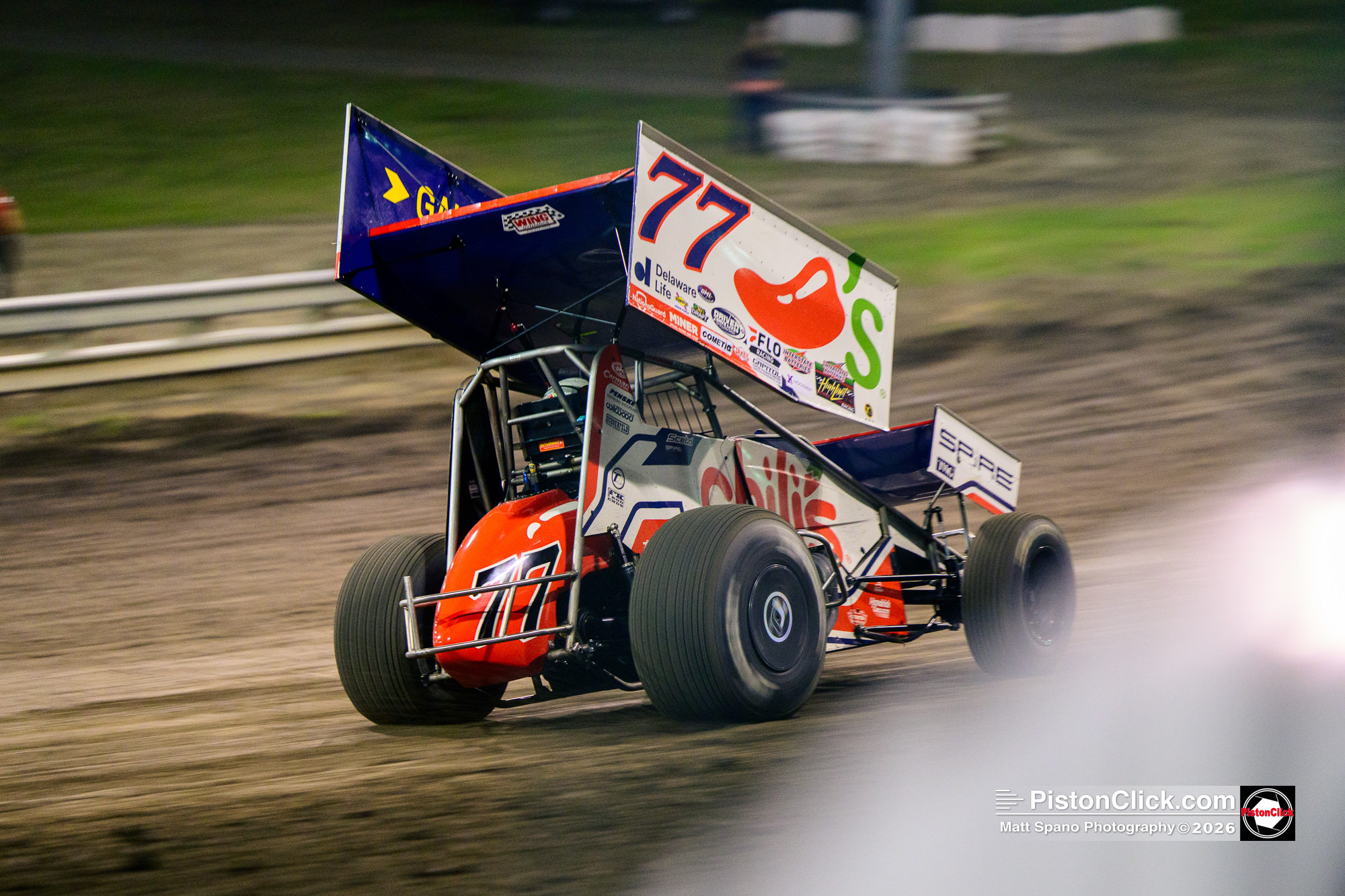
High Limit Racing features purpose-built, open wheel cars engineered specifically for the demands of short dirt ovals. A typical 410 sprint car weighs roughly 1,400 pounds (about 635 kg) with the driver, yet produces more than 900 horsepower from a naturally aspirated 410 cubic-inch methanol-fuelled V8. That gives them a power-to-weight ratio that exceeds many contemporary Formula 1 cars.
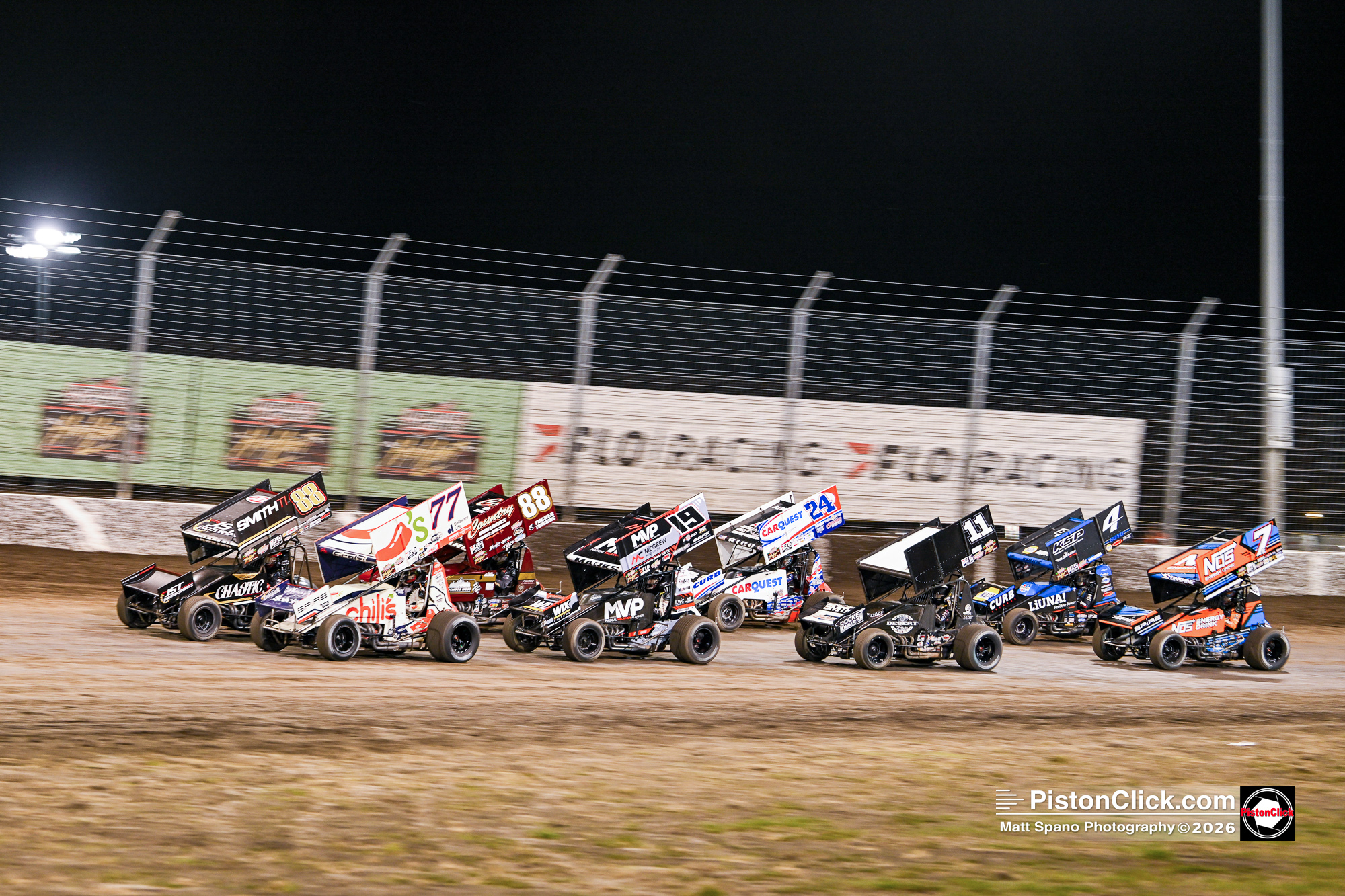
The most distinctive visual feature is the large top wing. It generates substantial downforce, allowing the cars to carry more speed through the corners while still sliding on the clay. Unlike most circuit cars, sprint cars have no multi-speed transmission — just an in-out box — and no onboard starter. A truck push-starts the cars before each session. Their extreme power, low weight and short wheelbase make traction difficult to control. This forces drivers to balance on the limit as they slide sideways through the corners and hurl clay into the air.
The Texas Motor Speedway Dirt Track
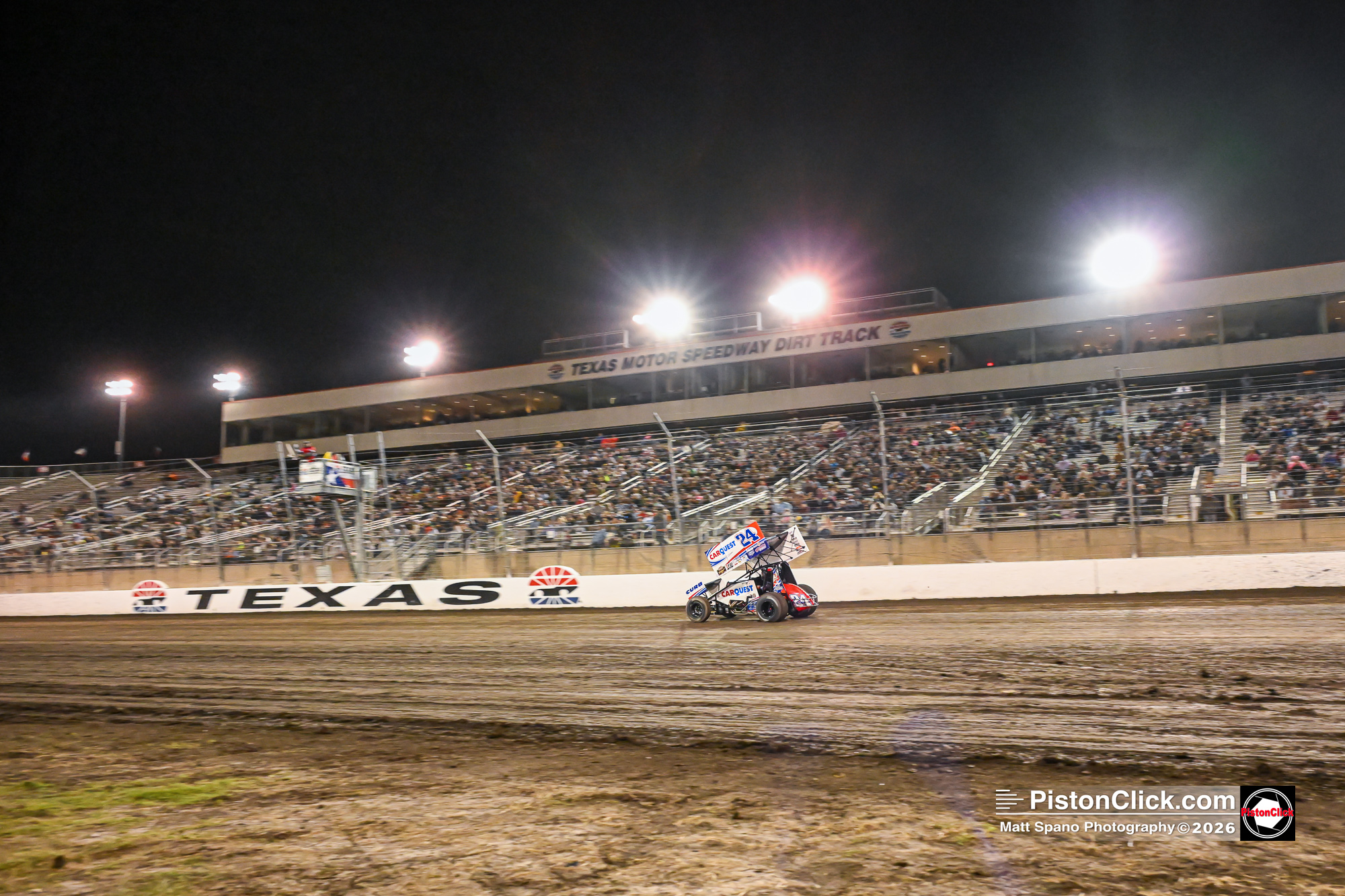
The racing took place on the Texas Motor Speedway Dirt Track, a 0.4-mile (approximately 644-metre) clay oval located adjacent to the backstretch of the main 1.5-mile paved speedway in Fort Worth. The track features 12-degree banking, with straights roughly 70 feet wide. It accommodates just under 11,000 spectators and regularly hosts High Limit Racing and other dirt-track series.
Compared with the long asphalt circuits familiar to most UK fans, the layout is short and simple: four turns and two straights. Because the distance is so limited, the racing is almost continuous. Cars are rarely more than a few car lengths apart, and the clay surface changes throughout the night as it dries out. Night racing under the lights is standard, which creates a strong contrast between the cars, the dust, and the dark sky.
The Weekend Format
Both Friday and Saturday followed the same basic programme, which is standard for High Limit Racing.
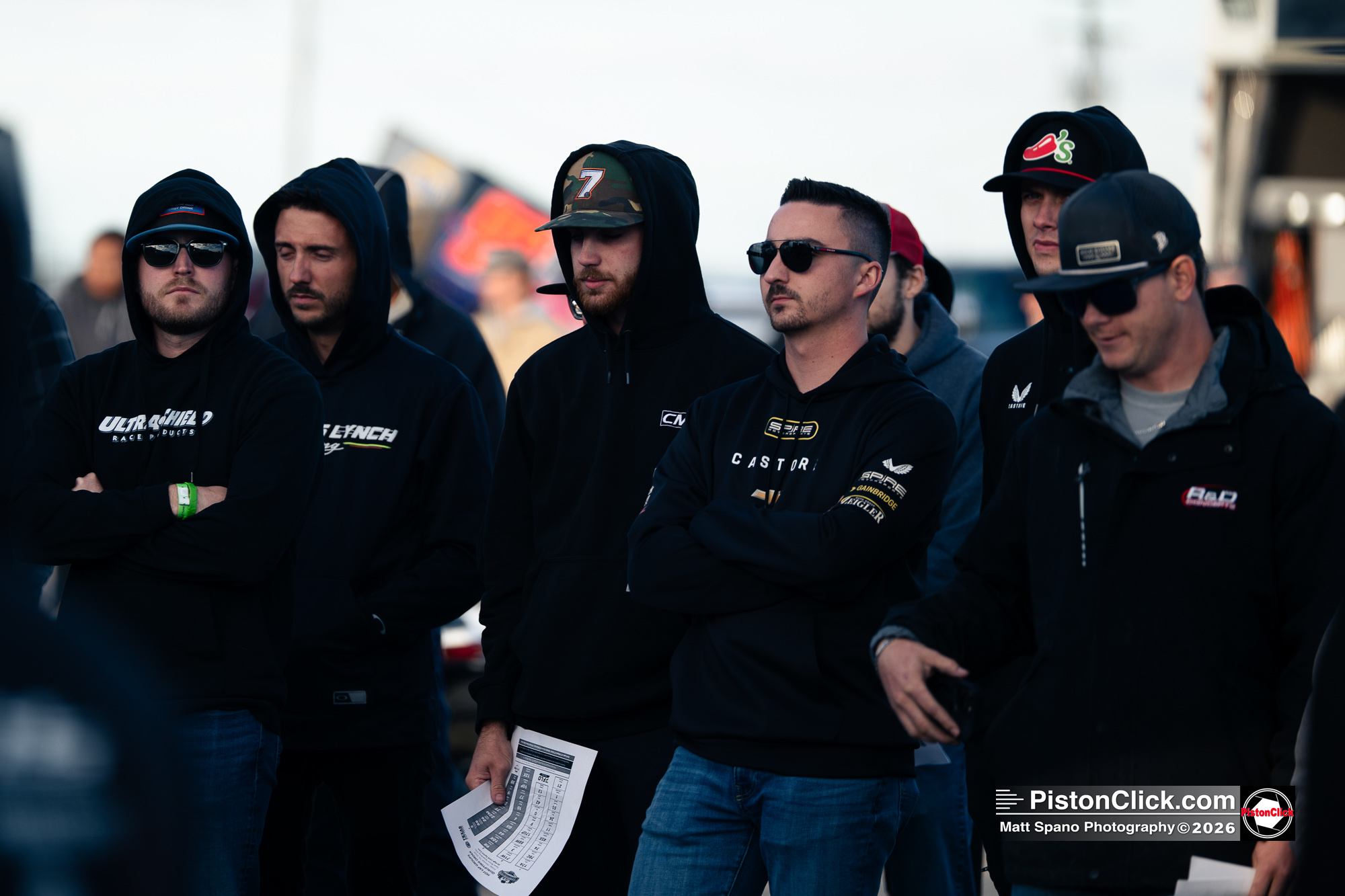
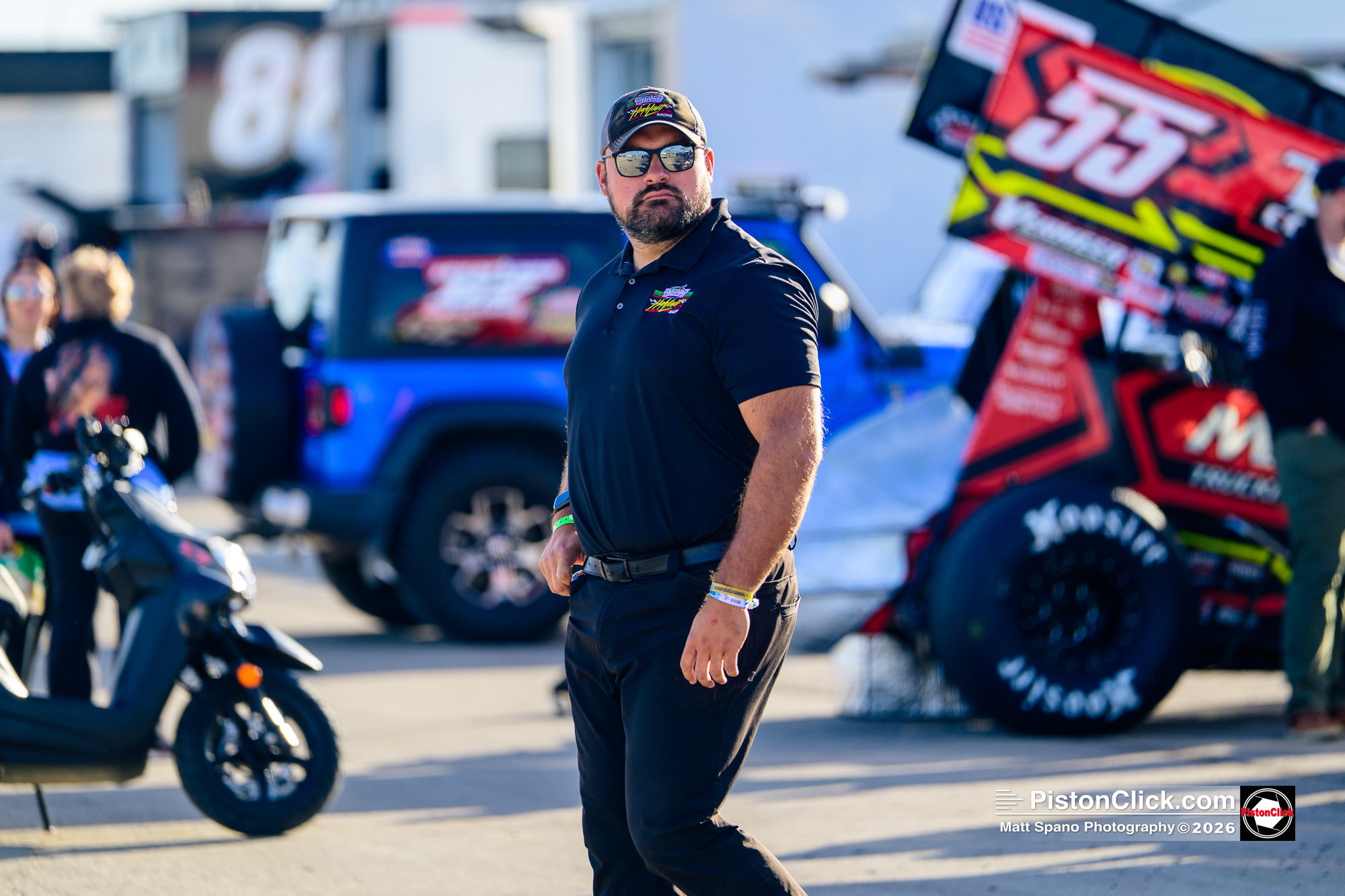
The day starts in the pit area, where the teams unload, set up, and make final preparations. Once the track is ready, the cars go out for Hot Laps — short practice sessions of three to five laps so drivers can feel the surface and crews can make setup changes.
Next, drivers tackle qualifying, where each car sets a single lap to determine its starting position for the heat races. When 32 or more cars enter, officials split the field into two groups. Each will qualify separately.
The Heat Races are short (typically eight laps). The top five or six finishers from each heat transfer directly into the night’s feature, while the rest drop into the B-Main. The heat winner and the fastest qualifier from each heat also advance to the Dash.
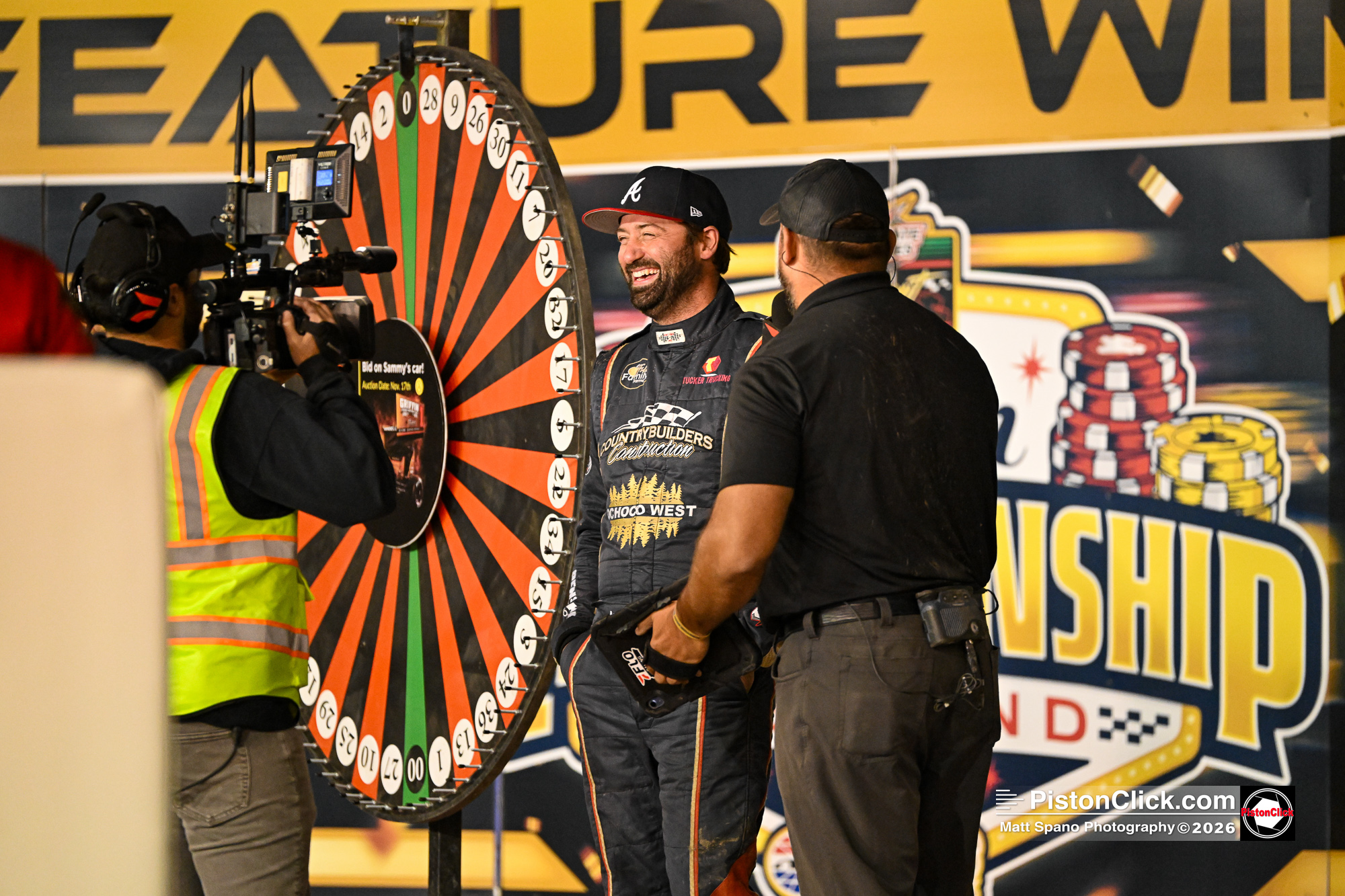
The Dash runs for seven laps and determines the front rows of the feature race. Drivers draw their starting positions by spinning a wheel. Even the fastest qualifiers can find themselves starting further back.
Cars that failed to transfer from the heats run in the B-Main, a 12-lap last-chance race. The top four finishers move into the feature and start at the rear.
Finally, the A-Main (or Feature) is run. At Texas Motor Speedway, this was 25 laps on Friday and 30 laps on Saturday. Twenty-four cars start, and the winner of the feature is the overall winner of the night. Championship points are awarded based on feature finish.
The entire sequence then repeats the following night as a separate race programme.
Shooting Areas: Infield vs Around the Fence
Credentialed photographers at dirt tracks usually have two main options: the infield or the perimeter fence.
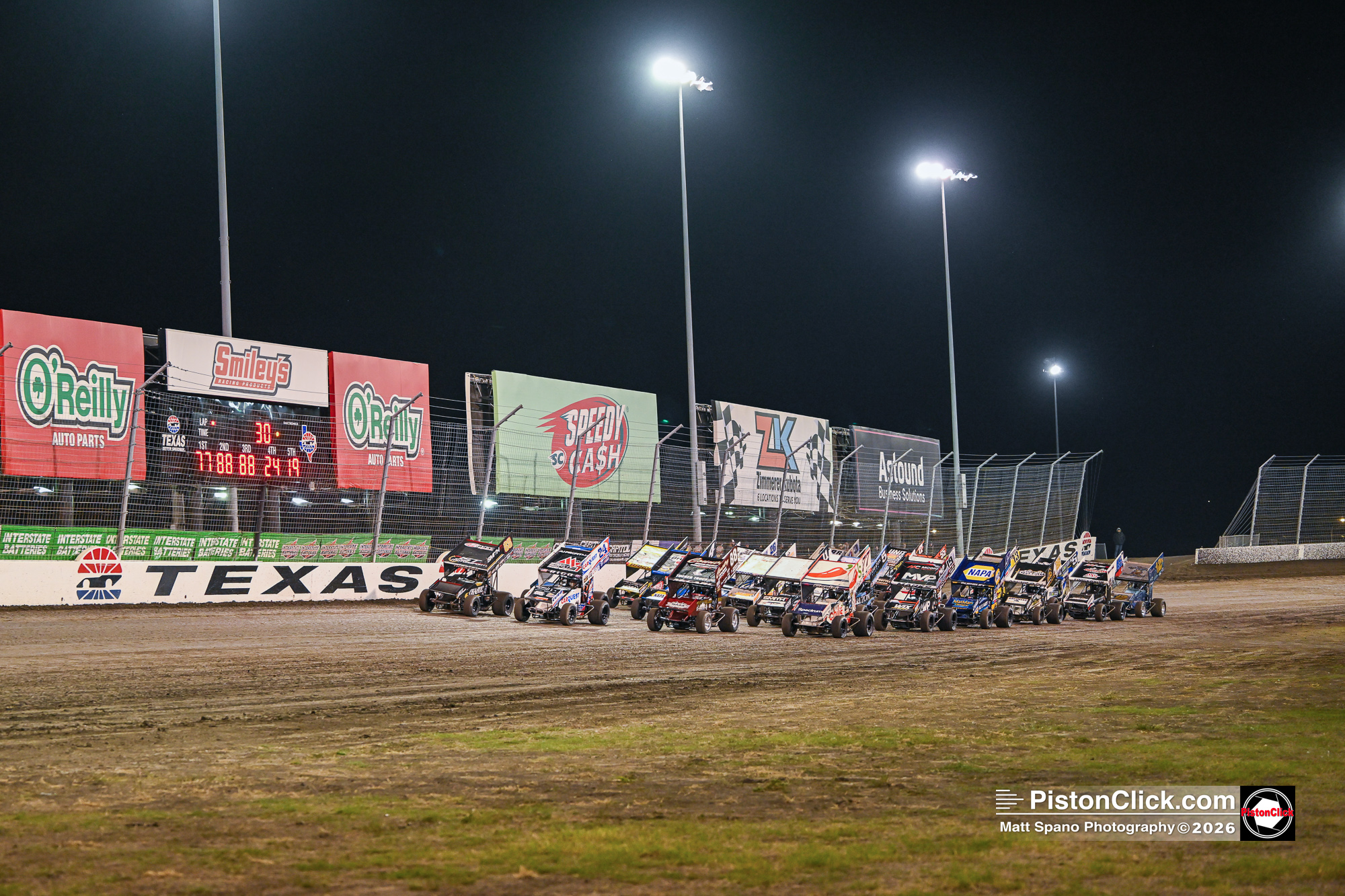
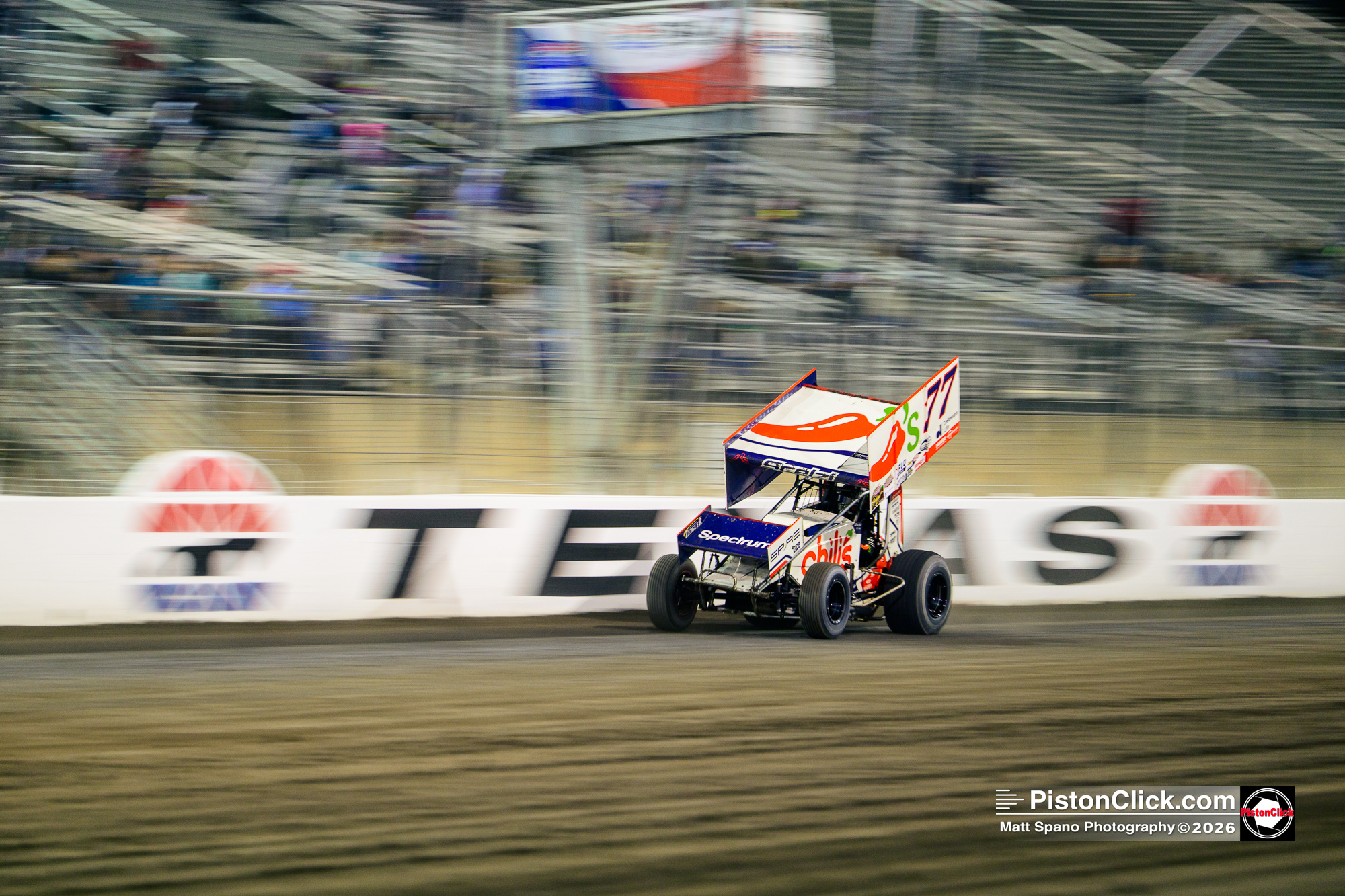
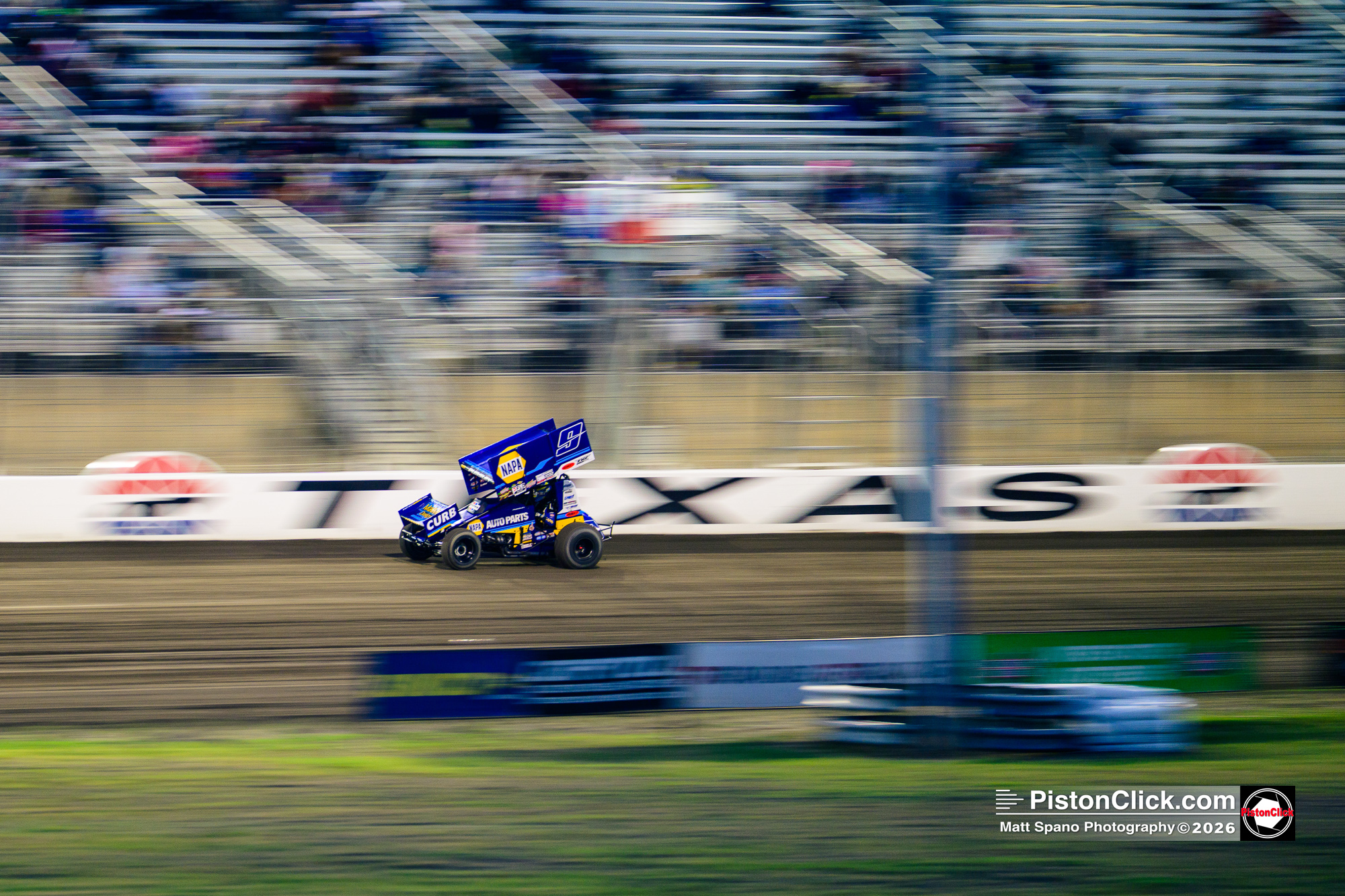
The infield is the cleaner of the two locations, which seems wrong at first. You’re farther from the clay that the cars throw as they slide, so your gear stays cleaner and you can work more comfortably through the night. From here you can get good panning shots as the cars come through the turns and down the straights, with cleaner backgrounds and less debris in the air.
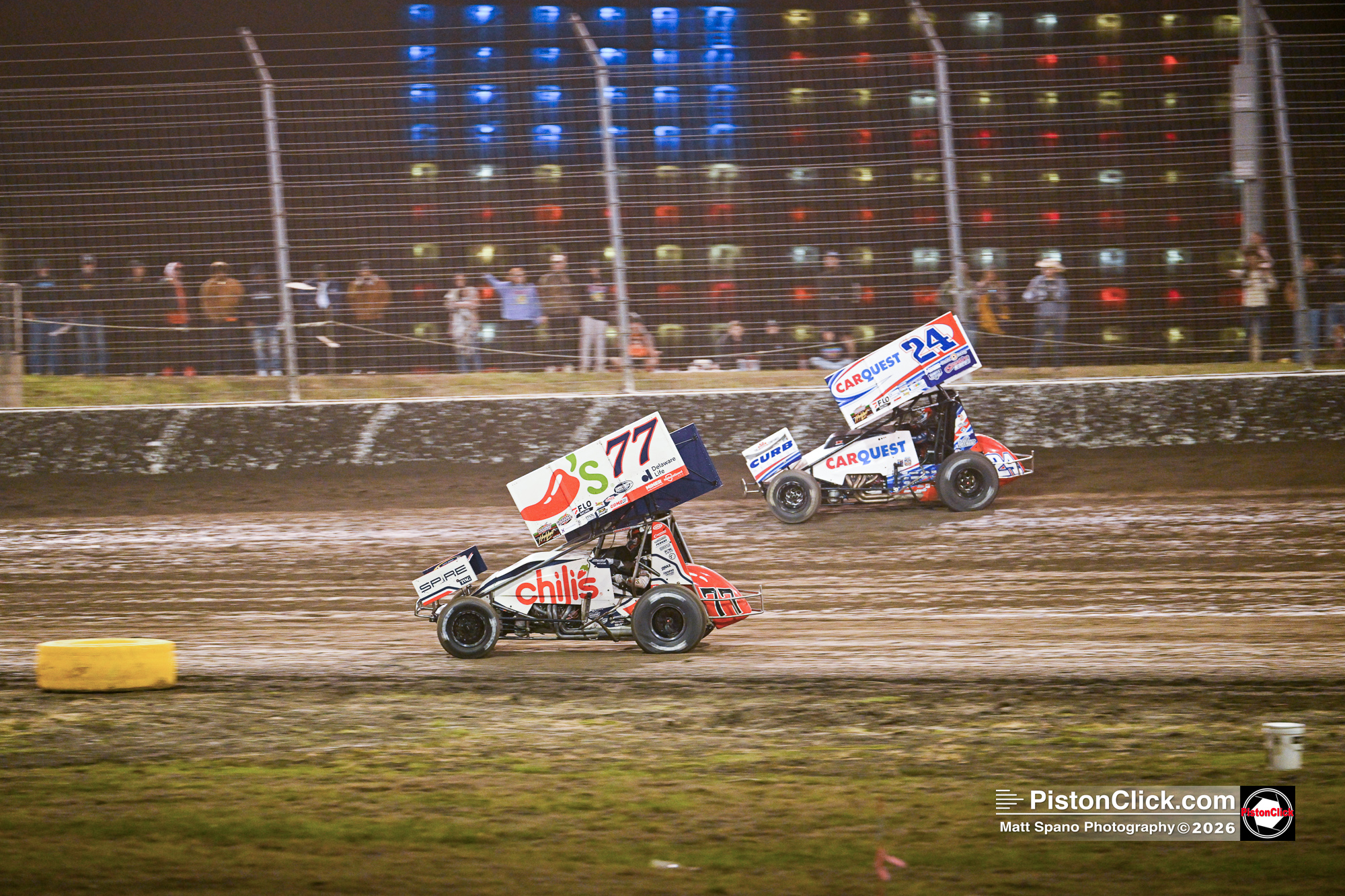
The outside fence puts you right in the line of the dirt. As the cars slide through the corners, they throw clay outward, so you get pelted regularly. The advantage is the straight-on angles into the turns — you can shoot the cars coming directly at you or exiting the corner with the wing and slide fully visible. The fence itself can get in the way, so positioning and aperture choice matter, but the head-on view is hard to match from anywhere else.
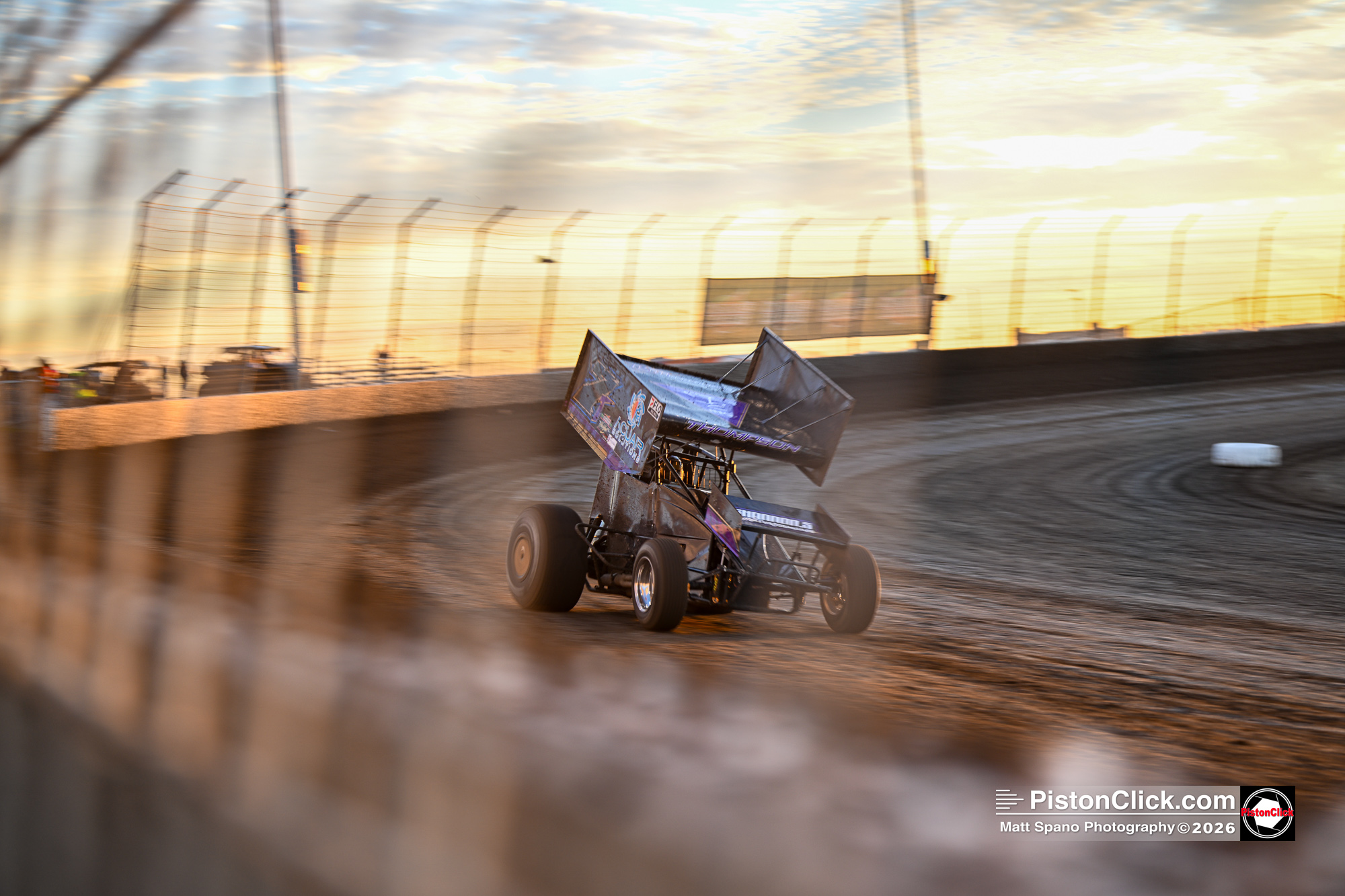
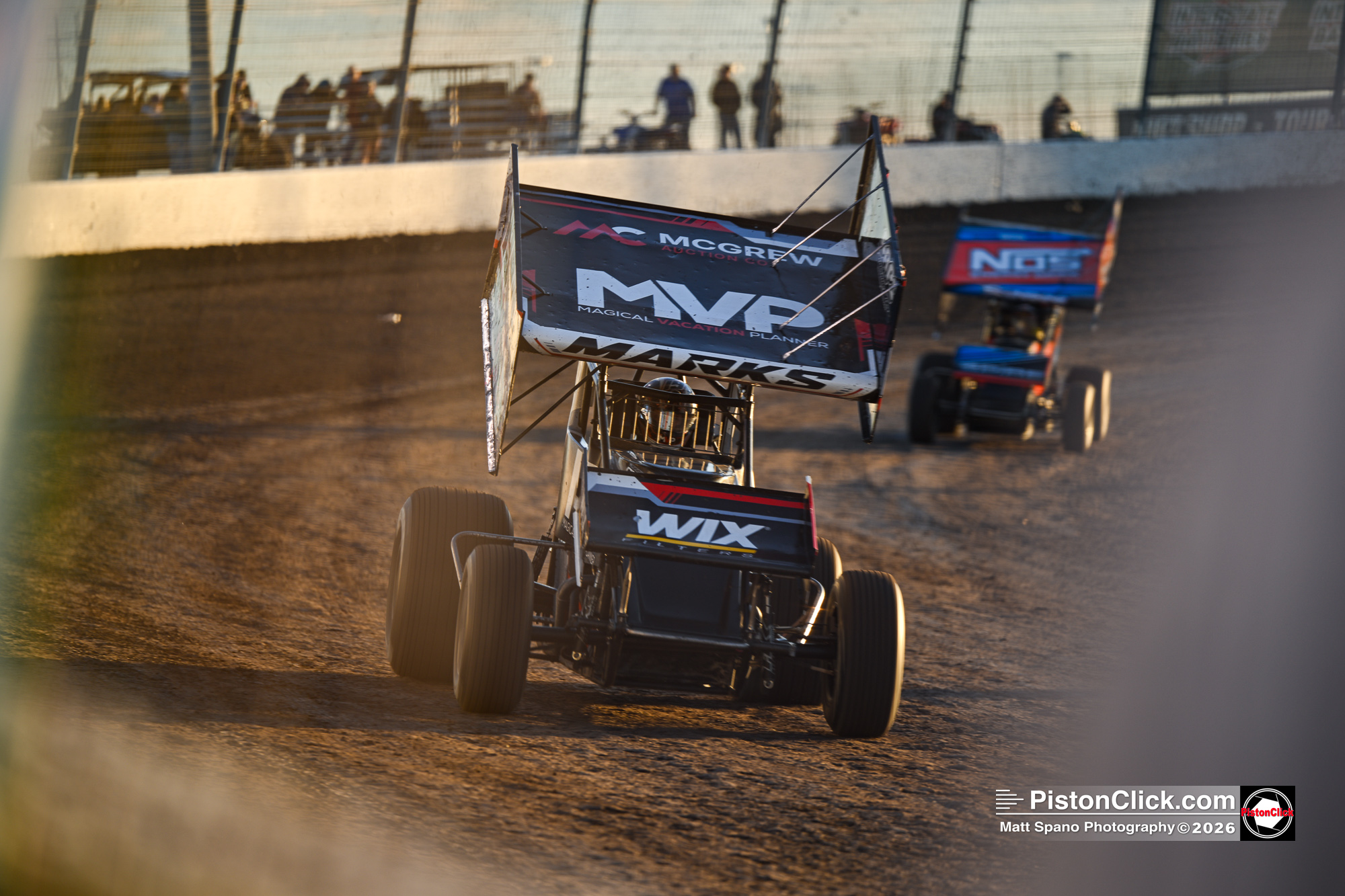
Both spots have clear strengths depending on what you want: cleaner panning and less infield dust, or more dramatic straight-on action (and more clay) from the fence. Typically, photographers spend the hot laps and qualifying outside on the fence, and then move into the infield during the races.
Victory Lane Celebrations
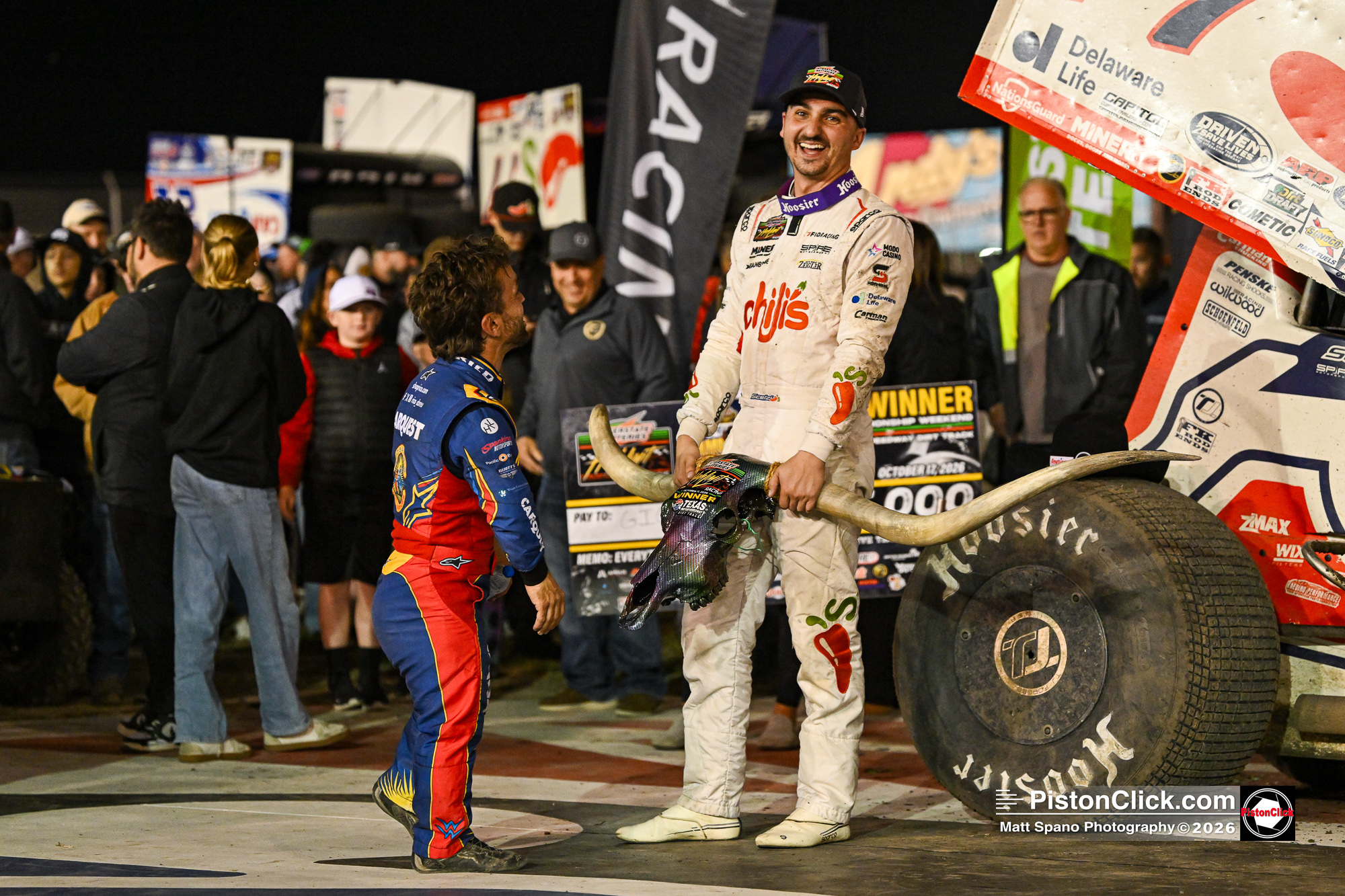
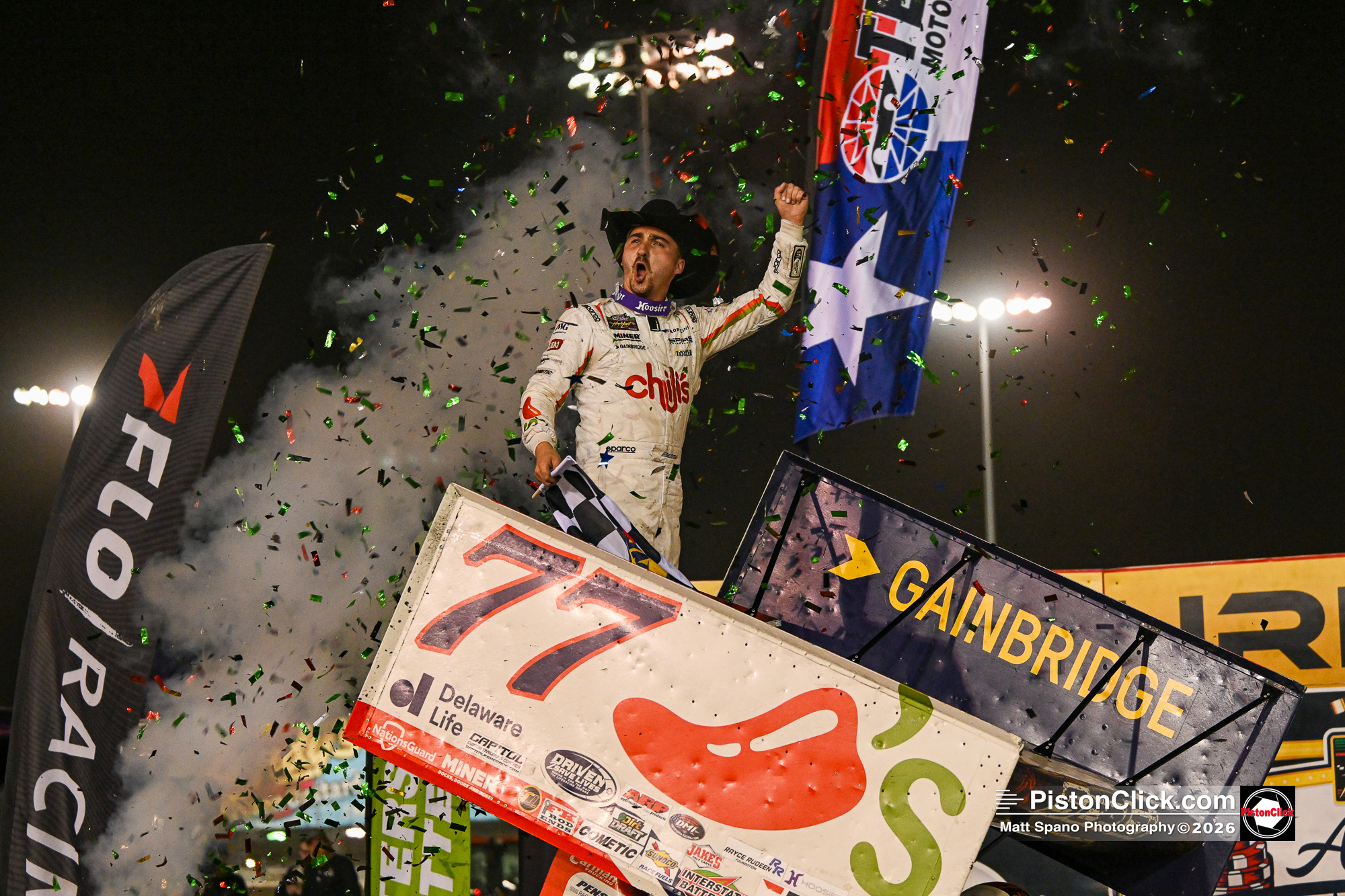
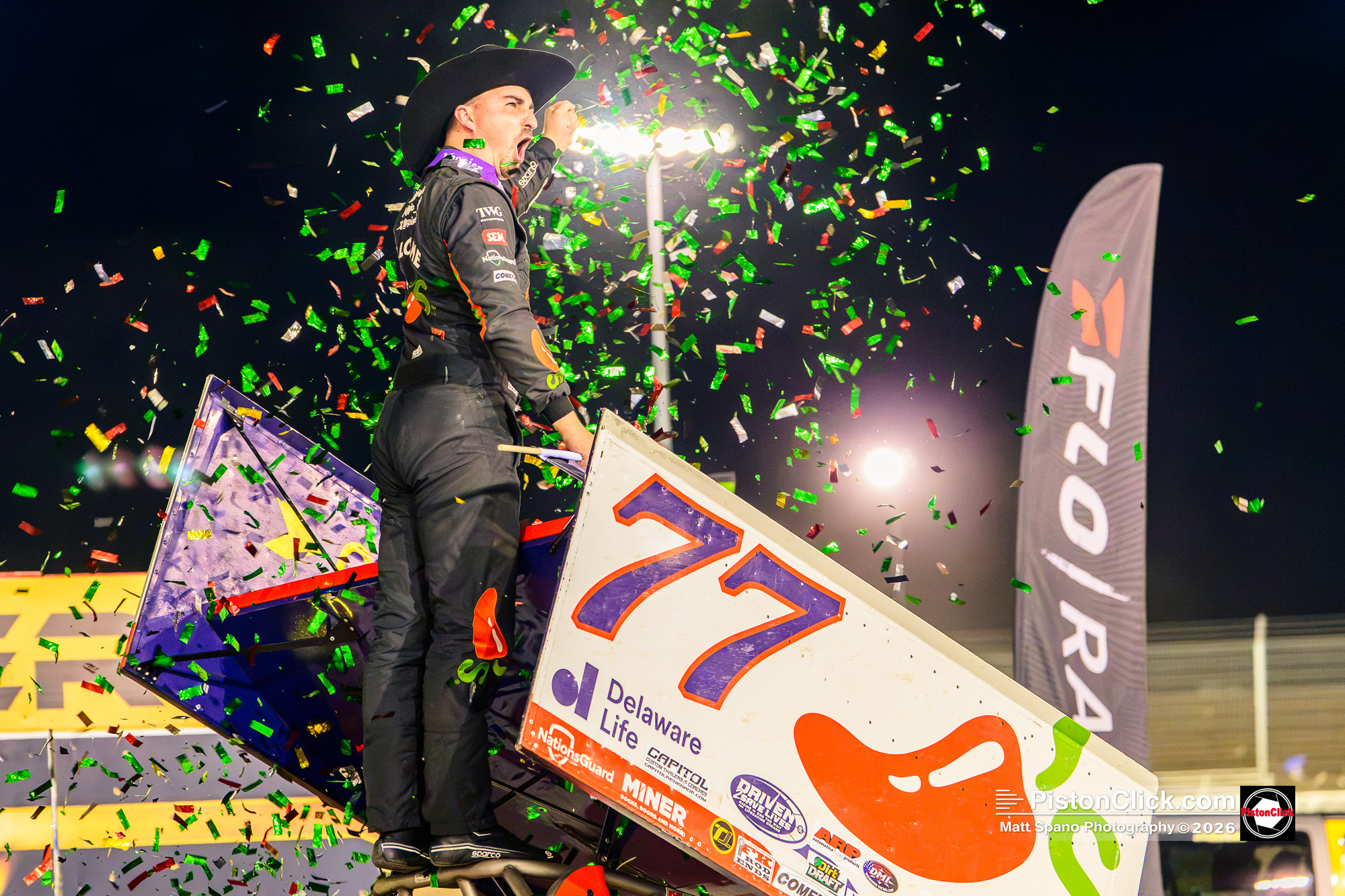
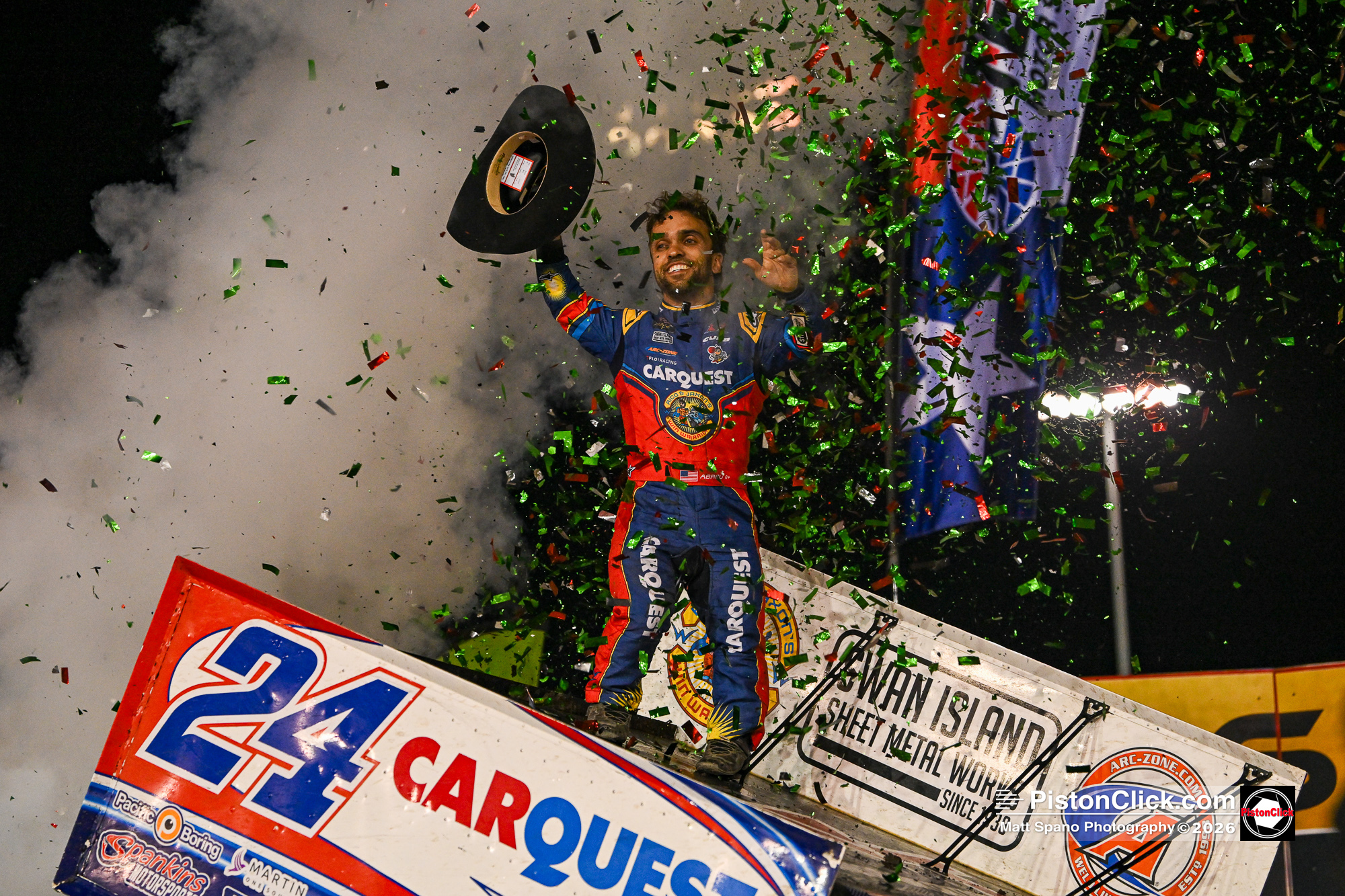
After the feature, the winner takes the car to victory lane. A compact area near the front stretch where the drivers, team and series officials gather for photos and interviews. The crew parks the car with its wing often still caked in clay, creating an immediate, hands-on celebration that feels more intimate than the post race ceremonies at many larger asphalt events.
These moments tend to be less staged than victory lane at a major NASCAR or Formula 1 race. Drivers are still in their suits, the team is celebrating the result, and the dirt is still on everything. For a photographer, it is one of the better places to capture the human side of the night — the relief, the exhaustion, and the reaction to a hard-fought feature.
Closing
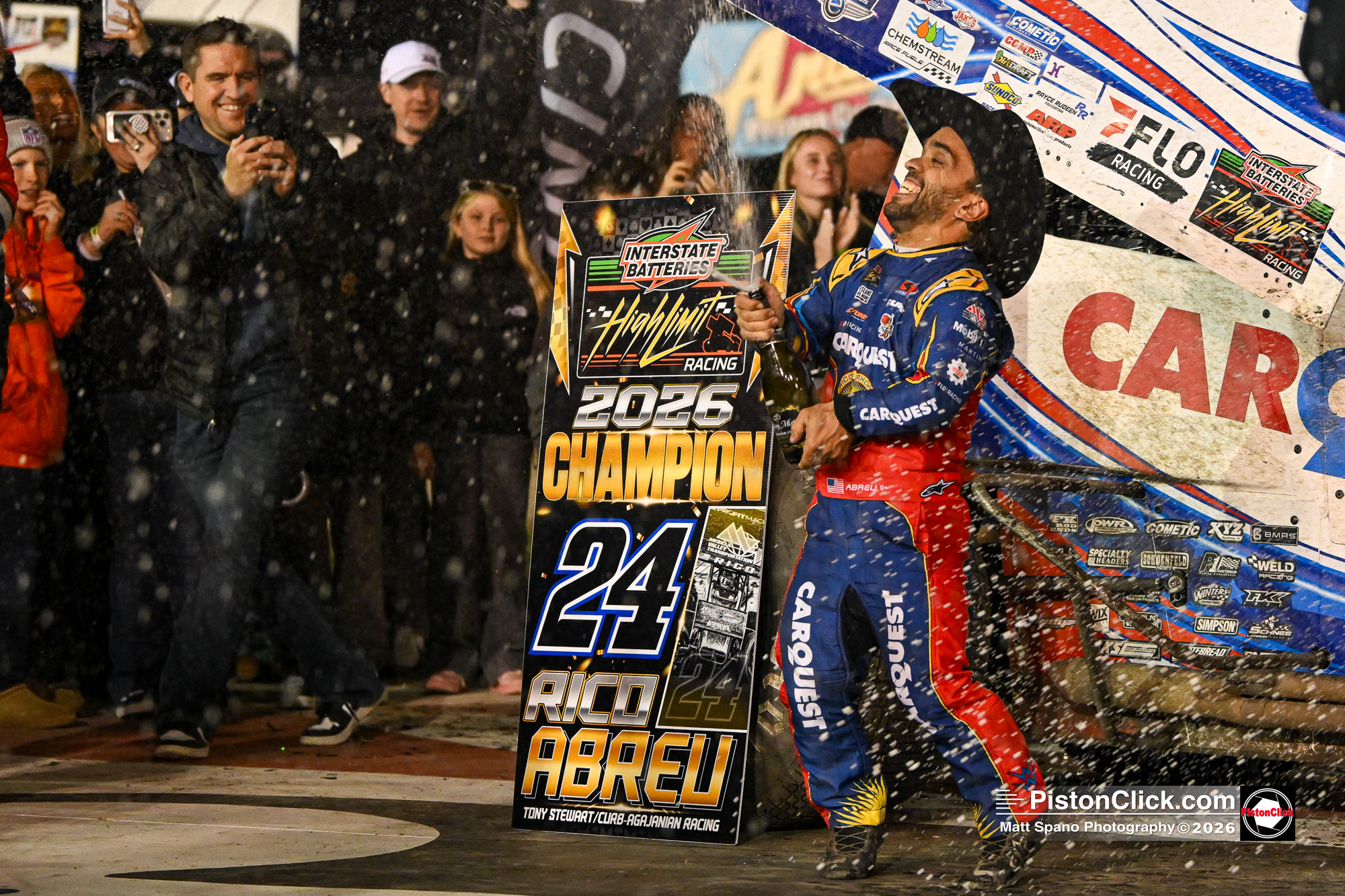
The All-In Championship Weekend at Texas Motor Speedway delivered exactly what High Limit Racing is built for: two nights of close, physical racing on a short clay oval, with a championship on the line. Giovanni Scelzi won both features, while Rico Abreu finished high enough both nights to clinch his second consecutive series title. For a photographer, the weekend offered the classic elements of 410 sprint car racing — the big wings, the constant sliding, the dust under the lights, and the raw intensity of a short track. Those are the images that stay with you long after the last car is pushed back to the pits.
Thanks to Matt Spano Photography for this High Limit Racing report. You can find out more about Matt from the links below.


