


What Exactly Is Supermoto? Discovering the Chaos of British Supermoto at Cadwell Park
Supermoto King of the Mountain Finale
Cadwell Park
19 October 2026
Supermoto might not enjoy the same profile as British Superbikes, but after spending a day trackside at Cadwell Park, I can confirm that it delivers plenty of speed, skill, and spectacular action. Add frequent rain showers, tricky track conditions, and riders fighting to keep their machines under control, and you have a recipe for some seriously entertaining motorsport.
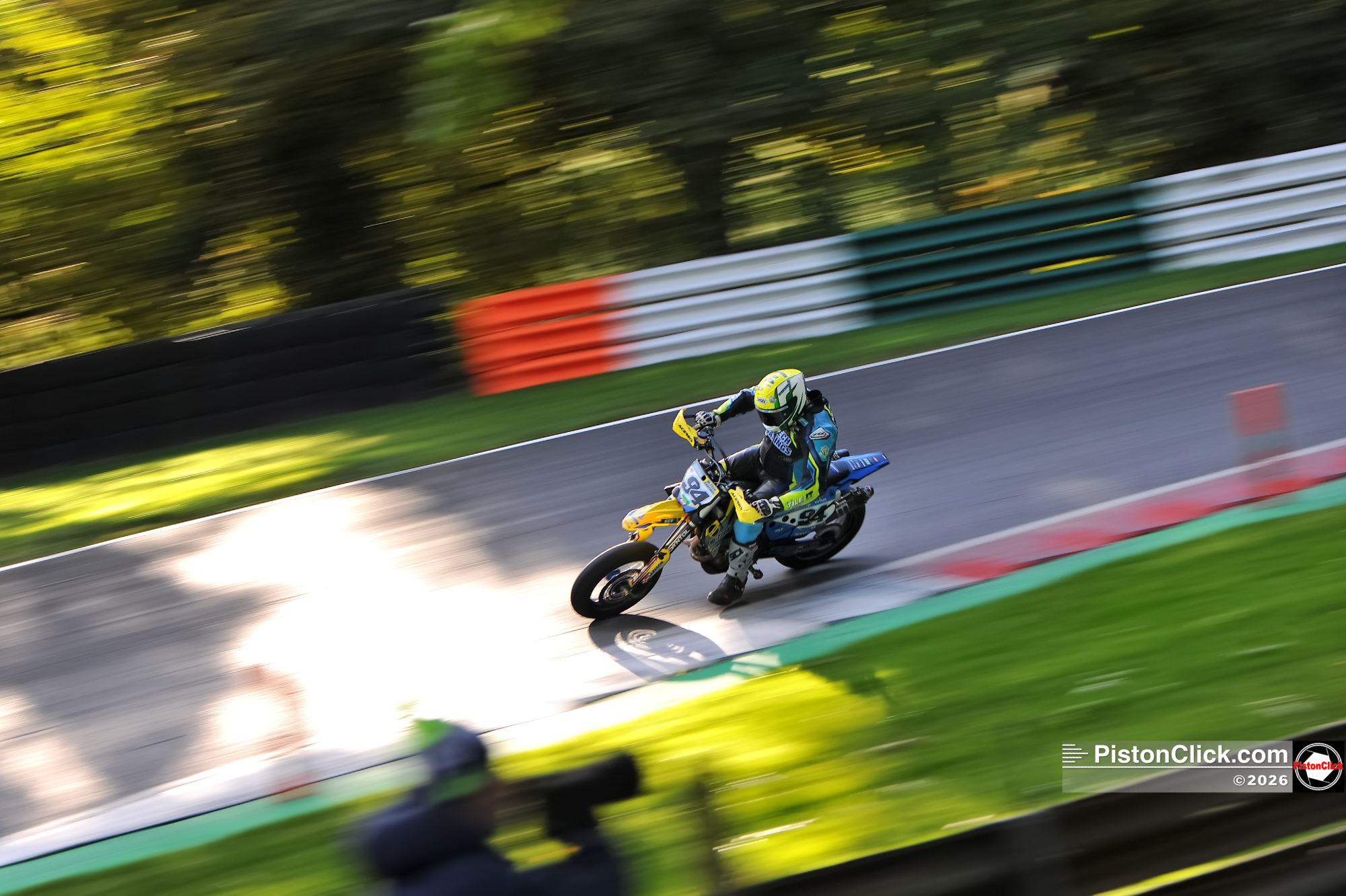
Before getting into the action, it’s worth explaining what Supermoto is, how the sport developed, and why this unusual form of motorcycle racing deserves a place on every motorsport enthusiast’s radar.
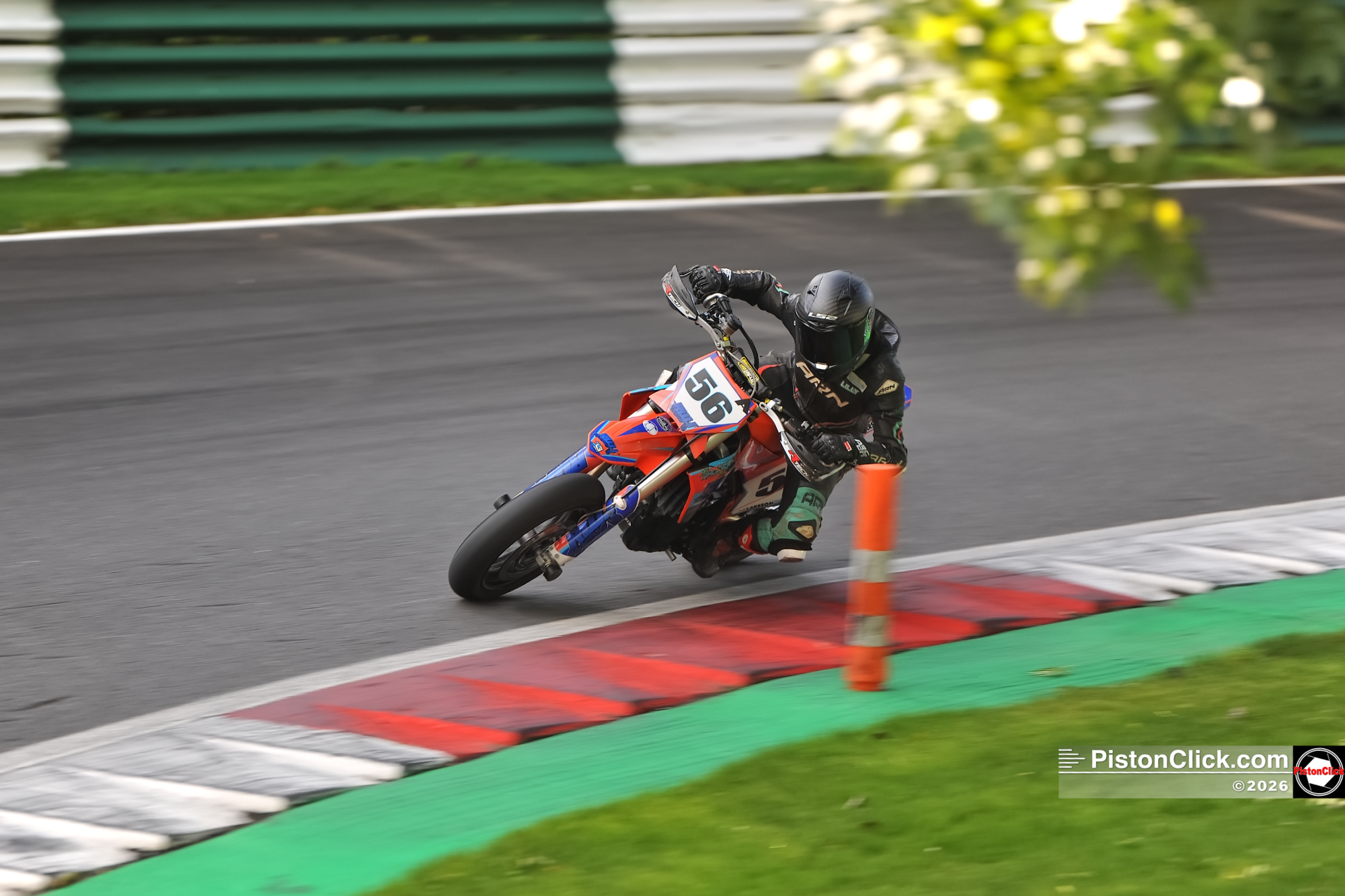
What Exactly Is Supermoto?
If you’ve never watched Supermoto live, imagine motocross, flat-track racing, and tarmac road racing thrown together on one circuit. Then add riders sliding their bikes into corners, launching over dirt sections, and fighting for position on the asphalt. That’s Supermoto.
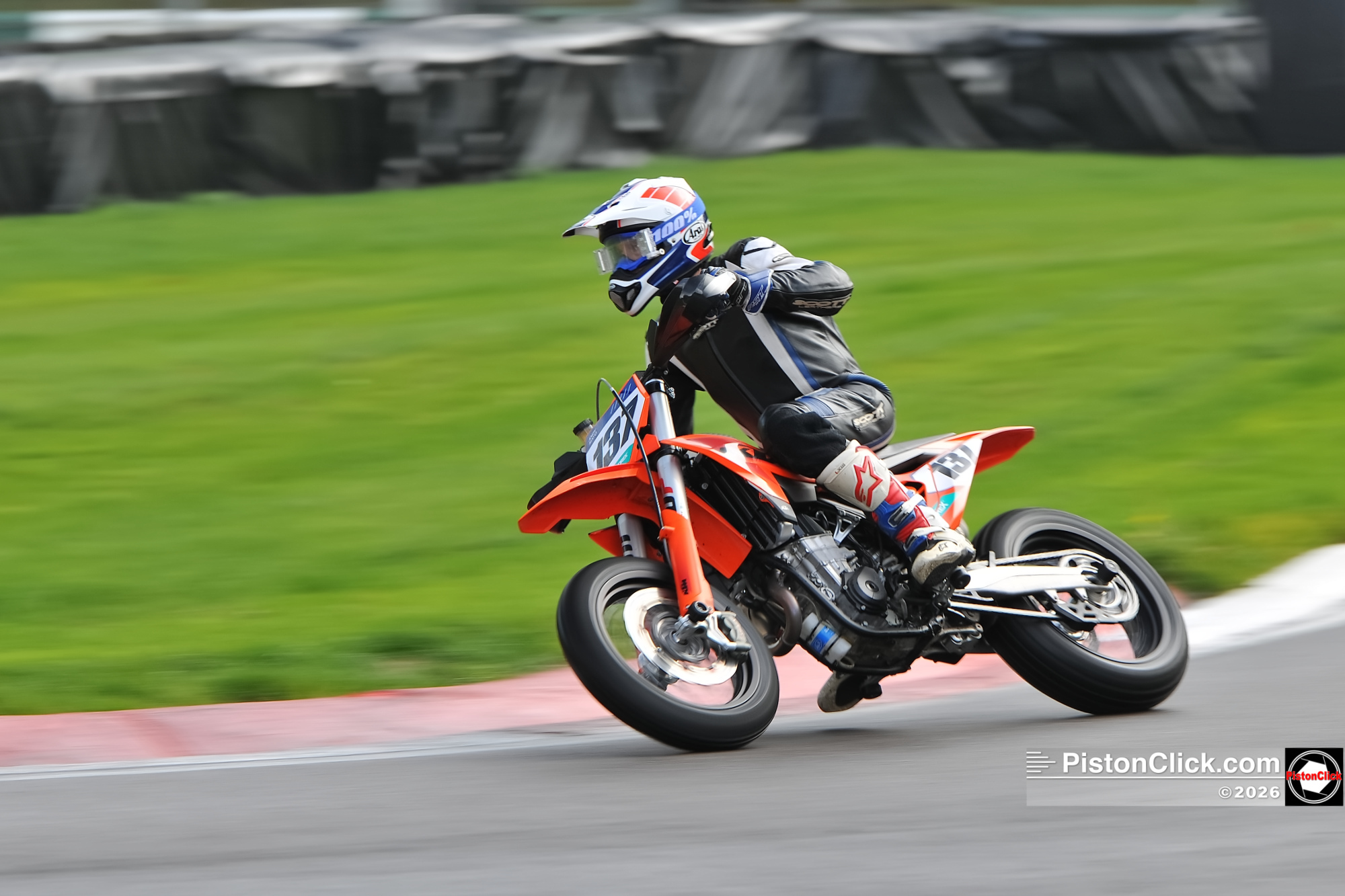
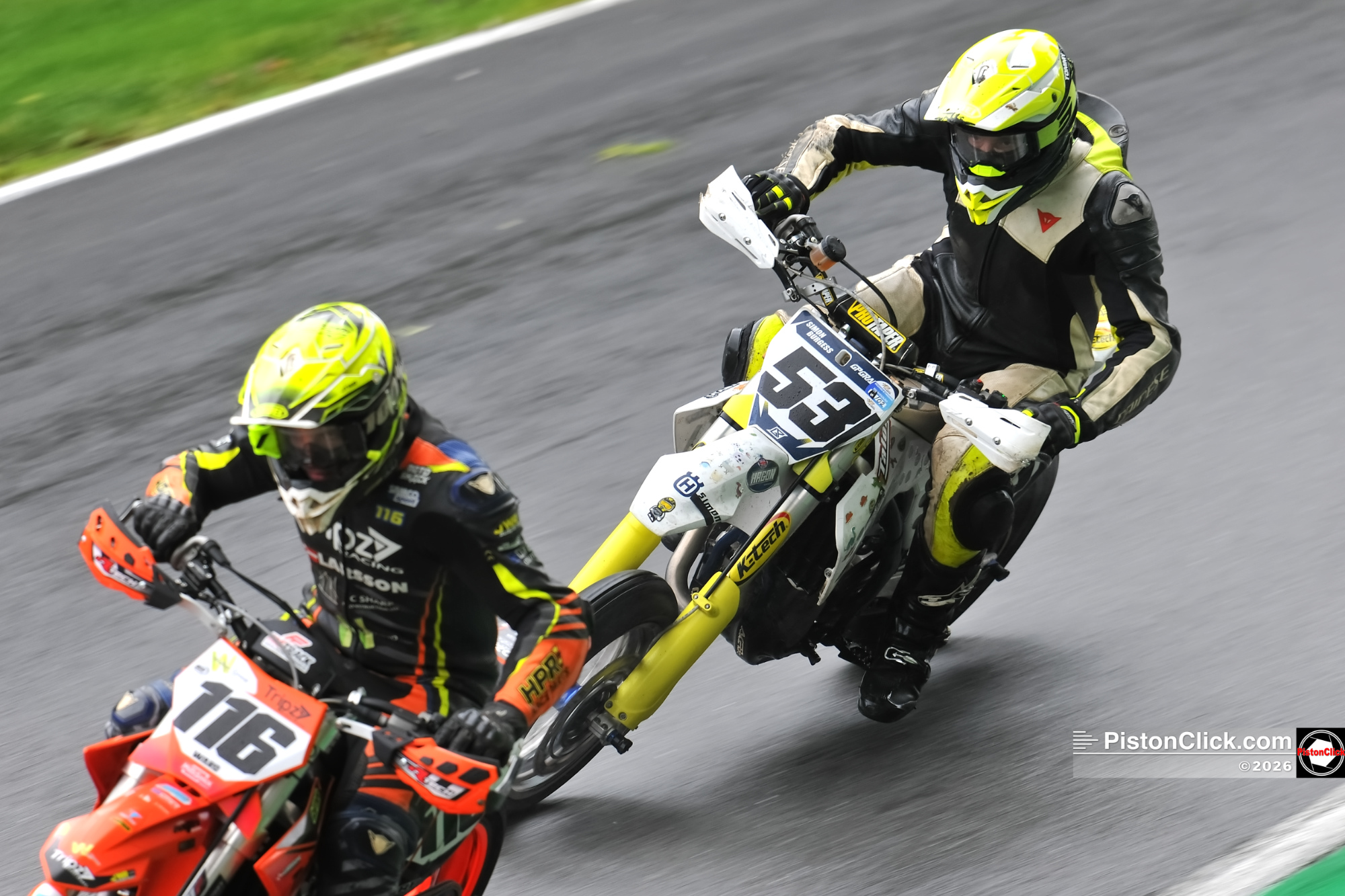
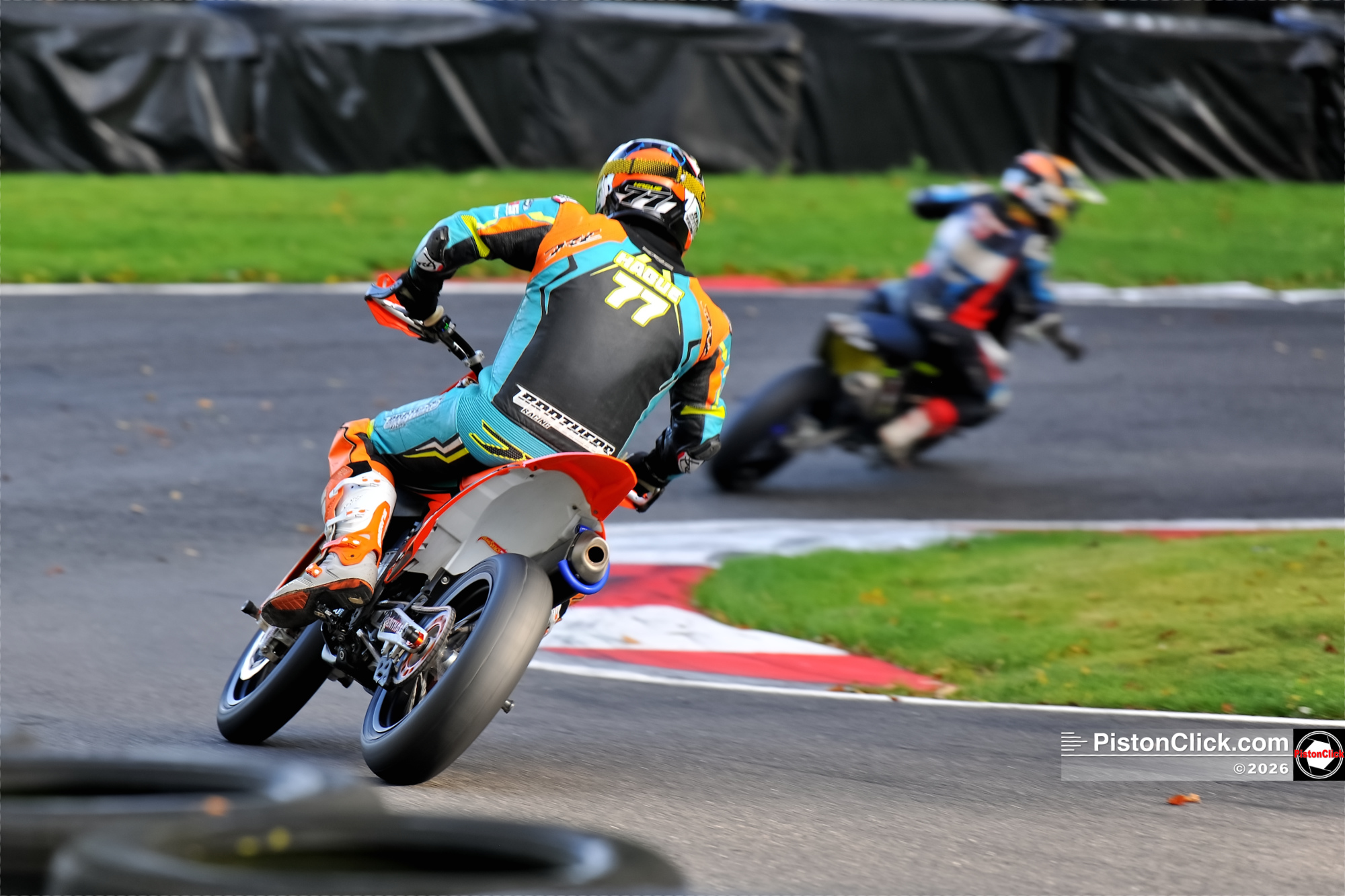
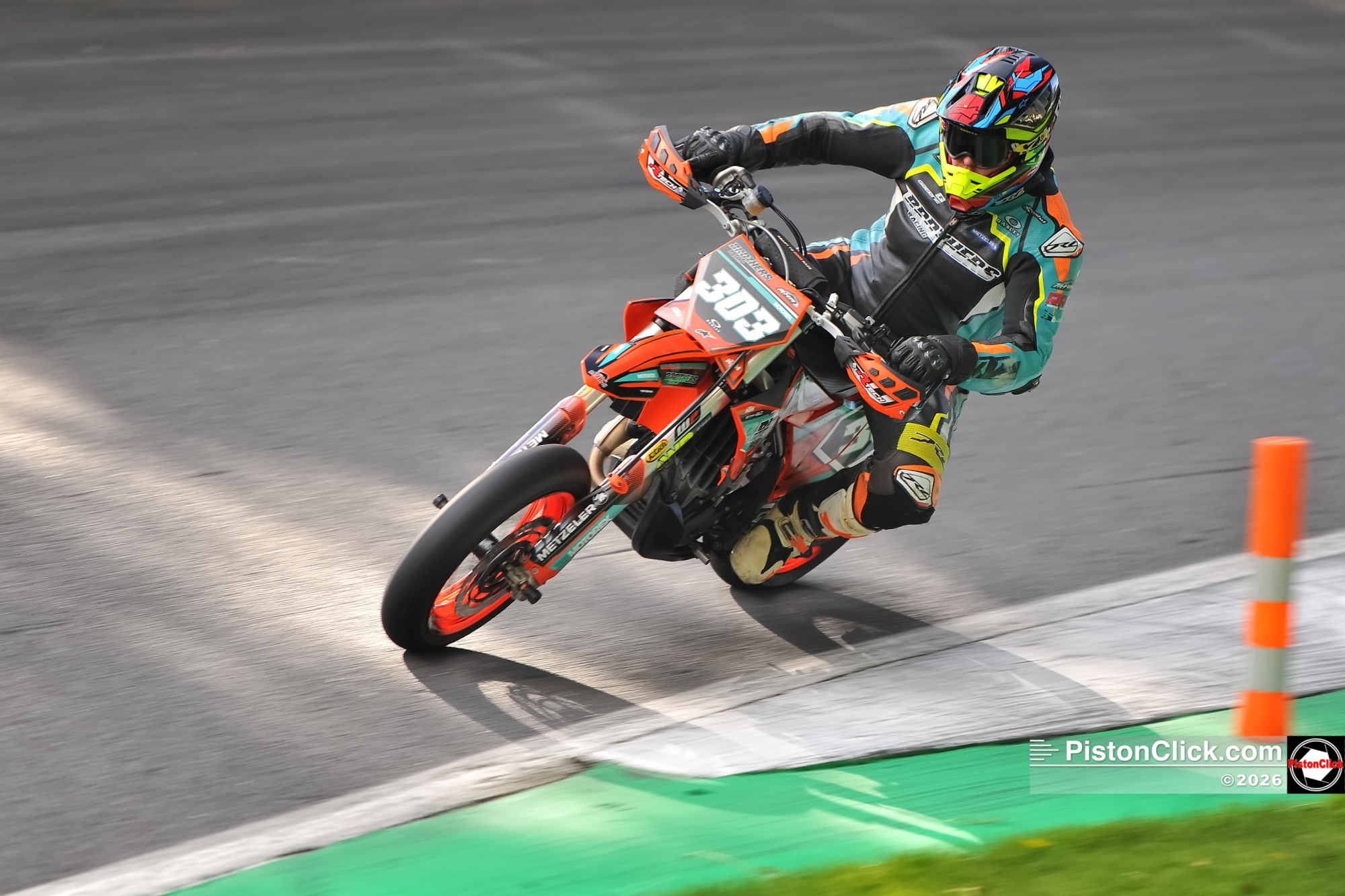
The tracks combine different surfaces, usually with sections of smooth tarmac and a dirt or off-road element. Riders use motocross-style motorcycles adapted for circuit racing, typically with smaller wheels, road-oriented tyres, and brakes suited to the demands of tarmac. The result is a discipline that rewards far more than outright horsepower. Riders must constantly adapt to changing grip levels, switch their riding style between surfaces, and find a way to carry speed through tight, technical corners.
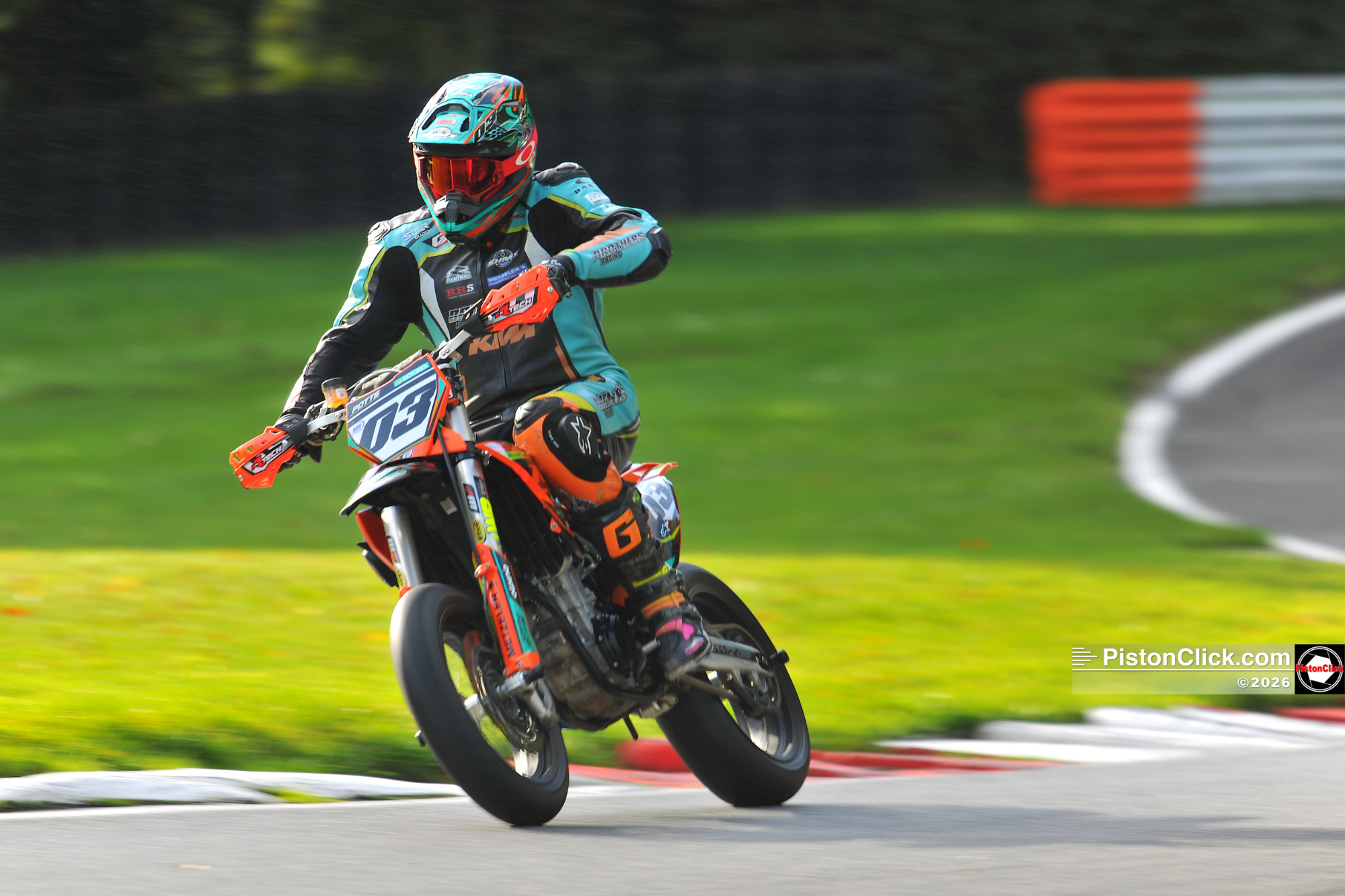
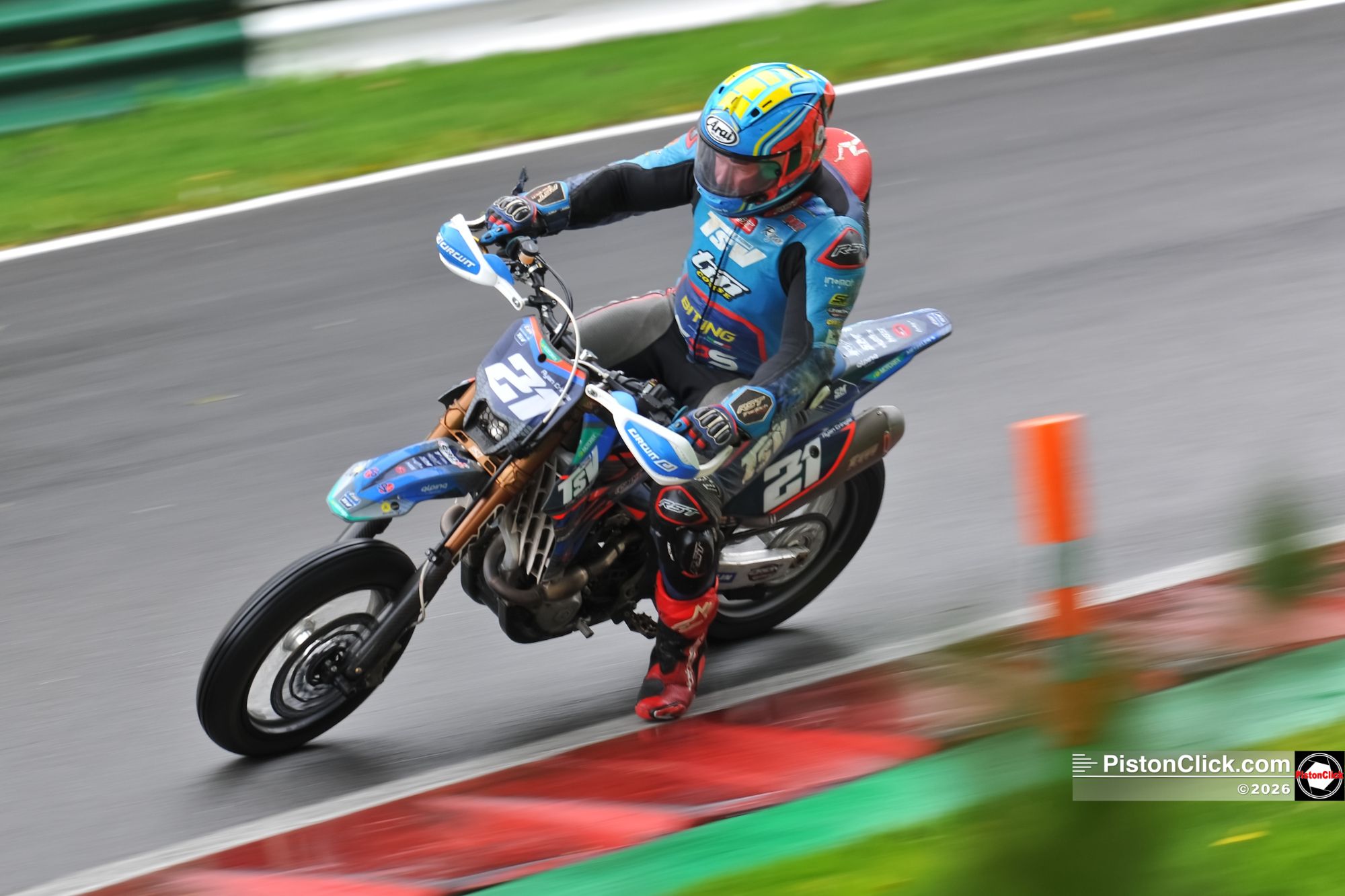
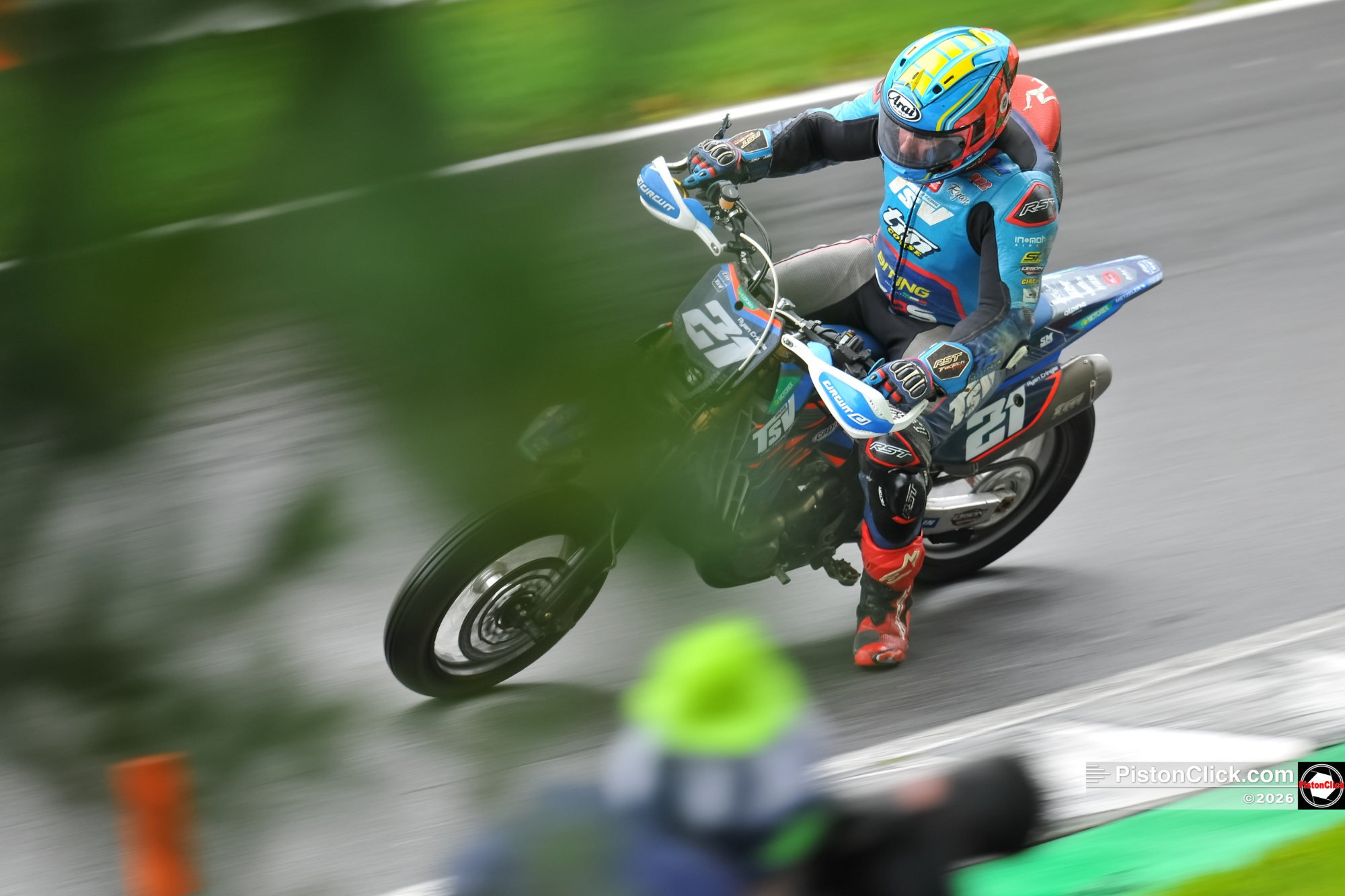
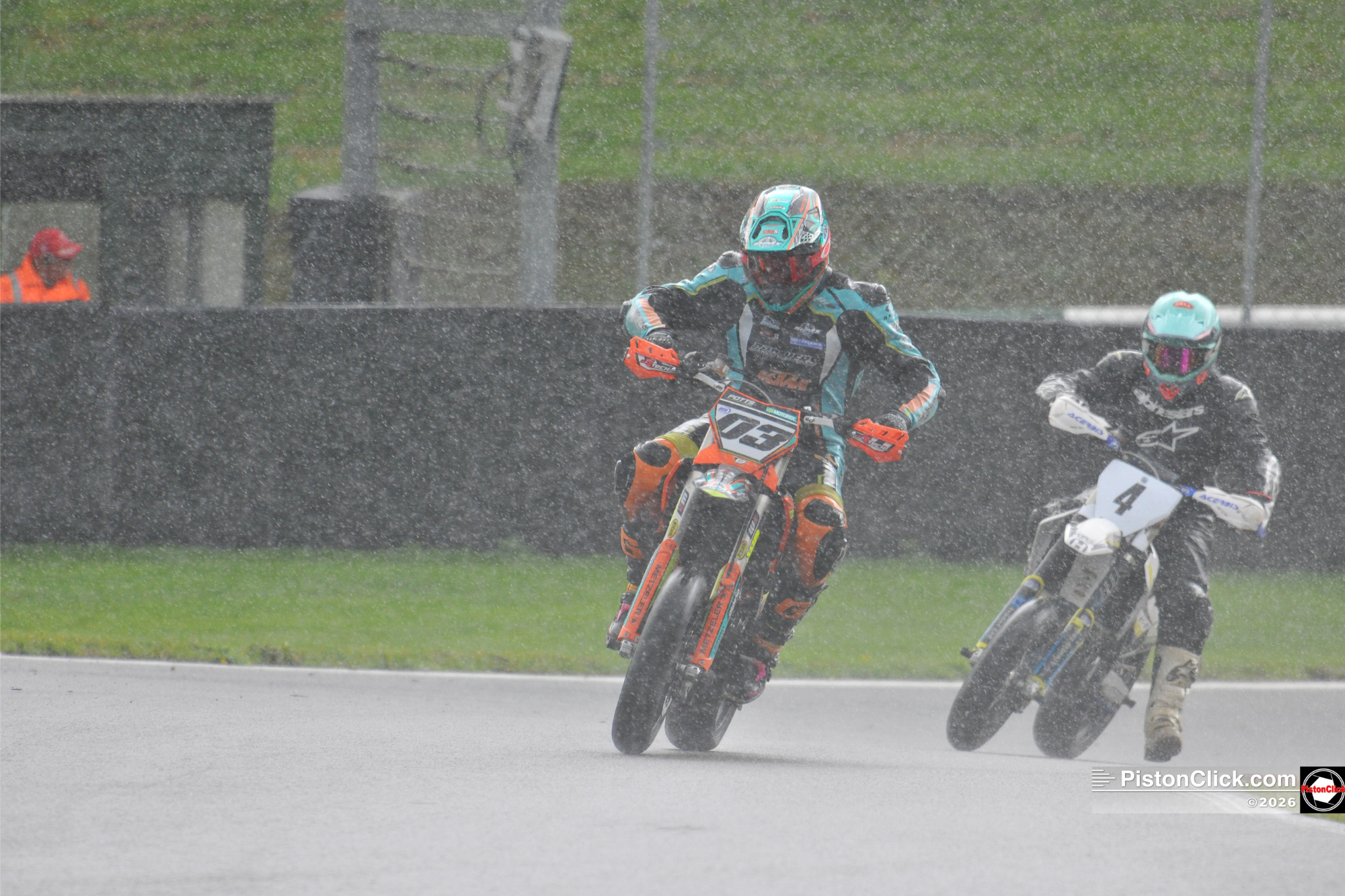
The two-day meeting at Cadwell Park showcased the immense demands those skills place on competitors. Frequent showers created challenging conditions for the riders who constantly assessed remaining grip and adjusted their approach with the shifting weather. A successful line on one lap could become far less predictable after another shower hit the circuit.
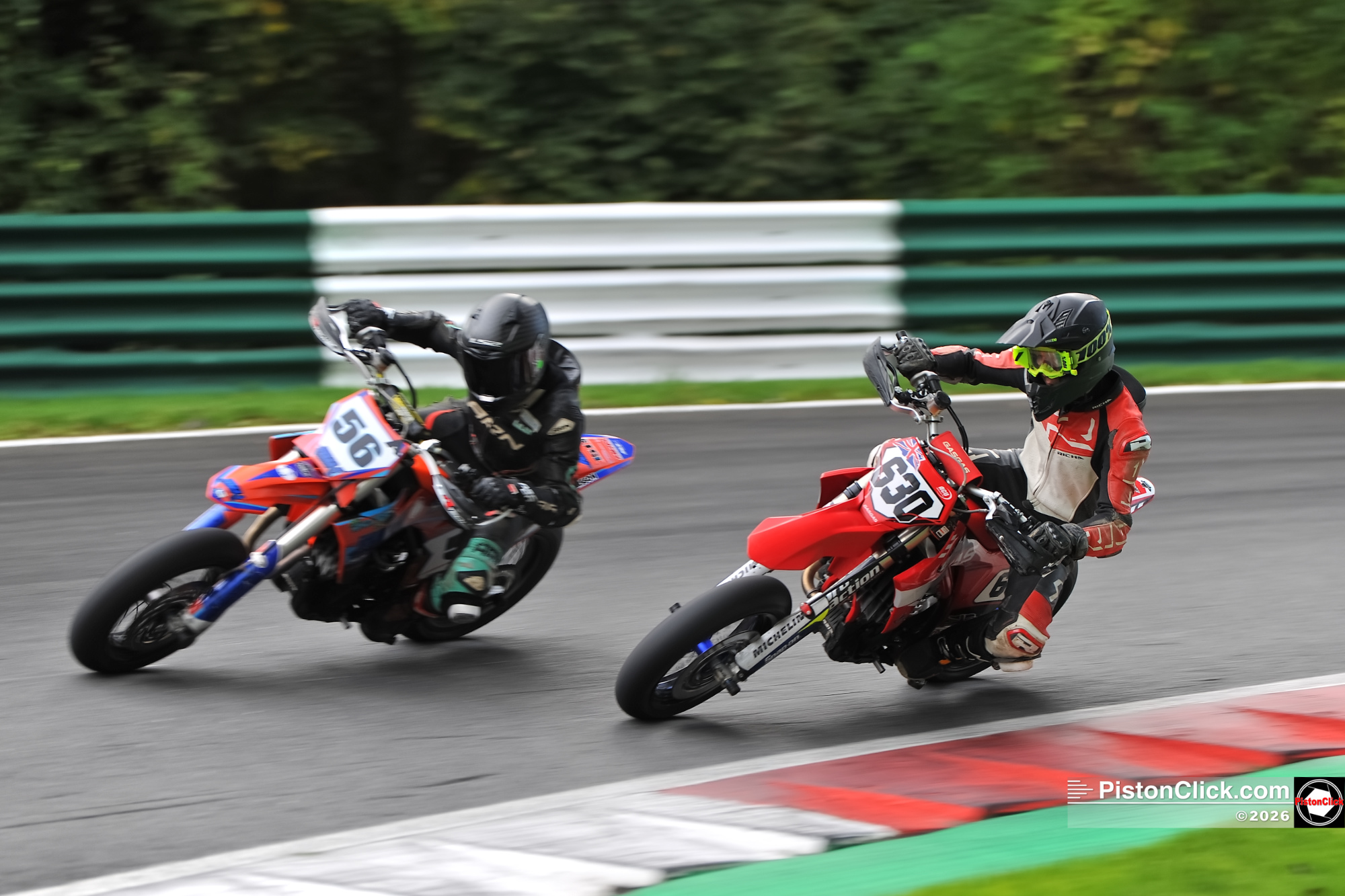
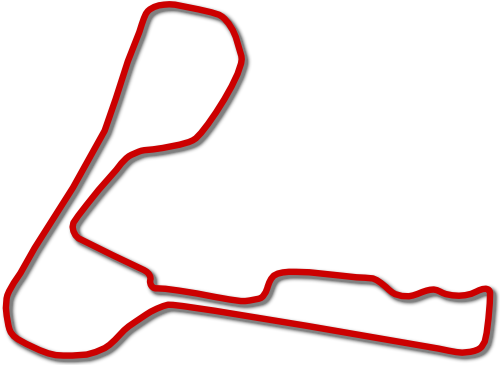
The track layouts on Saturday and Sunday were different. On Saturday only tarmac was used, with a shortened section of the main Cadwell track, the ‘Woodland Circuit’ in action. Sunday extended the Woodland Circuit to include Chris Curve and a slip road short ‘off-track’ section at Mansfield. This combination offered plenty of varied opportunities for a spectator photographer to build their portfolio.
From American Television Experiment to International Motorsport
Supermoto’s origins can be traced back to 1979, when promoter Gavin Trippe created an event called Superbikers for ABC’s Wide World of Sports television programme in the United States. The concept was straightforward: bring together leading riders from different motorcycle disciplines and challenge them on a course that tested their abilities across several surfaces. Rather than allowing specialists from one branch of motorcycle racing to dominate, the event aimed to discover the ultimate all-round rider.
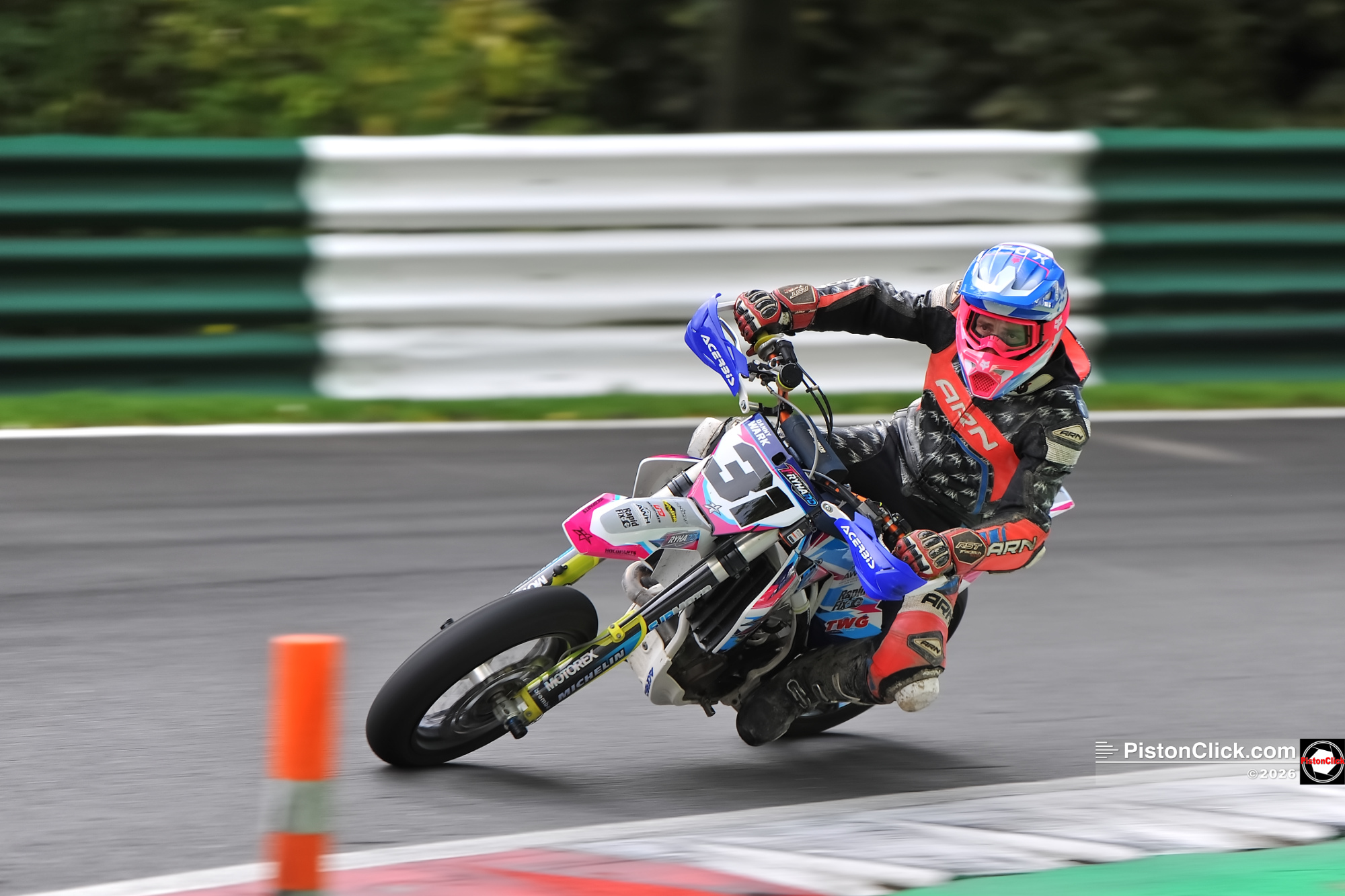
What began as a television spectacle developed into a racing discipline in its own right. The format spread internationally, attracting riders who enjoyed the challenge of switching between dirt and asphalt. Supermoto remains distinctive because it rewards adaptability. A rider who excels on a conventional road-racing circuit might struggle when the surface changes, while a motocross specialist must learn to exploit the grip and braking performance available on tarmac.
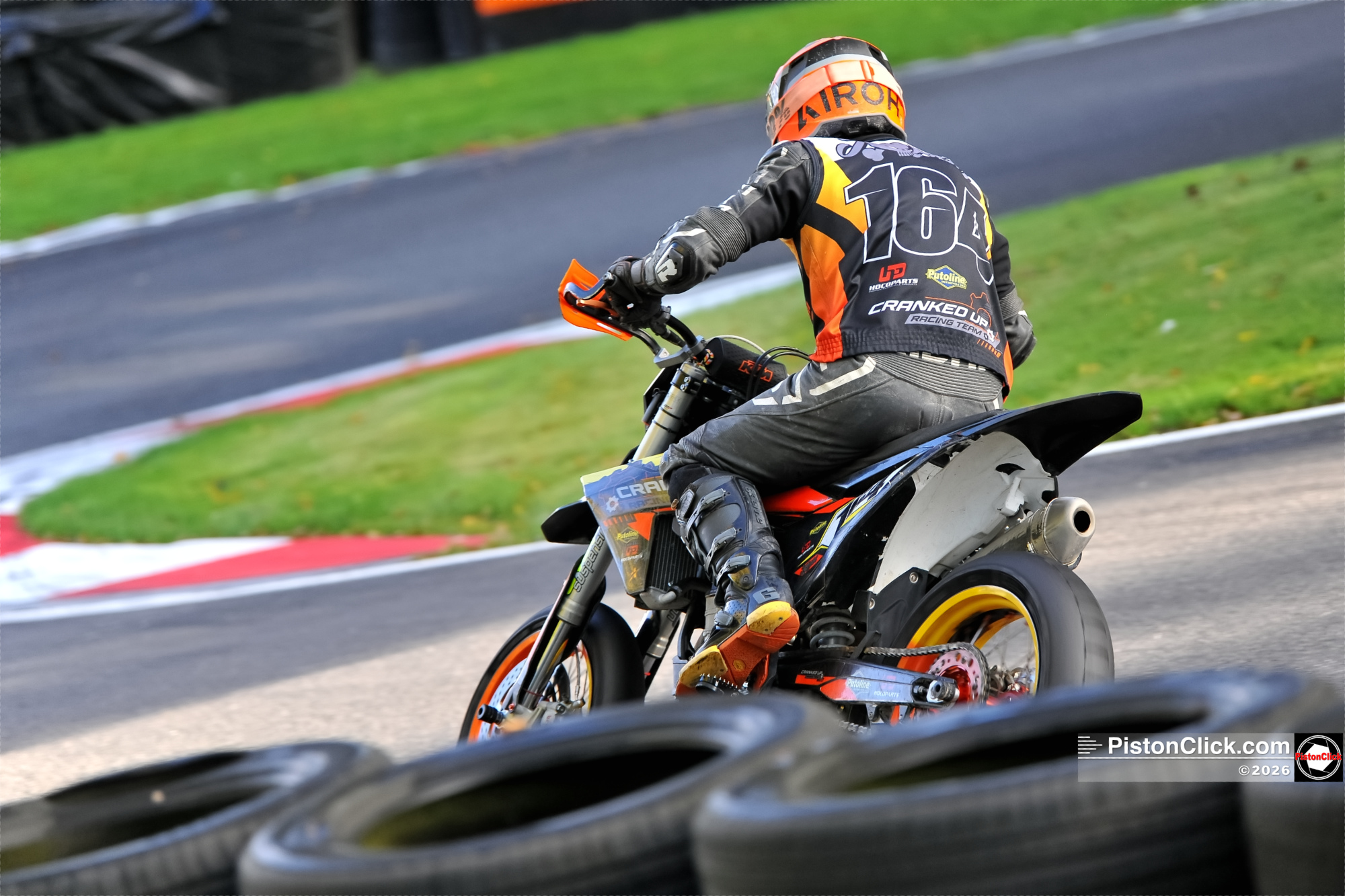
The weather at Cadwell provided another reminder of that adaptability. When showers arrive regularly, riders must make quick decisions about braking points, corner entry, and acceleration. Pushing too hard can cost valuable time, but being too cautious can allow rivals to seize an opportunity. That balance between aggression and control is a big part of what makes Supermoto so entertaining to watch.
How the British Championship Developed
During the 2000s, British Supermoto had several organisers running their own events and championship series. Although that gave riders plenty of opportunities to compete, it also created a fragmented picture for a sport trying to establish a clear national identity.
A significant step towards a unified championship came in March 2010, when Norasport agreed a five-year arrangement with the ACU to promote the official British Supermoto Championship for solo and quad competitors. Later that year, key organisations, including the ACU, Norasport, Southern Supermoto, Club Thundersport, and Triple A Racing, worked towards a more coordinated approach.
Changes to the class structure around 2011–2013 helped make the championship easier to follow, with Elite, National, and Clubman categories providing different levels of competition. The principle remains important today: give experienced riders a serious championship to contest while keeping the sport accessible to newcomers who want to move beyond casual riding and enter organised competition.
The Modern British Supermoto Championship
The championship calendar brings together meetings promoted by different regional organisers. Norasport, Southern Supermoto, and Scottish Supermoto all contribute to the wider British Supermoto scene.
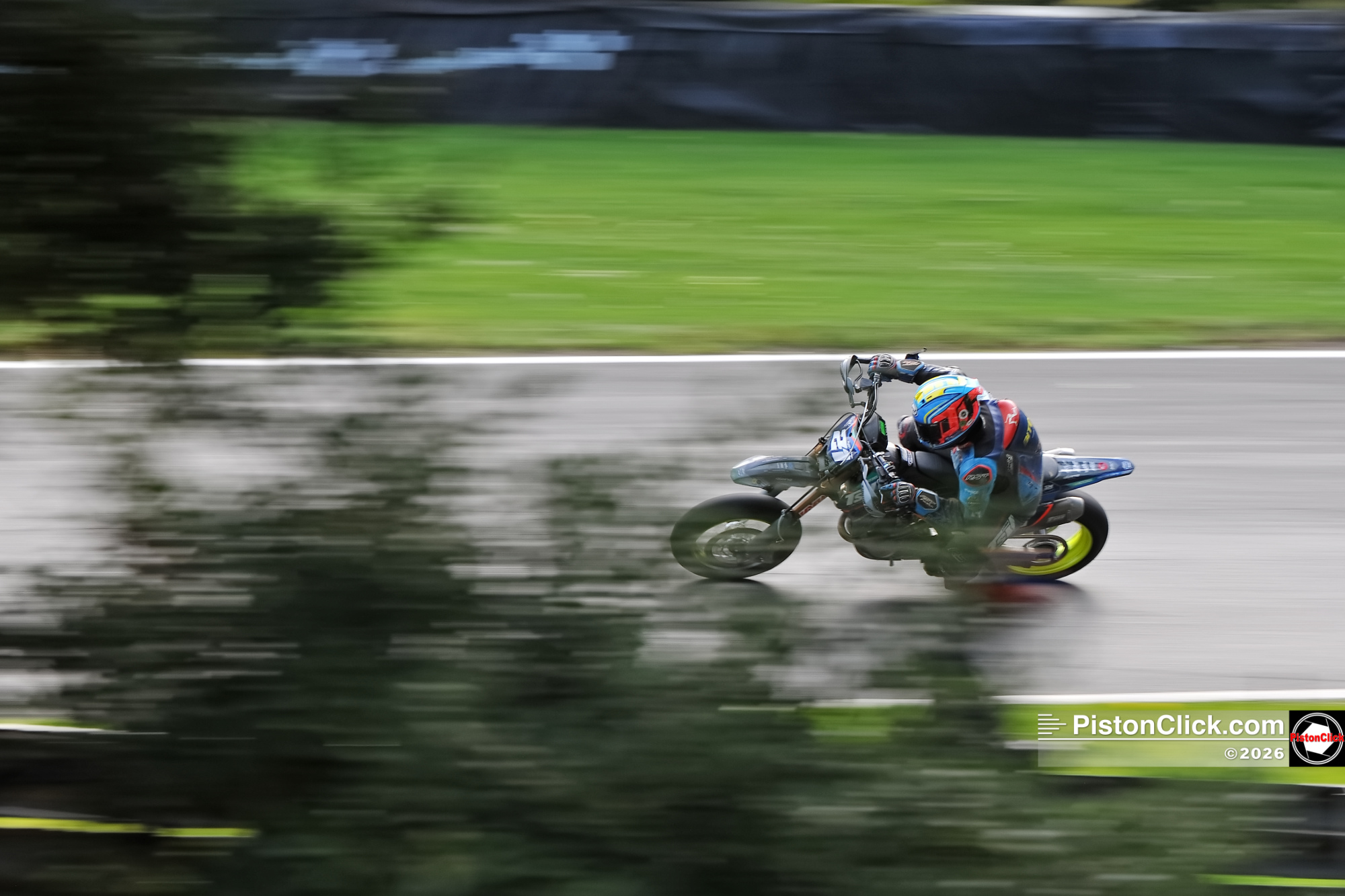
Events typically run over two days, with practice, qualifying, and races providing plenty of track action. The season stretches from spring into autumn, taking competitors to circuits across England, Wales, and Scotland, and the changeable seasons.
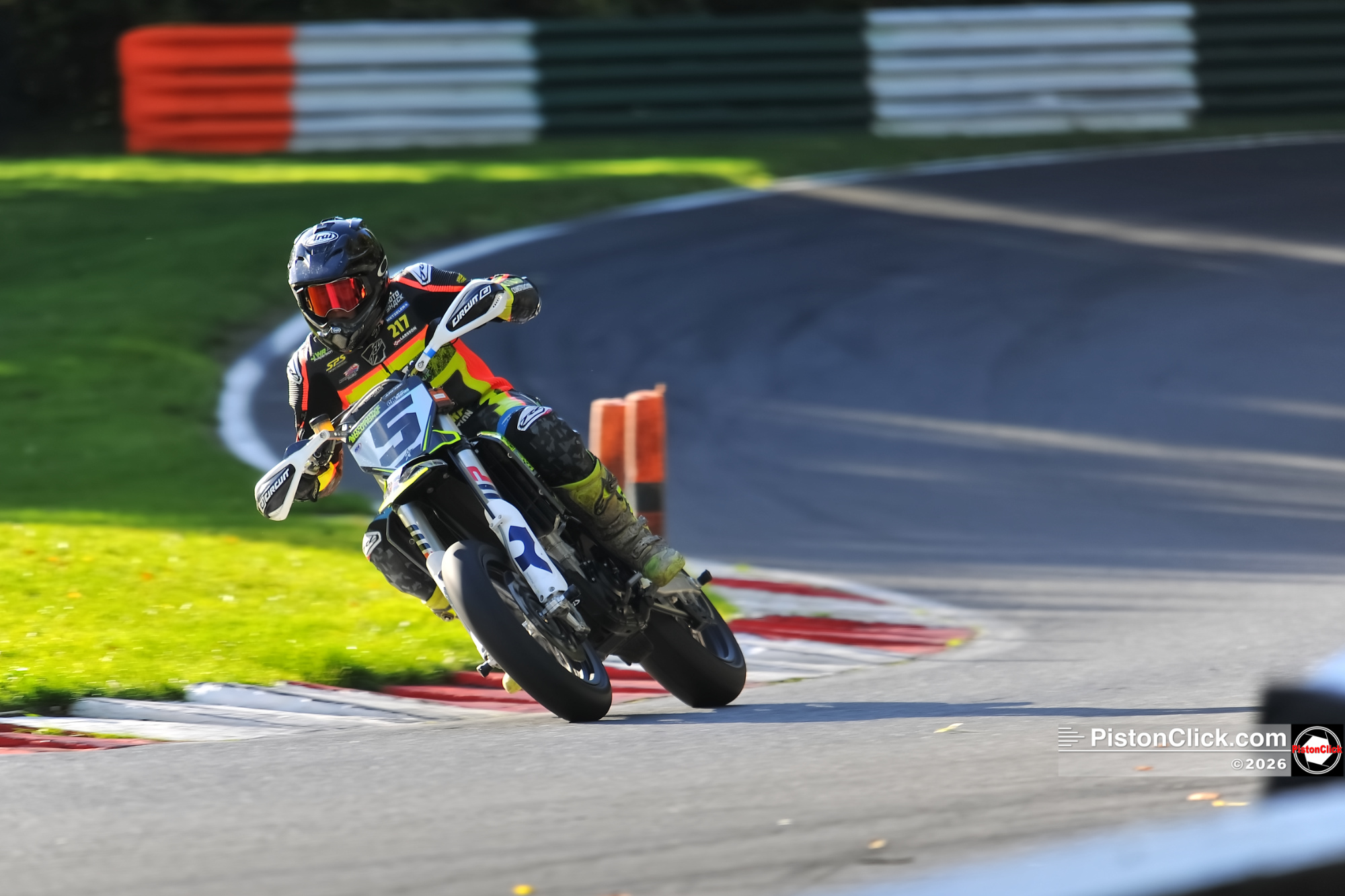
The format gives riders several opportunities to demonstrate their ability, while spectators can follow different classes and watch the battles develop throughout a meeting. This weekend’s Cadwell Park finale brought the season to its conclusion, with the King of the Mountain event providing an additional focus for the competitors. However, the frequent showers ensured that the riders had more to contend with than just the pressure of competition.
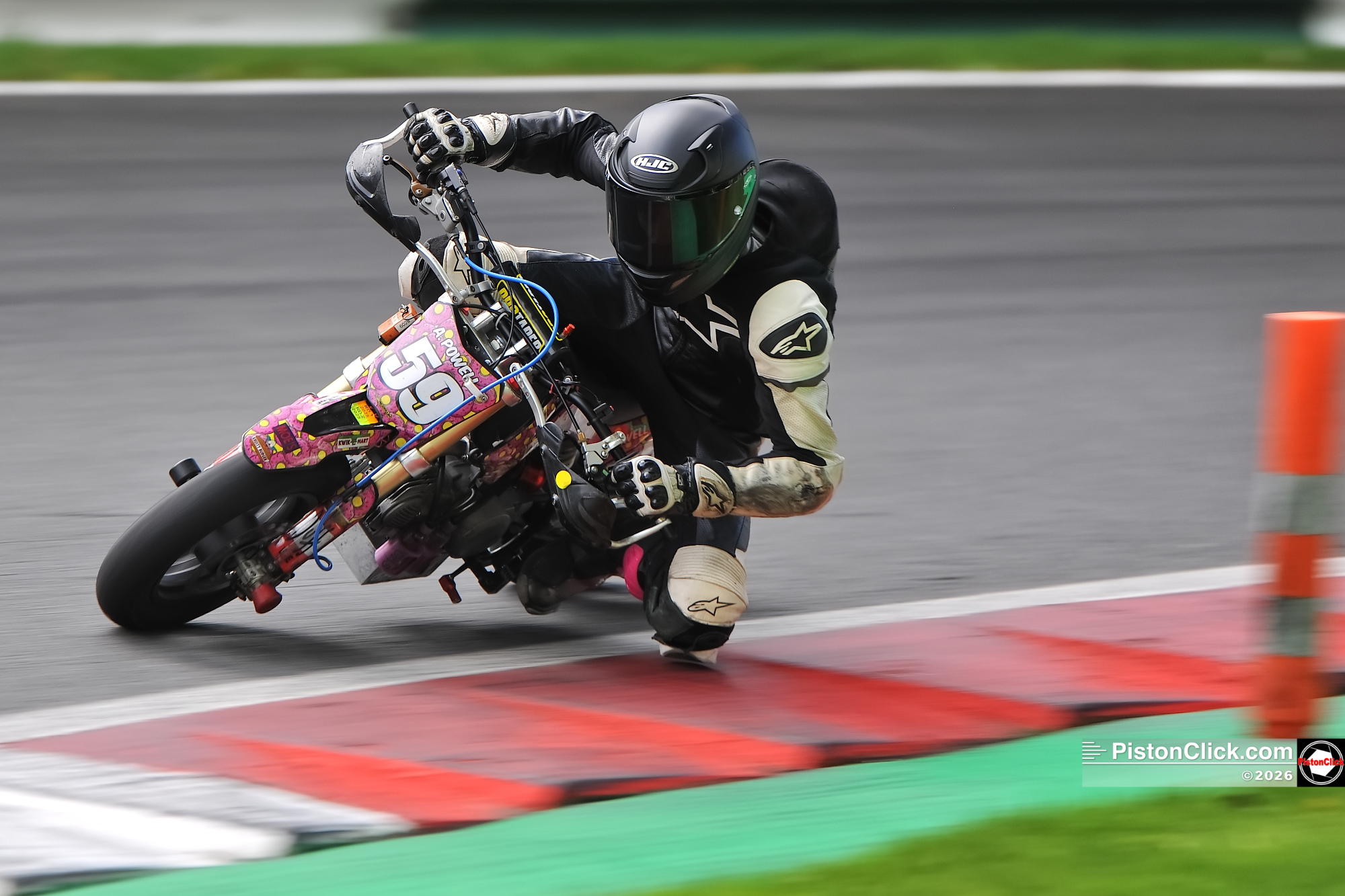
The Classes: From Elite Contenders to Future Champions
British Supermoto caters for a broad range of abilities and machinery. It’s all quite simple and self explanatory, from Elite to Novice, over 45 or under 21 there is a class for just about every ability and age.
The exact classes and championship titles can vary by event, so the entry list is always worth checking before heading to a circuit. For spectators, the variety means there’s more to watch than one headline race. Different machinery, riding styles, and levels of experience create their own battles throughout the meeting. More information can be found on the British Supermoto & Superlight Championship (BSSC) website.
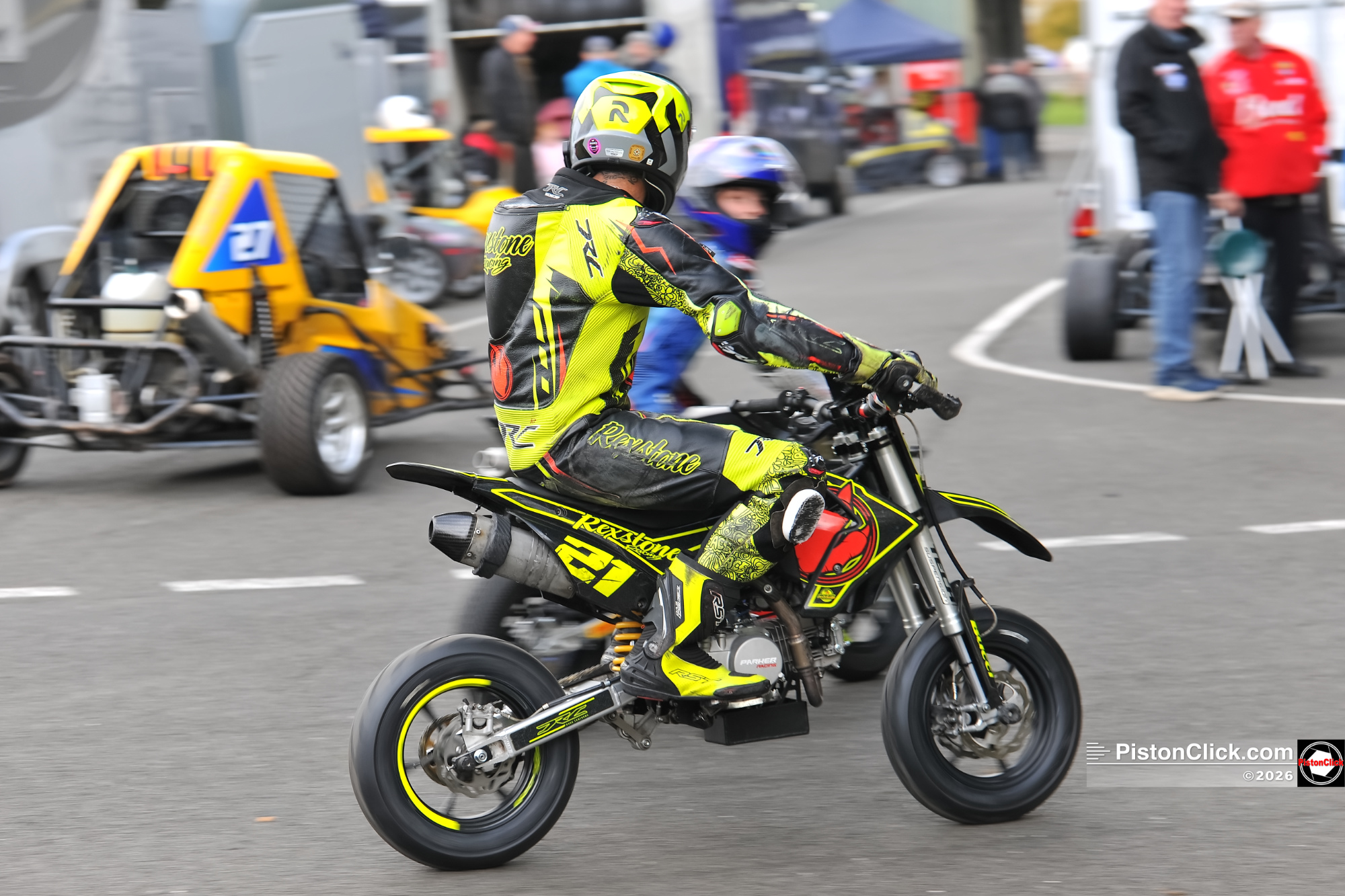
Where Does British Supermoto Race?
Supermoto events tend to be held at smaller venues like kart tracks and a few regular tracks. The championship visits a varied collection of circuits, including Oliver’s Mount, Teesside Autodrome, Three Sisters near Wigan, Rowrah in Cumbria, Pembrey in South Wales, and Crail in Scotland. Each venue offers a different challenge, and the combination of surfaces is central to the discipline’s appeal.
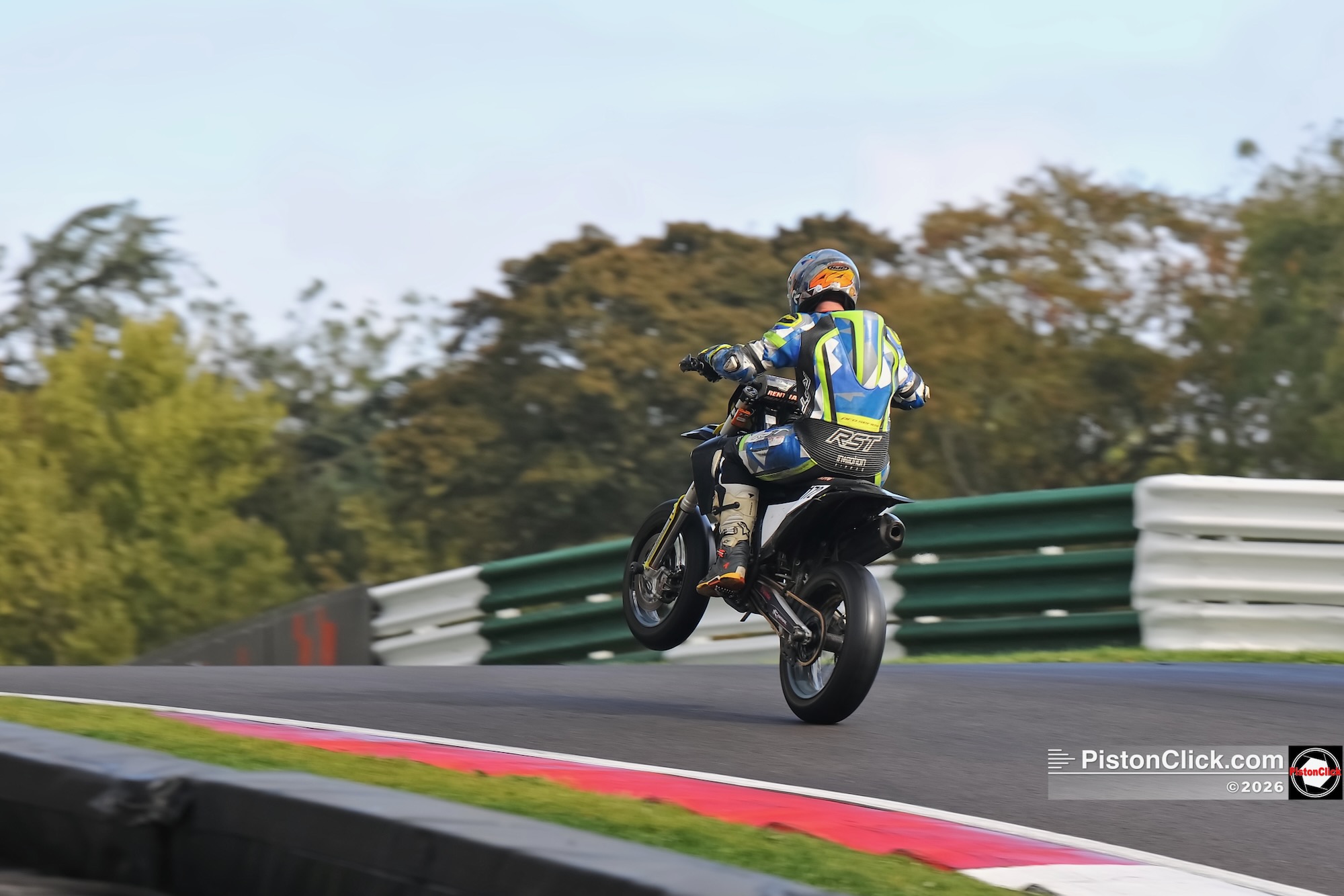
Then there’s Cadwell Park, a circuit already famous among motorcycle racing fans for its elevation changes, narrow track, and dramatic corners. Cadwell’s distinctive layout makes it a fitting venue for the season finale. Its undulations and technical sections reward precision, while the opportunity to photograph riders attacking corners and changing direction provides plenty of interest from the spectator areas. So the take away for amateur photographers is there is an event near you, and is great to photograph as you are never far from the action.
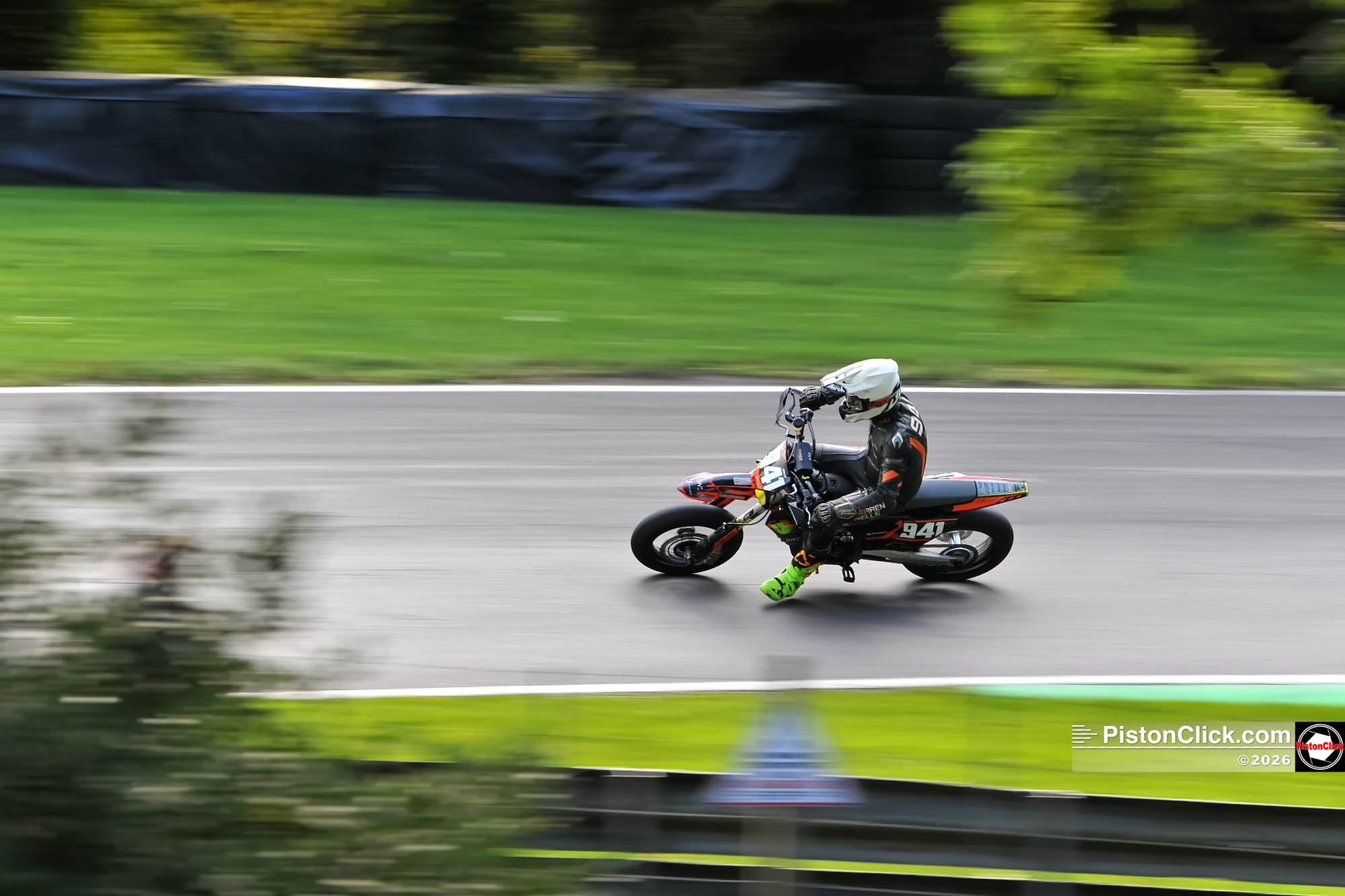
King of the Mountain: Supermoto’s Cadwell Park Finale
My visit to Cadwell Park coincided with the British Supermoto season coming to its conclusion, with the King of the Mountain finale providing the headline attraction. Cadwell is best known for its road-racing events, but Supermoto brings a different flavour to the Lincolnshire circuit. Instead of watching superbikes sweep through the corners at enormous speeds, spectators get a more technical form of racing, with riders working hard to control their machines and maintain momentum.
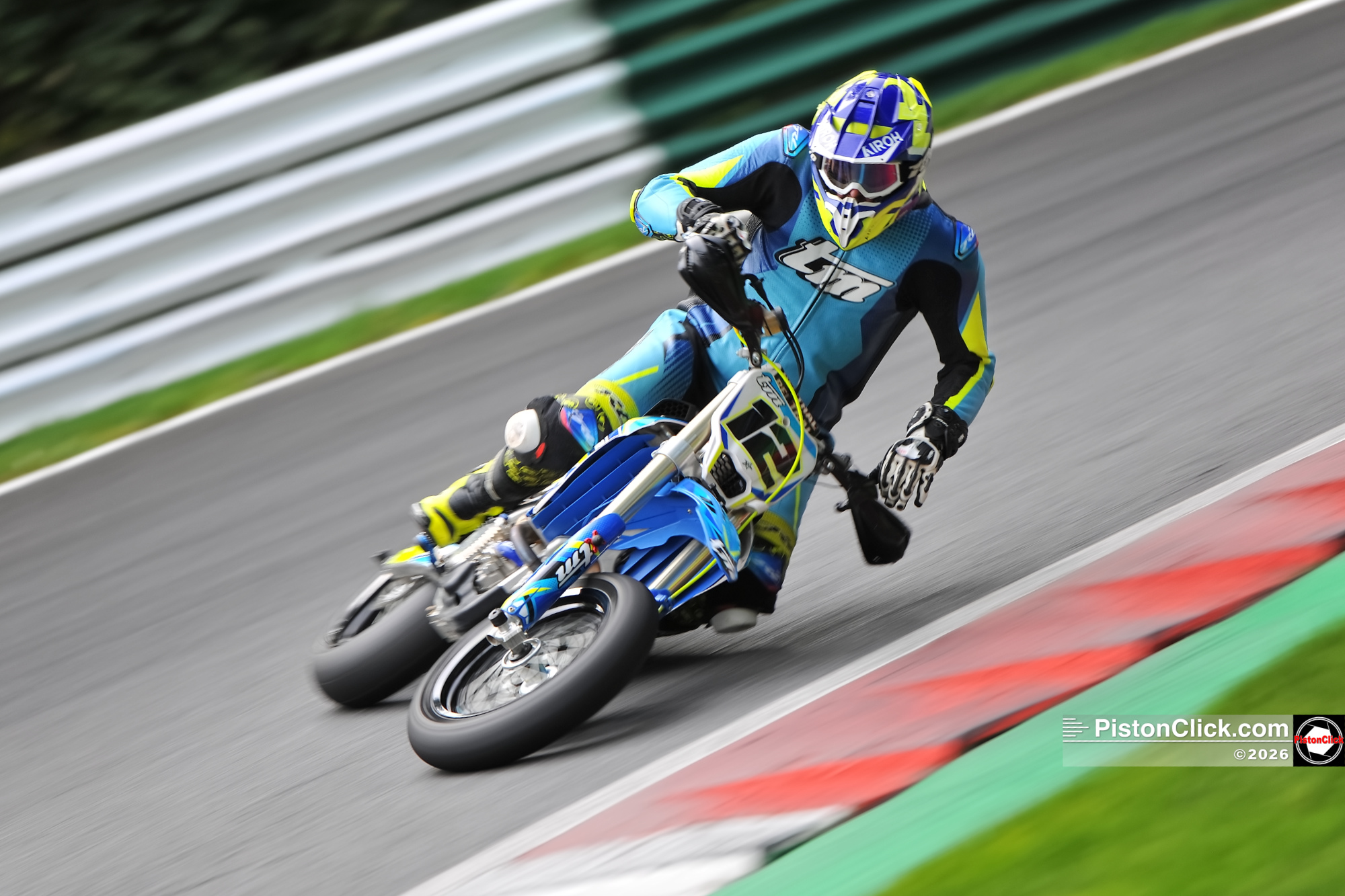
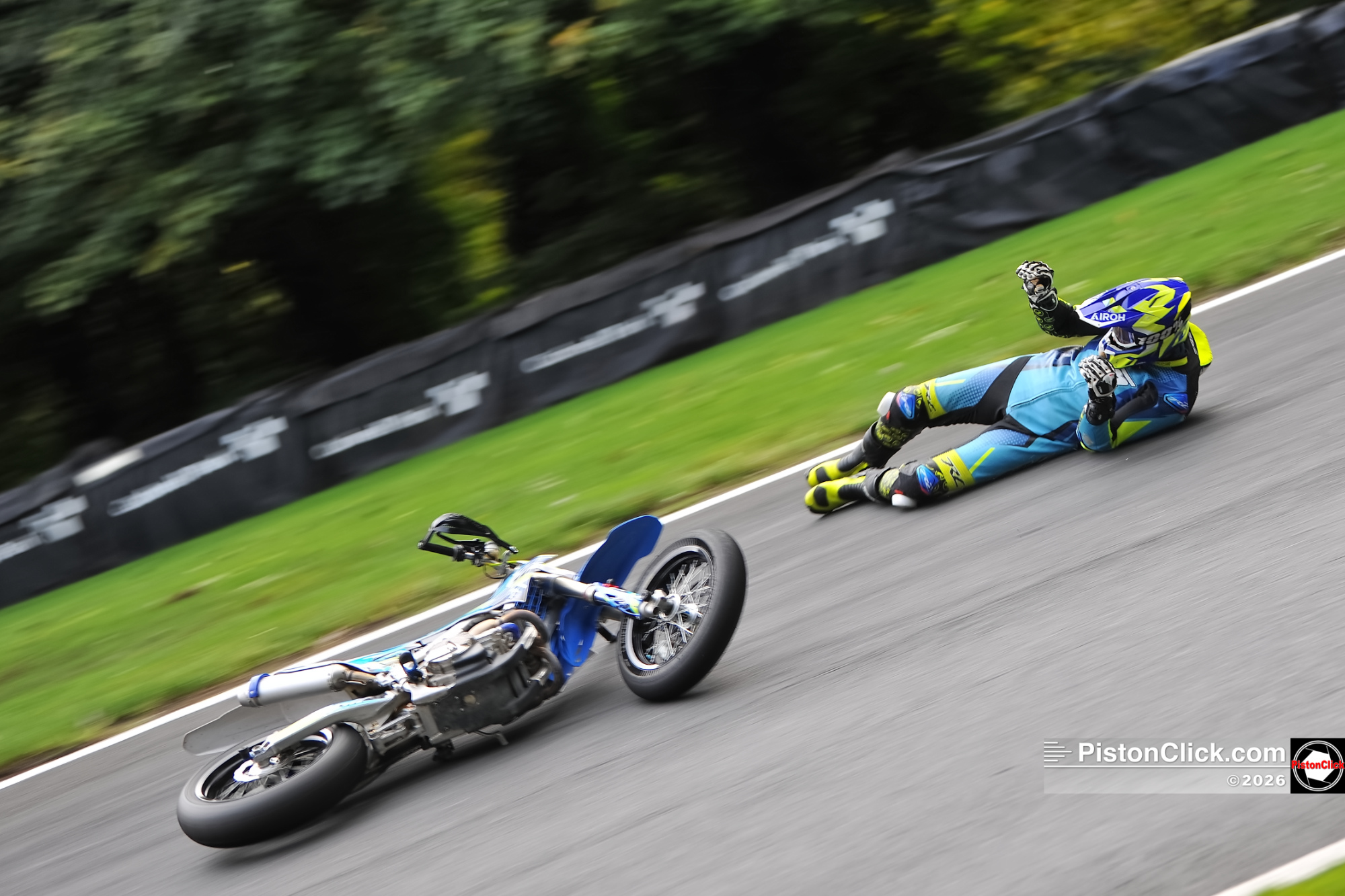
I spent the day trackside with my camera, looking for the moments that reveal the character of the sport. As with any motorsport meeting, finding the right viewing positions and anticipating the racing lines are important, but Supermoto adds another challenge: the action can change direction quickly, and a rider’s body position often tells you what’s about to happen. Or does it?
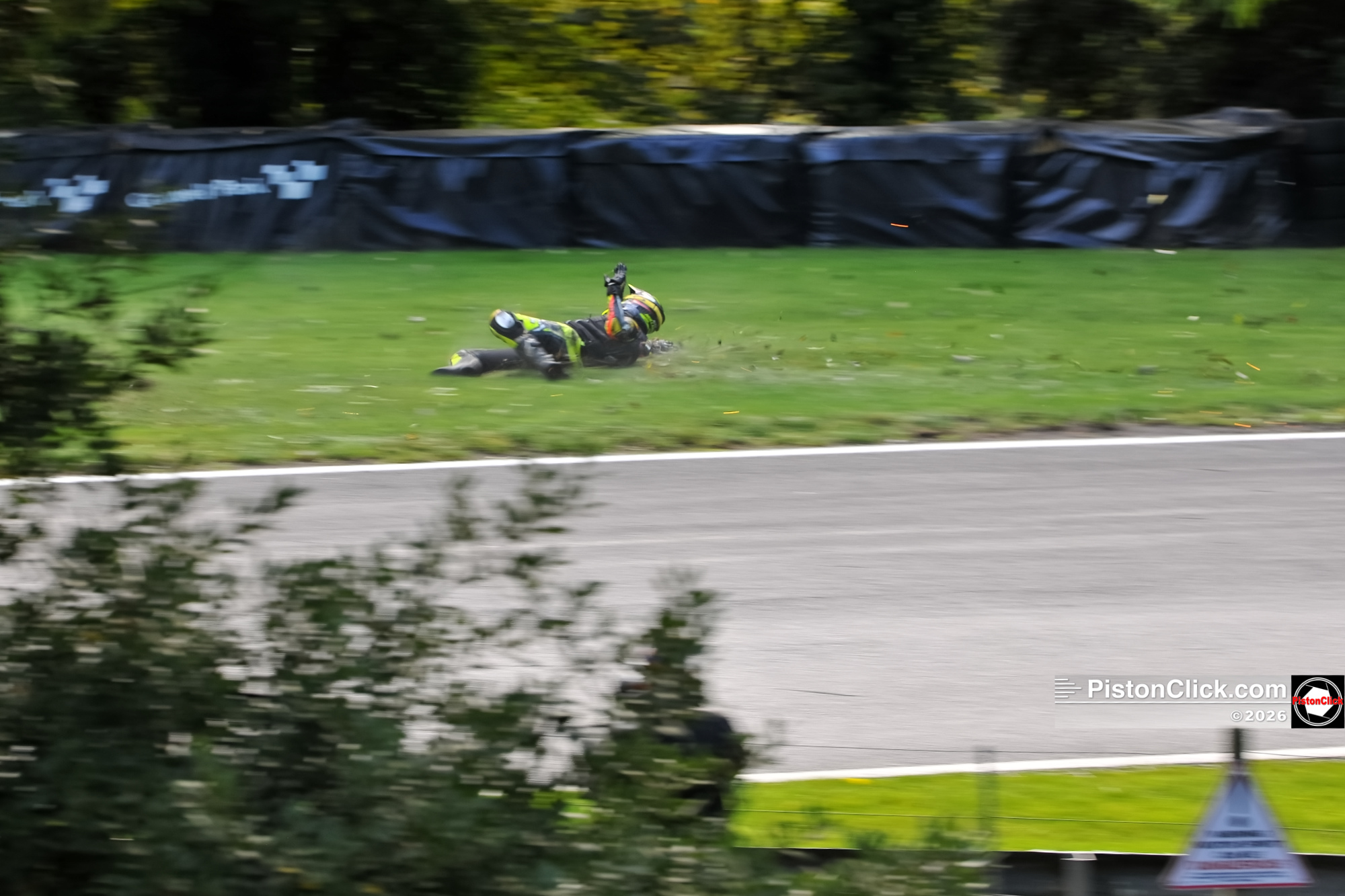
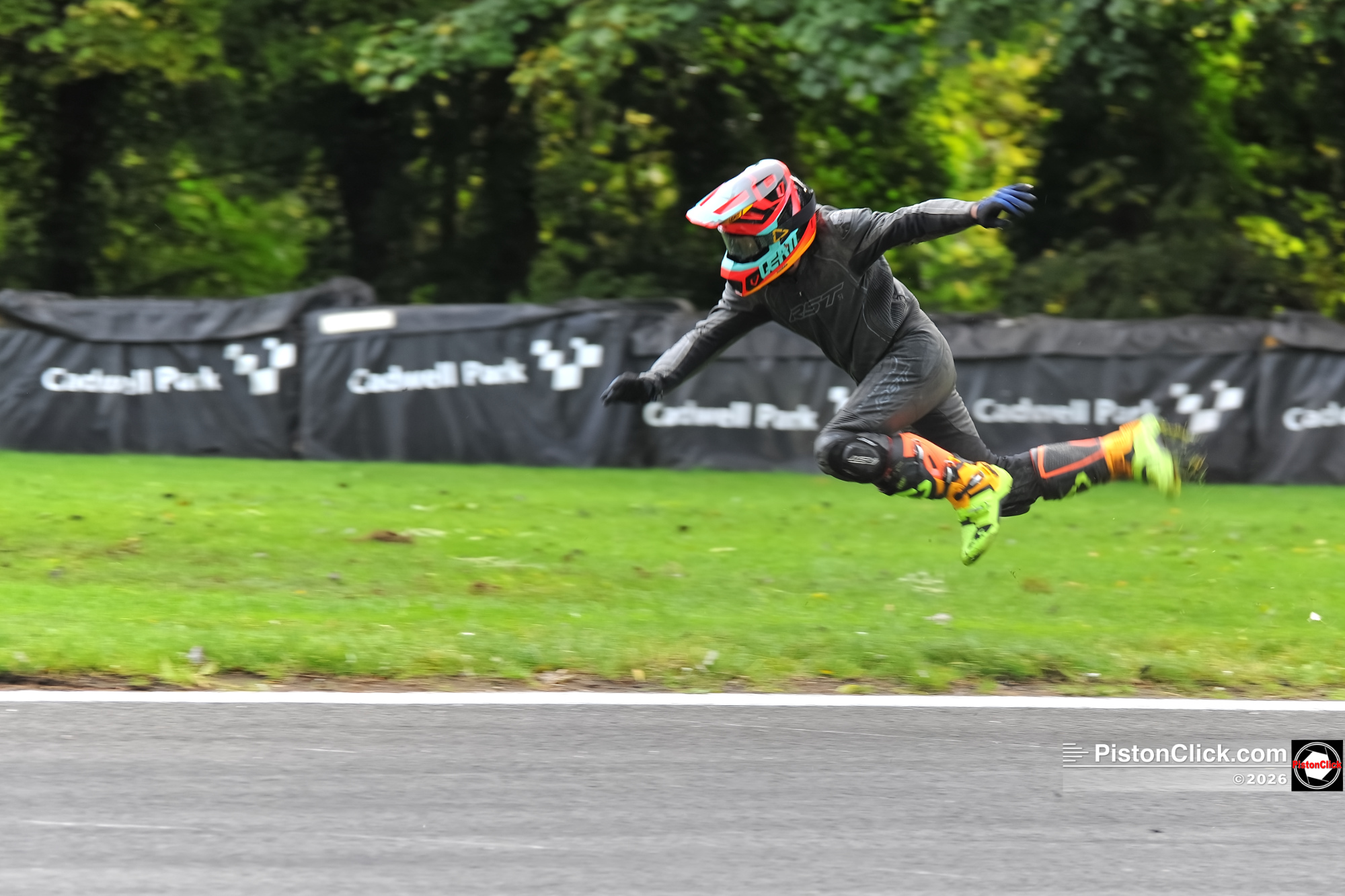
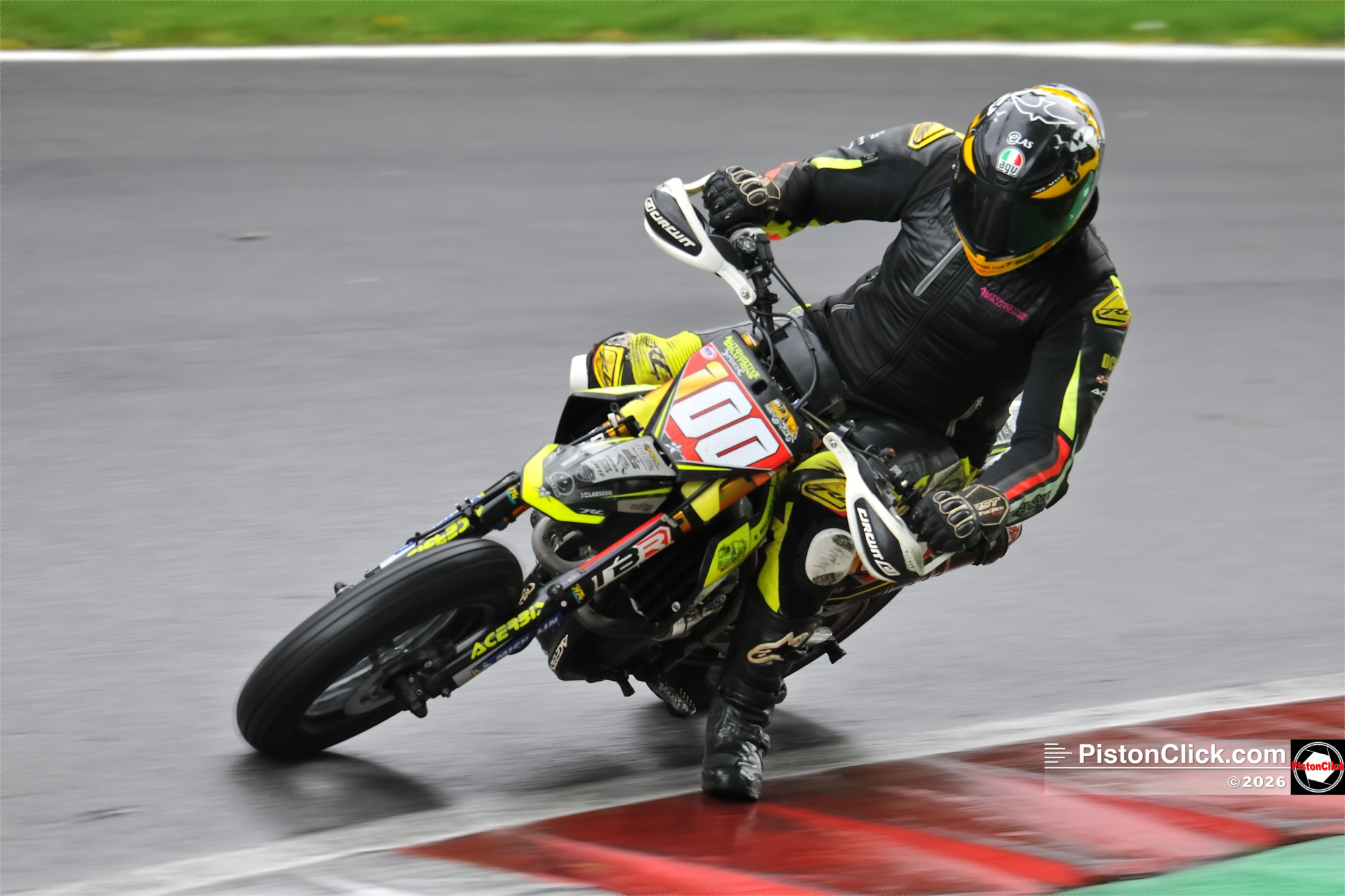
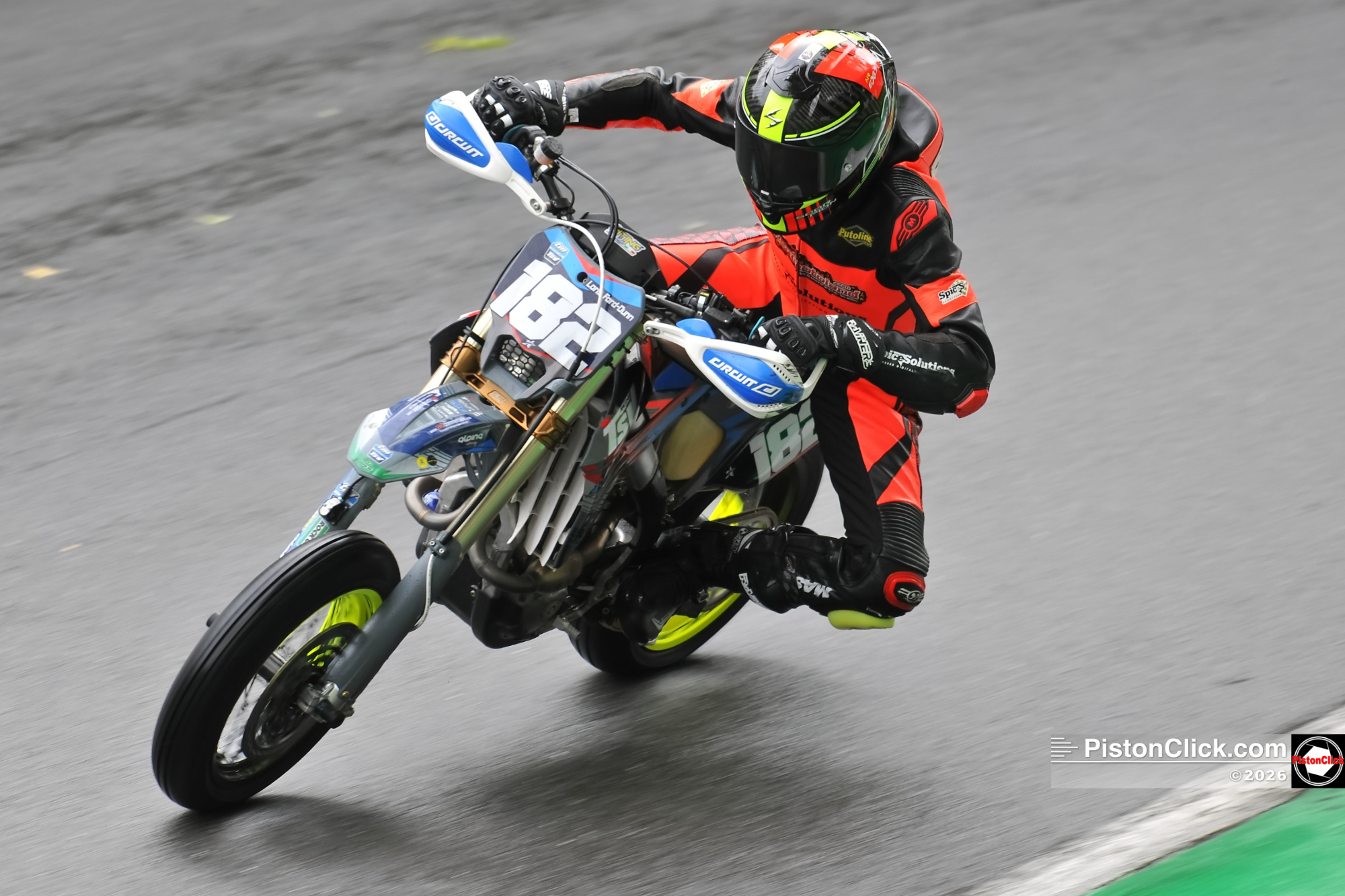
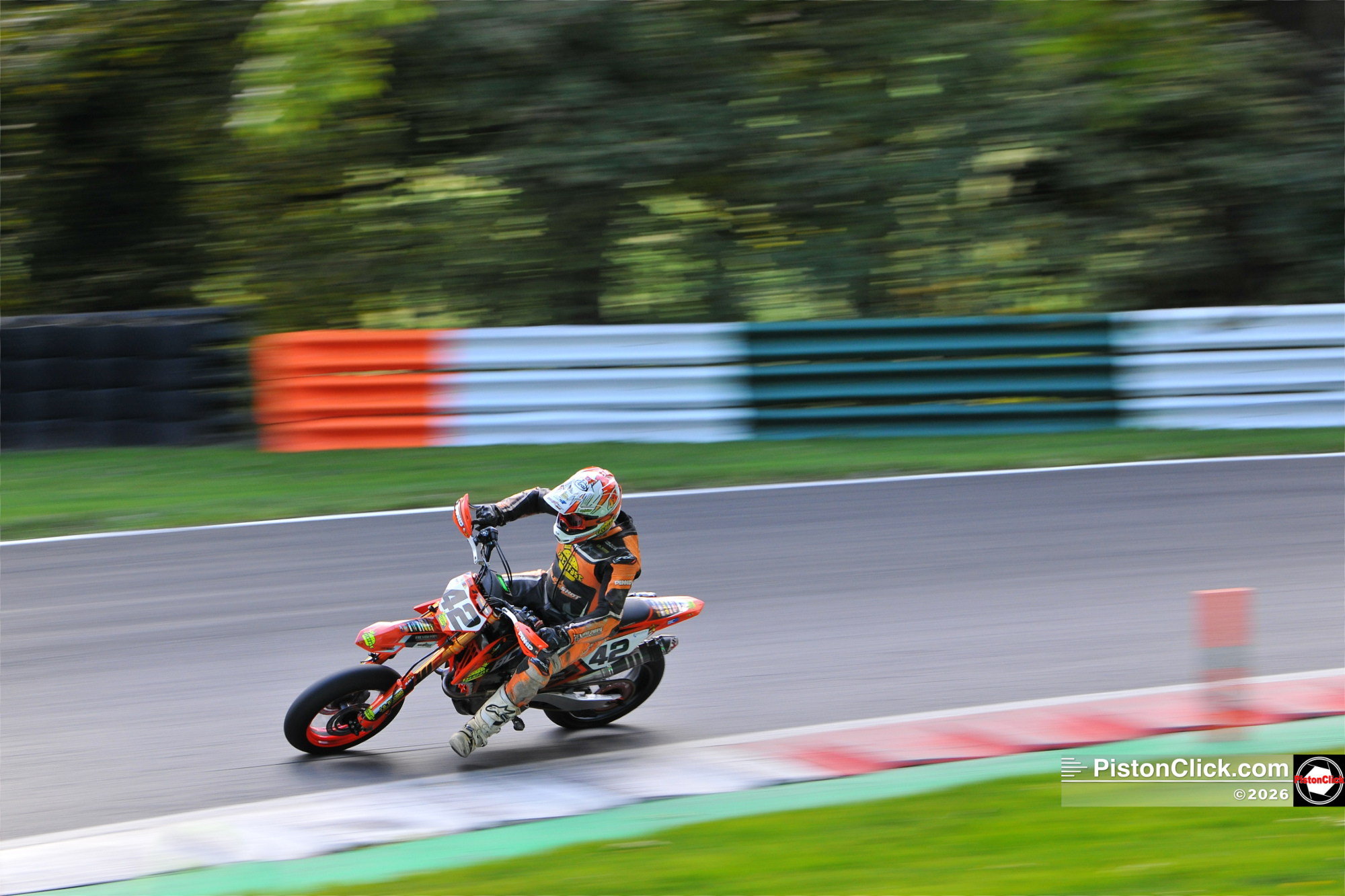
The riders entered the corners with two distinct styles. Foot down or knee down, this doesn’t really affect how you take the shot, but the difference in styles gives you different outcomes. The weather made the task more interesting. Frequent showers left the riders dealing with tricky conditions, requiring them to judge the available grip and adapt their riding as the rain came and went.
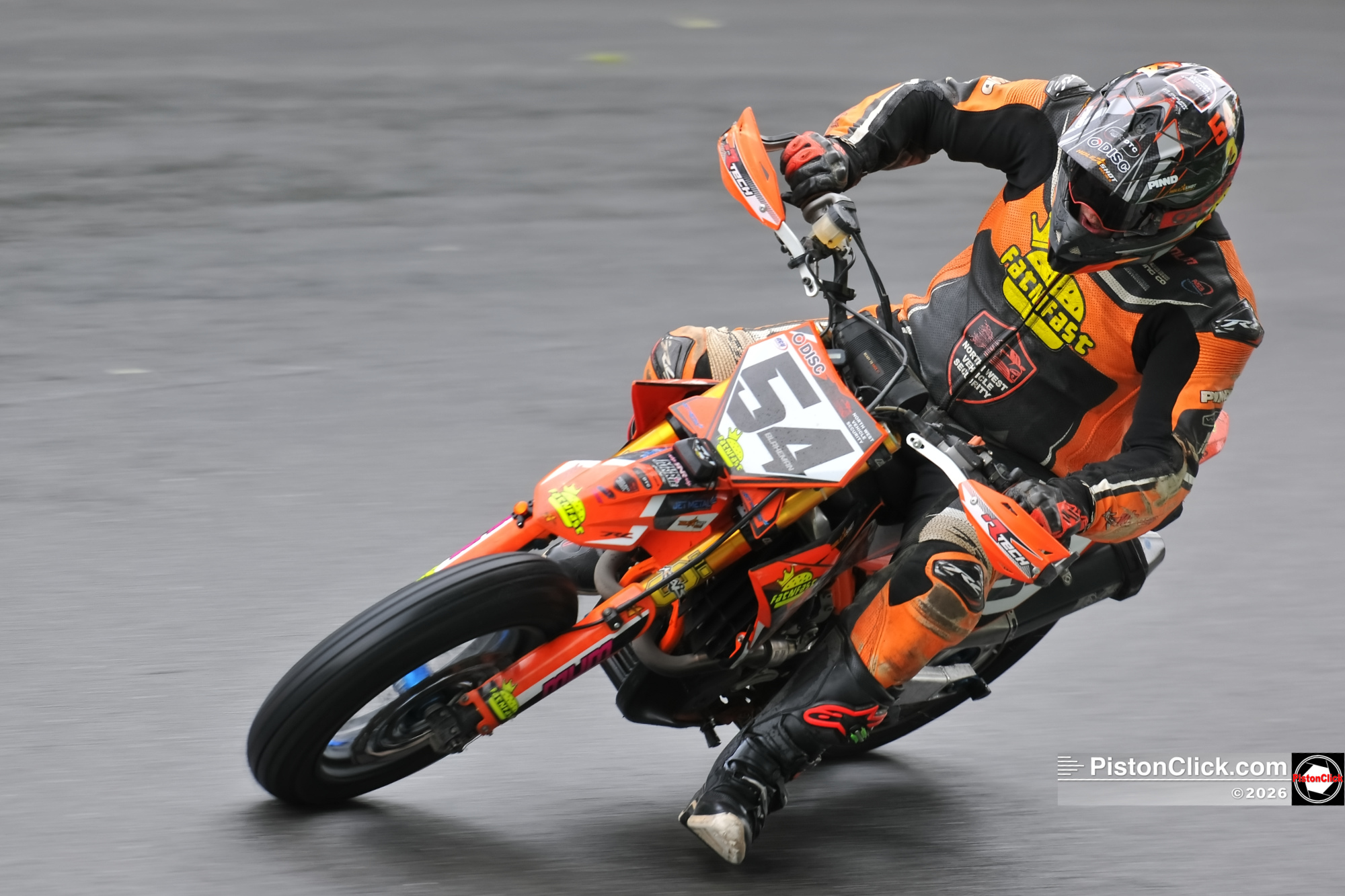
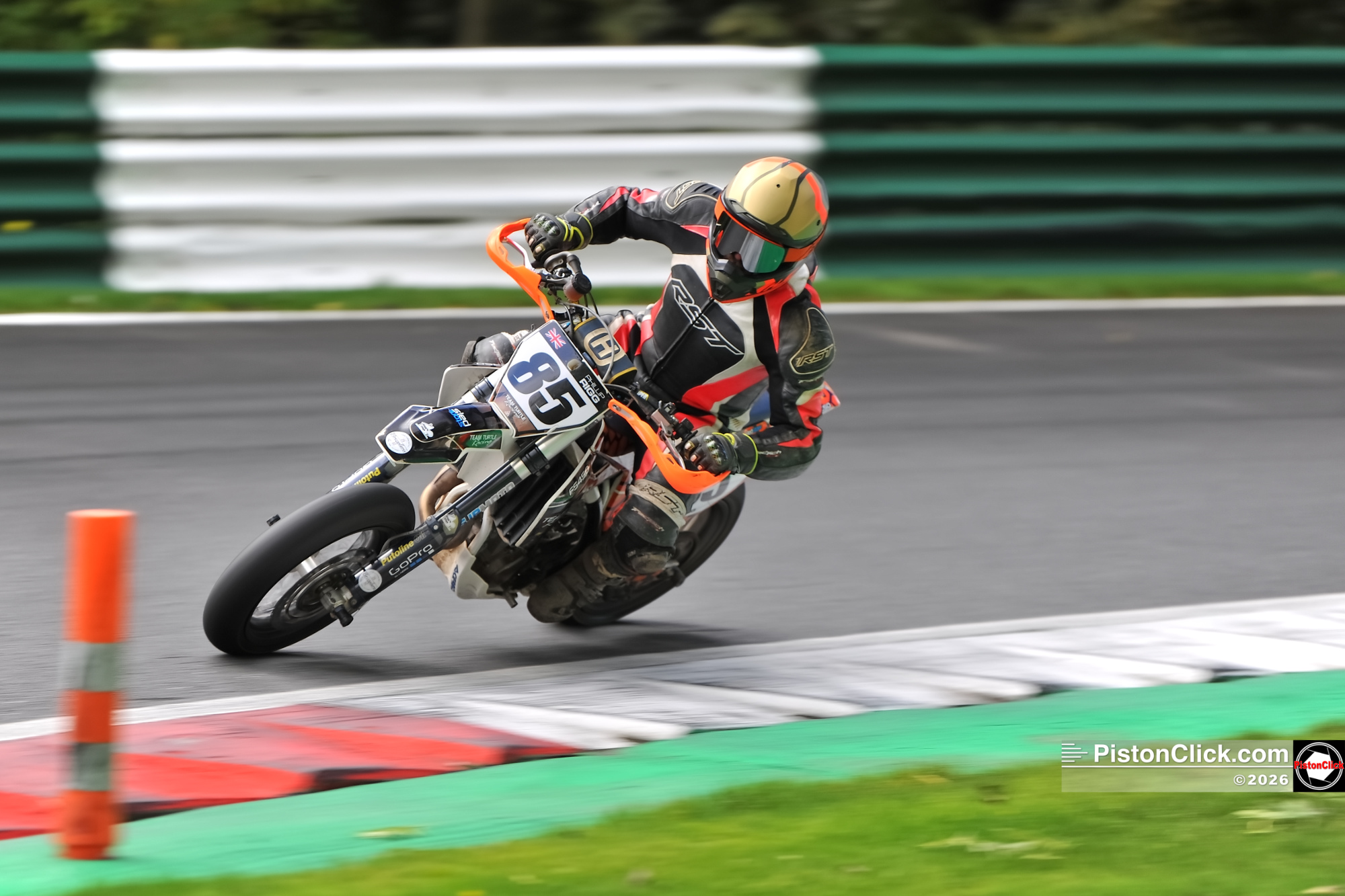
Wet weather is not great for photographing motorcycles. The extreme lean angles that are a highlight of motorcycle racing reduce as the grip levels reduce. This equates to less dynamic images as the speeds also reduce, so time to get creative.
Superlite Racing Adds Four-Wheel Action
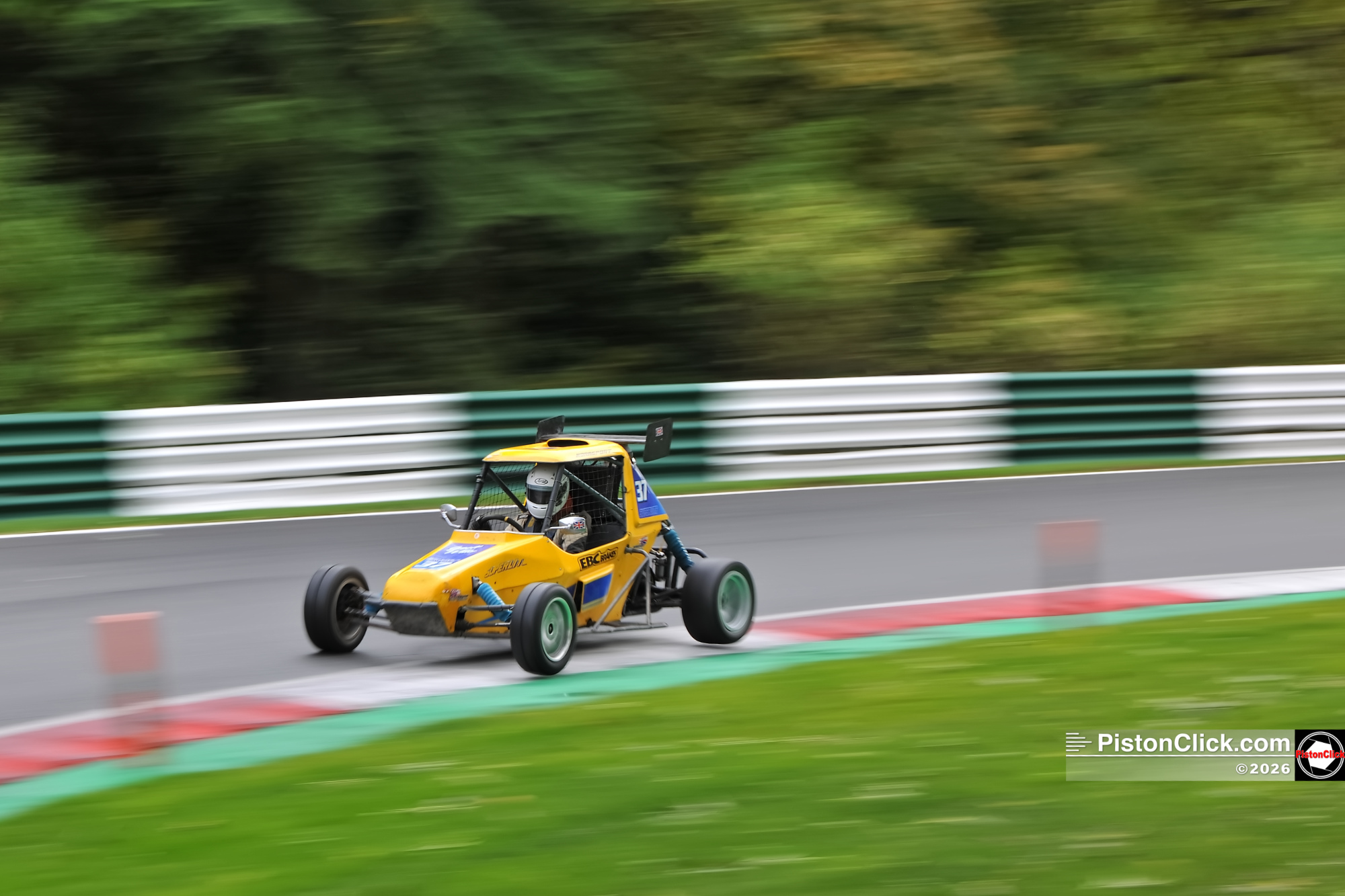
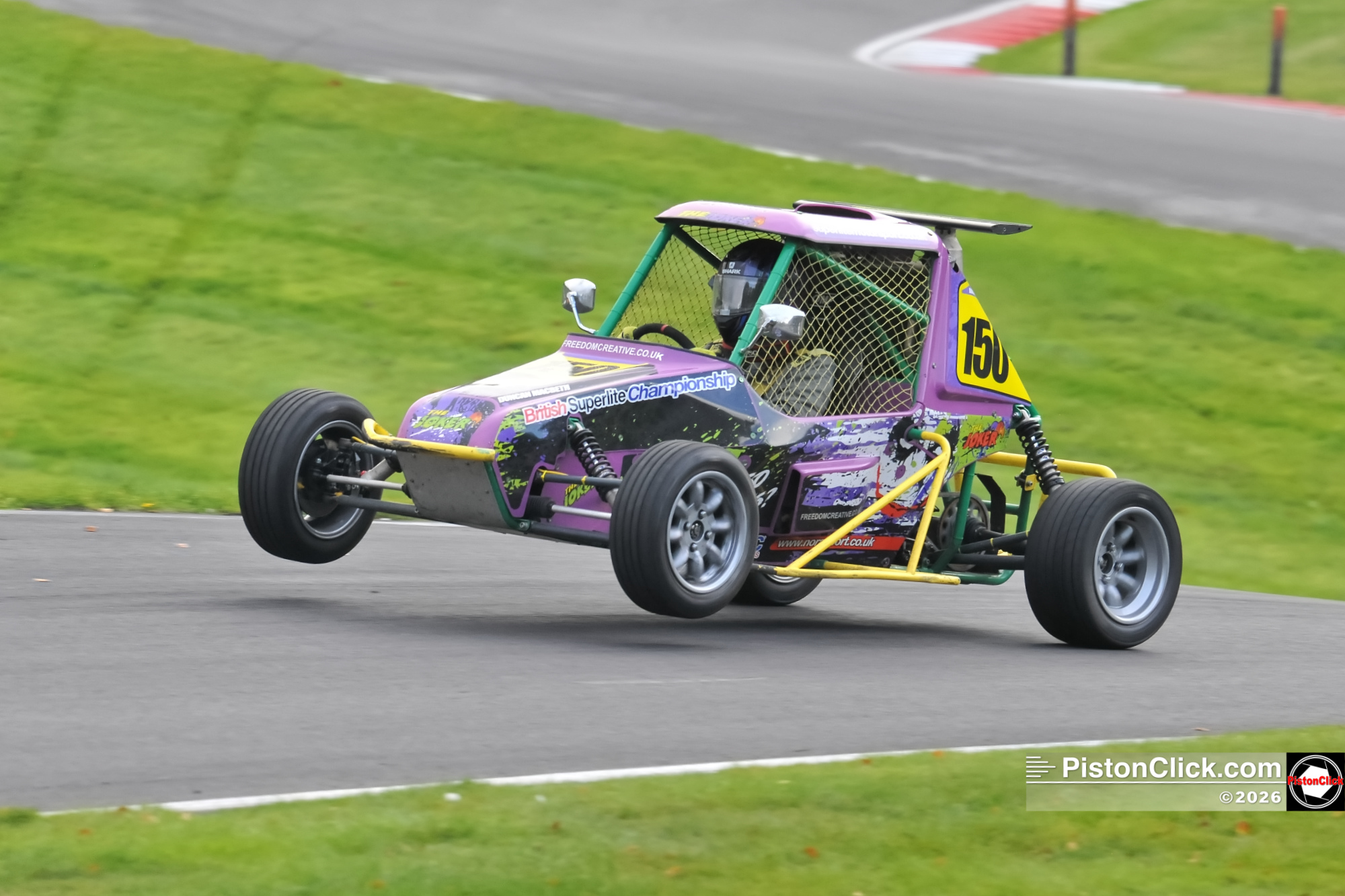
Alongside the motorcycle action at Cadwell Park, the meeting also featured the British SuperLite Championship, bringing a completely different type of racing to the circuit. These lightweight, open-wheel buggies use tubular chassis construction and motorcycle-derived engines to deliver an exciting combination of rapid acceleration, nimble handling, and close competition.
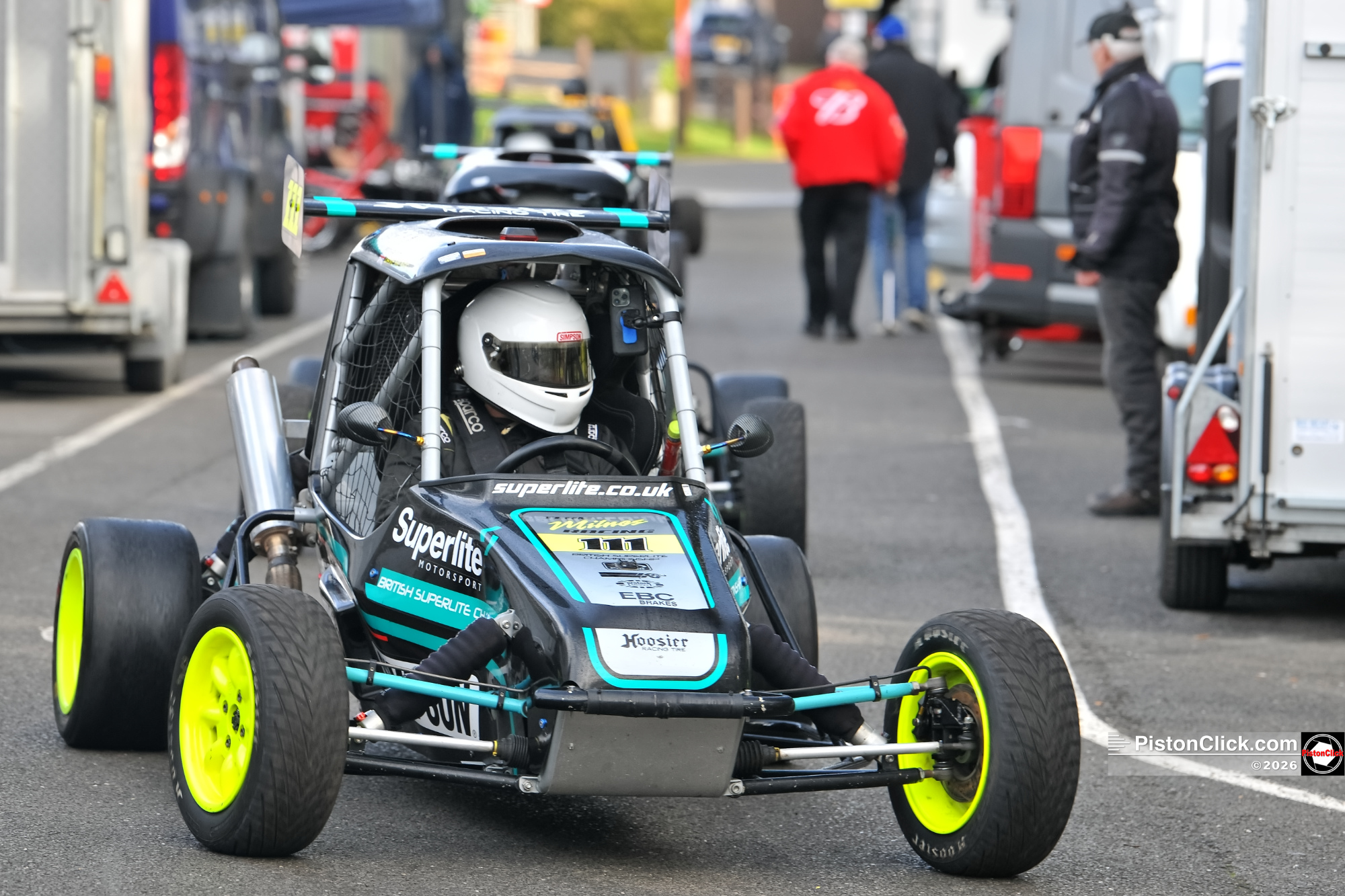
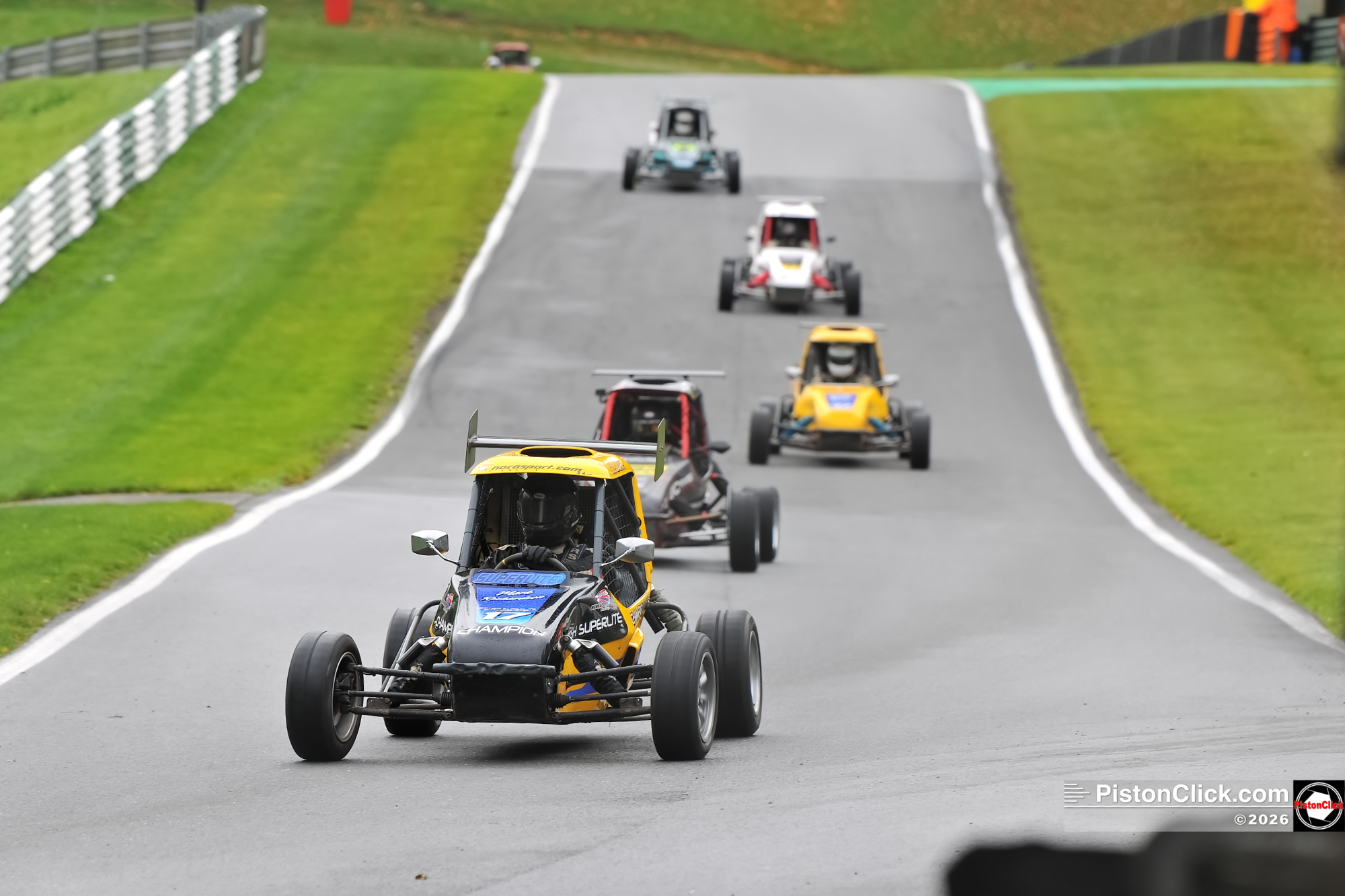
The championship features three classes – S6, S9, and S10 – catering for different SuperLite specifications. Basically, 600, 900, and 1000cc engines determine the classes. Although the buggies look small compared with conventional 4 wheel racing machinery, their low weight and purpose-built construction make them serious competition machines.
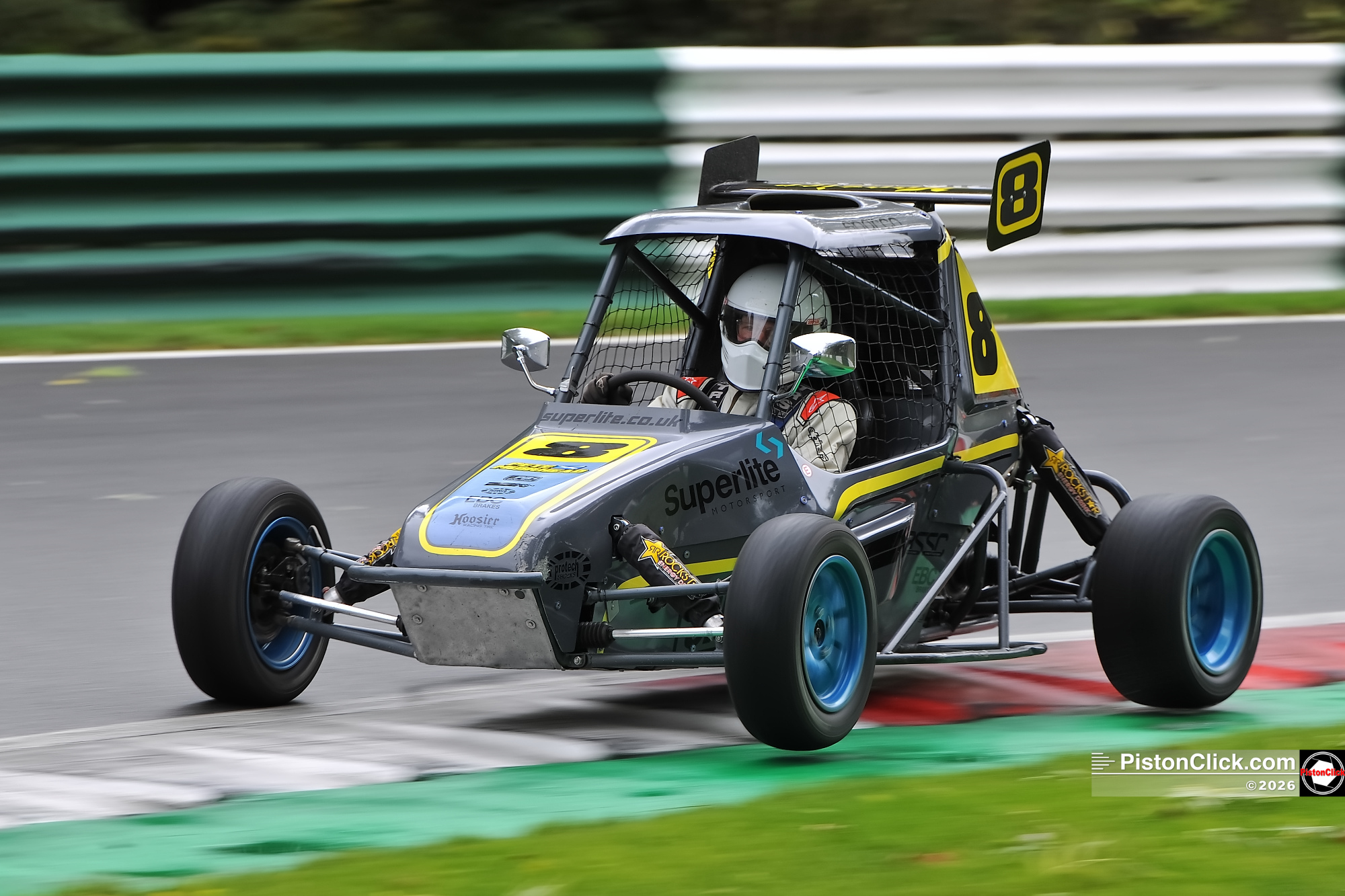
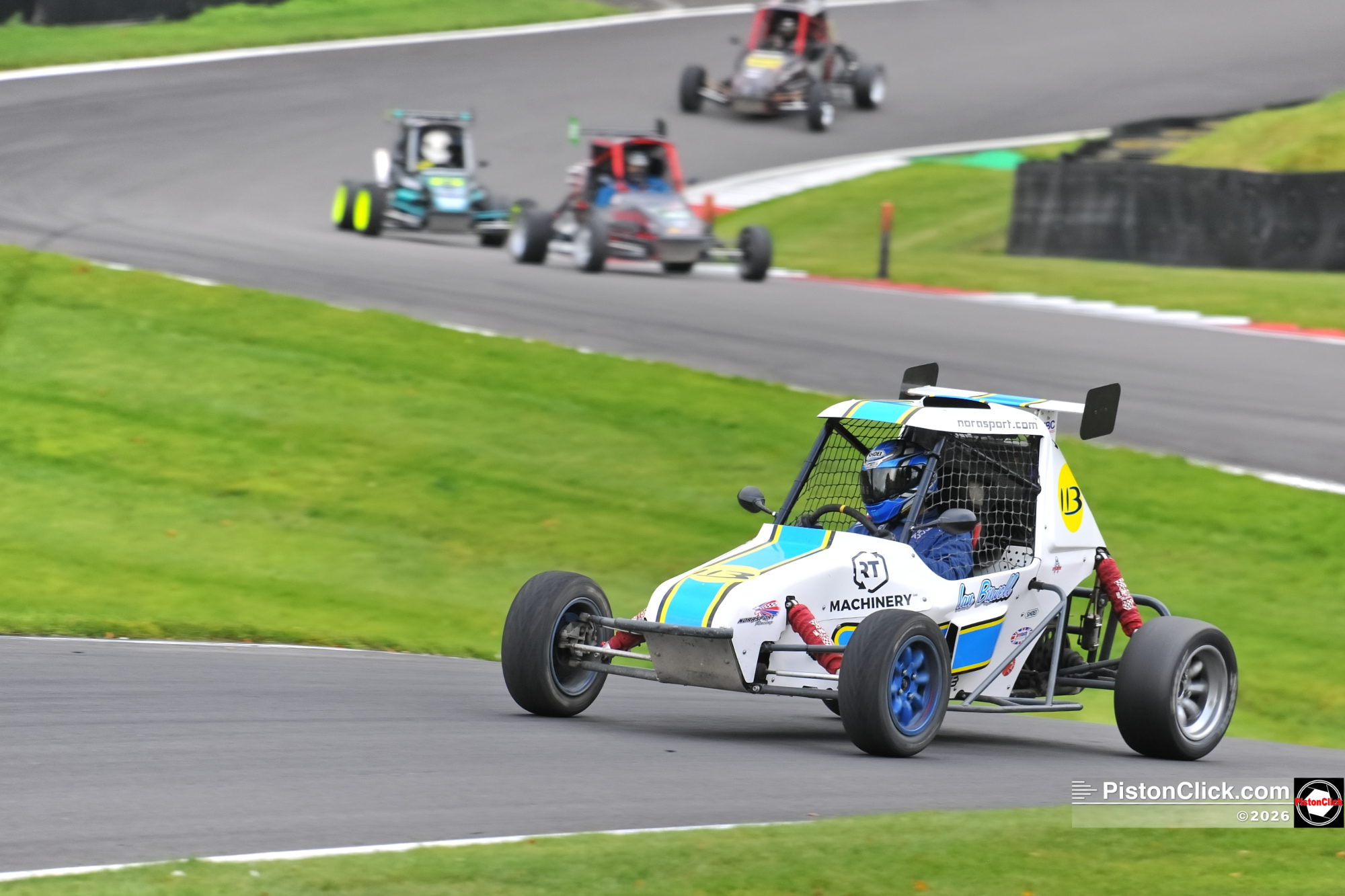
SuperLite adds an extra dimension to the British Supermoto programme. These pocket rockets are great to watch; the extreme acceleration and grip levels are next level. Getting air over the mountain during qualifying did give you a hint of who was going to be a front runner. Fortune favours the brave.
Why Supermoto Still Matters
British Supermoto has helped develop riders who have gone on to compete in other disciplines, including Storm Stacey, Christian Iddon, Matthew Winstanley, and road-racing star Davey Todd.
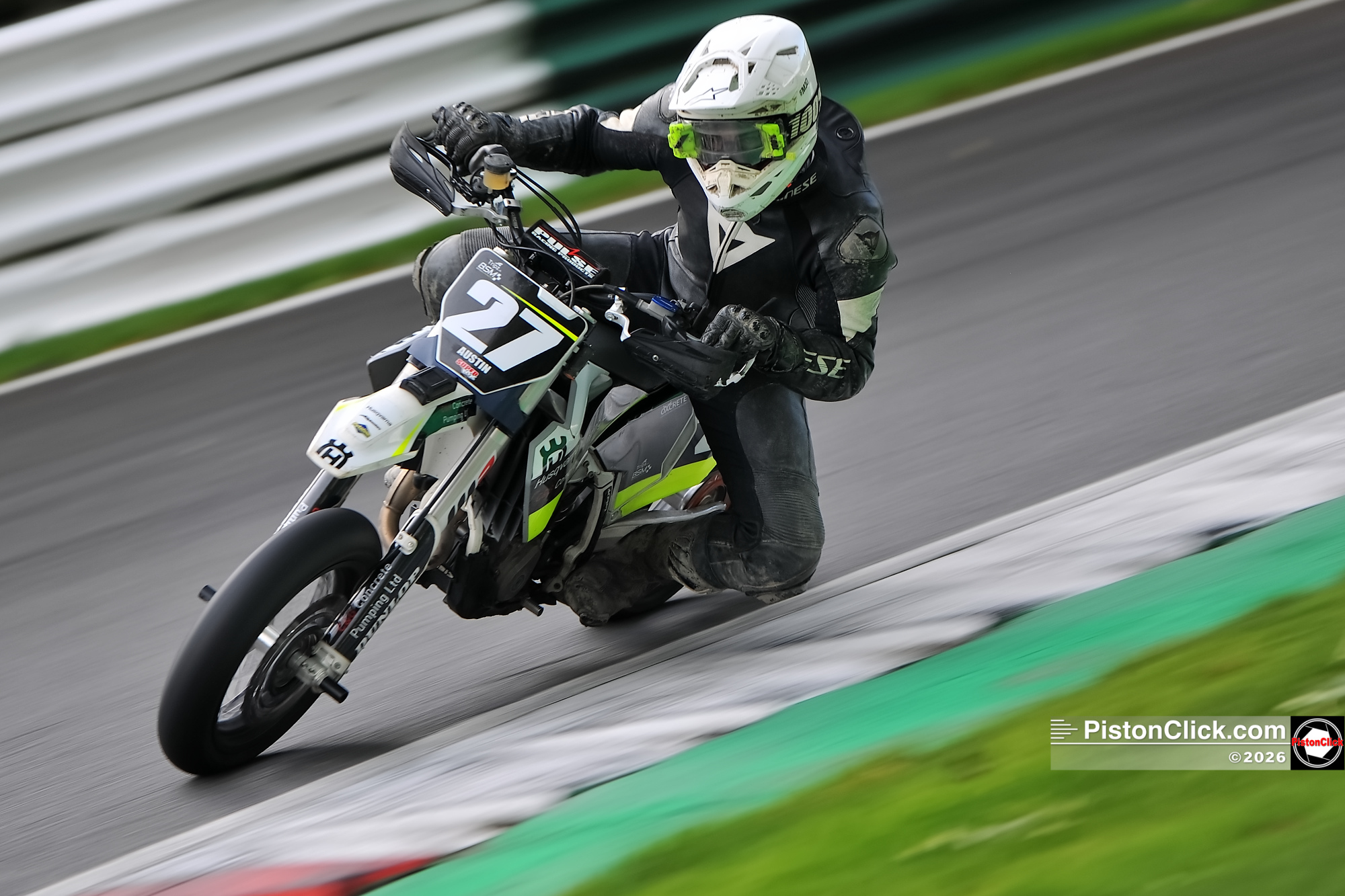
Their careers underline one of Supermoto’s central strengths: the sport rewards adaptability, machine control, and the ability to respond quickly to changing conditions. Those qualities can prove valuable if the young riders step beyond a Supermoto circuit.
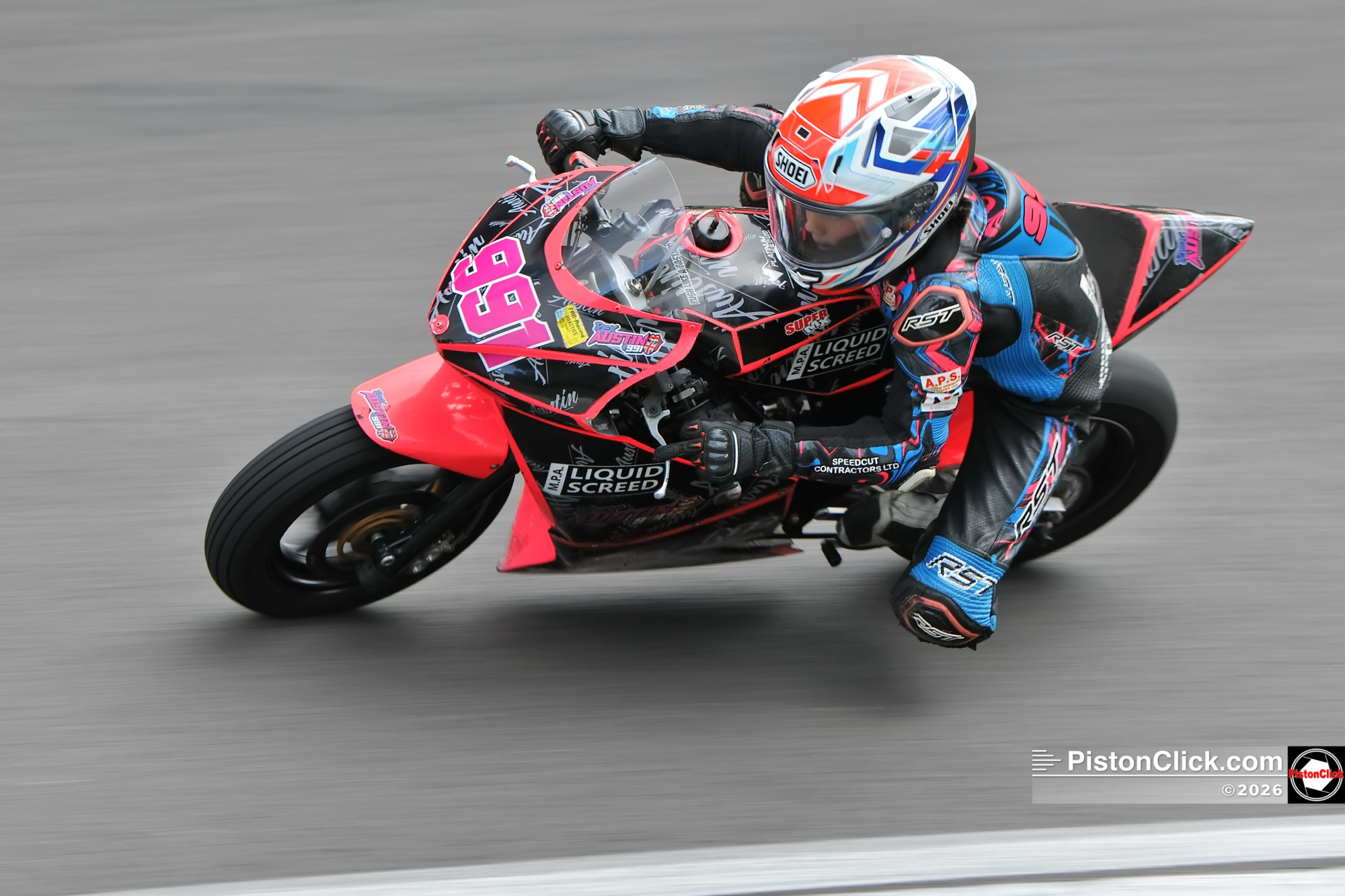
I have commented in the past about the importance that if a young rider wants to be a world champion in motorcycle sports, they need to have many different skill sets. It will be no surprise that all of the modern MotoGP champions were also dirt and flat track champions.
Supermoto brings all of these skills together in one event. It was great to see so many young riders out honing these skills; did I capture the next British Superbike or MotoGP Championship contender today? Time will tell.
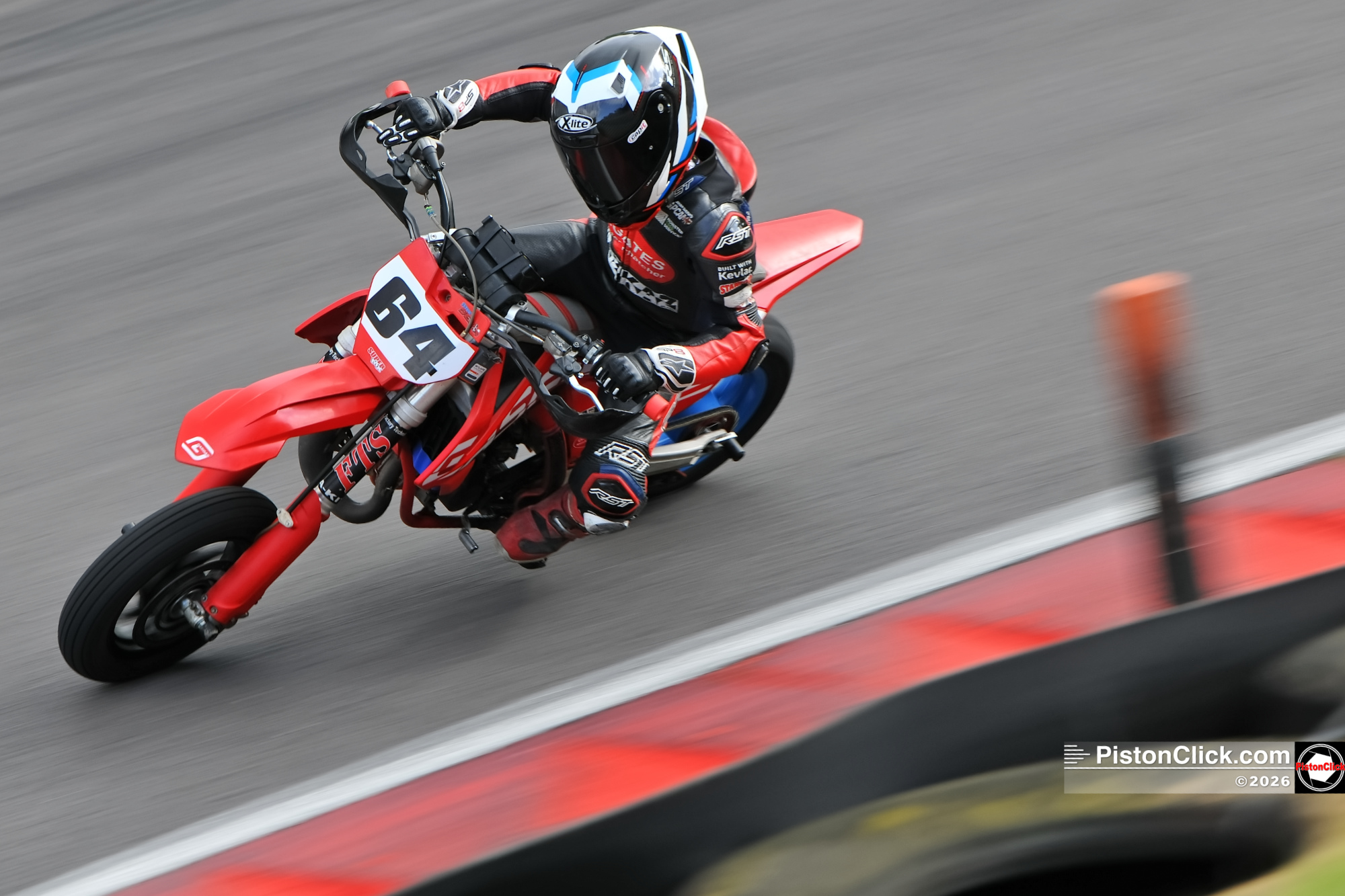
The meeting at Cadwell Park was a reminder that grassroots racing doesn’t need a huge television audience or international star names to deliver an entertaining day.
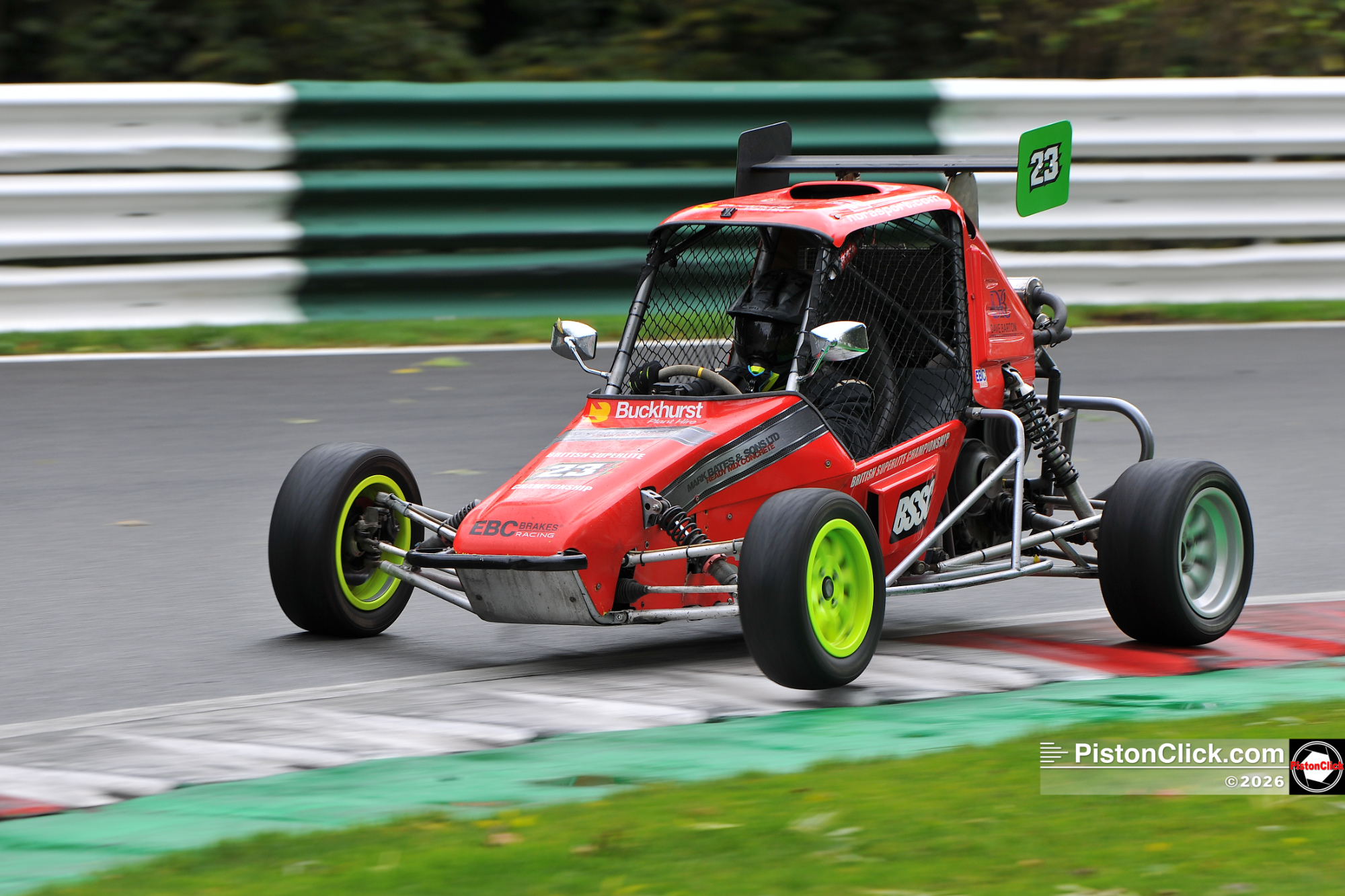
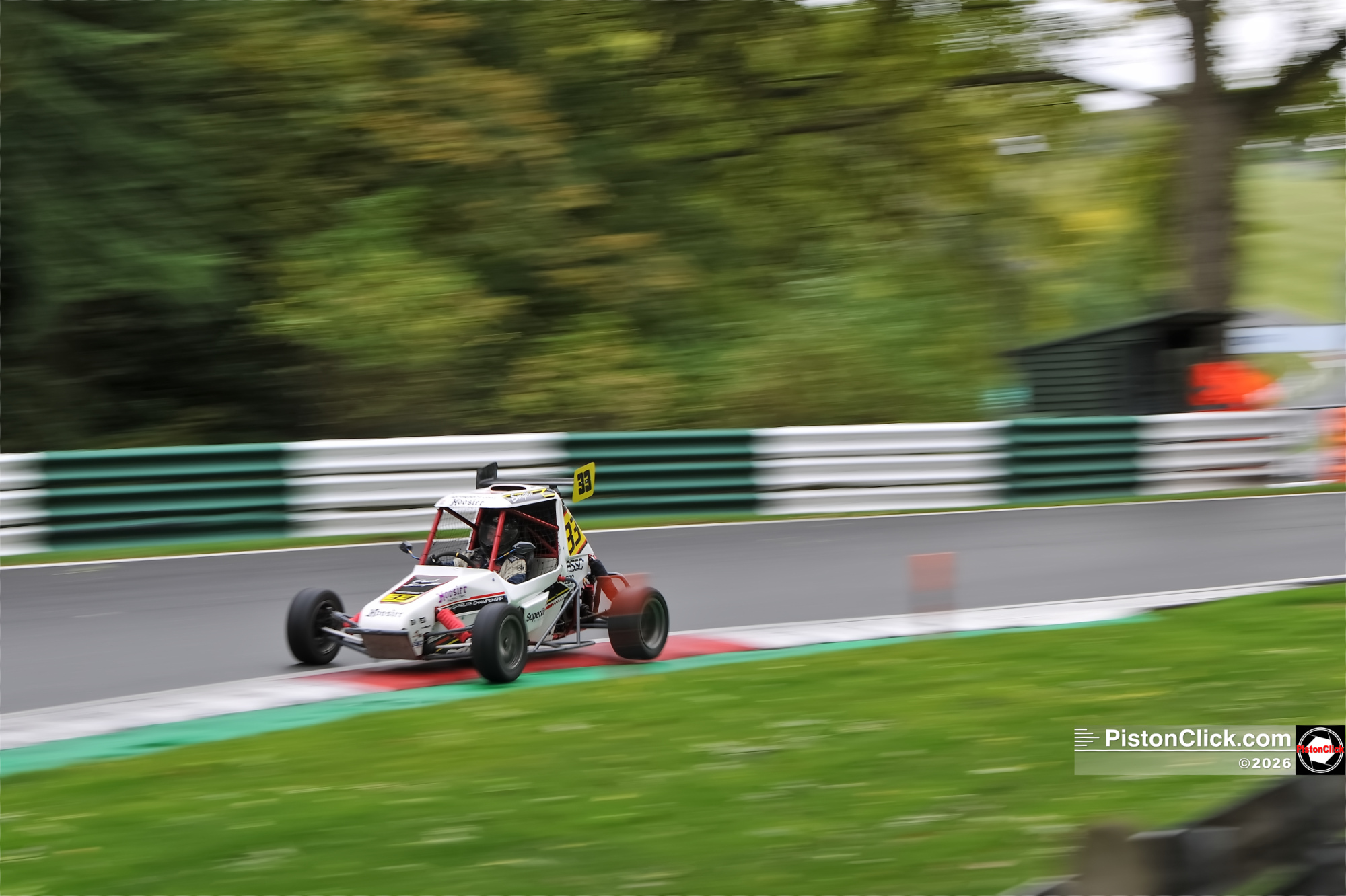
The combination of close competition, challenging weather, and riders determined to make the most of every session provided plenty of reasons to keep watching. From the King of the Mountain Battle to invited World Supermoto Champions, Supermoto at Cadwell had it all.