



RMA Track Day Report Donington Park
Report by Graham Atkinson
4 August 2026
I Don’t Do Track Days… Or Do I?
People often ask why I rarely photograph track days. The answer is simple: most track days aren’t particularly exciting from a photographer’s perspective.
They’re fantastic for the people taking part, but standing beside the circuit watching the same road cars circulate lap after lap doesn’t usually produce the variety or spectacle needed for an interesting report. You could almost compare it to watching traffic pass on a motorway.
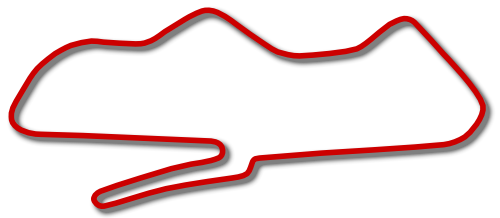
Last week I made an exception after seeing an unsilenced track day advertised at Donington Park. Those events usually attract an excellent mix of road-going performance cars and competition machinery, making them well worth the visit.
Unfortunately, that wasn’t the case.
The day had been booked almost exclusively by the BMW Owners Club. I knew there would be plenty of BMWs, but I expected a few interesting guests as well. Instead, virtually every car was a BMW M4. By 10:30am I was driving back through the gates, thoroughly disappointed.
A week later, however, I found myself returning to Donington Park. Why? Because this time it was an RMA Track Day.
Like the previous event, it was unsilenced and used the full Grand Prix circuit, but that’s where the similarities ended. I’ve attended every RMA track day held at Donington, and they consistently deliver the very best selection of machinery anywhere in the UK. They really are the crème de la crème of track days.
Unlike a conventional test day, where organisers divide cars into two or three groups and allocate fixed 45-minute sessions, RMA Track Days operates an open pit lane. Drivers can head onto the circuit whenever they wish between 9:00am and 5:00pm, stopping only for lunch or to refuel.
That means no waiting for your session, no lengthy delays after a red flag and far more track time for the drivers. Surprisingly, it also tends to cost less than many traditional testing days. For photographers, the constant flow of cars creates endless opportunities.
A Surprise Before Breakfast
The day immediately promised something special. As I sat in my car before the circuit opened, professional racing driver and instructor Chris Ward pulled into the parking space beside me. I’d featured Chris in an earlier report this season and often stop for a chat whenever our paths cross.
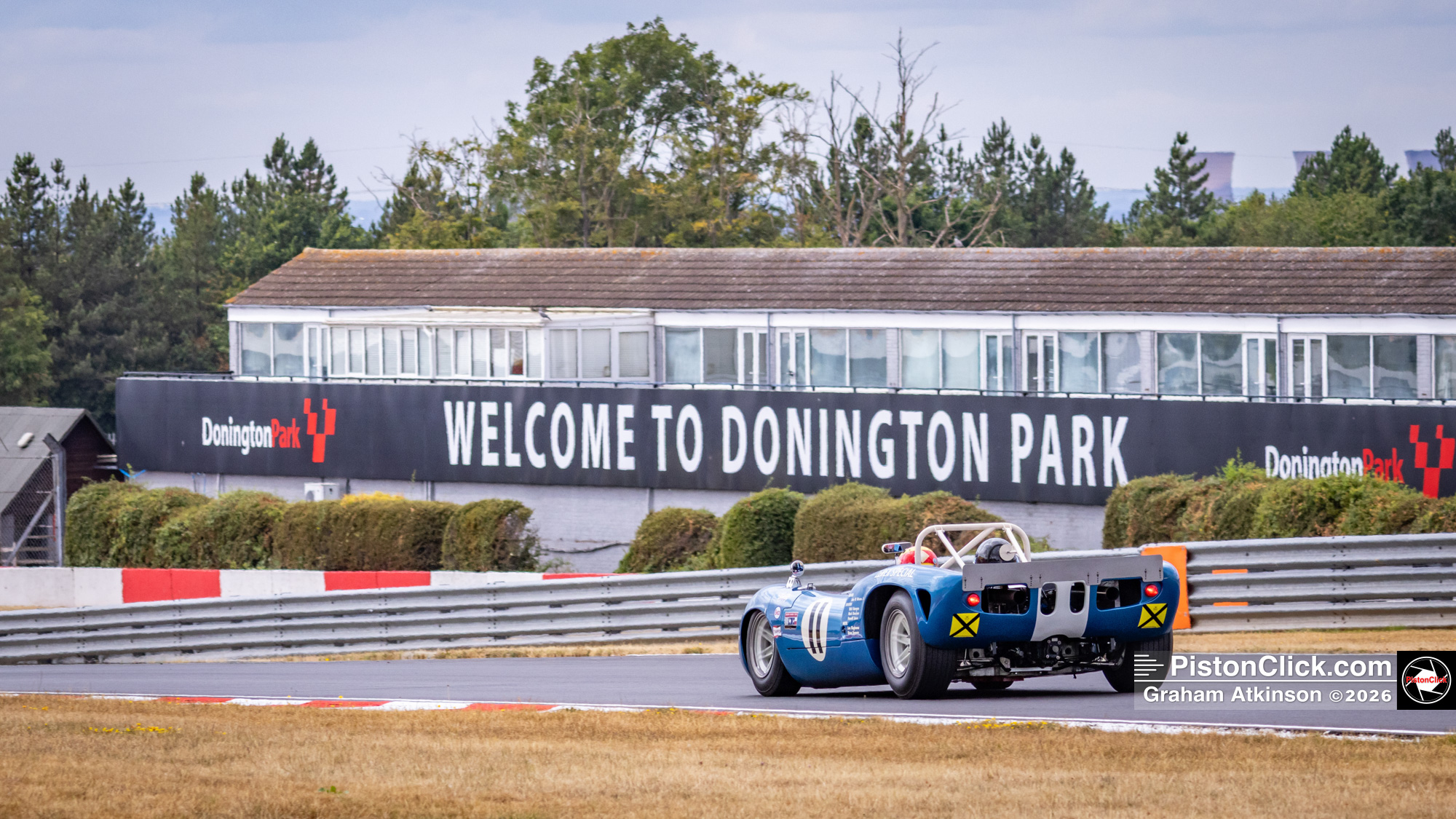
He told me he would be spending the day instructing the new owner of a 1965 Lola T70 Spyder, one of the most significant examples of the legendary sports racer. We agreed to meet as soon as we found where the car was parked.
Within half an hour I’d photographed the Lola, spoken with Chris and interviewed its new owner. Not a bad start to the RMA Track Day—and it wasn’t even 8:30am.
The First Lola T70
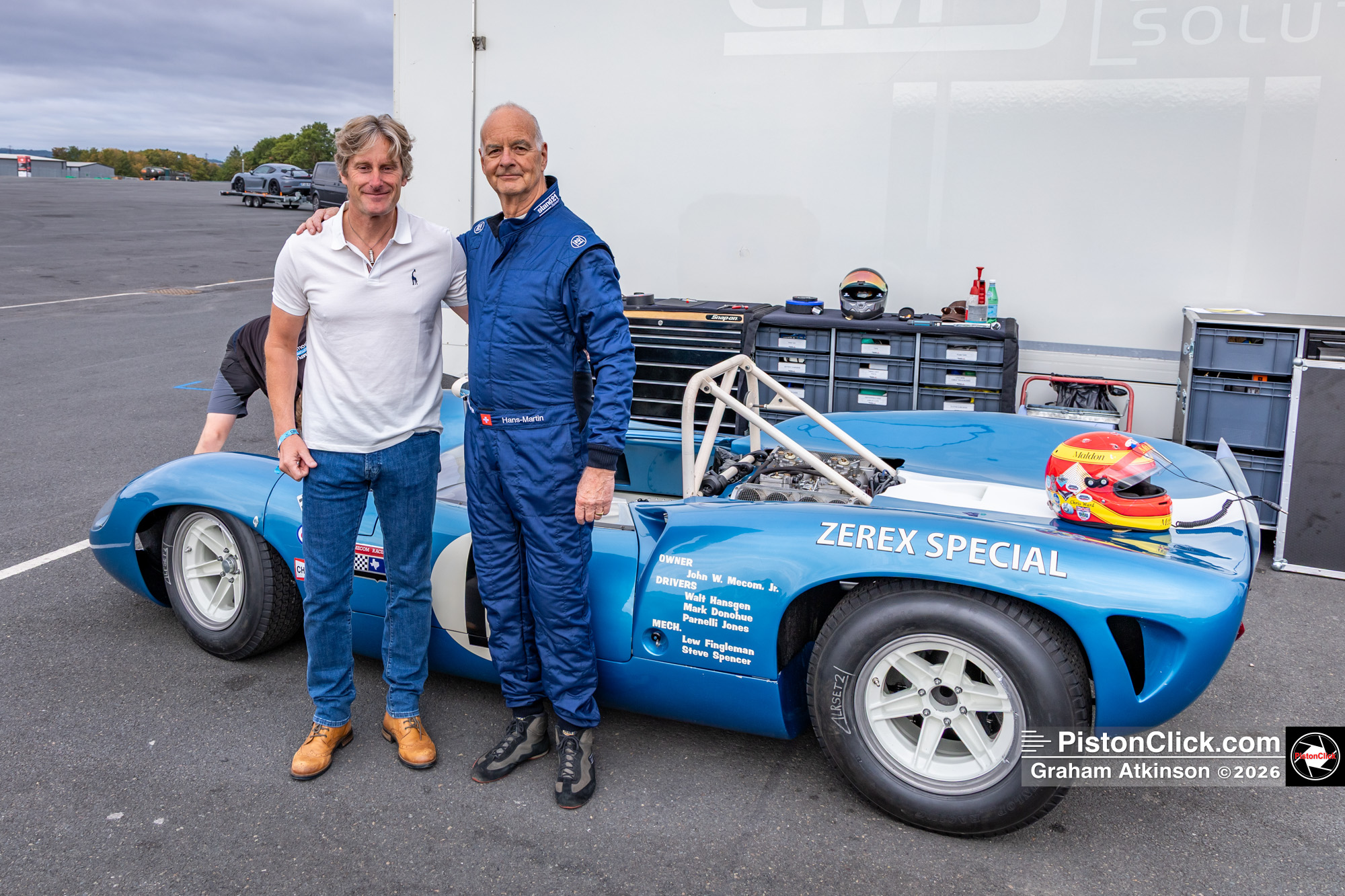
The Lola T70 standing in front of us wasn’t just another historic racing car.
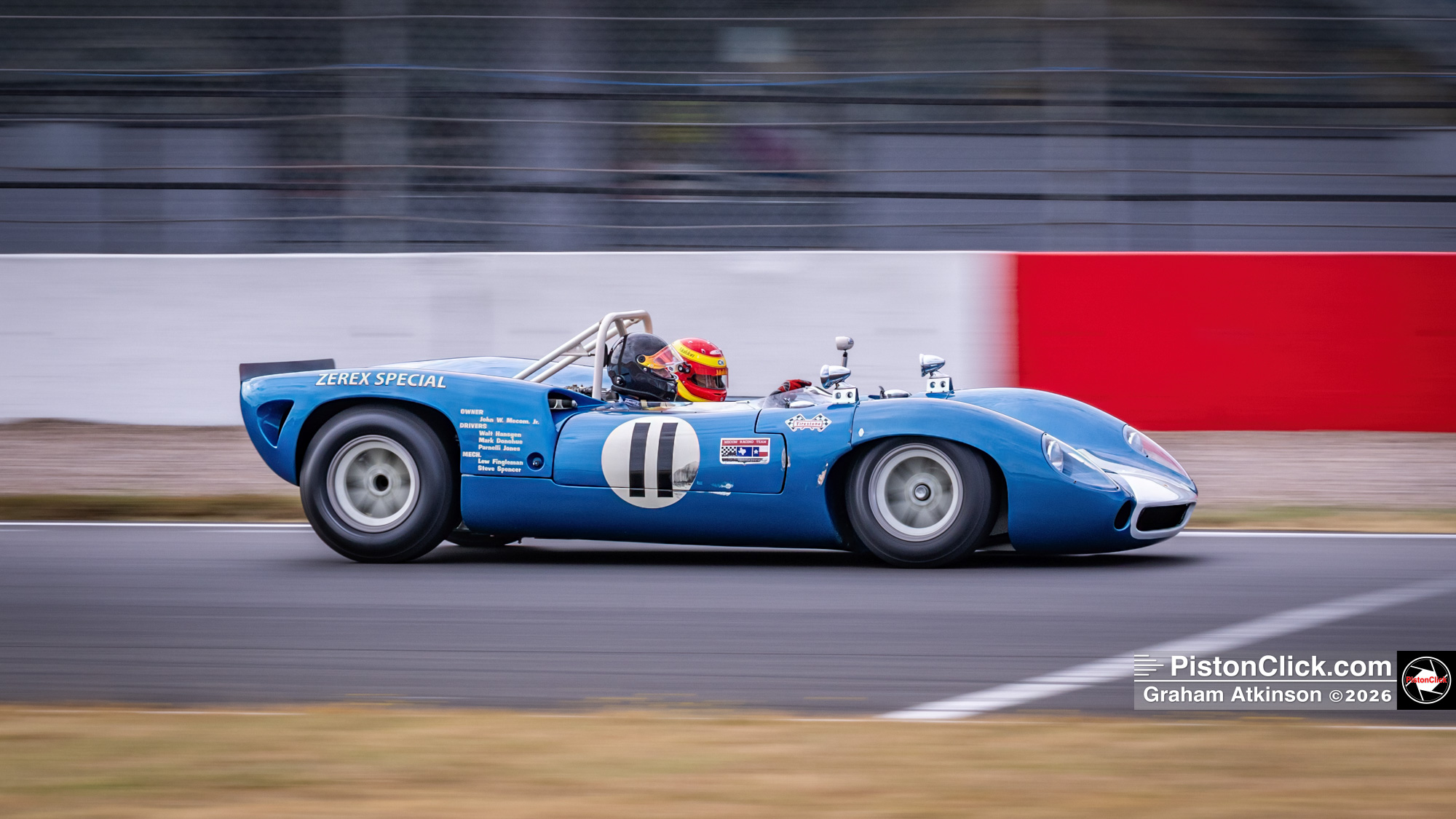
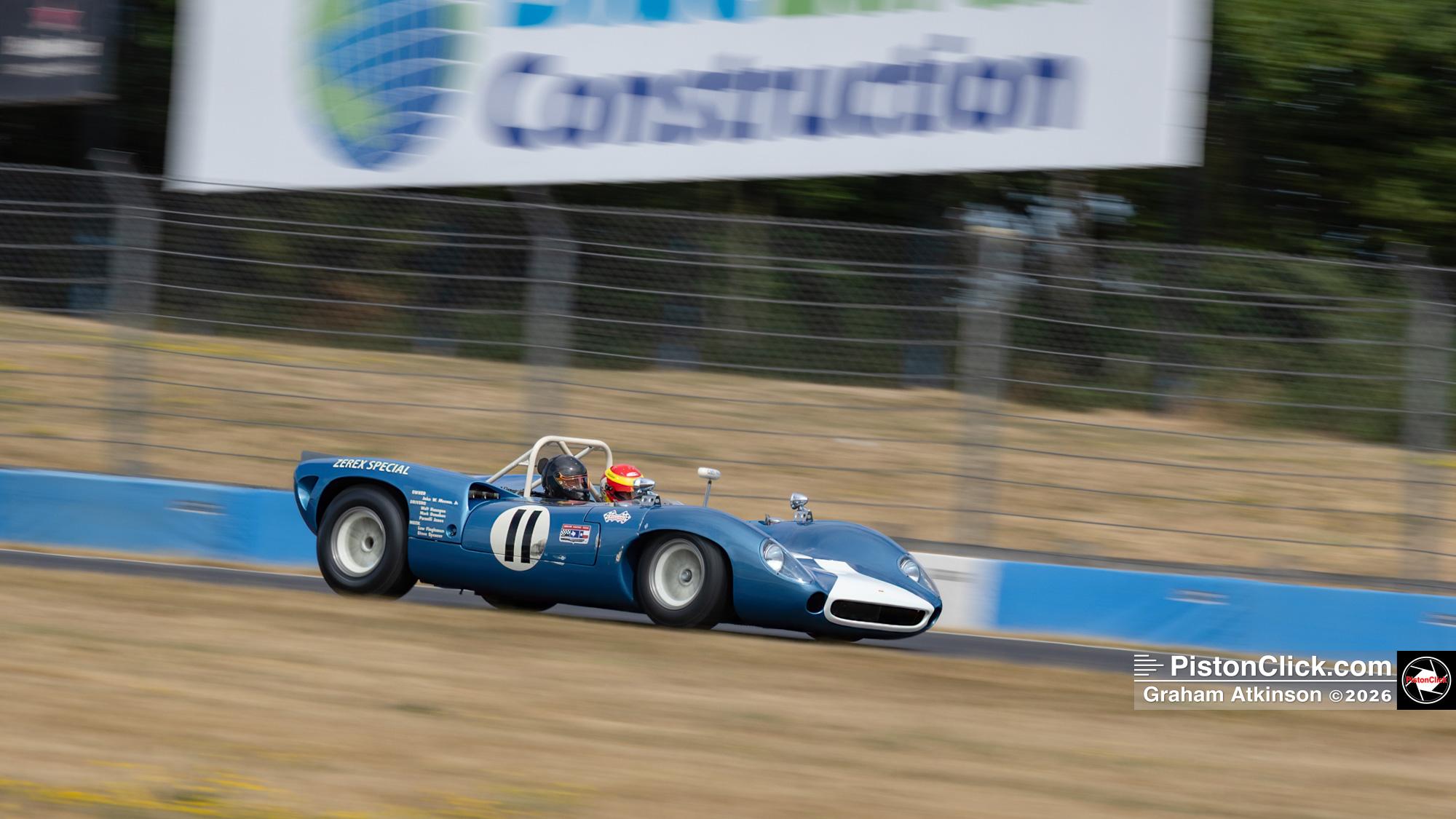
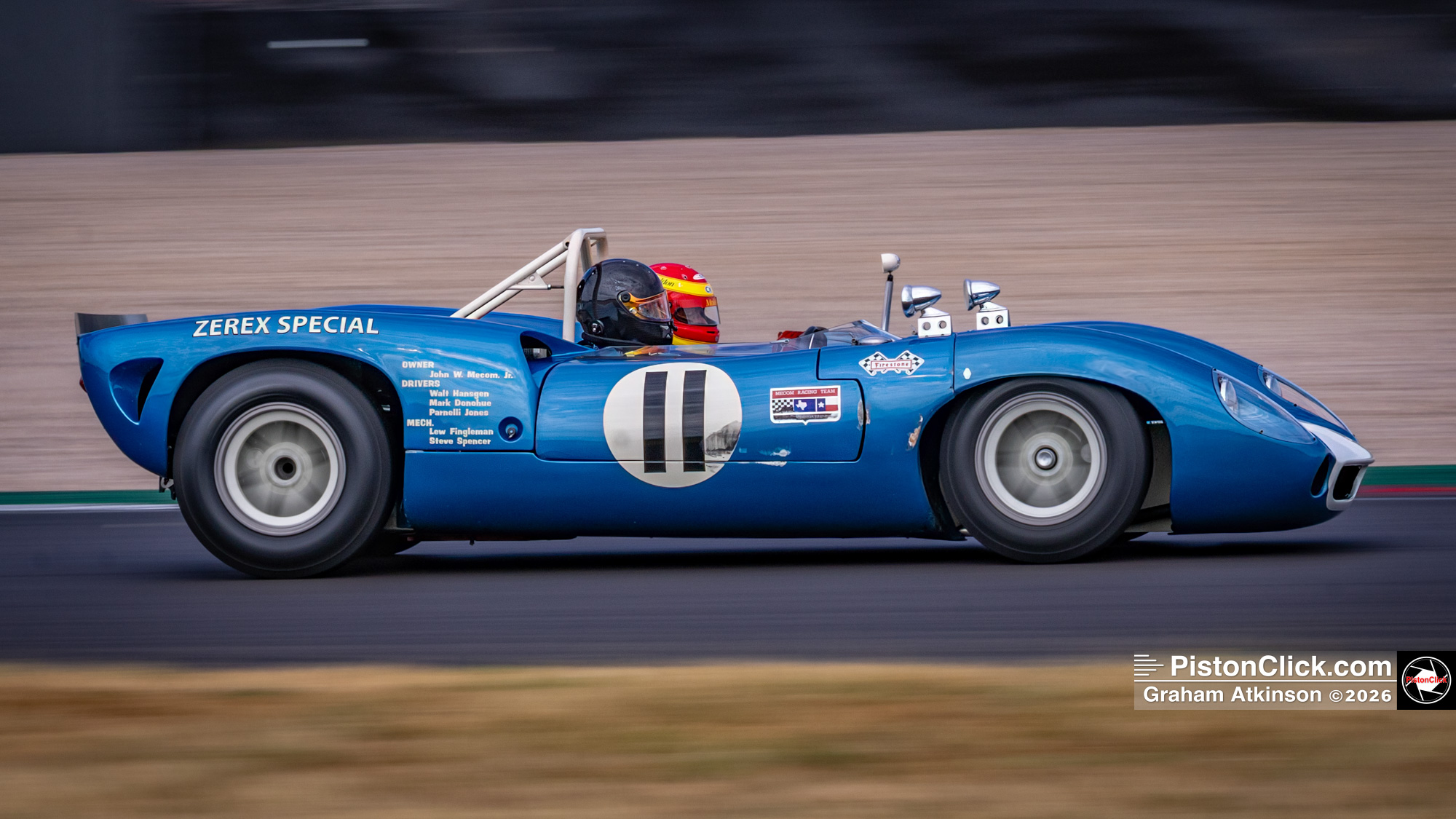
It was the very first Lola T70 ever built. Constructed in 1965, chassis SL70/3 made its public debut at the Racing Car Show at Olympia in London. Painted dark blue with a white centre stripe, it immediately attracted attention before becoming the first T70 shipped to America.
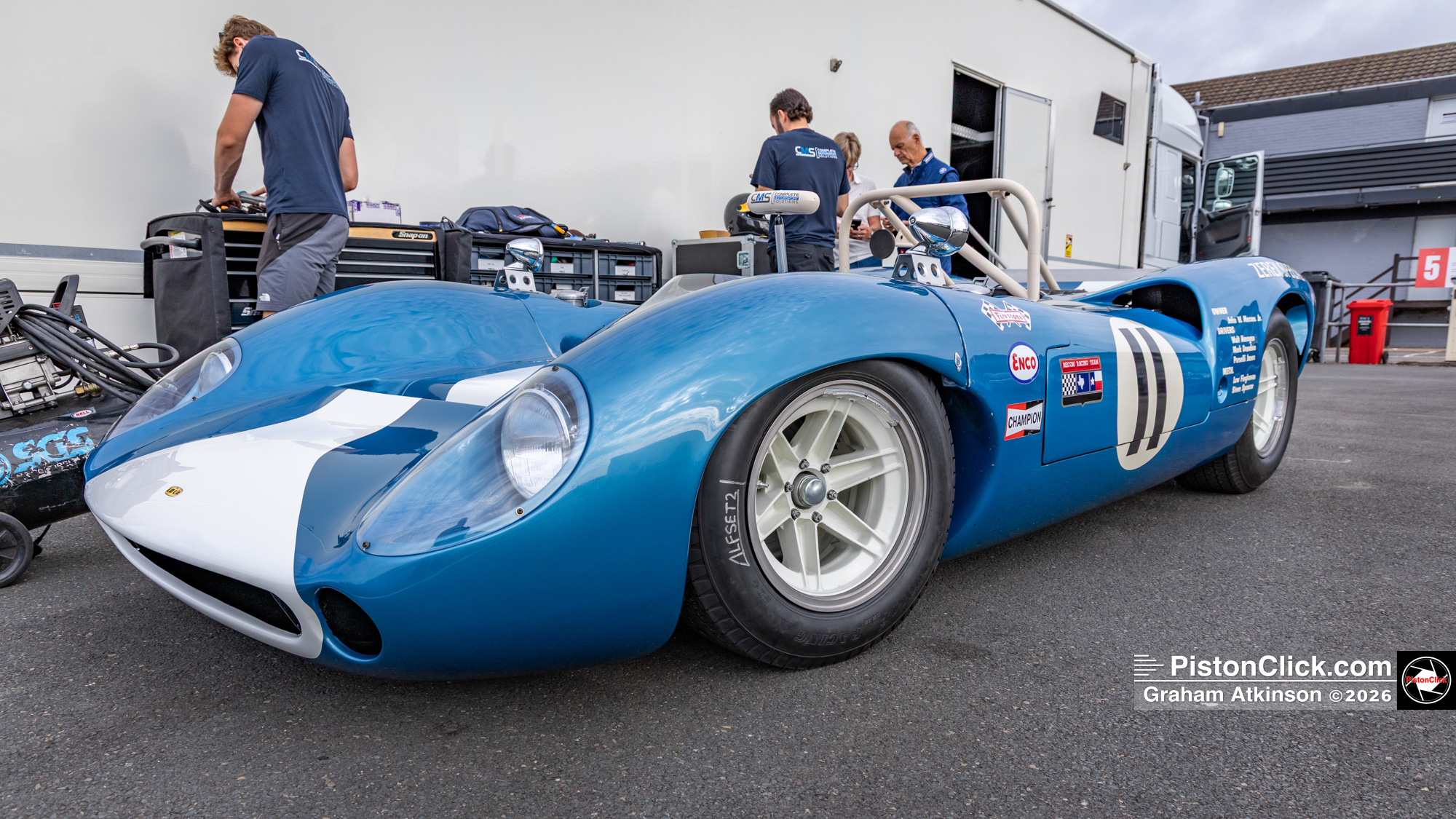
Its new owner was Texan racing enthusiast John Mecom, who repainted the car in his team’s lighter blue colours while retaining the distinctive white stripe. Power came from a 4.7-litre Ford V8.
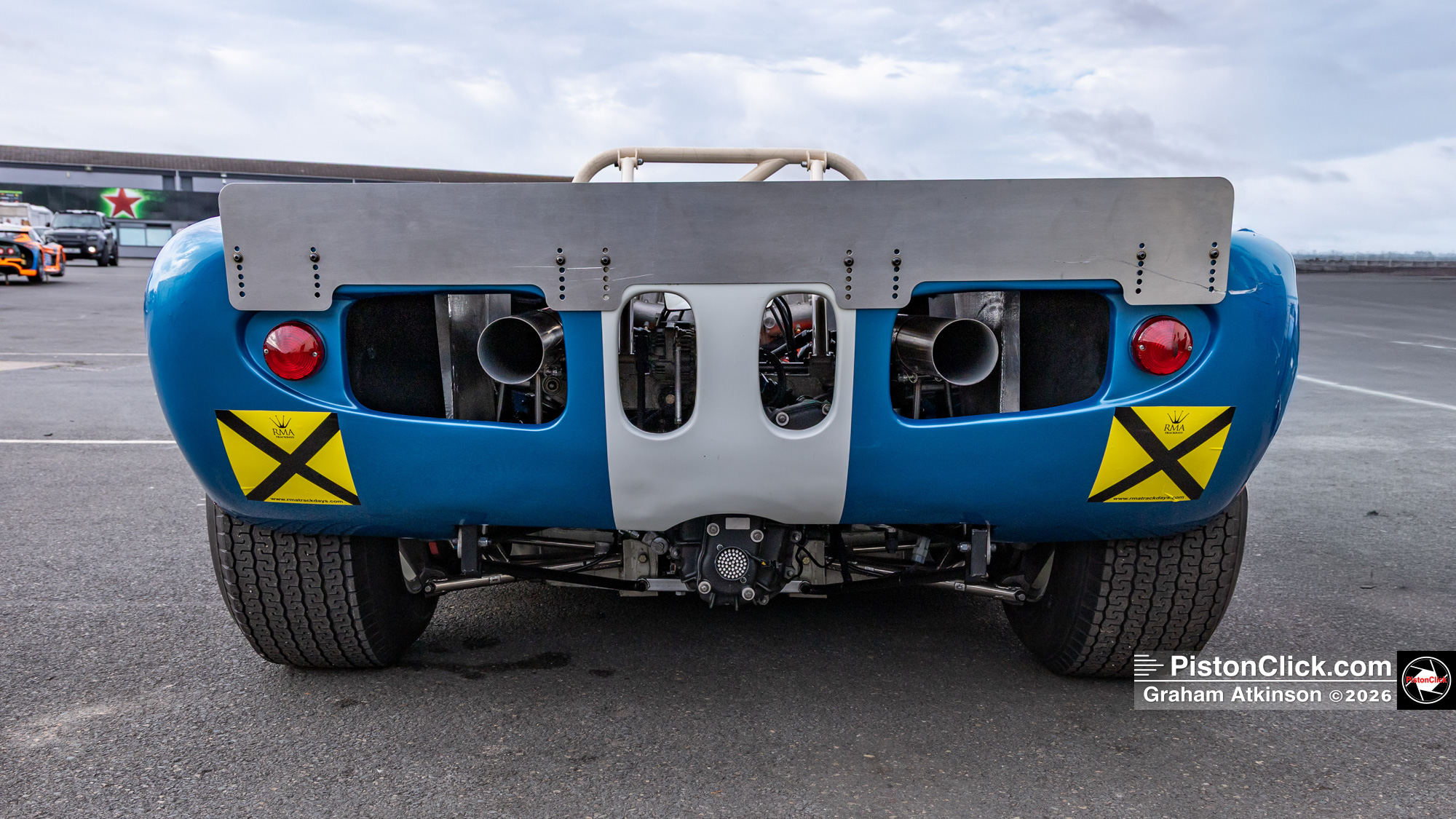
The car enjoyed instant success. American driver Walt Hansgen won the 1965 Monterey Grand Prix Laguna 200 on its competitive debut, firmly establishing the Lola as a serious contender. Mark Donohue a friend of Walt Hansgen joined the team and competed in the Lola as well as others, along with Walt Hangsen as well as Parnlli Jones.
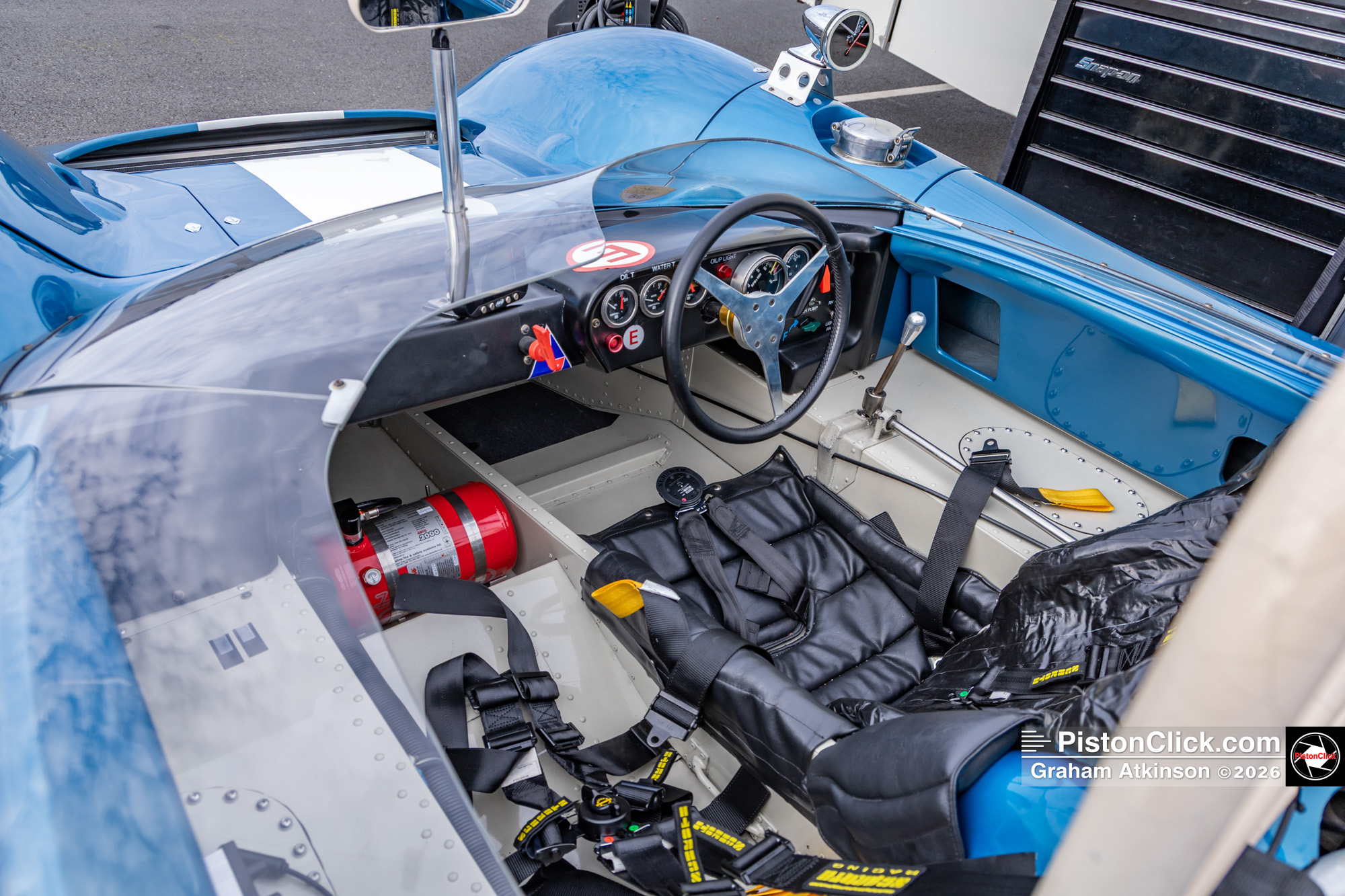
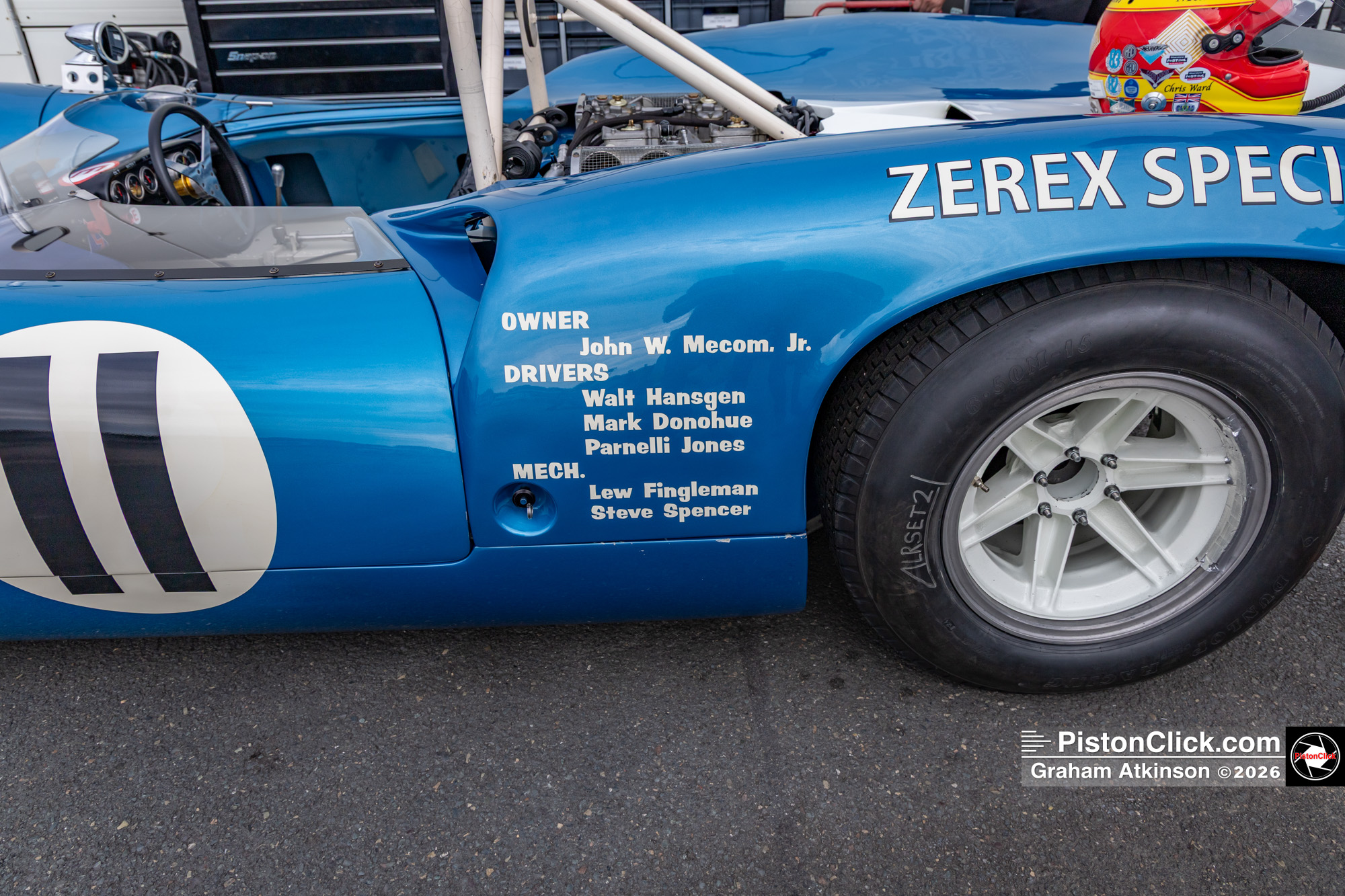
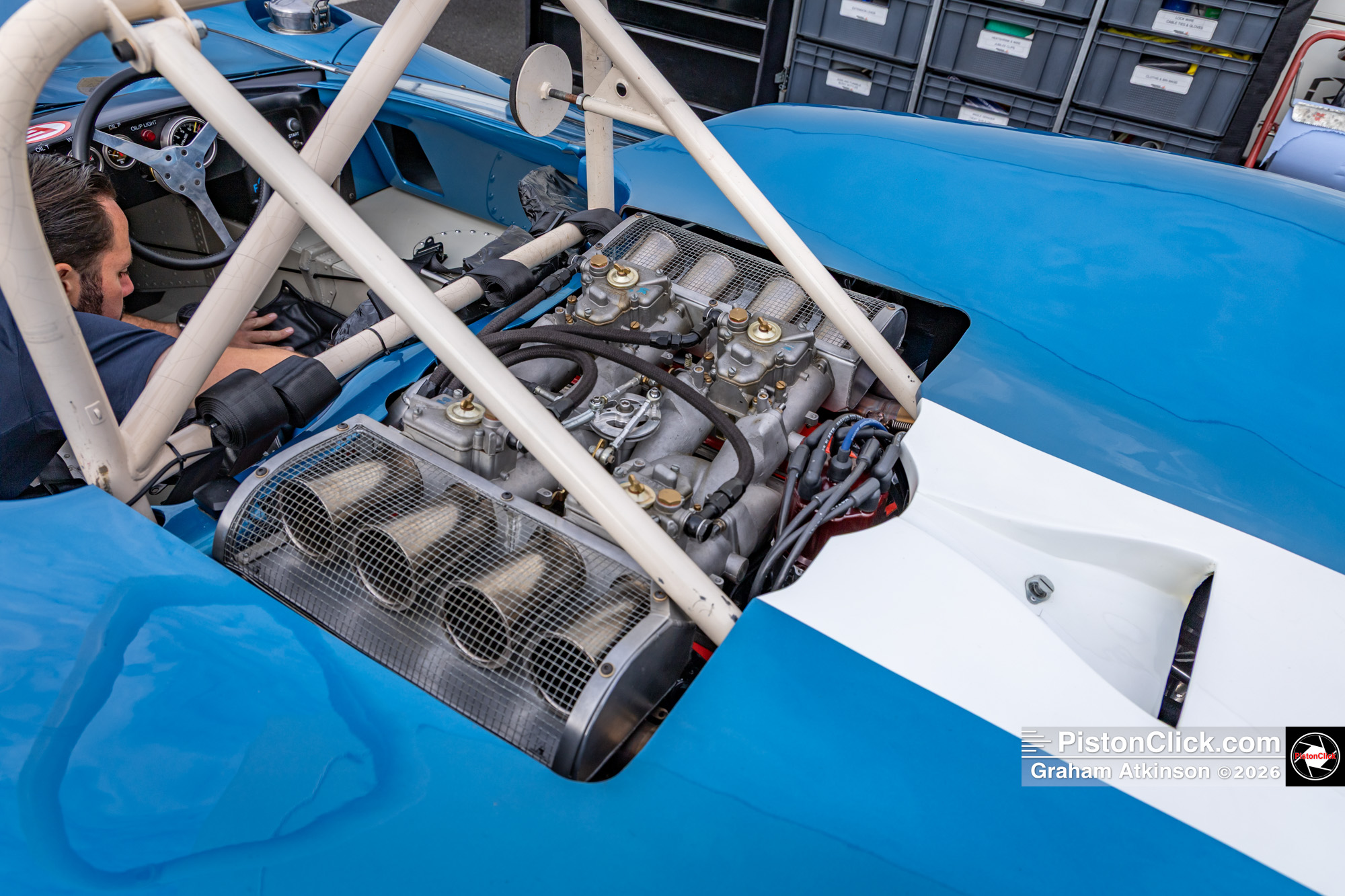
Later that year, while qualifying for the Stardust Grand Prix in Las Vegas, Hansgen ran wide and crashed the Lola. The damage proved too extensive to repair before the race, so the team transferred the engine into a spare T70. Hansgen went on to finish second.
The damaged chassis, now without its engine, remained in storage until the end of 1966, when a new owner rebuilt it around a 5.9-litre Chevrolet V8. It later returned to the UK, passing through several owners before recently being purchased by Swiss enthusiast Hans Martin Schneeberger.
A New Chapter for Hans Martin Schneeberger
Hans has always been passionate about cars. As a teenager in Switzerland, he built his own road car from a rusty Porsche 356 fitted with a dune buggy body so he could pass his driving test.
Work and family commitments eventually took priority, leaving little time for his hobby. Everything changed when he turned 50. With more free time and the resources to pursue his passion, he immersed himself in the classic car world.
One purchase led to another. An SS100 Jaguar introduced him to historic motoring events such as the Mille Miglia and sparked a lifelong fascination with the Jaguar marque. Today, his private collection includes almost every significant Jaguar model up to the E-Type.
Hans affectionately describes the collection as:
“My smoking lounge, where if I have time, I have a read with a nice cigar and a glass of my favourite whisky.”
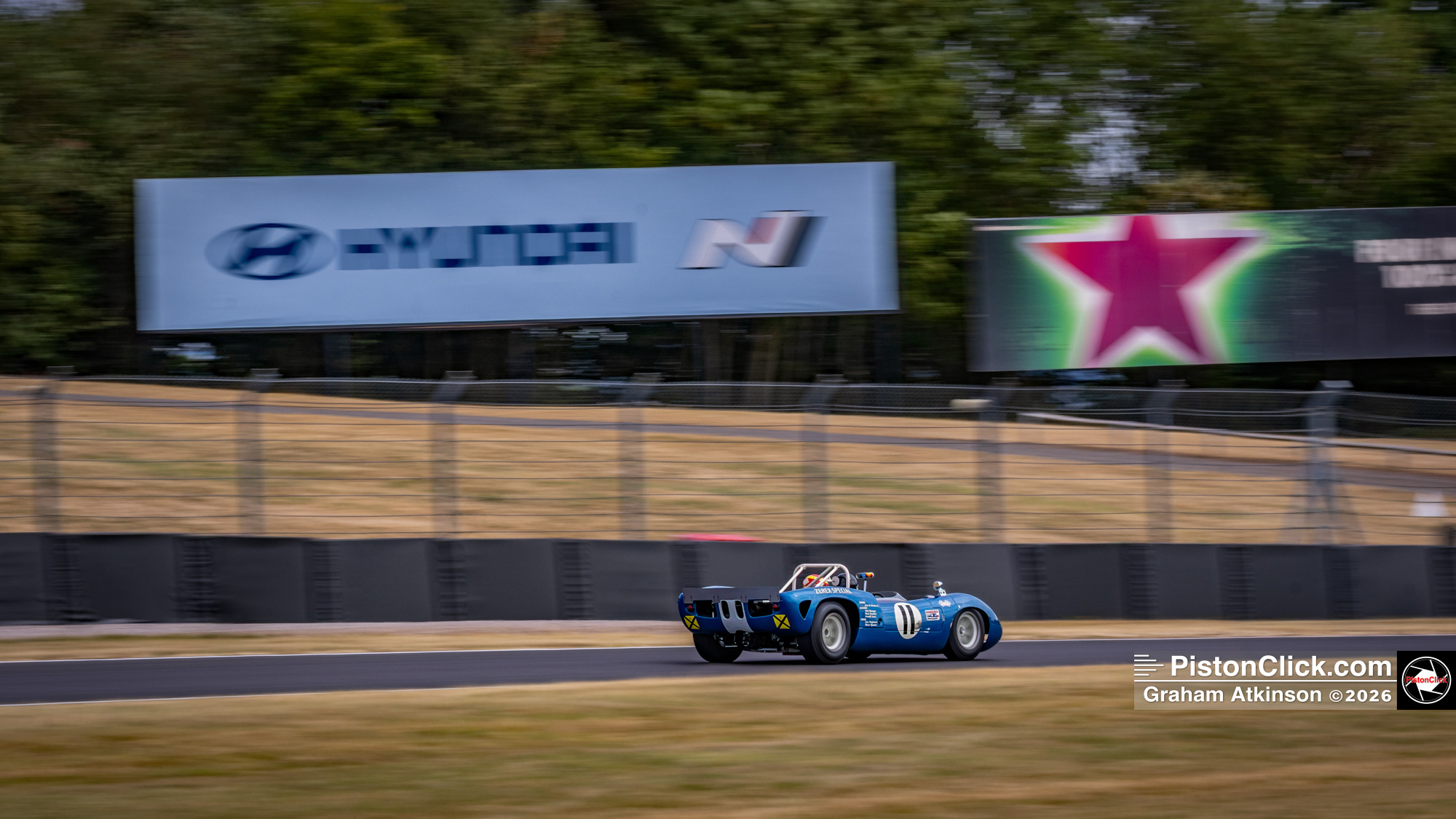
Lola T70 Spyder
For the past two decades he has raced Jaguars throughout Britain and Europe. Now, having recently celebrated his 70th birthday, he wanted a fresh challenge. The answer was this remarkable Lola T70 Spyder.
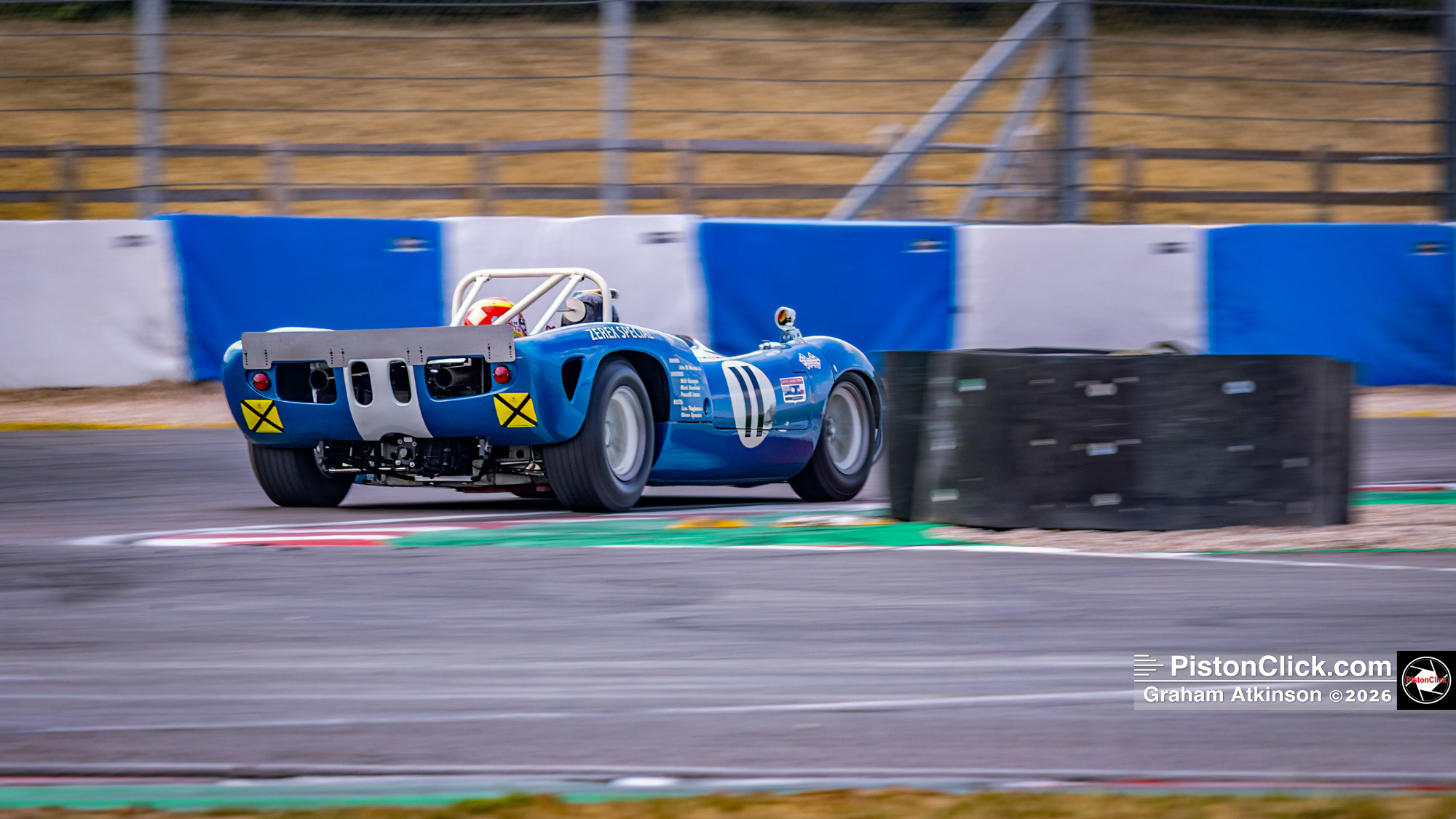
Because the car delivers significantly more power than his Jaguars and rides on narrow period tyres, Hans enlisted the help of Chris Ward to guide him through his first day behind the wheel.
Chris was the perfect instructor. Earlier this season he raced this very Lola T70 at Goodwood and also drove another T70 alongside Jan Magnussen for the Legacy Outlaws Racing team. More recently, he claimed victory in a Lola T292 at the London Historic Trophy at Brands Hatch.
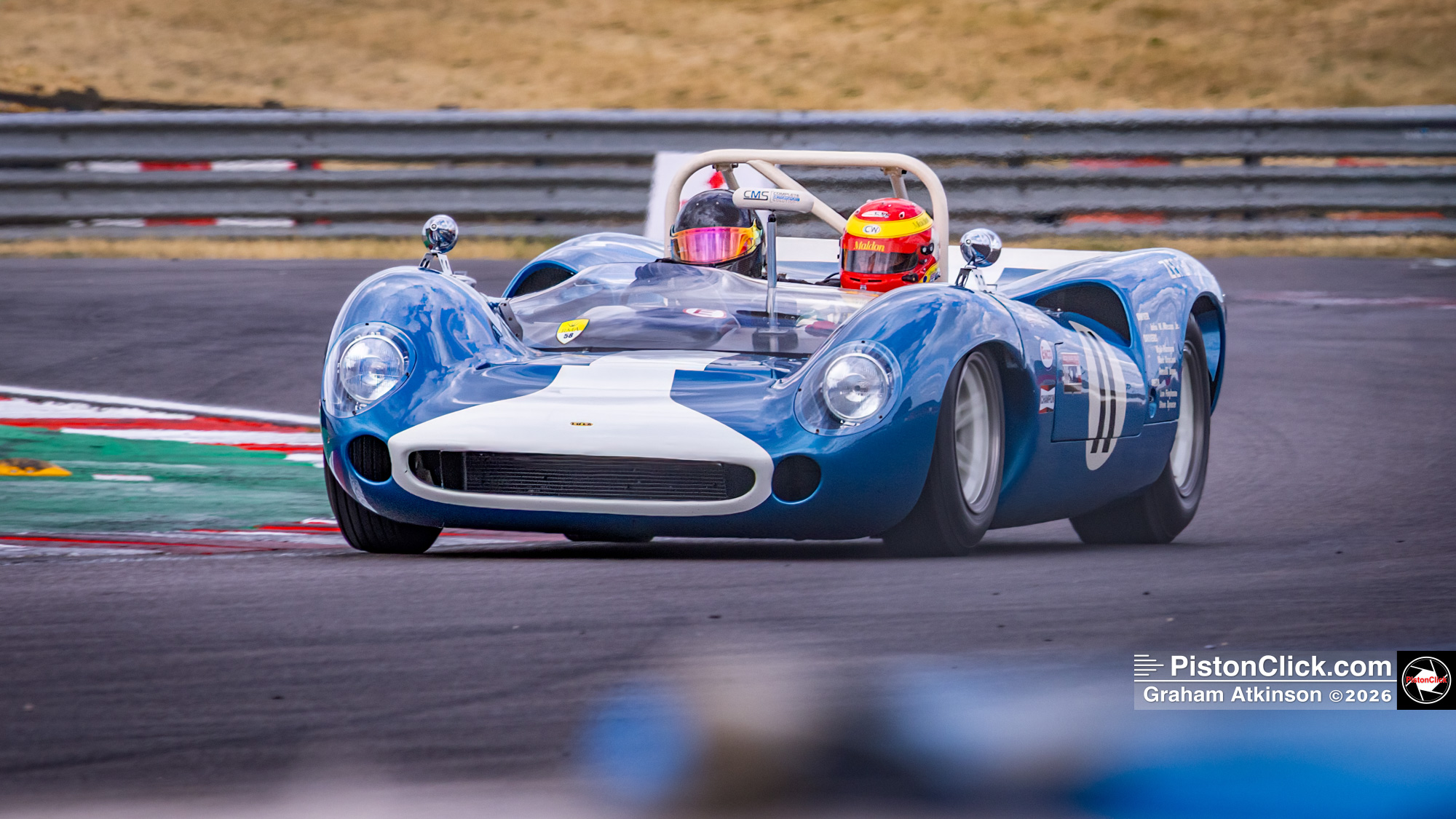
Few people understand these cars better. Chris explained that the goal wasn’t outright speed. Instead, he wanted Hans to become comfortable with the Lola’s characteristics, understand how the extra power behaves and learn to trust the chassis. If everything went to plan, Hans would leave Donington Park with confidence—and a very big smile.
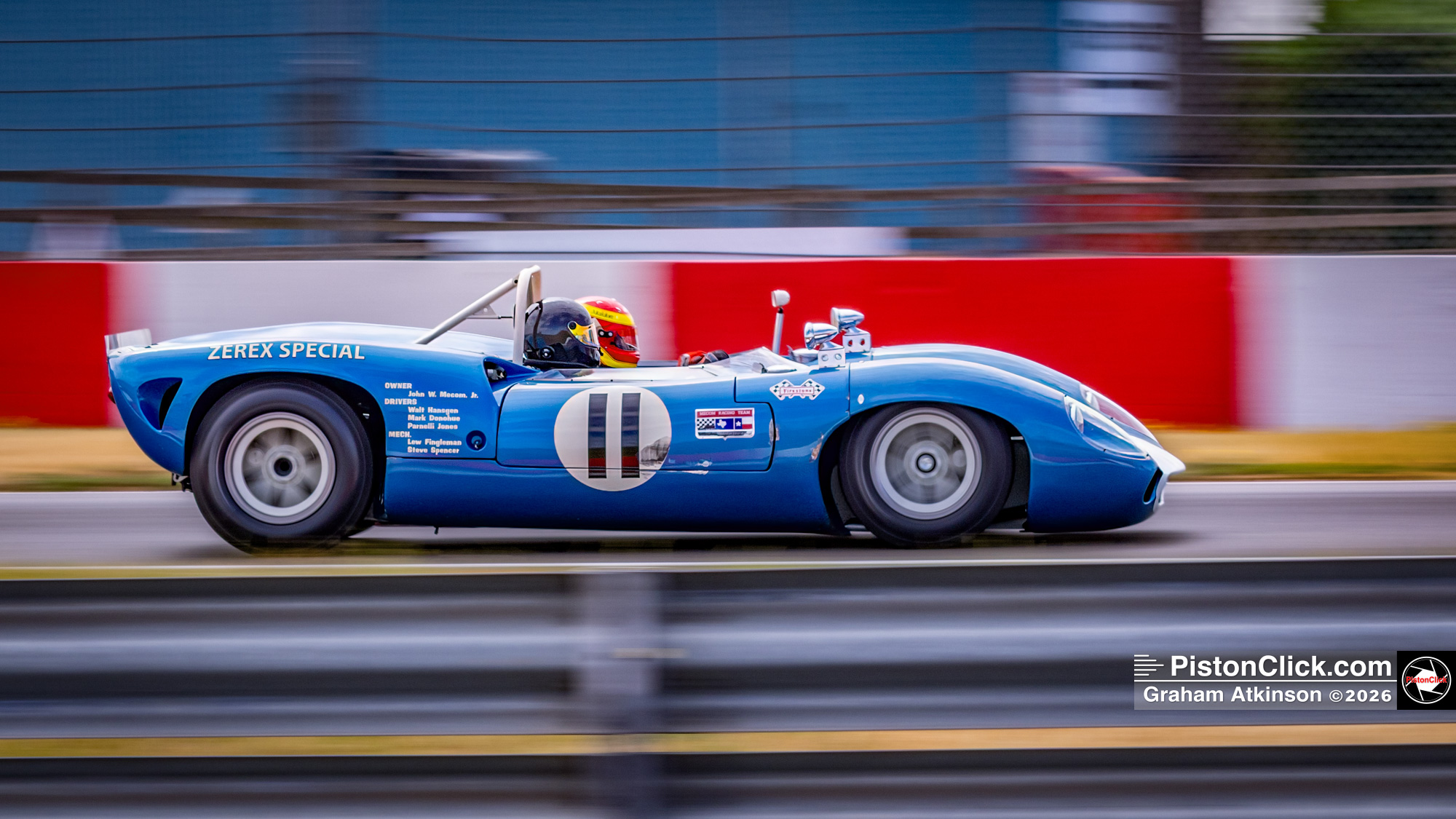
For me, the morning at the RMA Track Day couldn’t have started much better. By 8:30am I’d already captured one of motorsport’s most significant sports cars, interviewed its new owner and caught up with one of Britain’s finest historic racing drivers. The rest of the day had a lot to live up to.
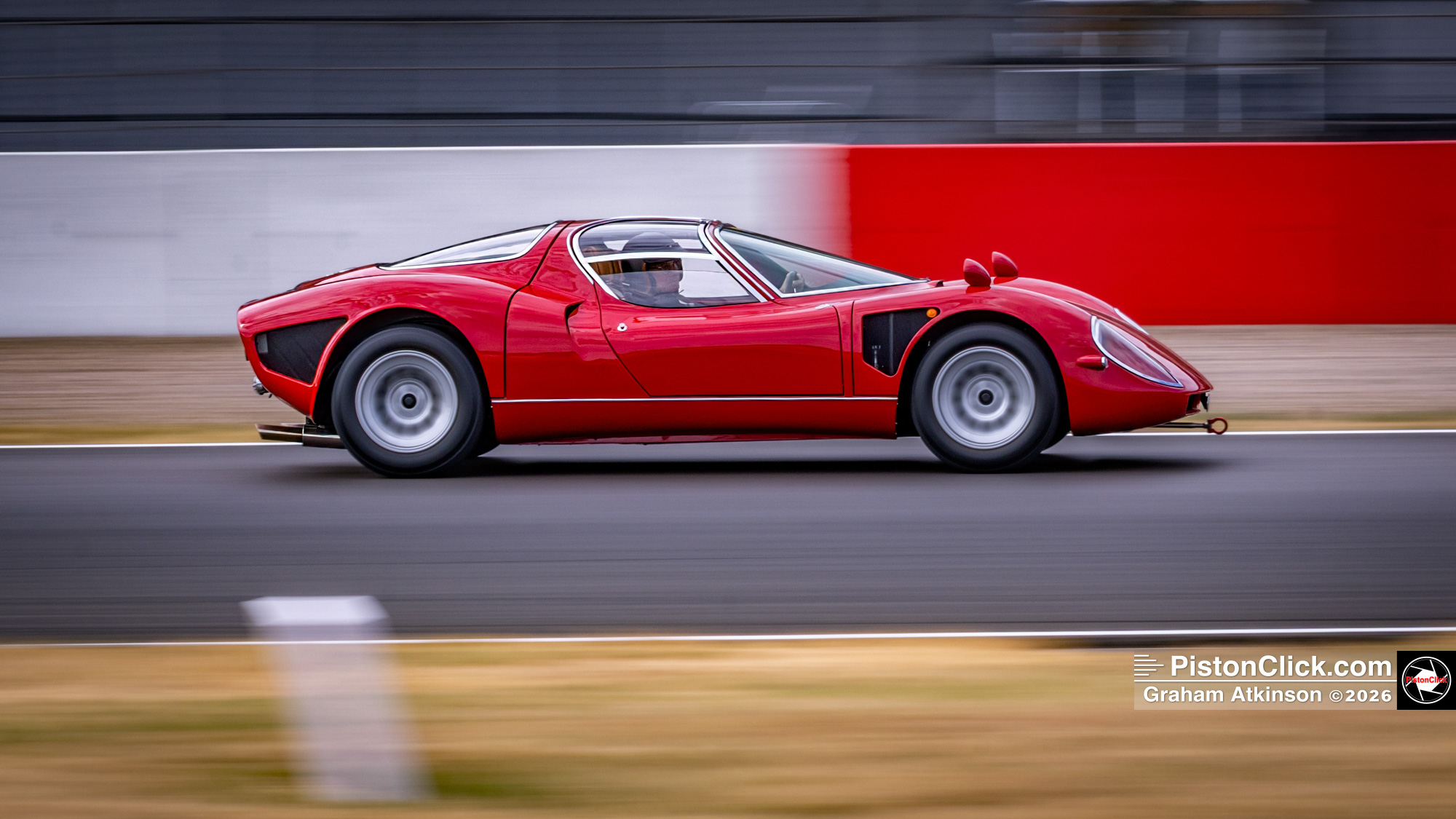
R33 Stradale – A Modern Homage to an Italian Icon
Walking back towards the paddock, I noticed a crowd gathered around a small red sports car. I almost walked straight past, but curiosity got the better of me—and I’m glad it did.
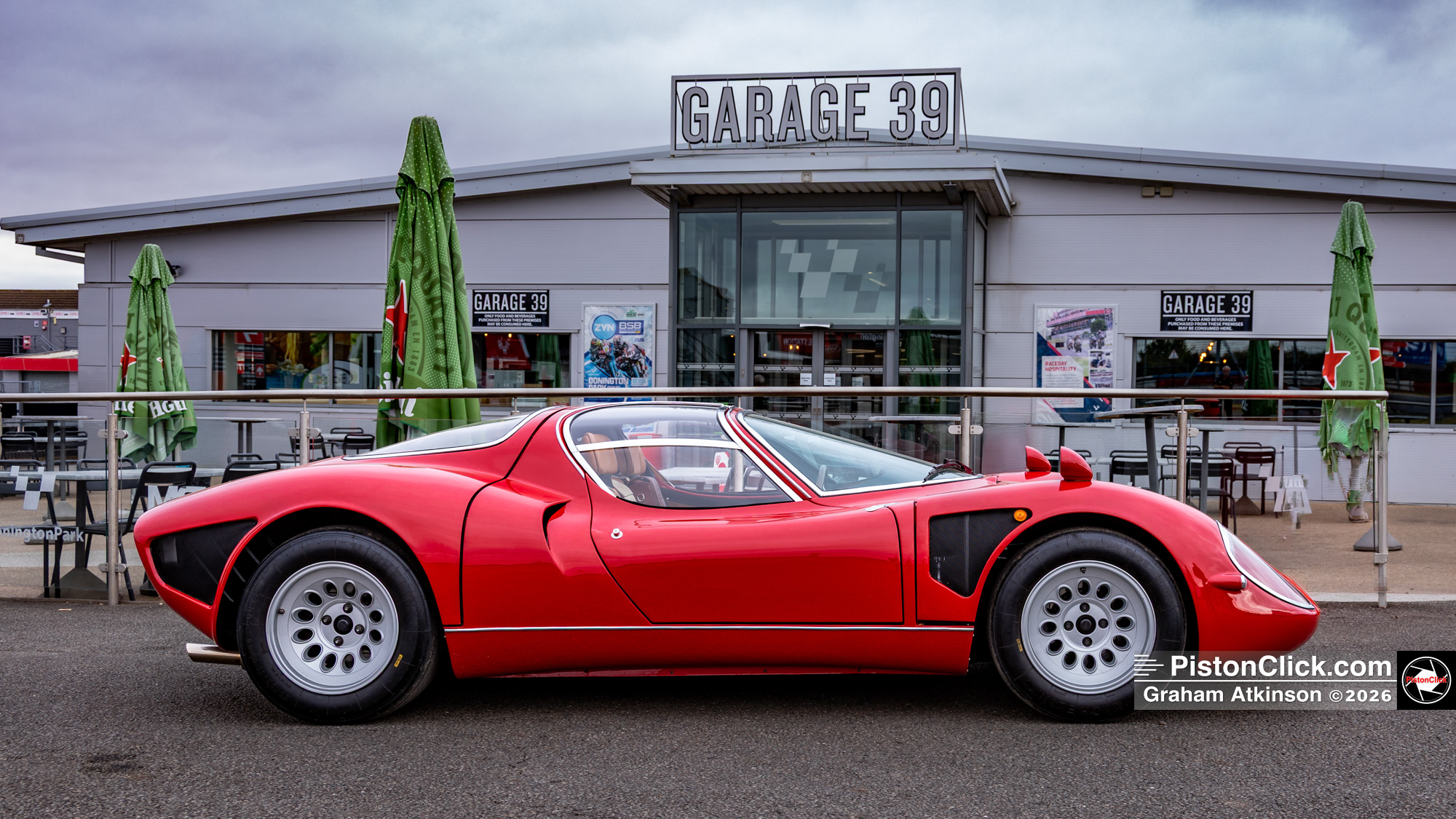
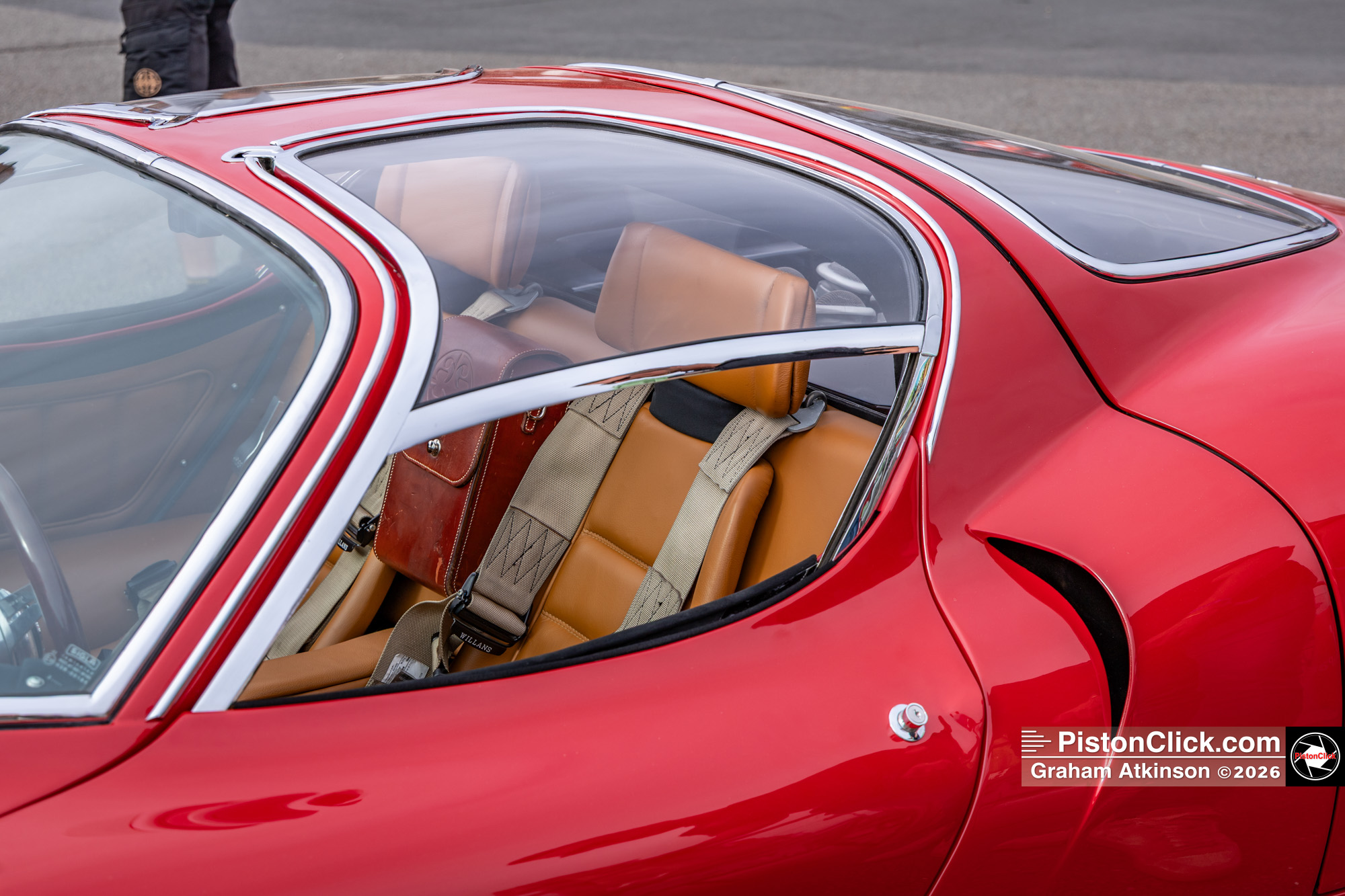
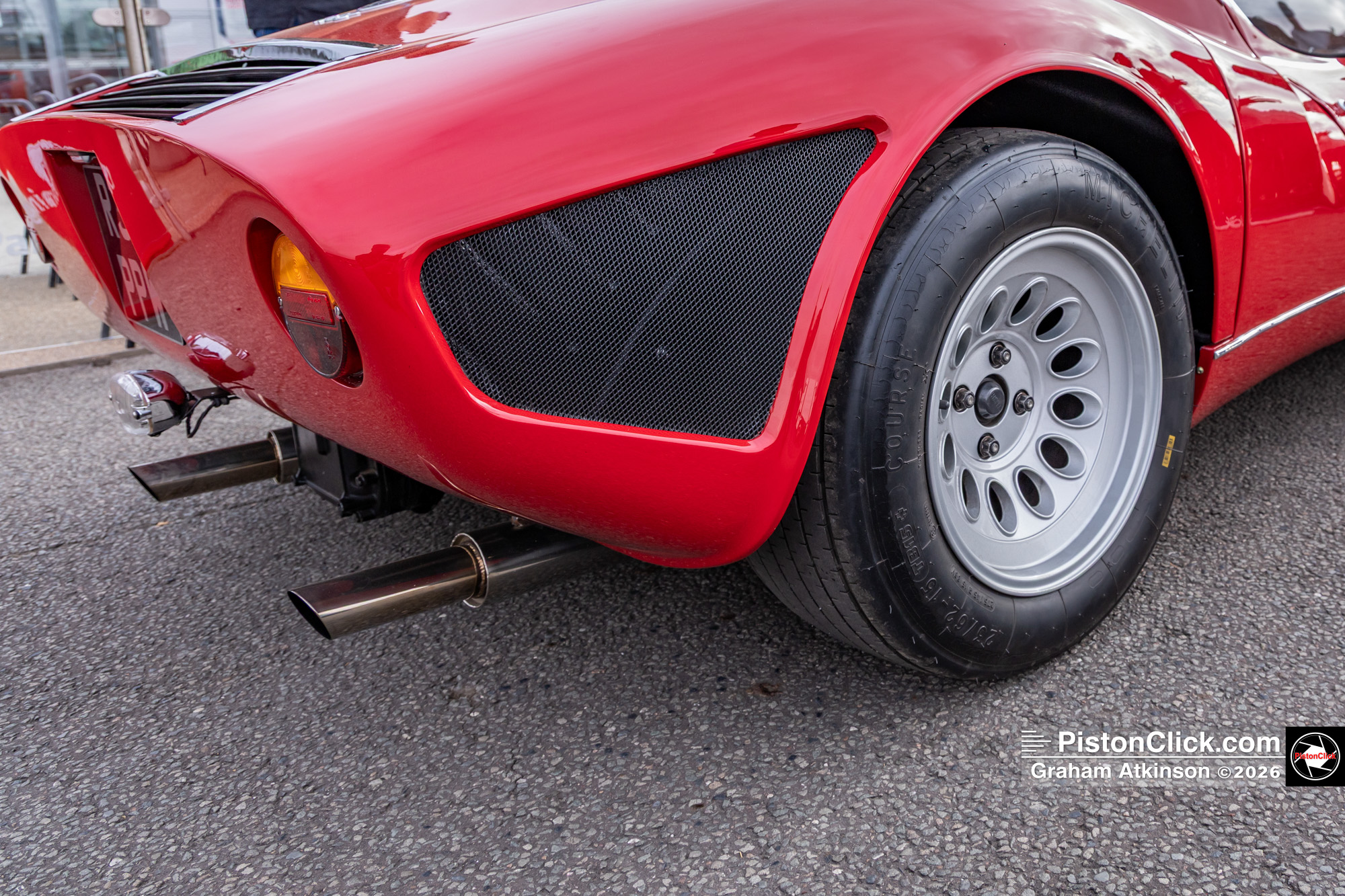
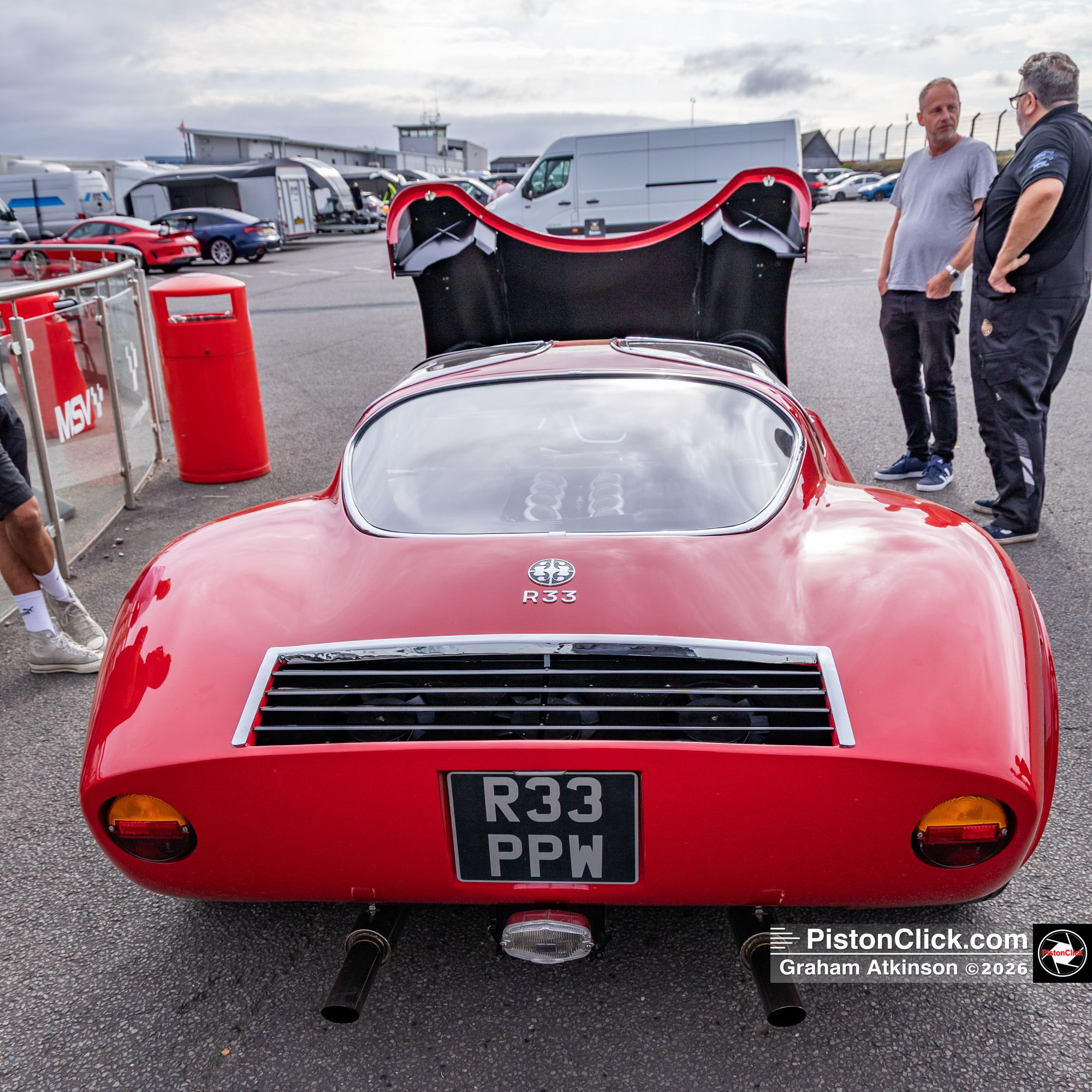
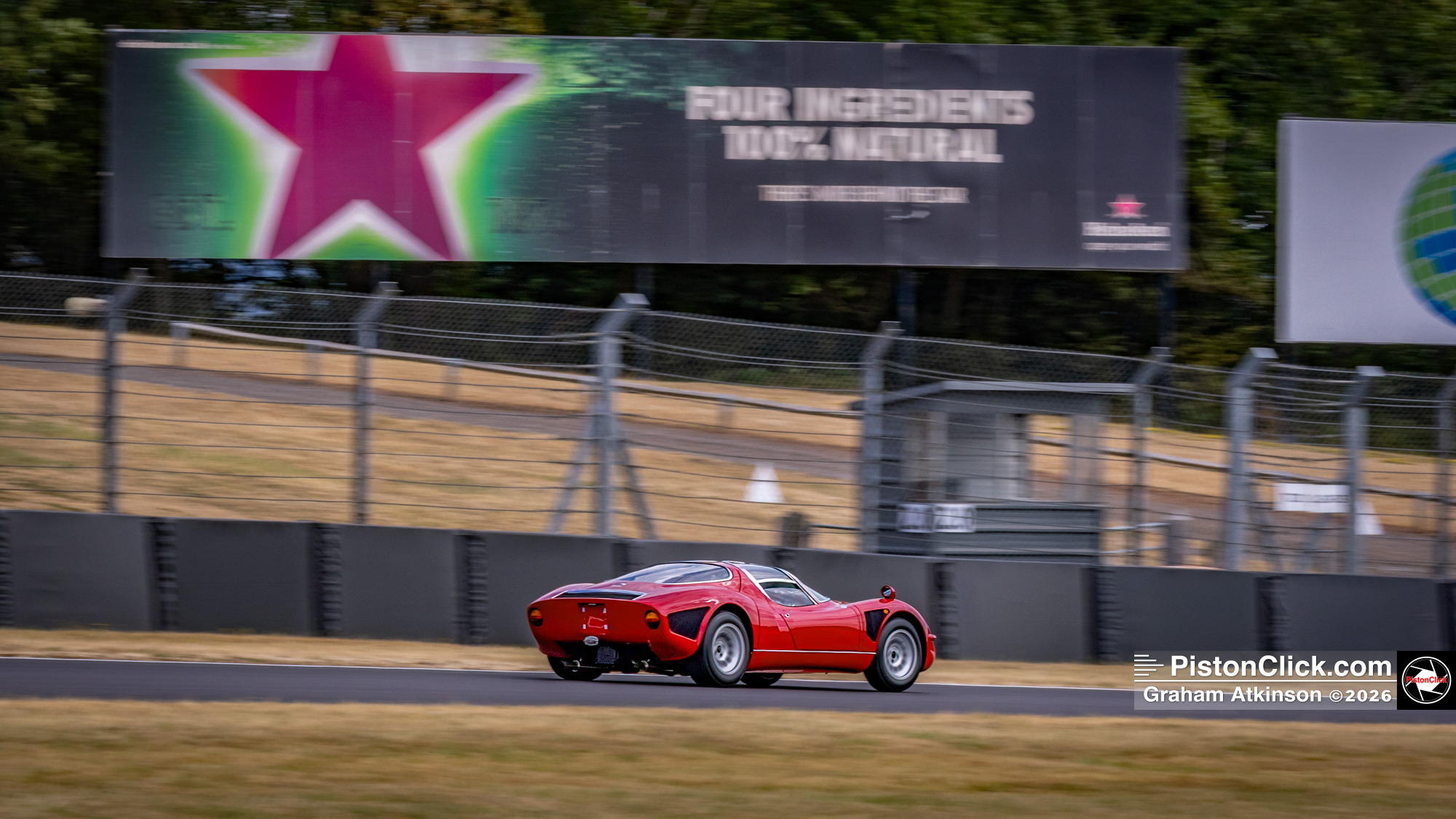
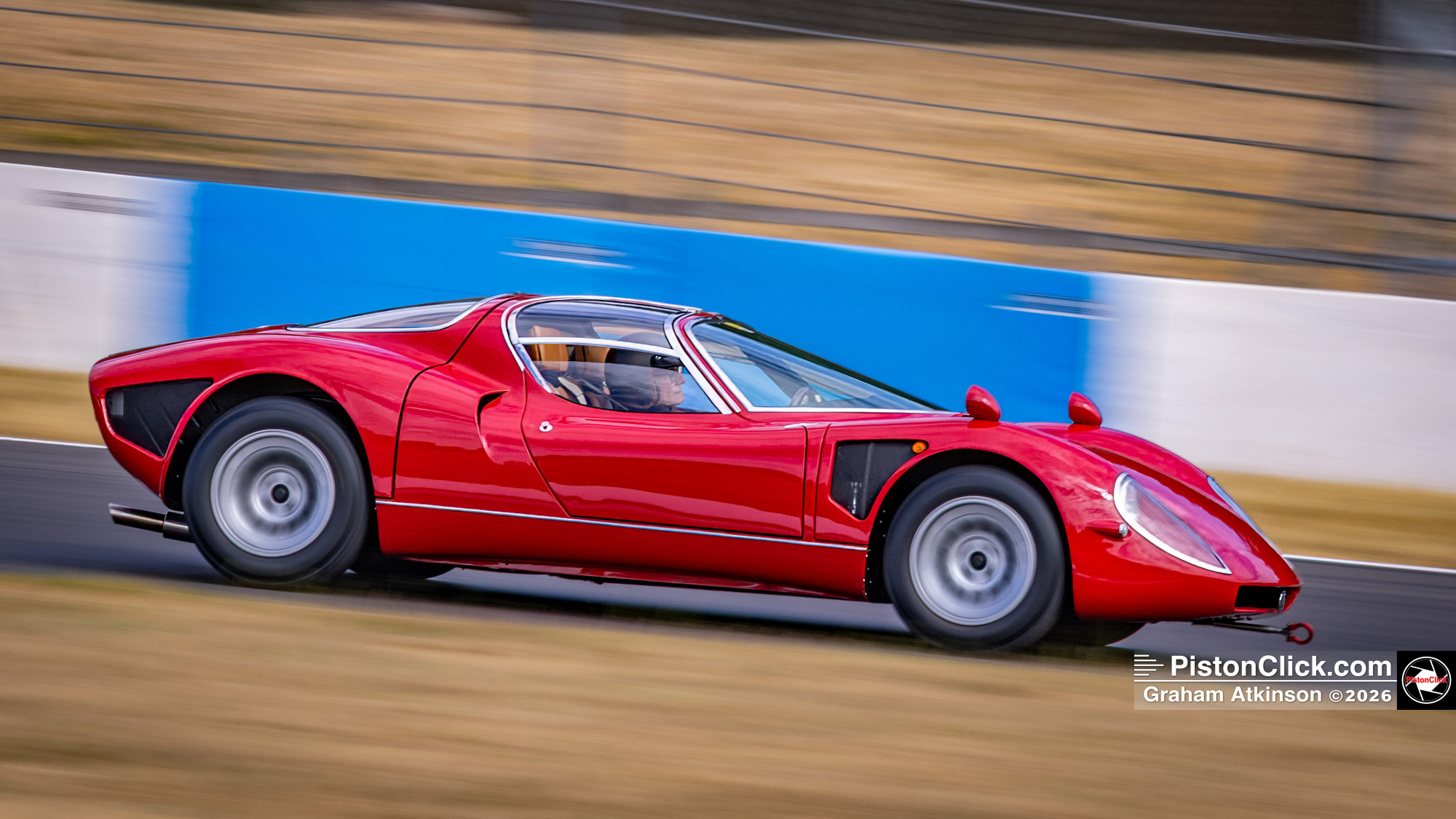
The car was the very first R33 Stradale built by Automotive Artisans, a stunning homage to the legendary Alfa Romeo 33 Stradale. Alfa Romeo built just 18 examples of the original between 1967 and 1969, making it one of the rarest and most desirable sports cars ever produced. One of the Automotive Artisans team told me that an original changed hands at auction last year for around £20 million.
The owner had disappeared into the paddock, so I arranged to catch up with him later. As it turned out, that nearly didn’t happen.
A minor oil leak had developed, and the team needed the car for a promotional film with Jodie Kidd the following day. Rather than risk any problems, they decided to load the car up and head back to the workshop to fix the issue before filming.
I arrived just as they were preparing to leave. Thankfully, Lee Irish, co-founder of Automotive Artisans, and his wife Jayne kindly delayed their departure long enough for a quick conversation.
A Respectful Homage
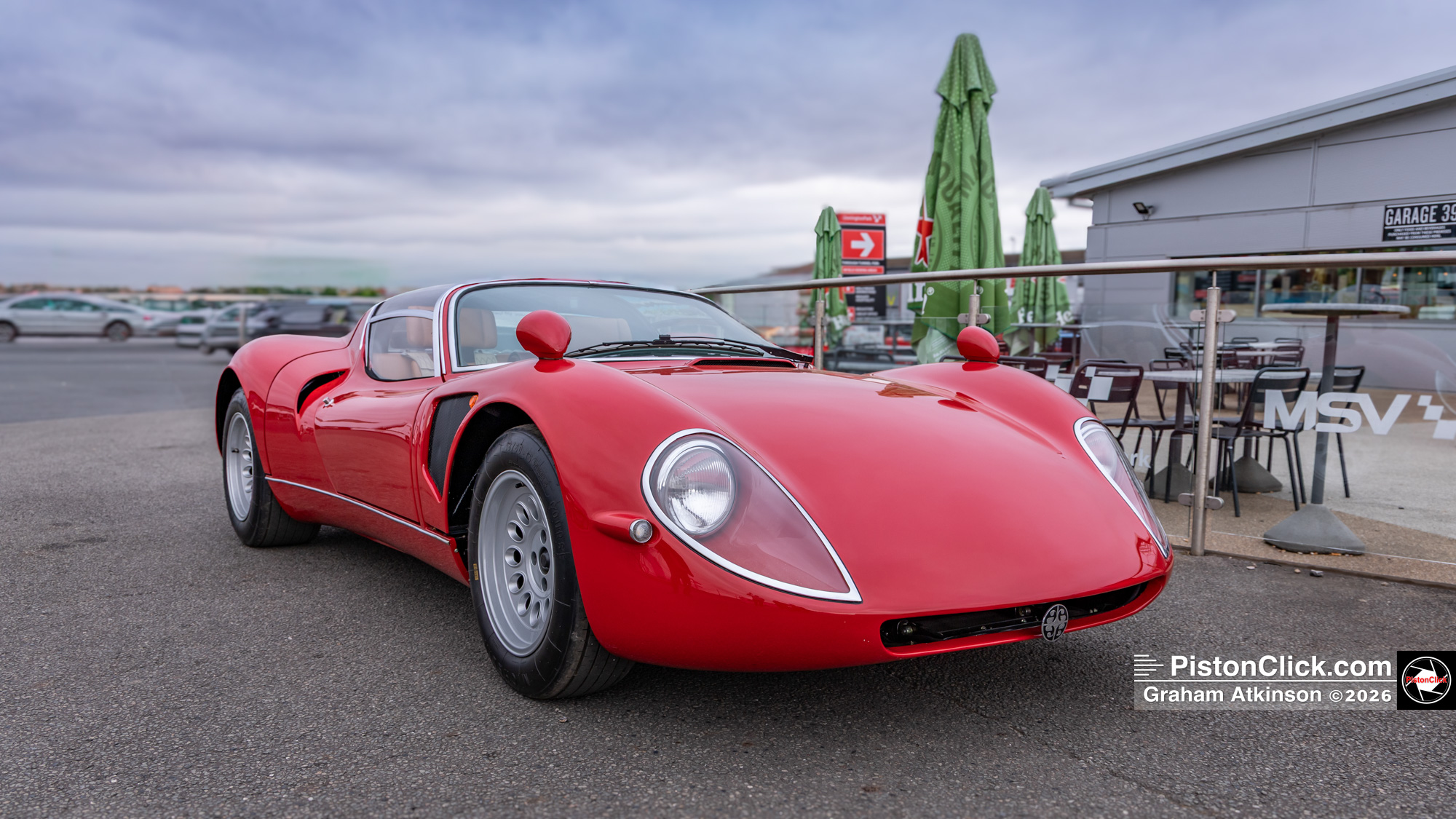
Lee explained that he had never intended to build an exact replica of the Alfa Romeo 33 Stradale. Instead, his vision was to create a respectful homage that captured the beauty and character of the original while offering the comfort expected from a modern driver’s car.
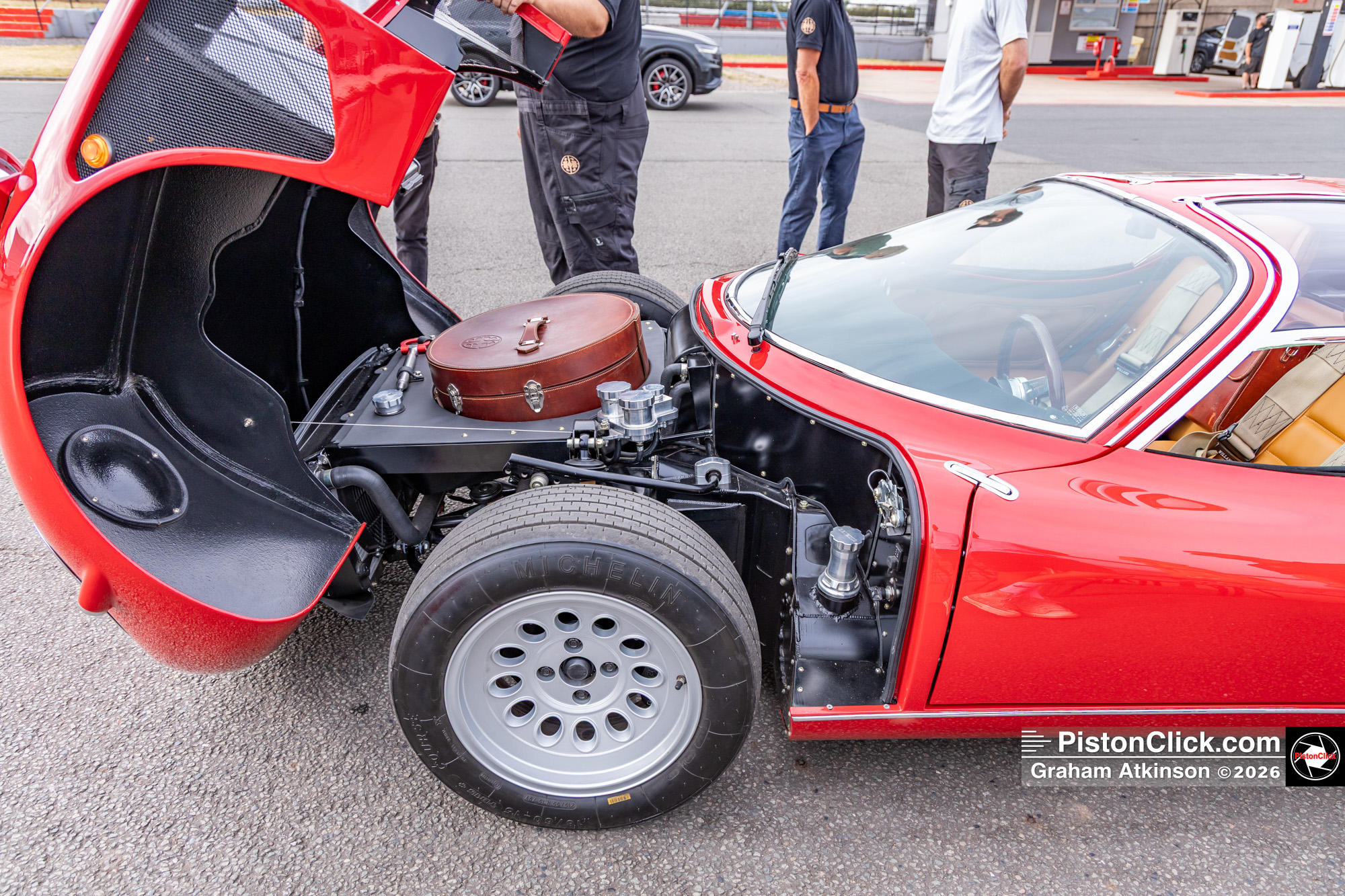
The R33 includes electric windows and air conditioning, yet deliberately does without ABS, traction control or power steering. By removing those electronic aids, the driver enjoys a far more connected and involving experience behind the wheel.
Power comes from a naturally aspirated 4.2-litre Ferrari/Maserati-derived V8, producing 376bhp and driving through a Porsche 997 six-speed gearbox.
Lee summed up the philosophy behind the project perfectly:
“We weren’t chasing horsepower; we were chasing beauty in a car.”
That thinking also explains why the engine has been tuned for drivability rather than outright performance. The R33 Stradale was never designed as a race car. Instead, Automotive Artisans wanted to create an elegant grand tourer that rewards the driver every time it is driven.
From Restoration Project to Limited Production
The idea for the R33 Stradale grew naturally from Automotive Artisans’ restoration business. Lee’s speciality is hand-crafting steel and aluminium bodywork, and over the years the company has assembled an in-house team capable of restoring virtually any classic car.
While restoring an original Alfa Romeo 33 Stradale, the owner asked whether Lee could build a recreation. That commission took five years to complete and proved so successful that it inspired Automotive Artisans to launch a limited production run.
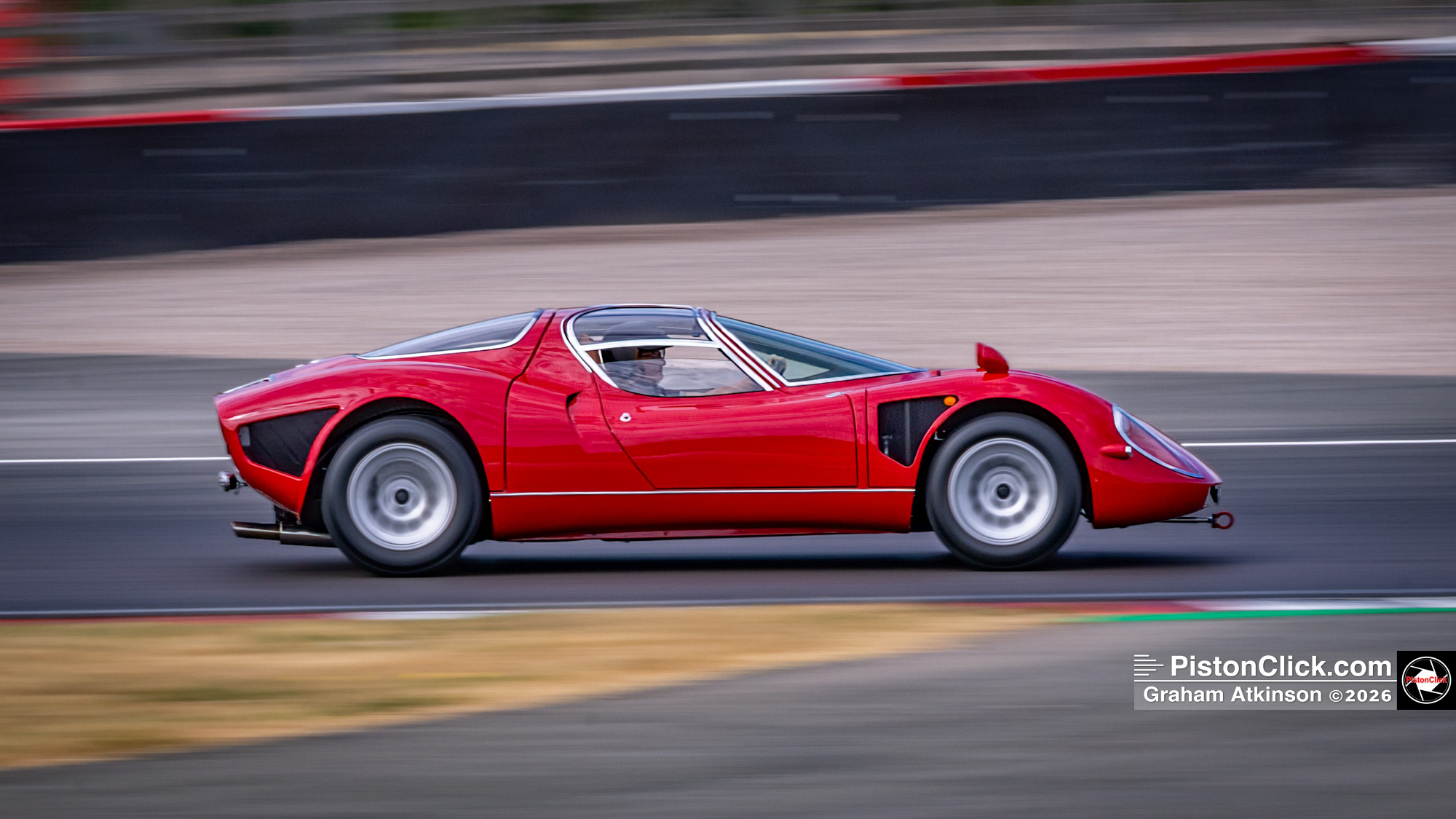
Only 33 R33 Stradales will be built.
Each car will be hand-crafted and tailored to its owner, ensuring that no two examples are exactly alike. If you’re hoping to own one, you’ll need to move quickly. Lee told me that pre-orders have already been placed for almost the entire production run.
As he prepared to leave, he dashed back across the paddock, handed me his business card and invited me to visit the Automotive Artisans workshop for a behind-the-scenes look at how these remarkable cars are created.
Keep an eye on PistonClick for that feature in the near future. Just when I thought the day couldn’t get any better, it did. Earlier that morning I’d spotted a beautiful Ferrari and managed to introduce myself to its owner, who was surrounded by admirers. I mentioned that I’d love to feature the car, and his reply immediately brought a smile to my face.
“Yes, I know all about PistonClick. No problem—come back around lunchtime when it’s a bit quieter.”
It looked like the RMA Track Day still had a few more surprises in store.
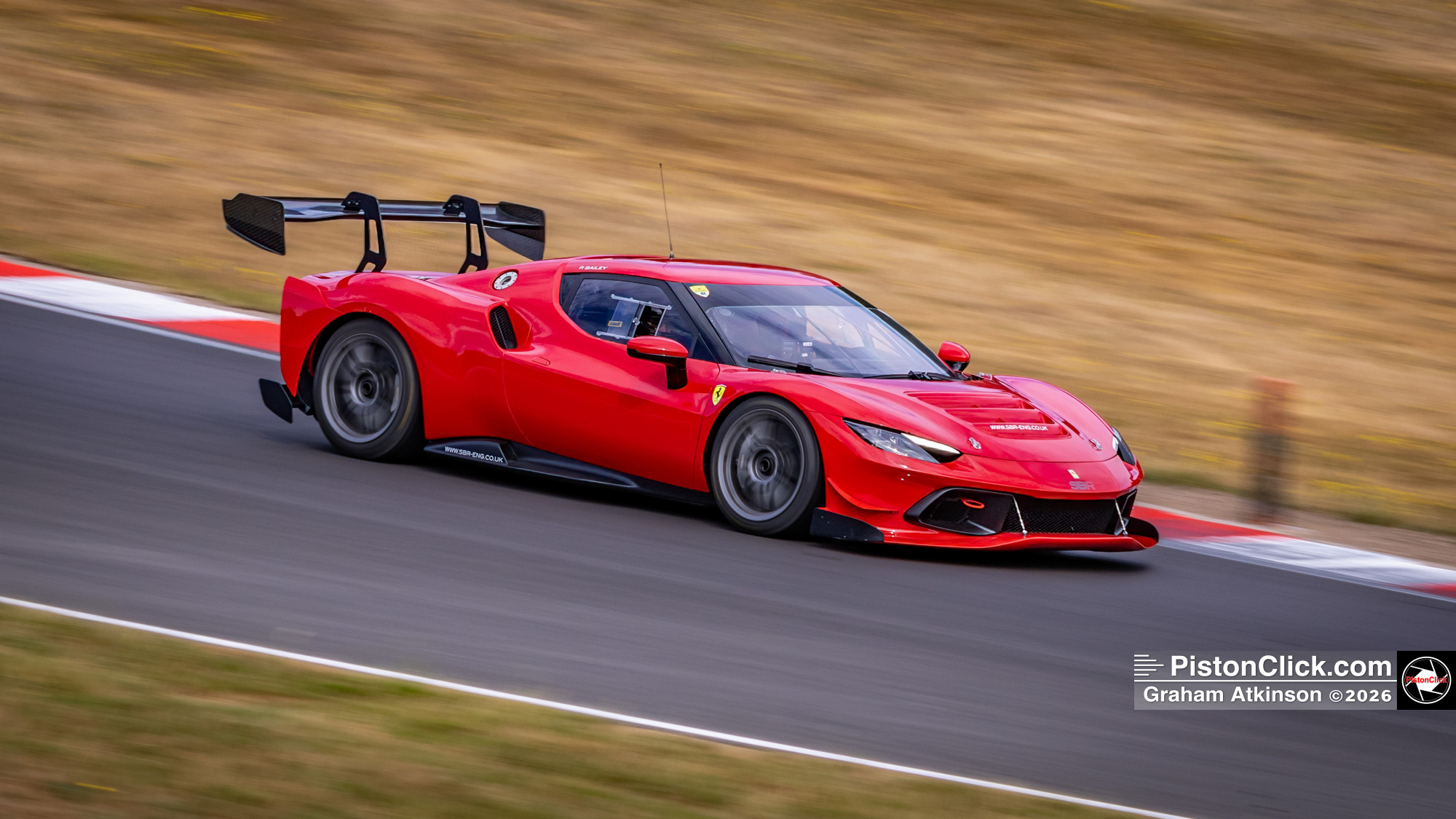
Ferrari 296 Challenge
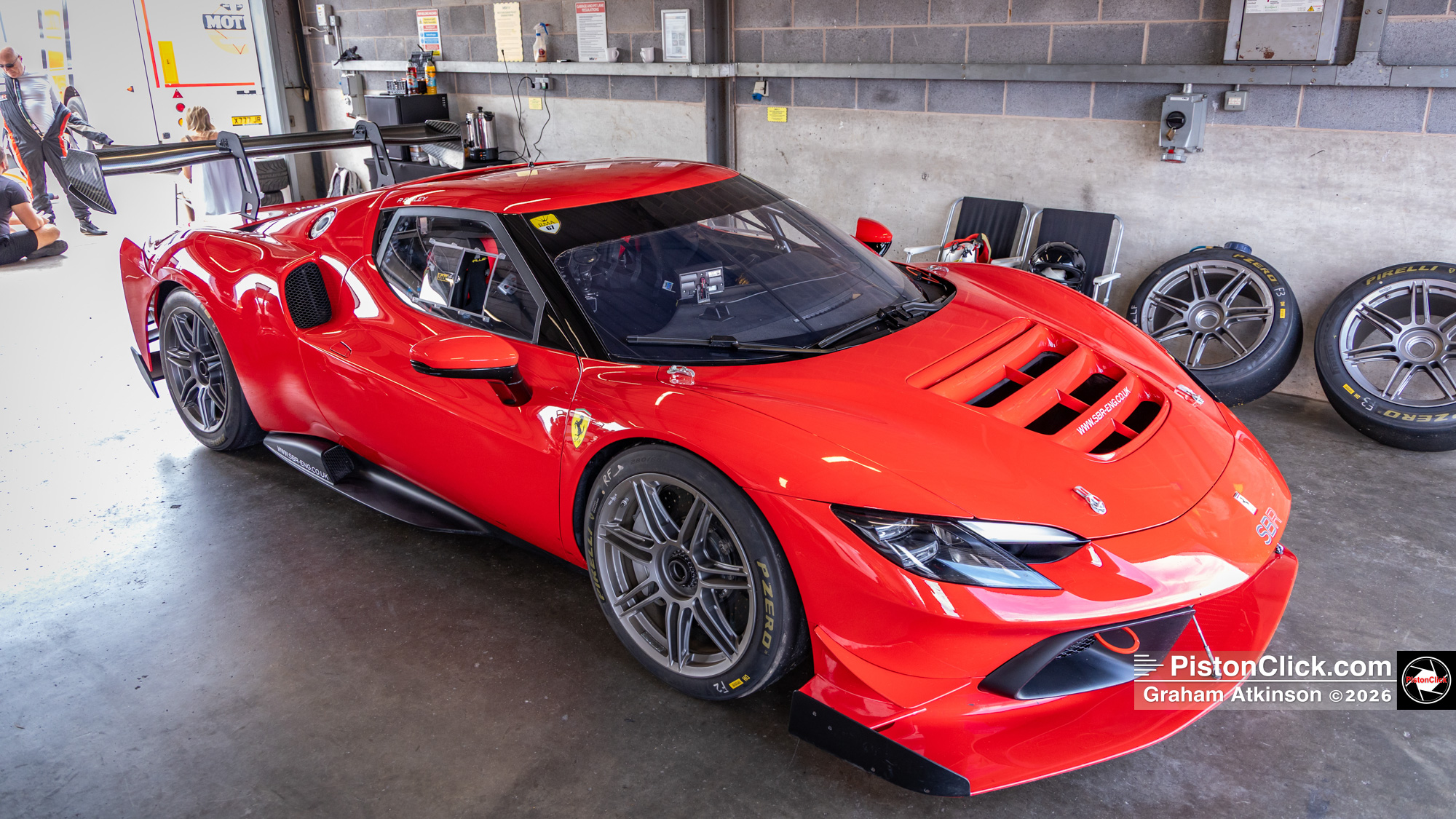
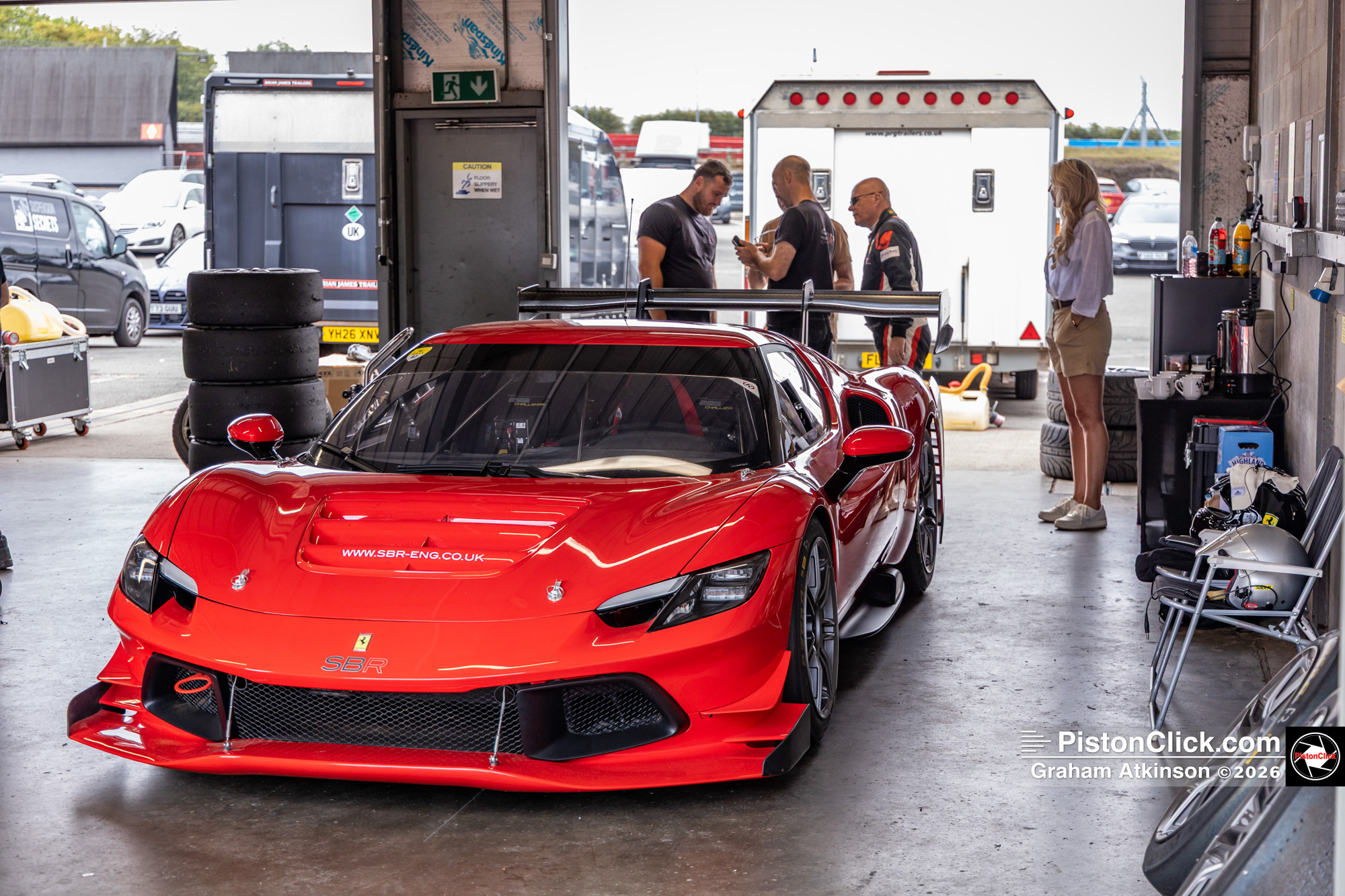
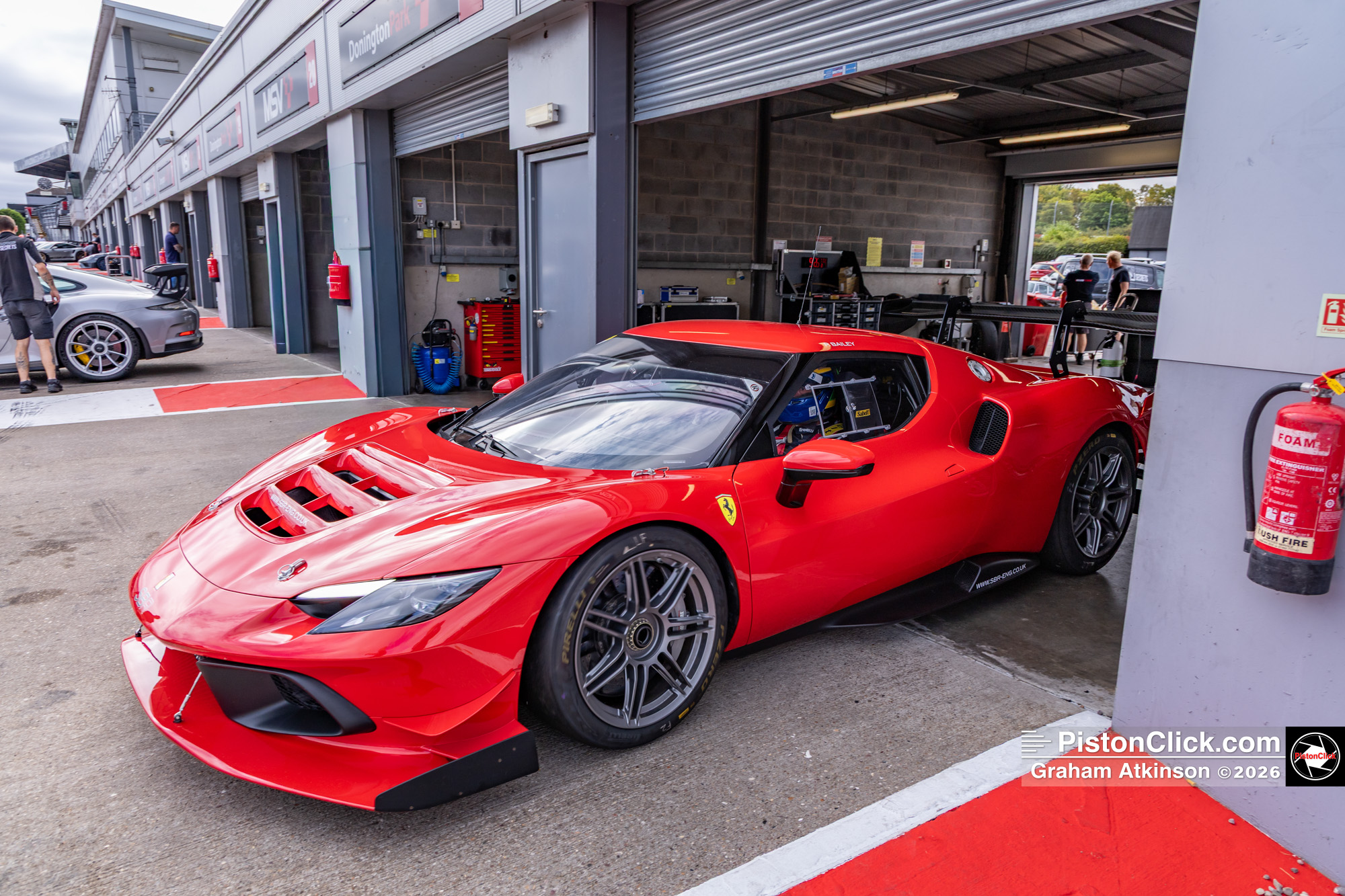
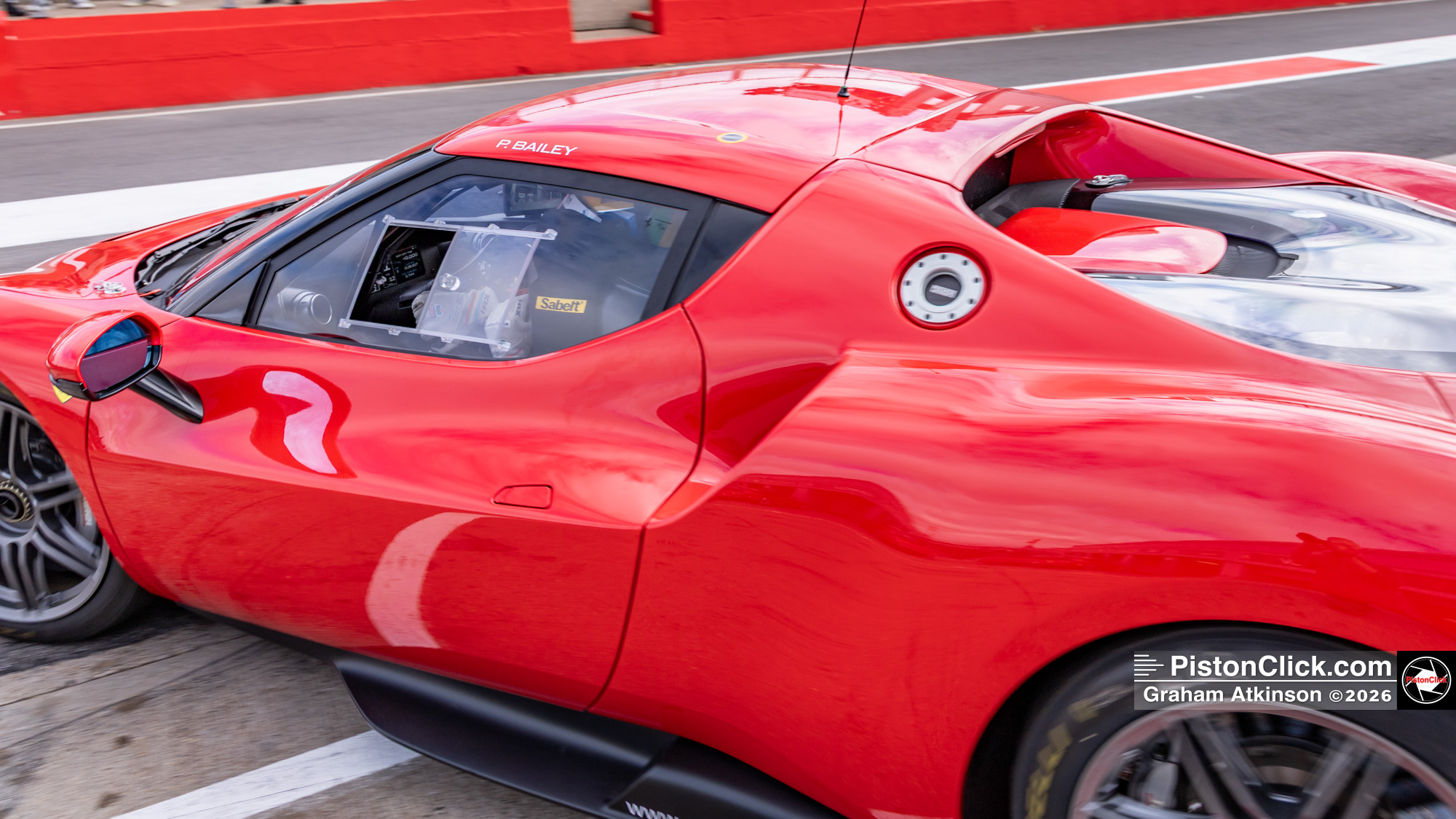
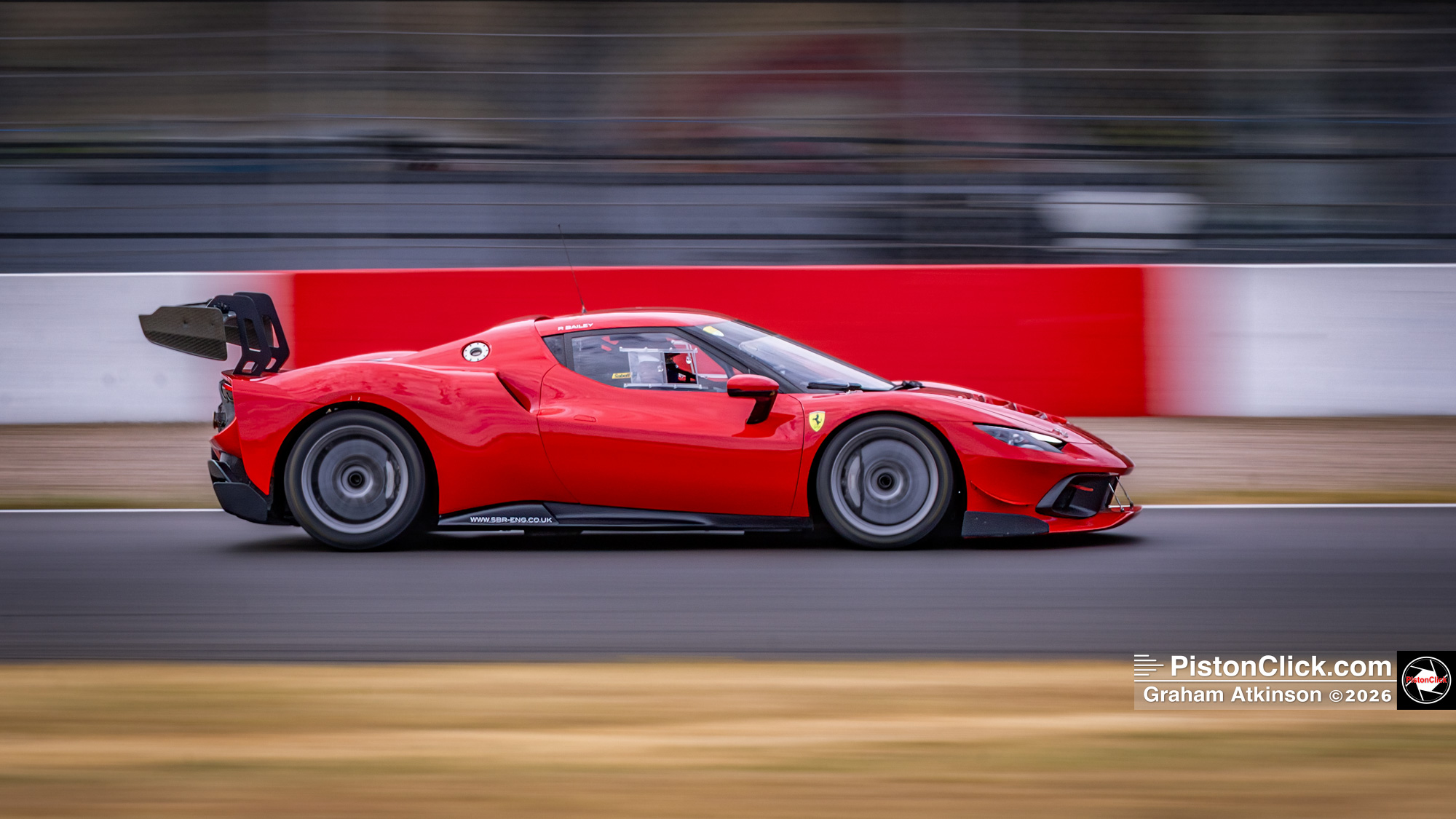
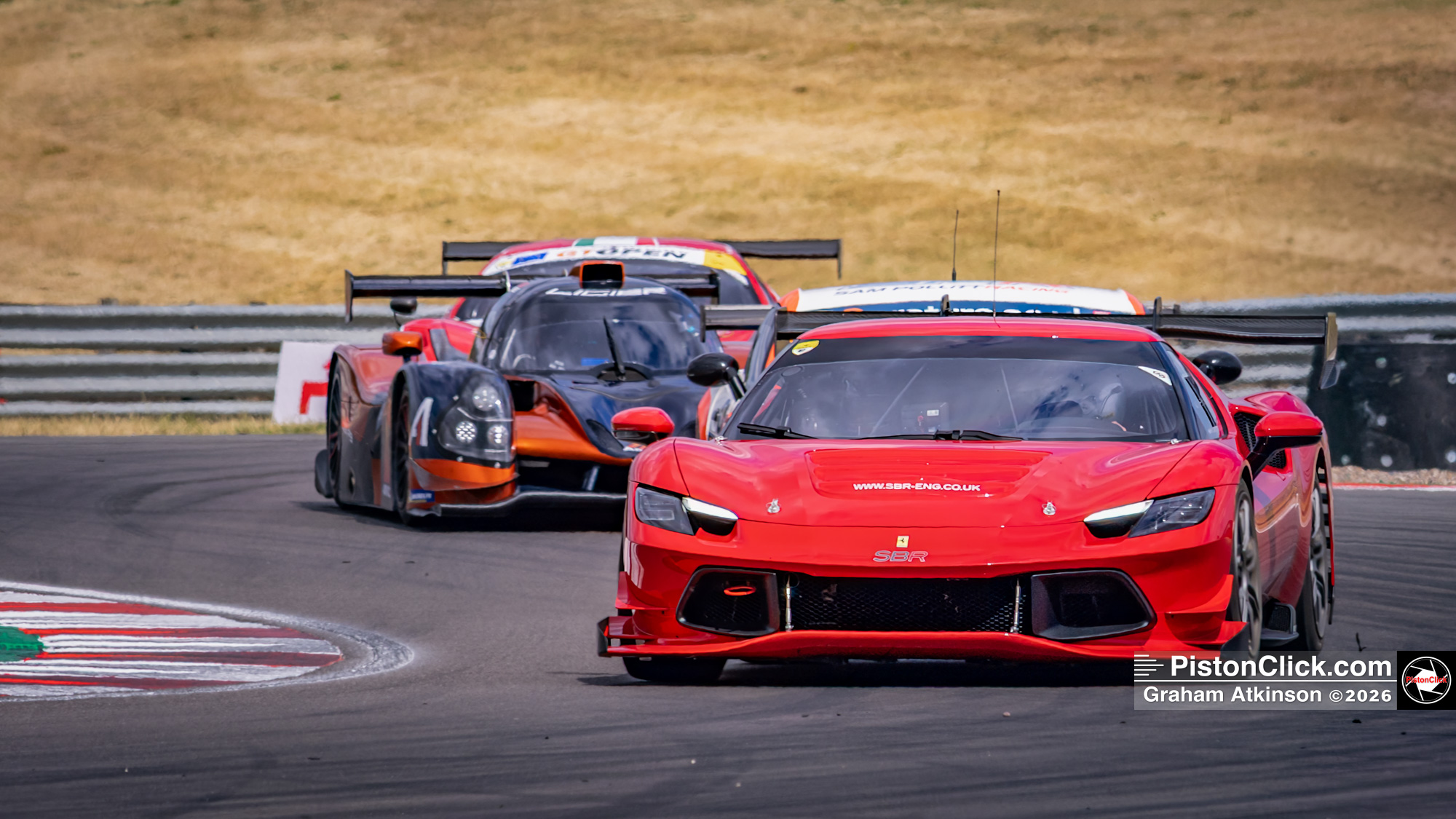
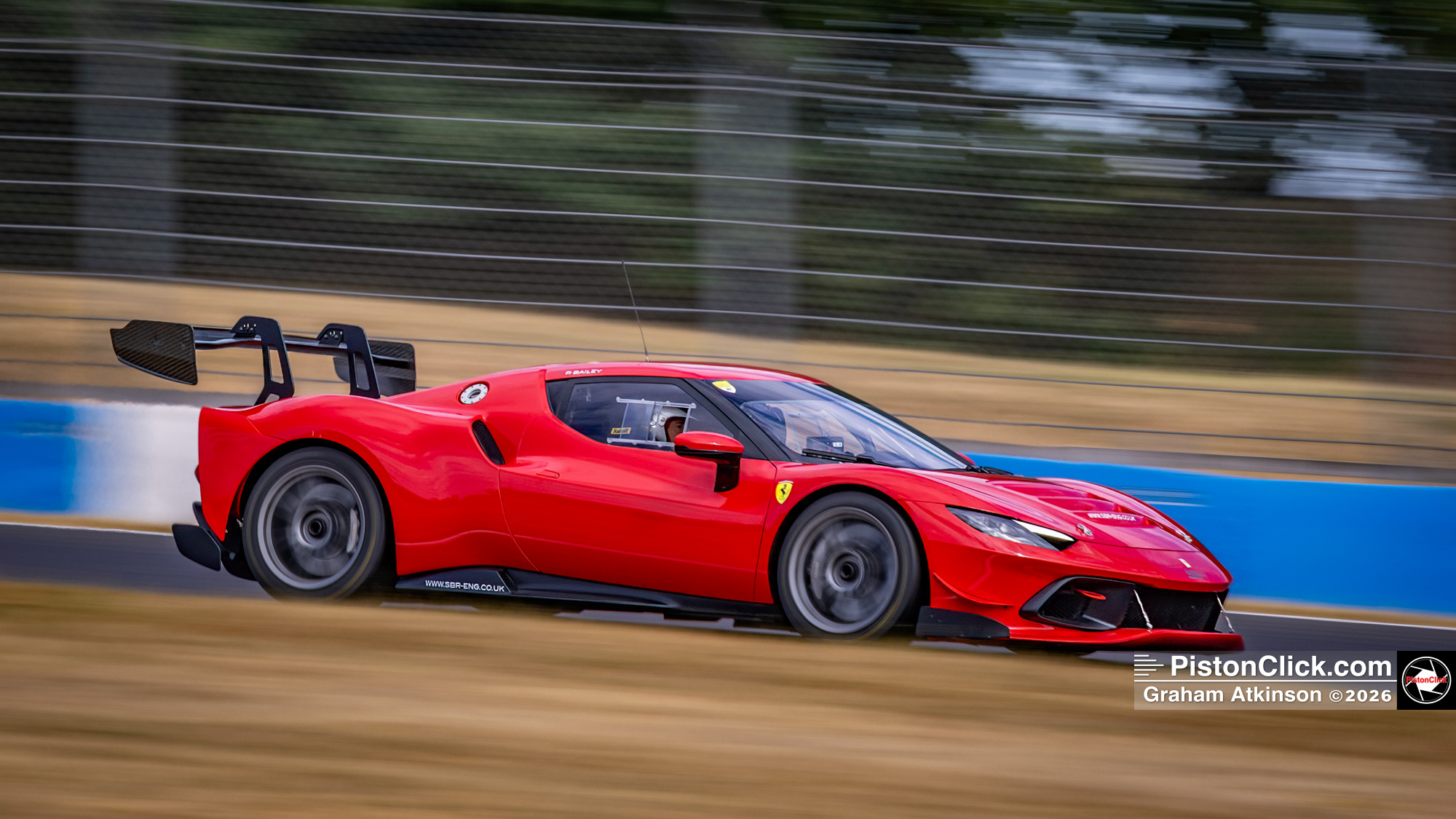
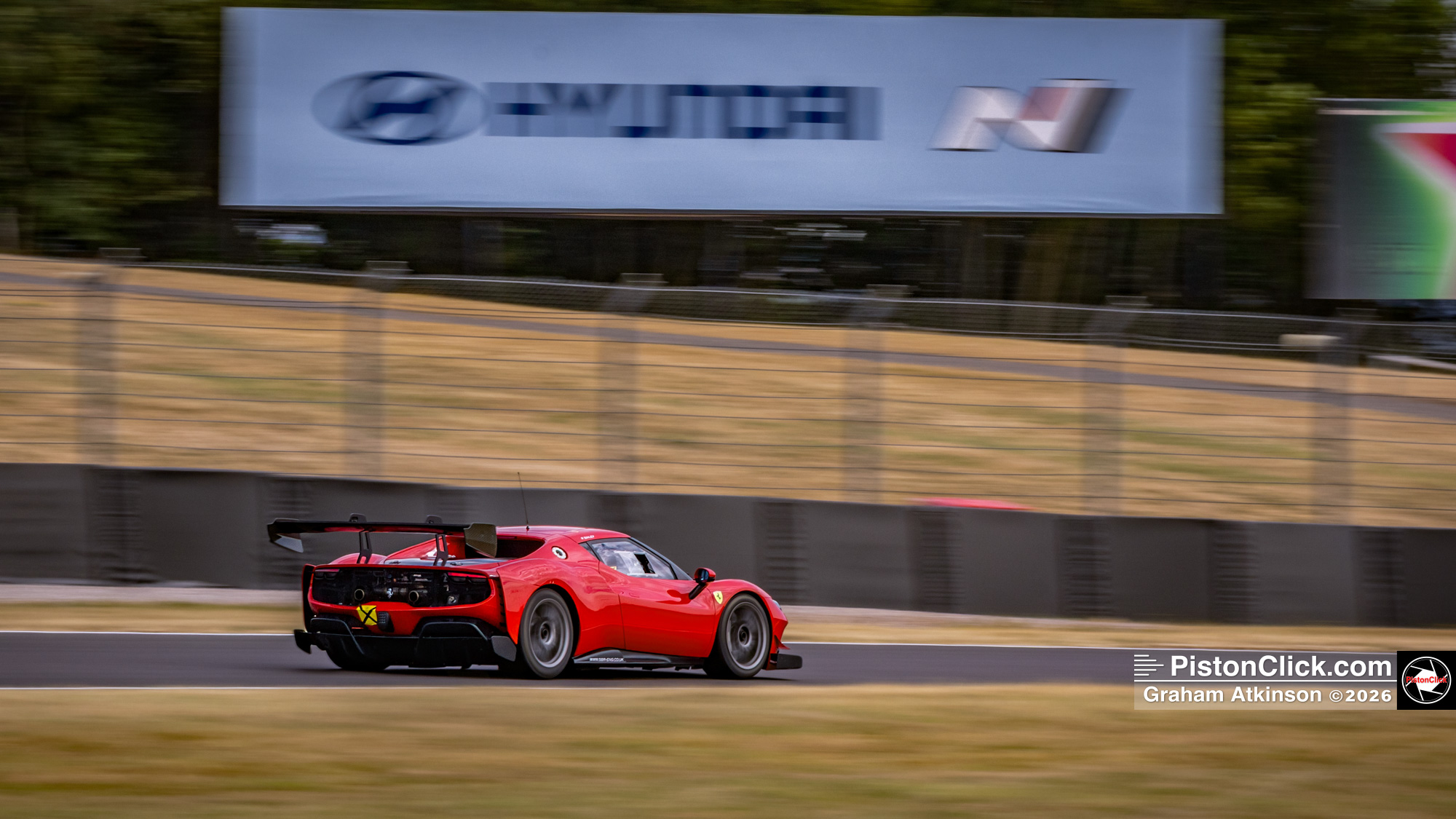
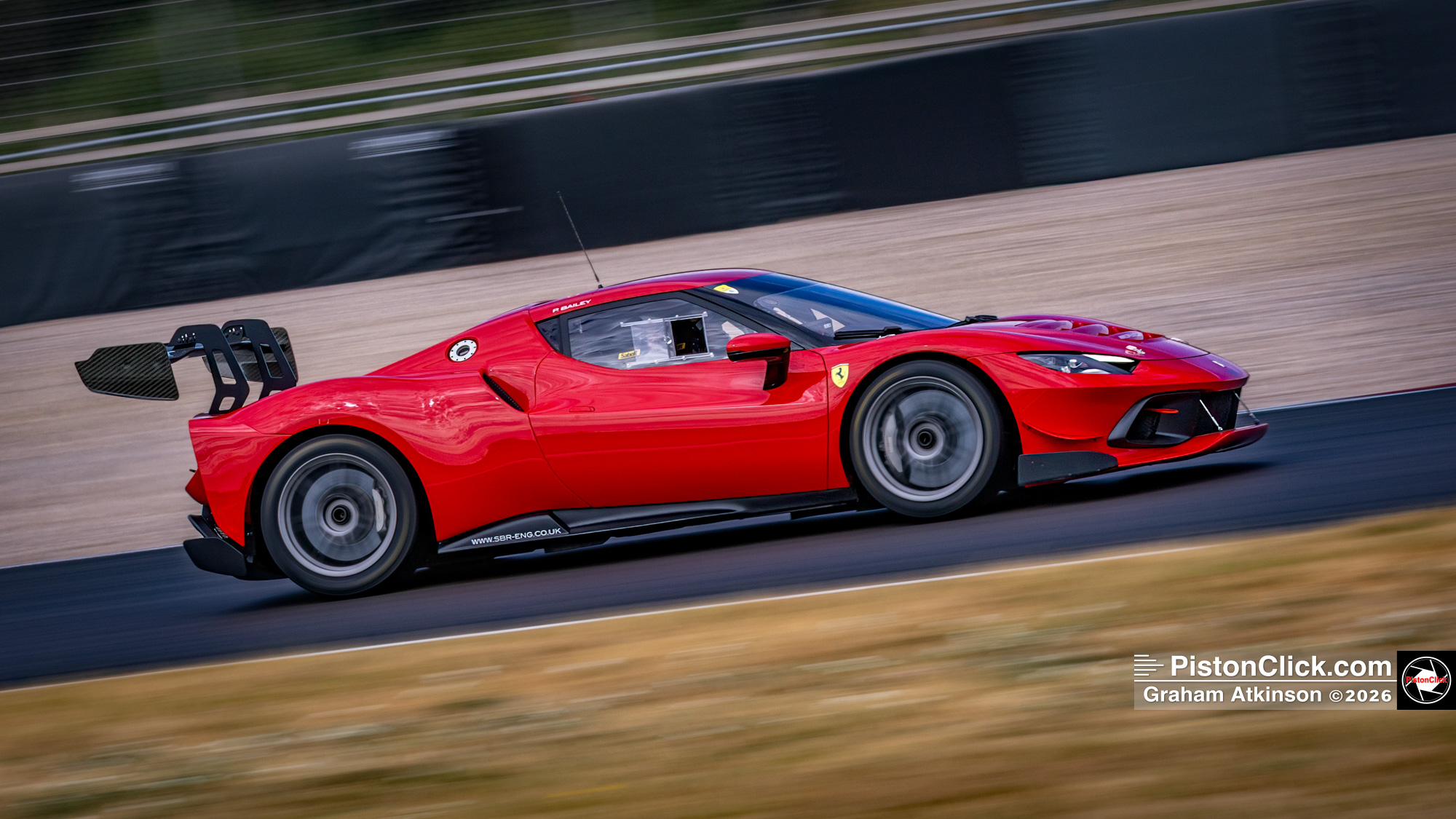
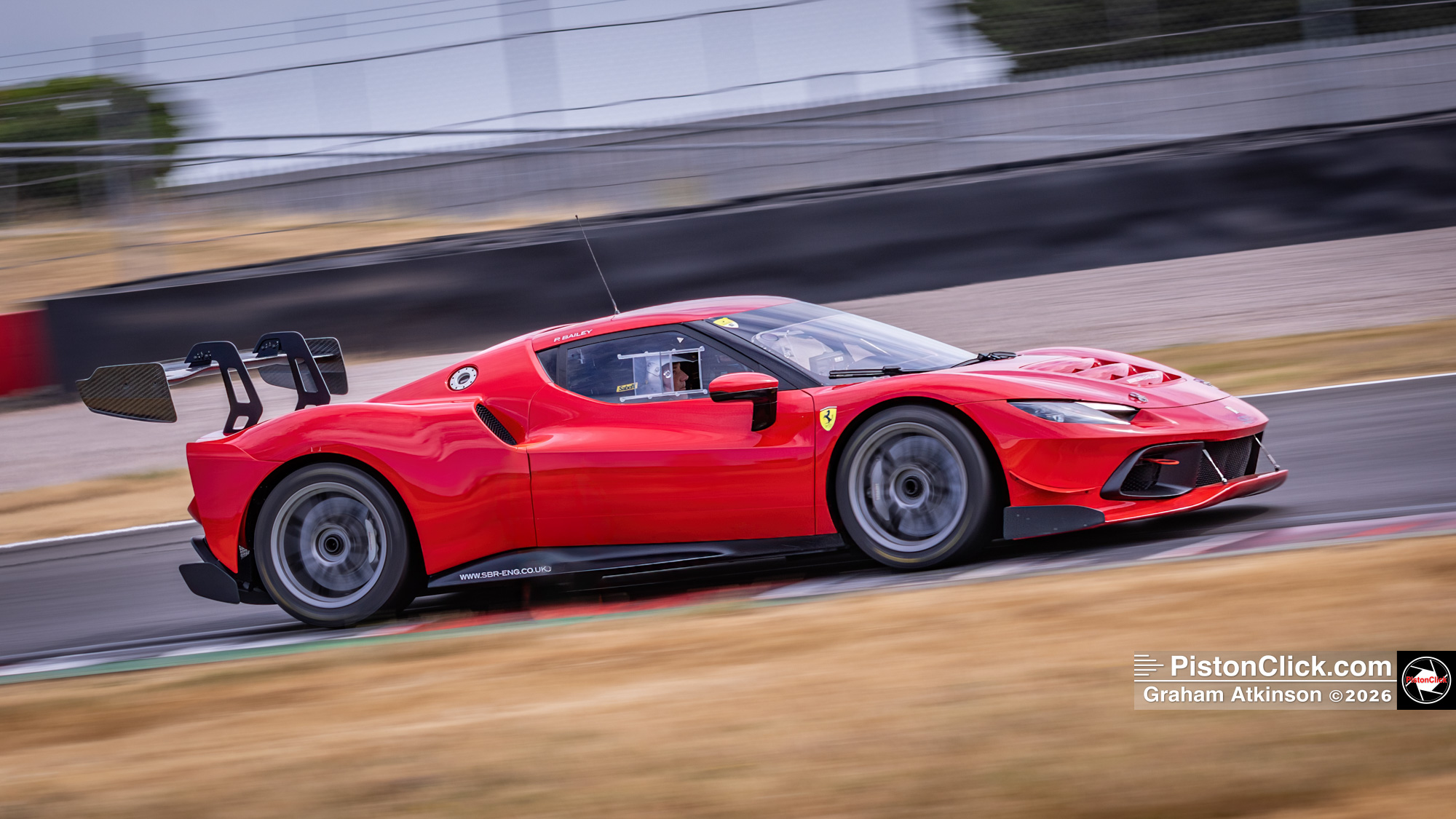
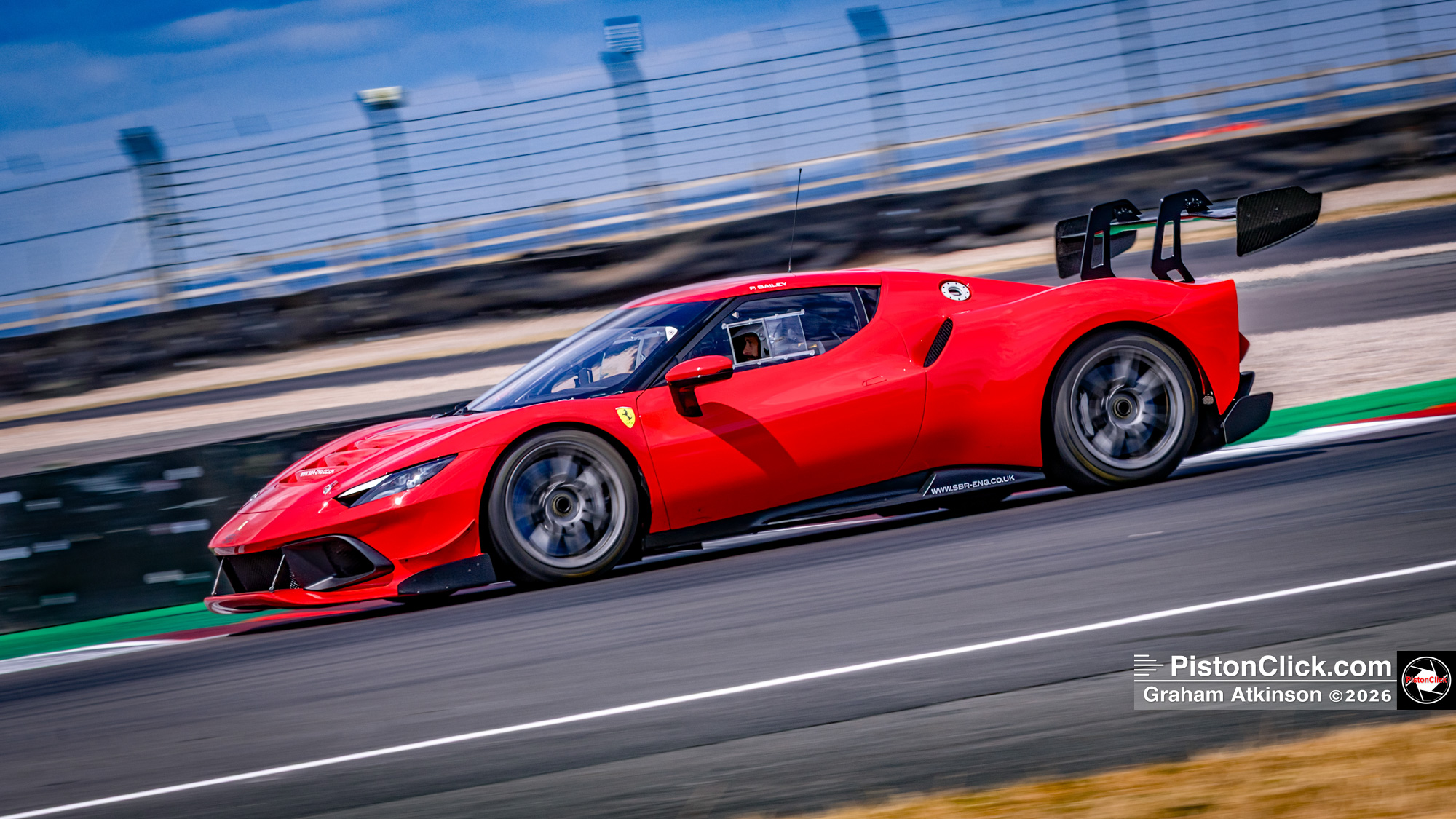
The Ferrari 296 Challenge is a purpose-built track car that bridges the gap between the road-going Ferrari 296 GTB and the full GT racing Ferrari 296 GT3. Built by Ferrari from 2024 exclusively for the Ferrari Challenge one-make championship, it packs around 700bhp into a machine designed purely for the circuit.
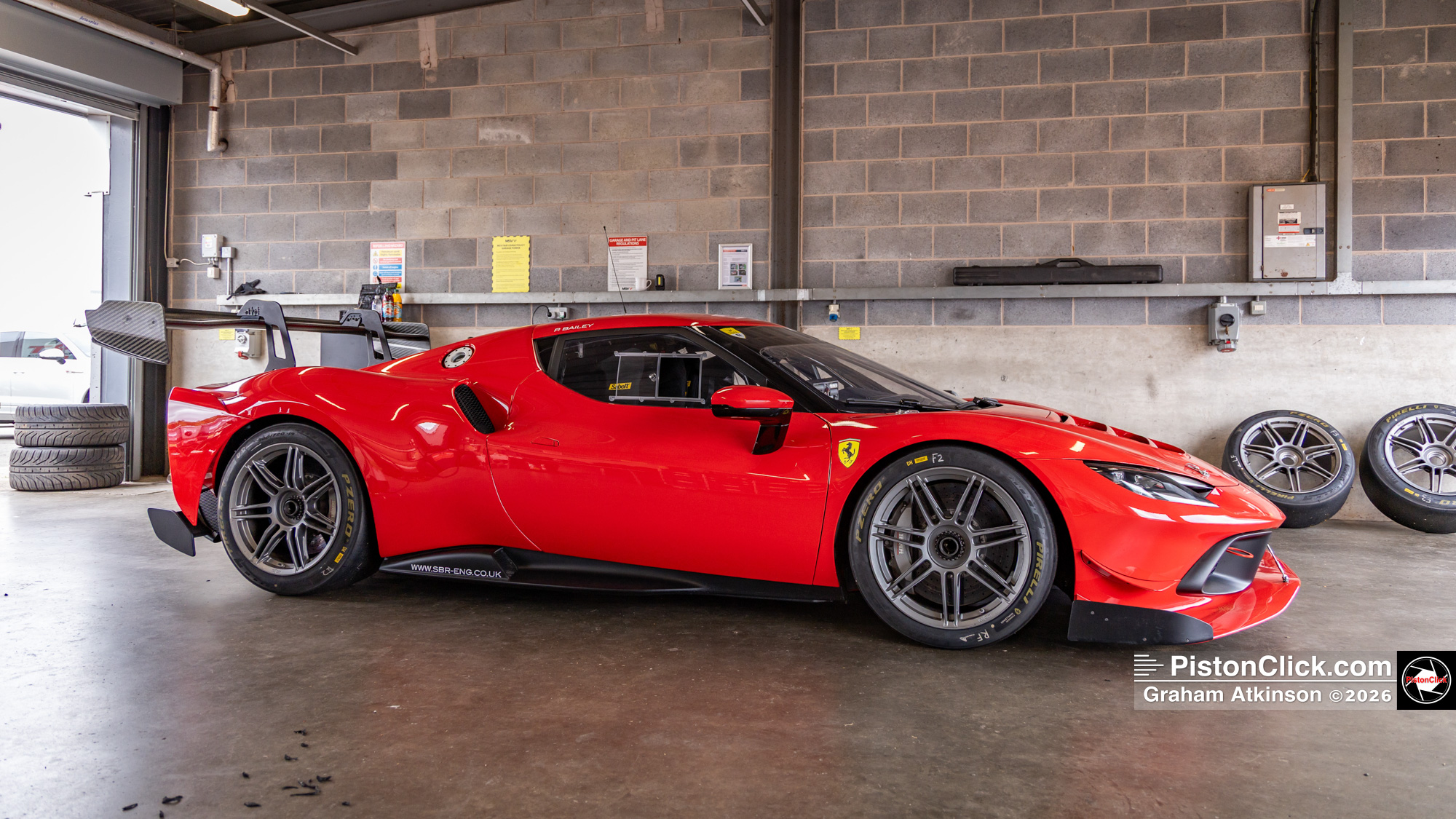
That was the car sitting in front of me in a quiet garage at Donington Park as I caught up with its owner, Paul Bailey, and his wife, Selena, to find out what had brought them to the RMA Track Day.
Meeting Paul Bailey
Paul introduced himself with characteristic honesty.
“My name is Paul Bailey. I’m a serial car collector, but my number one hobby is racing. I didn’t start until I was 52, which was a bit late in life, but I’ve enjoyed a very successful few years and it’s something I absolutely love.”
The Ferrari 296 Challenge had been built specifically for the Ferrari Challenge championship, a race series contested around the world. “It’s an exceptionally fast car with around 700bhp,” Paul explained. “The first time you climb into something like this it can make you very nervous, especially if you don’t have much experience and you know how valuable the car is. Ironically though, these cars are often easier to drive than many people imagine. The Ferrari is certainly one of those. “It’s absolutely fabulous on track and I’m very lucky to own it.”
Listening to Paul speak, it became obvious that he sees these cars as machines to be enjoyed rather than investments to be hidden away. So I asked the obvious question. “What brings you to Donington Park today?”
His answer had nothing to do with lap times. “Selena and I have been incredibly fortunate in life,” he said. “We feel it’s important to give something back, so we do a lot of work for charity.”
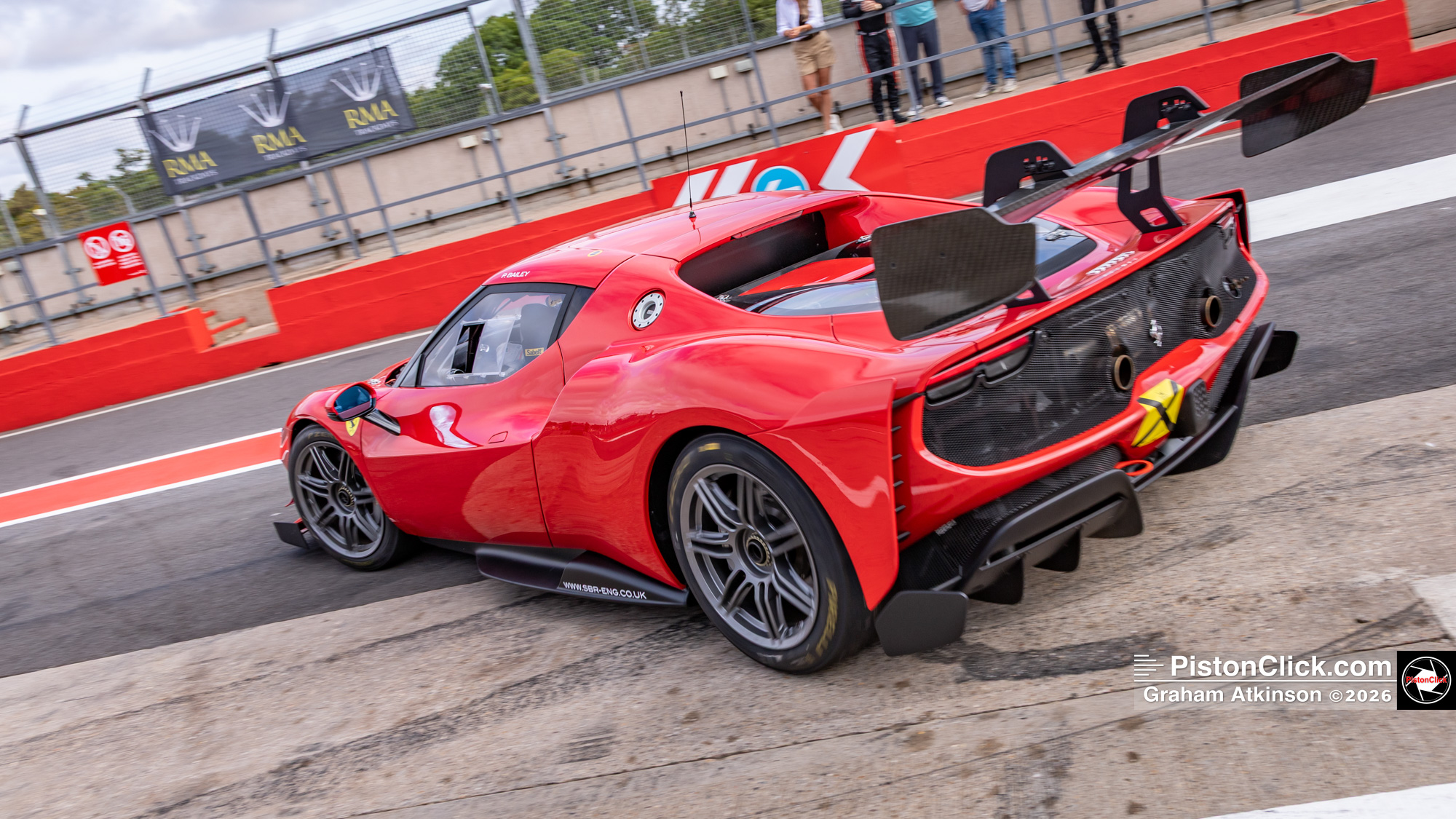
The day’s event centred around guests who had successfully bid at a charity auction for the opportunity to experience the Ferrari 296 Challenge around Donington Park. However, Paul had organised an extra surprise.
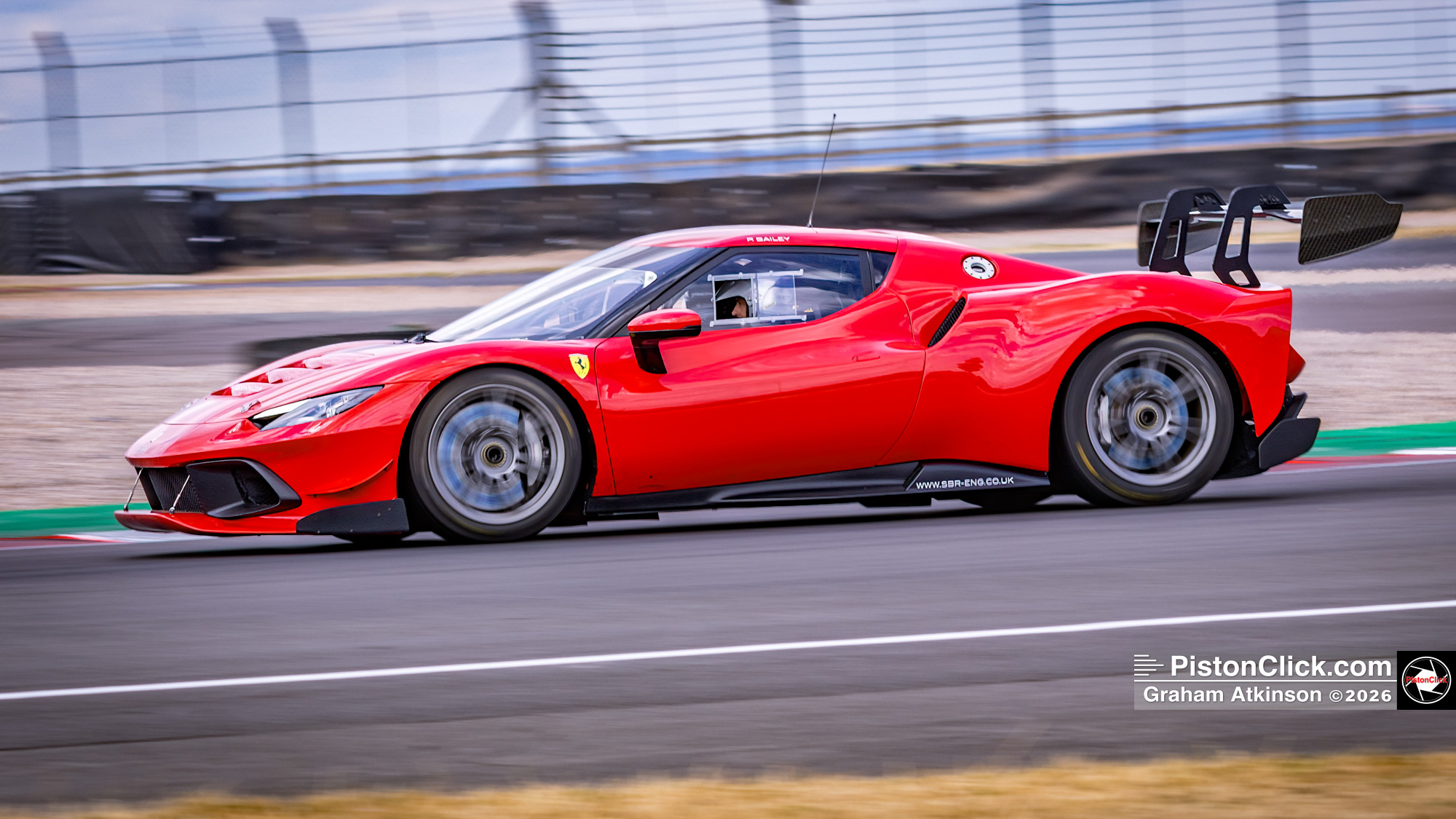
The winners also received high-speed passenger laps with former Formula One driver and Le Mans winner David Brabham, son of three-time Formula One World Champion Jack Brabham. “They didn’t know about that,” Paul smiled. “It was just something I threw in to make their day even more special.”
Paul also revealed that he and David regularly share driving duties in one of his cars in the GT Cup Championship. “I start the race and David takes over to finish it.”
Cars Are Meant to Be Driven
During the interview I asked Paul how he would describe his philosophy towards cars and motorsport. For a moment he sat silently, staring into the distance.
Before he could answer, Selena laughed. “Go on… tell him. I dare you.” Paul smiled. “I borrowed this from a very famous American car collector, Jim Glickenhaus, who I’ve met a couple of times.” Then he delivered the quote.
“Not driving your Ferrari is like not sleeping with your girlfriend so she’s fresher for the next bloke.”
The garage erupted with laughter. Behind the humour, however, was a serious point. Paul believes too many Ferraris spend their lives hidden away as investments while values continue to rise.
“So many Ferraris are sitting in collections and never being driven,” he explained. “That’s not what they were built for. They were designed to be driven and raced.”
His own collection certainly reflects that philosophy. “I drive all my cars. You’ll often see them on social media. Just the other week I took my Ferrari F80 into London. It gave lots of people the chance to see a very rare and beautiful car.”
Eighty-Nine Cars… and Counting
Towards the end of our conversation I casually asked one final question. “So… how many cars do you actually own?” Without hesitation Paul replied, “Eighty-nine.” Thinking I’d misheard him, I asked him to repeat the number. He smiled and slowly replied,
“E…i…g…h…t…y…n…i…n…e.”
“We’ve built a big collection over the years,” he said. “But space is limited, so if I buy something new, something else has to go.” His latest acquisition is the eagerly awaited Aston Martin Valhalla.
“To make room I had to sell my McLaren Senna,” he explained. “It was a fabulous car, but I’d covered around 10,000 miles in it. It was time for someone else to enjoy it while I experienced something new.”
That final comment summed Paul Bailey up perfectly. He doesn’t buy cars simply to own them. He buys them to experience them.
As our interview came to an end, I thanked both Paul and Selena for their openness and generosity before they headed off to continue their day. I walked back to my own car and sat quietly for a few minutes, reflecting on the conversation.
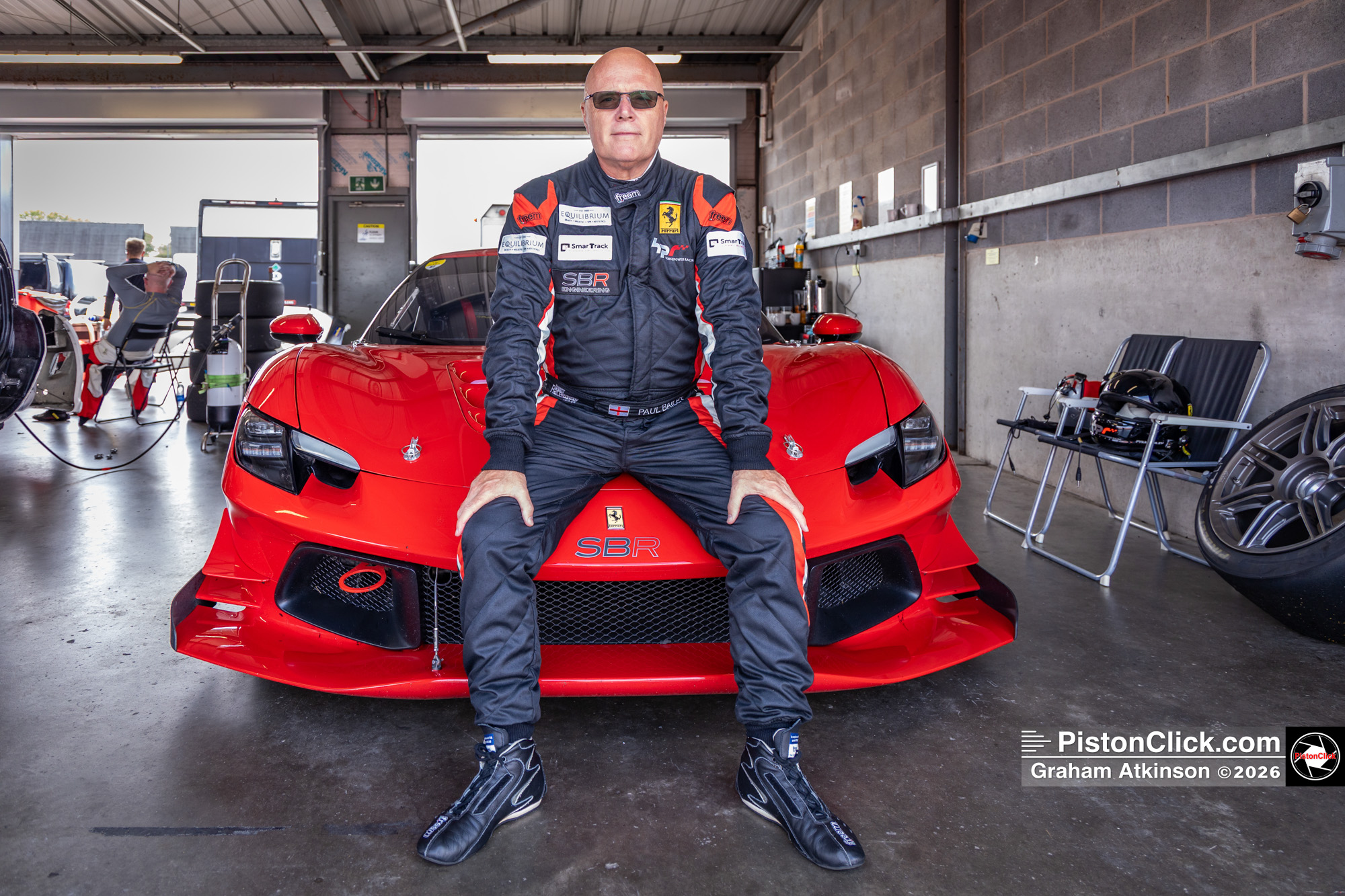
For most of us, owning a collection of 89 remarkable cars is the stuff of dreams. Yet one of the great privileges of writing for PistonClick is the opportunity to spend time with people like Paul Bailey. For a brief moment, you get a glimpse into a world very few people ever experience—and then you return home with another story worth telling.
Thanks to Graham Atkinson for this RMA Track Day report. You can find more of his work by following the links below.

