


Donington Park Unsilenced Test Day – Three Very Different Racing Cars
Report by Graham Atkinson
12 August 2026
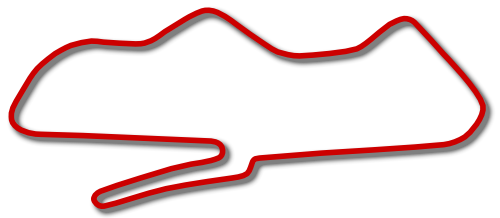
Donington Park was preparing for a very different kind of motorsport weekend when I arrived for the unsilenced test day on 6 August 2026.
With just two days to go before the Convoy in the Park, the main paddock had filled with Trucks, and the village that surrounds the event. They would provide the main attraction over the weekend, but today belonged to the cars. And, more importantly, it was another unsilenced test day. That meant one thing, noise, lots of it.
Donington Park delivered another superb selection of racing machinery, and there were so many interesting cars in the garages that choosing just three for this report proved surprisingly difficult. I could have walked into almost any garage and found something worthy of a feature.
Eventually, I settled on three cars that could hardly be more different.
A 1958 Lister-Jaguar ‘Knobbly’, an Aston Martin DBR4/250/2 and a Ford GT40.
Each has its own fascinating history, and each arrived at Donington with a different purpose.
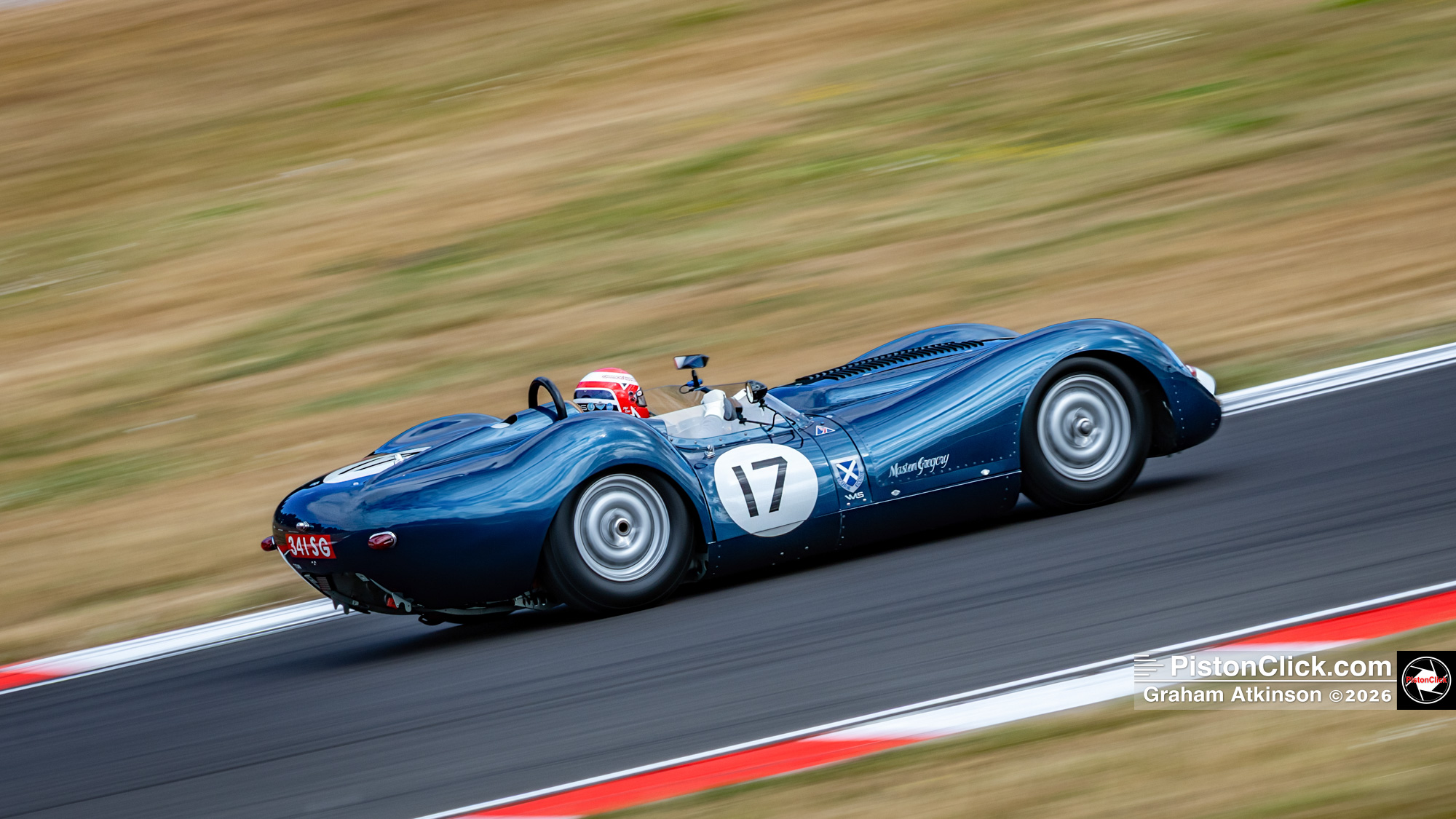
1958 Lister-Jaguar ‘Knobbly’
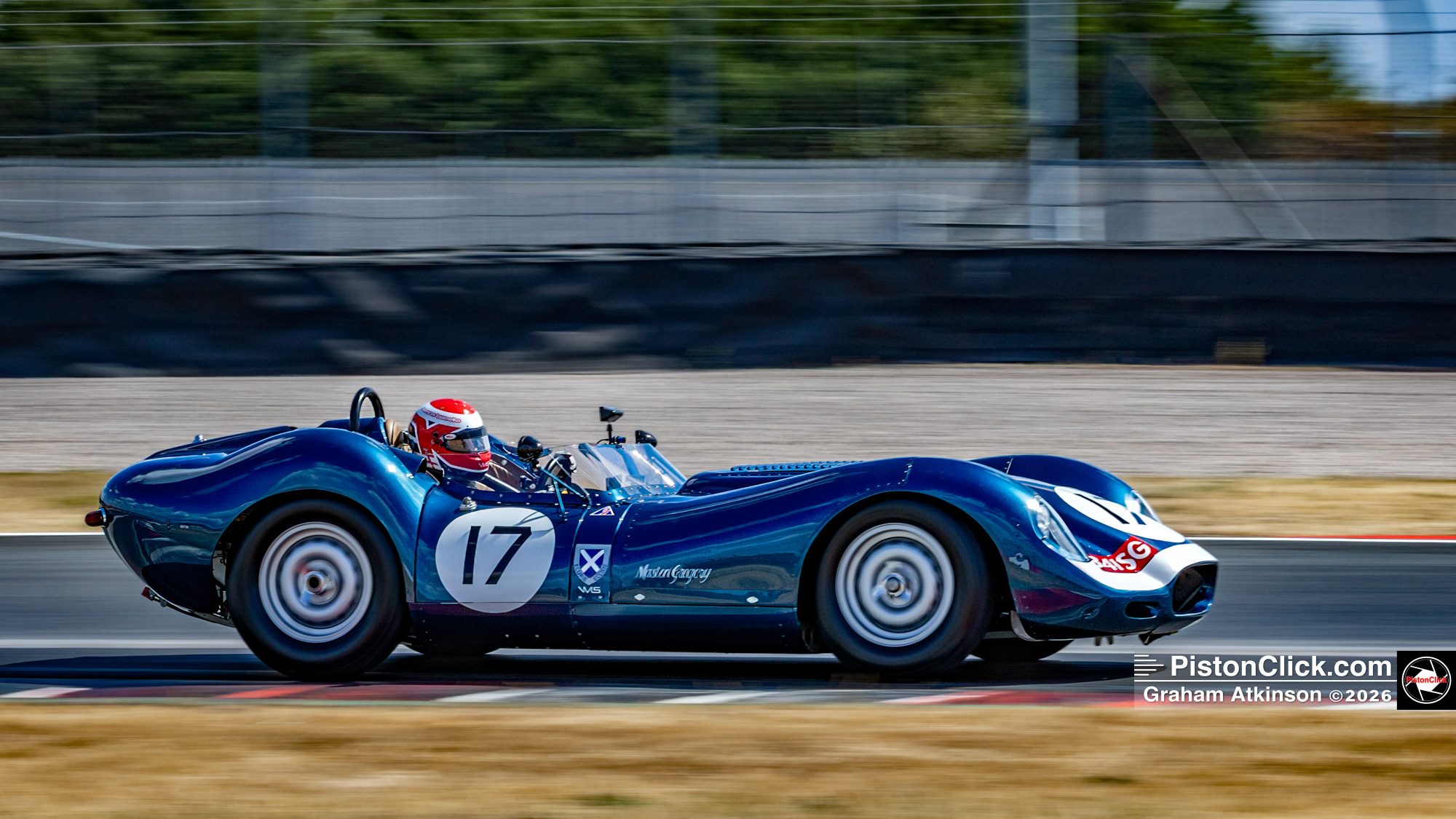
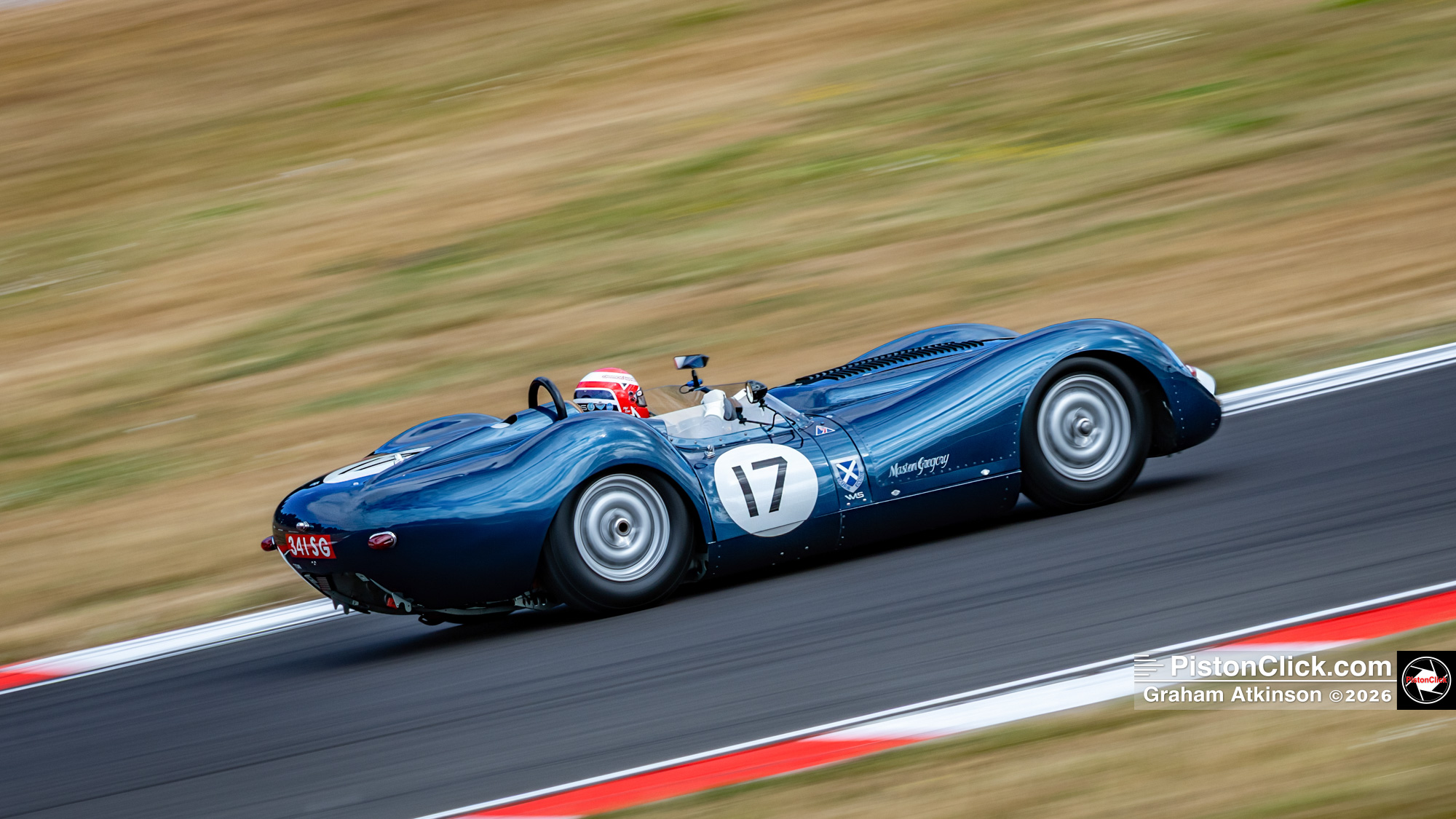
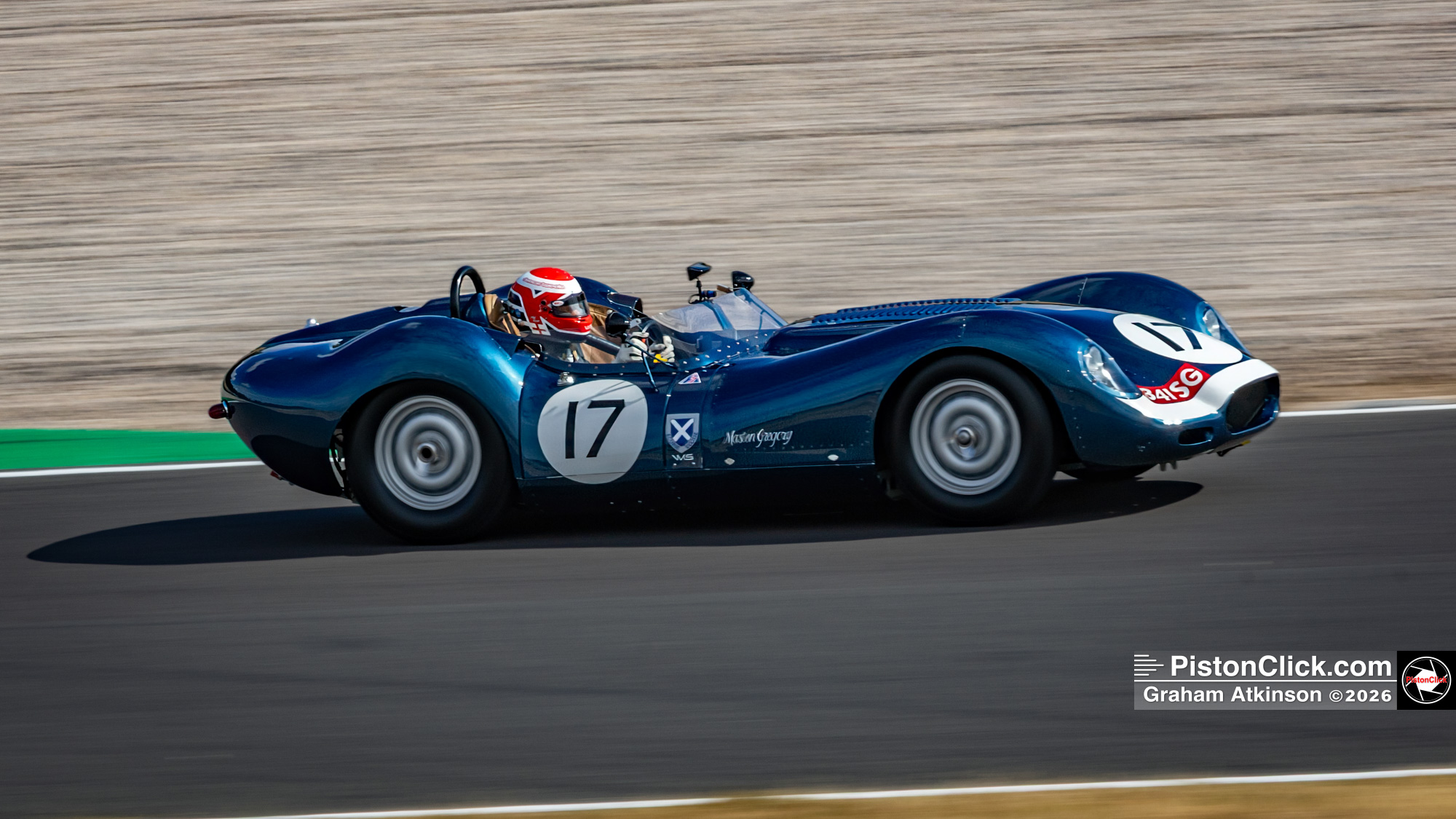
The first car to catch my attention was this magnificent 1958 Lister-Jaguar ‘Knobbly’, chassis number BHL 104, powered by its 3.8-litre Jaguar engine.
The car has a particularly interesting history. It was the fourth customer car supplied in kit form to the Scottish racing team Ecurie Ecosse and originally enjoyed considerable success in the hands of American Formula 1 driver Masten Gregory.
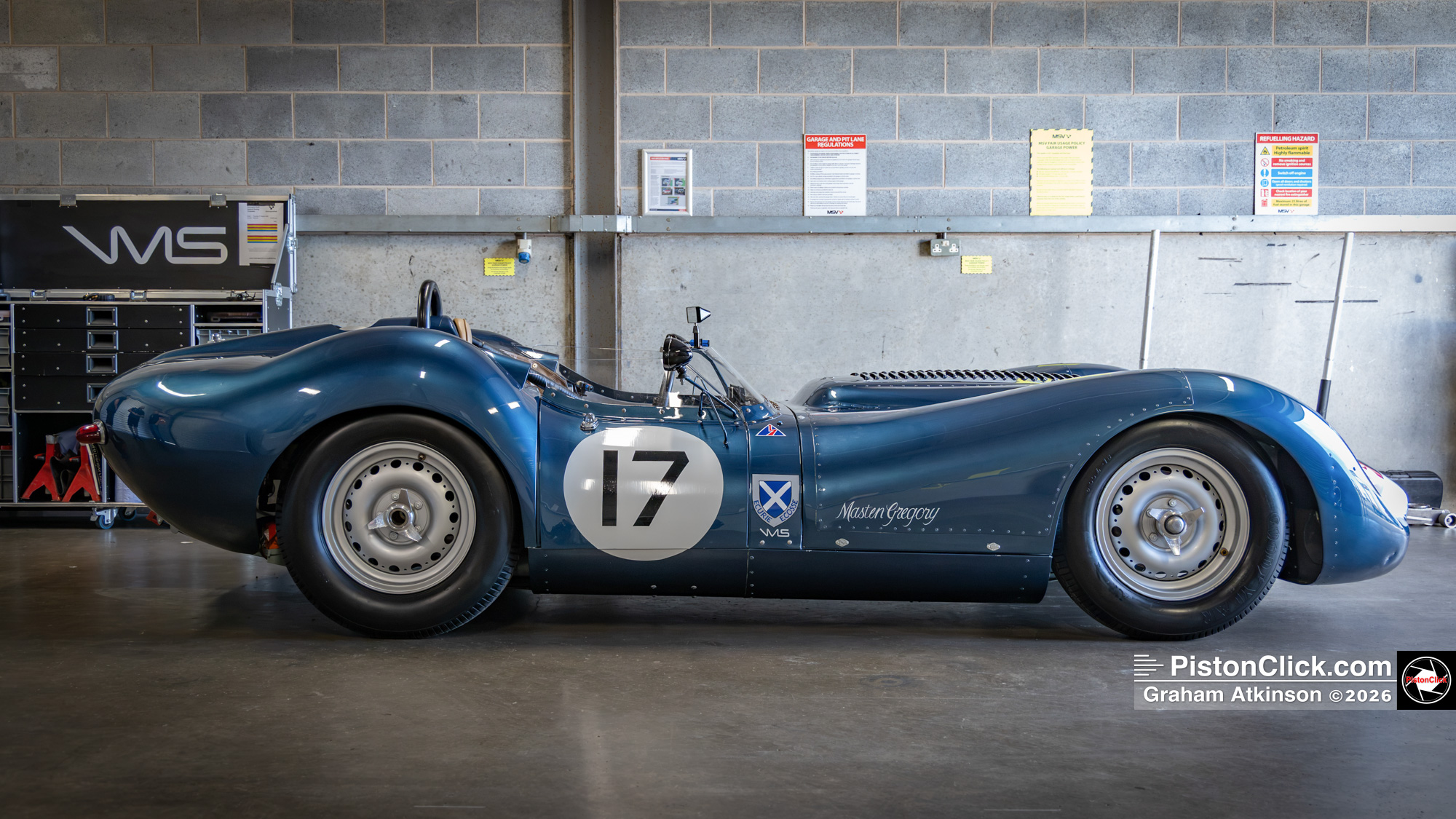
Gregory raced the Lister in several events during 1958, taking victories along the way, including the Grand Prix de Spa.
Later that year, however, the car suffered a major accident at Silverstone. It returned to the Ecurie Ecosse workshop, where the team removed all the salvageable components and used them in the construction of the Lister Monza.
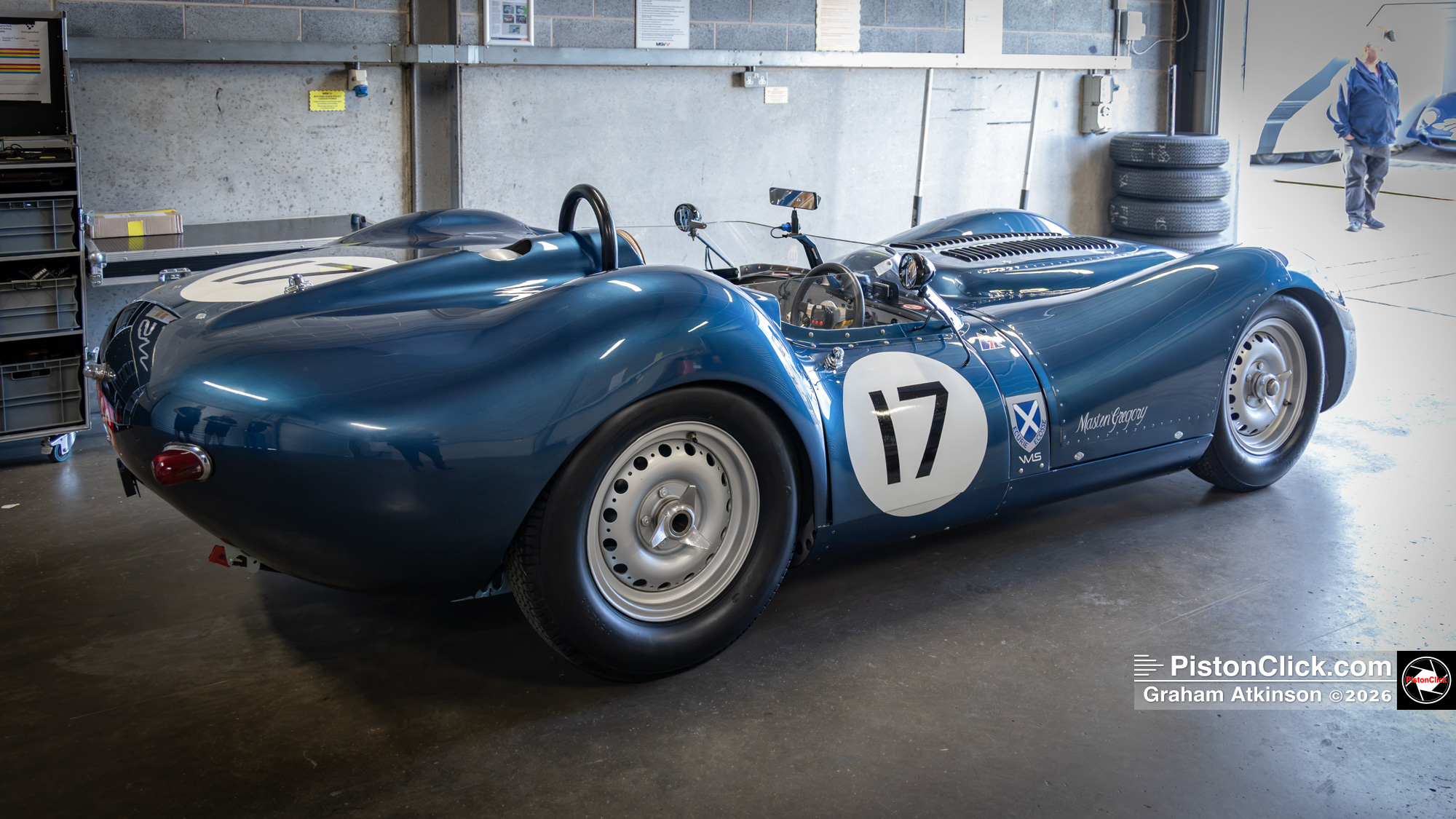
The original BHL 104 chassis survived, and subsequent owners restored and raced the car in various configurations. In 1982, it came into the ownership of John Pearson, who embarked on a rebuild to return the Lister to its original 1958 specification. Pearson eventually sold the car to a new owner in New Zealand in 1985.
The Lister returned to Britain in 2001, when Pearson Engineering once again took responsibility for the car. A further rebuild followed, bringing it up to contemporary FIA competition specifications.
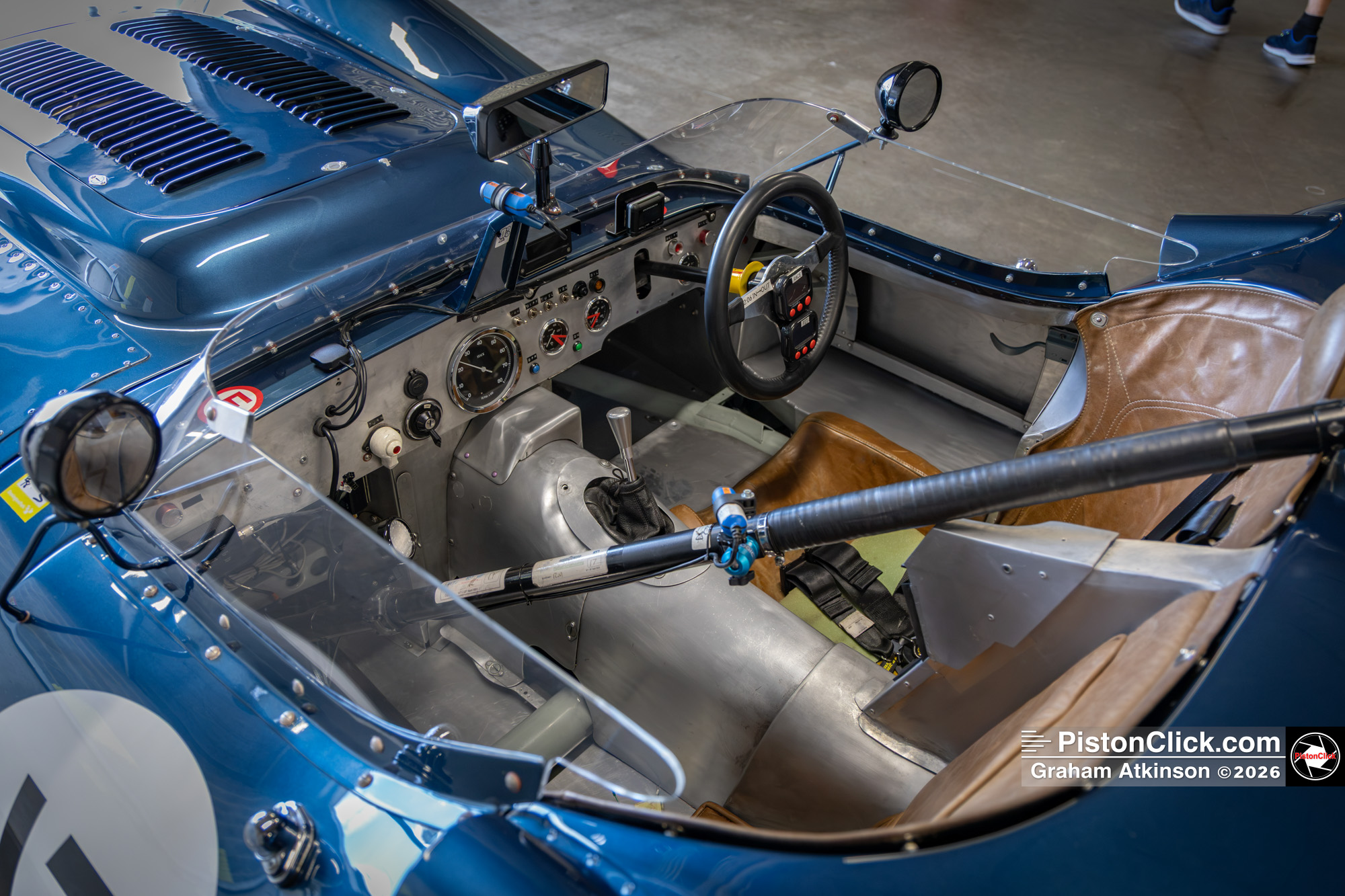
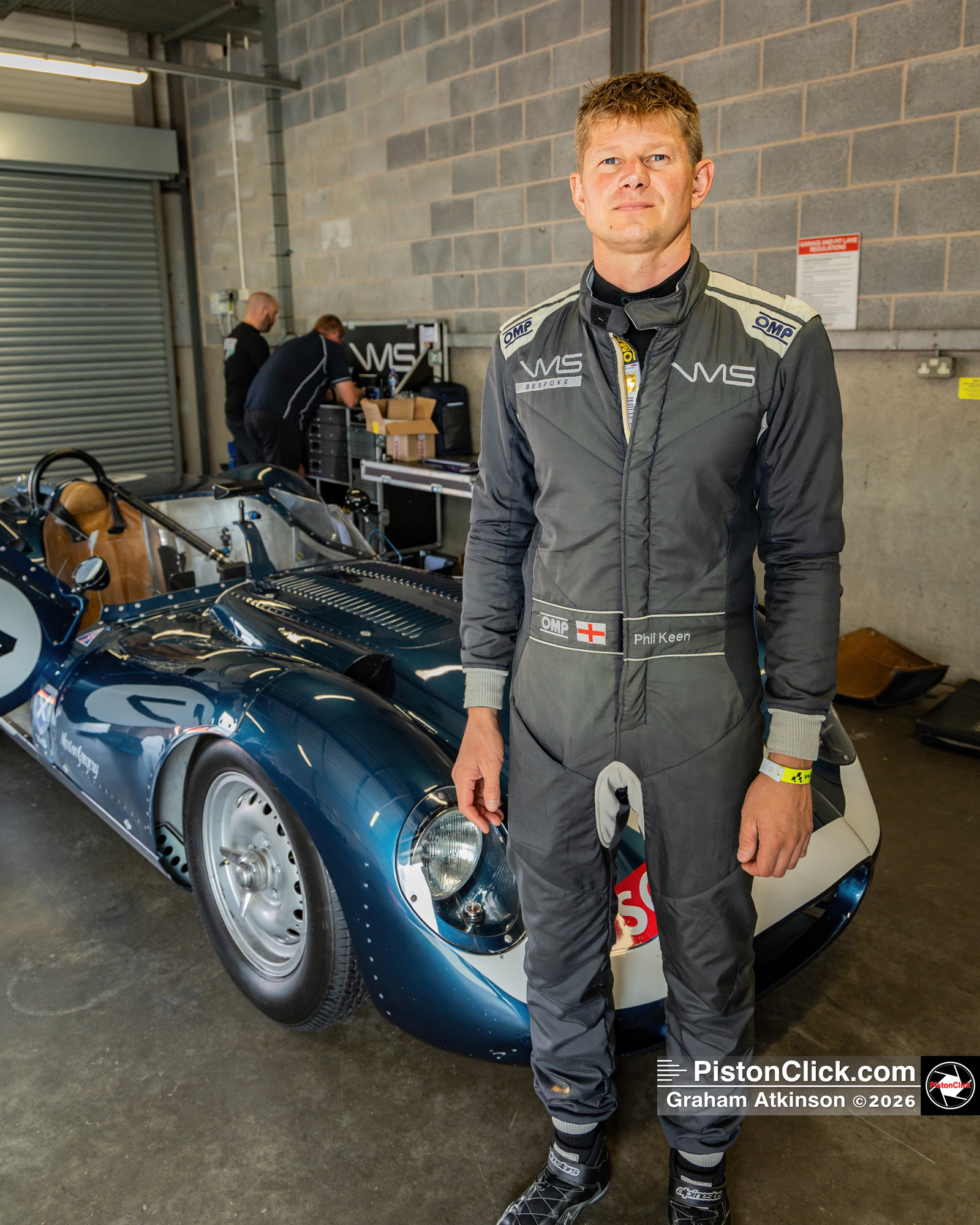
JD Classics purchased the car in 2005. Today, the Lister belongs to Saif Assam from Abu Dhabi in the UAE. I spoke to Saif earlier this season when he was testing the ex-Graham Hill Lola T370 Formula 1 car. He regularly races historic machinery at events around the world, although he wasn’t at Donington for this test day. Instead, the Lister was in the hands of Phil Keen.
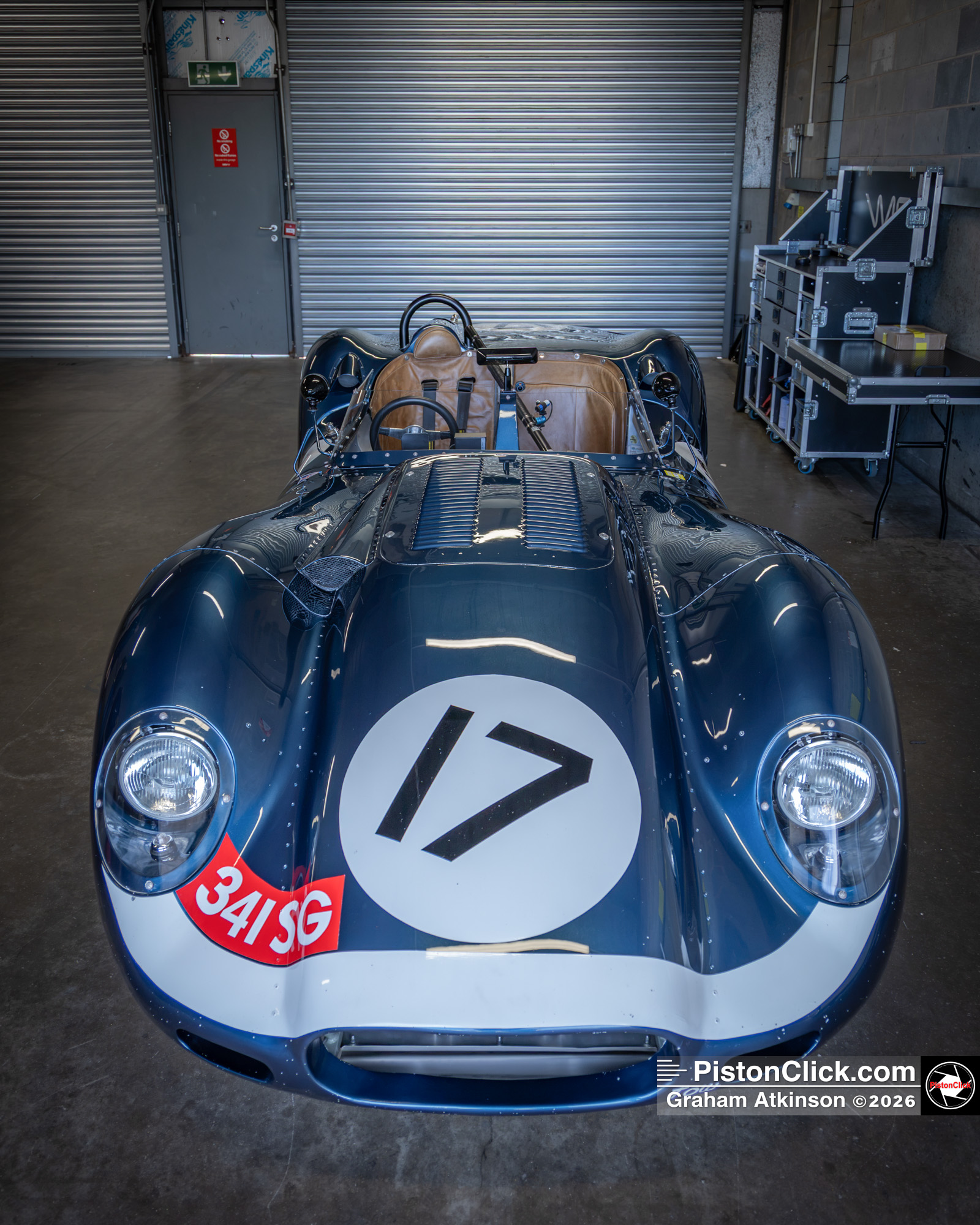
Preparing the Lister for Goodwood
Phil was putting the Lister through its paces as part of its preparation for the Goodwood Revival later this year. Phil is a young driver who was initially reluctant to be interviewed, although he did tell me that he races occasionally and spends much of his time testing and setting up cars. He was, however, happy to pose for a photograph.
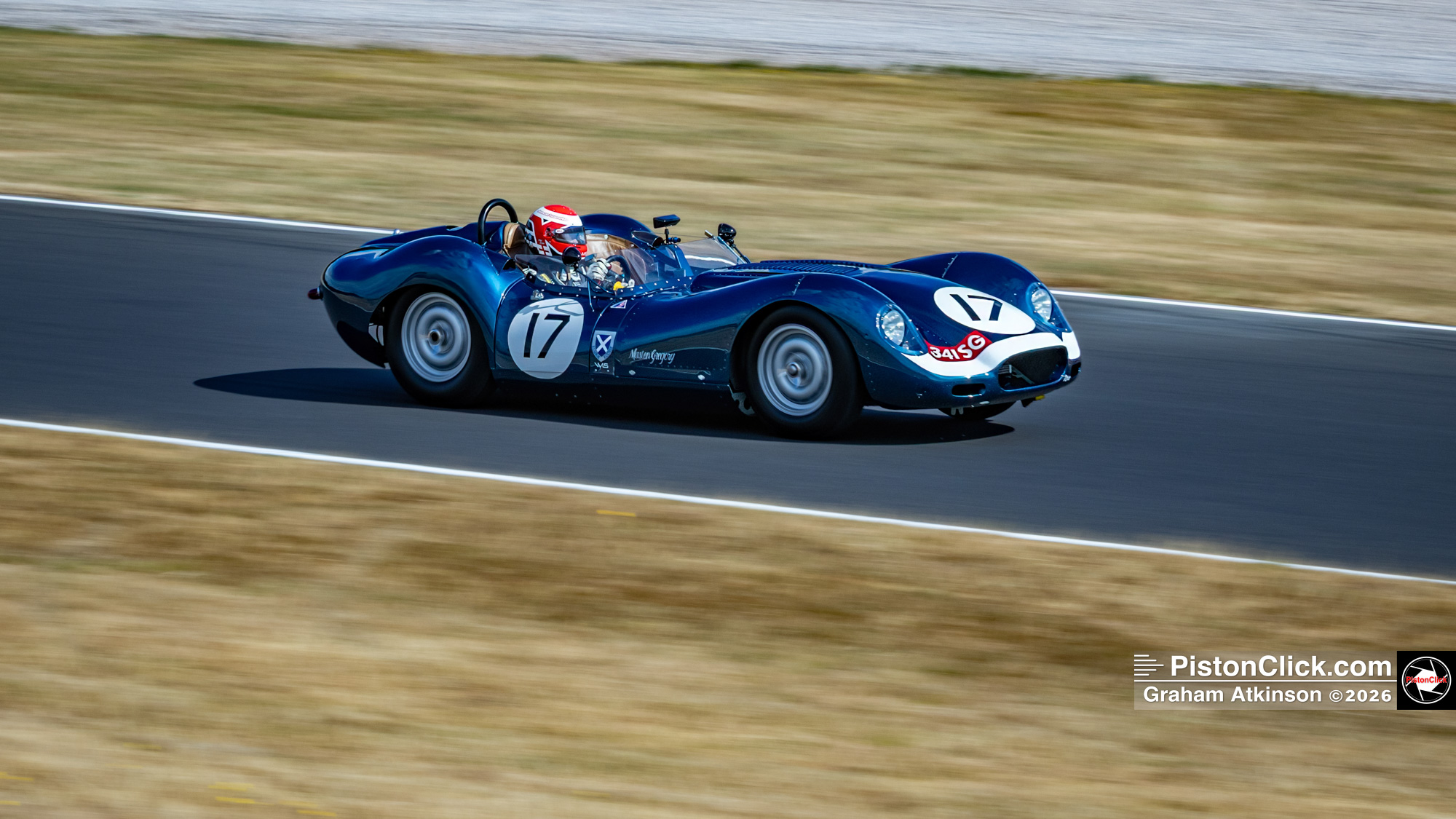
Watching the Lister circulating Donington was a reminder of just how special these historic sports cars remain. The distinctive ‘Knobbly’ bodywork, the sound of the Jaguar engine and the sight of the car being driven properly around the circuit make it almost impossible to ignore.
There is another fascinating detail about this particular Lister. It is road legal and still carries its original registration number: 341 SG. That makes the car even more remarkable. It isn’t simply a historic racing machine preserved for display; it remains capable of taking to the road under its own power while also competing at some of the world’s most prestigious historic racing events.
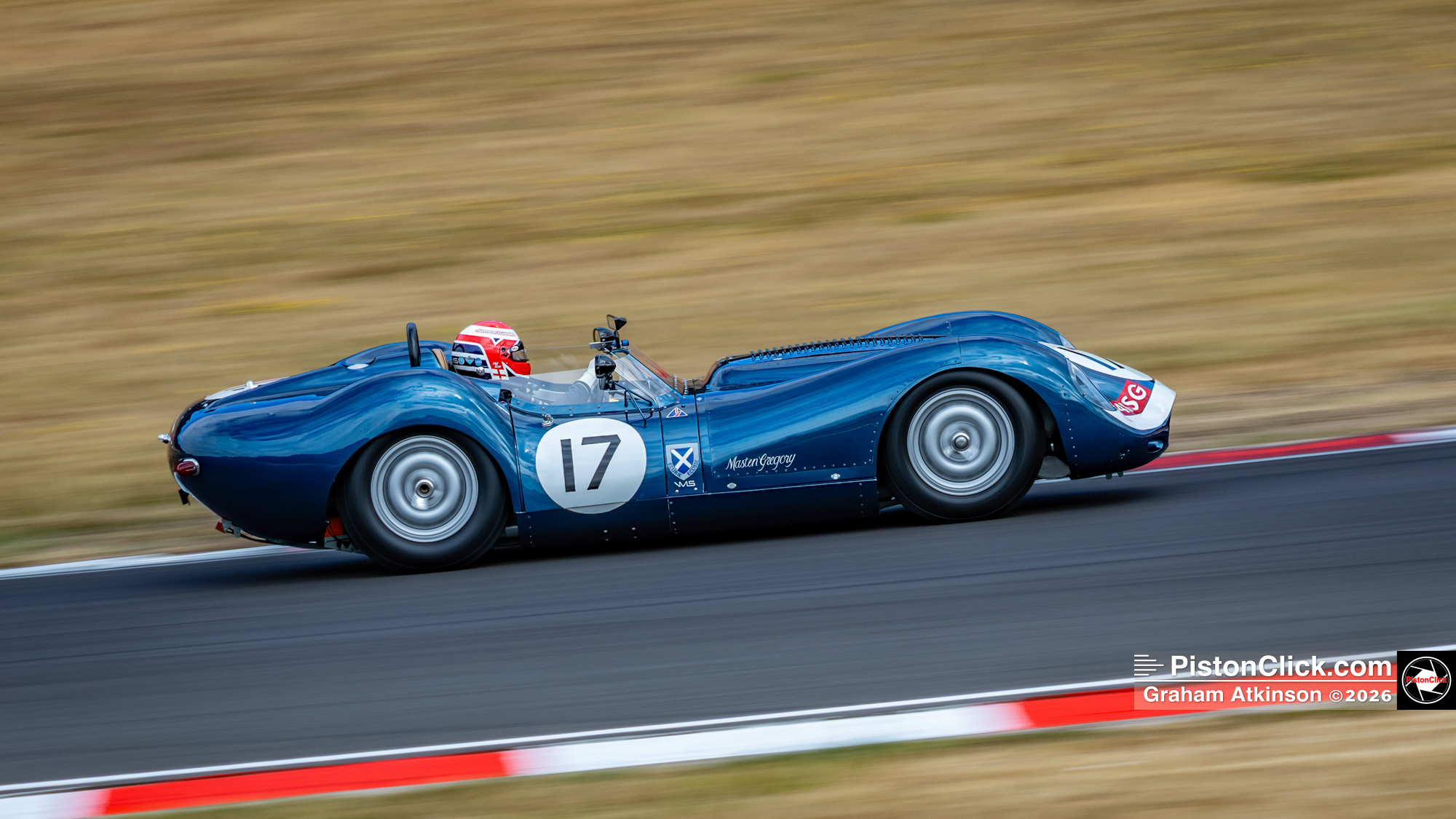
From Ecurie Ecosse and Masten Gregory to Goodwood Revival preparation nearly seven decades later, BHL 104 has certainly lived a life. And it wasn’t the only piece of significant racing history being exercised at Donington.
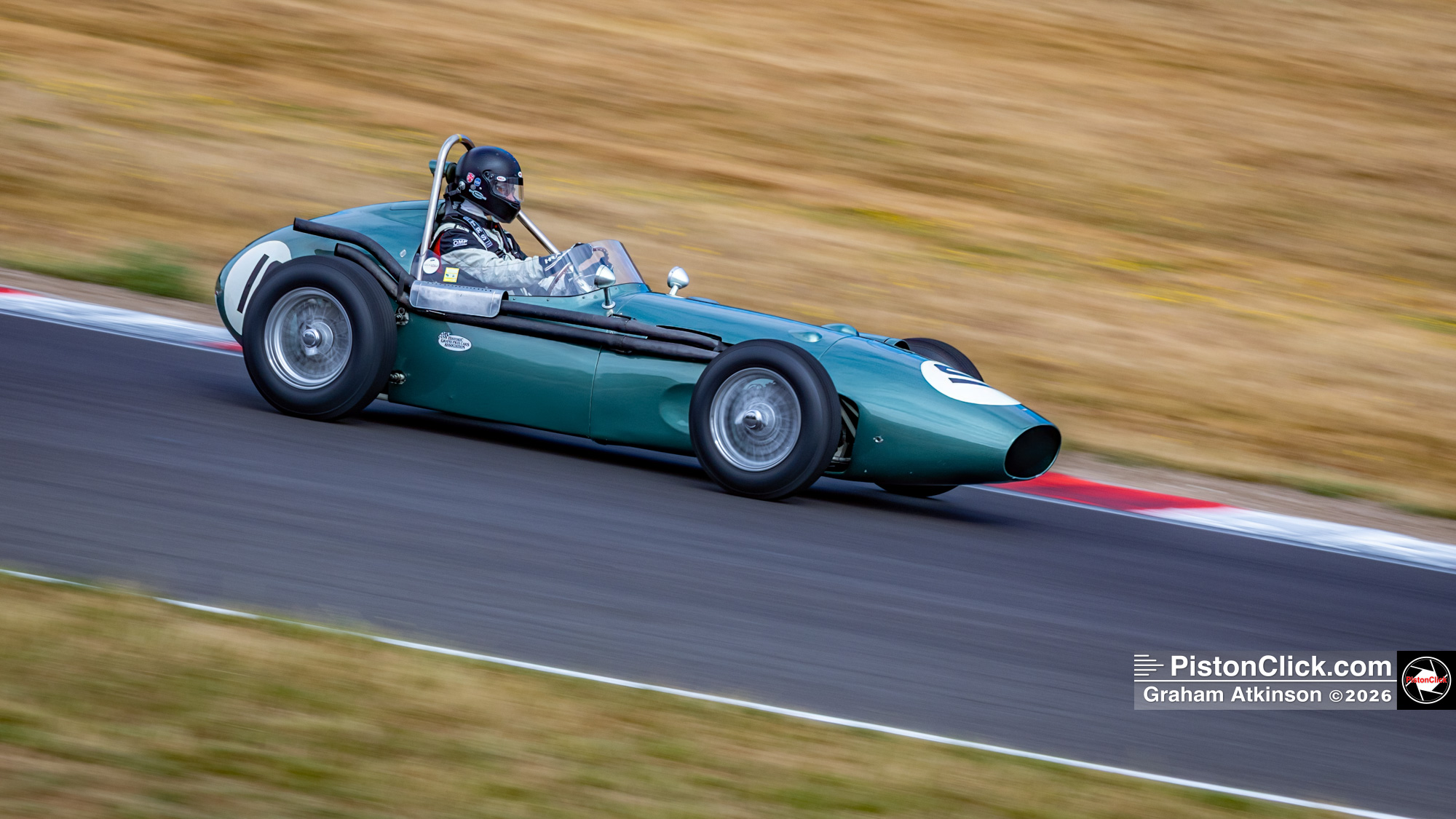
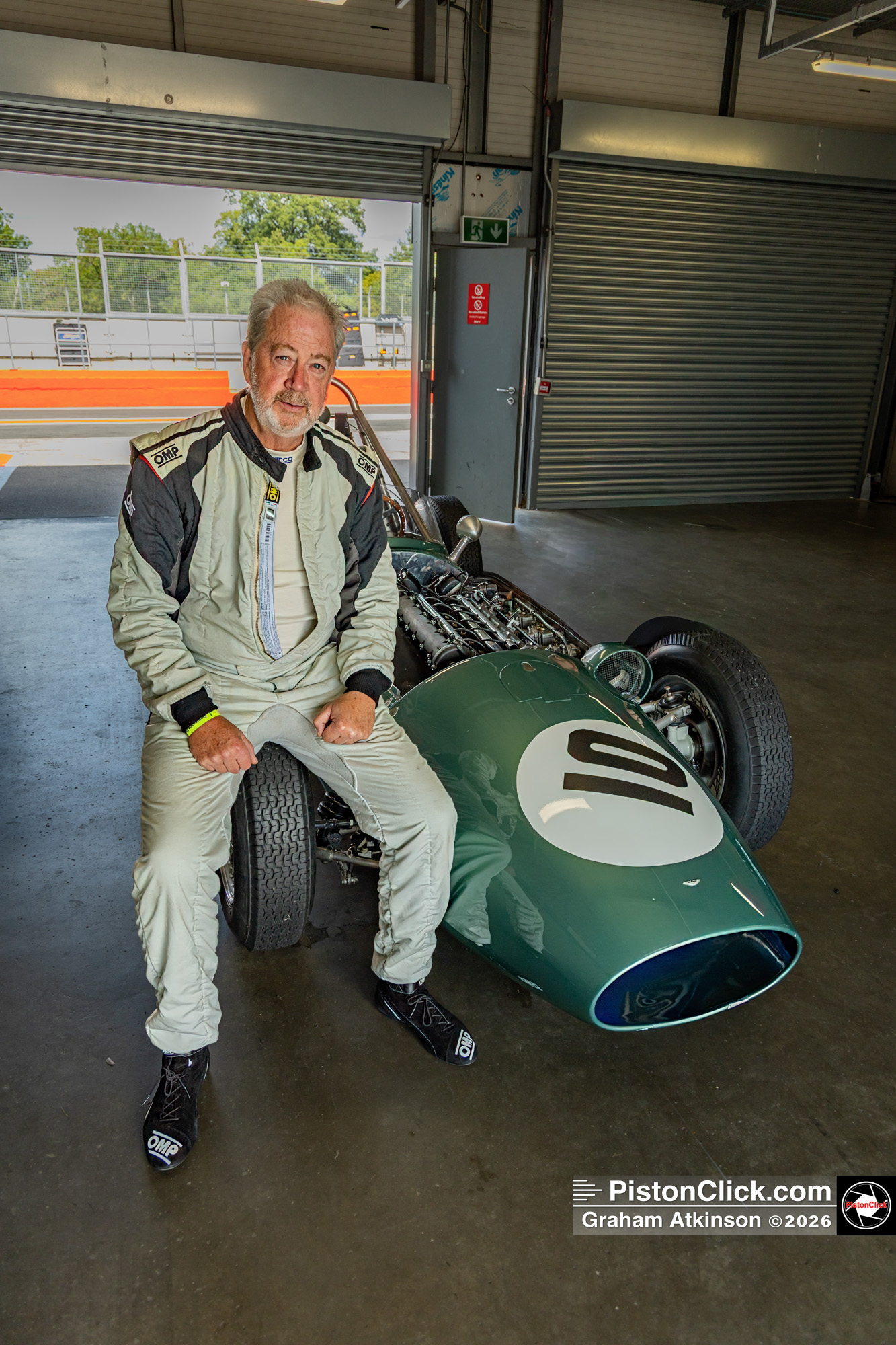
Aston Martin DBR4/250/2
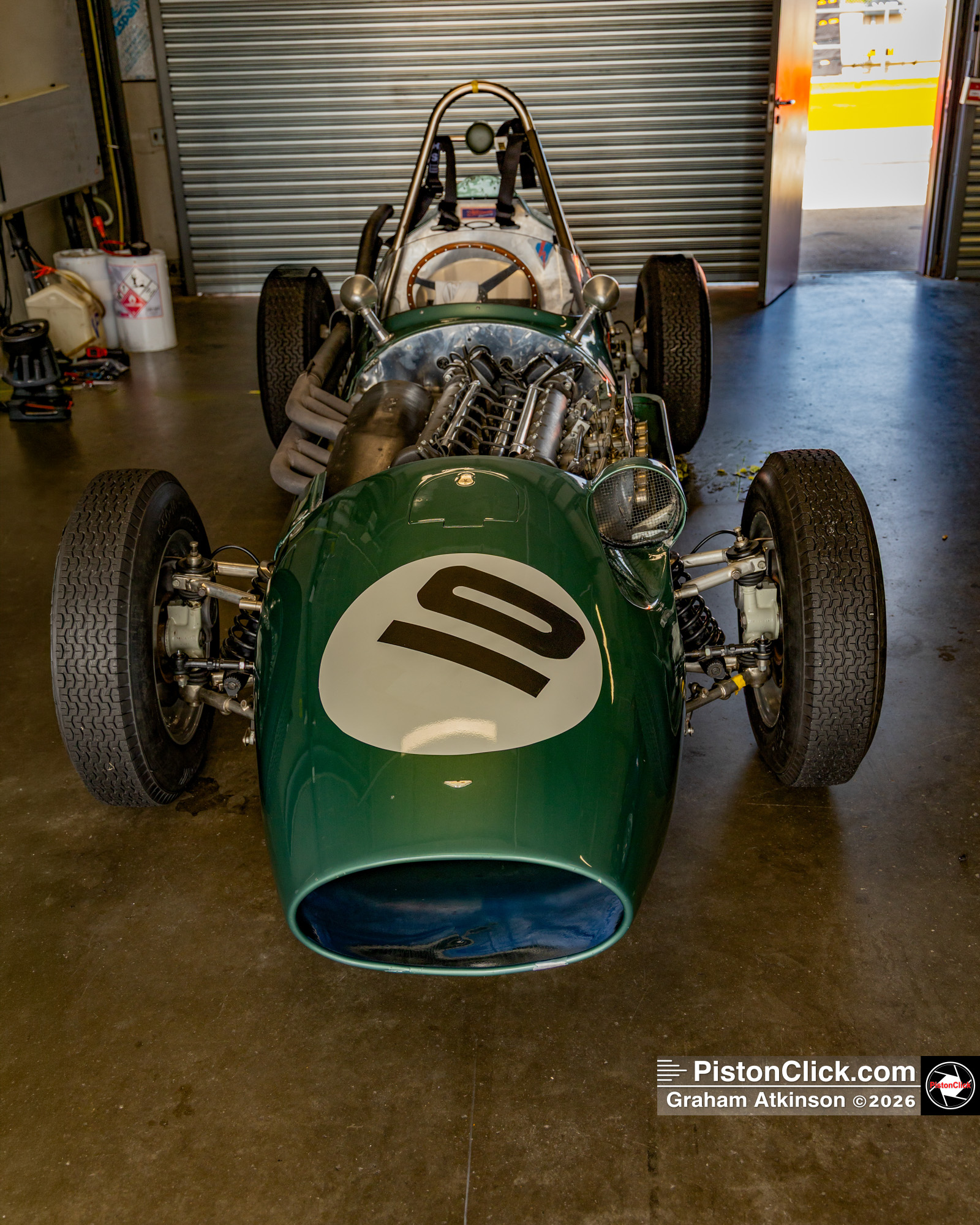
The second car was perhaps even more significant from a historical perspective. The Aston Martin DBR4/250/2 is one of just four DBR4s ever built.
Aston Martin began developing the car during the mid-1950s with Formula 1 competition in mind. The company built four examples in 1957, intending to use them in the World Championship.
But Aston Martin faced difficult financial circumstances at the time. Although the company was producing cars, sales were not where they needed to be.
According to the story, an Aston Martin dealer in California delivered a blunt message to the company:
“Win Le Mans and then we can sell some of your cars.”
The decision followed to shelve the DBR4 Formula 1 project temporarily and concentrate on the World Sportscar Championship, including the 24 Hours of Le Mans.
It seemed logical. Success at Le Mans could raise Aston Martin’s profile and help sell road cars. Unfortunately, the plan didn’t deliver the expected results. By the time the DBR4 finally made its Formula 1 debut in 1959, Cooper was beginning to revolutionise Grand Prix racing with lightweight, rear-engined cars.
The DBR4 was effectively two years too late.
A DBR4 brought back to life
The car, driven principally by Carroll Shelby, struggling against the increasingly sophisticated opposition and continued racing until the middle of 1960 before being retired and dismantled.
DBR4/2 later received an extraordinary second life.
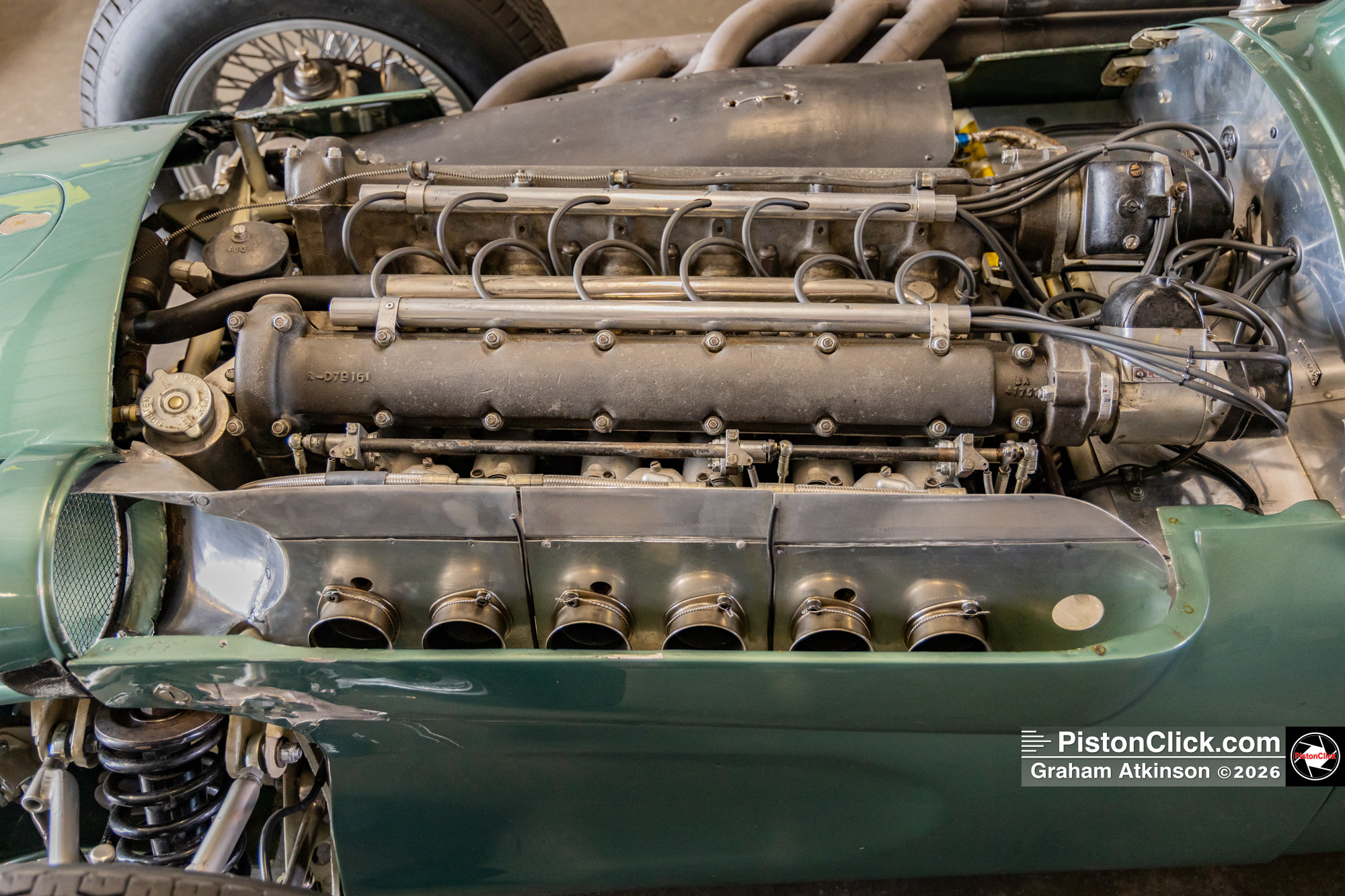
During the 1980s, dedicated enthusiast Geoffrey Marsh reconstructed the car from scratch using surviving factory components. The rebuild incorporated the original body panels and running gear, together with an original 2.5-litre twin-overhead-cam engine and David Brown transaxle.
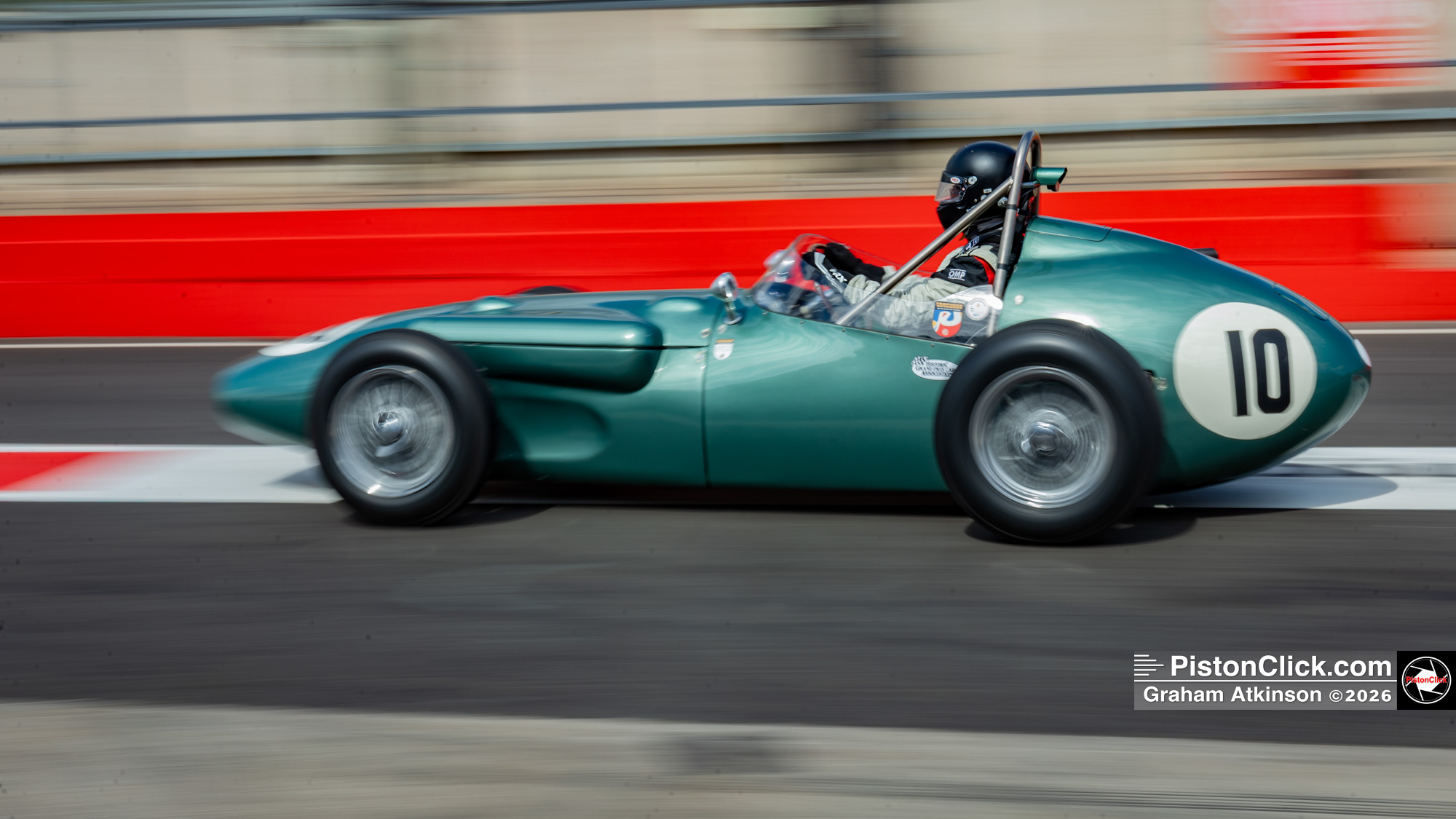
The completed car made its debut at the Birmingham Street Race in 1984, with none other than Carroll Shelby back behind the wheel.
The DBR4 has passed through several owners since then and, since November last year, has belonged to racer Jim Chapman.
Jim has already driven the Aston at a number of events, but gearbox problems have caused some headaches, including instances where the gearbox locked up. That made the Donington test particularly important.
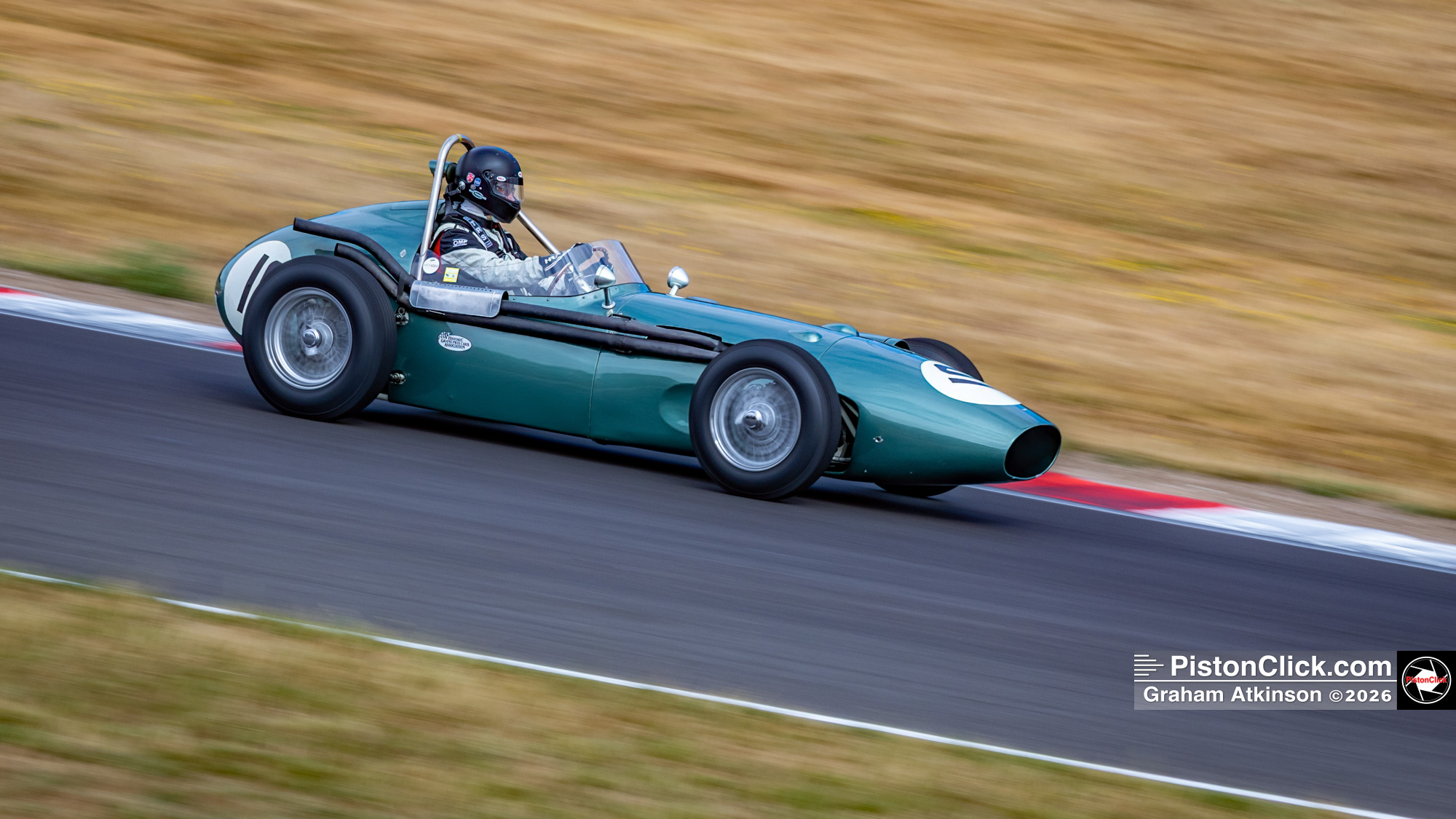
This was effectively a shakedown to establish whether the problems had finally been resolved. Judging by the number of laps Jim completed, it looked as though the work had paid off. Jim began racing in 1999 and has competed in Formula Ford, sports prototypes, Marcos machinery and a classic 1964 Austin-Healey 3000, among others.
Moving into an Aston Martin DBR4 represents a significant step up. There is also the small matter of fitting into some of the cars. At more than 6ft 4in tall, Jim has to be selective about which cars he races. Fortunately, the DBR4 fits him perfectly.
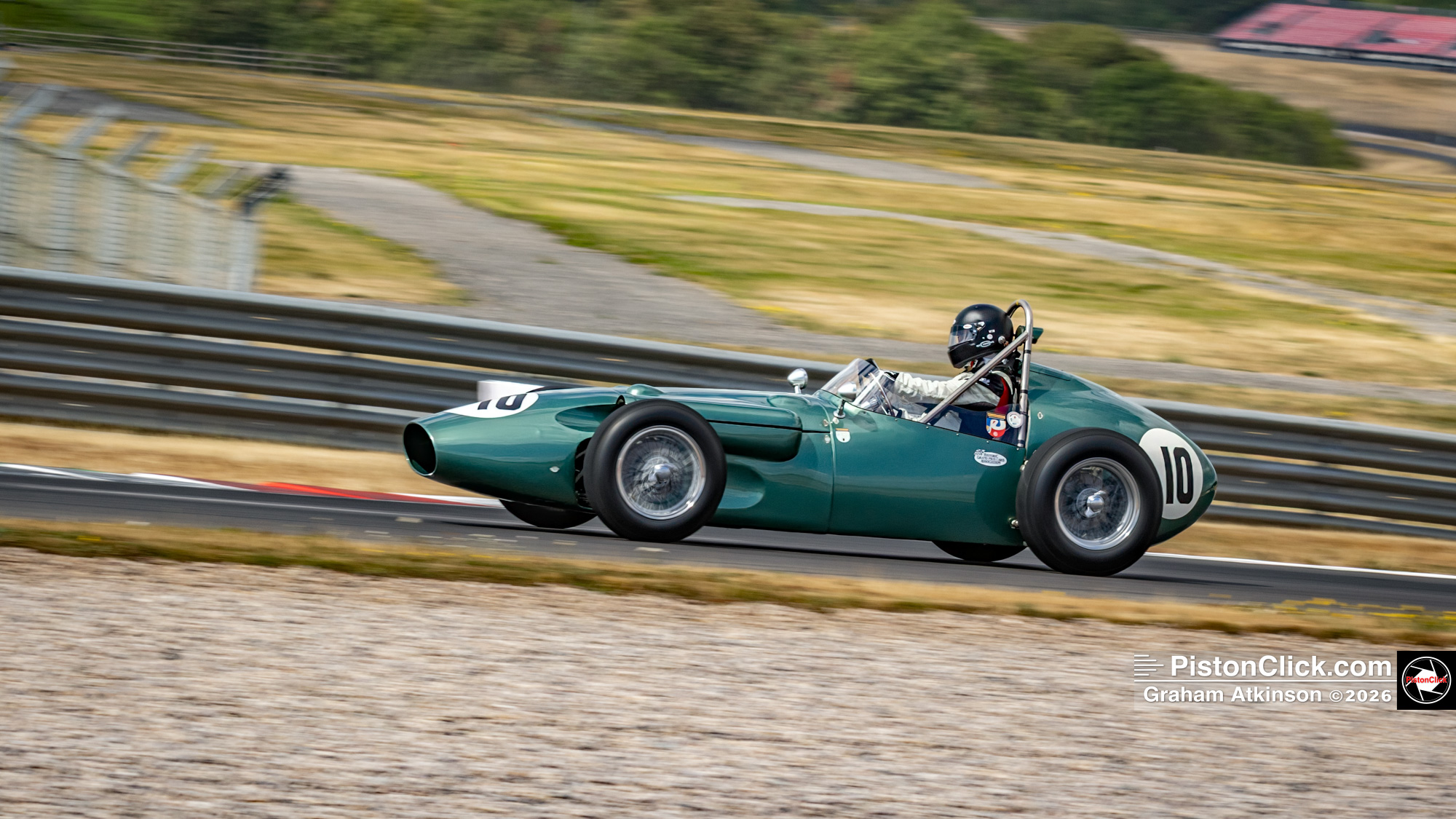
Maintaining a DBR4
Jim has traditionally maintained and worked on his own cars, a process that once consumed most of his spare time. He enjoyed the hands-on approach, but the Aston Martin demands a different level of care.
For the DBR4, he has handed the engineering work to Jack Williamson. Jim explained that Jack has “much more patience, skill and capability than myself”.
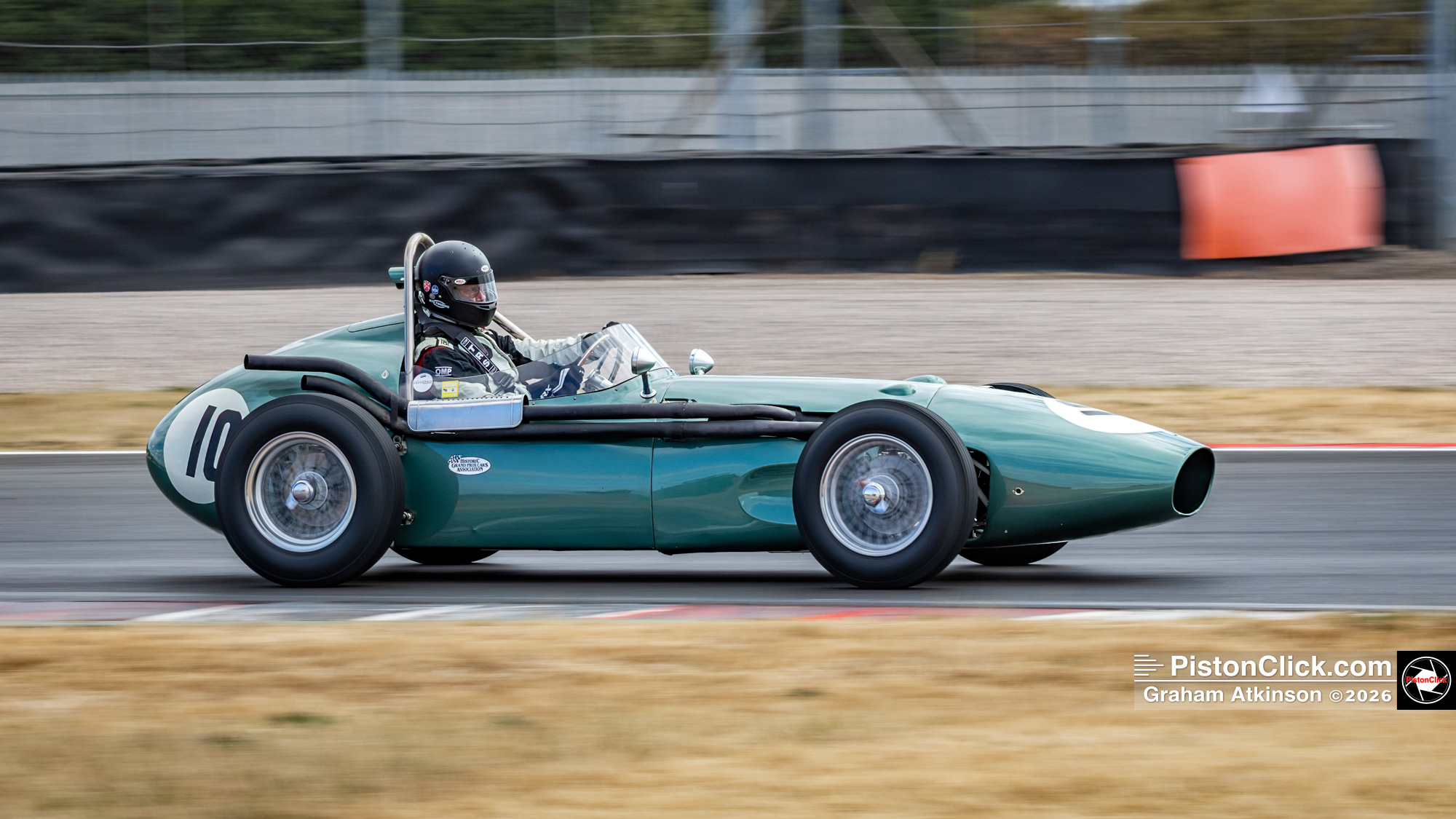
When I asked him about his relationship with the Aston, Jim summed it up perfectly:
“I’m slowly trying to make friends with it.”
He went on to explain that it has been a struggle, but added:
“It’s the reason that you exist isn’t it, it really is.”
That probably tells you everything you need to know about historic racing.
Ford GT40 – Stepping Up the Game
The third car couldn’t have been more different from the Aston Martin.
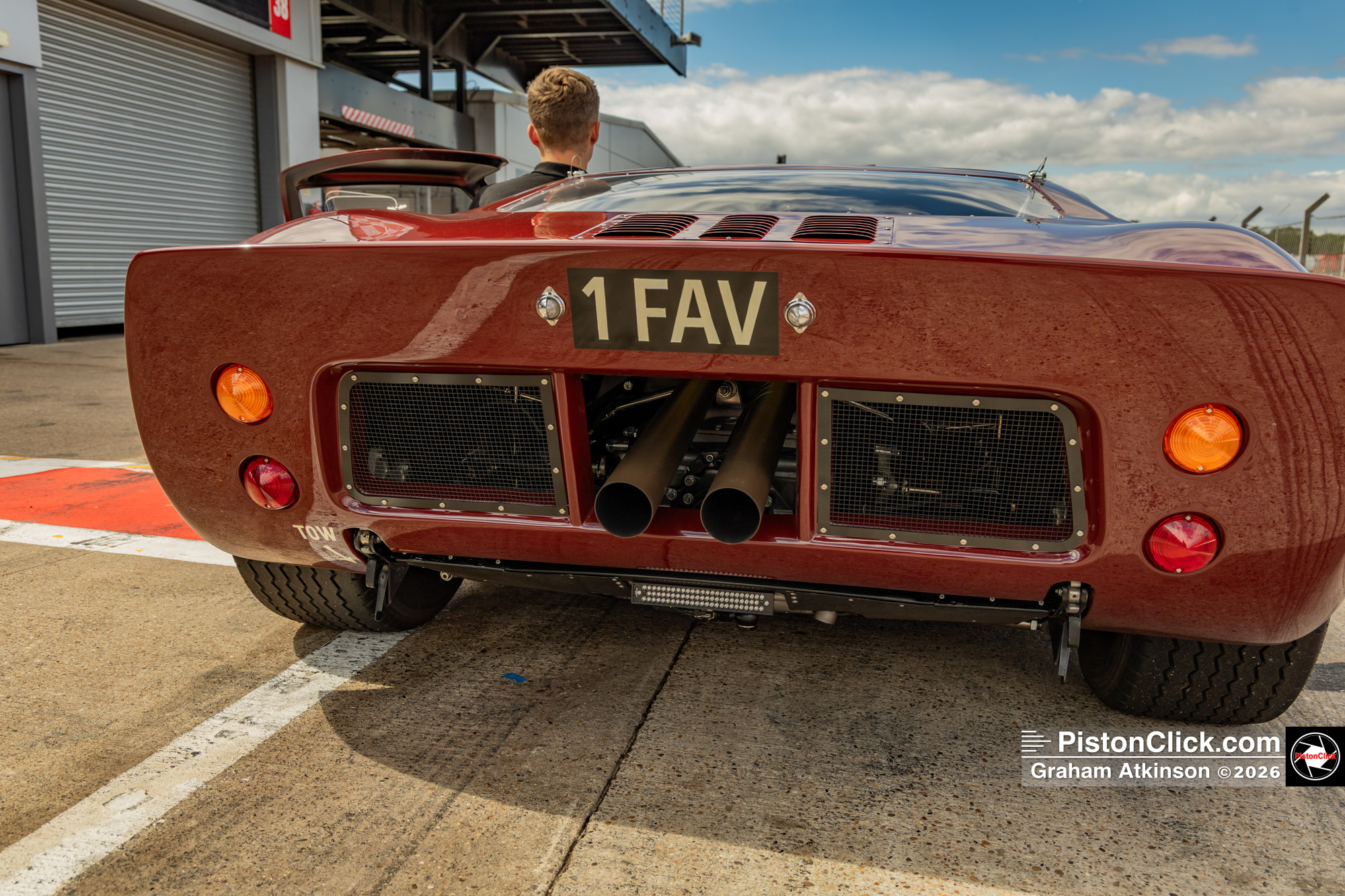
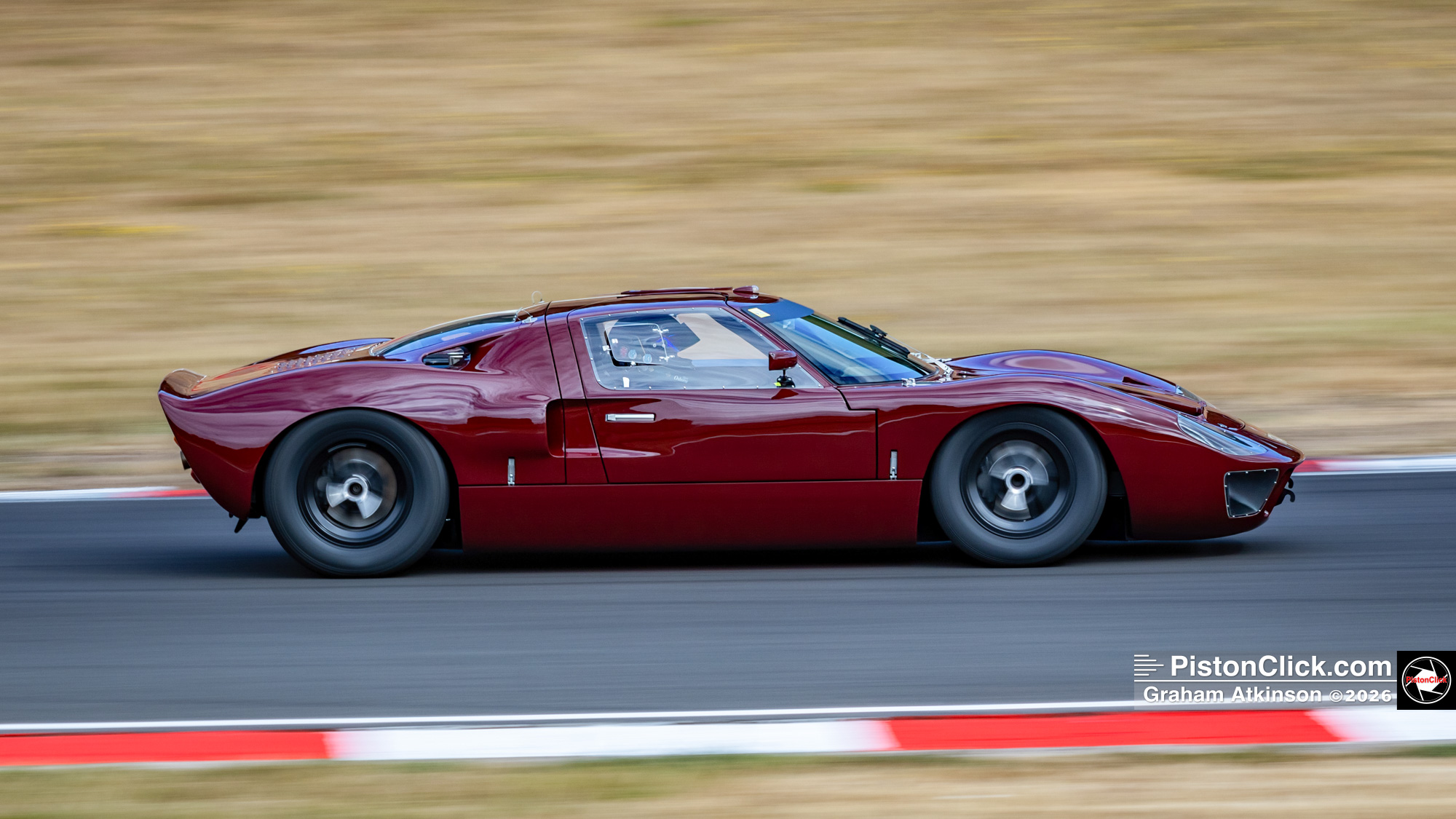
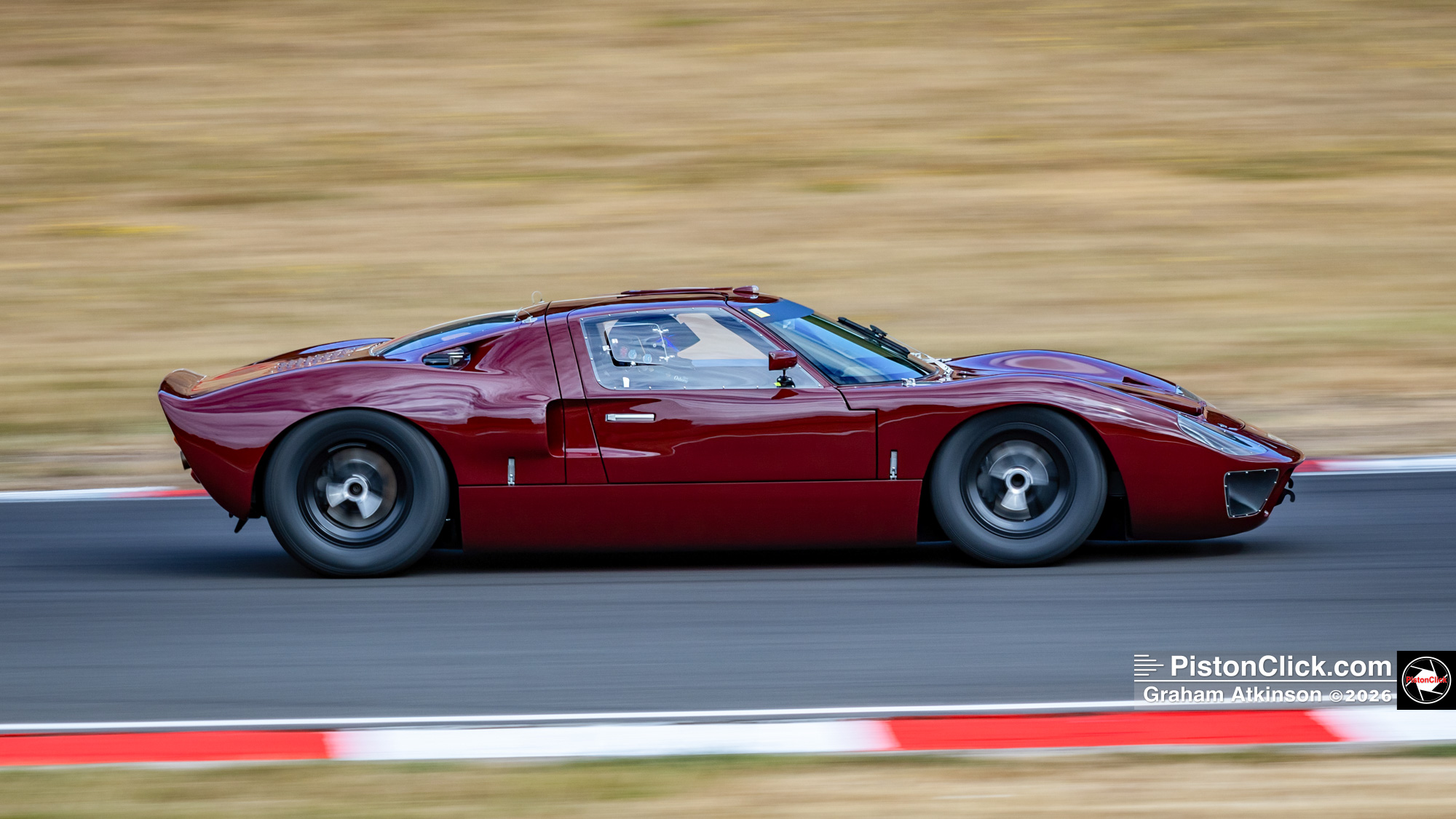
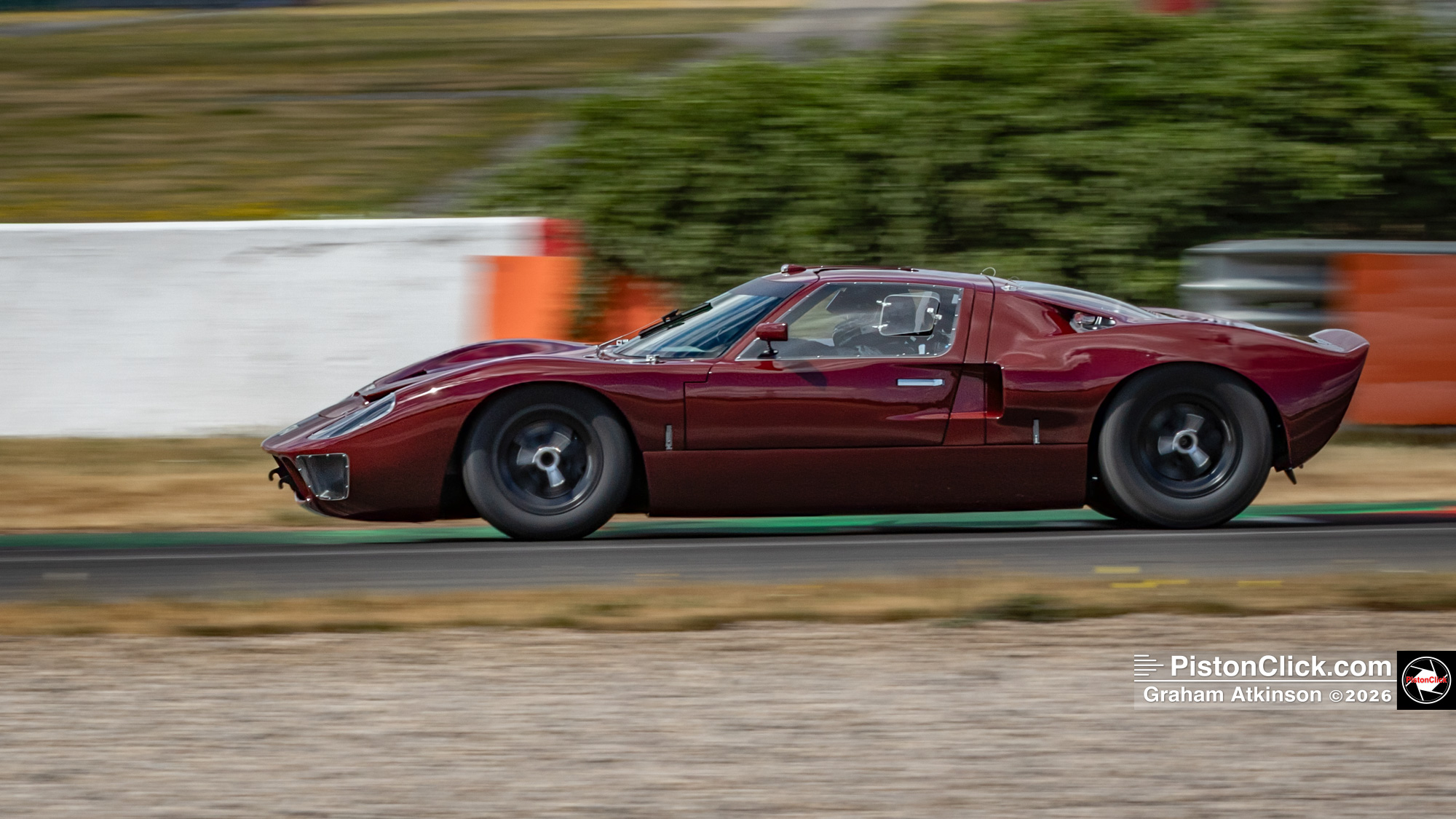
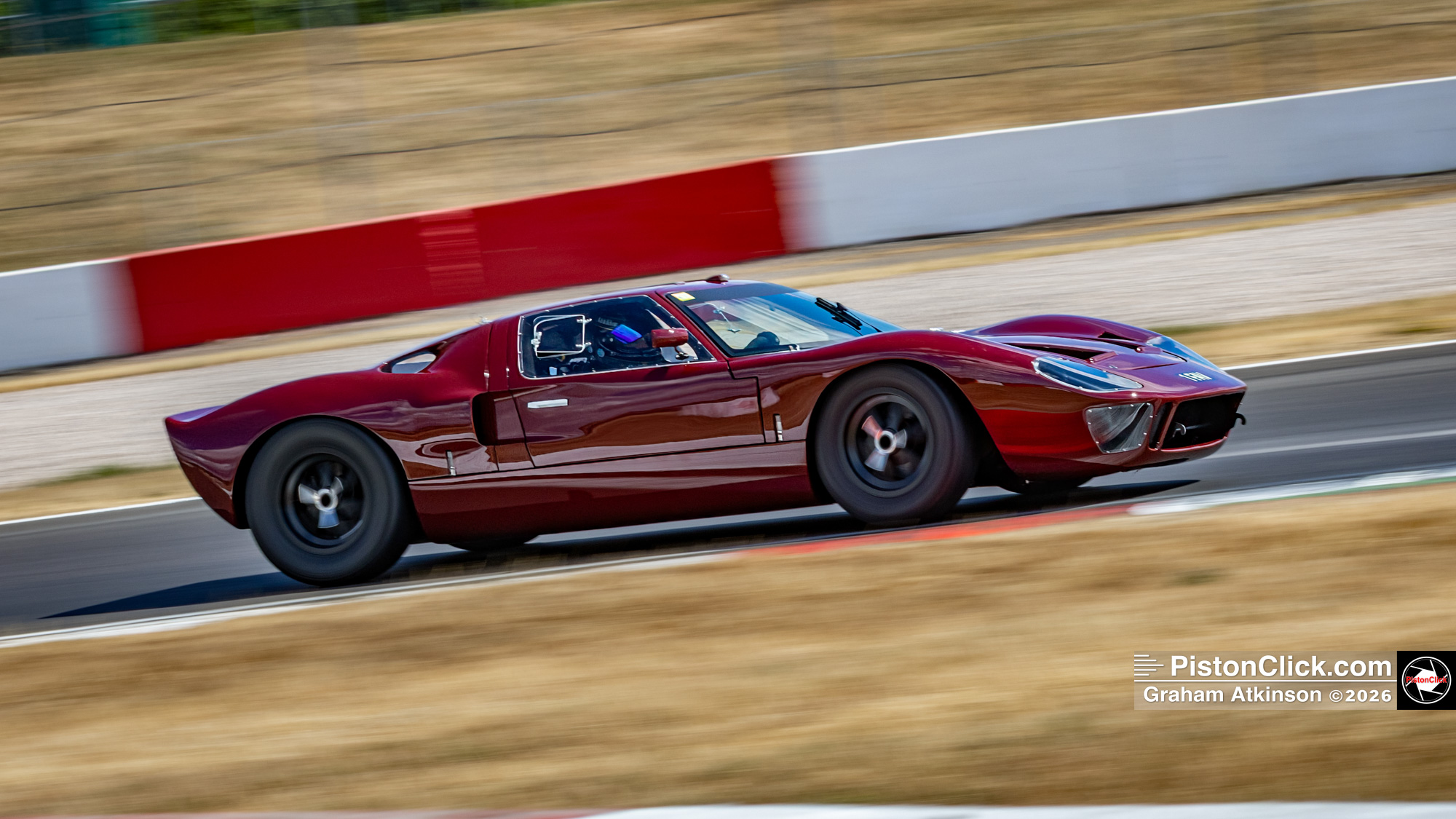
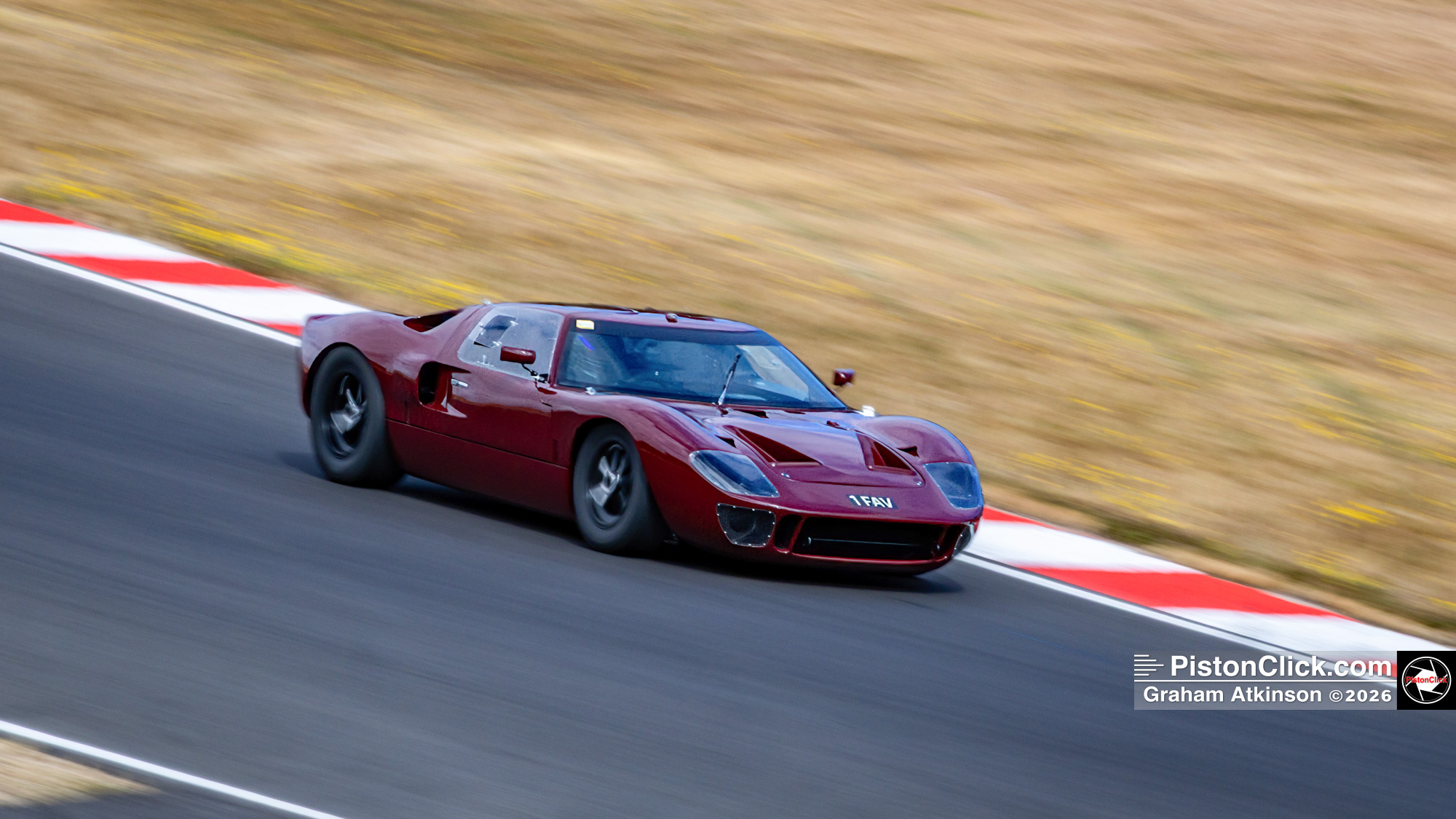
From the outside, this Ford GT40 looks remarkably similar to the road-going version of the legendary car. Just 105 GT40s were built between 1964 and 1967, but this particular example has spent the last year undergoing a serious transformation.
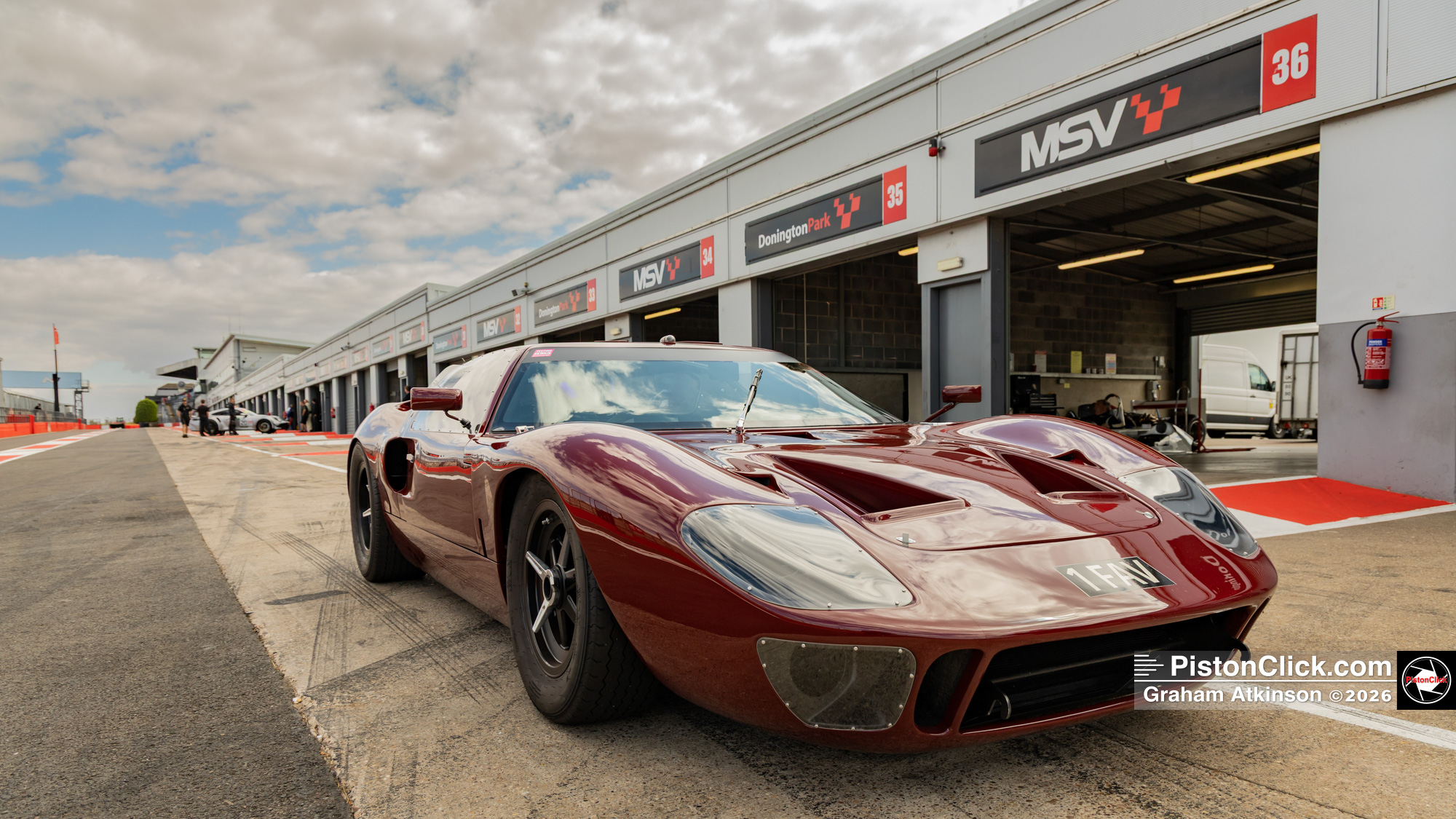
The car has been at Blakeney Motorsport, where Dan Power and his team have been converting it into a full race-specification machine ahead of the Spa Six Hours. The work includes new fuel cells, additional brake-cooling ducting, different camshafts and a range of other performance upgrades.
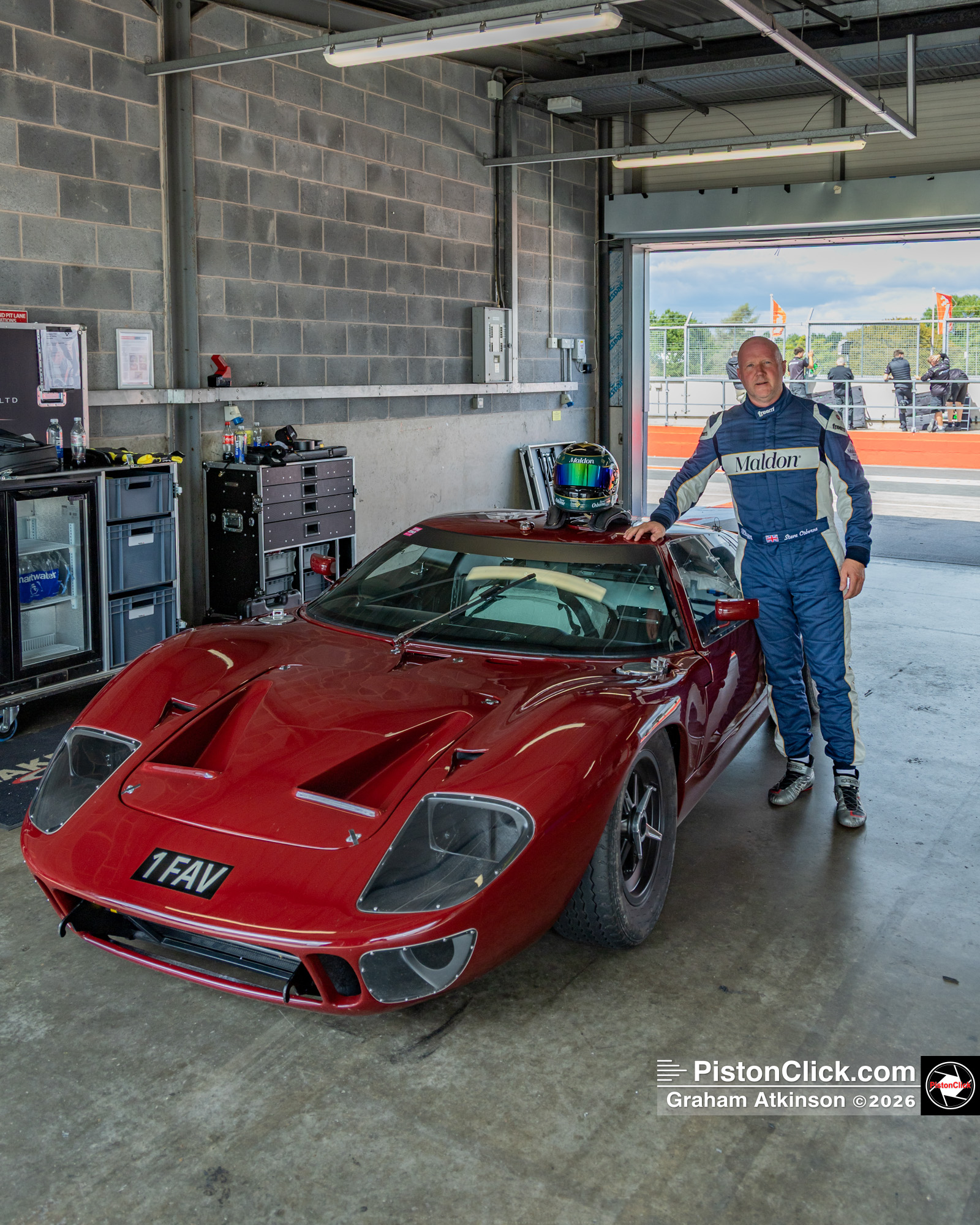
The result is one of the fastest GT40s around. The owner, was another familiar face. As I began talking to Steve, he immediately asked whether we had spoken earlier in the year. He was right.
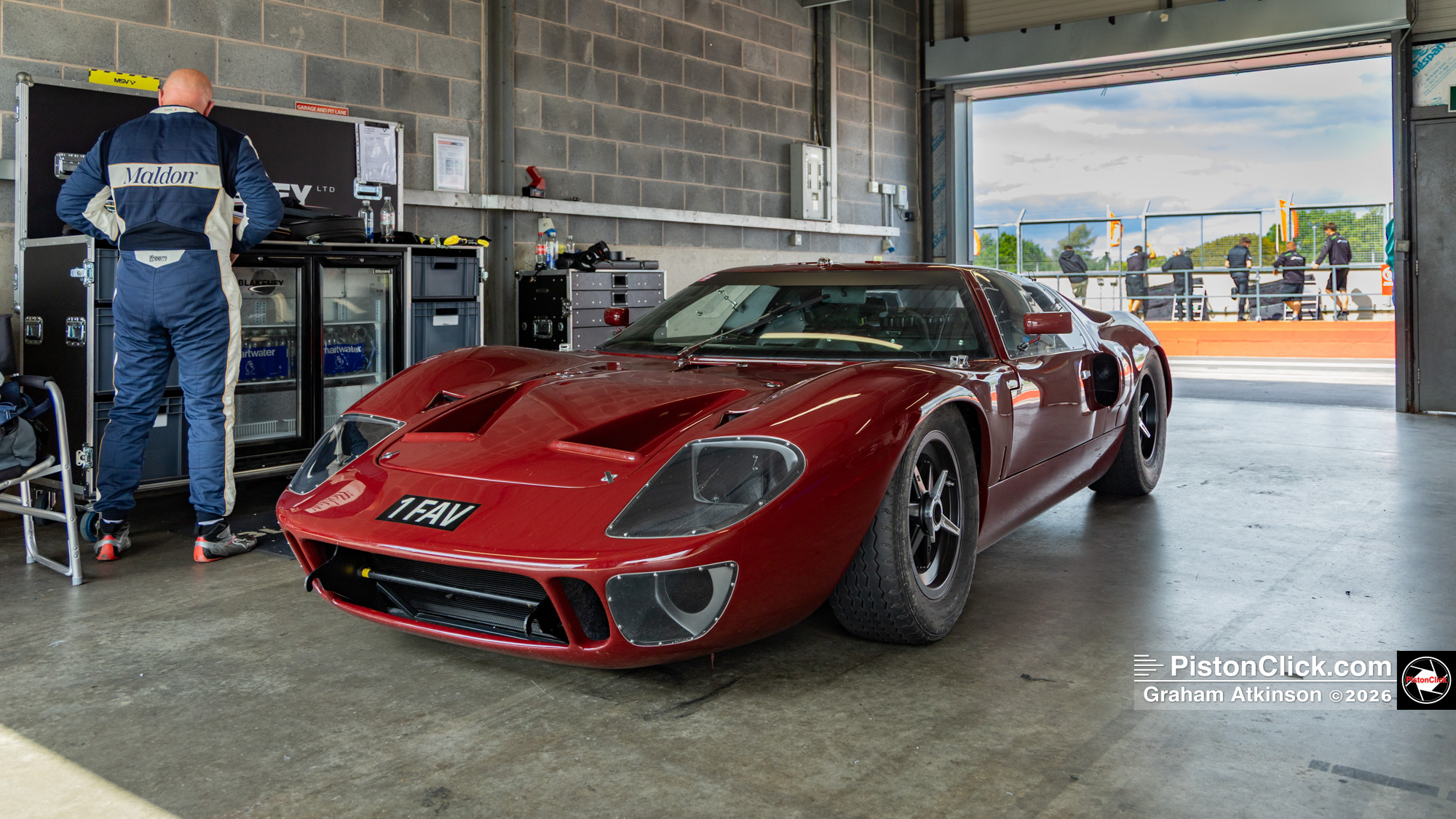
Steve is also the owner of the BMW M1 Procar that I featured in a PistonClick report earlier this season, so our conversation was immediately relaxed and familiar.
Steve only started racing around five years ago, beginning with an MGB. Now he owns and races a GT40. He also competes in a BMW M3 E46 GT, Porsche 911 and E-Type, sharing some of his racing programmes with Chris Ward and Jörg Müller. The trio will also share the Ford GT40 at the Spa Six Hours.
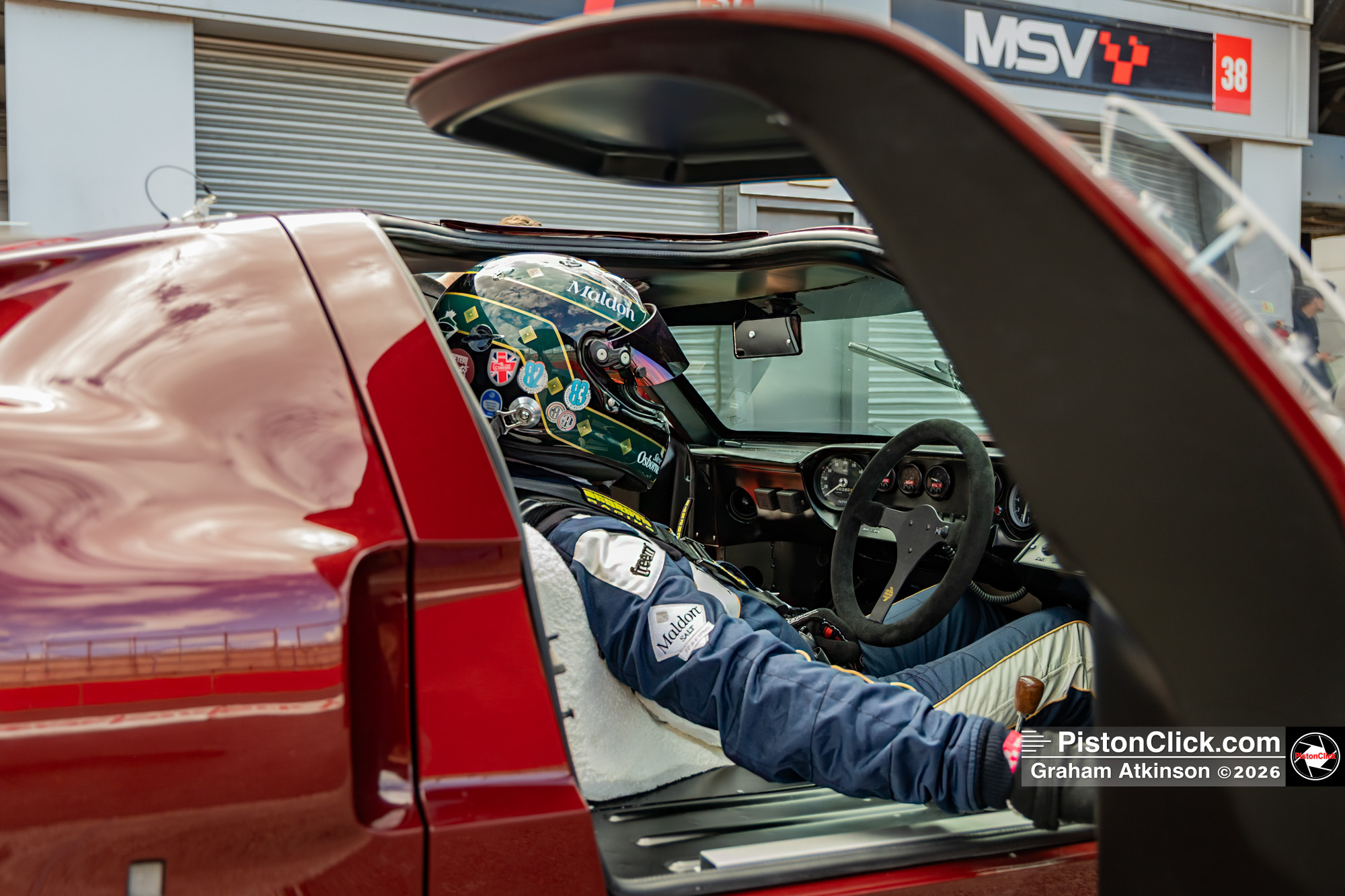
It has already been a very successful season for Steve and the team. They took first in class with the Porsche and second in class with the E-Type, but Steve now wants to raise the stakes.
Racing with the big boys
Steve told me that he enjoys racing at Spa, but the GT40 represents the next step.
He wants to compete with the bigger and faster machinery at the front of the field, and the GT40 should give him the weapon required to do that. There is much more to historic racing for Steve than simply turning up at a circuit and driving.
He was keen to emphasise the importance of team camaraderie and the support provided by Maldon Salt Racing. The social side of racing matters too, with barbecues, dinners and time spent together away from the circuit all forming part of the experience.
It is something that is sometimes overlooked when people see the glamorous side of historic motorsport. Behind every car is a team of people, a considerable financial commitment and an enormous amount of preparation.
When I asked Steve about his feelings towards racing, he offered perhaps the most memorable quote of the day:
“There’s no cash machines in heaven.”
It was his way of explaining both his passion for racing and the financial reality of competing at this level. And he certainly isn’t wasting his opportunity.
Donington Park Unsilenced Test Day – Three Cars, Three Stories
What made this Donington Park unsilenced test day particularly enjoyable was the contrast between the three cars.
The Lister-Jaguar represents the golden age of sports car racing, with a history stretching back to Ecurie Ecosse and Masten Gregory.
The Aston Martin DBR4 provides a fascinating insight into what might have happened had Aston Martin committed fully to Formula 1 a couple of years earlier. Its eventual reconstruction and return to the circuit make it an extraordinary survivor.
The Ford GT40, meanwhile, represents another legendary chapter in motorsport history, but this particular example is being prepared to fight again rather than simply sit in a collection.
That’s what makes unsilenced test days at Donington Park so worthwhile. While the main paddock was filling with lorries ahead of Convoy in the Park, the racing circuit offered something completely different. There were no crowds waiting for the weekend’s main event and no need for the spectacle surrounding the lorries.
Instead, there were historic racing cars being tested properly, drivers working with engineers and the unmistakable sound of unsilenced engines echoing around the circuit. For a photographer and motorsport enthusiast, it is difficult to ask for much more: great cars, fascinating stories and plenty of noise.