



Donington Park Test Day – Rare Racing Cars and the Stories Behind Them
Report by Graham Atkinson
16 October 2026
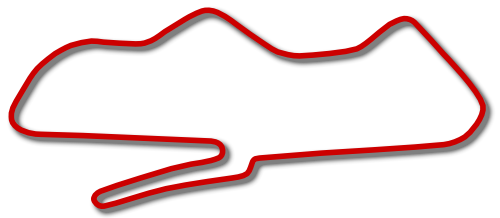
Here we are again at Donington Park for another test day, and I have absolutely no idea what might turn up. With no race meeting scheduled for the following weekend, I have little to go on when trying to predict which cars and teams might be testing. It really is anyone’s guess what I will find today, but hopefully there will be something interesting to photograph and, even better, a few stories worth sharing.
As it turns out, I needn’t have worried. From an LMP3 prototype and a continuation Cobra Daytona Coupe to a rare Holden Commodore and a collection of historic machinery, there is plenty to keep me occupied.
LMP3 Ligier JS P320 – A New Challenge for John Hewitt
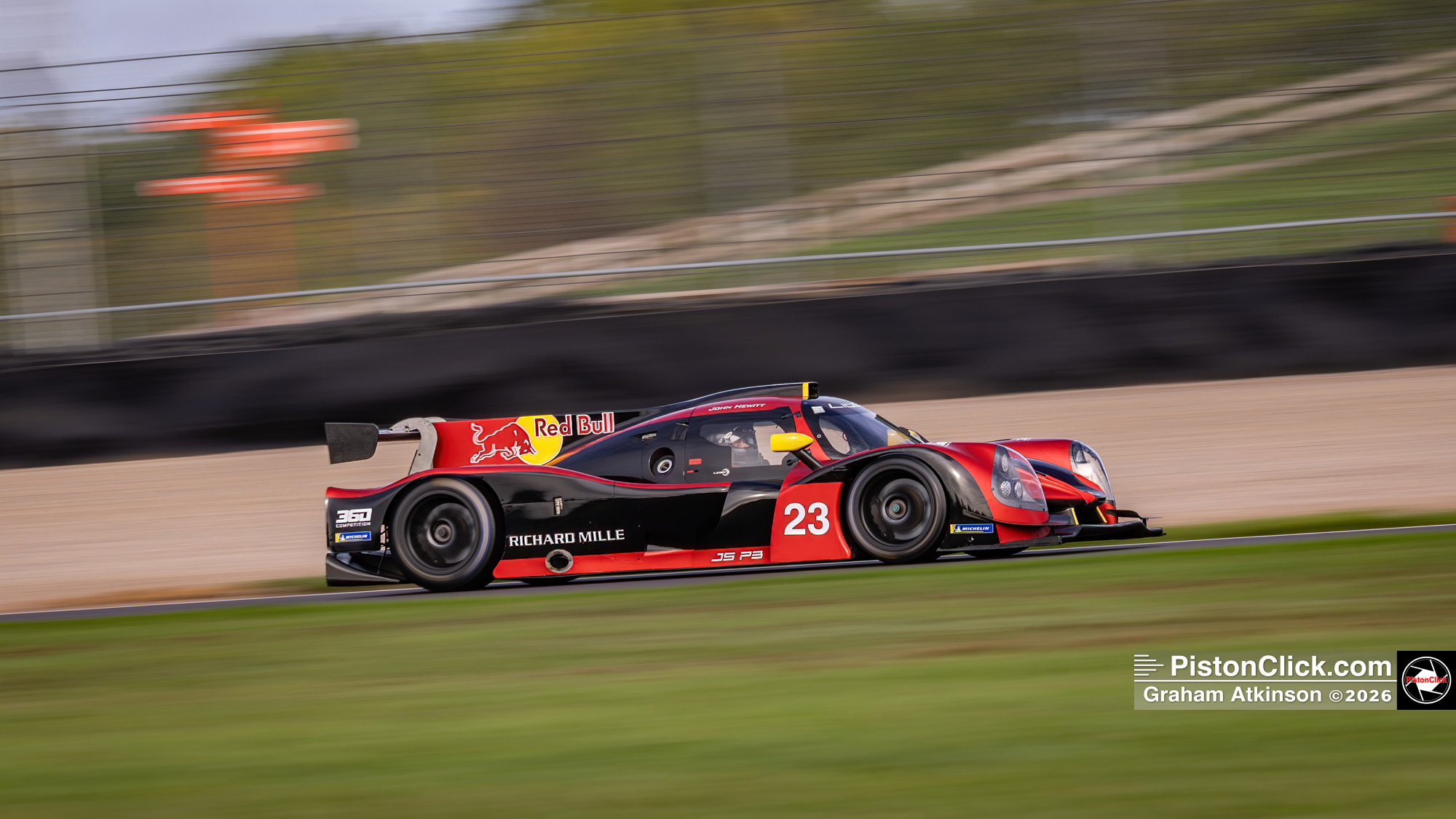
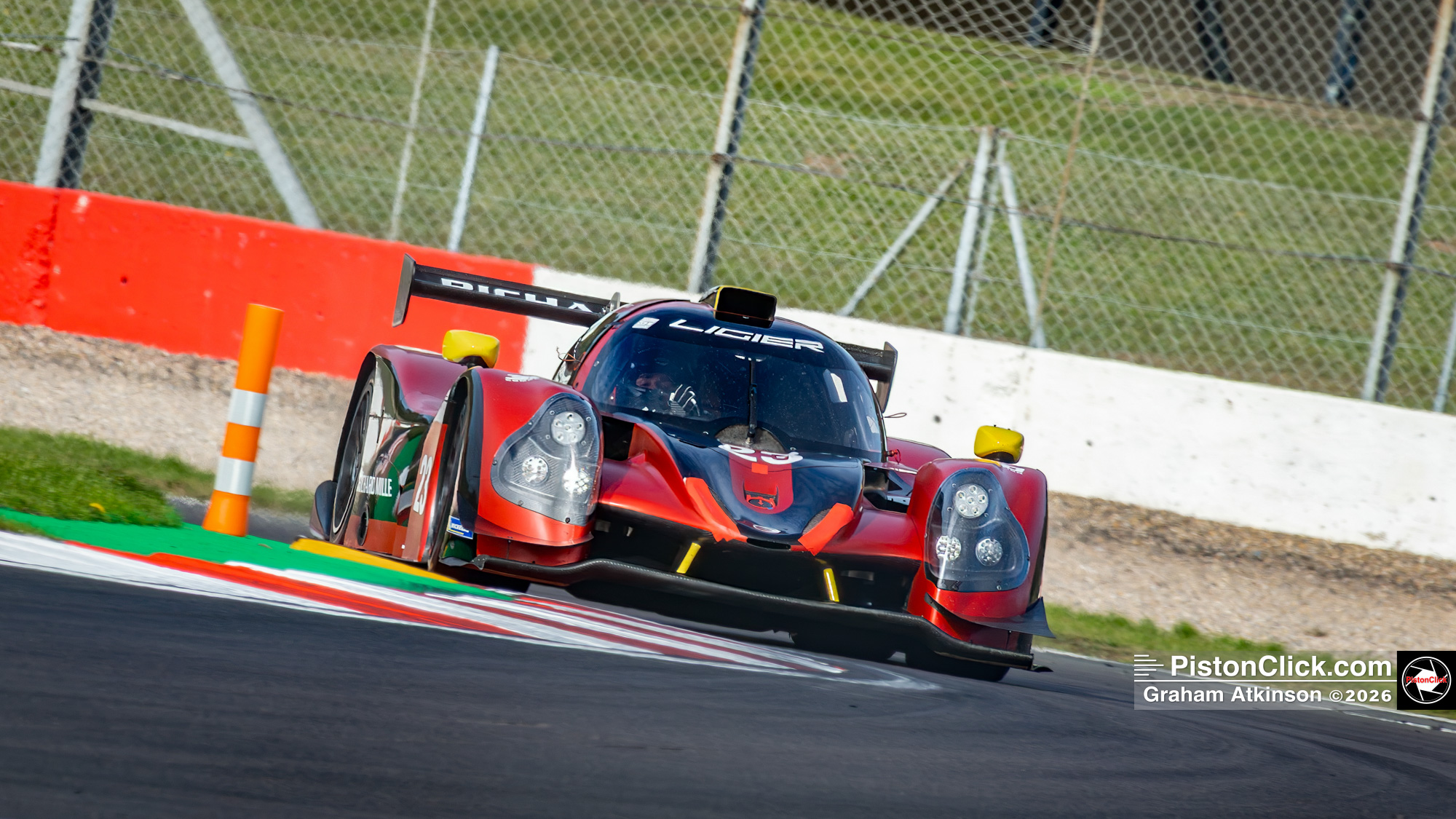
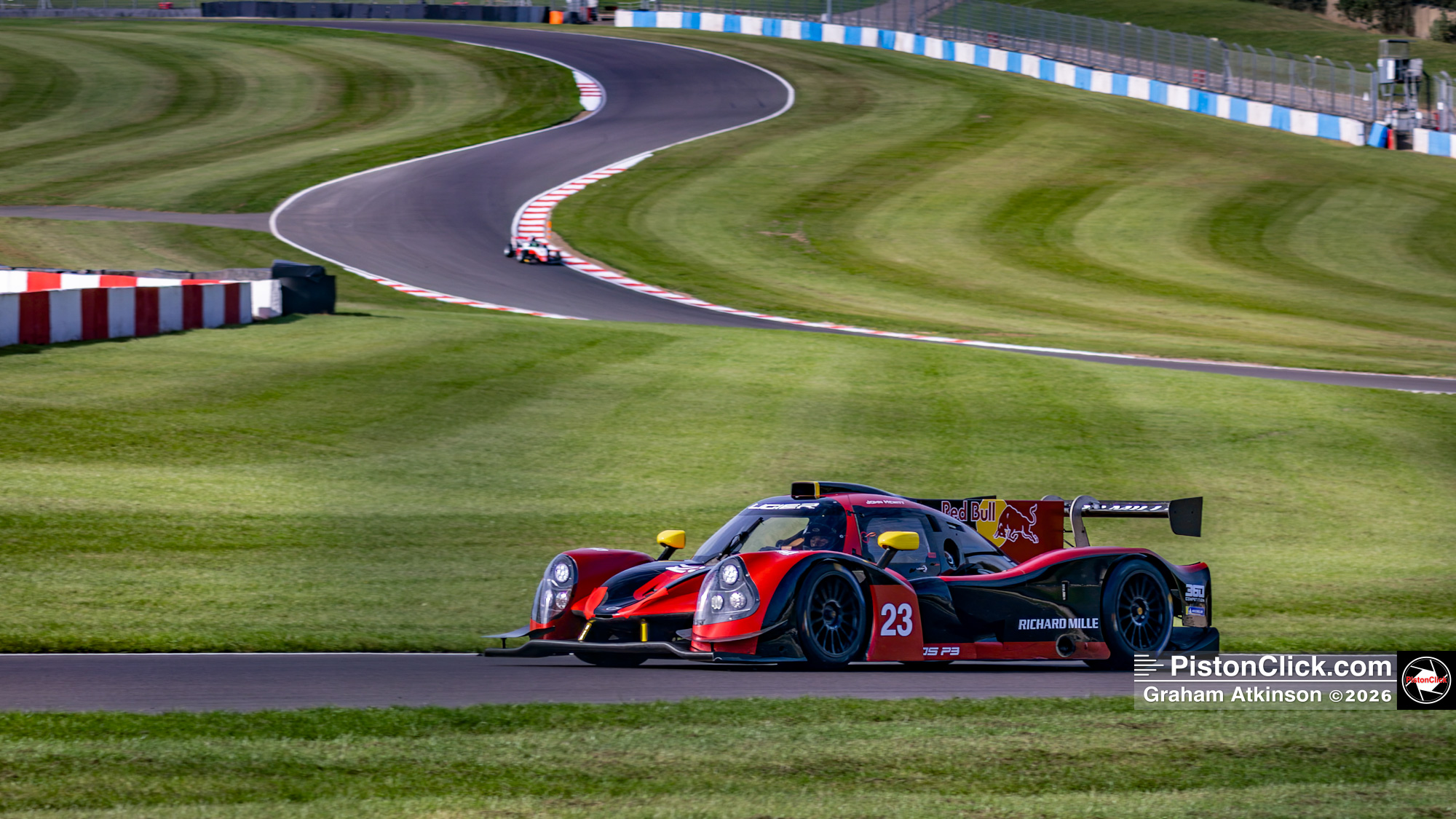
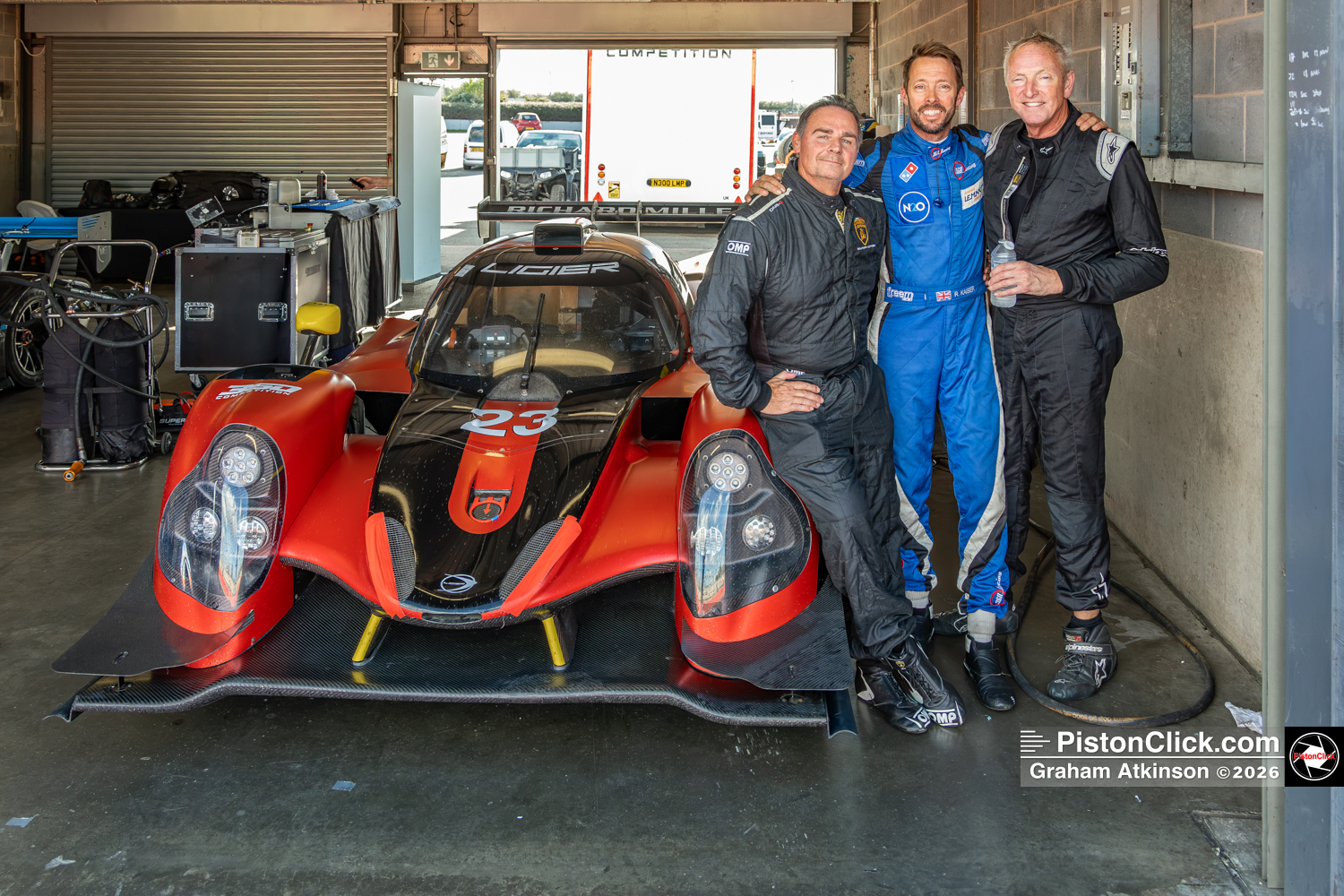
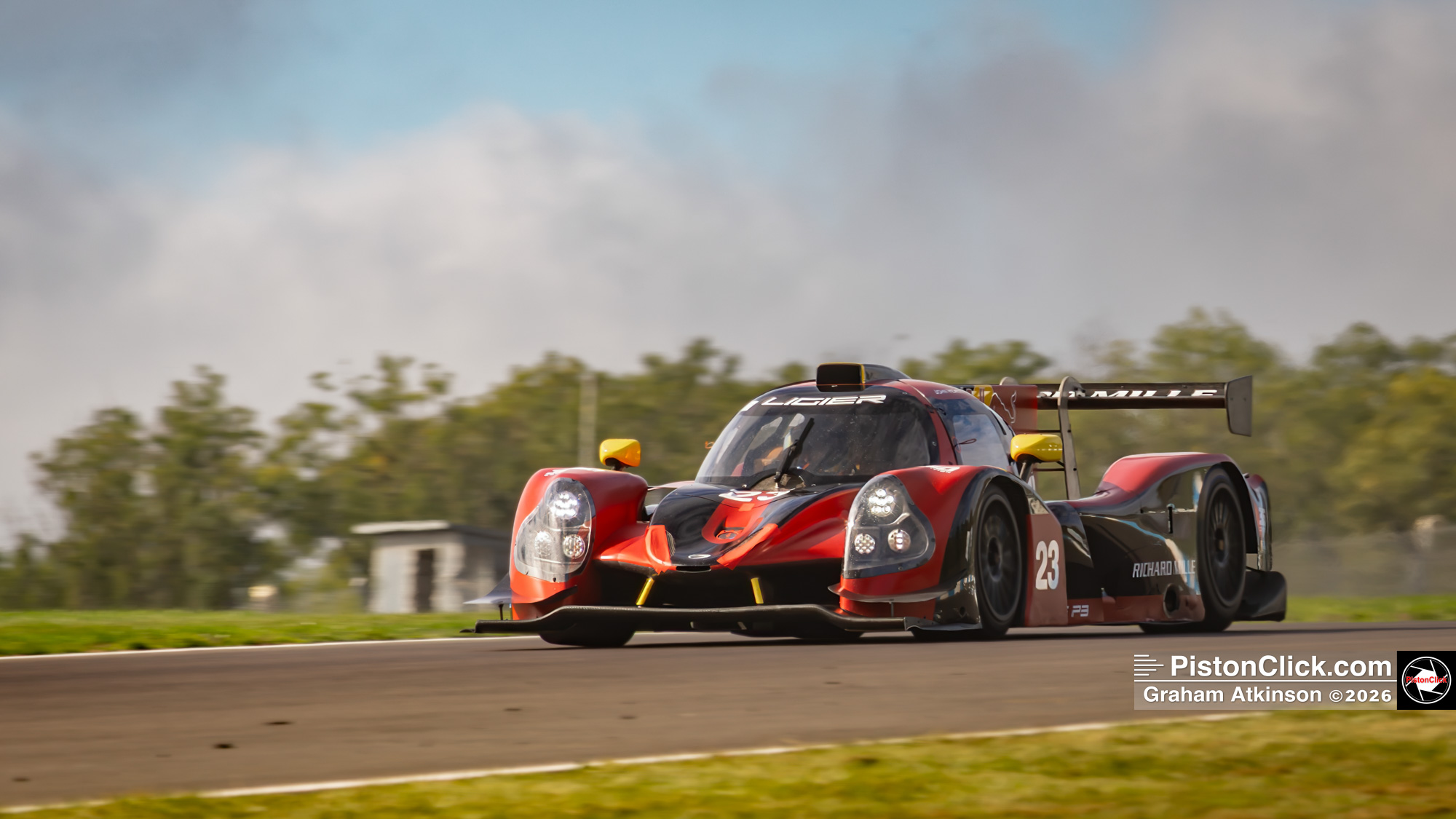
First up is Team 360, with owner-driver John Hewitt giving his recently acquired Ligier JS P320 a good run around Donington Park.
John’s involvement in motorsport began around 25 years ago with Radical, where he raced the SR3, SR4 and, eventually, the SR8. He enjoyed considerable success with the marque, securing multiple wins throughout his time behind the wheel. However, having spent years racing Radicals, he decided it was time for a completely different challenge.
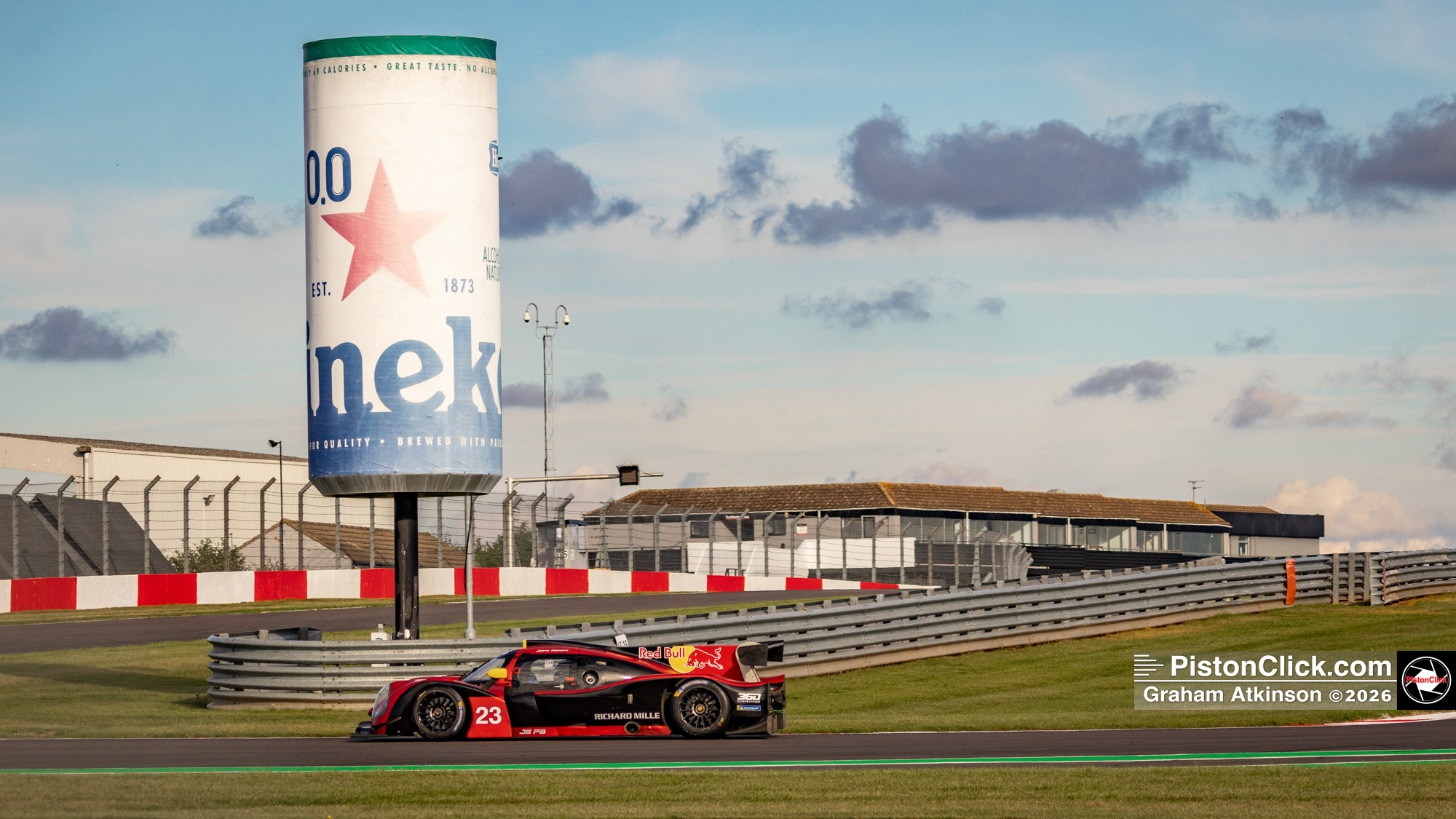
Enter the Ligier JS P320, an LMP3 prototype powered by a 5.6-litre Nissan V8 producing around 450bhp. The JS P320 competed in the LMP3 category from 2020 to 2025 before the newer JS P325 took over.
John admits that adapting to his new car has been quite a learning curve. The difference between the Ligier and his previous Radicals is considerable. With a broad smile on his face, he explained that his old cars would rev to around 10,000rpm, whereas the LMP3 operates at a lower limit of approximately 7,000rpm.
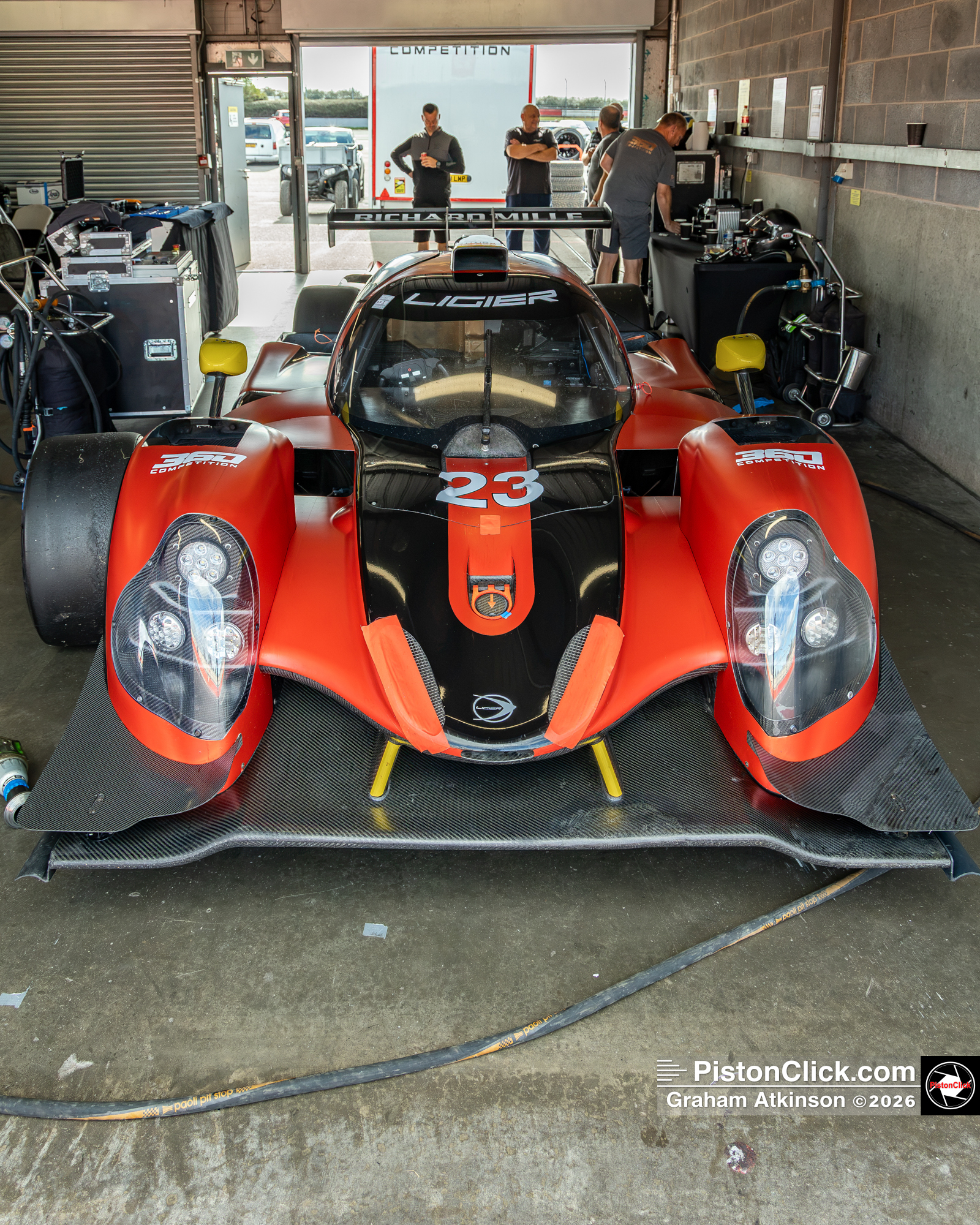
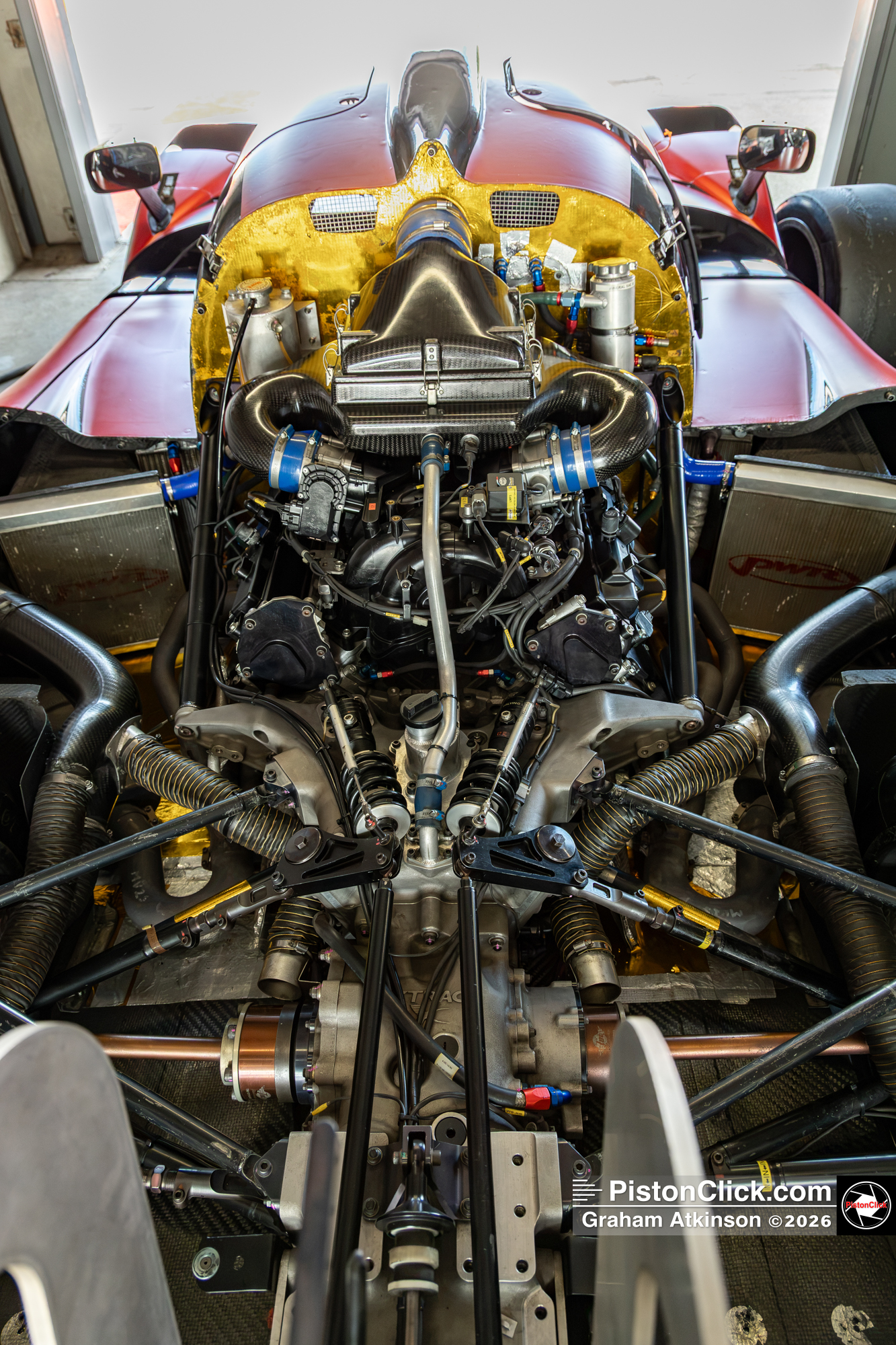
Despite the differences, he is clearly enjoying every minute behind the wheel.
Changes to the organisation running the series, which is now French-owned, have made competing in European rounds more difficult for UK-based racers. As a result, John has had to restrict his activity largely to testing on British circuits this year. He hopes to return to Europe next season and attend as many rounds as possible.
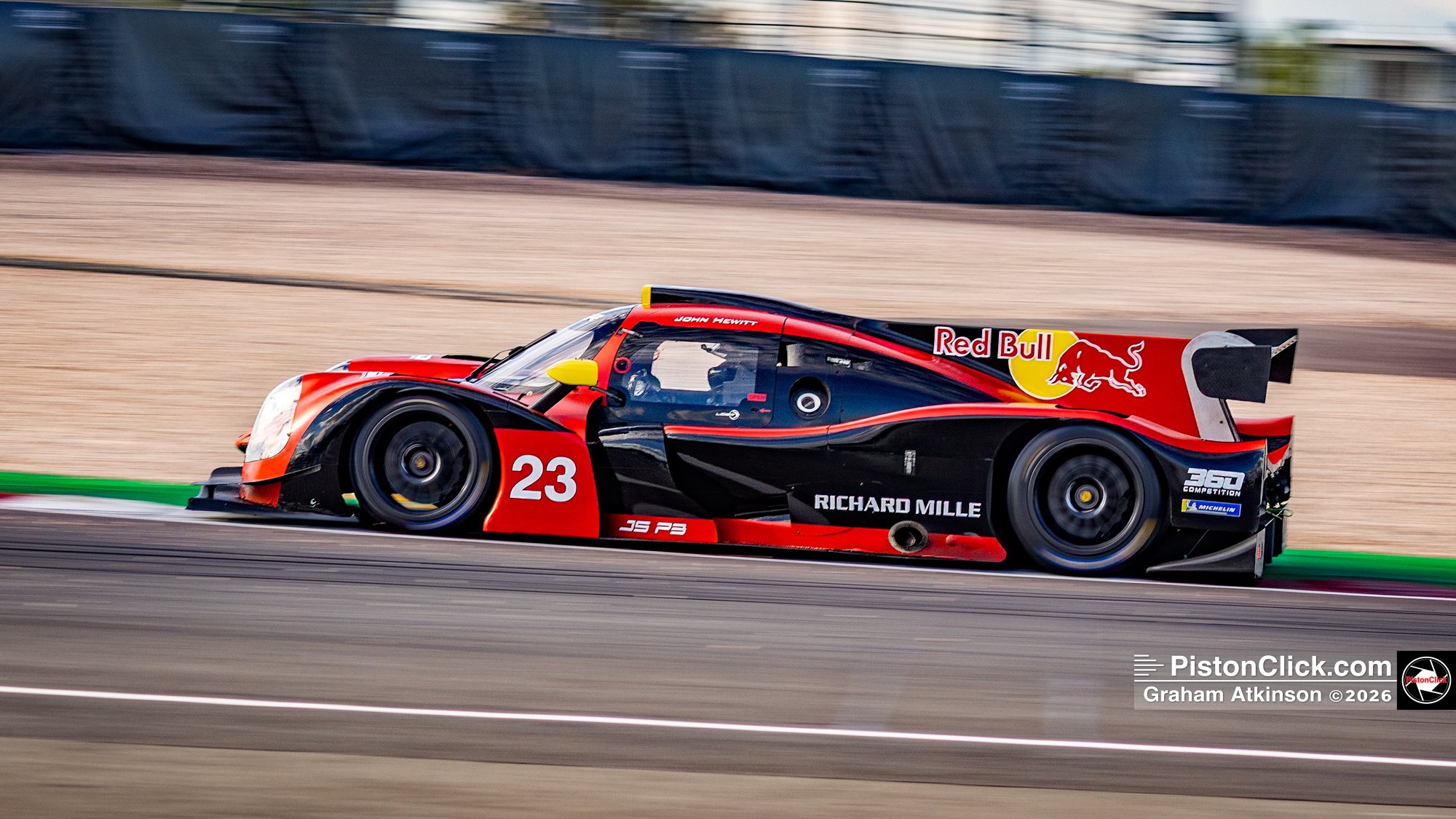
I asked John what motivates him to continue racing despite the considerable financial commitment involved. For him, motorsport represents a lifelong dream. He describes being on a racetrack as feeling like home and considers himself privileged to have the opportunity to compete.
It is a sentiment I hear regularly from people involved in the sport. The costs can be eye-watering, but for those who live and breathe motorsport, the experience remains difficult to put a price on.
There is also an interesting footnote to John’s Radical story. On 28 January 2025, Radical Motorsport manufactured its 3,000th vehicle at its Peterborough headquarters and delivered it to John. This special SR3 featured a custom bronze powder-coated chassis, matching bronze wheels and bespoke decals celebrating the marque’s heritage.
Having enjoyed success with Radical, John has now taken on an entirely different challenge. Watching the Ligier circulate, it is clear that he is determined to make the most of it.
Cobra Daytona Coupe 289 – A Thoroughbred Racer
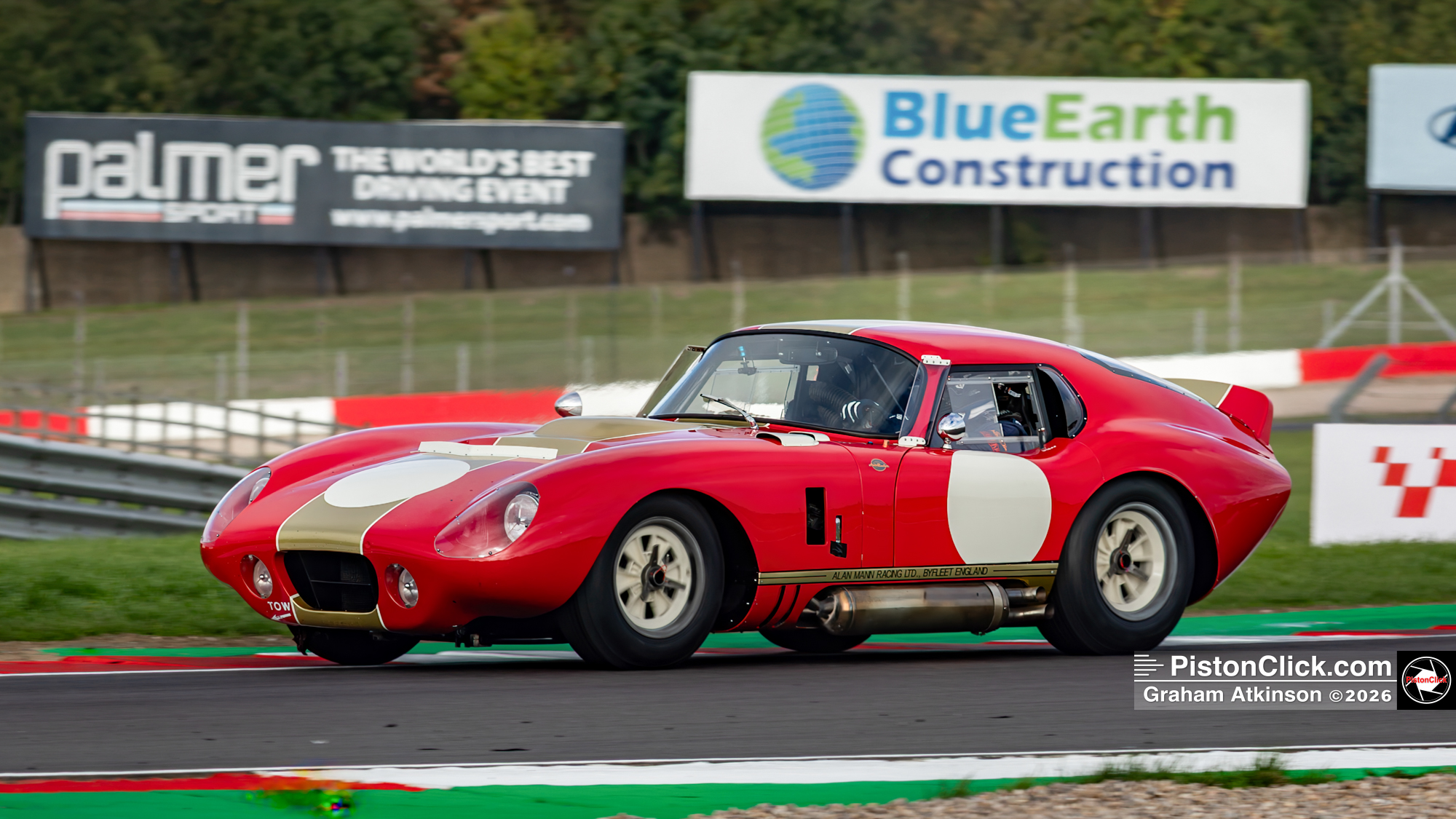
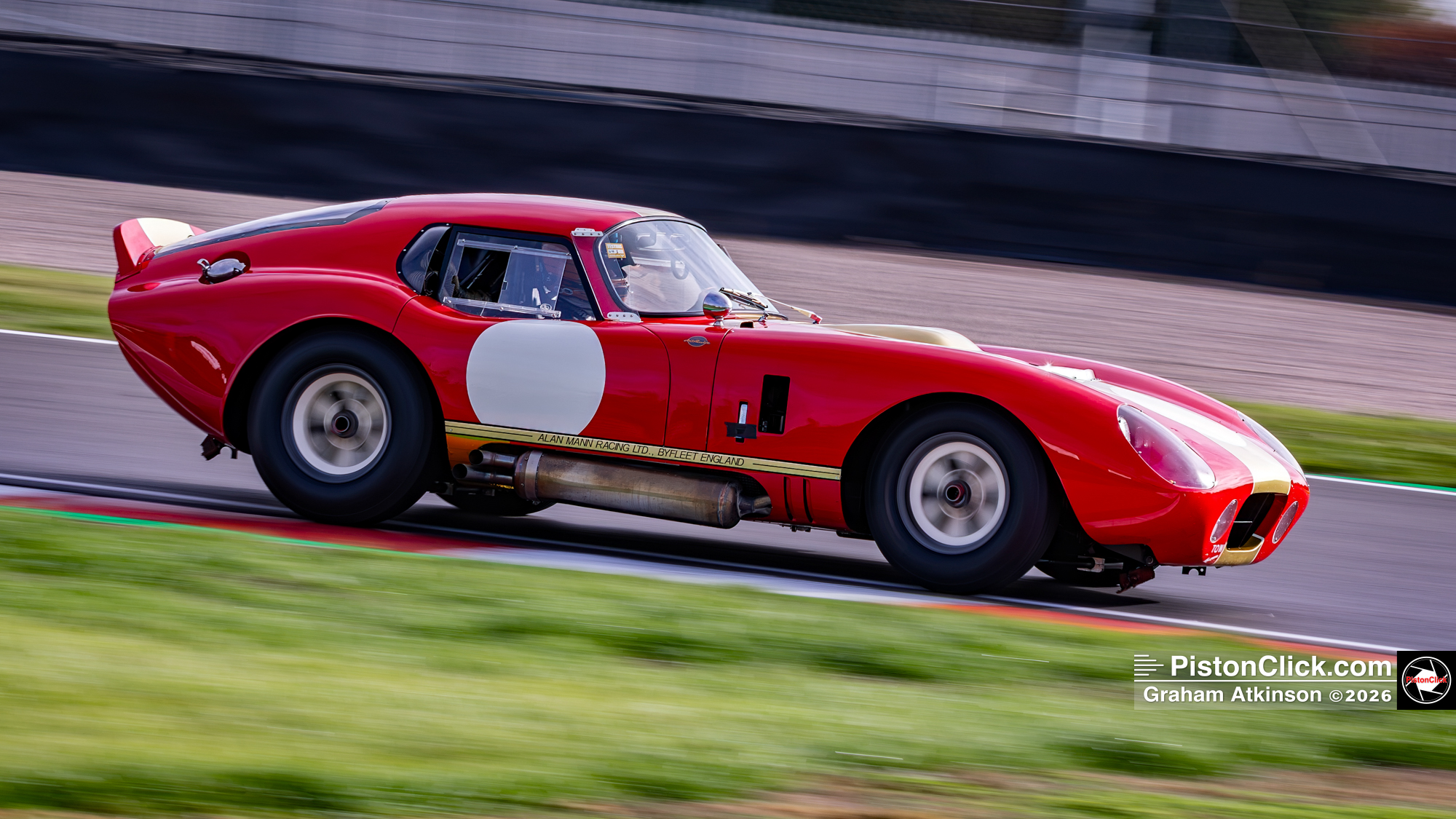
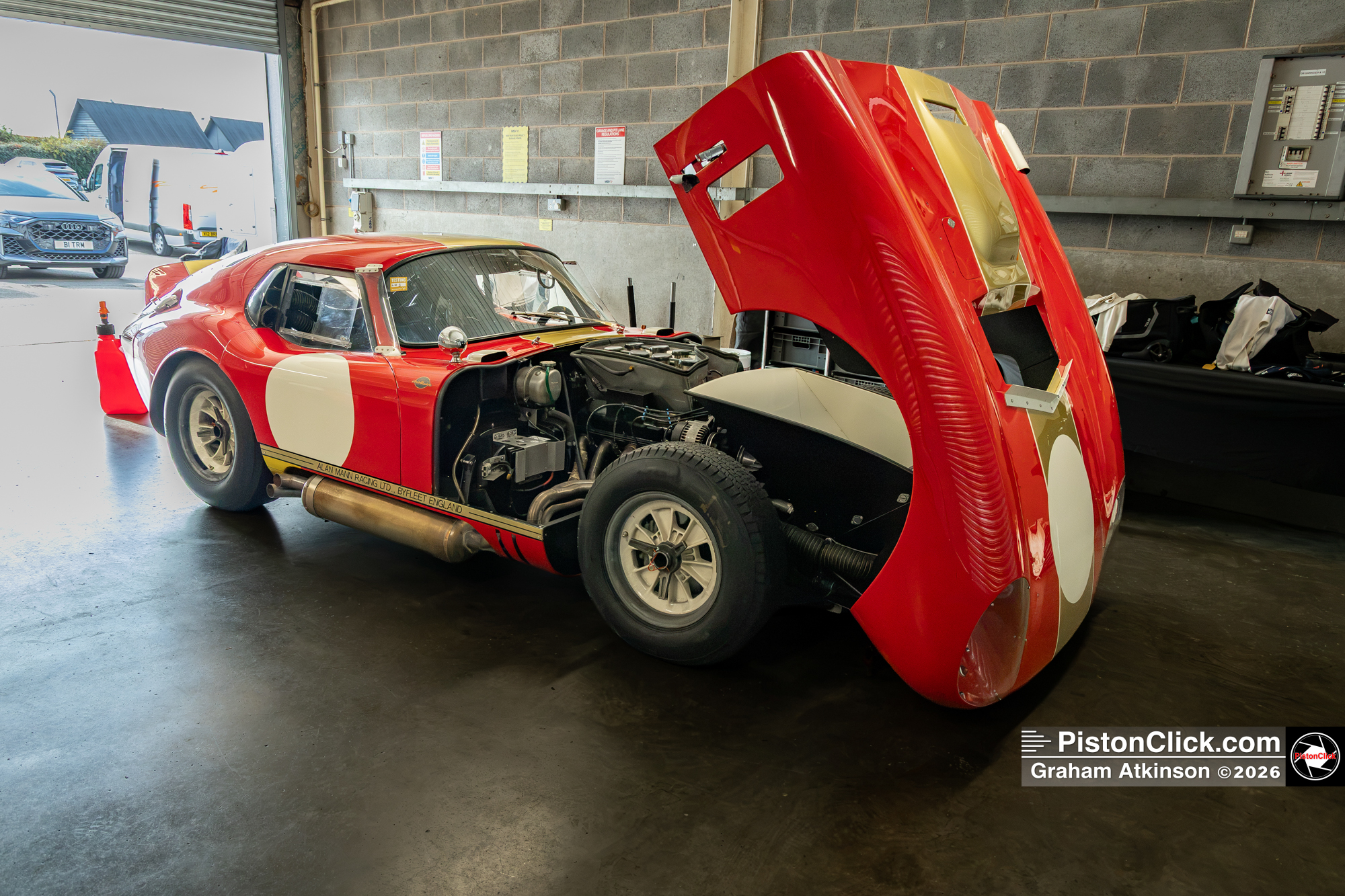
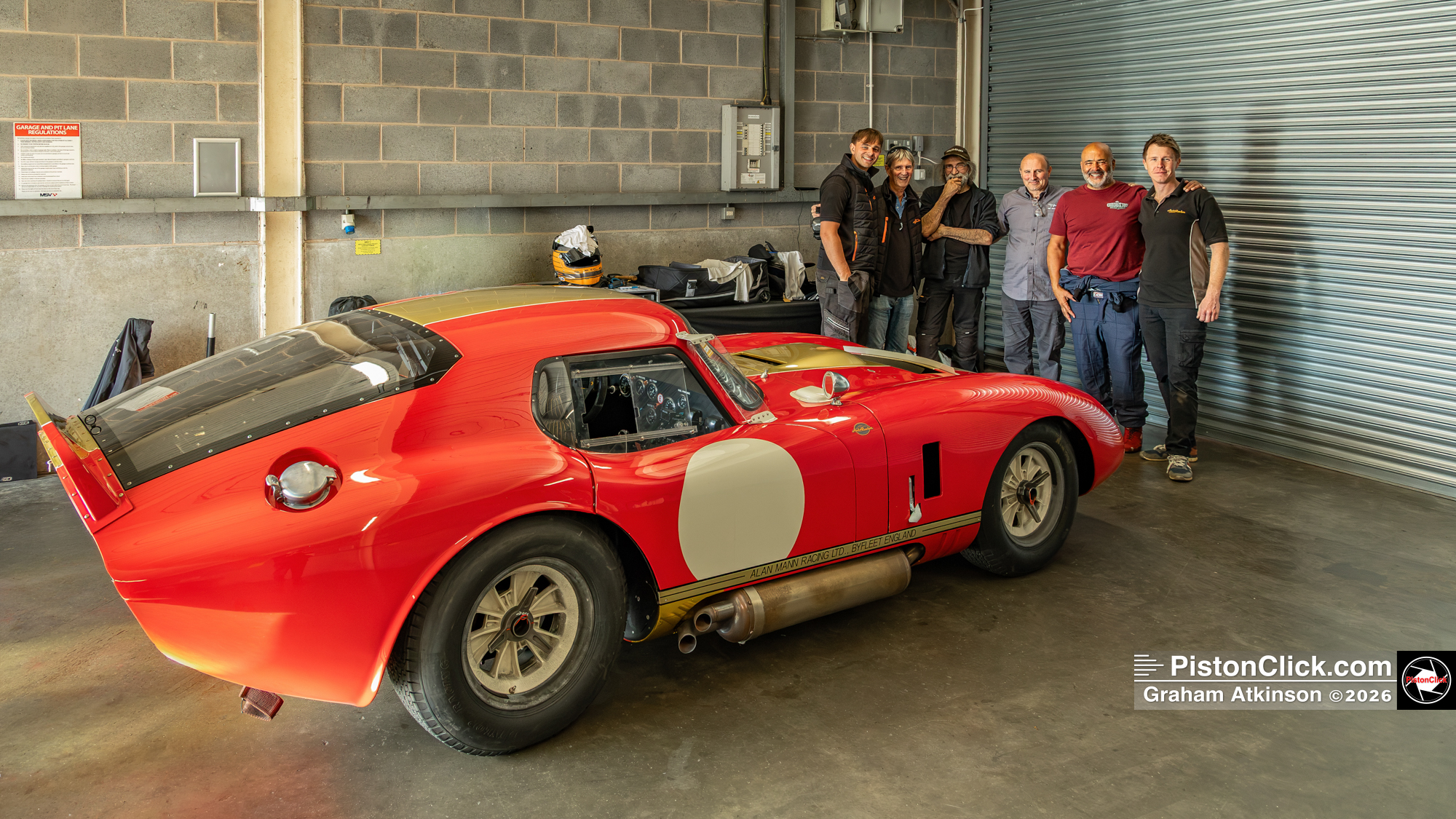
Next on my list is Can Bitirin and his brand-new Cobra Daytona Coupe. This is no ordinary road-going sports car, and its story is just as interesting as its appearance.
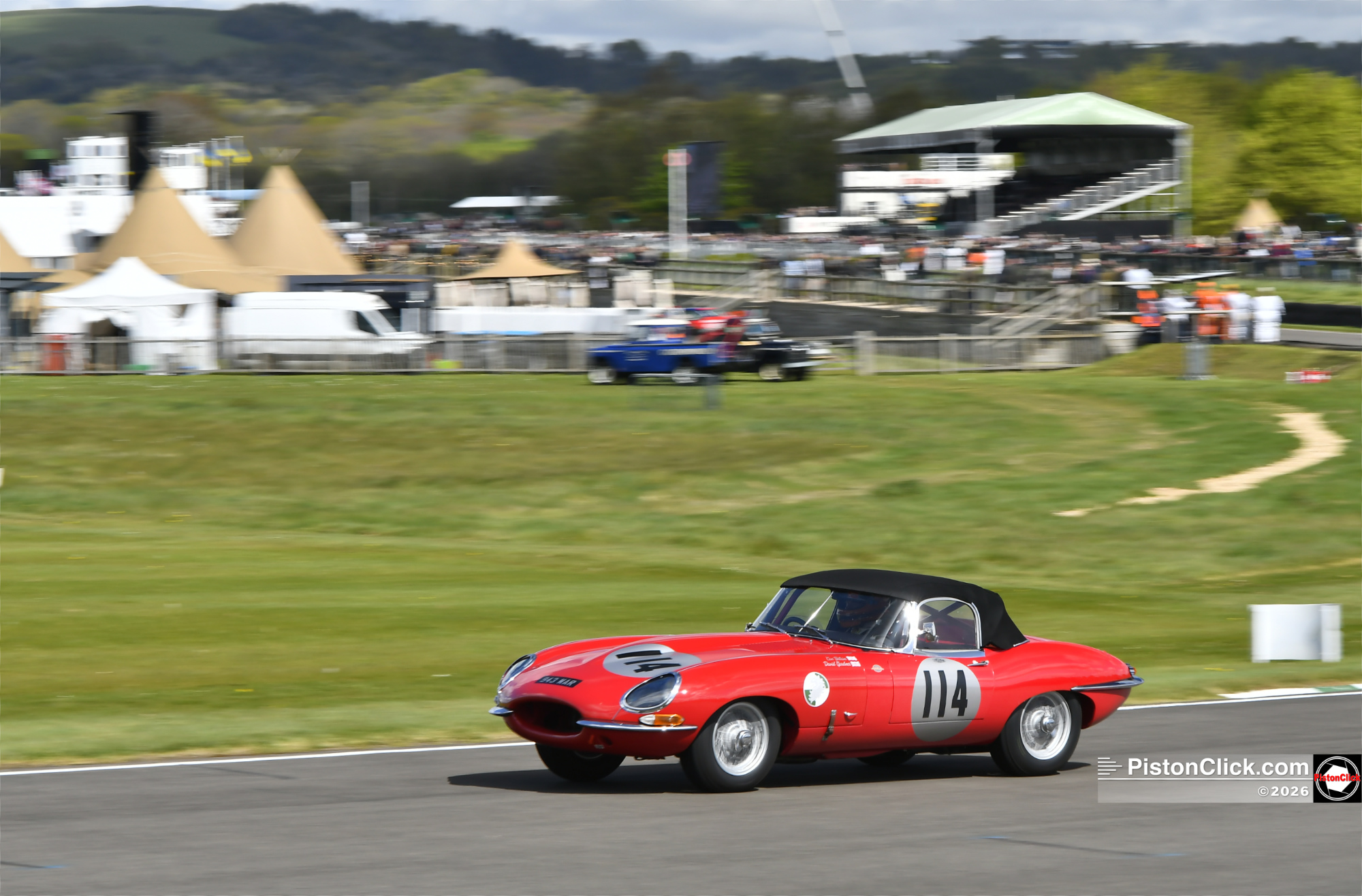
Can only began racing around four years ago, initially competing in MGBs in entry-level events. He subsequently moved into a Jaguar E-Type, racing in the Motor Racing Legends series and the Protheroe Cup at the Goodwood Members’ Meeting. Can has also competed in a Lotus Elan R26, a factory competition version of the original Type 26 road car.
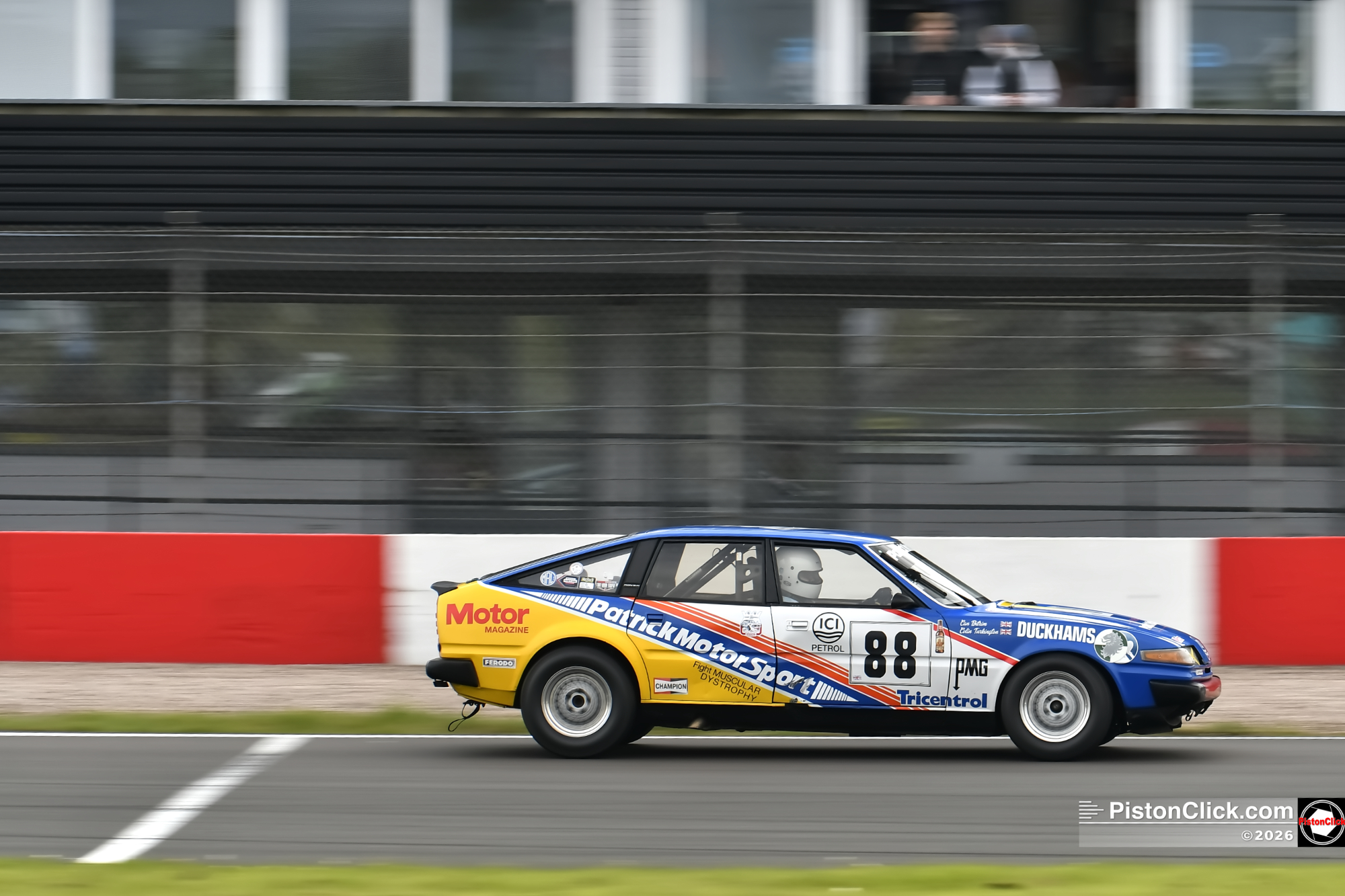
His collection includes a works Rover SD1 Group 1 car, which he races in the Historic Racing Drivers Club (HRDC) Gerry Marshall Trophy.
Behind much of this activity is David Gardner, owner of Autorevive London. David has become Can’s professional mentor, mechanic and co-driver, helping him develop as a racing driver while preparing the cars for competition.
His approach goes well beyond simply getting the cars onto the circuit. He uses telemetry and video analysis to fine-tune their setups, identify improvements and help Can understand where he can find more performance.
David has a motorsport story of his own that deserves an article in its own right.
His interest began as a young boy accompanying his father to Silverstone to watch the Aston Martin DB2/4s that his dad had prepared. In 2000, David began an apprenticeship at a family garage specialising in MGs, while his own racing career started with karting before progressing to MG Maestros in the MG Owners Club series.
In 2006, he joined DK Engineering, a Ferrari specialist. Two years later, he took over his father’s company and rebranded it as Autorevive London, initially concentrating on repairs and servicing.
However, some of his father’s customers continued bringing their racing cars to the business. One eventually offered David the opportunity to drive a car on a track day.
He jumped at the chance, but soon recognised that, although the car was good, it lacked the performance he wanted on the circuit. He began developing its setup to make it more competitive. Before long, other owners were asking him to prepare and drive their cars, too.
That was the beginning of his journey into historic motor racing.
David told me that he has been fortunate enough to drive all the cars they run and shares the driving at two-driver events with Can. Autorevive has continued to grow, building a reputation for preparing fast, reliable historic racing cars.
The Alan Mann Cobra Daytona Coupe – A Link to Le Mans History
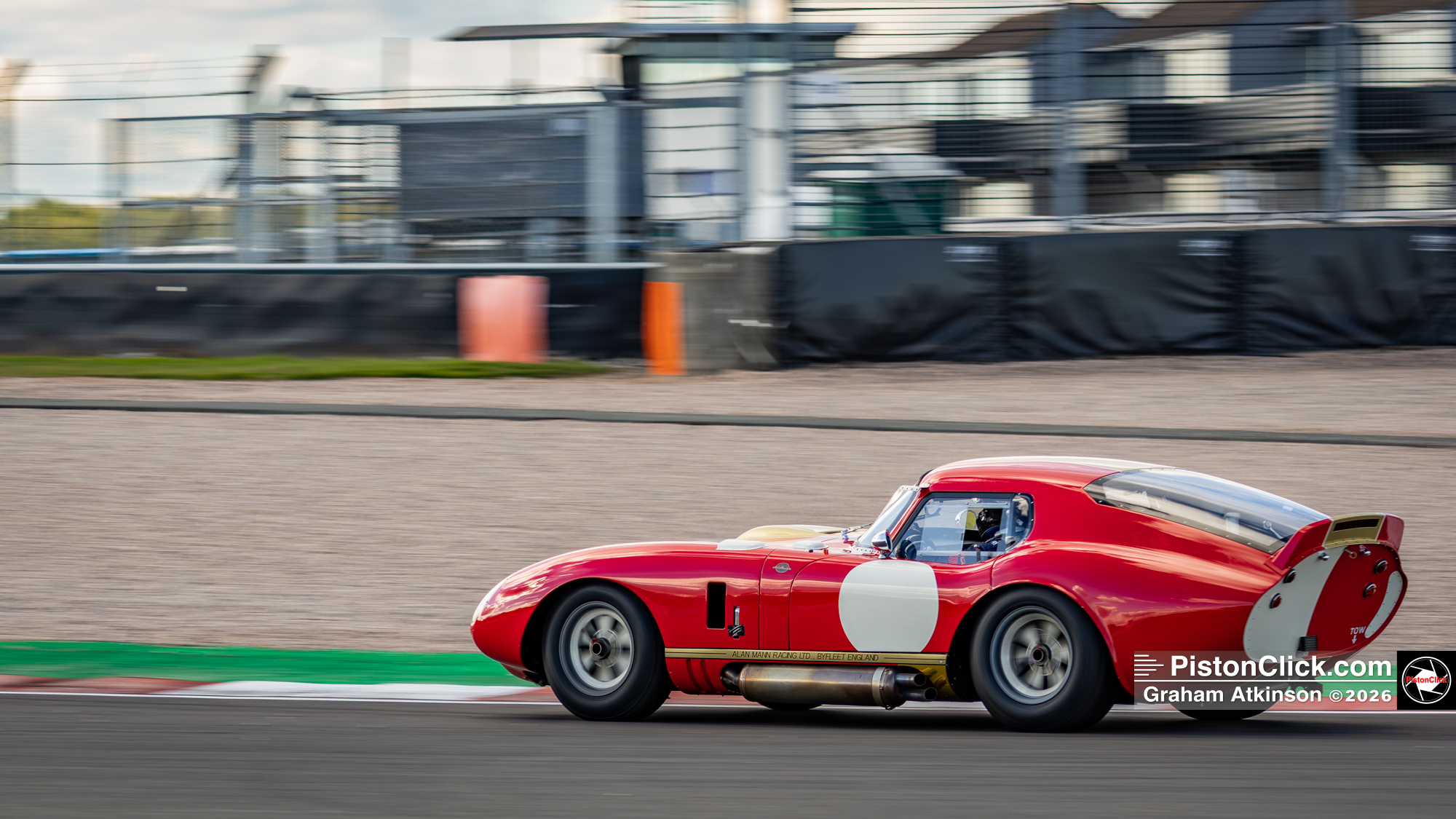
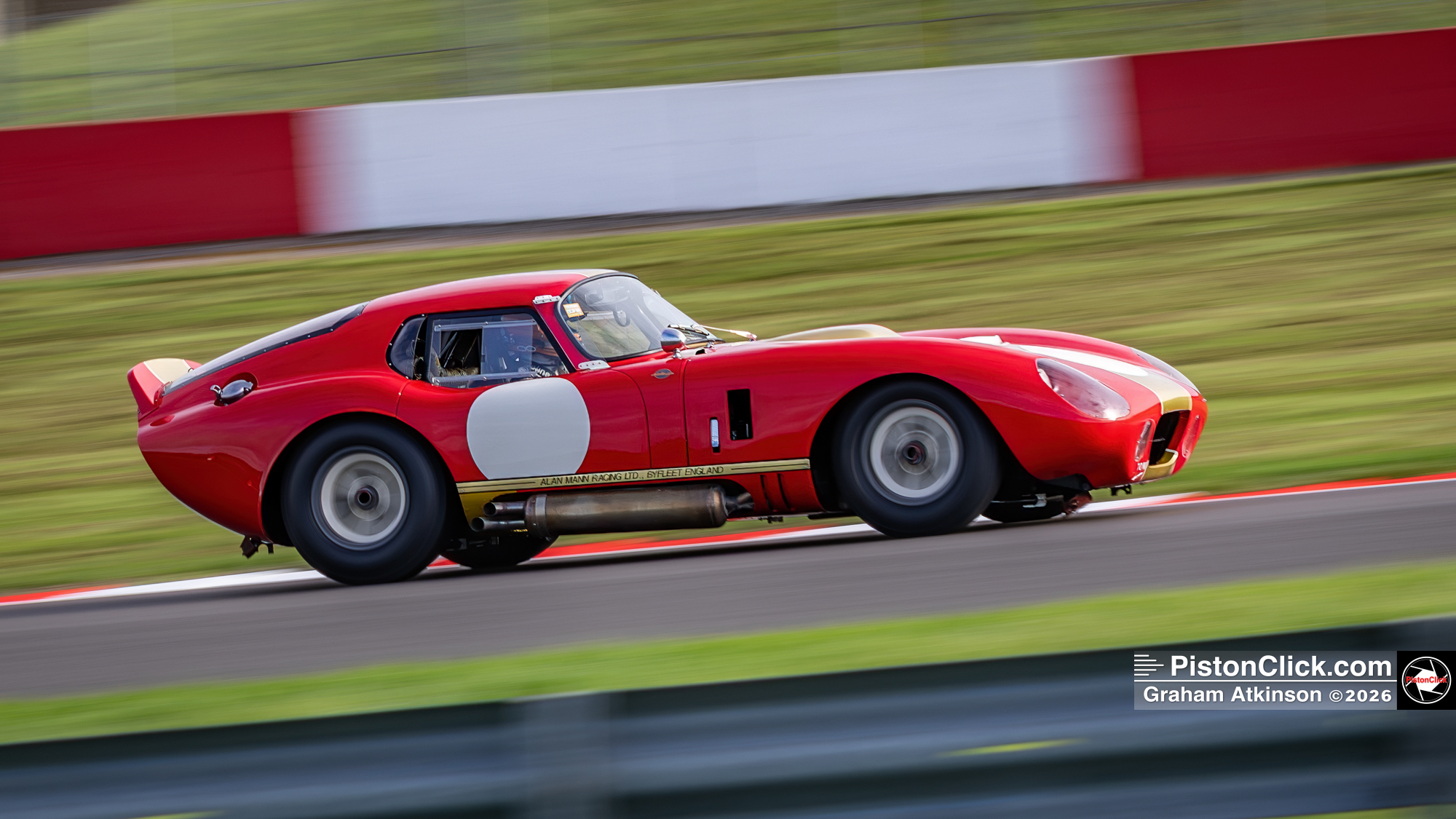
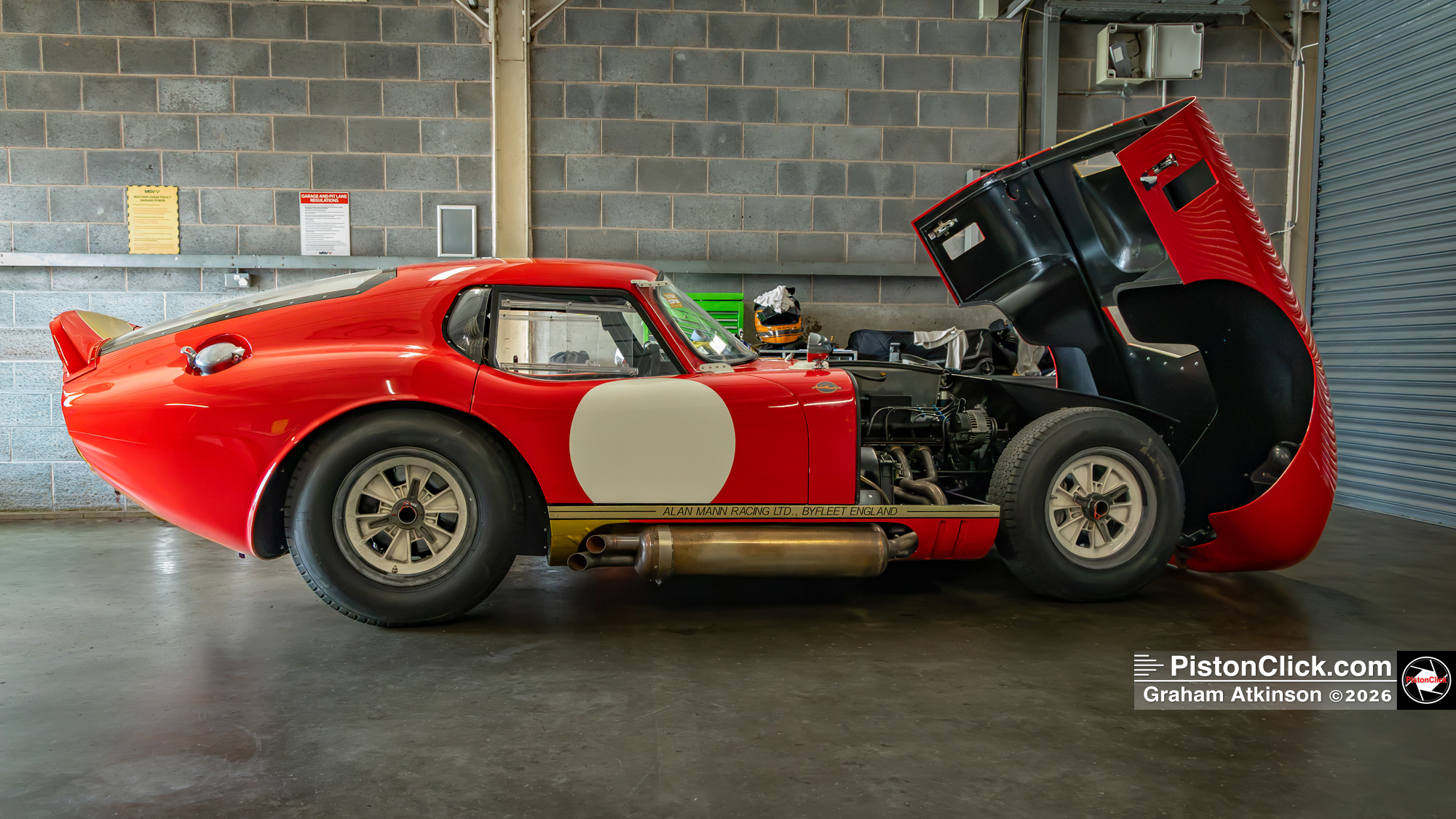
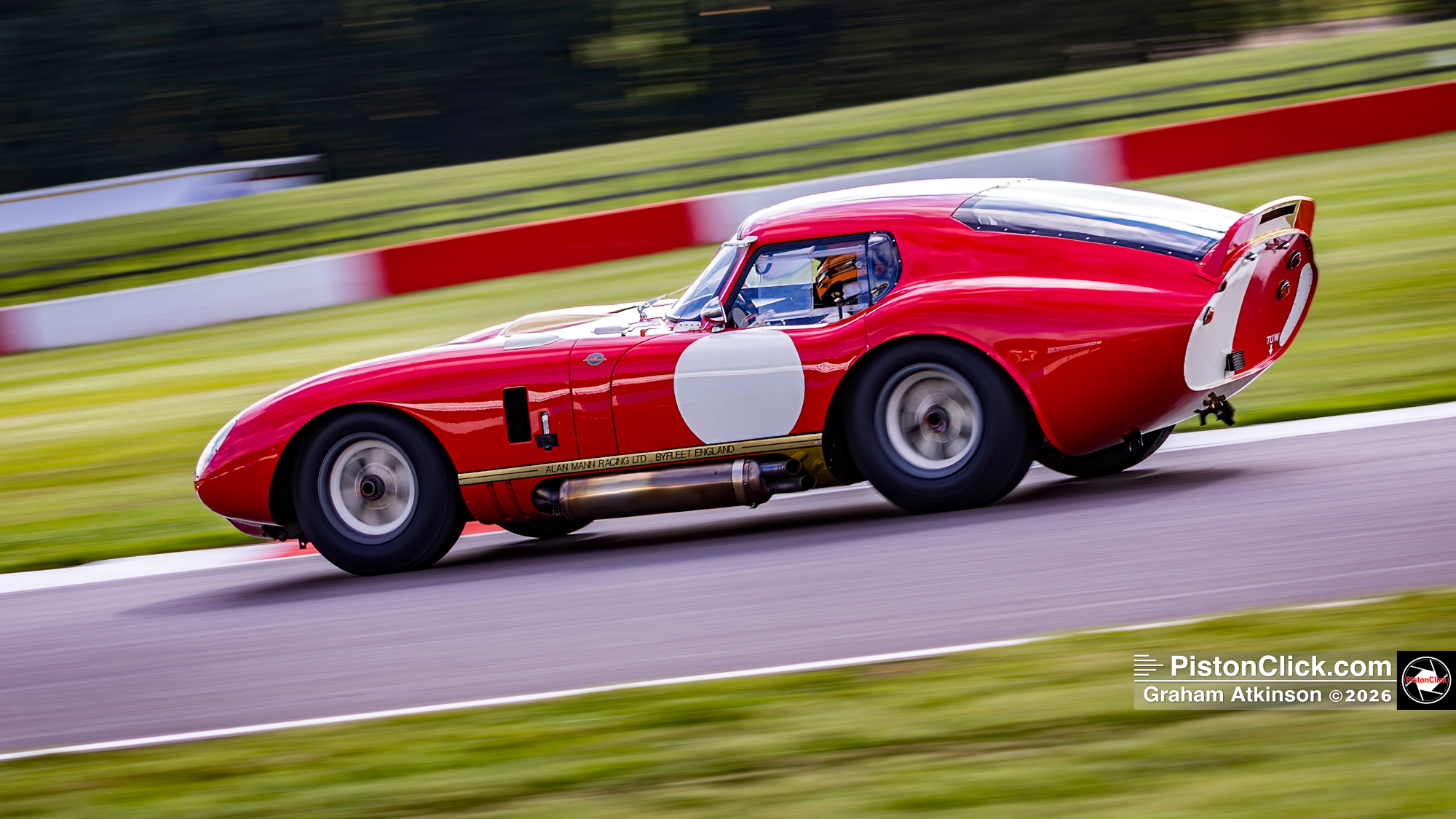
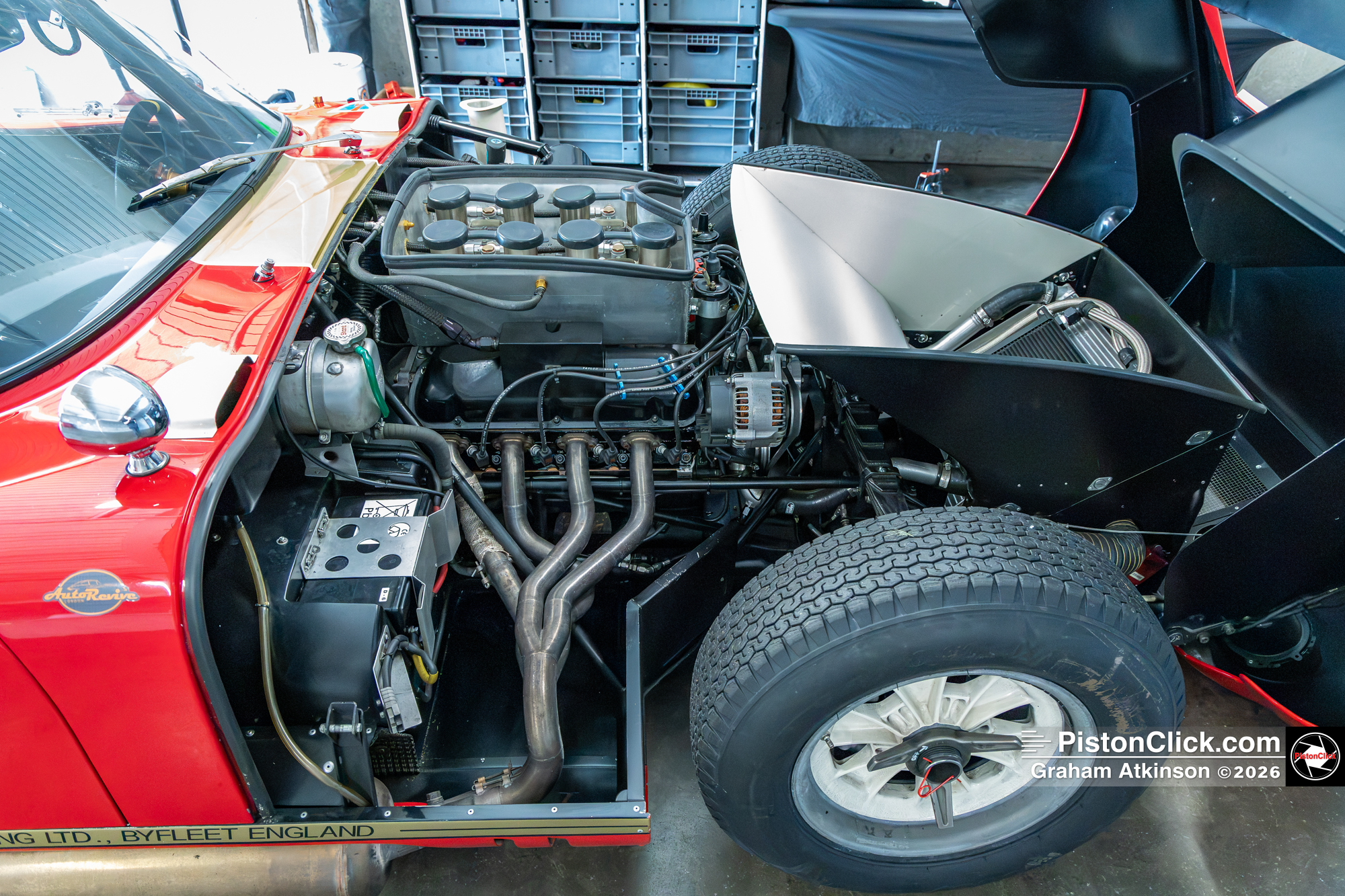
Back to Can’s latest acquisition. Some people might describe this as a replica, but that misses an important distinction. This is a continuation car built by Alan Mann Racing to commemorate the team’s FIA World Championship success in 1965.
That achievement formed part of the story that ultimately led Henry Ford II to pursue victory at Le Mans with the GT40 programme in 1966.
Unlike many competition cars of the period, which began life as road cars before teams converted them for racing, the Daytona Coupe was designed specifically for competition.
Its distinctive aerodynamic shape came from designer Peter Brock, who developed the concept around the Cobra 289. The revised rear bodywork, with its characteristic fastback profile, helped improve high-speed performance. The design was intended to overcome the limitations of the open Cobra roadster, with the coupe capable of reaching speeds approaching 200mph under suitable conditions.
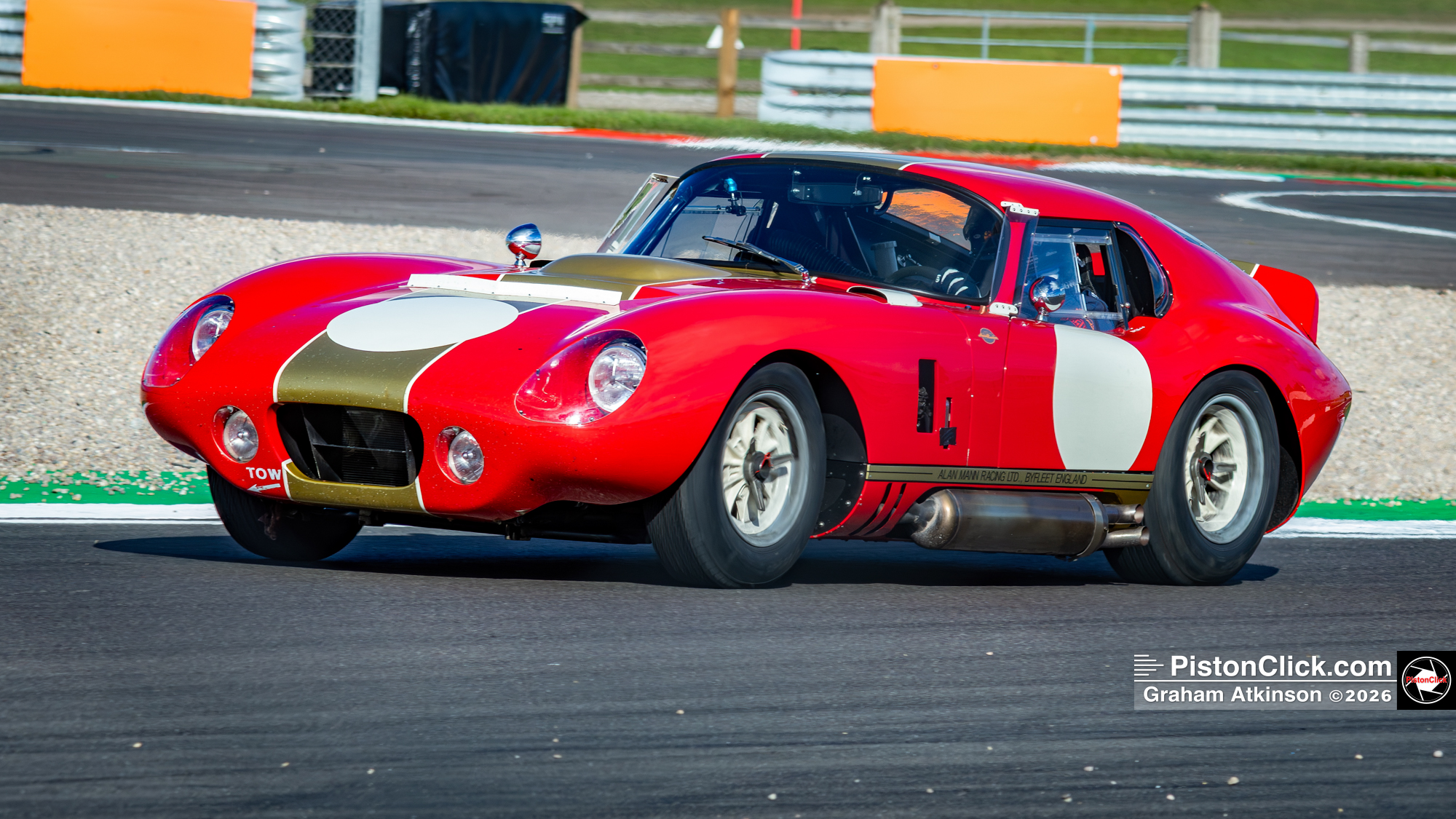
It is a fascinating piece of motorsport history, and seeing one being prepared for competition rather than simply displayed is always a pleasure.
Can plans to race the car in the Pall Mall Cup at Silverstone on 17 October 2026, so it will not be long before this beautiful machine gets the chance to demonstrate what it can do in anger.
I asked Can to sum up what motor racing means to him. His answer was one of the most revealing conversations of the day.
“The workplace is sanitised. You can’t say this and you can’t say that. But then you come on track and you meet interesting characters with interesting stories, people with vibrant personalities, and it’s just a fabulous place to be.
“Anything to do with the real world is not very good at the moment, so to be on track, just to concentrate on the car, going round in circles as quick as you possibly can, and having a nice time. And what’s not to like about it?”
I think he has summed it up perfectly. For all the engineering, competition and expense, motorsport is also about escaping everyday life, meeting fascinating people and sharing an experience that is difficult to replicate anywhere else.
Holden, Porsche or Aston Martin? Take Your Pick!
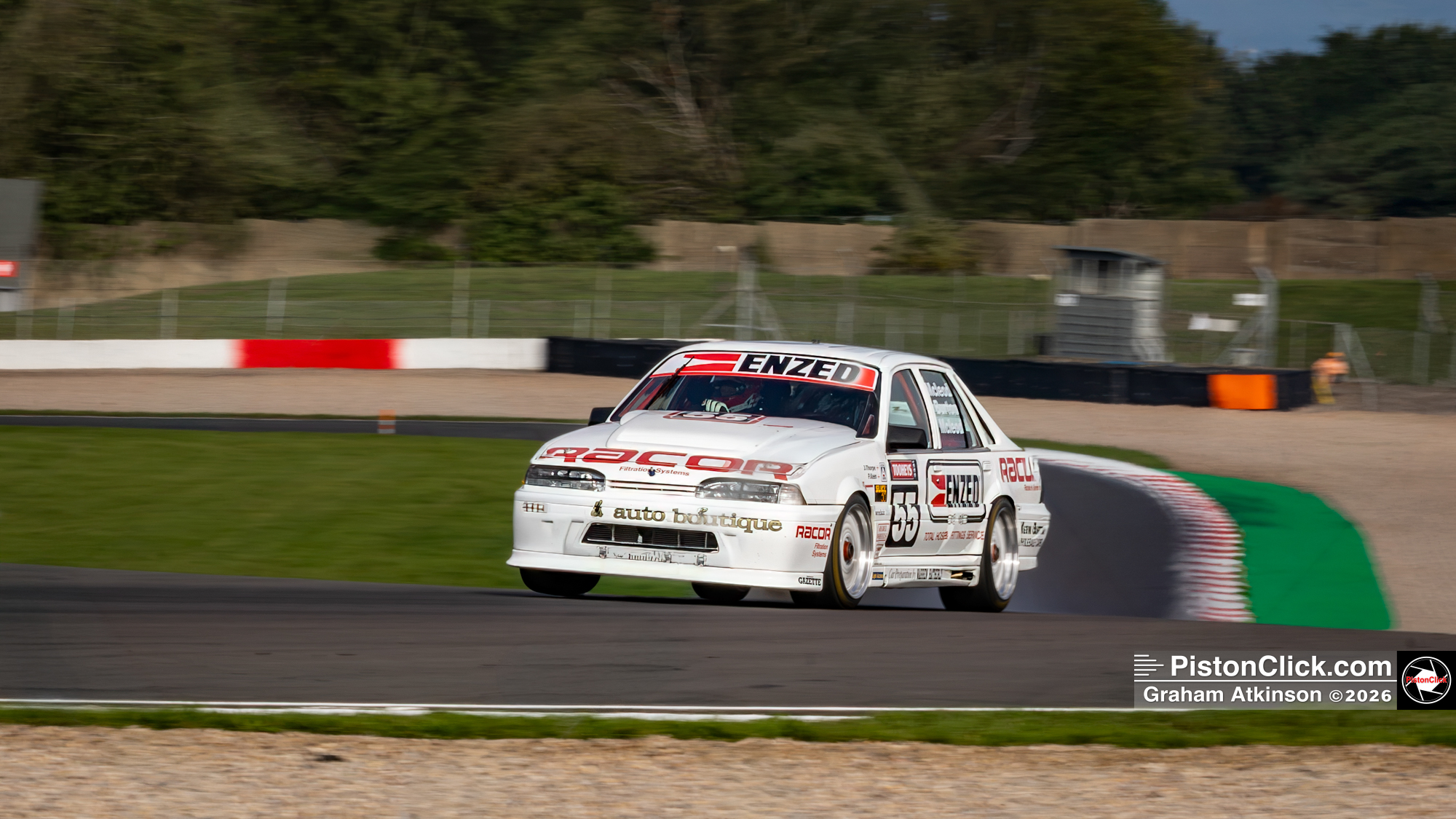
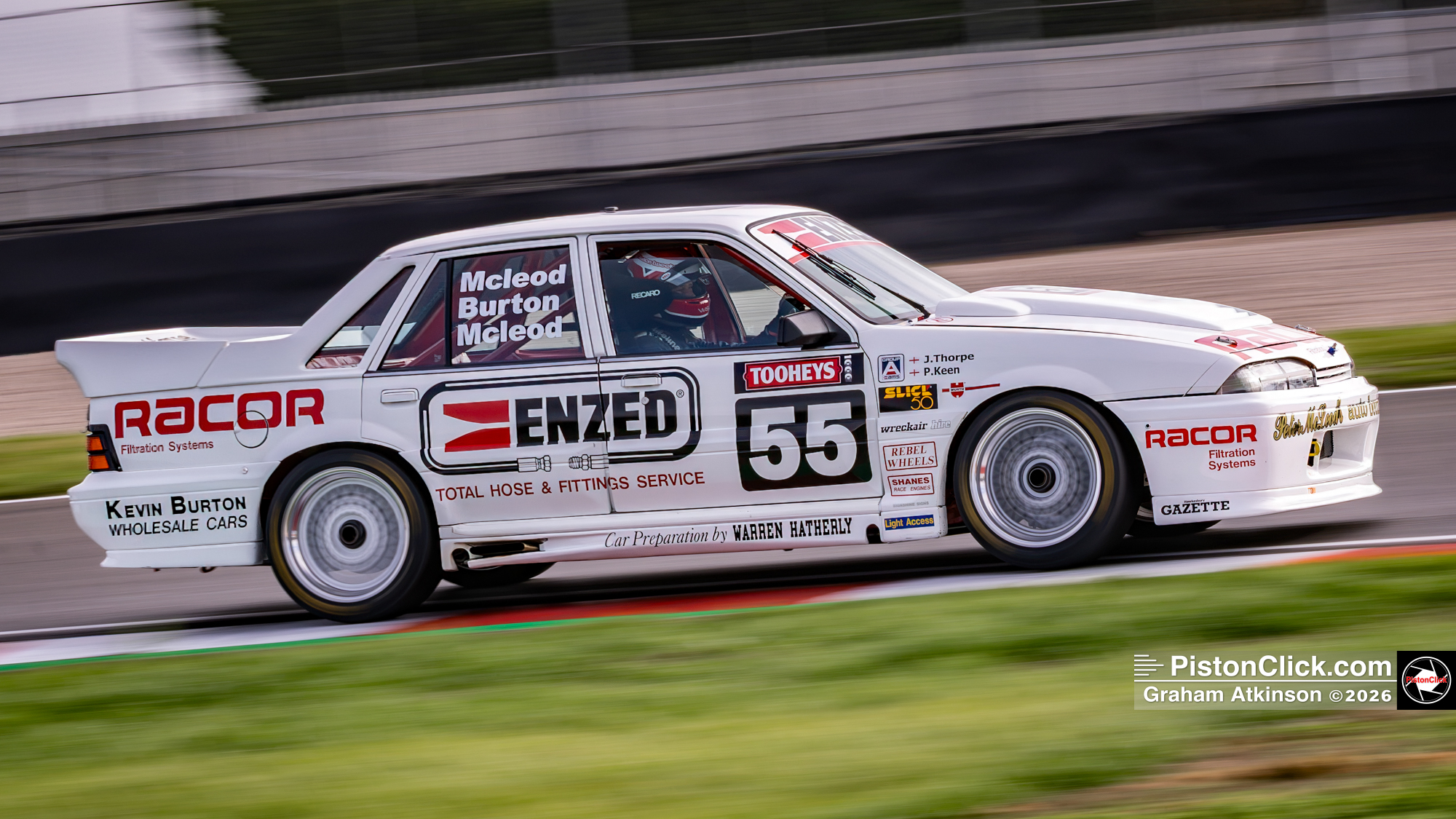
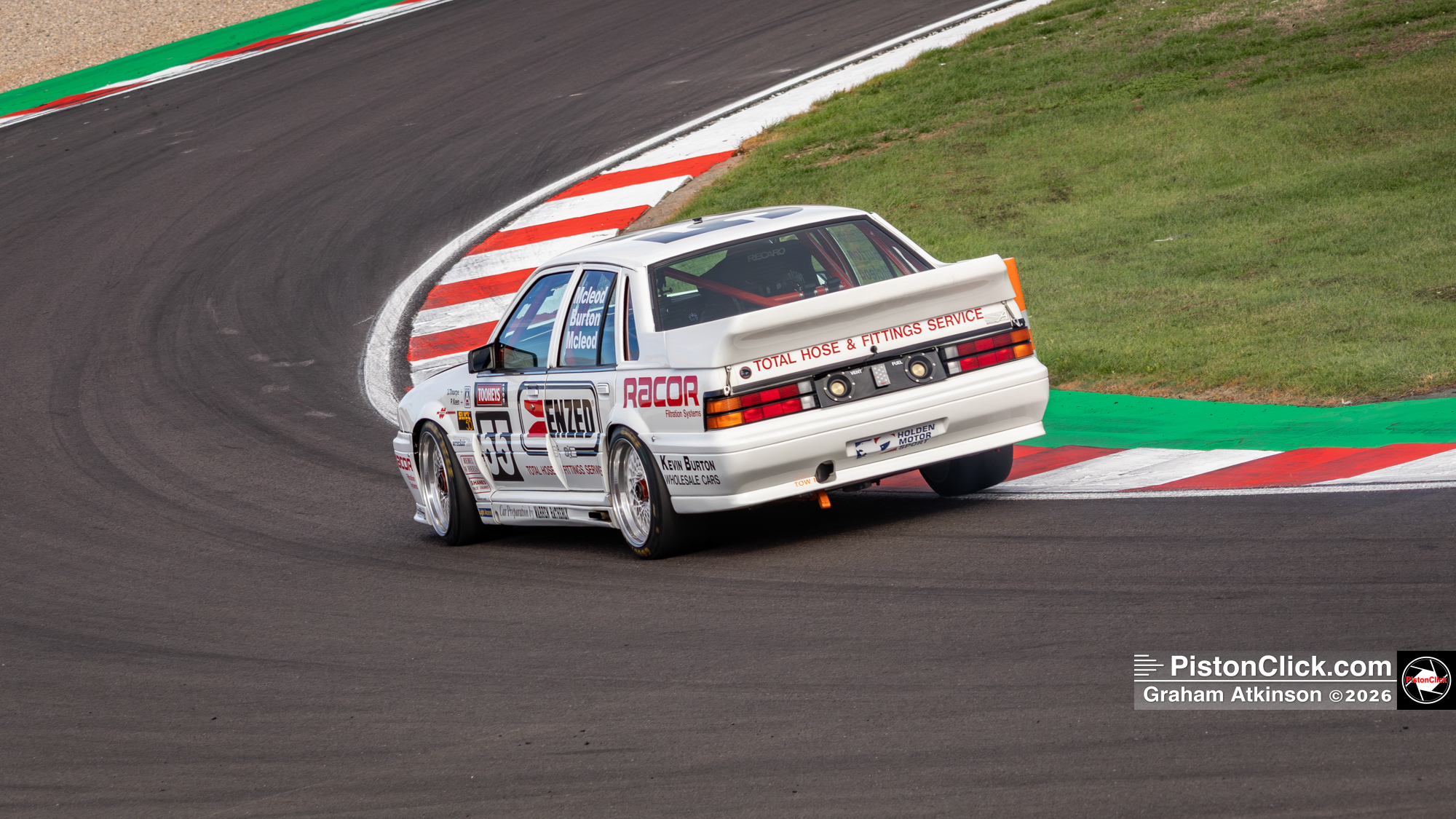
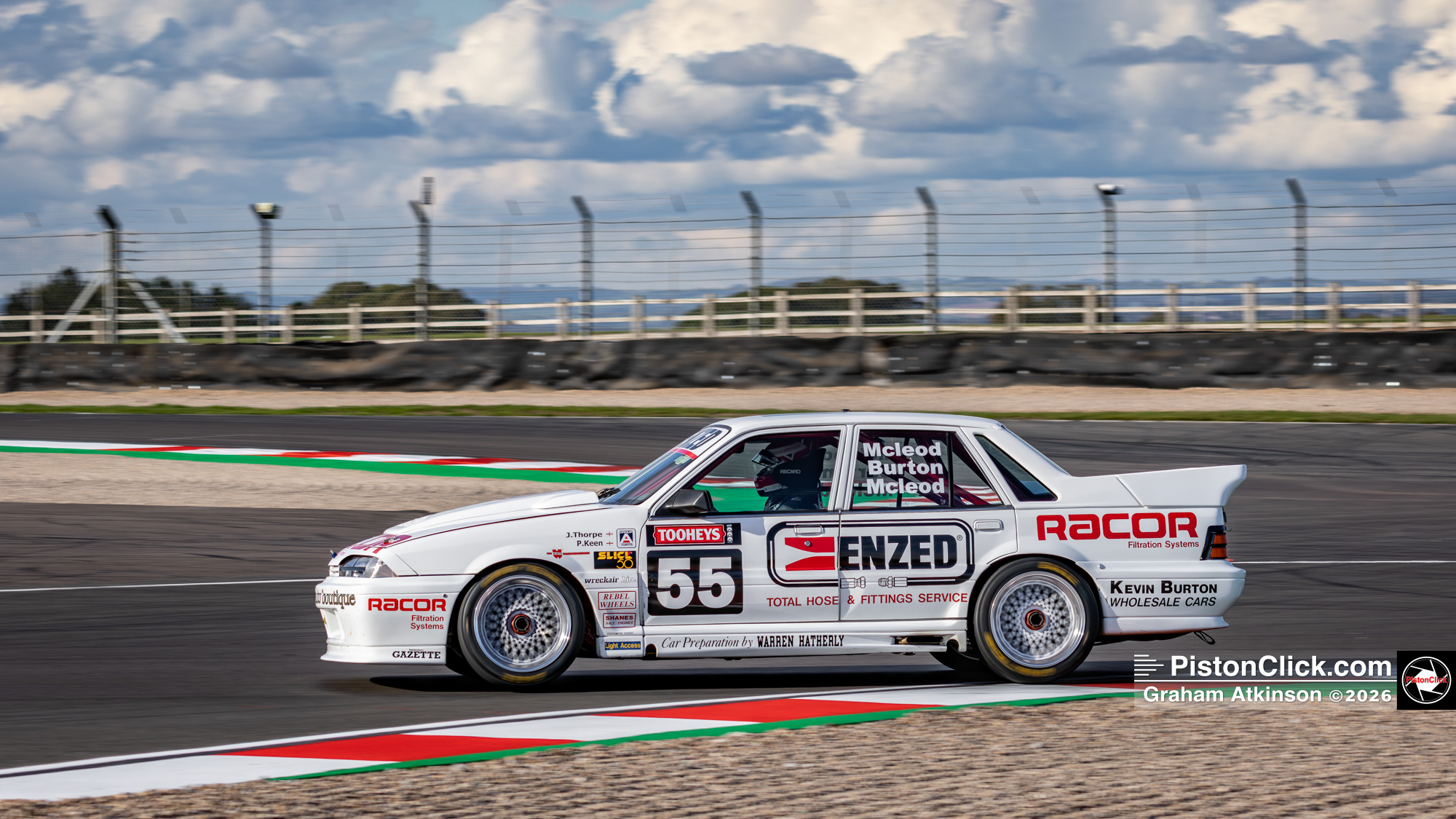
I always try to pick out cars that you don’t see every day when writing these reports. A 1992 Holden Commodore VL certainly fits that description. You don’t see many of them at Donington Park, or anywhere else in the UK for that matter, so heading into the garage to introduce myself was an easy decision.
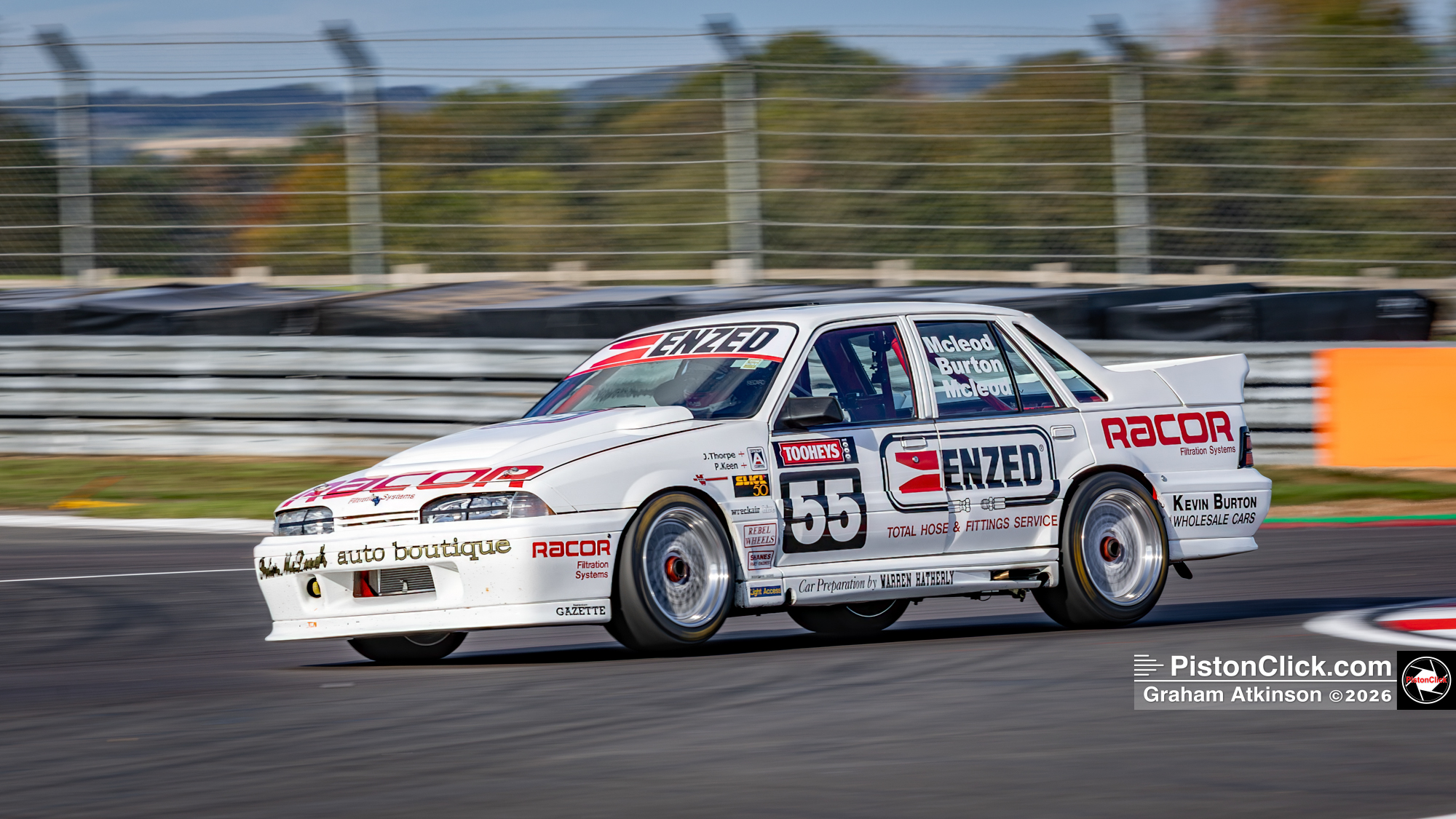
The car had been circulating throughout the morning, but when I arrived in the garage, there was quite a commotion around it and its engine. Experience has taught me that this is rarely the best moment to stick your nose in and start asking questions. Instead, I hung back and waited until things had calmed down.
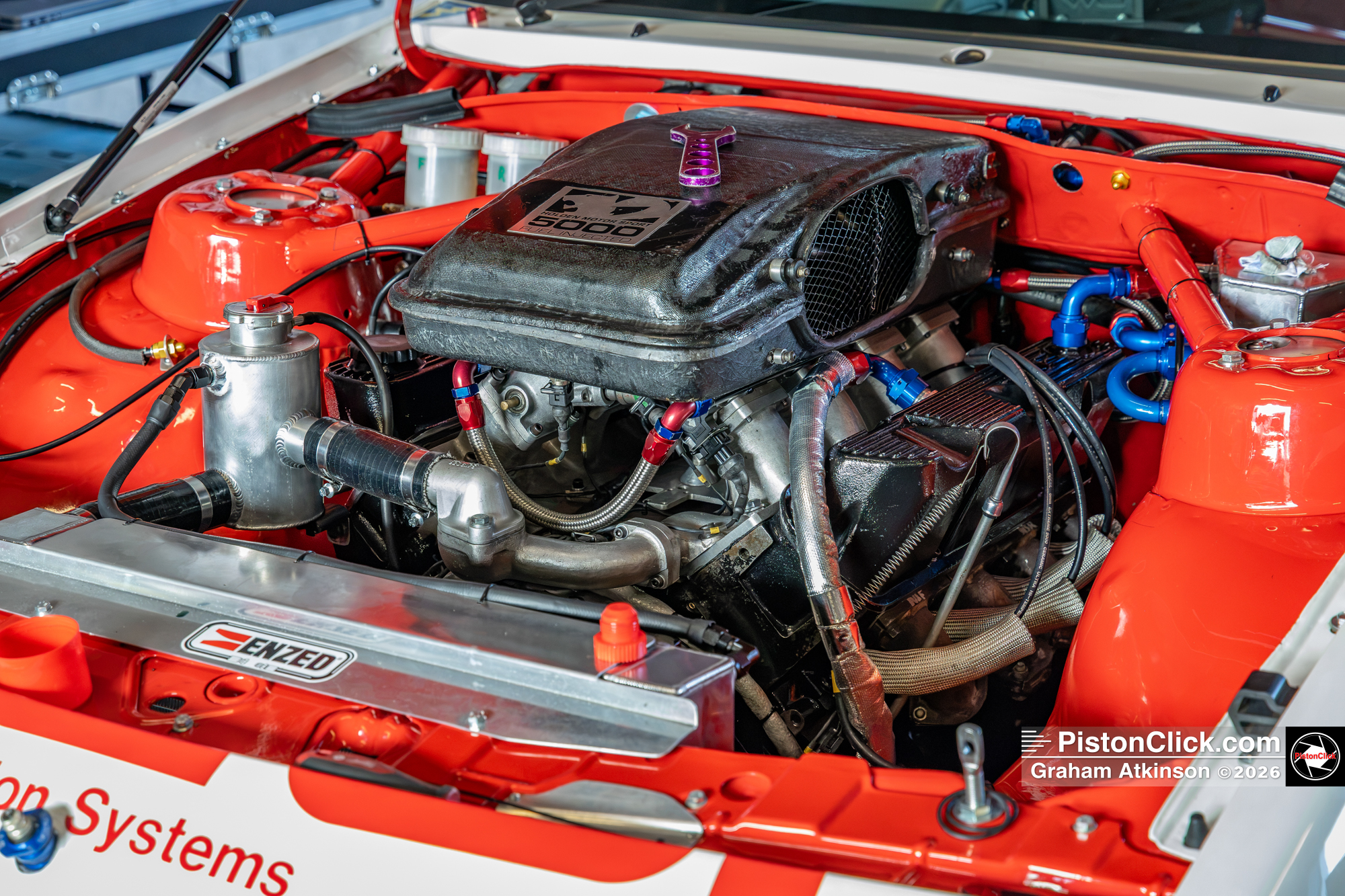
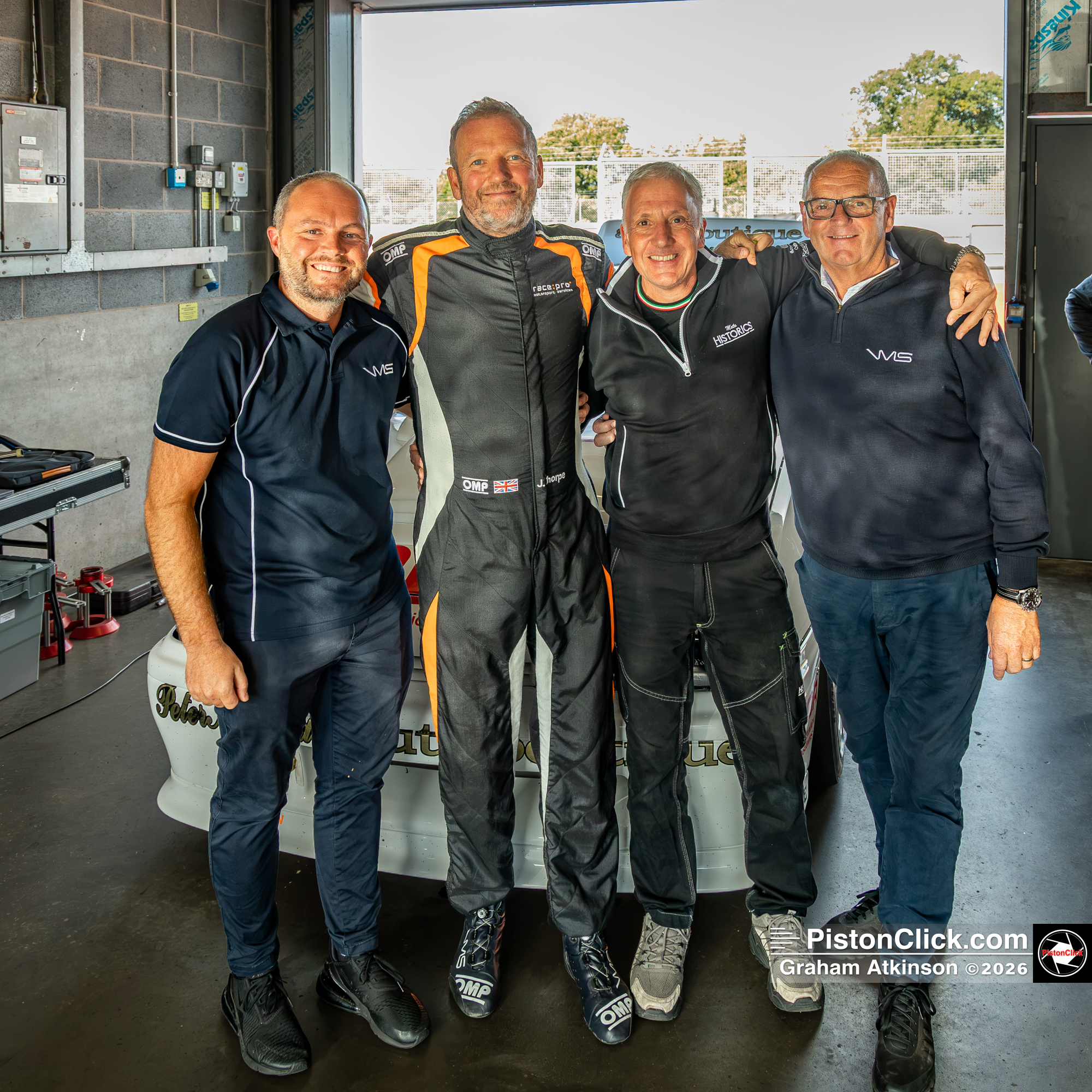
Eventually, owner-driver James Thorpe came over for a chat. He explained that they had encountered an issue with the oil cooler, which the team was in the process of sorting out. With that taken care of, he was more than happy to tell me about his motorsport background and the cars he had brought to Donington.
James has been involved in motorsport for around 30 years, concentrating on classic cars for approximately the last 15. He also manages a collection of racing machinery.
I stopped him there and laughed. Only a few weeks earlier, Paul Bailey had told me he had a small collection of cars. When I asked how many, the answer was 89!
James laughed at that, explaining that his own collection was rather more modest, with just 14 or 15 cars. Then he revealed that all three cars in the garage belonged to him.
Modest is clearly a relative term in the world of historic motor racing!
Three Very Different Cars, One Passion for Racing
The Holden is one of James’s principal competition cars. He races the 1992 Commodore in the HGT2 category with Peter Auto. A leading French organisation founded in Paris in 1978 by Patrick Peter, Peter Auto specialises in organising historic car racing events rallies and concours d’élégance.
It is an unusual sight on British circuits, and its presence at Donington immediately caught my attention. Cars like this bring variety to a test day, particularly when so much of modern motorsport can revolve around familiar machinery.
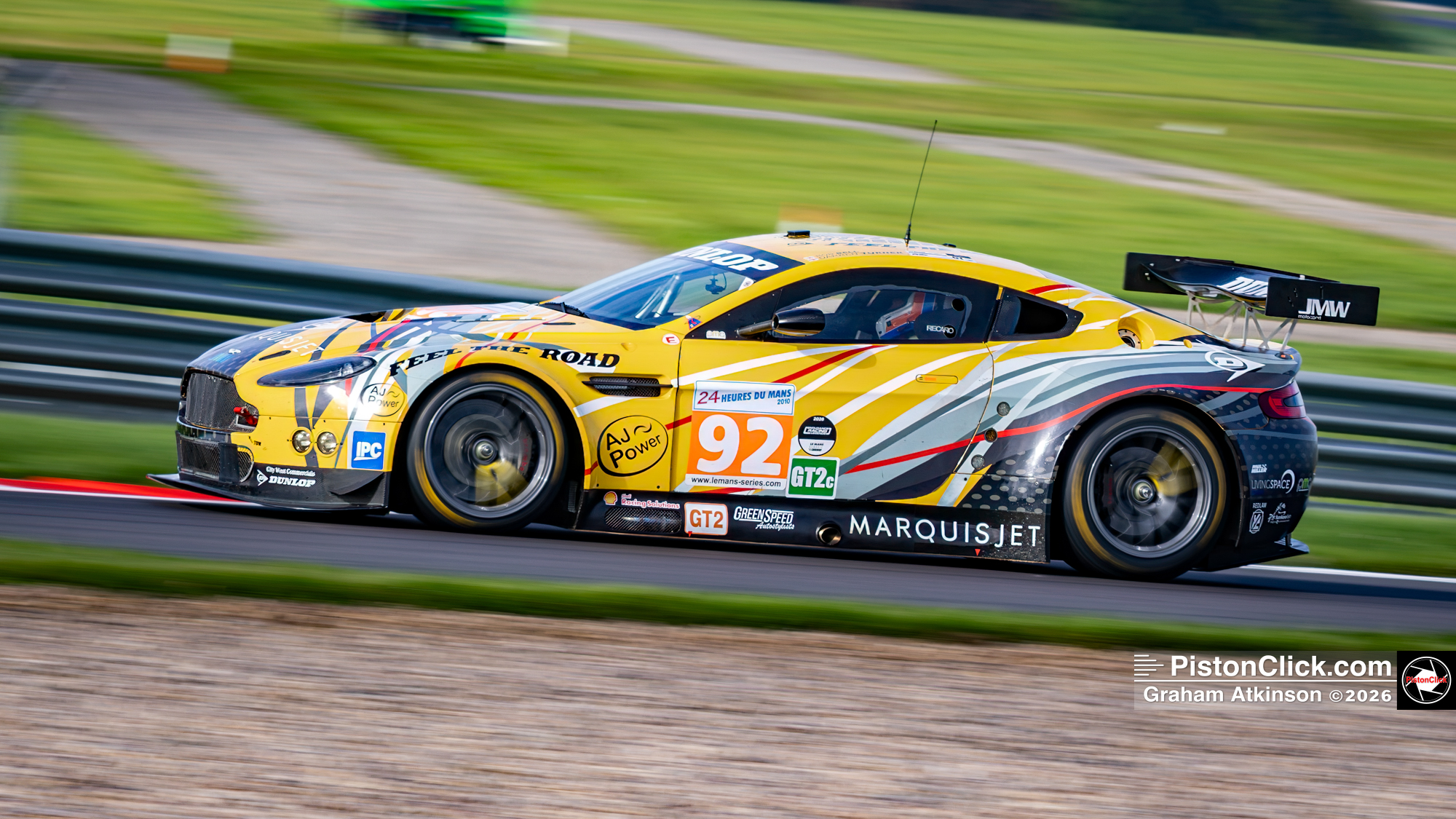
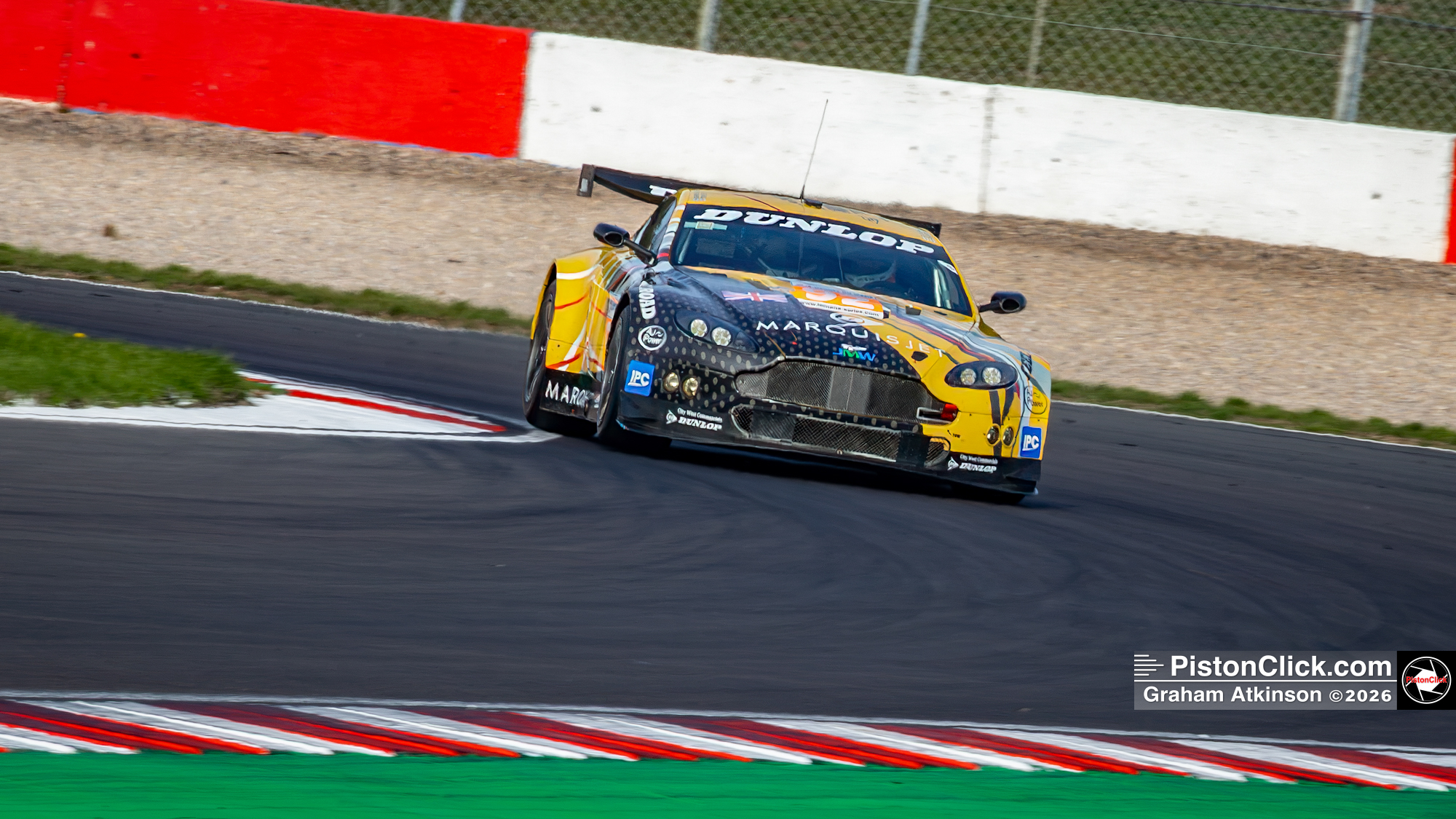
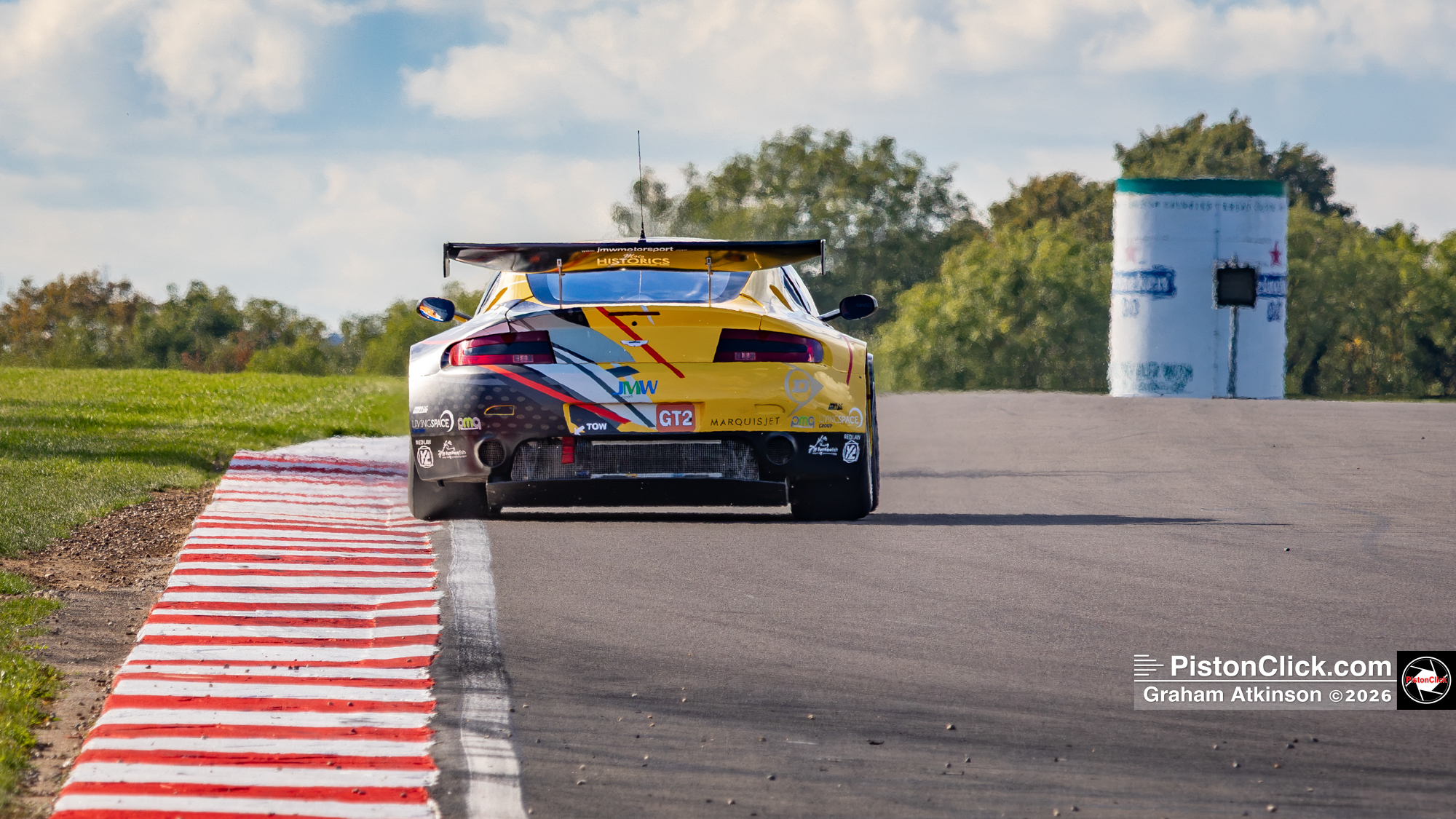
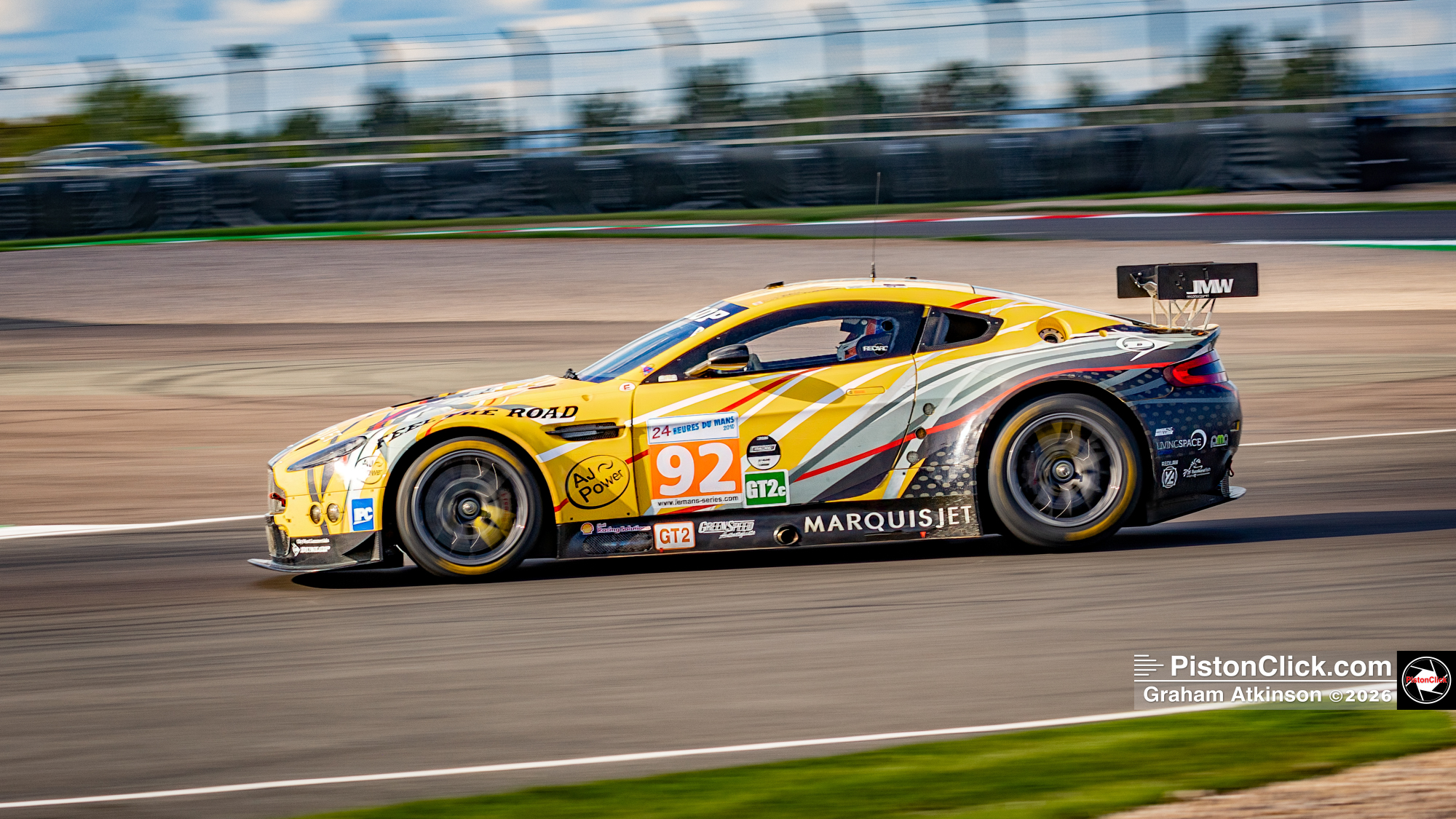
Alongside the Holden, James owns a 2010 Aston Martin GT2 that previously competed at Le Mans with Darren Turner. He now races the Aston Martin in Peter Auto’s Plateau 9 category.
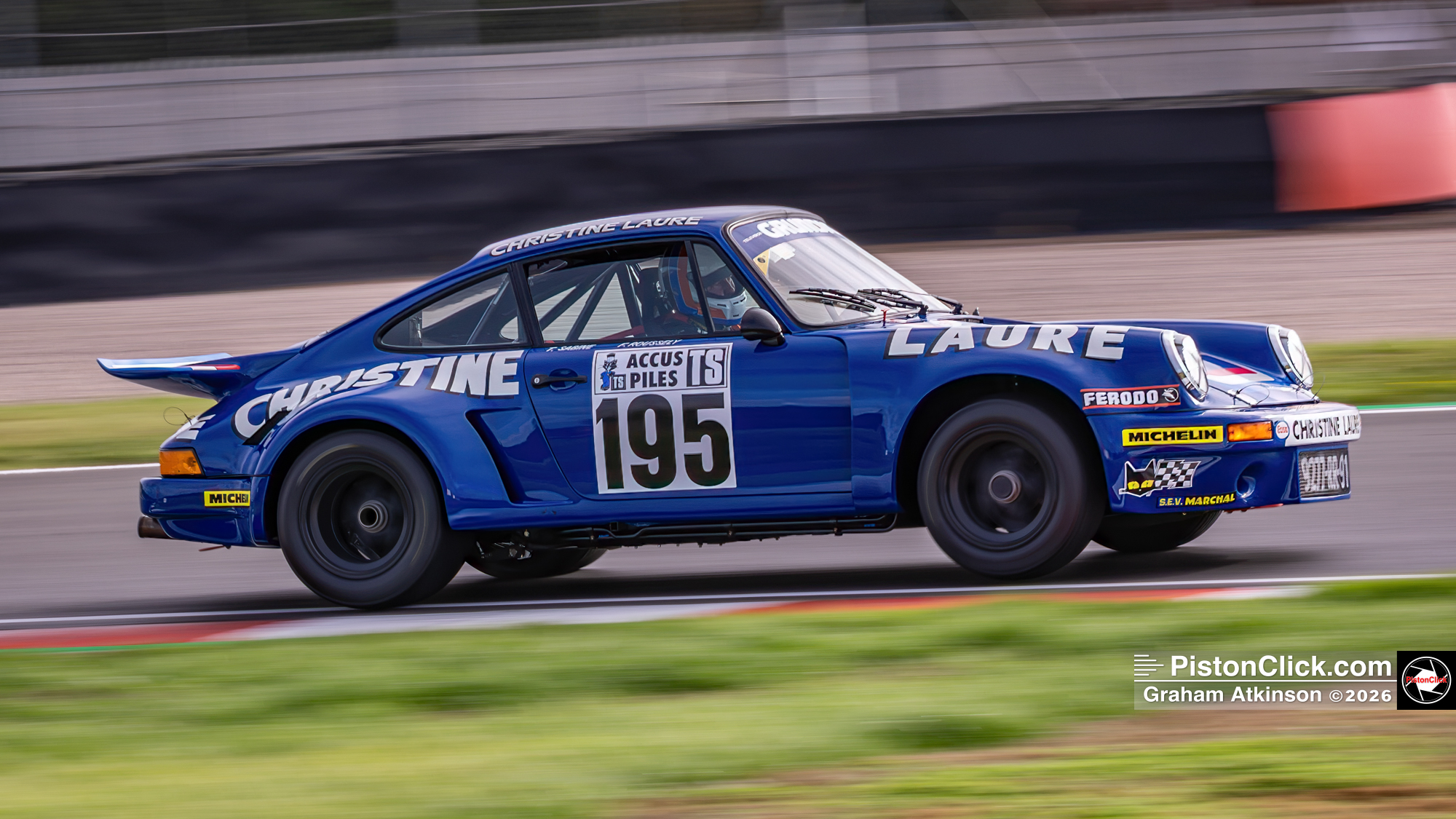
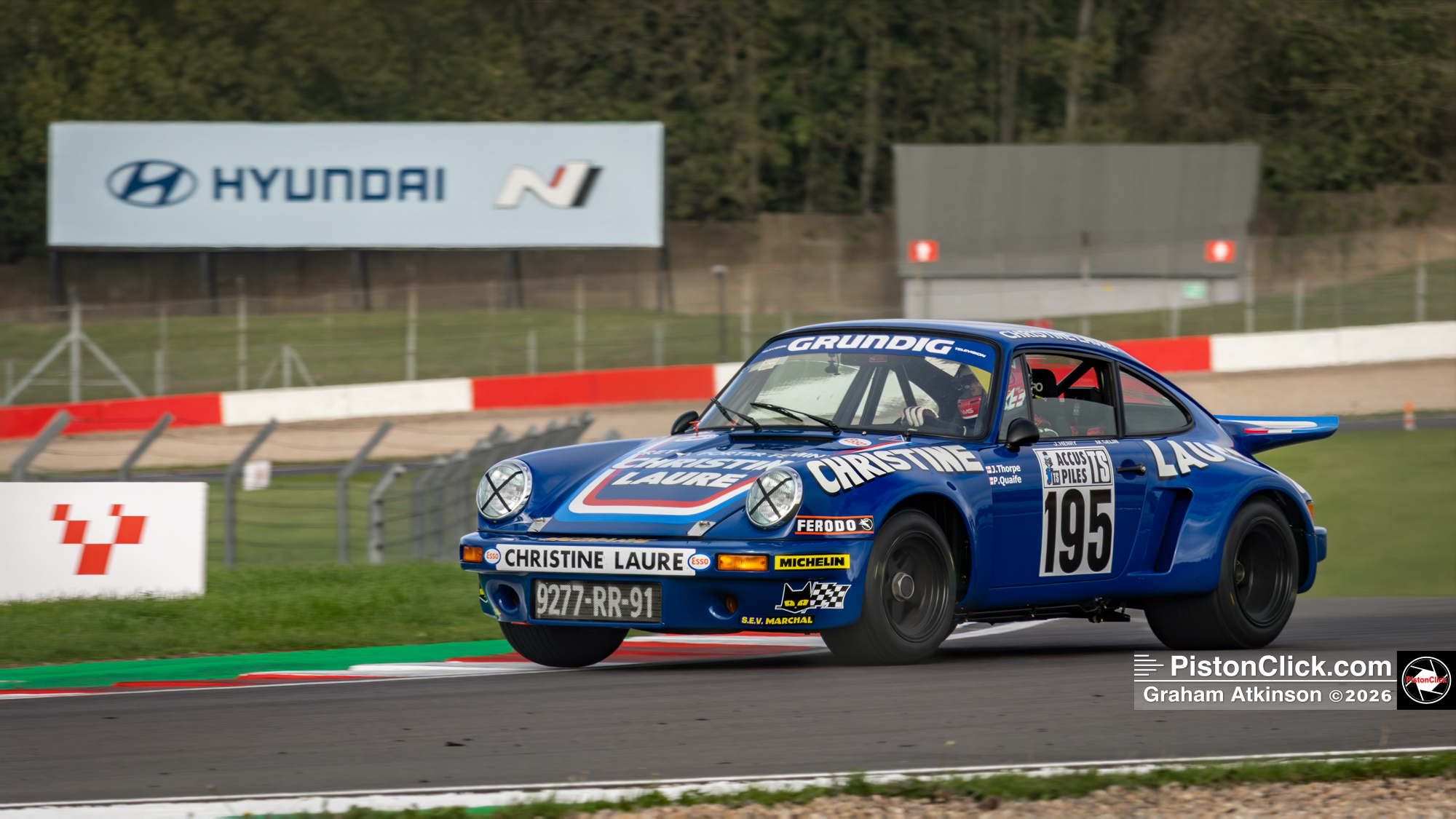
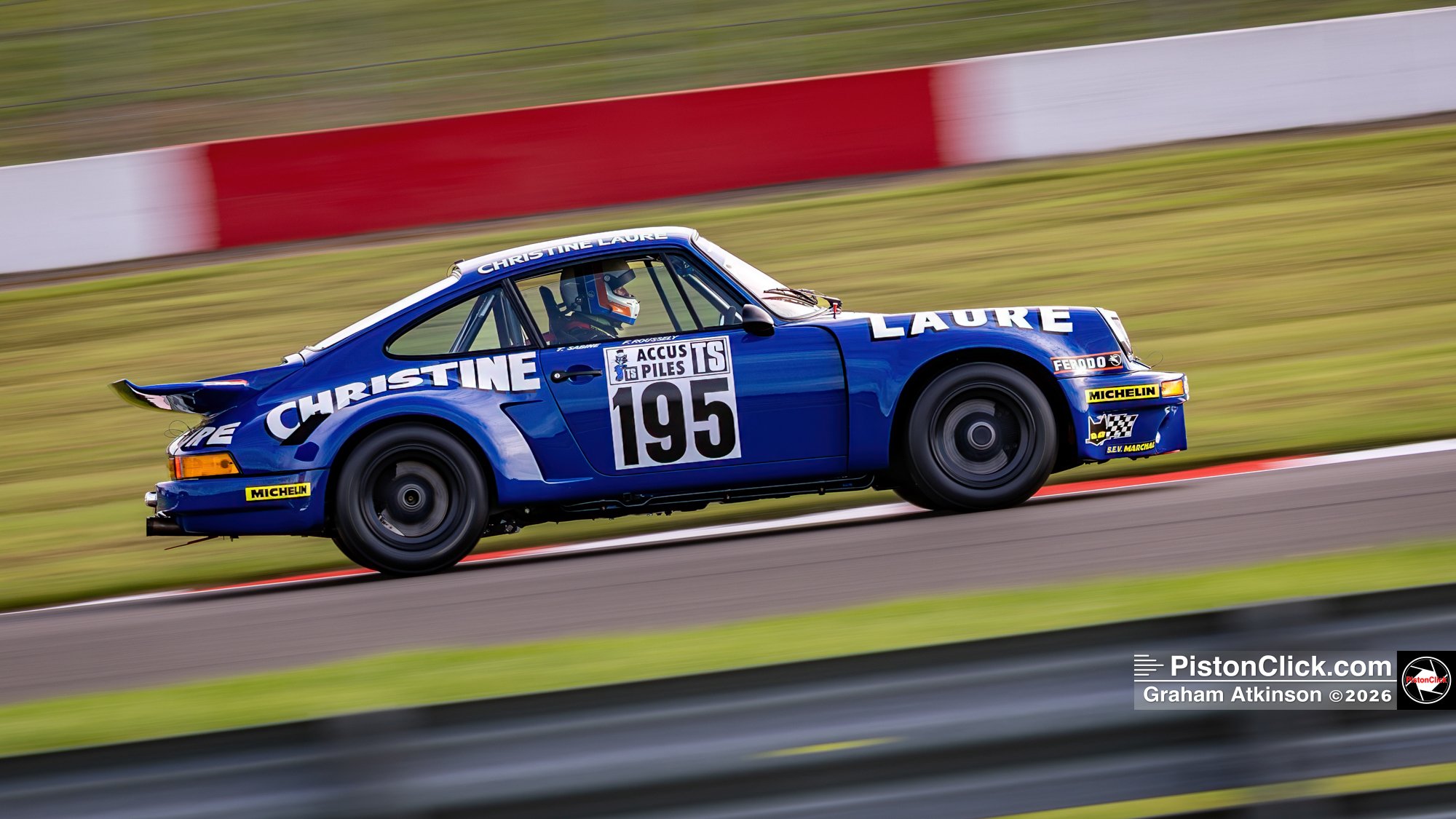
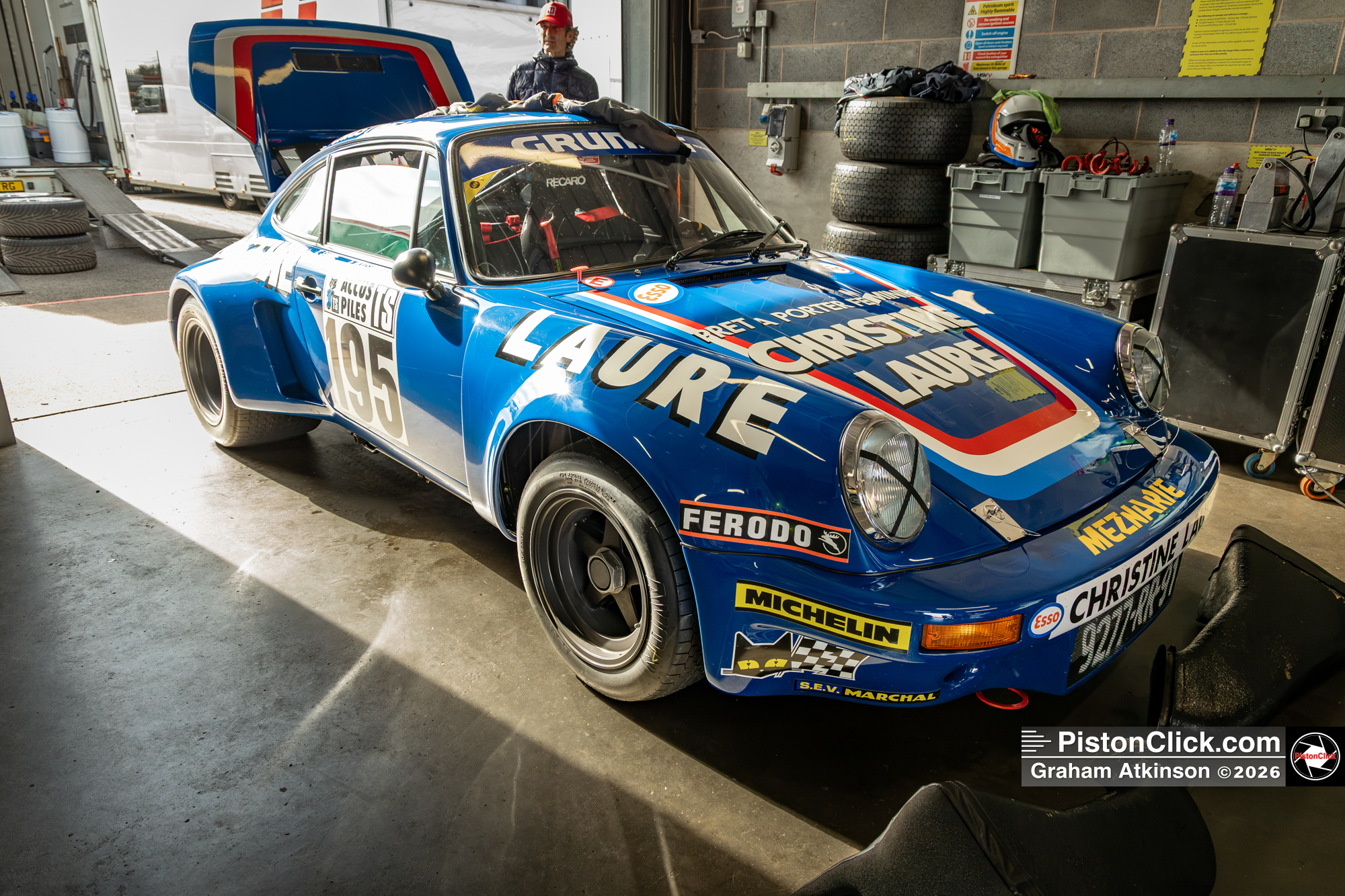
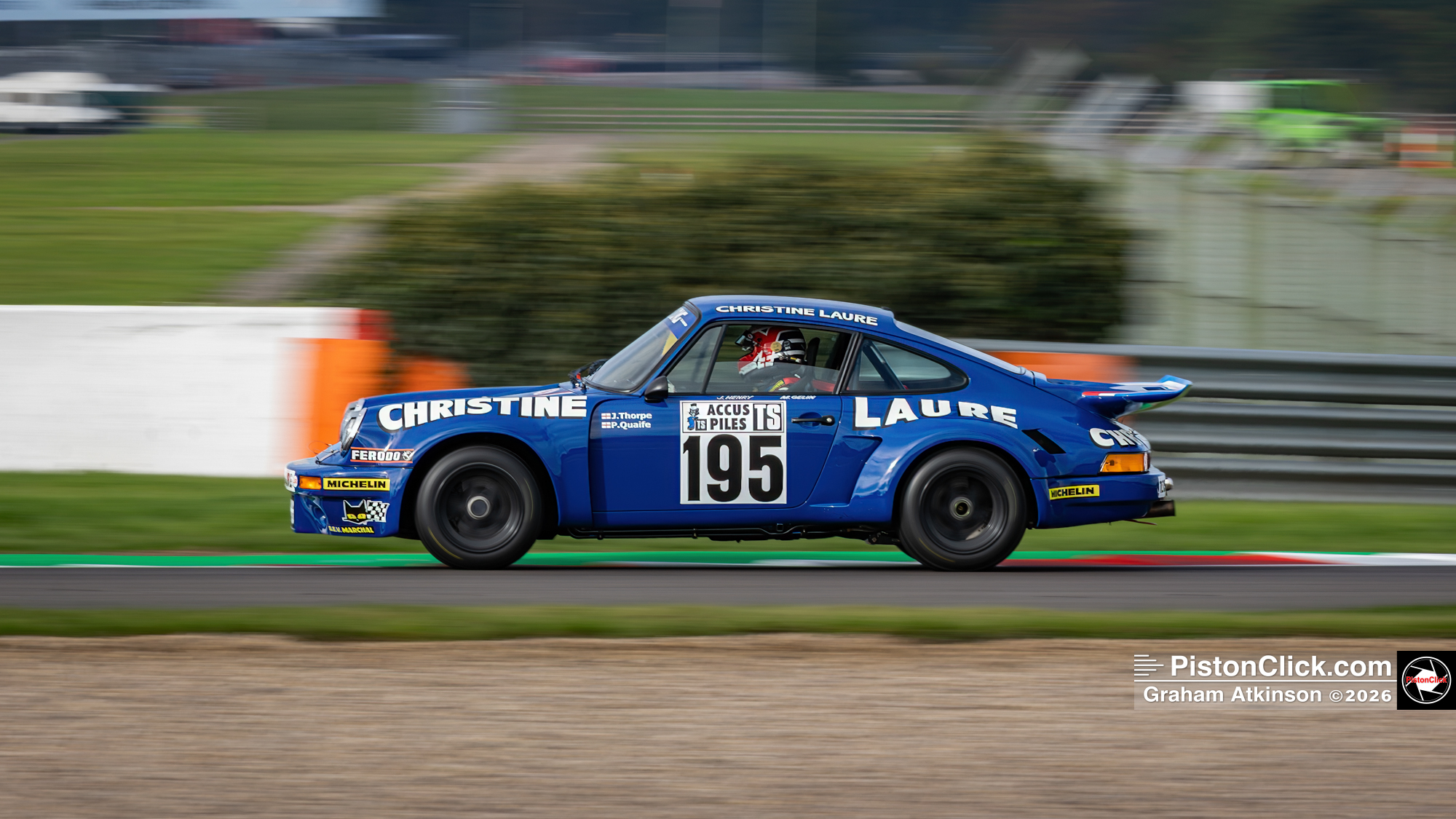
His third car at Donington was a recently acquired Porsche built to 1974 specification. It had previously competed in the Tour de France Automobile during the 1970s, adding another fascinating chapter to an already varied collection. James also races a Nissan Skyline in the Peter Auto Tour, within the Sixties Endurance category.
Pain and Pleasure
That is quite a range of machinery, spanning different eras, categories and driving experiences. I would love to know what the other cars in his collection are, because if these three are anything to go by, there are bound to be some interesting stories attached to them.
James offered a particularly honest assessment of his life in motorsport, describing it as “90% pain and 10% pleasure”.
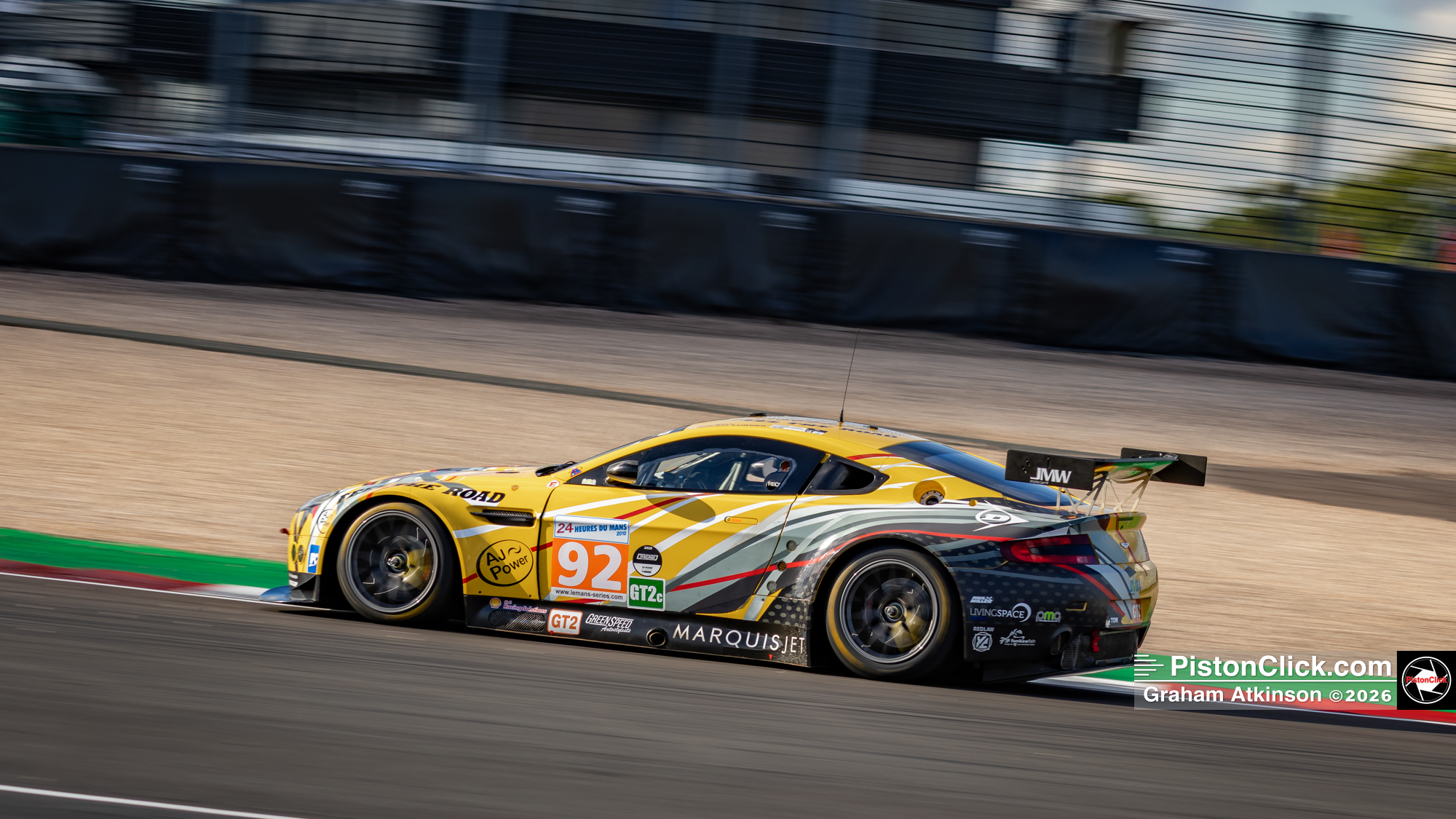
Anyone who has followed historic racing will recognise the sentiment. The financial demands, preparation, mechanical problems and long hours can take their toll. Yet the passion remains strong enough to bring drivers back for more.
James shares the driving duties with various co-drivers. At present, Phil Keen and Phil Quaife are among those helping him campaign his cars. Both are drivers I hope to feature in future PistonClick reports.
Another Donington Test Day, Another Set of Stories
This is exactly why I enjoy visiting Donington Park on test days. Without a published race entry list to guide me, I never quite know what will appear in the paddock or what stories I might uncover.
Today has delivered an LMP3 prototype, a beautifully engineered Cobra Daytona Coupe and a collection of unusual historic racing cars that would be welcome at any major meeting.
More importantly, each car has introduced me to people with different backgrounds, experiences and reasons for staying involved in motorsport.
From John Hewitt pursuing a new challenge with his Ligier to Can Bitirin enjoying the characters and camaraderie of the paddock, and James Thorpe balancing the pleasures of racing against its inevitable frustrations, there is a common thread running through all three stories.
Motorsport is about much more than the cars. It is about the people who buy them, build them, prepare them, drive them and spend their time and money keeping them on track.
And from my perspective, standing behind the safety fence with a camera in hand, those are often the stories worth telling most.
Thanks to Graham Atkinson for this Donington Park Test Day report. You can find more of his work by following the links below.

