


Anger Management’s Tenth Title
Report by Nik Stojkov
10 October 2026

Winning a championship is rarely straightforward, but Andy Robinson and his Robinson Race Cars team took the hard way to a tenth Motorsport UK Pro Modified title in 2026. Engine failures, broken gearboxes, electrical problems and rain repeatedly threatened to derail their season. At the UK National Finals at Santa Pod, the championship came down to a single race against Jon Webster, decided by just 0.0098 seconds.
Having spent time alongside the team at ‘The Main Event’, Round 1 of the FIA/FIM European Championships in May and the FIA European Finals in September, I saw first-hand how much work goes into keeping a 3,000-horsepower drag car competitive. From frantic repairs between rounds to the final dash for the championship, this was a season that showed why drag racing is about far more than simply pressing the accelerator.
A Valve, a Heatwave and a Very Long Weekend
I had been with the Robinson Race Cars team since early Friday morning, and I returned to photograph them at the European Finals on Saturday. For the rest of their season, I had followed their progress from a distance. It ended with a tenth British Pro Modified championship, won by less than a hundredth of a second. Getting there was anything but easy.
The plan for Saturday morning at the final event of the FuelTech / Motorsport UK British Drag Racing Championship was simple. Andy Robinson would roll the ‘Anger Management’ Camaro into the staging area for first qualifying, and I would photograph it. Instead, the engine dropped a valve at idle, just a few feet from the start line, and the car returned to the pits without making a run.
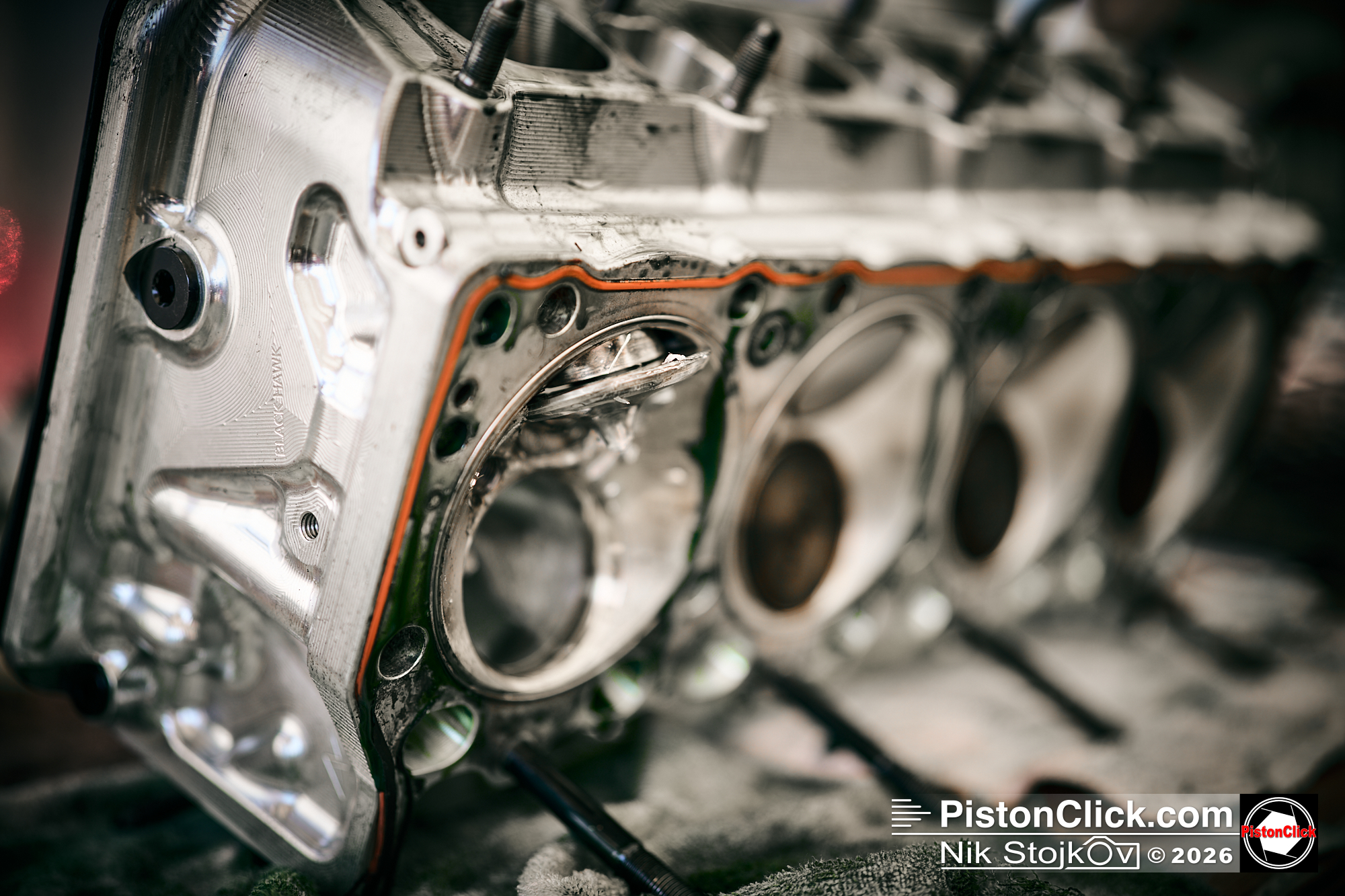
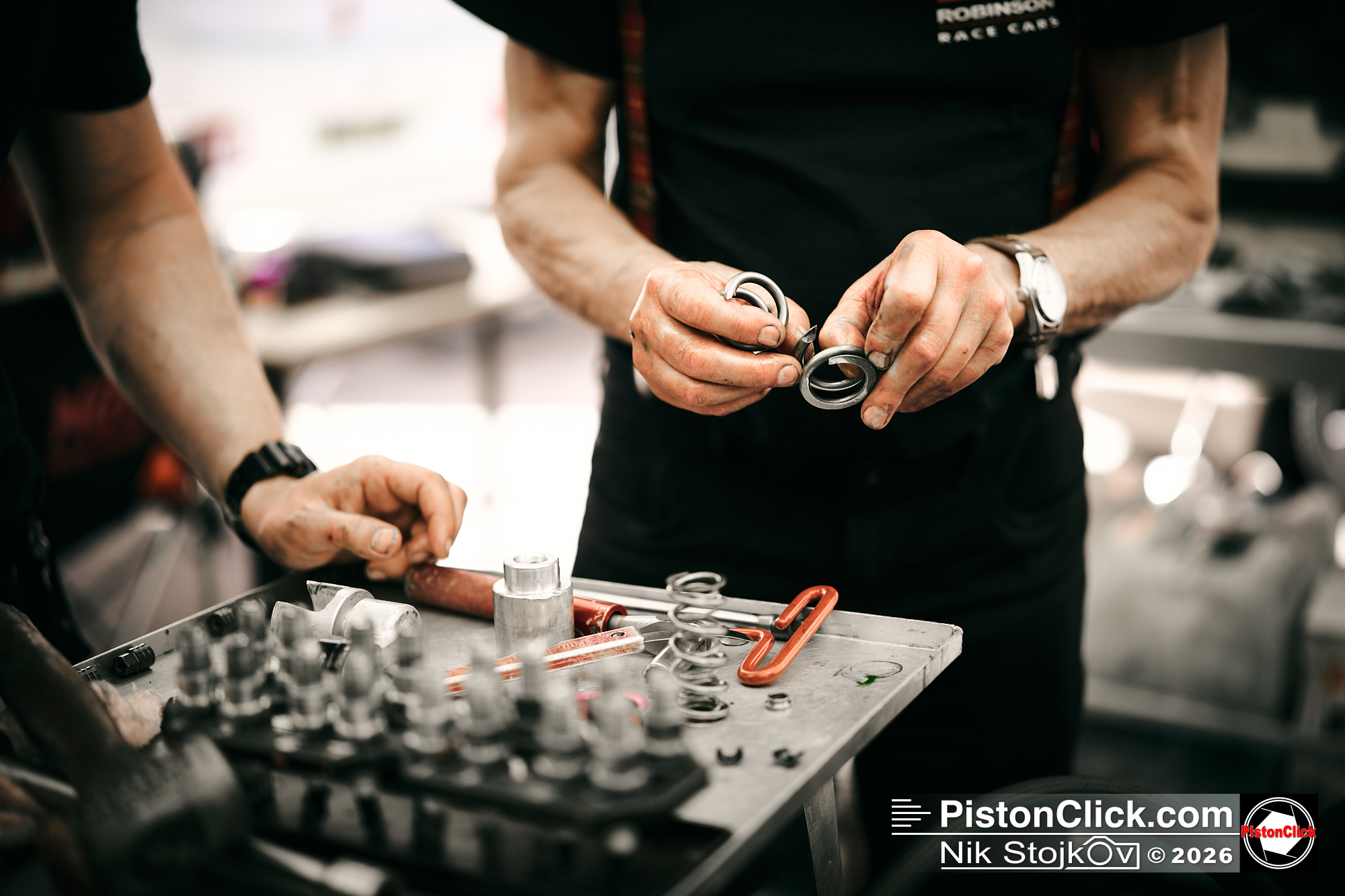
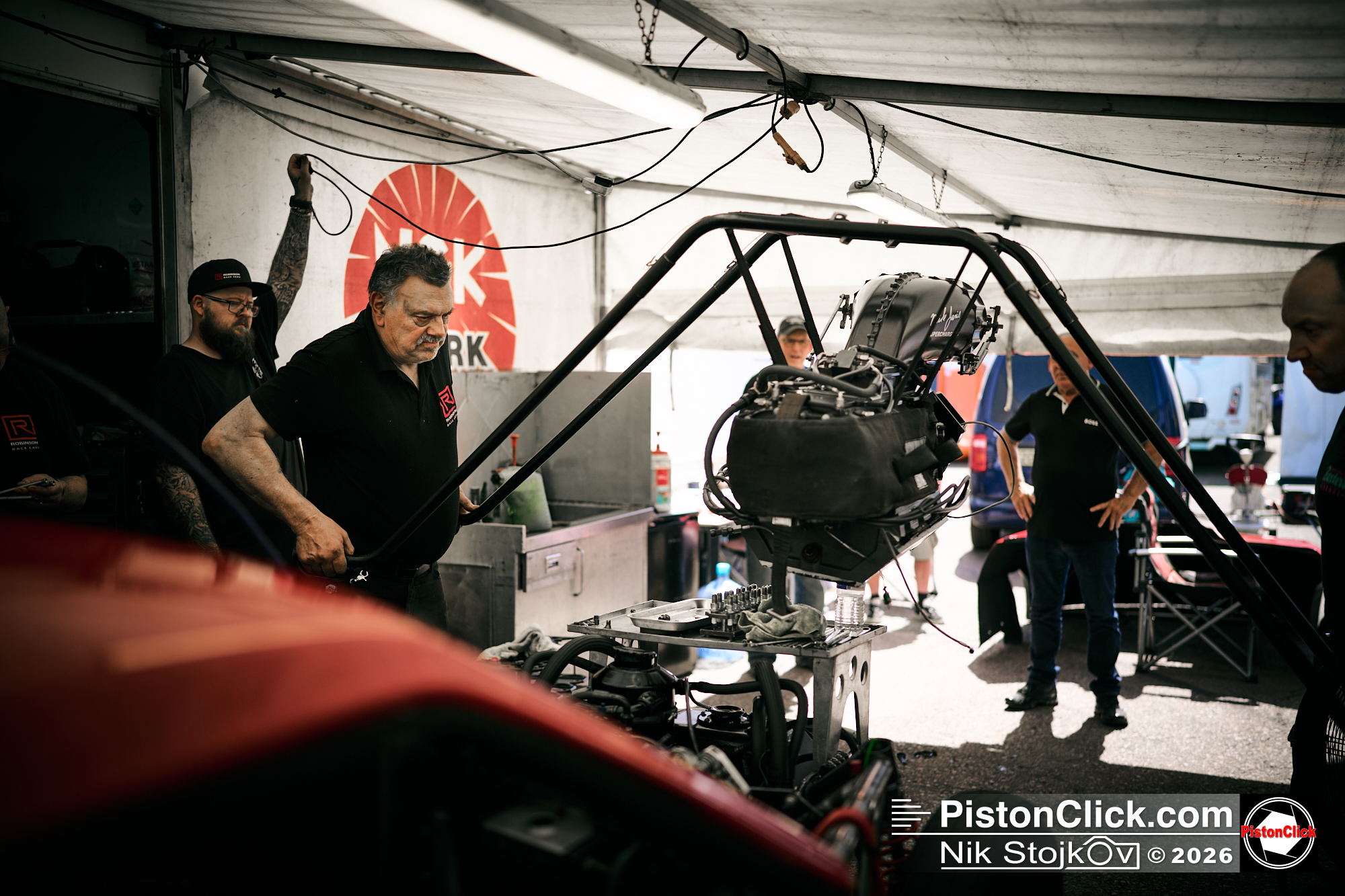
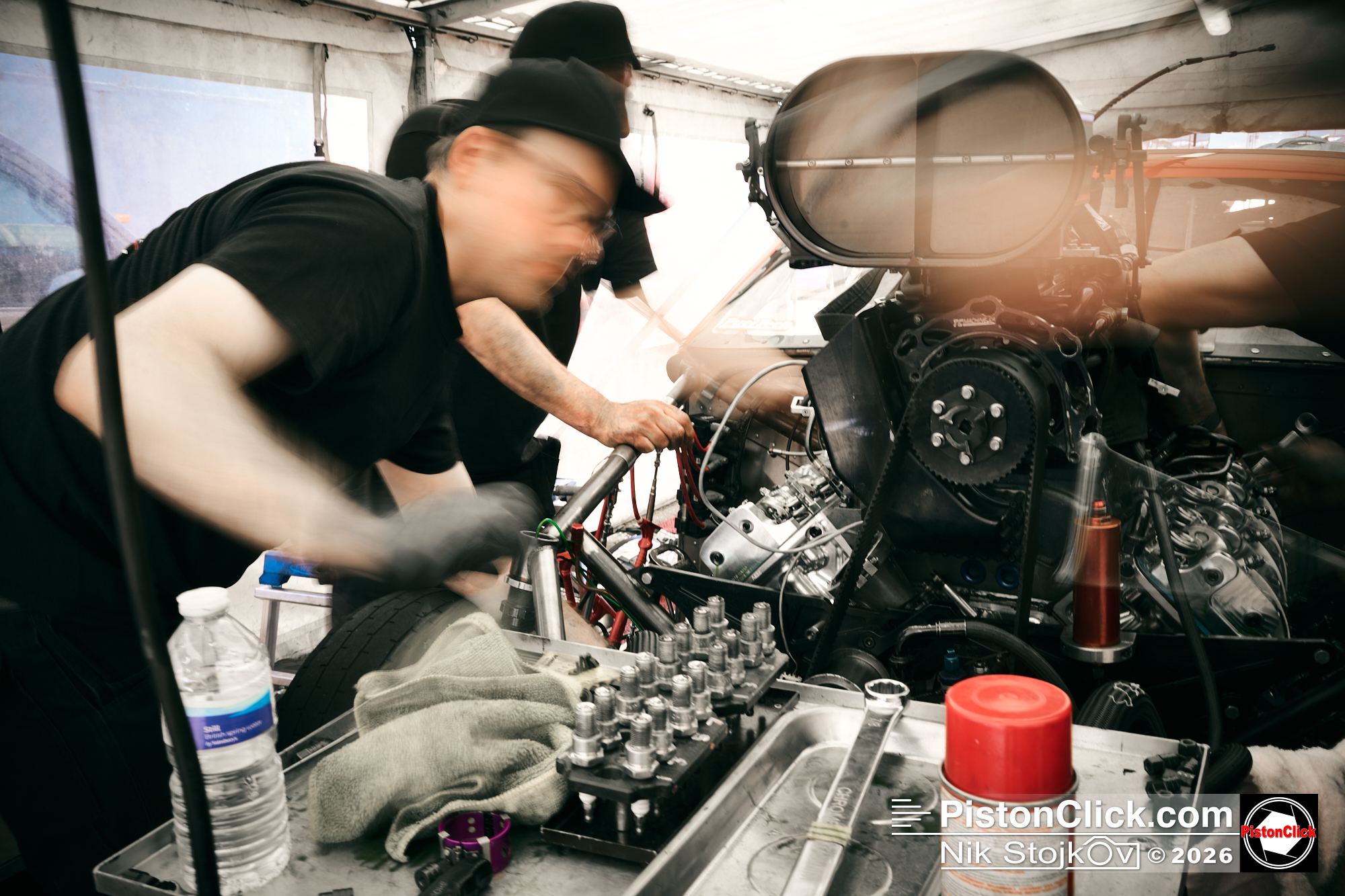
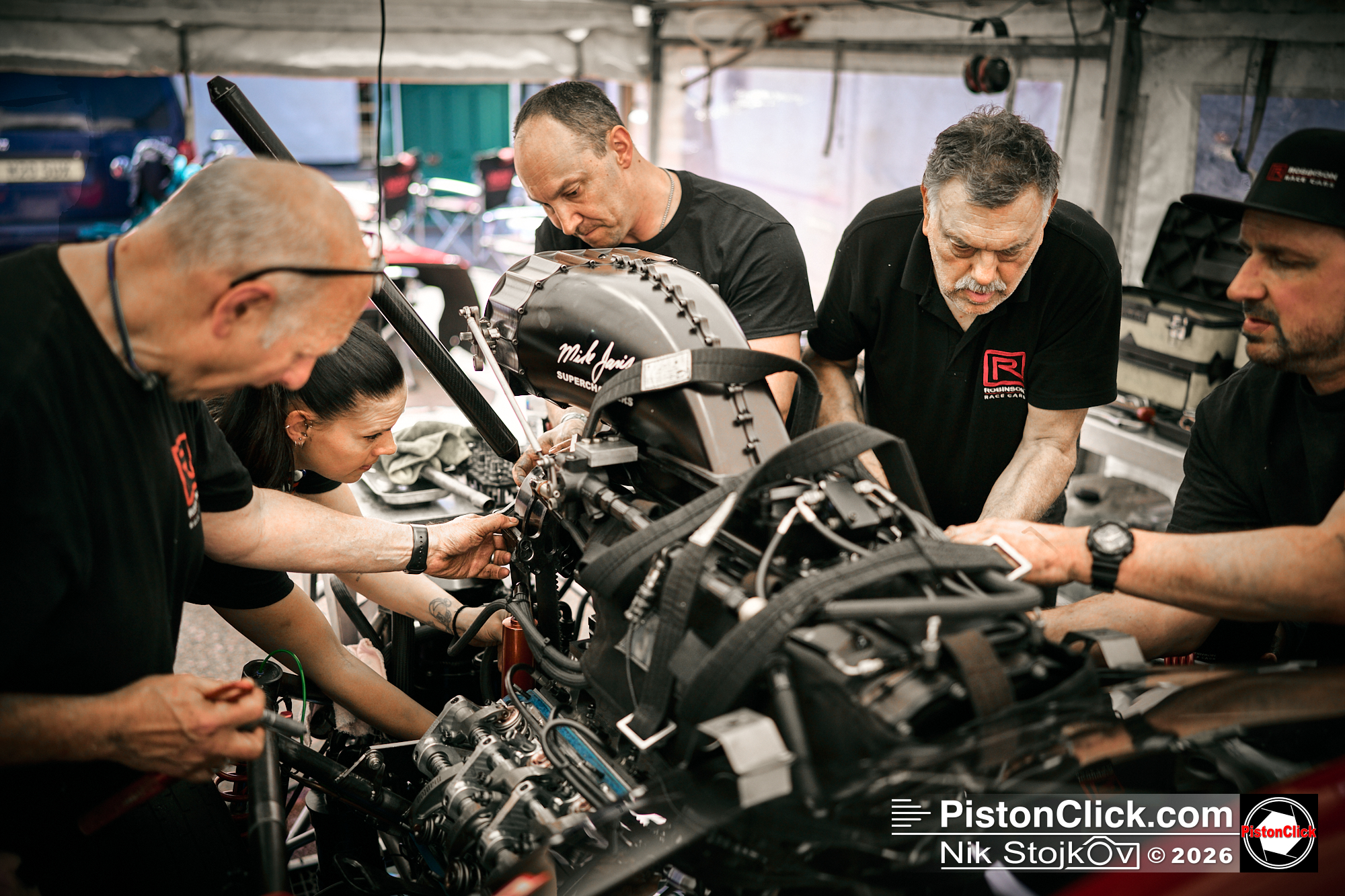
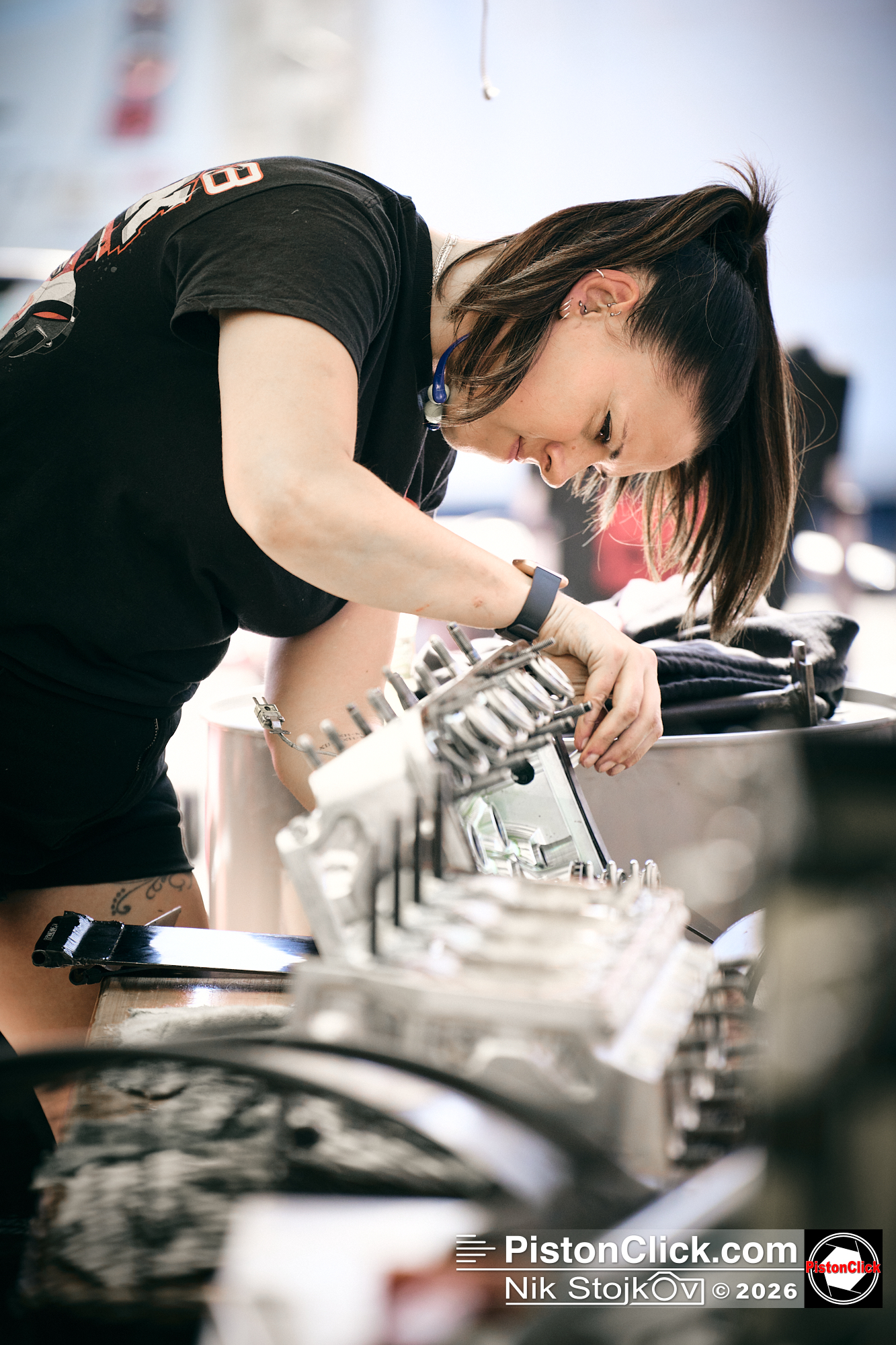
What happened next explains why I wanted to write this story. With the track surface above 50°C in the heatwave, the crew removed the cylinder heads, changed a piston, put everything back together and made it out for the second session. The car ran 5.91 seconds at 245mph. Nobody made a fuss about it.
Under Six Seconds, With Doors
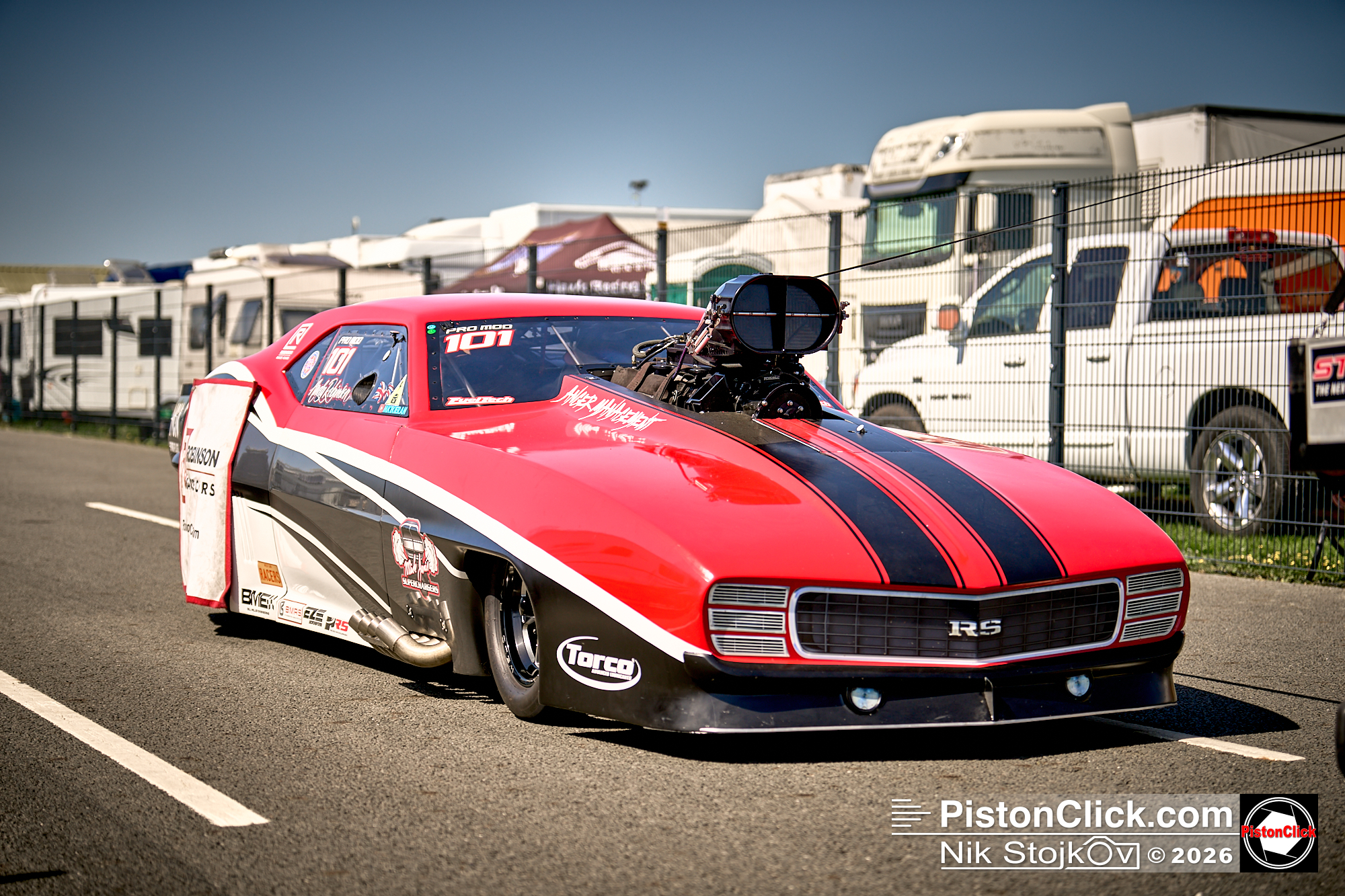
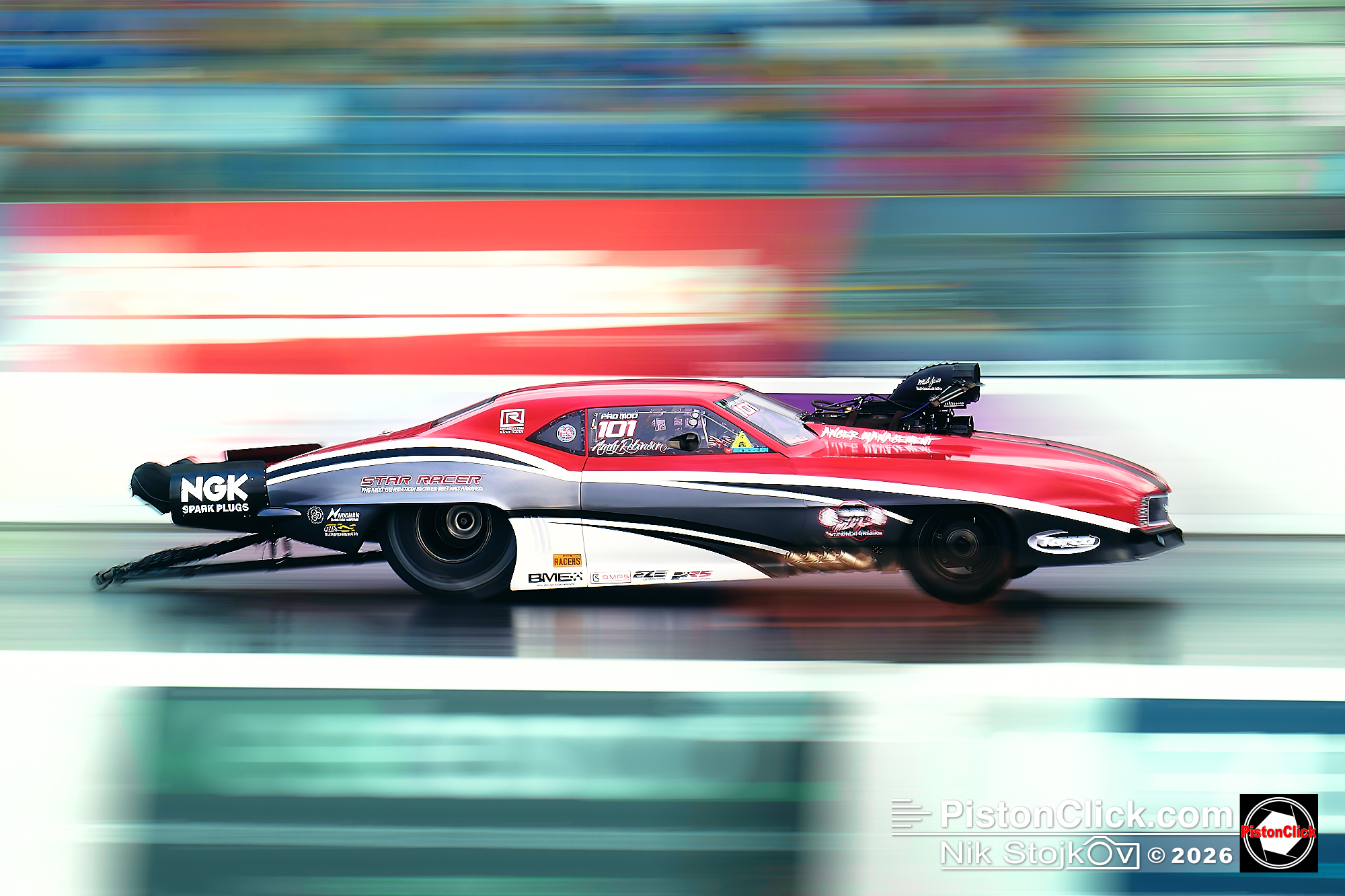
I came to drag racing from circuits and bikes, where the standing joke is that it is just racing in a straight line. No corners, no strategy. How hard can it be? Here is the short version for anyone who thinks the same way. A Pro Modified car is about the quickest thing on a drag strip that still has doors. Beneath Anger Management’s carbon-fibre 1969 Camaro body sits a supercharged V8 producing somewhere around 3,000 horsepower. The car covers the quarter mile in under six seconds and crosses the finish line at close to 250mph. At that point, only the parachutes bursting from the rear offer any hope of stopping before the car reaches the next field.
One mechanic told me it burns something like six gallons of methanol per mile. That sounds terrible until you remember that it only ever covers a quarter of one.
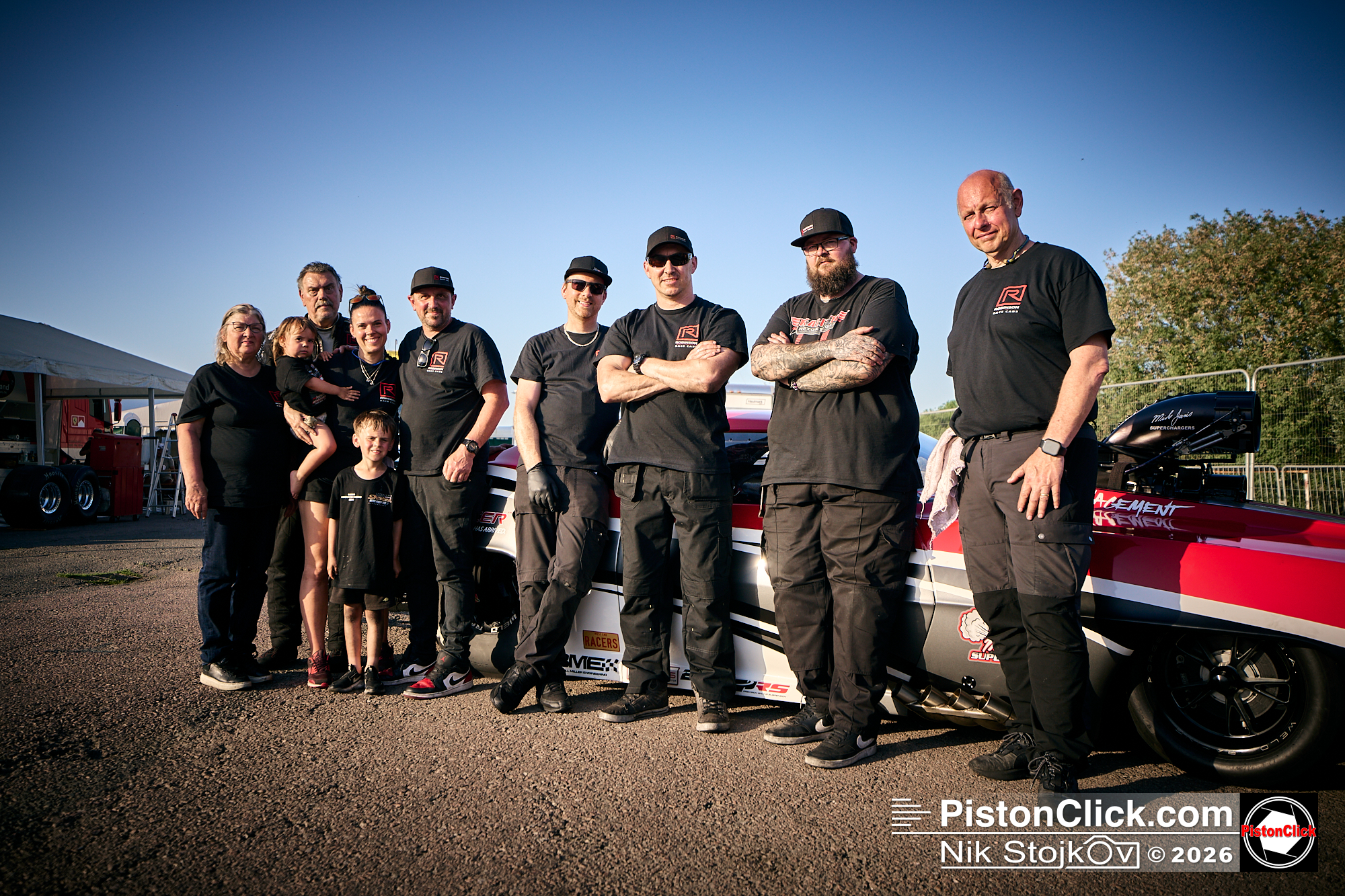
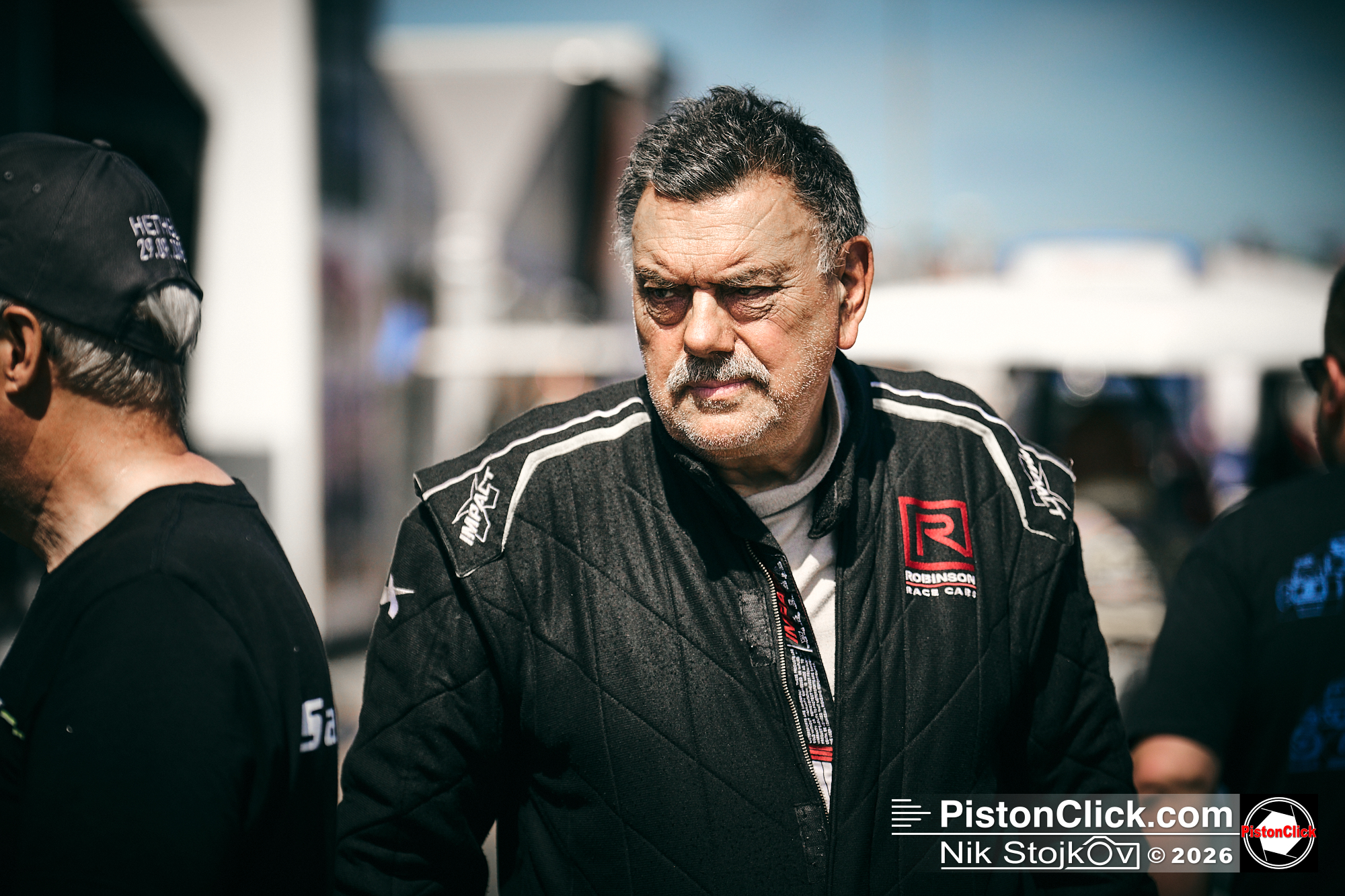
Anger Management is a family car in the least sensible meaning of the phrase. Andy Robinson owns Robinson Race Cars, drives the Camaro and has spent more than 40 years building championship-winning chassis. His son Luke tunes the car, while his daughter Stefani seems to be everywhere at once, doing whatever needs doing next.
Ben, Ricky and Bowser are the mechanics, and three of the hardest-working people I have met at a race track. Simon arrives first, leaves last and helps with everything in between. The team regards him as its MVP. Jerry builds the engines at home, and even the grandchildren get involved, pushing the car back, cleaning it and becoming part of the operation. In 2026, the team entered eleven events and reached six finals. From May onwards, every one of those battles played out over the same quarter mile of rubber and concrete.
More Than Pressing the Accelerator
Tuning the car is where things get complicated. The more the team explained, the more I realised how little this sport has to do with simply pressing the go fast pedal. Fuel delivery, ignition timing, clutch settings, gearbox behaviour and tyre pressures all need adjusting to suit the track and the weather.
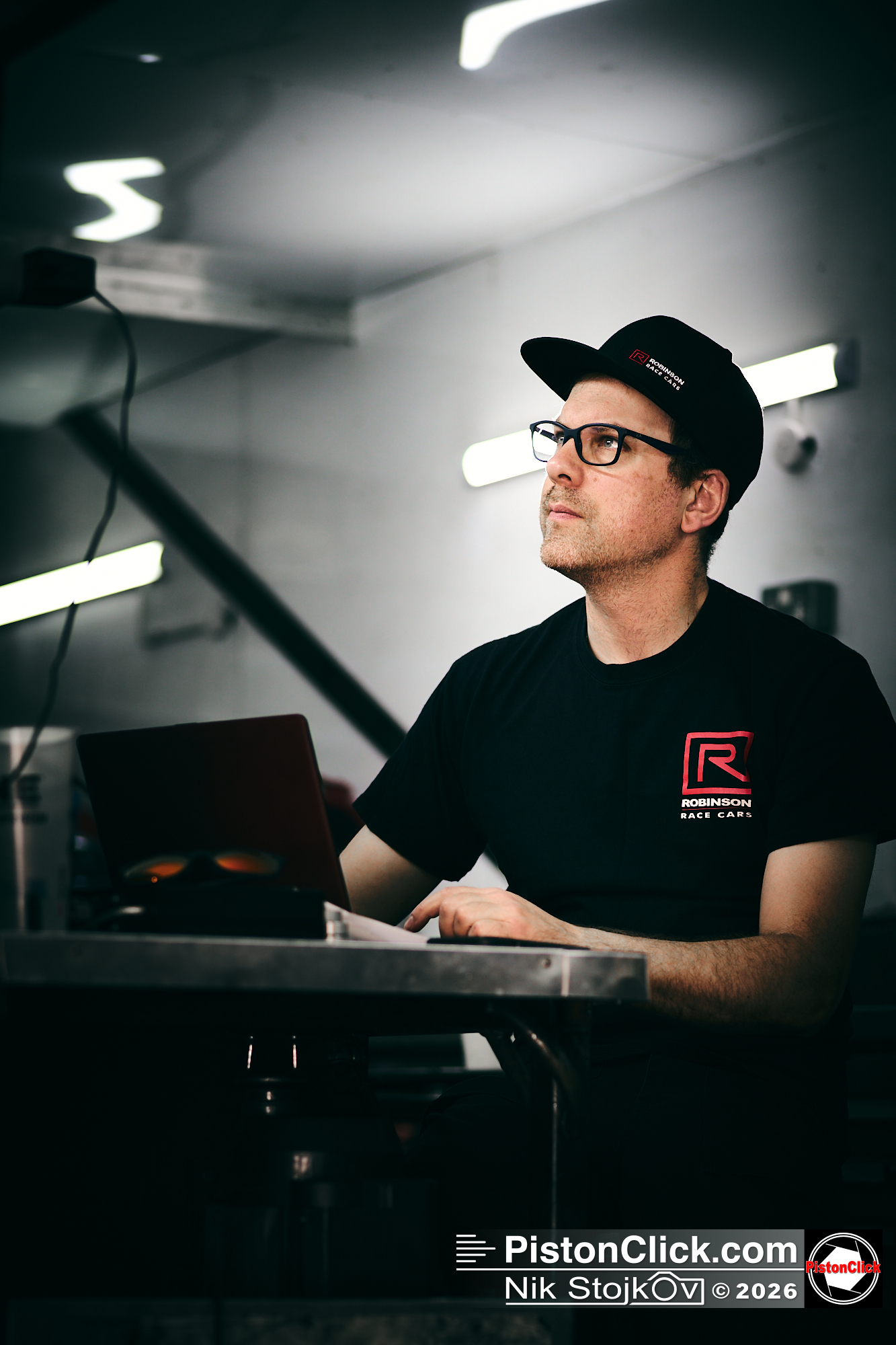
This is where the straight-line joke falls apart. A drag race is like an entire Grand Prix compressed into somewhere between three and a half and ten seconds, depending on the class. The launch, tyre grip, gear changes, fuel delivery and the moment something goes wrong all matter. There is no second lap to settle into and no pit stop to put things right. Andy has to make the most of whatever the team has programmed into the laptop and how Anger Management was bolted back together.
Luke Robinson explained the balancing act at The Main Event:
“Tuning a Pro Mod car is all about balance. Too much clutch and you risk losing traction or dropping the engine RPM too low on the shifts and running lean. Too much power in the first 60 feet and you risk again losing traction or slipping the clutch too much. It’s generally false economy to change just one aspect of the car; you have to manage all the variables to maintain the balance.”
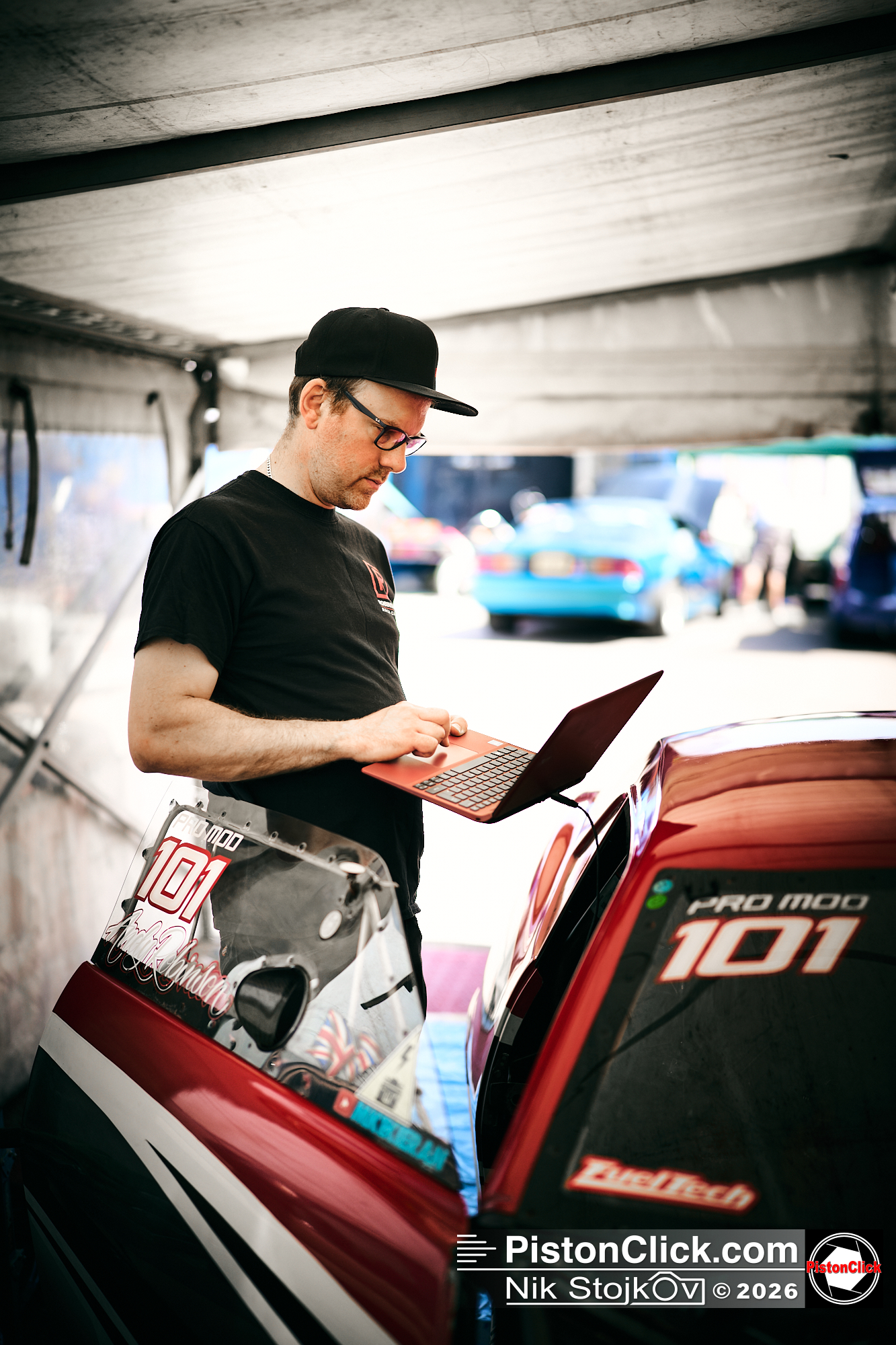
Fine-Tuning the Perfect Pass
As the track temperature changes, the team must respond. Luke explained that a 25°F swing could mean softening the ignition profile, removing weight from the clutch arms, increasing tyre pressure and changing the fuel curve to cope with reduced traction.
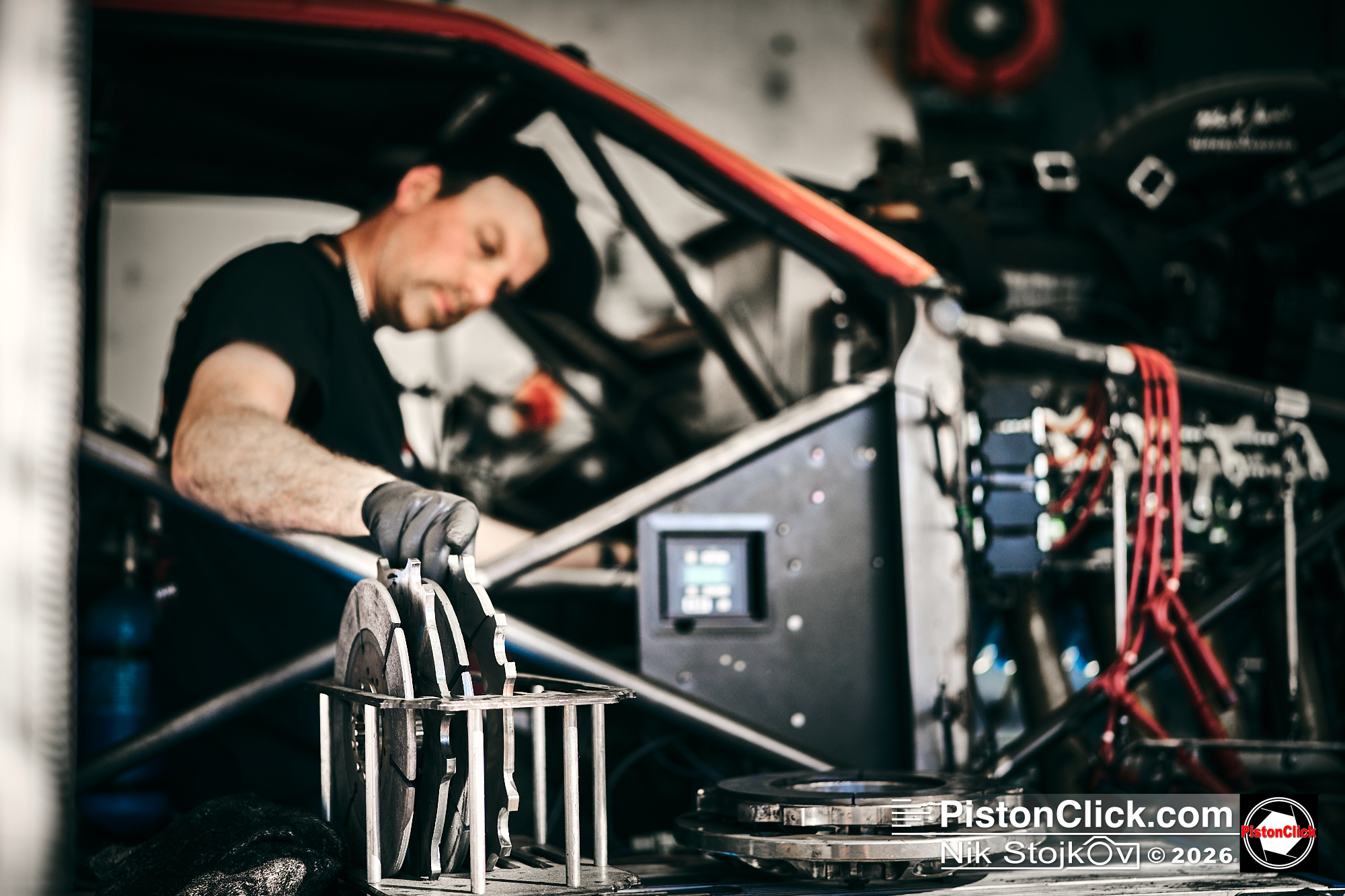
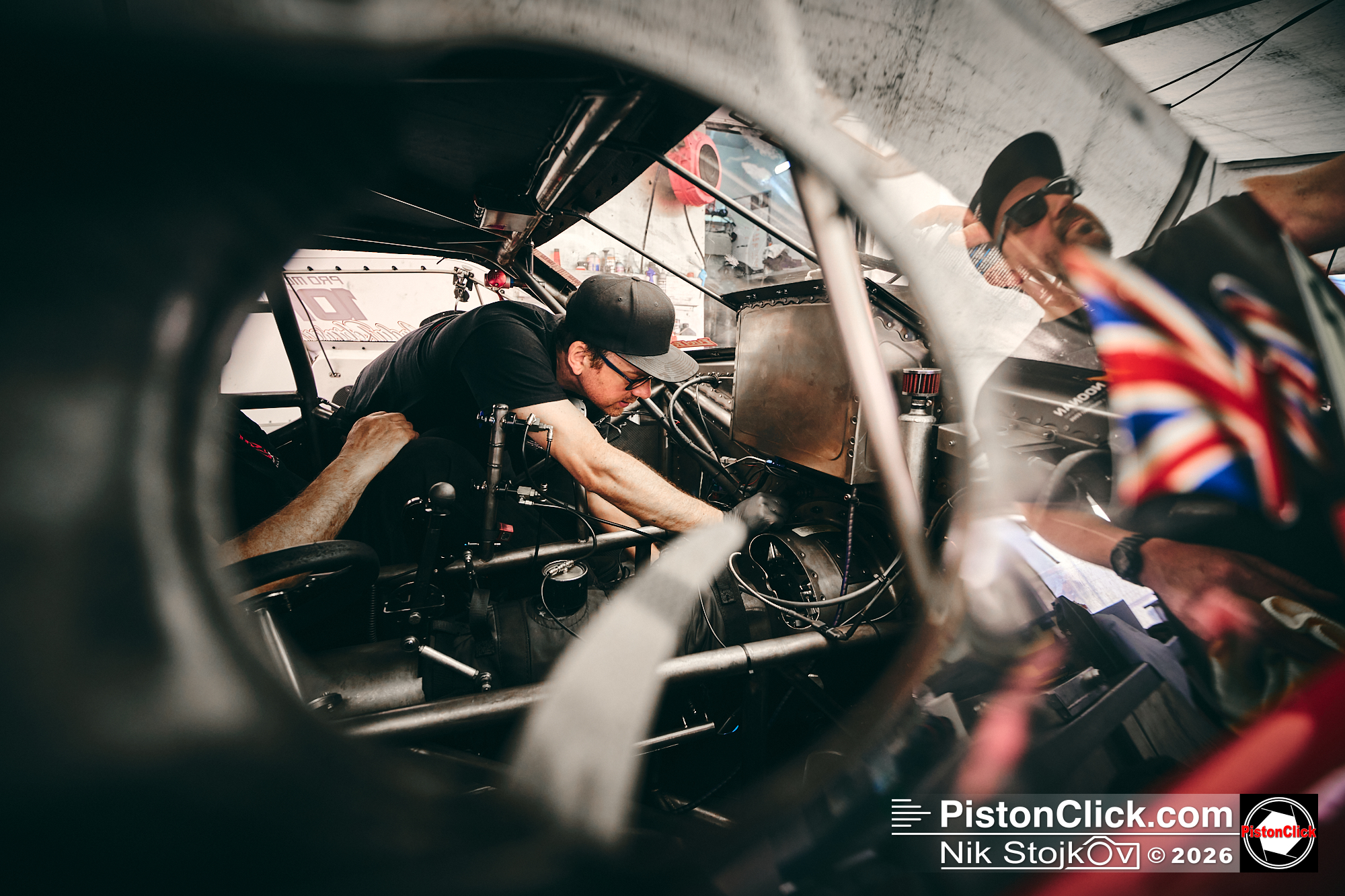
Even the suspension receives attention after every run. Lasers measure how far it travels during a pass, the crew examines the readings and they make the necessary adjustments before the car heads back out.
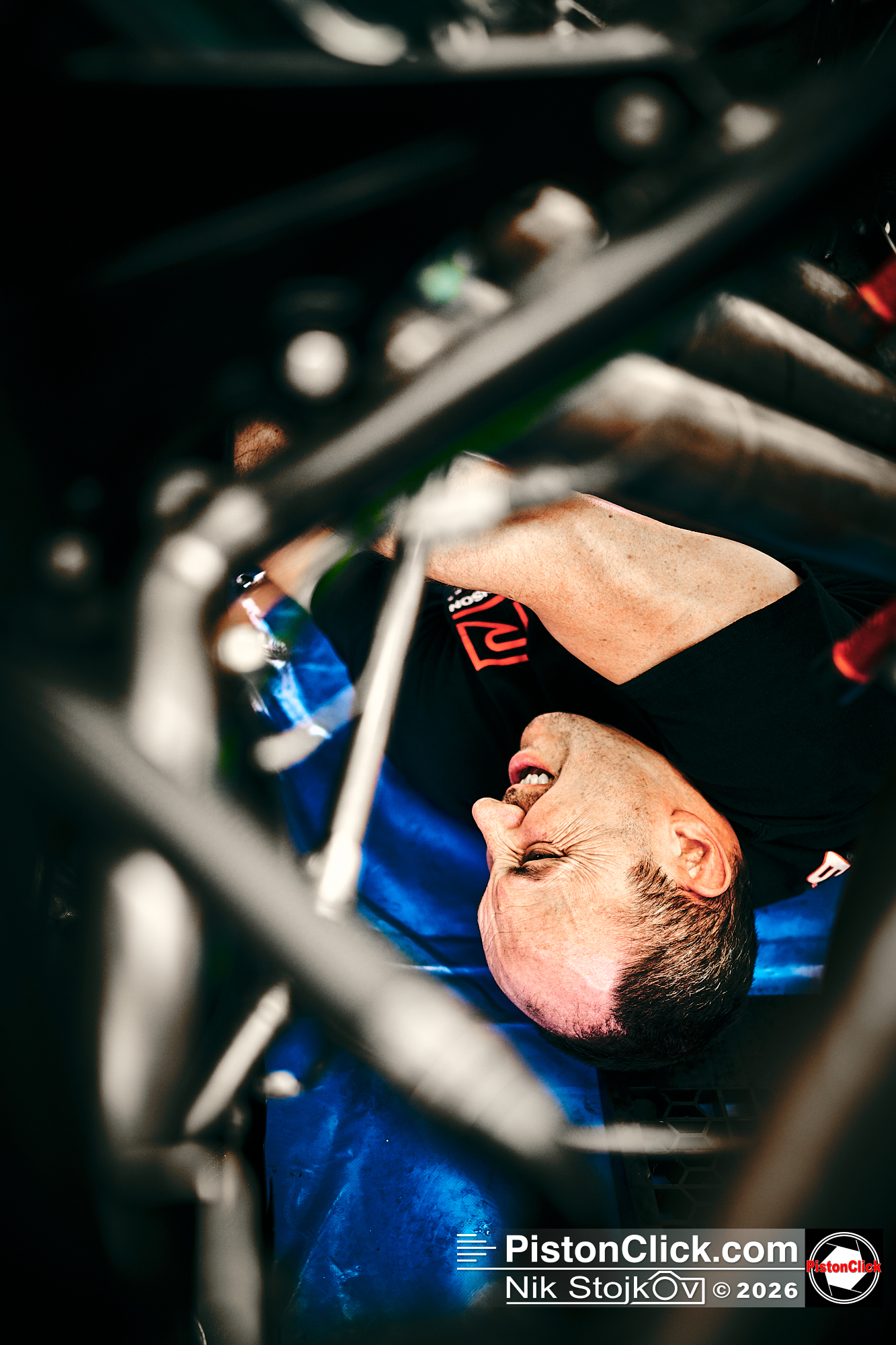
One of the best examples came in the Carl Cox Motorsport series, which ran before The Main Event. The series uses a 5.90-second index, so the aim is to hit that number rather than beat it. The team therefore had to make a car capable of running in the 5.8s deliberately go slower without putting the engine at risk. They held the power back for the first 250 feet, then adjusted fuel and ignition timing through the second half of the run to keep the engine safe. Andy qualified quickest of everyone with a 5.914.
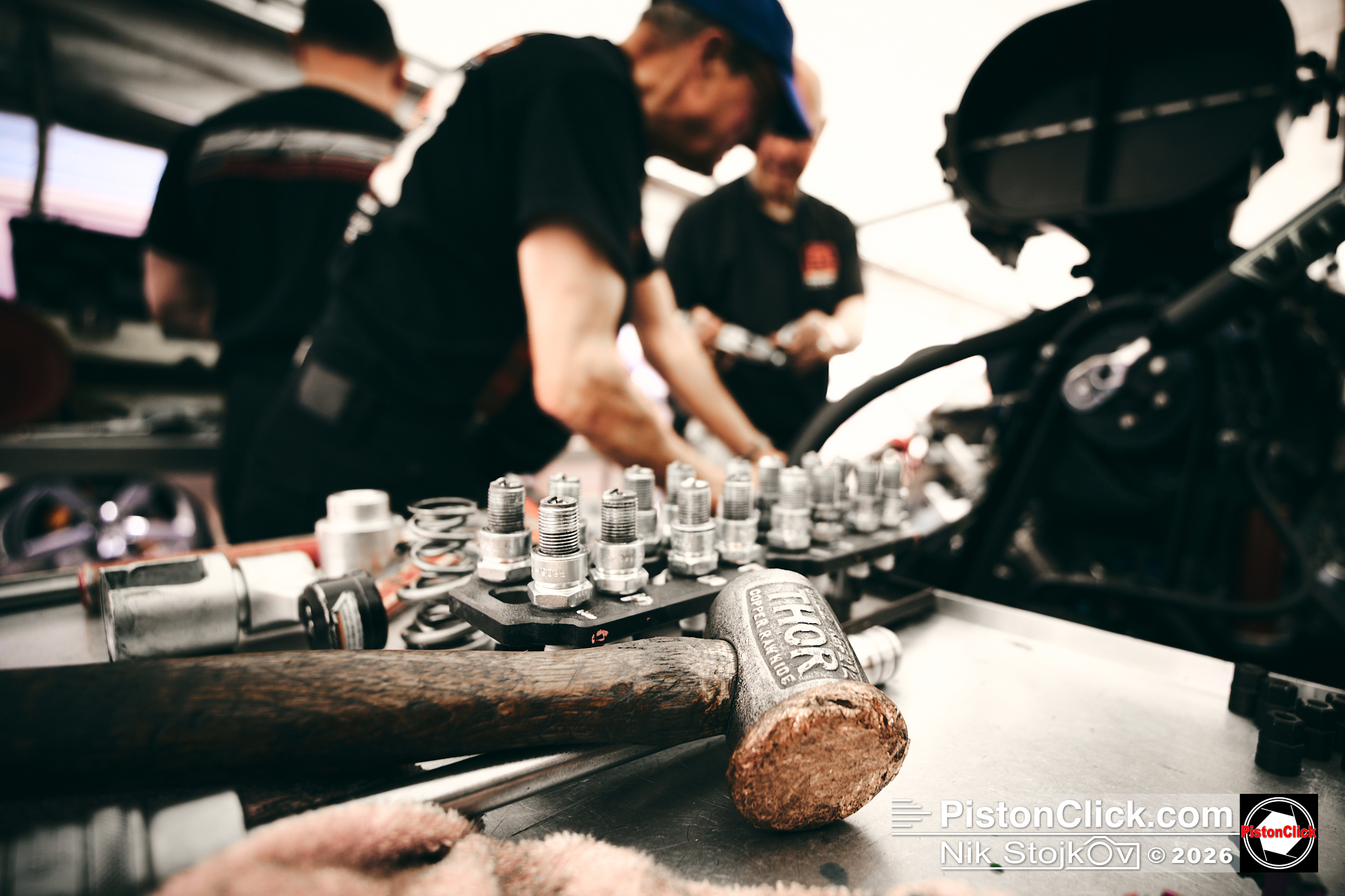
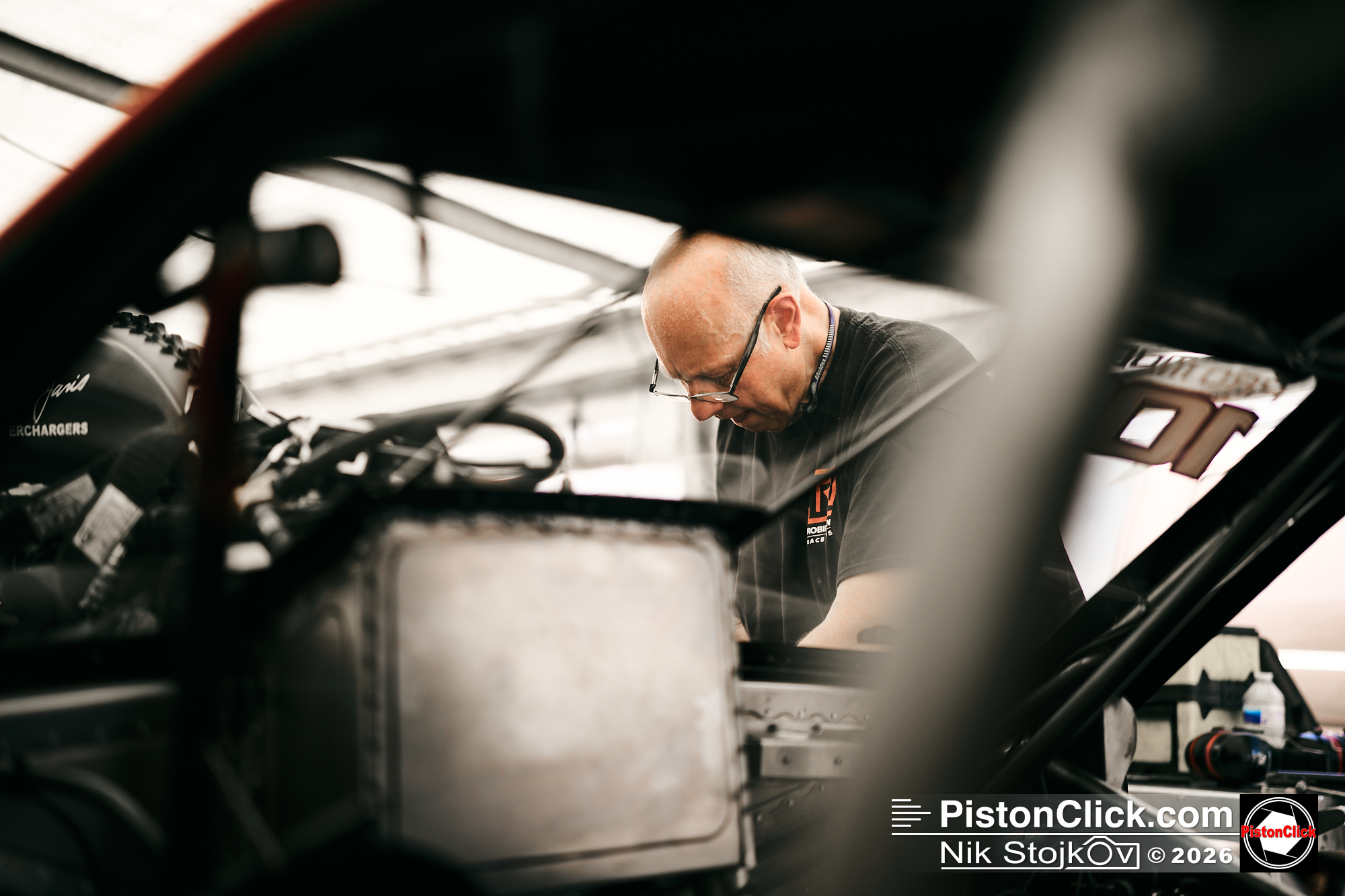
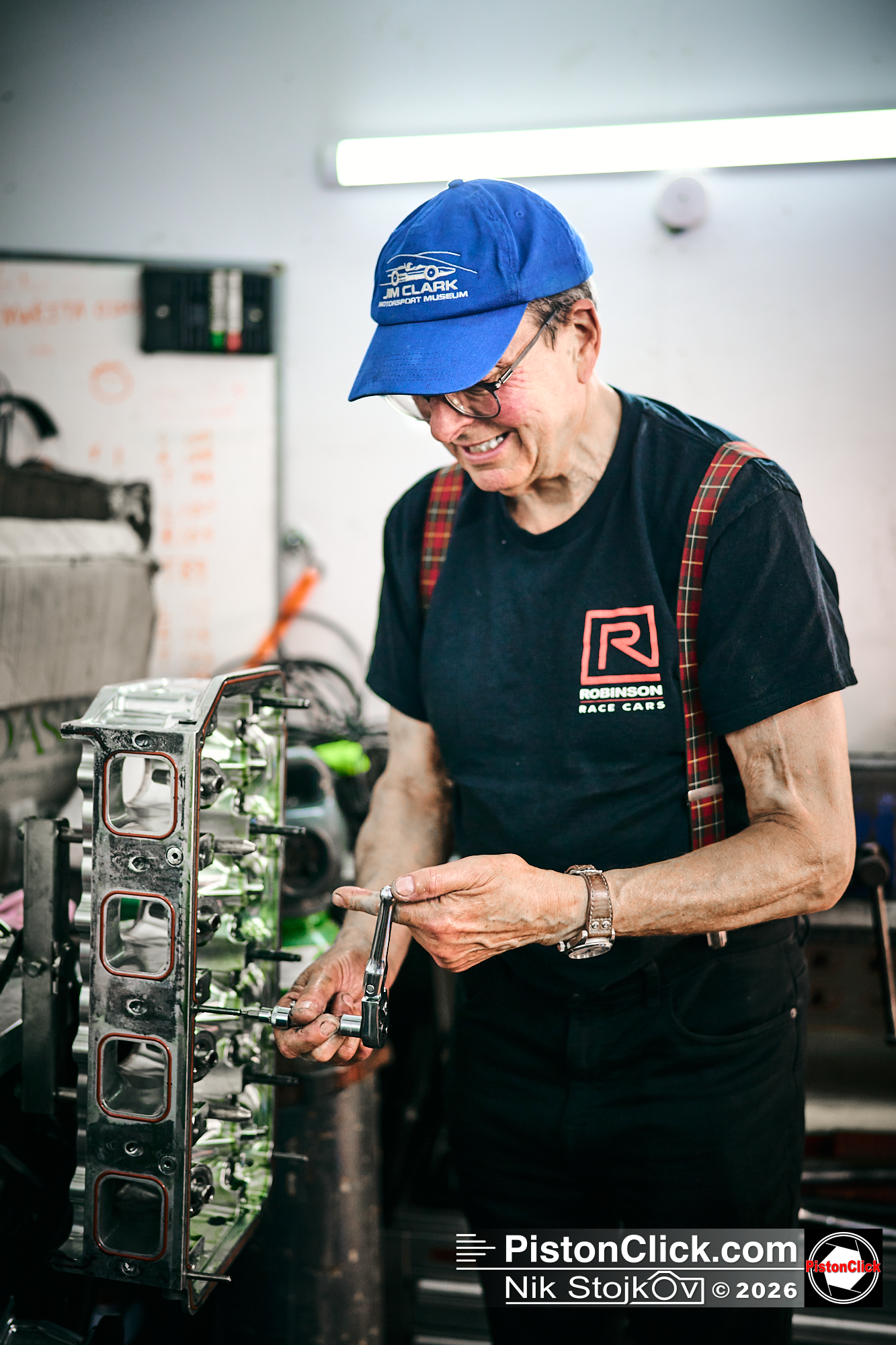
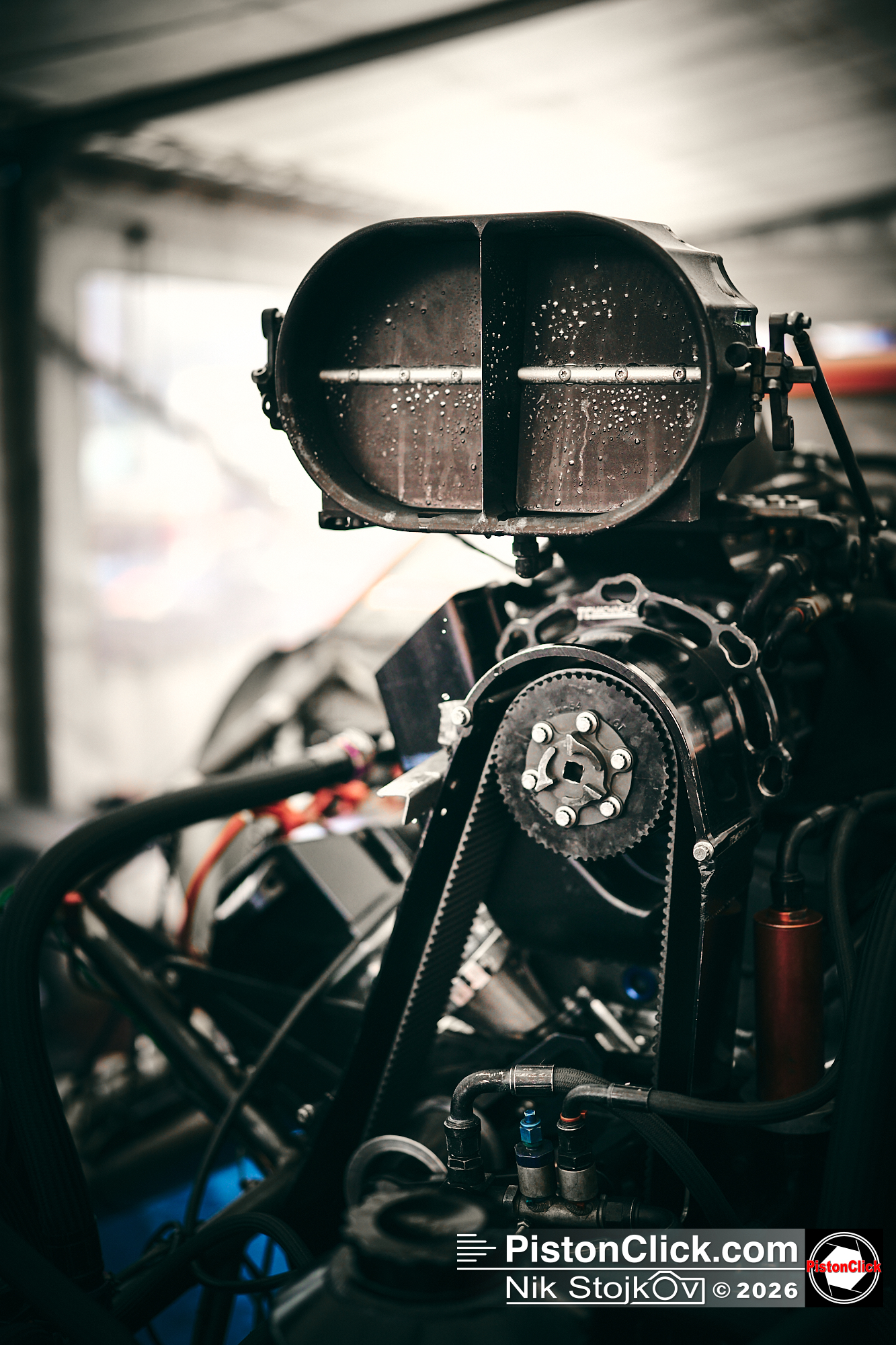
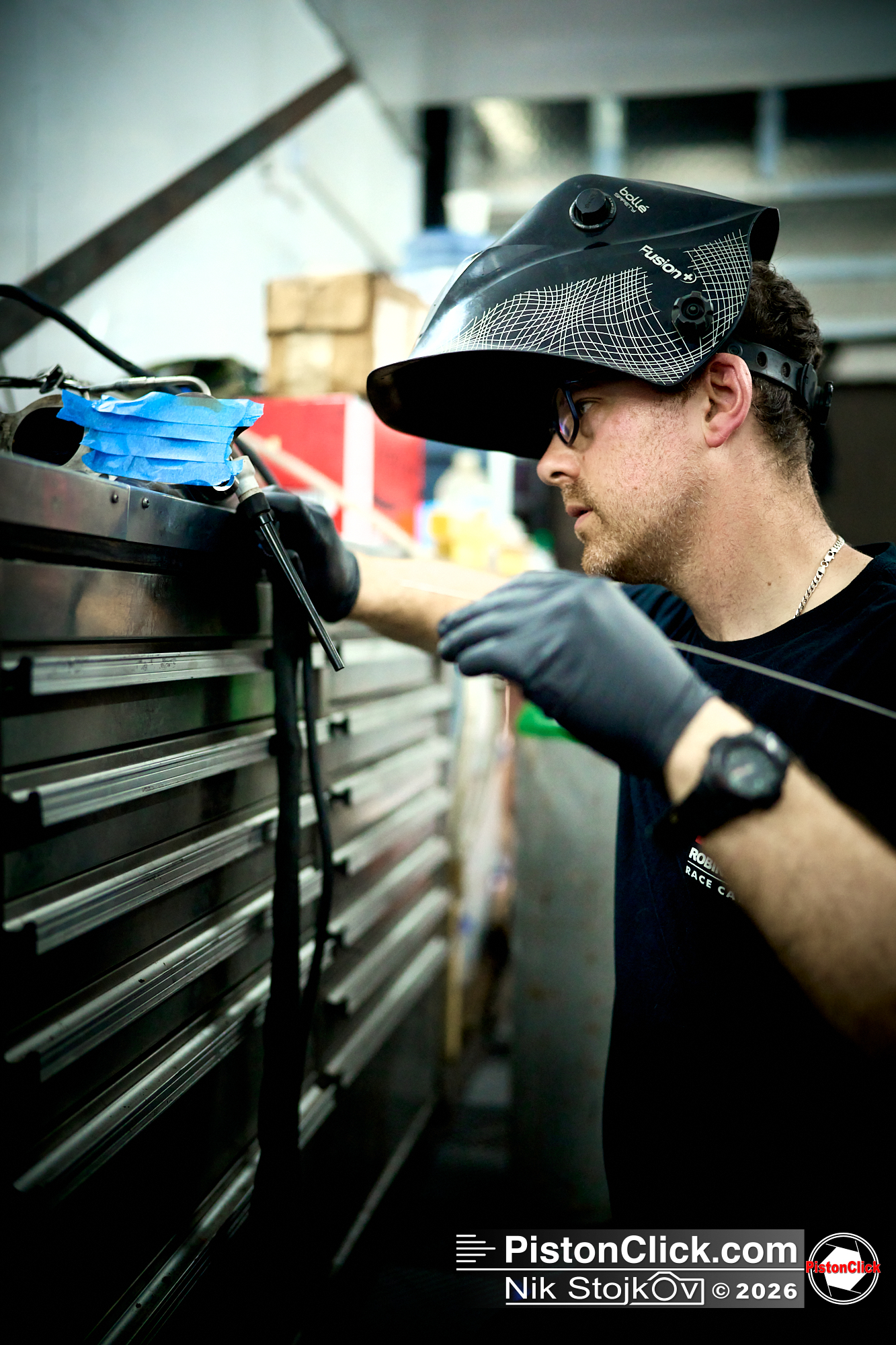
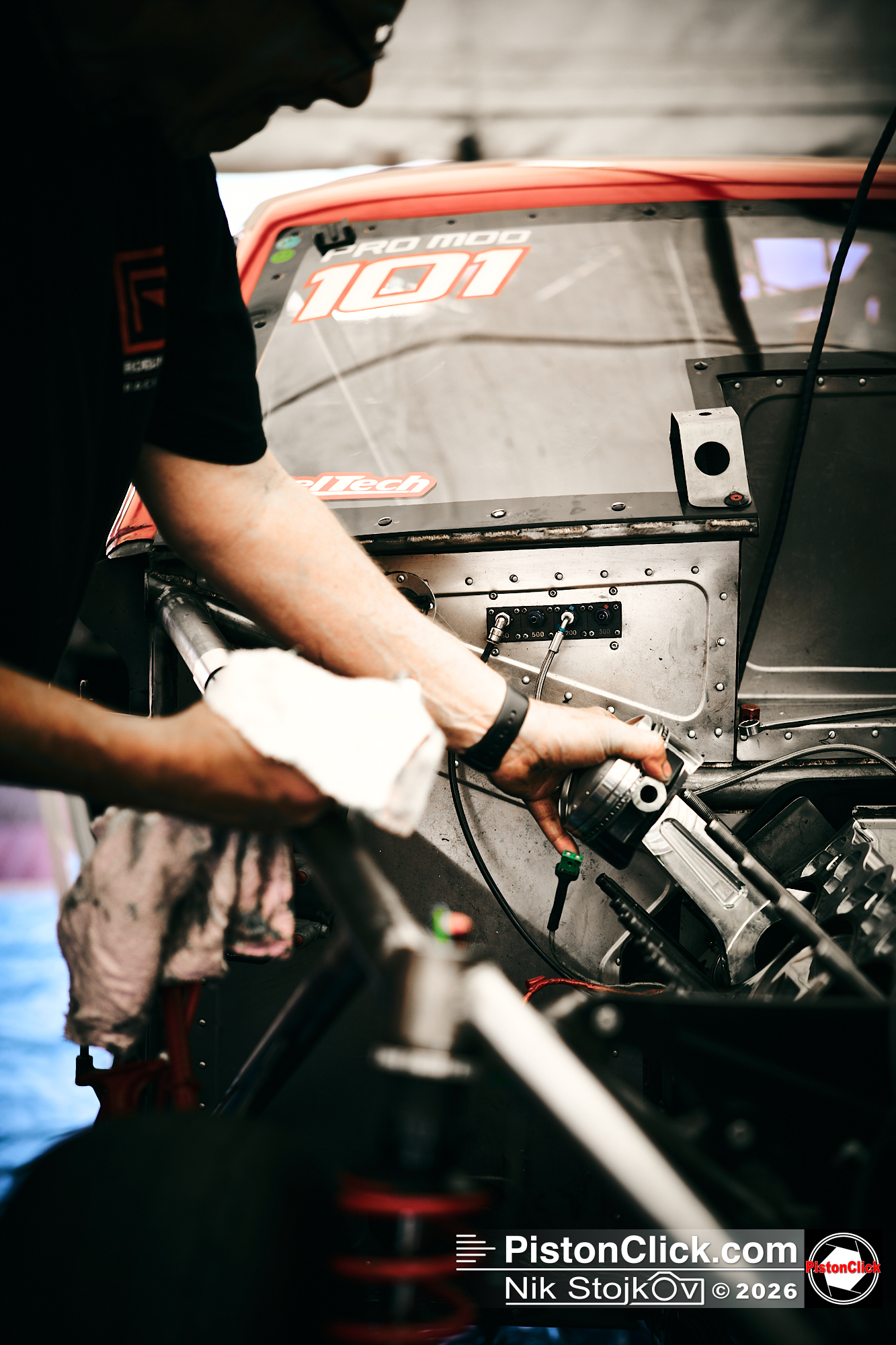
Every crew member seems to know every part of that car inside out. They need to. Rebuilding an engine between rounds is normal, as is welding cracked headers back together in the pits.
Three Finals in Ten Days
May was productive, despite the valve failure. The team raced three times in ten days and came away with something from every event.
At the Doorslammers, they reached the final but lost to Estonia’s Andres Arnover, despite running 5.821 seconds, just a thousandth off their best. In the opening round of the Carl Cox series, they won the B final and finished third overall. Then came The Main Event, the FIA round, and the Saturday I have already described.
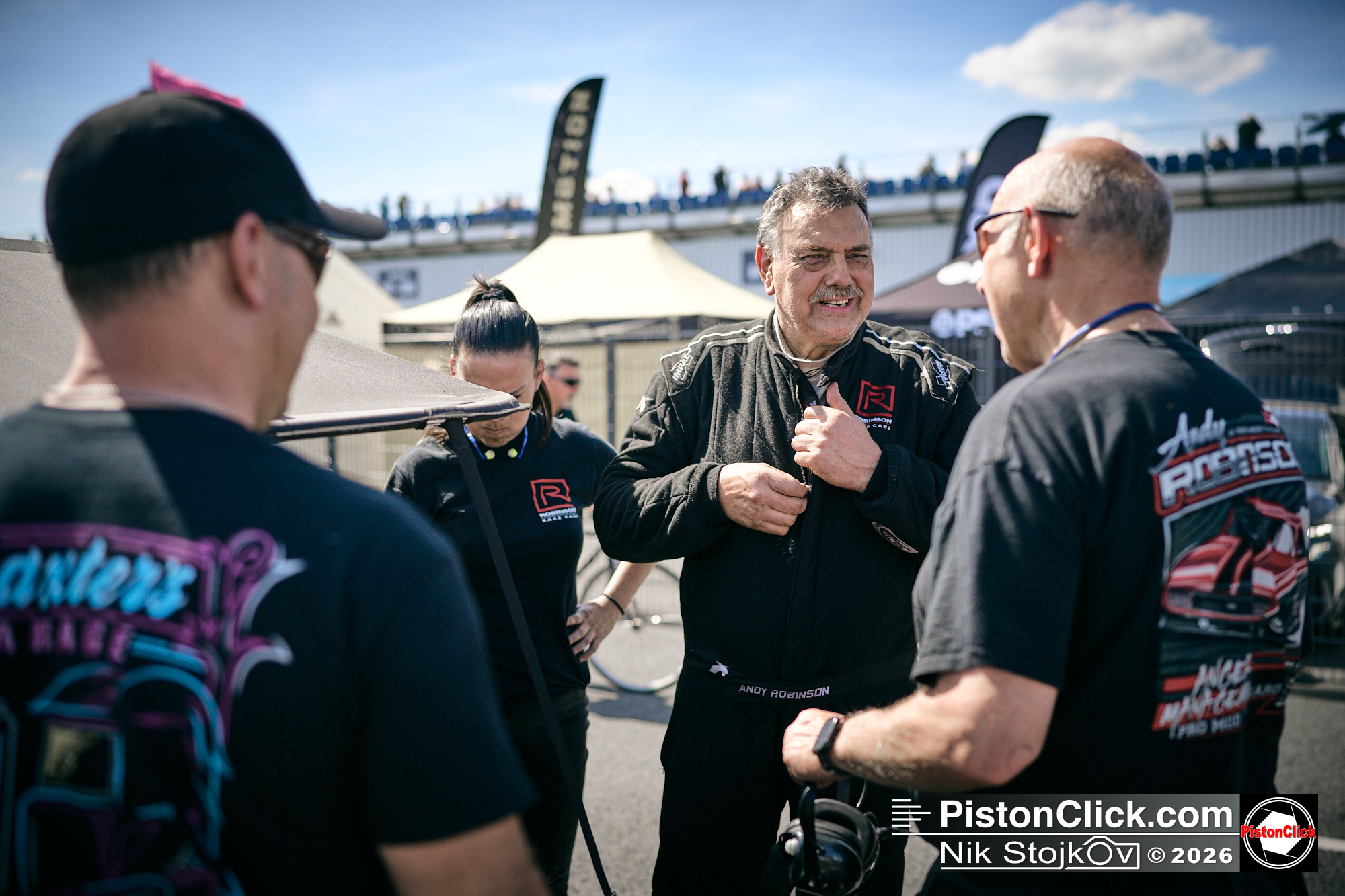
By Monday, the rebuilt engine was running happily. Andy beat Bruno Bader with a 5.87, David Vegter with a 5.91 and Jon Webster with a 5.92, all at 245mph. That level of consistency is difficult to appreciate until you have seen how much can go wrong between runs. In the final, Andy faced Arnover again, but a red light decided the race. In drag racing, leave a fraction too early and you hand the win to the other lane, whatever happens afterwards.
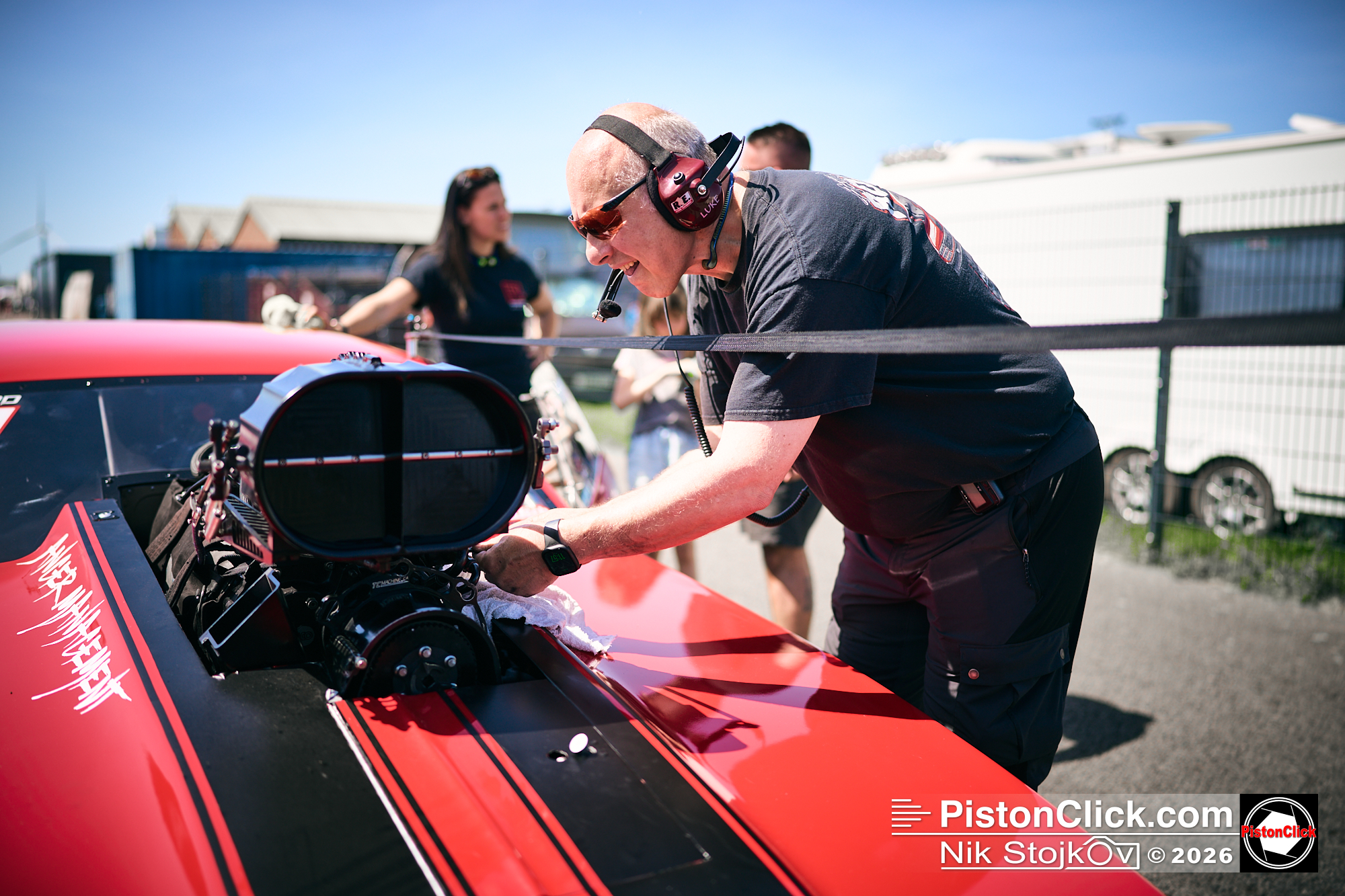
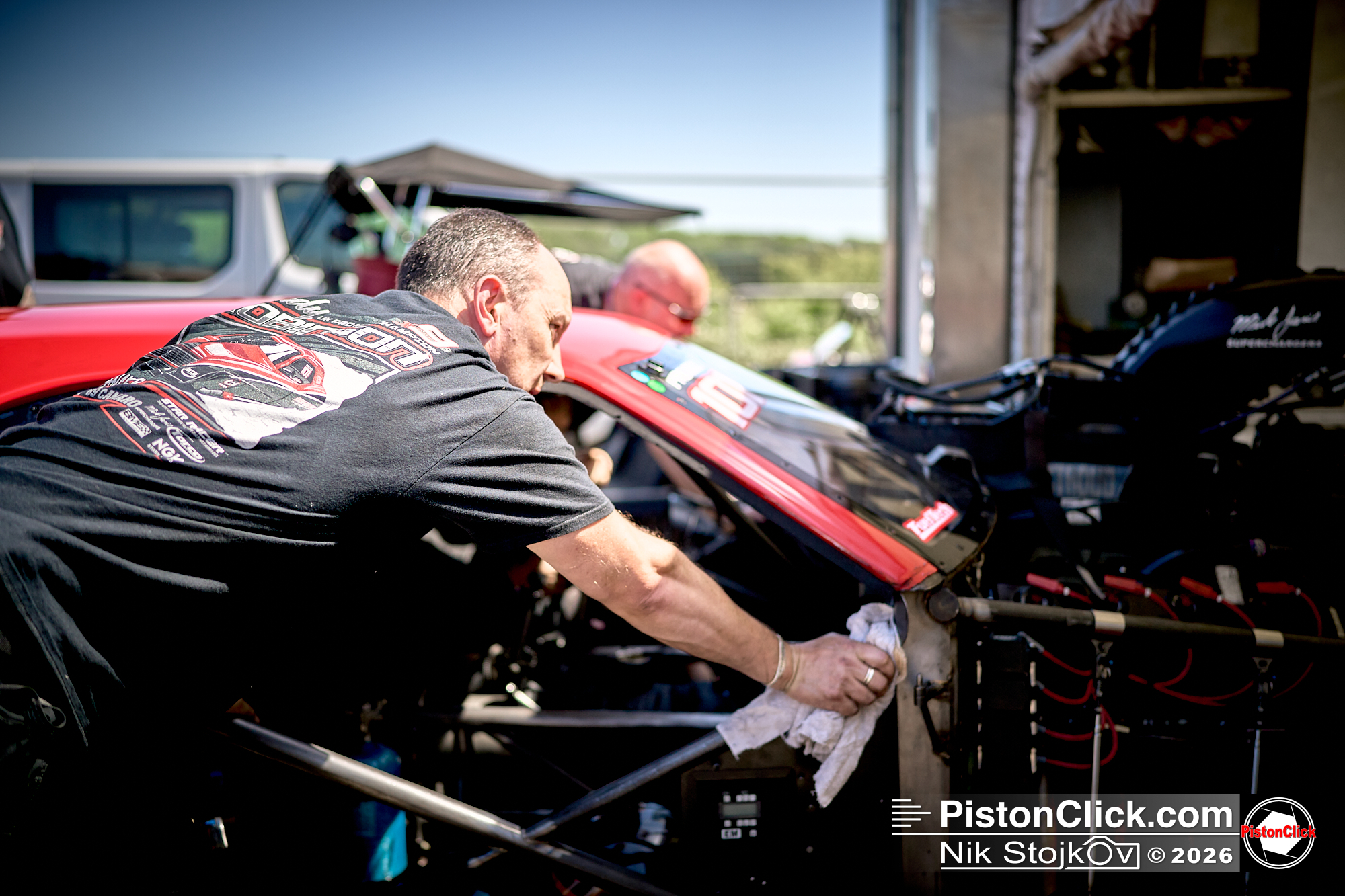
Two runner-up finishes and a third place made for a strong start to the season. Most teams would happily take that.
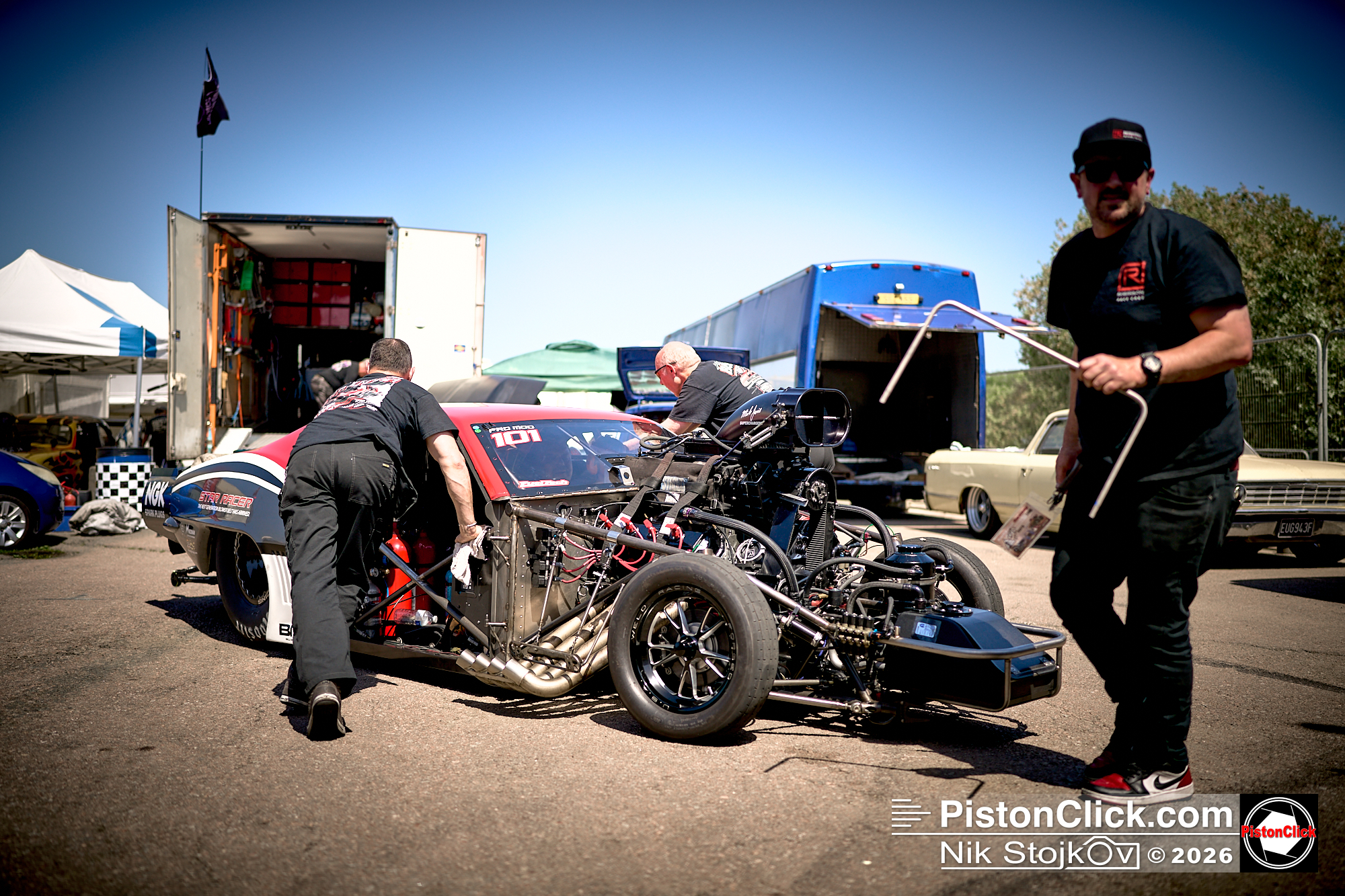
The Hard Part
Then summer arrived, and the car stopped cooperating.
Luke reckons you can often tell early how a weekend will unfold.
“Sometimes you can tell how your weekend is going to turn out on the first run,” he says. “If the car just rolls itself out of the trailer, you put some fuel in it and some air in the tyres and it goes and runs a 5.8 without trying, then you know it’s going to be a great weekend. If you come out in Q1, shaking the tyres and bits falling off the car, then it may be one of ‘those’ weekends.”
Summer brought a succession of those weekends.
Round two of the Carl Cox series in July brought an electrical fault, an oil leak and two red lights. A week later, at the Summer Nationals, tyre shake wrecked qualifying and Webster knocked them out in the first round. At Bug Jam, the engine dropped another valve, forcing the team to run eliminations on seven cylinders. They lost the final to Webster, 6.28 to 6.21. In August, misfires cost them a whole day of running, and they lost another final.
September looked worse before it got better. At the Carl Cox finale, the Lenco gearbox refused to shift. The crew discovered crank damage and swapped the entire engine overnight. Then they stayed at Santa Pod because the FIA European Finals began the following morning.
The gearbox failed again in first qualifying. They fitted their spare and returned for the second session as the light was fading. I was standing around the 150-foot mark. The car launched hard and still had its front wheels in the air as it passed me, something the team said it had never done that far down the track. Both gear changes went in cleanly, and the timing boards lit up with 5.81 seconds: a new personal best, just hours after the third gearbox repair of the week.
A Personal Best, Then More Trouble
Two sessions later, the crew spotted a problem with the wing as the car left for the lanes. Luke welded it back together while the car sat in the queue, minus the wing, then rushed it down on a bike. The wing went back on just as the pair ahead pulled around for their burnouts.
Sunday brought more frustration. Rain fell all morning, and the Santa Pod crew worked to dry the track. The team finally ran a little after 4pm, only for the rain to return while they waited in the lanes for round two. That ended their event. They left tied on points with Jon Webster. Whichever driver progressed further at the National Finals would take the championship.
Tied on Points, Won by Three and a Half Feet
Two weeks later, everything finally came together at the National Finals.
On Friday, the car ran 5.811 seconds at 247mph, its quickest pass ever, and topped qualifying. Saturday reminded the team not to get comfortable: a timing-system fault, a misfire and an aborted run caused by tyre shake all threatened their progress.
On Sunday morning, Andy ran 5.85 at 249mph to reach the final. That speed mattered. The 249mph figure told the team that the clutch was working where they wanted it, whereas the car had struggled to get much beyond 244mph at the European Finals.
Waiting in the other lane was Jon Webster in his gold, twin-turbo Mustang named Fast Company. Webster had beaten Andy twice over the summer. With the pair level on championship points, the maths was simple: whoever won the final would take the title. Webster left first. Andy chased him down.
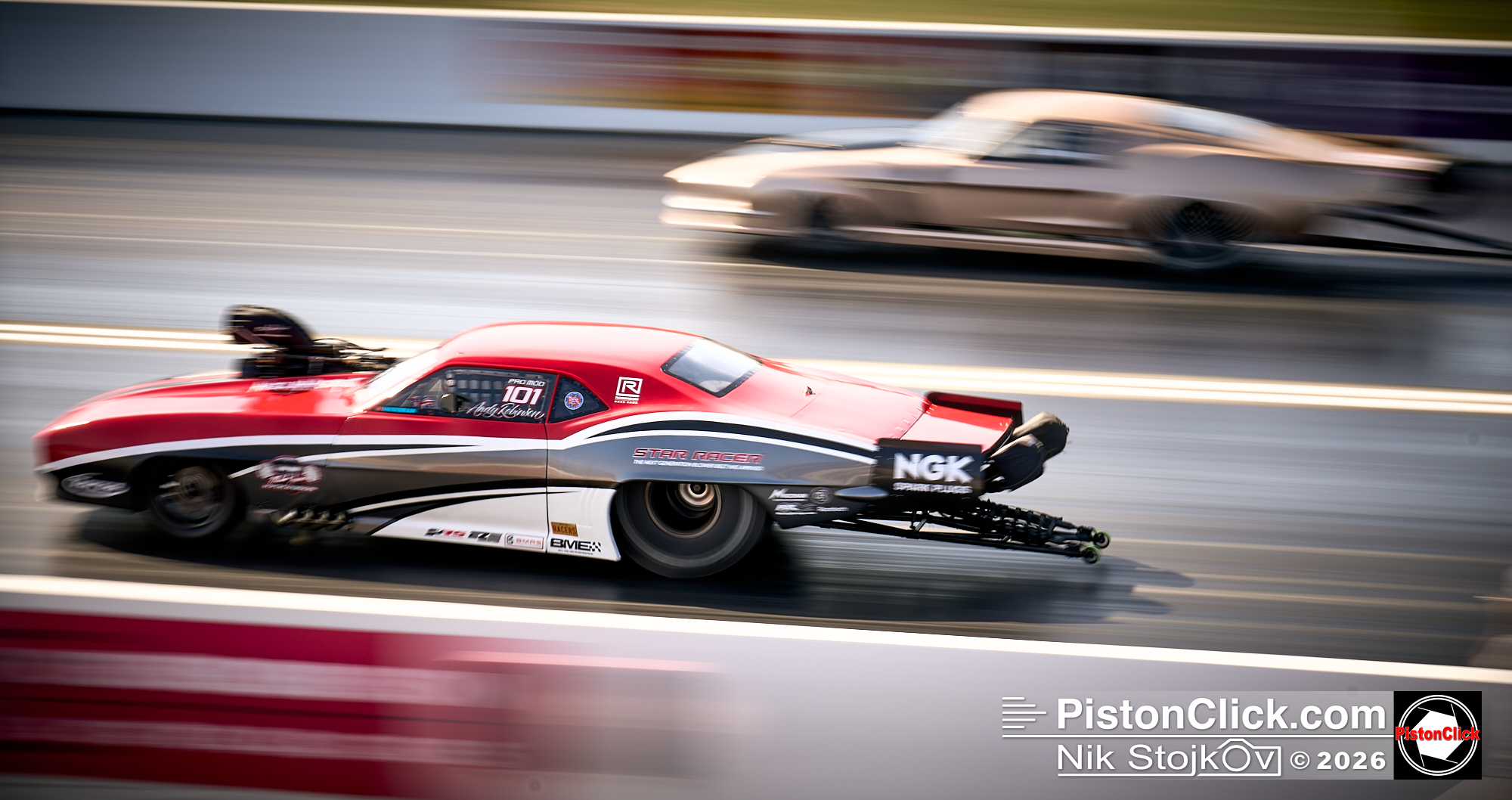
The boards showed 5.91 to 5.95, with just 0.0098 seconds between them at the finish line. Over a quarter of a mile, that amounted to roughly three and a half feet. Neither driver knew who had won until someone told them. That made it ten Motorsport UK Pro Modified titles for Andy Robinson. Nobody else has won more than two.
Santa Pod – Sixty Years of Noise
All of this happened at Santa Pod, which celebrated its 60th anniversary in 2026. The venue opened in 1966 on a former wartime American bomber base and became Europe’s first permanent drag strip. It still feels like a place people built because they wanted to, and then never quite stopped.
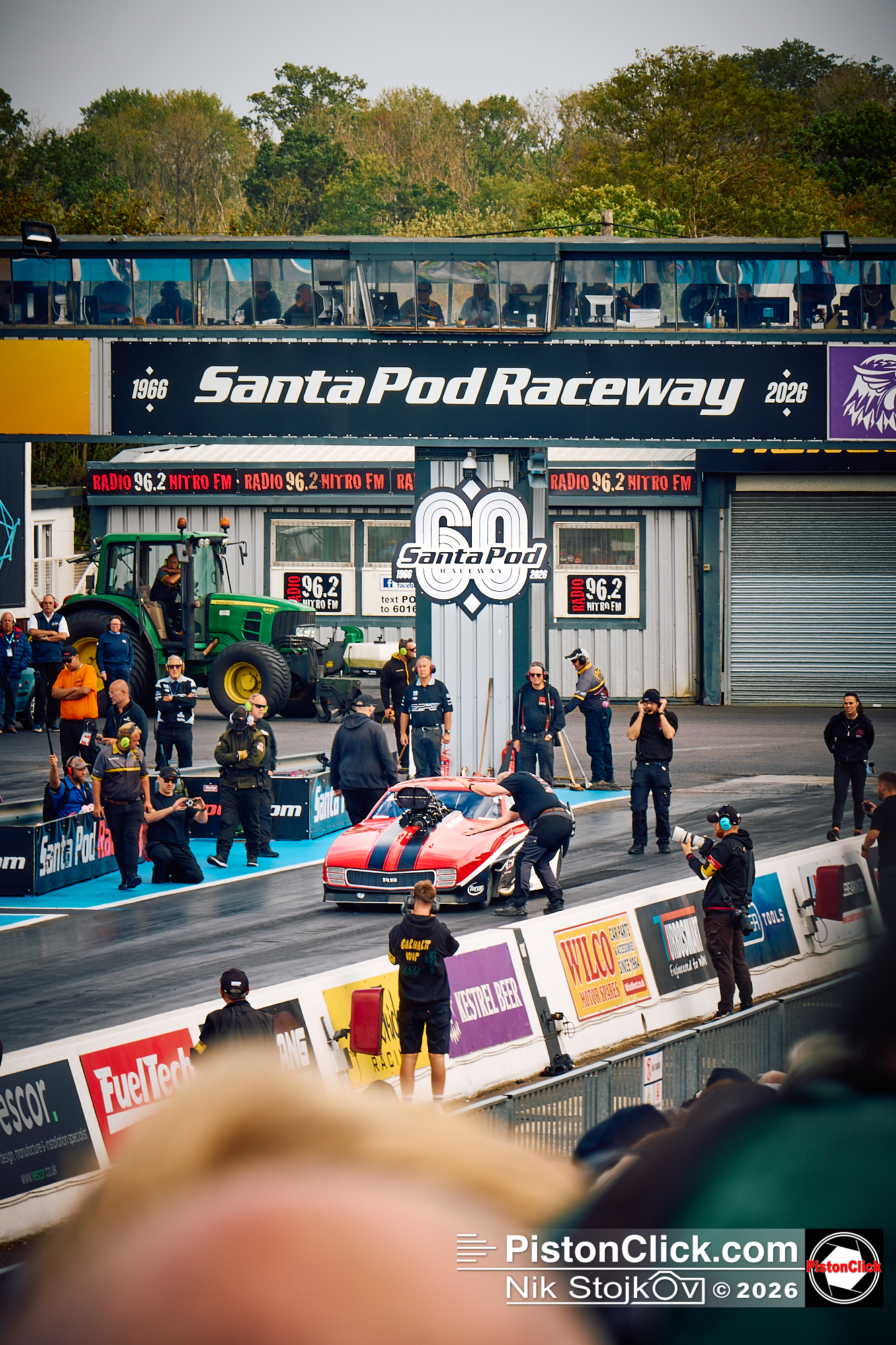
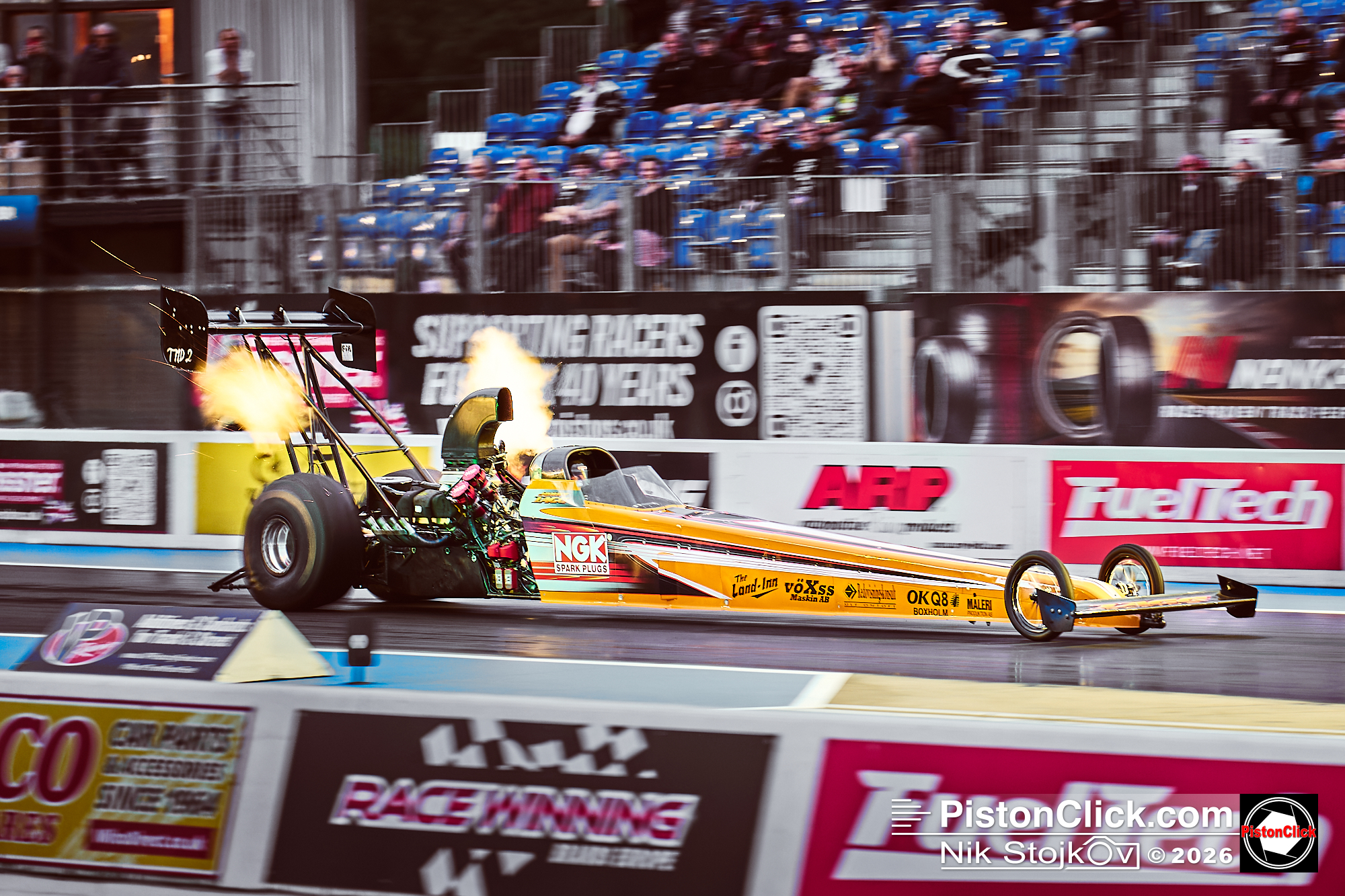
Very little can prepare you for the noise of a drag racing event, and absolutely nothing prepares you for your first Top Fuel race. I have never heard anything as loud as a Top Fuel dragster launching at full throttle. In truth, “heard” is the wrong word: most of the sound arrives through your chest and bones. These machines reach 280mph over 1,000 feet. The nitro hangs in the air afterwards and makes your eyes water, while car alarms sound somewhere in the distance.
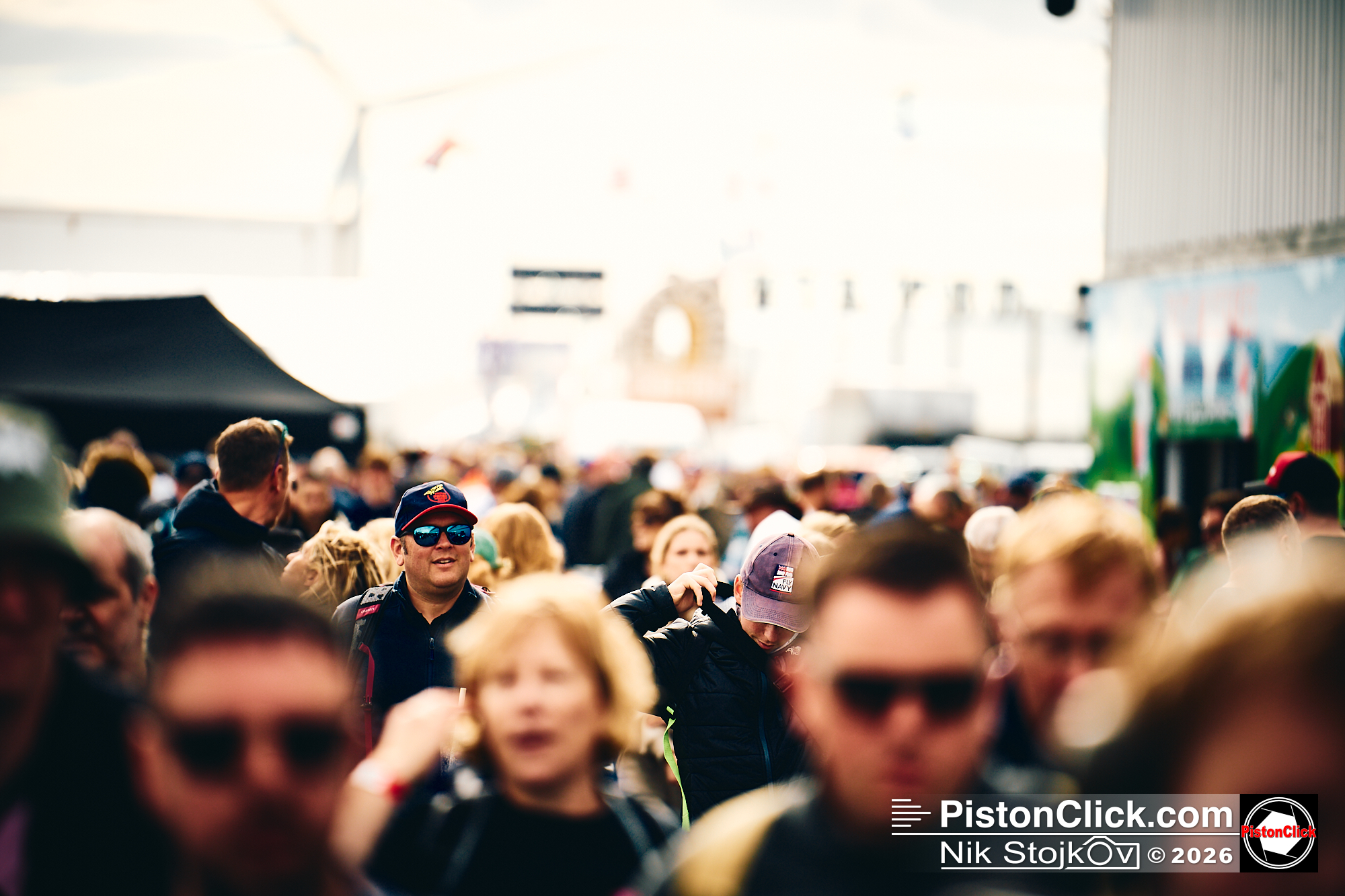
There is plenty to see between runs, too. Tyres wrinkle and grow as the cars launch. Crews repack parachutes by hand. Junior dragsters, jet cars and bikes cover the quarter mile at speeds that seem barely sensible. The whole event feels part race meeting, part festival, and nobody seems to be in a bad mood.
Photographing Drag Racing From the Spectator Side
For photographers, one of Santa Pod’s biggest attractions is the completely open paddock. Your ticket gets you right up to the team awnings. Most crews are happy to chat, and many enjoy having their photographs taken, even when they are elbow-deep in an engine with twenty minutes until the next round.
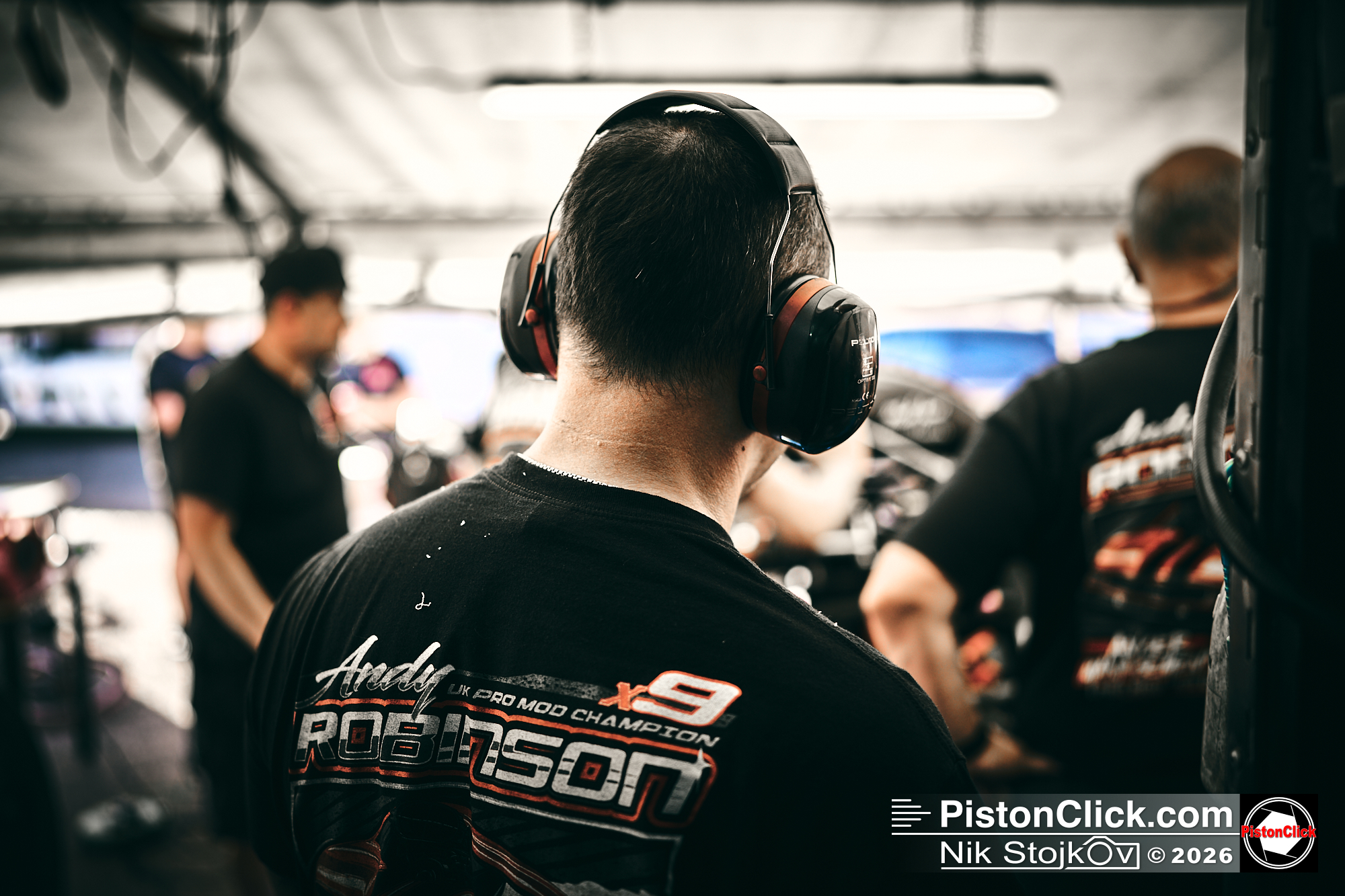
That is where I spend most of my time. The racing lasts six seconds, but the story unfolds over the hours in between: cylinder heads coming off, tuning changes, clutch plates laid out in a row and the expressions on the crew’s faces when the engine fires up again. Stay out of the way, ask before getting close and never touch anything. It might be hot.
Drag Racing Camera Kit
Trackside photography is more challenging from the public areas. Resident photographers stand less than a metre from the track and produce one great frame after another of cars and bikes performing huge burnouts to warm their tyres before the violent launch. The rest of us have a safety wall in the way.
The wall hides the bottom of the nearest lane, so I look for a little extra height on the bank or low down in the grandstand. From there, I can photograph the opposite lane with a cleaner view of the car. The best spot I found was around the first third of the strip. A 100–400mm lens gives you enough reach for the start-line action, along with some lovely panning opportunities as the cars hurtle past. Further down the track, they are travelling so quickly that 1/200 second can produce an effective sense of motion, but the backgrounds become less interesting as the sponsor boards disappear halfway along.
My 70–200mm lens accounted for around 90% of my frames on most weekends. I used a second camera with a 50mm, 35mm and 14–24mm lens, swapping between them for the paddock and wider storytelling shots. Most of my panning exposures fell between 1/20 and 1/50 second. One final piece of advice: bring proper ear defenders. Not just earplugs. Bring them for the Pro Mods as well as the Top Fuel cars.
Worth the Ringing Ears
I arrived at Santa Pod expecting to photograph fast cars. I left with far more photographs of people than I had planned: a family and their crew who spent five months fixing whatever broke, working through heat and rain, and still making repairs just two weeks before winning the championship.
The margin at the finish was three and a half feet. Having watched everything that went into that result, it feels about right. Nothing about their season came easily.
So yes, drag racing is racing in a straight line. It is also the most complicated six seconds I have ever pointed a camera at. My thanks to Andy, Luke and everyone at Robinson Race Cars for letting me stand under their awning and occasionally get in the way. I will be back at the Pod next season. If you have never been, go. Take a camera – and proper ear defenders you won’t regret it.