



Photographing the BTCC Rounds 19, 20 and 21
Donington Park
24 August 2026

As the editor of PistonClick, I receive a massive influx of motorsport reports during the race season. Some I’m familiar with, others not so much. Over the years, I’ve gained more knowledge through reading submissions. One series I had some working knowledge of but rarely attended was the British Touring Car Championship. A fan from my sofa and a few trackside visits a year was my commitment to the best tin-top racing in the UK.
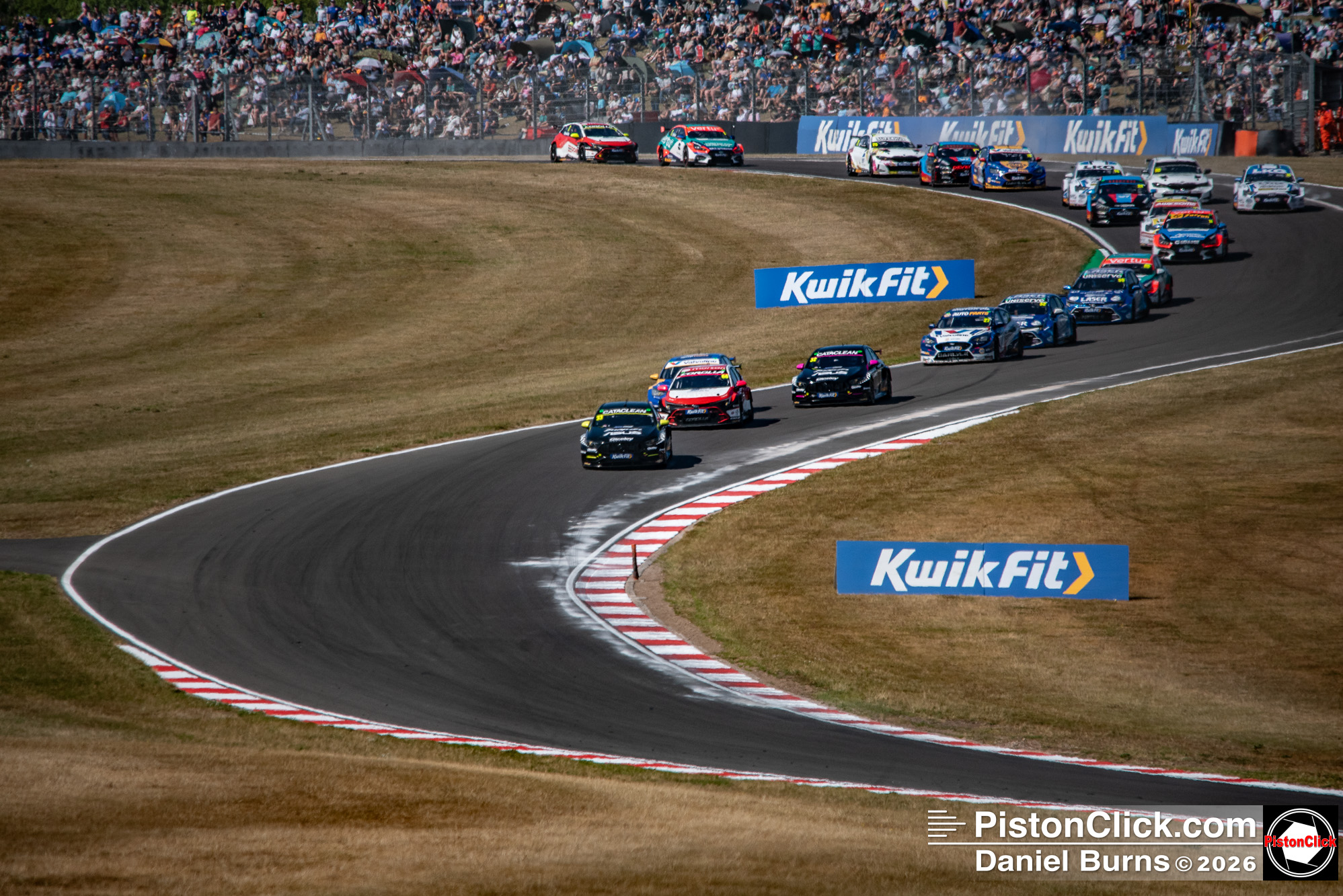
That changed after the Scottish round at Knockhill. The racing was fantastic and Scott Grant’s photos for our report captured it perfectly. However, the bombshell of Plato Racing going into administration after winning really caught my attention.
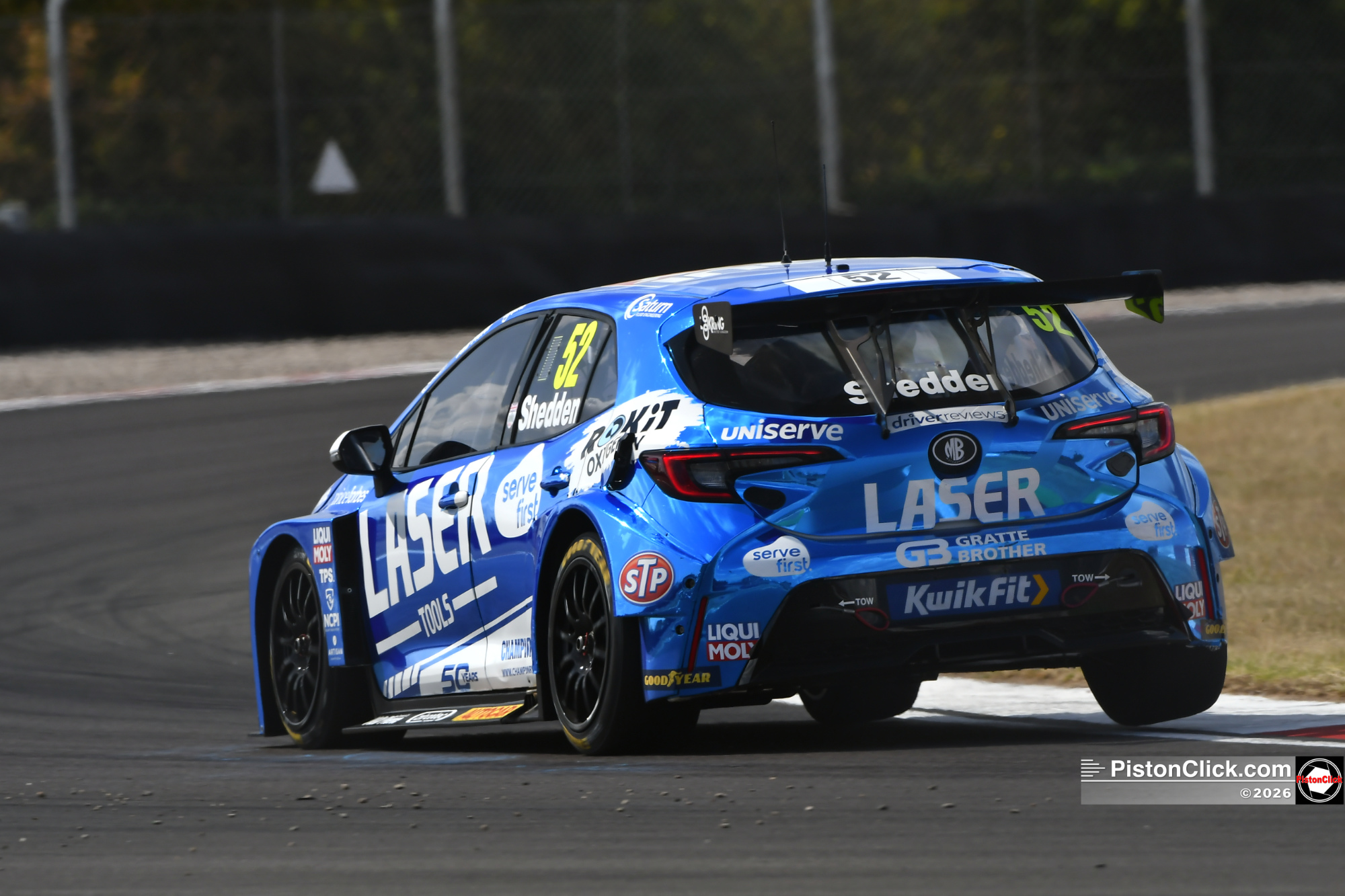
Donington was the next round, so I decided to go to the event, as I’ve done on and off for years. Race series fans are usually incredibly knowledgeable and friendly and willing to talk. As I often chat with fans trackside during assignments I wanted to hear the grassroots opinions from the BTCC fans. My somewhat old-school and perhaps not entirely objective perspective might offer some interesting insights for this report.
Why BTCC Teams Are Failing: The Sponsor Crisis, The Cost Trap and the Plato Racing Collapse
The BTCC has always been marketed as the toughest and most competitive touring car series globally, where independents can triumph over manufacturers. However, in 2026, it seems this model is faltering. Fans expressed a generally dismal outlook on the BTCC. Reasons for this include teams in Kent and Wellingborough either pausing, sitting out or going into administration. The collapse of Plato Racing, just 48 hours after its first win, isn’t an isolated incident; it’s a symptom.
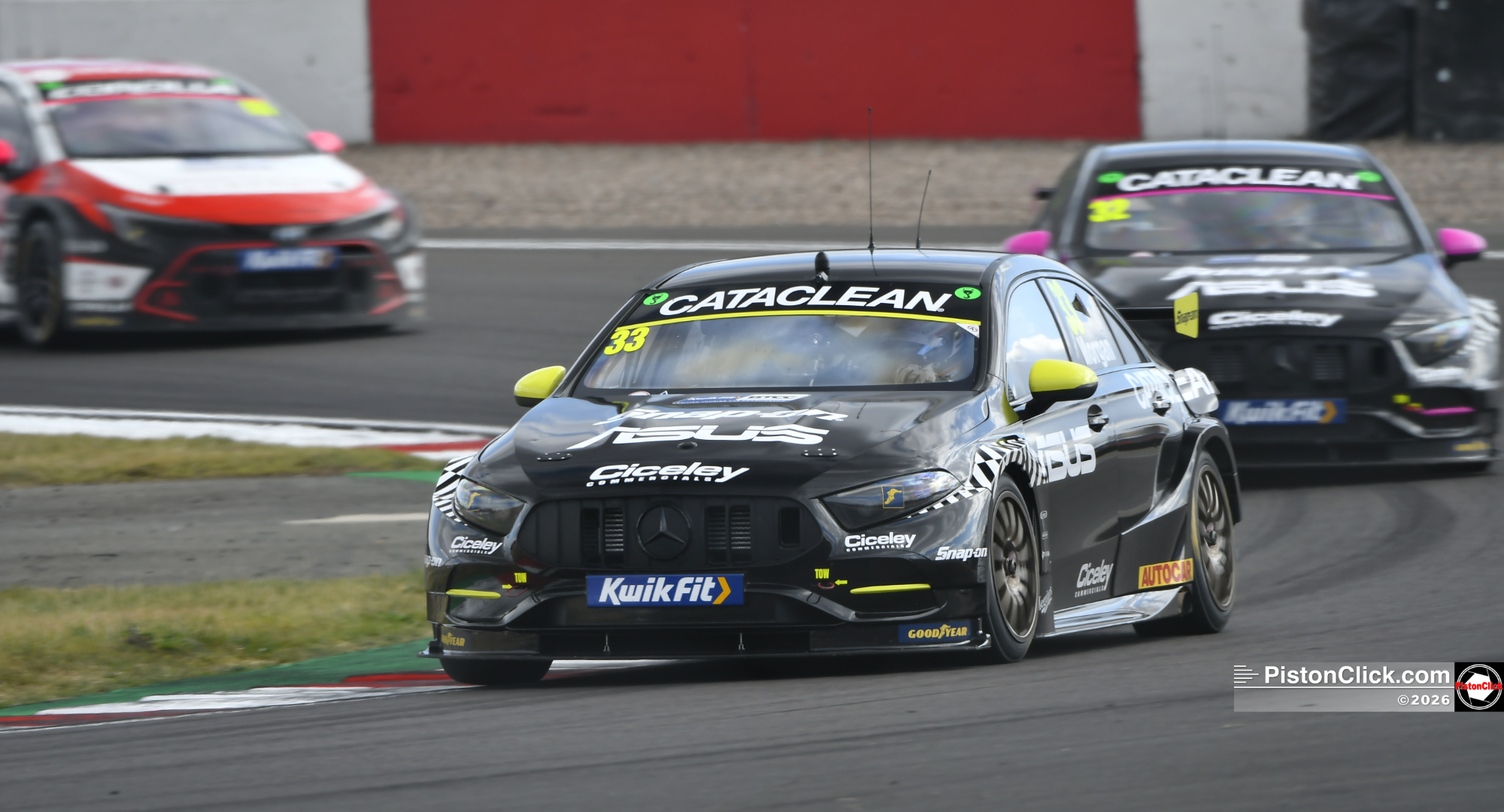
Fans were particularly unhappy, especially after purchasing Plato Racing merchandise only to see the cars turn up in a blacked-out livery at Donington. Furthermore, there were numerous comments suggesting the support card offered better value than the headline races, but we won’t delve into that perspective here.
The Current Grid Crisis: From Pauses to Pull-Outs
Warning signs emerged in 2024. One Motorsport, formerly BTC Racing and a race-winning independent team, announced a ‘pause’ from the BTCC to rebuild its Honda Civic programme. This pause, under BTCC regulations, meant surrendering its TOCA BTCC Licences (TBLs), the essential tickets for entry, and having to reapply to TOCA to return them. This effectively reduced the grid to 21 cars.
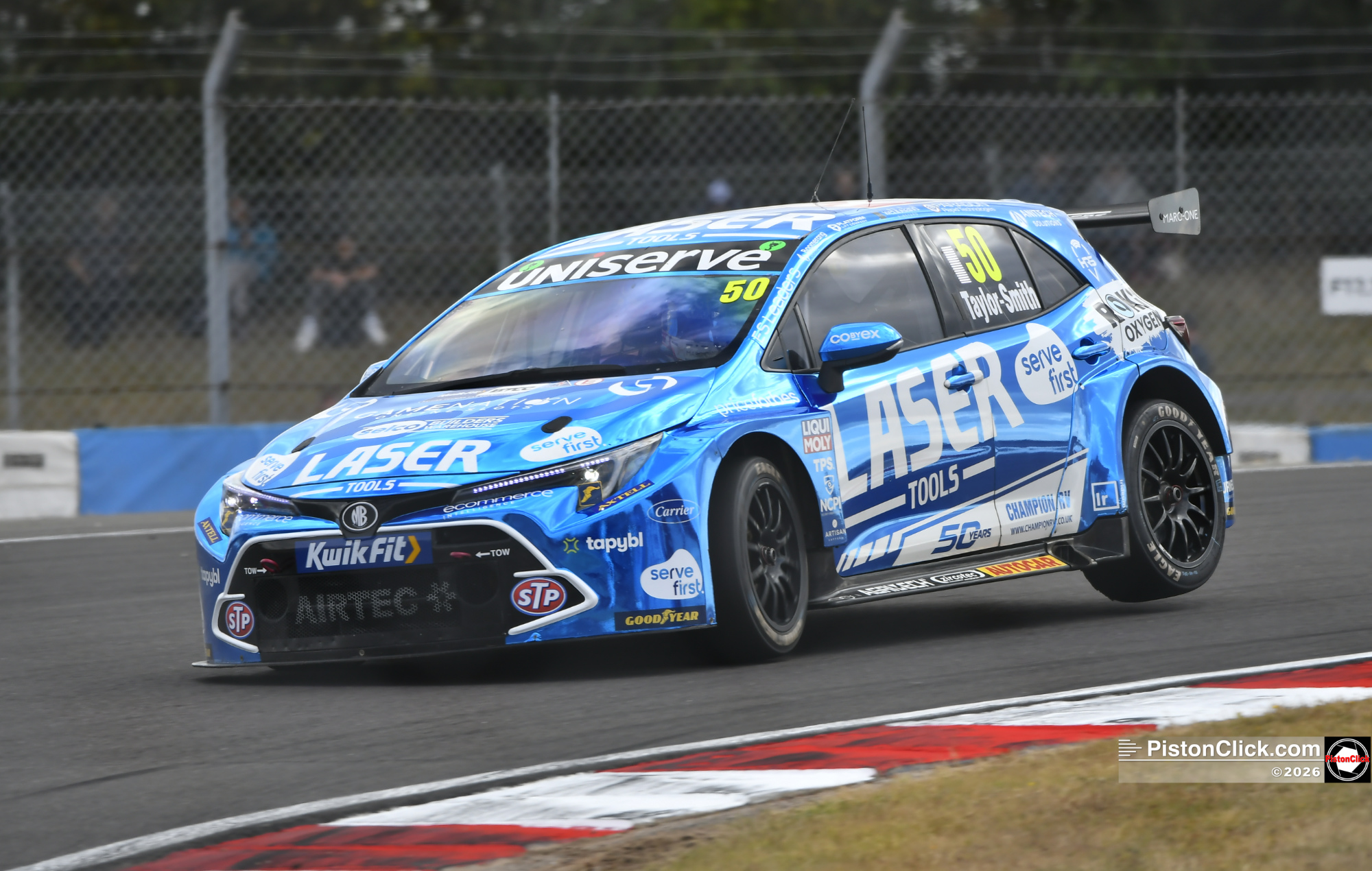
Then came 2026. In March, Un-Limited Motorsport, the team born from Team HARD, confirmed it would miss the entire 2026 season. The decision was straightforward: “This difficult choice stems from the withdrawal of our title sponsorship programme due to the current economic climate. Despite exploring various alternatives to remain on the grid, securing the necessary support to compete at the team’s expected standard proved impossible.”
This is a familiar story, echoed by Power Maxed Racing, which lost its title sponsor, and drivers like former champion Colin Turkington and Daniel Lloyd, who also missed seasons due to sponsor, financial and other commitments.
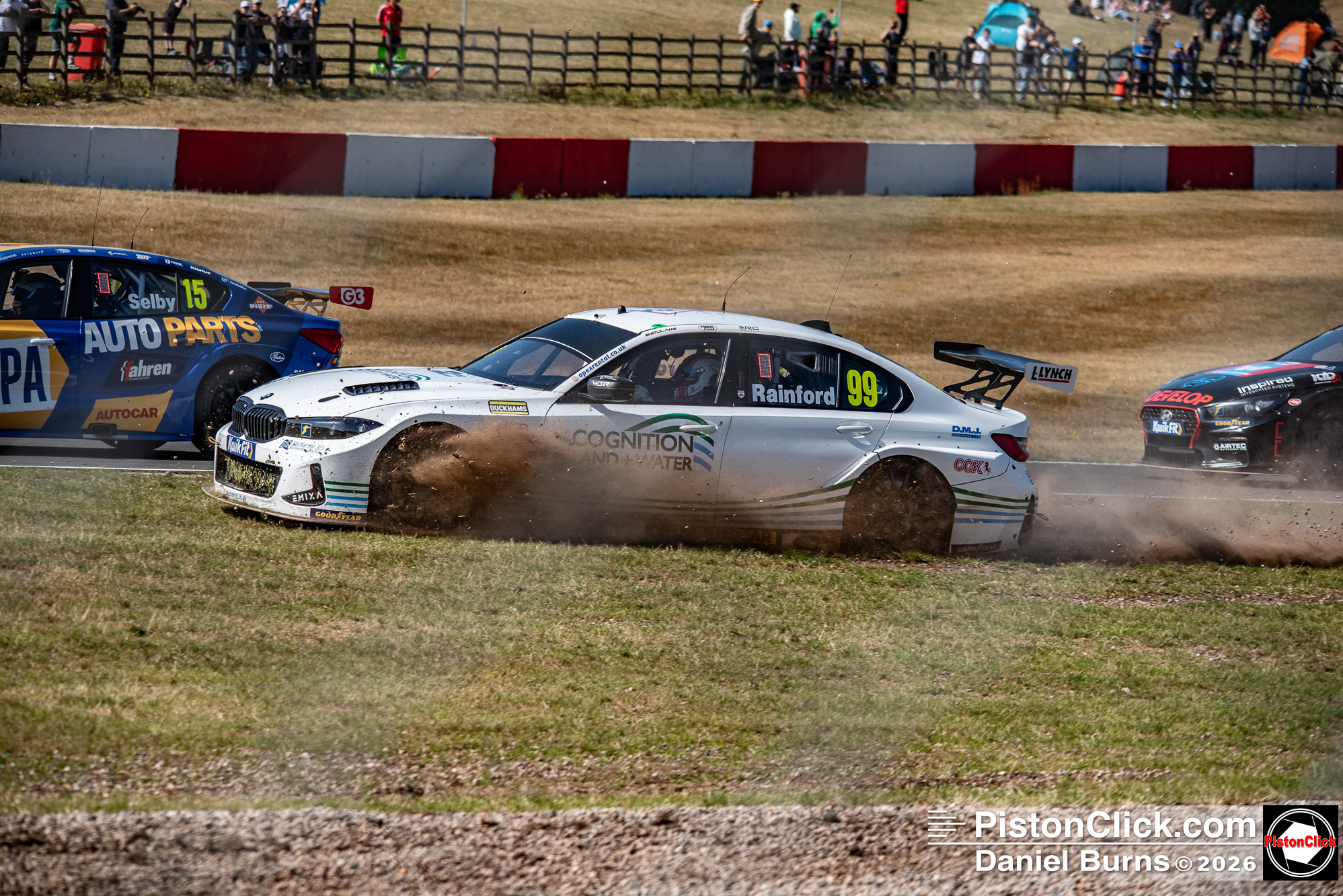
Even established teams are facing challenges. WSR, the team behind the BMW 330i M Sport, reduced its four-car line-up to two for the first four rounds of 2026, despite holding three TBLs. This decision was driven by its new British GT programme and the loss of BMW manufacturer backing. When one of the top independent teams can’t afford to run the cars it has licences for, the business model is fundamentally flawed.
The Hybrid Hangover and the Cost of Being Competitive
If you ask anyone in the paddock about the changes, they all point to one thing: cost, particularly the hybrid system introduced for 2022.
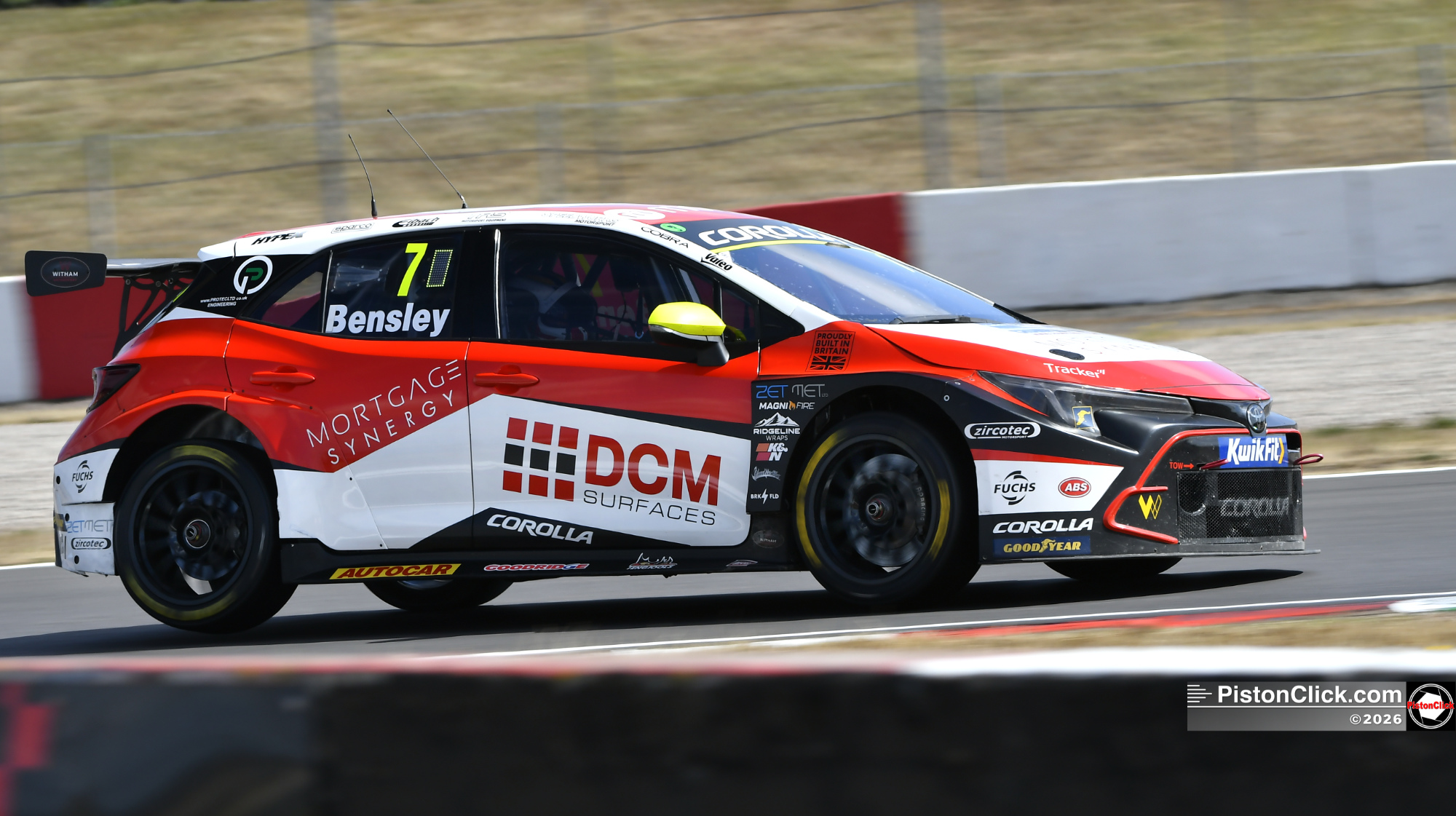
Autosport summarised the main concern: “The big beast when you talk to many in the BTCC paddock is the cost of the hybrid system.” The Next Generation Touring Car (NGTC) regulations, designed to be low-cost, locked all control-part supplies into five-year contracts. This meant the Cosworth-supplied hybrid was mandatory until the end of 2026, regardless of teams’ preferences.
The impact was twofold. Firstly, there were direct costs like leasing, servicing, crash damage and the mandatory mileage on a complex hybrid unit. Secondly, there were indirect costs stemming from the increased expenses caused by the hybrid system, making it harder for drivers to find budgets. In a championship where most independent drivers rely on sponsorship of £250k-£400k, an extra £80k could mean the difference between a seat and a season on the sidelines. Bobby Thompson, for example, missed three rounds in 2024 due to this very issue.
BTCC Hybrid System
Finally, for 2026, the hybrid system was removed and replaced with turbo boost, reducing weight by 55kg. However, the damage was already done. Teams had spent years funding the hybrid and now had to spend again to re-engineer around it for just one season.
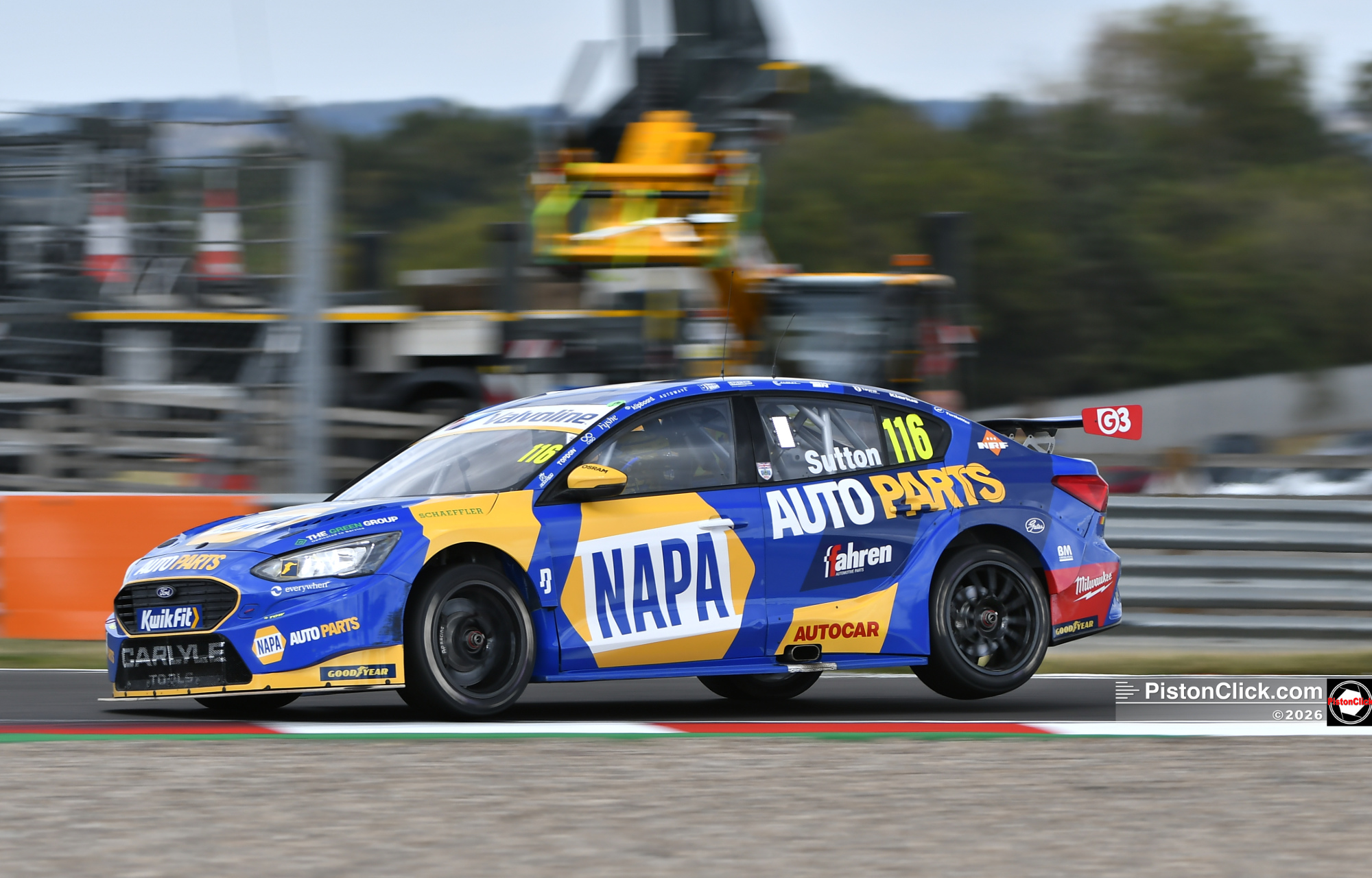
Another cost concern is the arms race for competitiveness. The Ford Focus ST used by NAPA Racing UK dated back to 2020 and was bought second-hand from Motorbase. The squad retired the hatchback version of the Ford Focus ST that they ran from 2022 to 2025. For the current 2026 campaign, they developed a completely new car: the Ford Focus Titanium Saloon. This means paying RML Group, who supply the entire grid with spec components, to design and build a new car—a seven-figure outlay before testing.
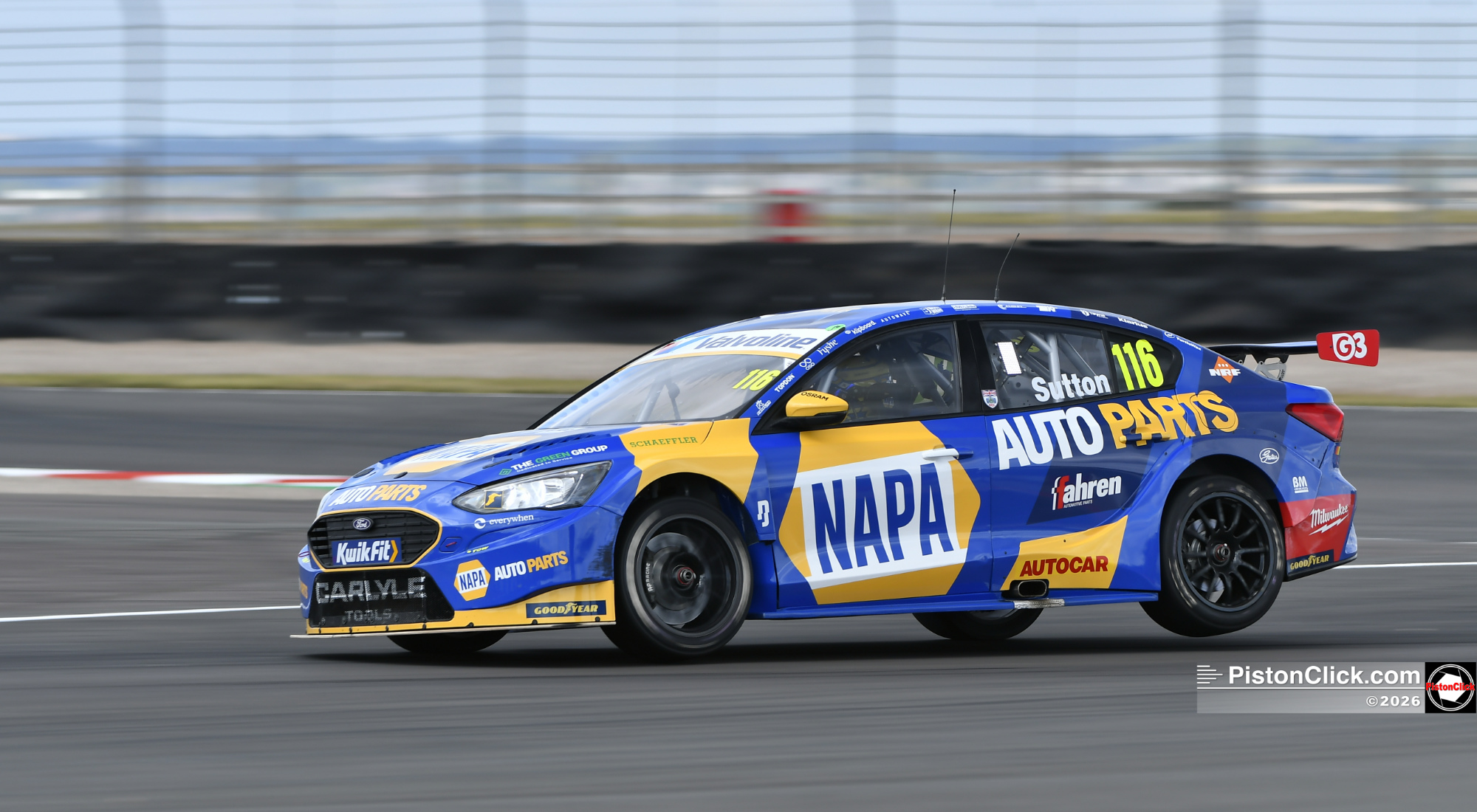
Next Generation Touring Car
NGTC is the official set of technical regulations that defines how all cars in the BTCC must be built. Introduced by the championship organisers (TOCA) in 2011, these rules were designed to drastically cut the costs of building and running a competitive touring car while maintaining high safety standards and close racing. Whispers in the paddock suggest a new two-car build could cost over £1.2m, ouch!
Case Study: How Plato Racing Won and Collapsed in 48 Hours
Plato Racing is the perfect case study because it did everything right and still failed.
Plato Racing’s story began in 2025 when Jason Plato established a new company, initially registered as Jason Plato Motorsport Ltd, with the ambitious aim of creating a two-car British Touring Car Championship operation. The company was later renamed Plato Racing and partnered with RML to develop and build two Mercedes-AMG A35 Saloons for the 2026 BTCC season. Cataclean Global Ltd became the team’s major commercial backer, supporting the project.
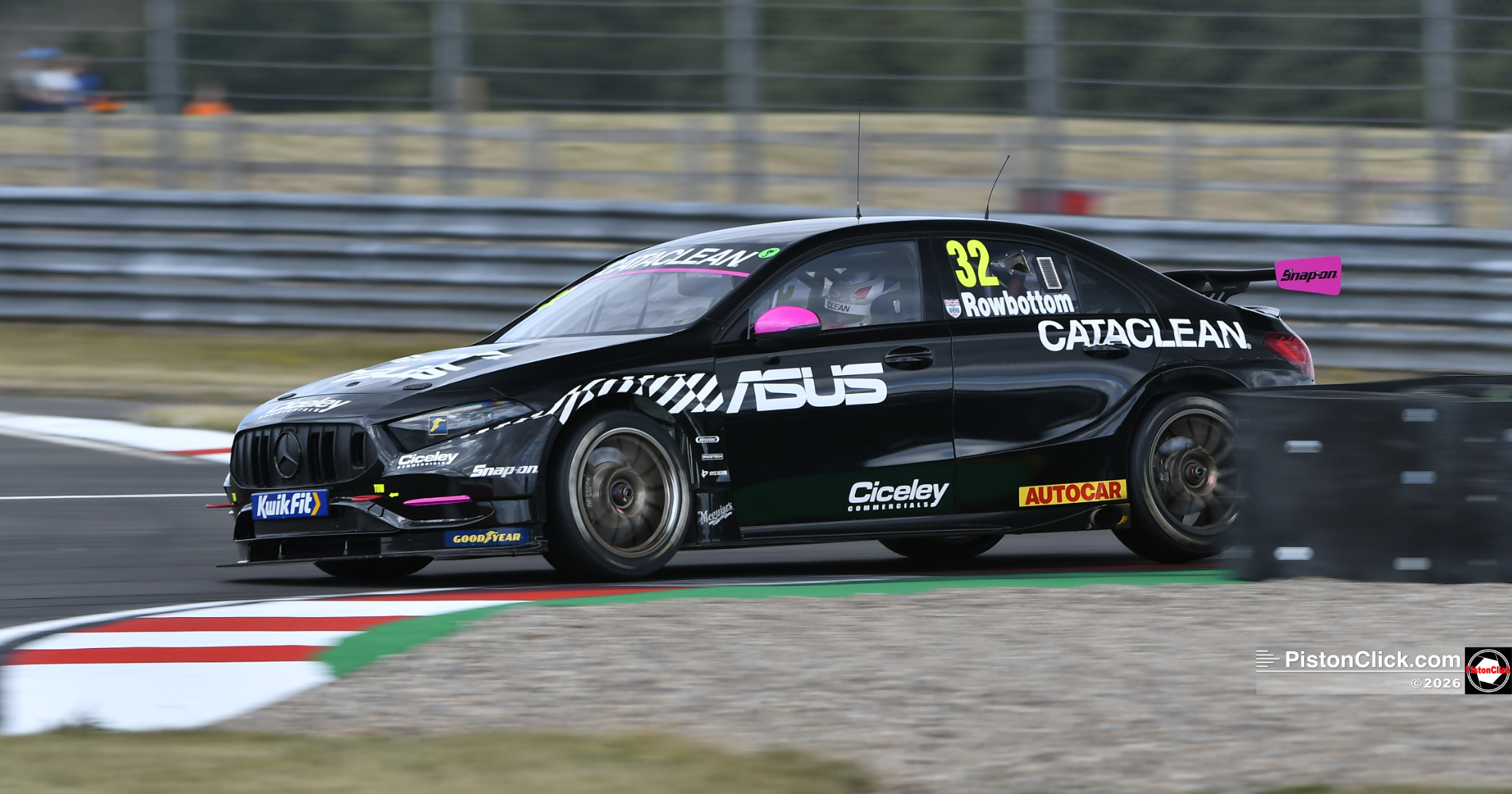
Dan Rowbottom, and Adam Morgan were selected as the drivers. On 30 March 2026, Cataclean registered a charge against Plato Racing, giving it security over the company’s assets, and on 20 April it became the company’s majority shareholder. The scale of the financial commitment subsequently became apparent, with the company generating around £545,073 in turnover but accumulating approximately £1.38 million in overheads, resulting in an operating loss of about £835,097.
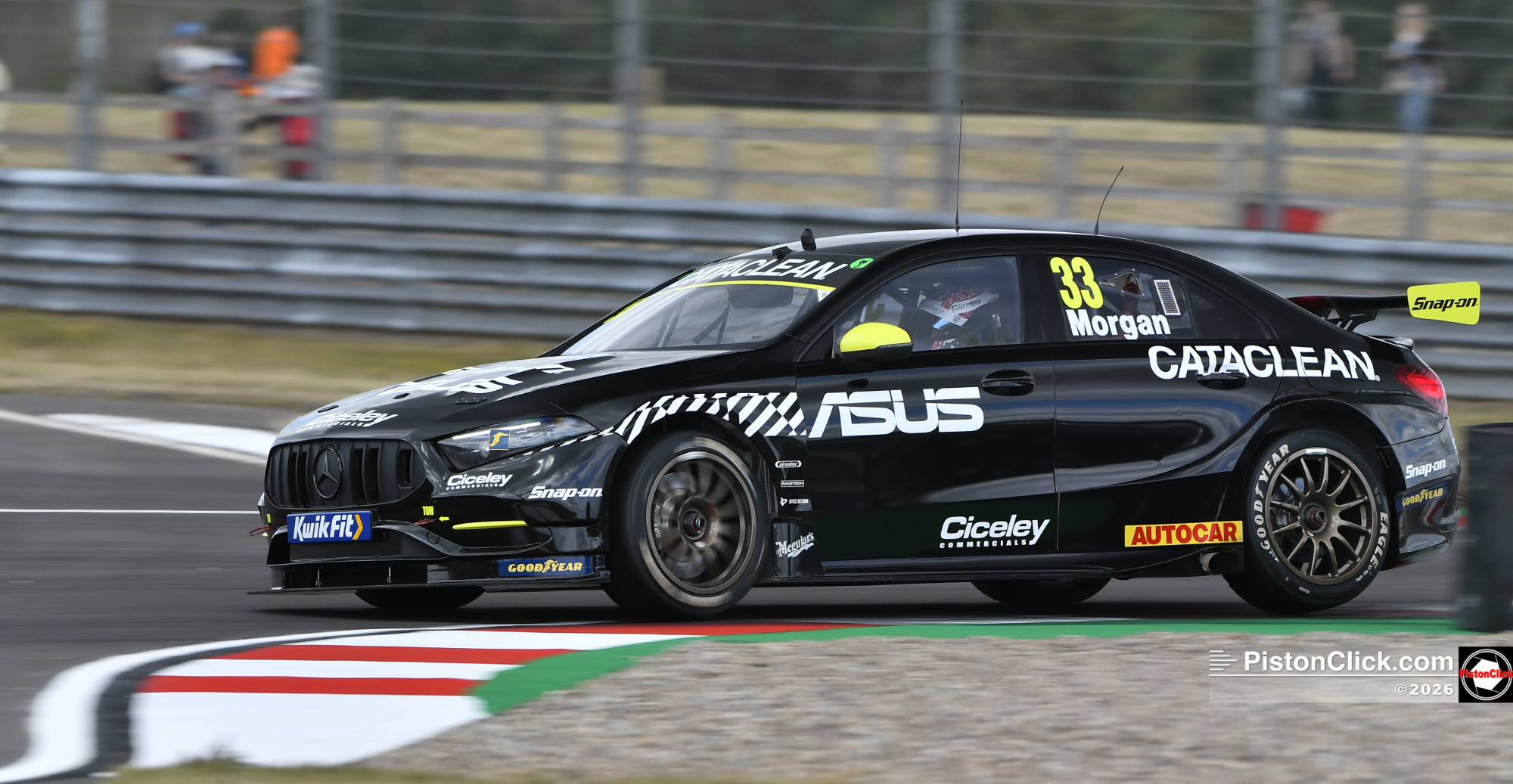
Financial Difficulties
Despite the financial difficulties, the racing operation was making progress. The new Mercedes cars became increasingly competitive during the season, culminating in Plato Racing’s first BTCC victory with Adam Morgan at Knockhill in August. However, only days after that breakthrough, the company’s financial problems became public.
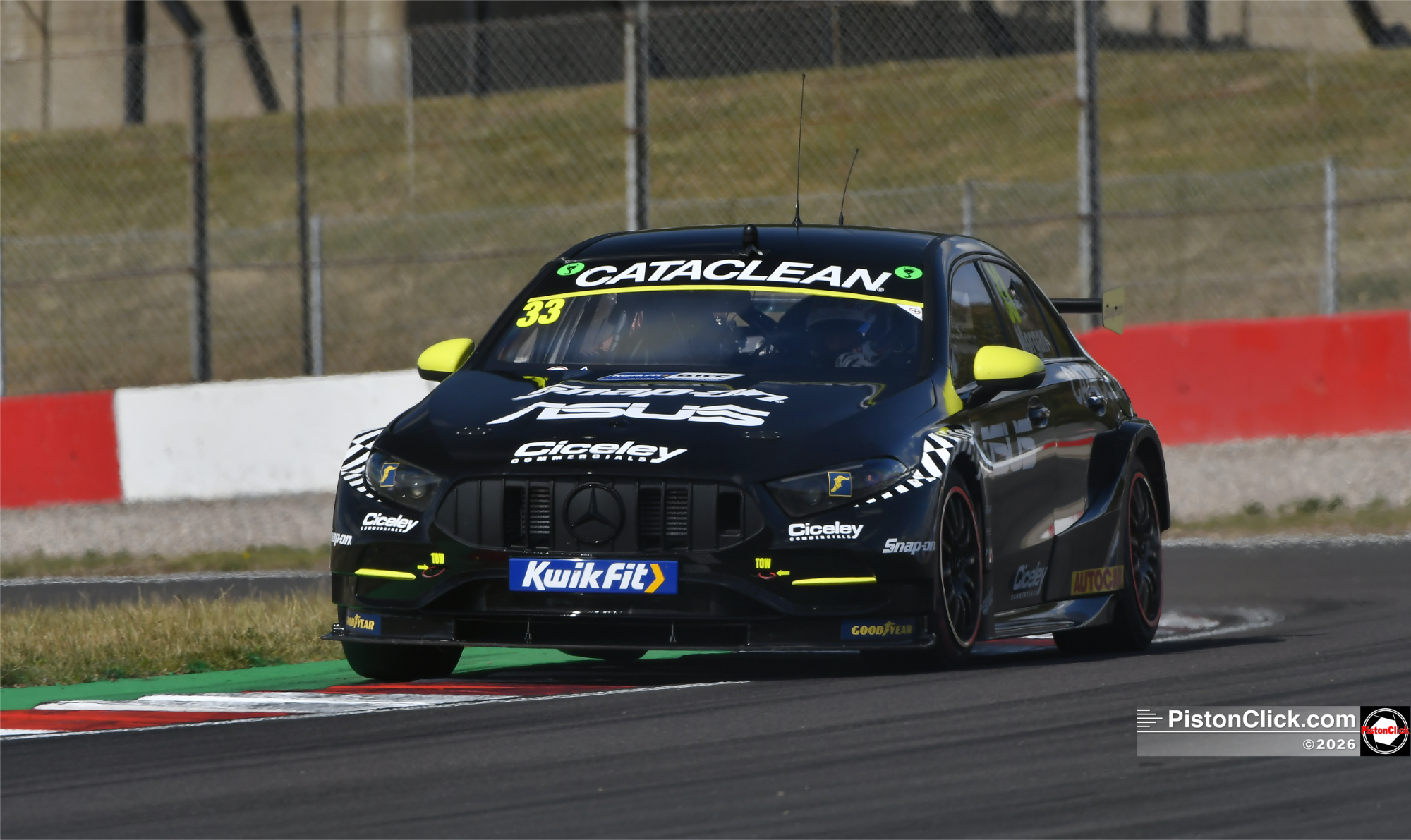
Cataclean, as both majority shareholder and secured creditor, applied for administrators to be appointed. On 12 August 2026, James Varney and Simon Bonney of Arafino Advisory were appointed as joint administrators of Plato Racing Ltd. The administrators subsequently put the racing operation up for sale, including the Mercedes cars, equipment, infrastructure, intellectual property and commercial relationships.
The figures released by the administrators show that the fundamental problem was the gap between the team’s income and the cost of running the operation, although the available documentation does not establish that any single contract or event caused the collapse.
Administration
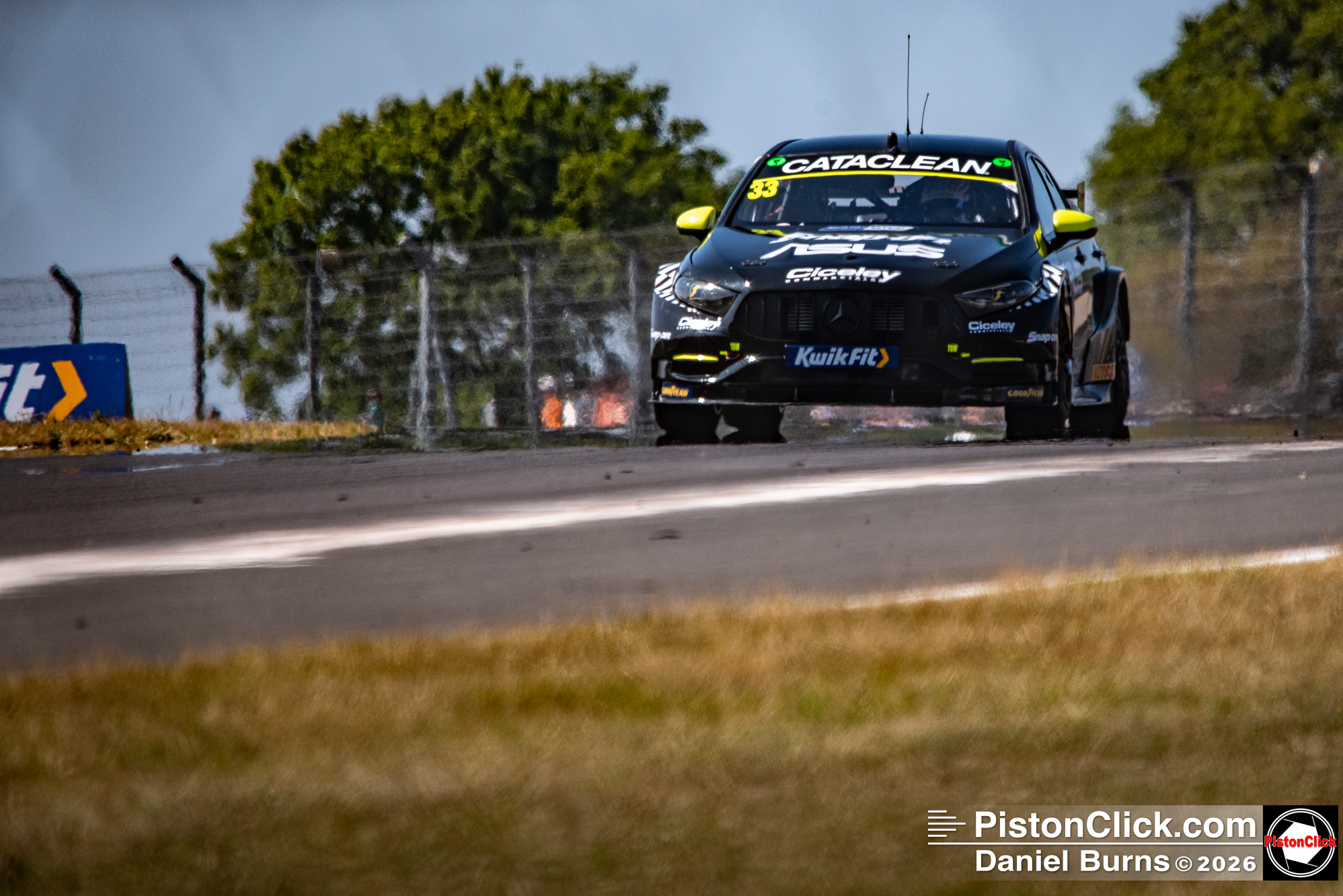
Importantly, the administration does not necessarily mean the end of the BTCC project. The value of the cars and infrastructure, together with the team’s improving competitiveness, means there is a viable racing operation for another party to acquire. The team was subsequently set to continue under the CPRL identity, with a new management structure and without Jason Plato’s further involvement in its management or ownership.
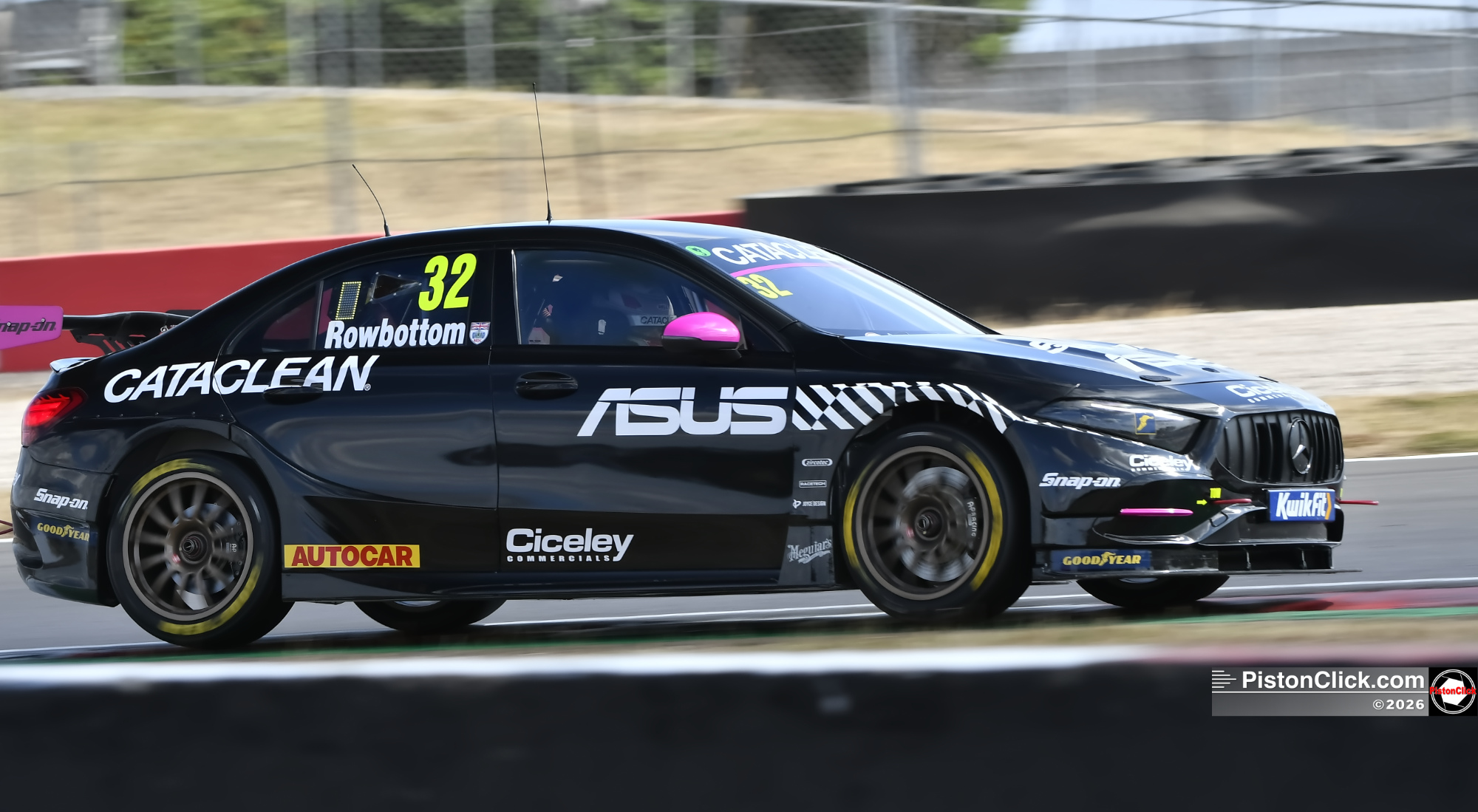
The Plato Racing collapse is therefore less a story of a racing team failing on track and more one of an ambitious new operation running out of financial headroom. It had invested heavily in creating a professional two-car BTCC team from scratch, but with approximately £1.38 million of overheads against £545,073 of turnover, the business was unable to sustain those costs. The eventual administrators’ report should reveal more about the company’s creditors and the precise circumstances behind its financial failure.
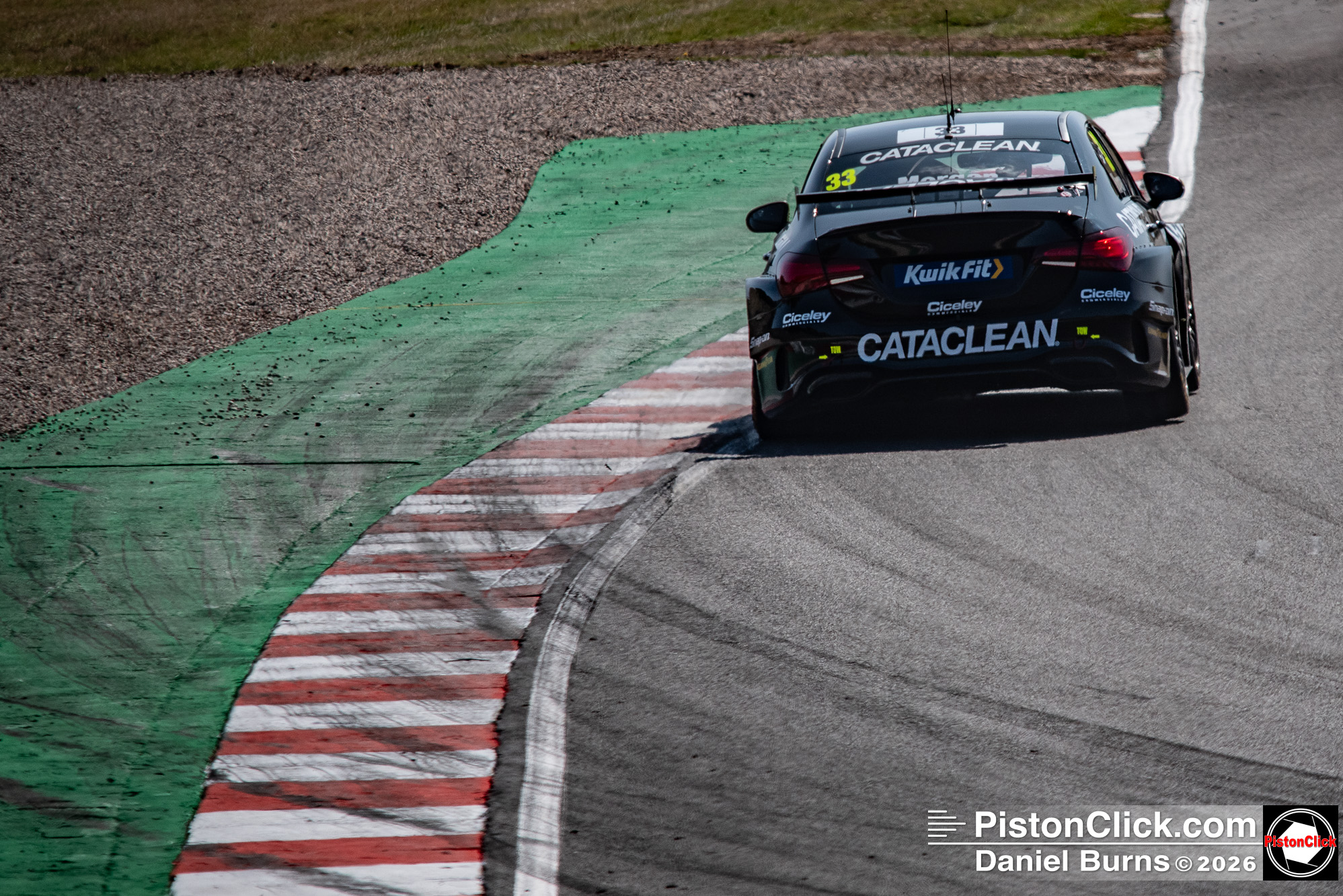
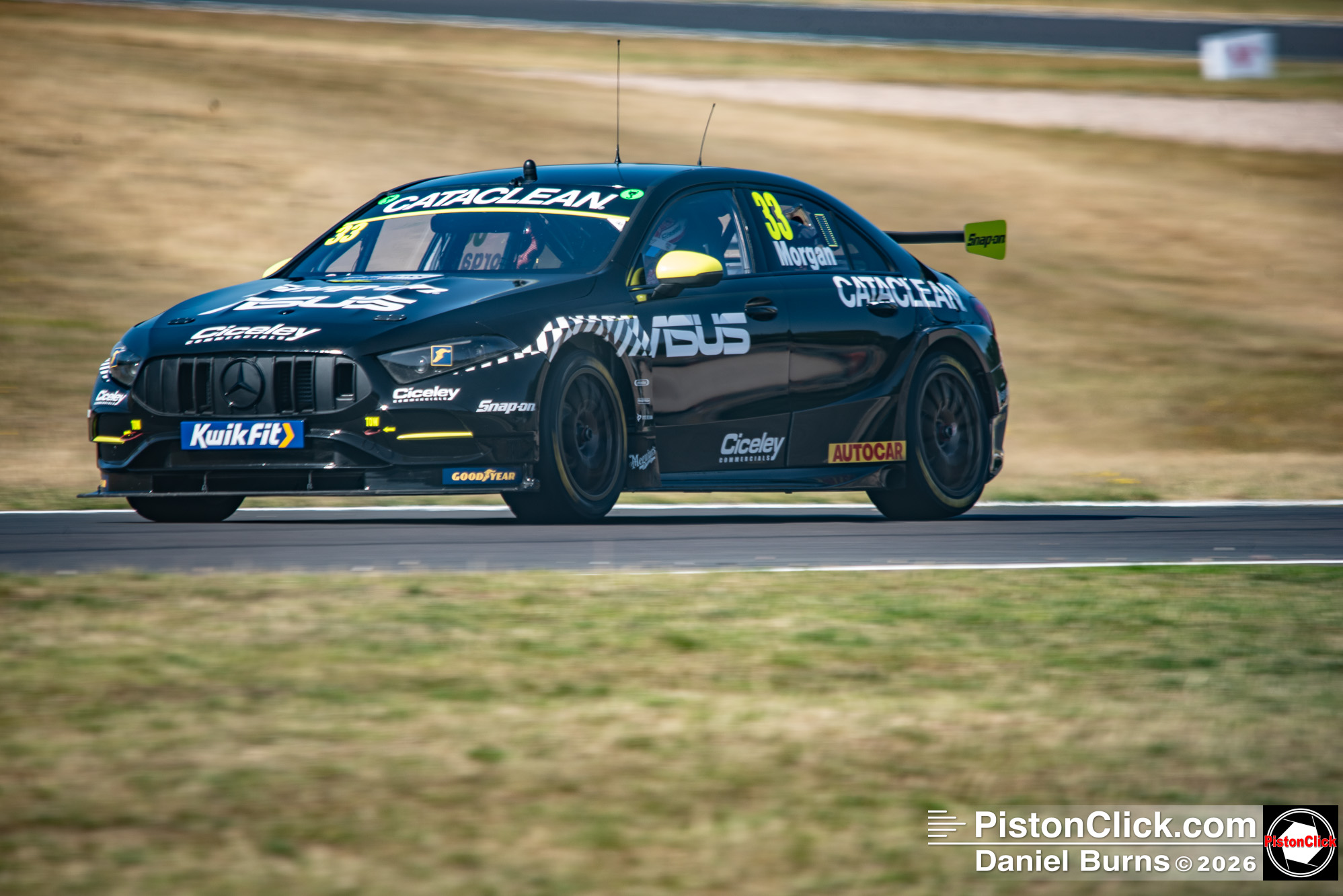
For the Donington Park rounds the team ran as the CPRL Racing Team, with Cataclean providing interim funding to keep the two Mercedes-AMG A35s of Rowbottom and Morgan on track. Founder Jason Plato departed the operation, with Dave Kelly now appointed as Team Principal as the team seeks new investment to complete the 2026 season.
Jason Platon statment
Earlier this week, I learned that my involvement with the company and the racing operation that I created back in July 2025 had been terminated. I was removed from my positions as CEO, Director and Team Principal without warning, explanation or discussion. The decision has left me stunned and deeply unsettled.
My 26-year driving career in the British Touring Car Championship from 1997 to 2022, and my return to the grid with Plato Racing this season after the struggles I faced in retirement, mean the world to me. I remain truly grateful for the opportunities, the success, and the relationships formed with sponsors, colleagues, rival teams and, of course, the fans along the way.
To establish a brand-new BTCC team from nothing – not a nut, bolt or even a tie-wrap to its name – in under six months, and to secure pole position on our debut at Donington Park, was a significant achievement. Against considerable odds the team then delivered exceptionally strong results at Knockhill two weeks ago, taking first and second places in the opening race followed by two further podium finishes.
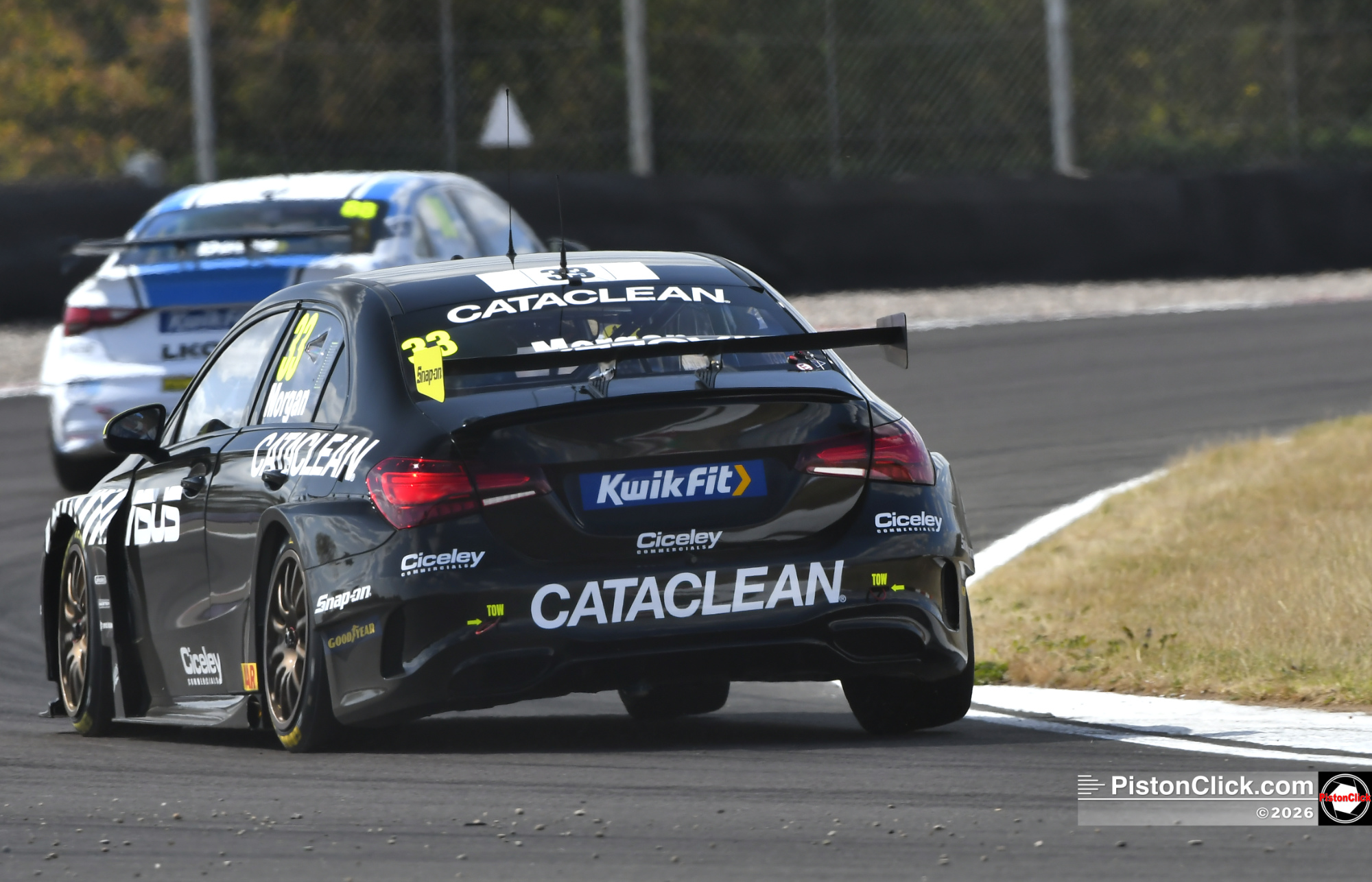
The story of Plato Racing versus Cataclean remains unresolved and the exact circumstances surrounding JP’s removal from the team will likely never be fully understood. The future of the new CPRL team is uncertain but time will tell. One thing is certain: after the Donington Rounds the CPRL team was highly competitive and its disappearance would be a significant loss to the BTCC paddock. Their two wins from three races speak for themselves.
Why 2026 Is the Perfect Storm and What 2027 Must Fix
Why is this all happening now? Because 2026 is a lame-duck year caught between two eras.
TOCA boss Alan Gow has confirmed a new ruleset for 2027 that will be a cost-saving evolution of NGTC, not making any existing car obsolete. But if you are a team owner, do you spend £600k building a new car for 2026 that might need to be rebuilt for 2027? Most are choosing to sit out, which is exactly what Un-Limited did, stating it will target 2027.
Add in the TBL system you can understand their thought process. When One Motorsport paused, when Un-Limited sat out their licences went back into the pot. Fewer licences in circulation means lower asset value for every other team trying to raise money against theirs.
The BTCC has always survived cycles like this, but to fix it for 2027, TOCA needs to do three things: cap the new-build cost, reduce dependency on a single title sponsor by allowing more flexible commercial inventory, and give teams cost certainty on engines and parts for a full five-year cycle. Otherwise, the grid will continue to be decided not by who is fastest, but by whose sponsor pays out last.
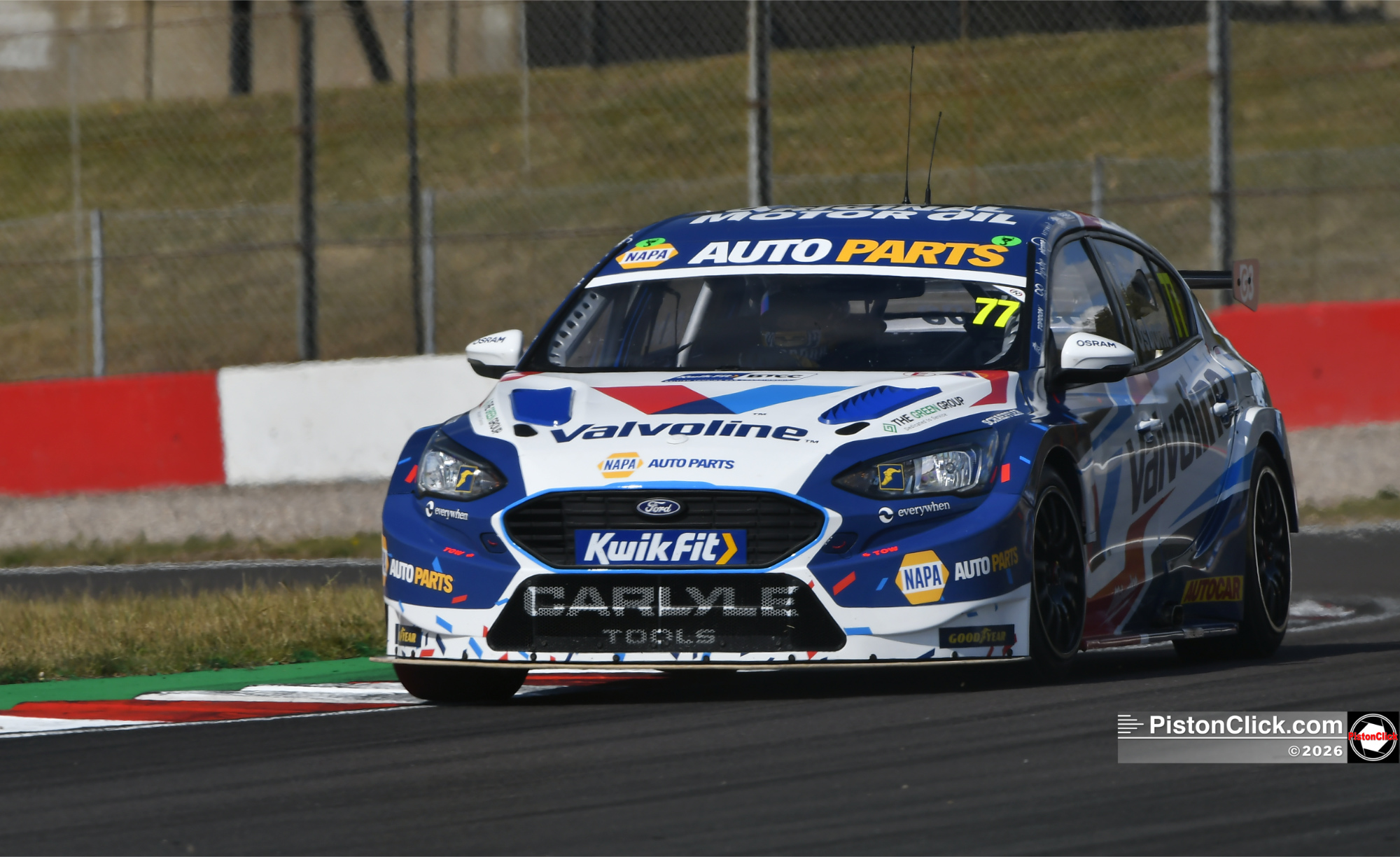
2027 will be a pivotal year for the BTCC but let’s look back at the present. Plato Racing demonstrated that a new independent team can still win in the BTCC. They also showed that it’s possible to win on a Sunday and be in administration on Monday. Hopefully, the new 2027 NGTC will prevent this from happening again and allow the BTCC to return to packed grids and top-quality racing. I hope CPRL survives in the meantime and competes in the final rounds. Next lets look at what actually happened at BTCC Donington Park Rounds 19, 20 and 21.
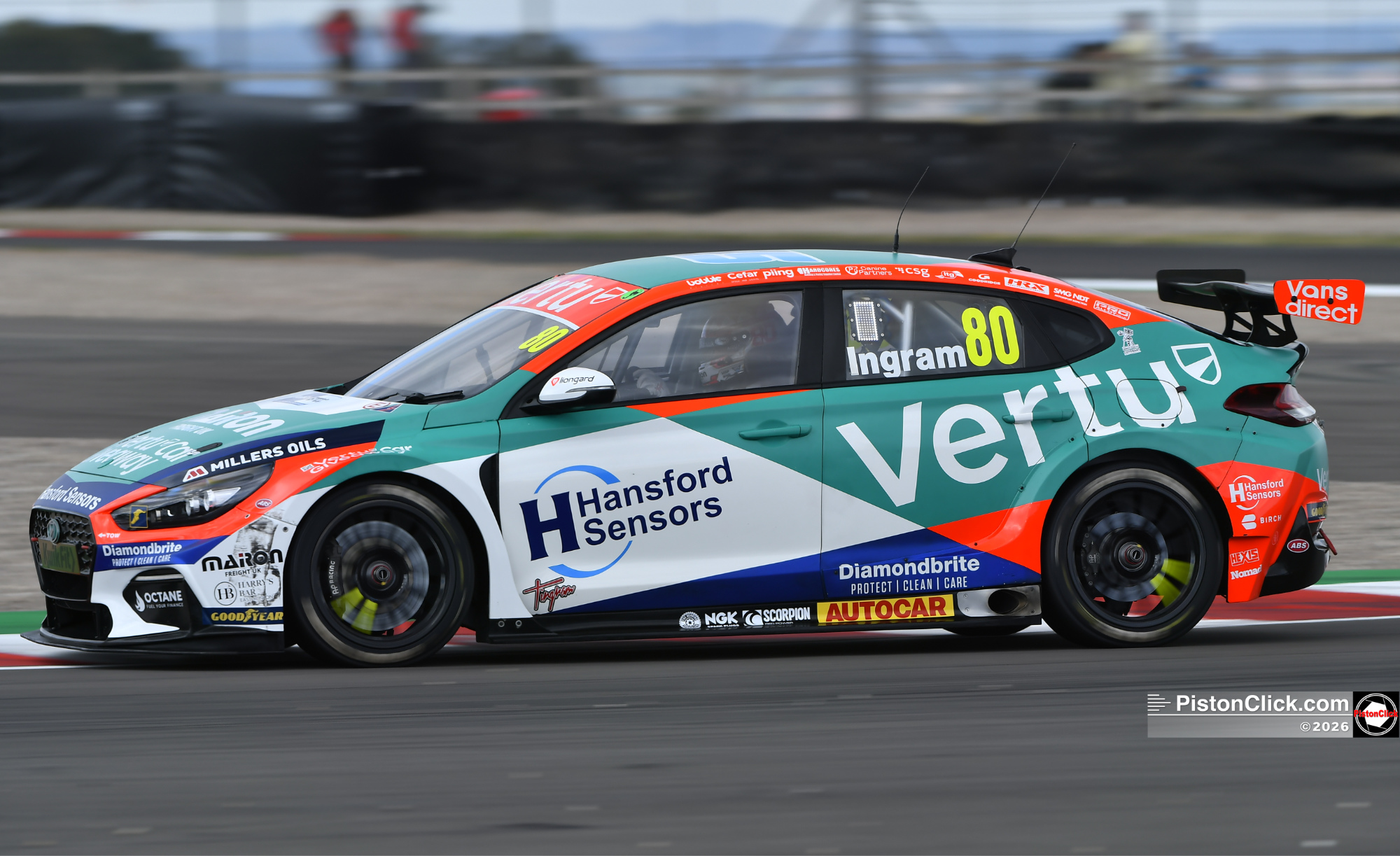
BTCC Donington Park Rounds 19, 20 and 21 Results
BTCC Donington Park GP – Qualifying Race
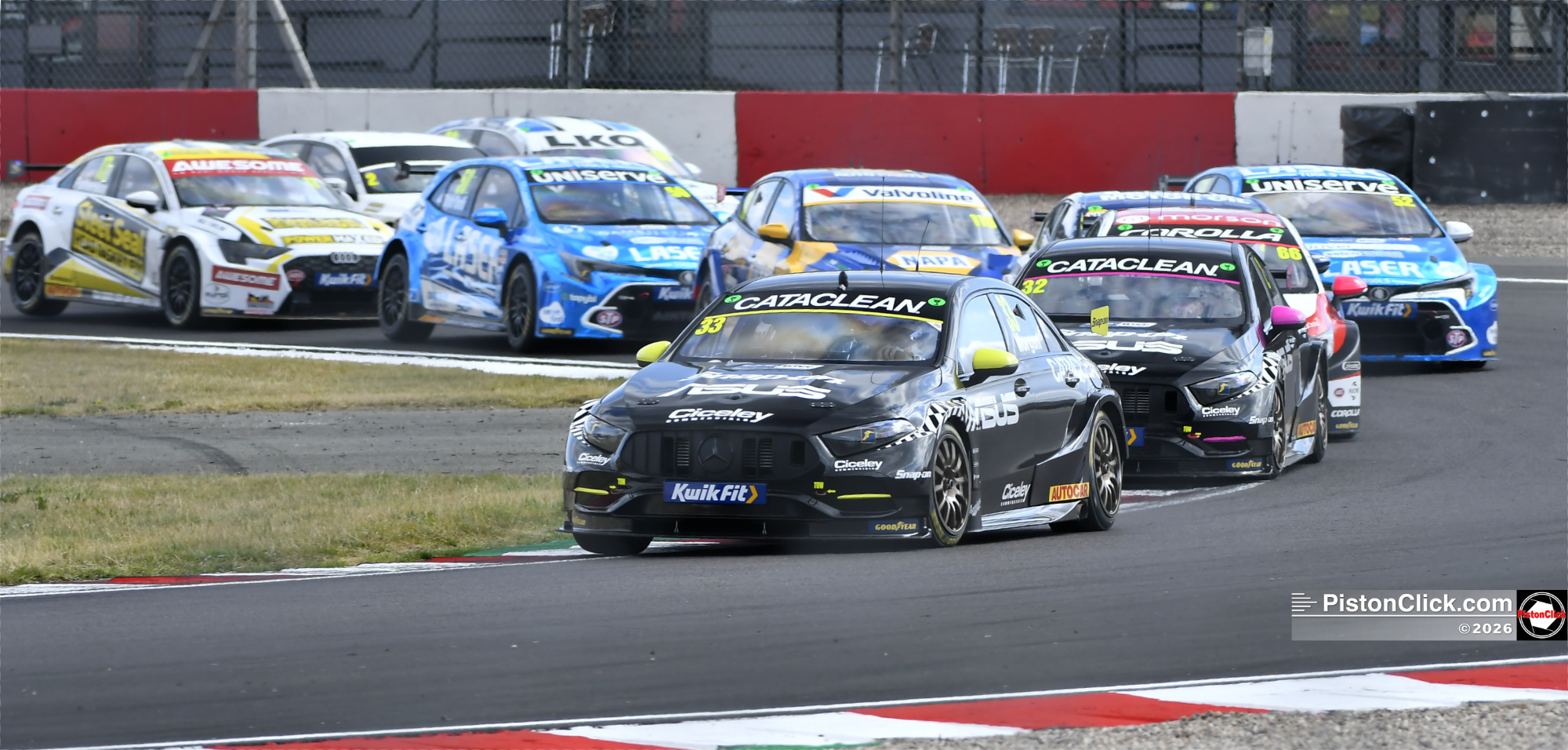
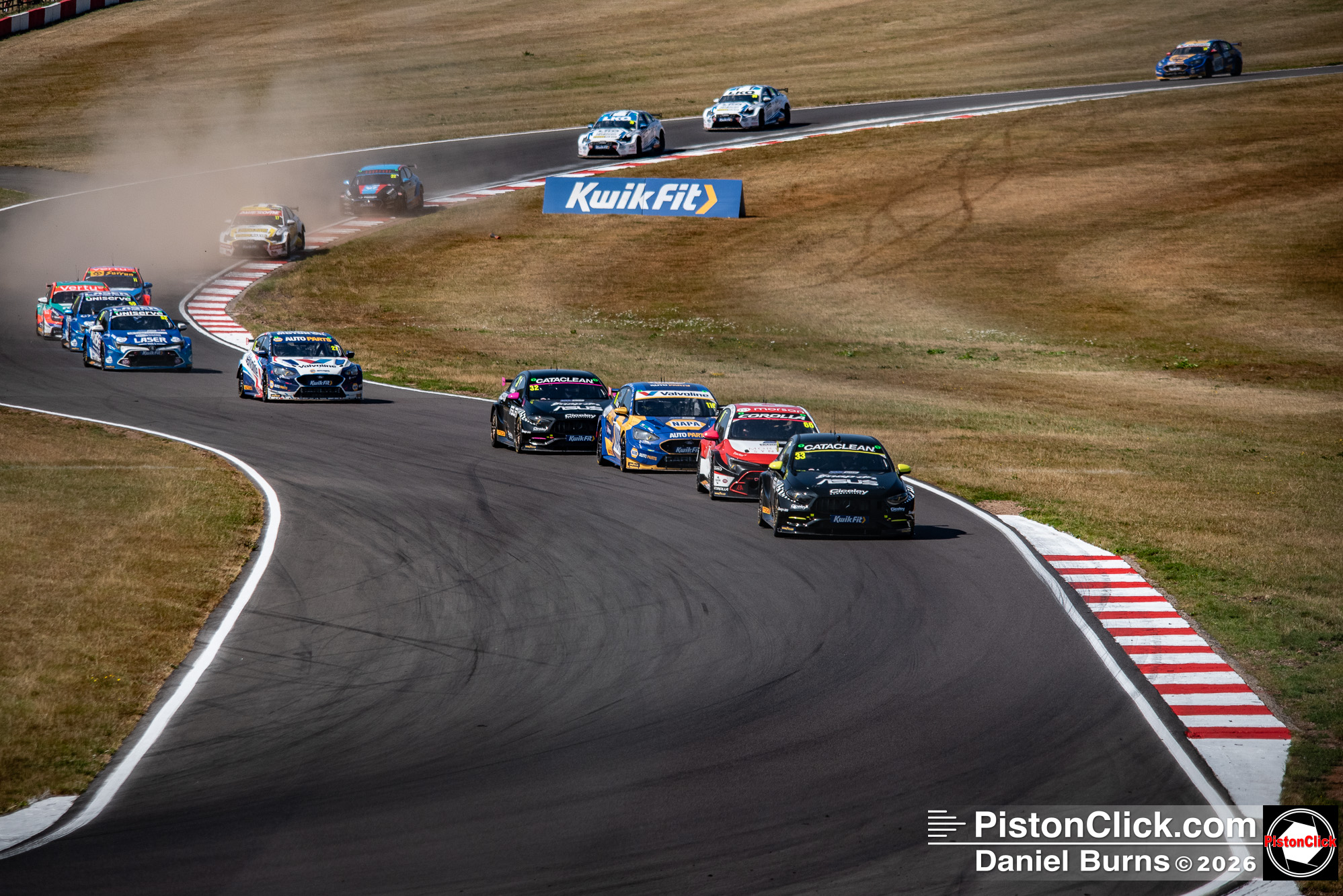
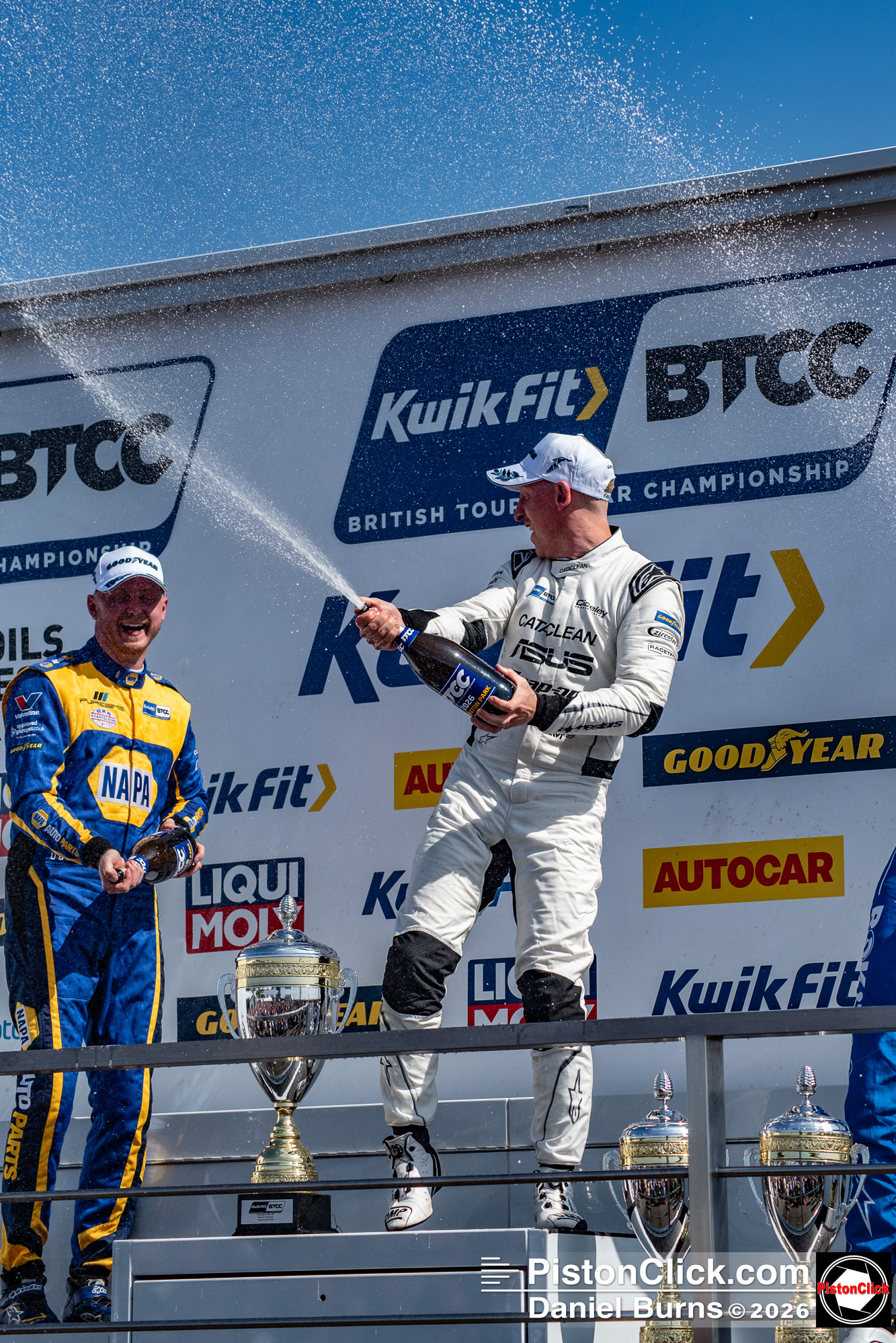
Adam Morgan delivered a remarkable performance at Donington Park, marking one of the most successful periods of his Kwik Fit BTCC career. Coming first in Saturday’s 11 lap Qualifying Race, Morgan secured pole position for Sunday’s first race. Over the weekend of 22–23 August, Morgan secured two championship race victories in his CPRL Mercedes, adding to his earlier season-first win at Knockhill.
| Pos | Driver | Team | Car | Gap |
| 1 | Adam Morgan | CPRL | Mercedes A35 Saloon | |
| 2 | Dan Rowbottom | CPRL | Mercedes A35 Saloon | 2.443 |
| 3 | Josh Cook | Speedworks Corolla Racing | Toyota Corolla GR Sport, | 3.033 |
| 4 | Ash Sutton | NAPA Racing UK | Ford Focus Titanium | 3.987 |
| 5 | Dan Cammish | NAPA Racing UK | Ford Focus Titanium | 6.190 |
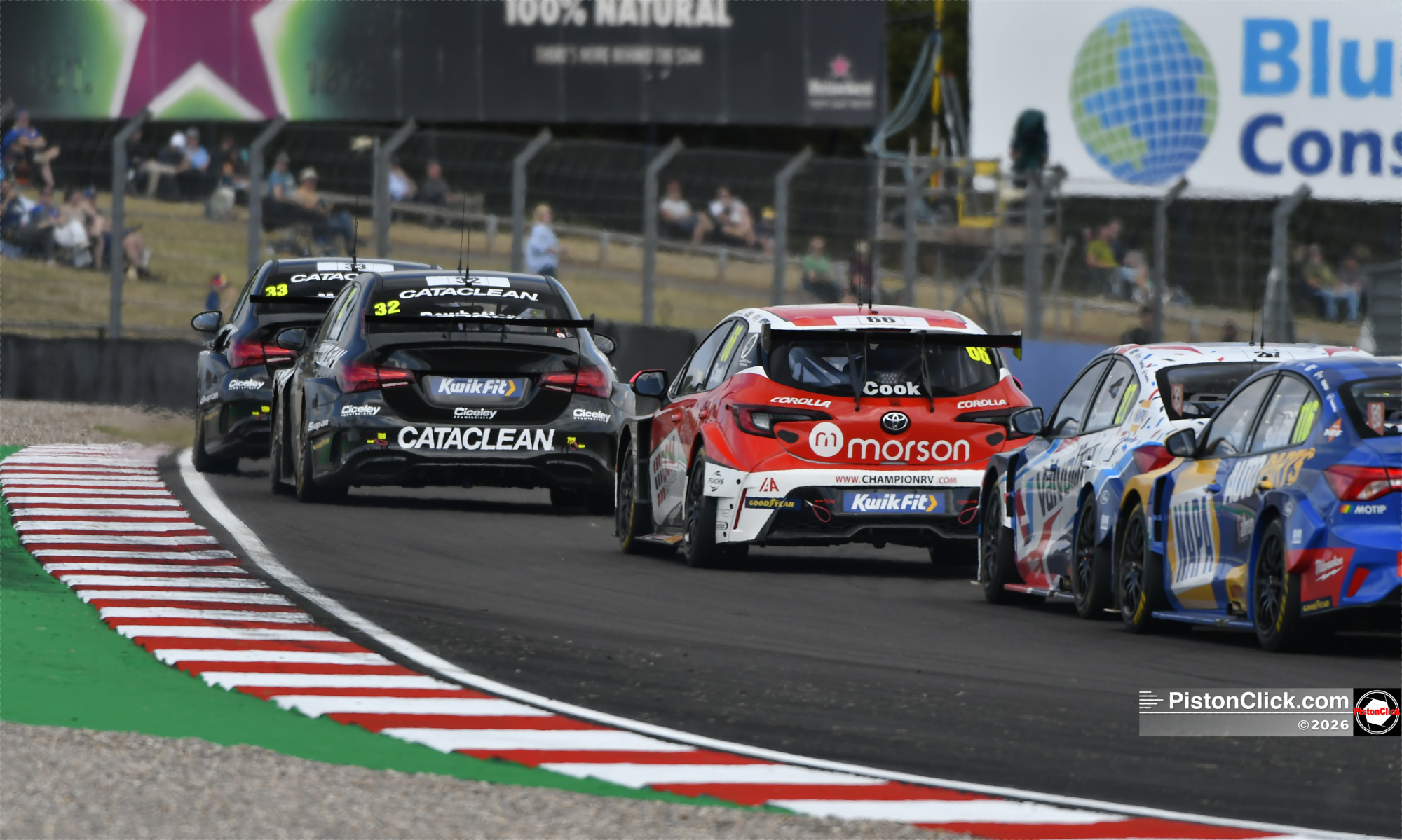
Manufacturers’ Constructors’ and Teams’ championships.
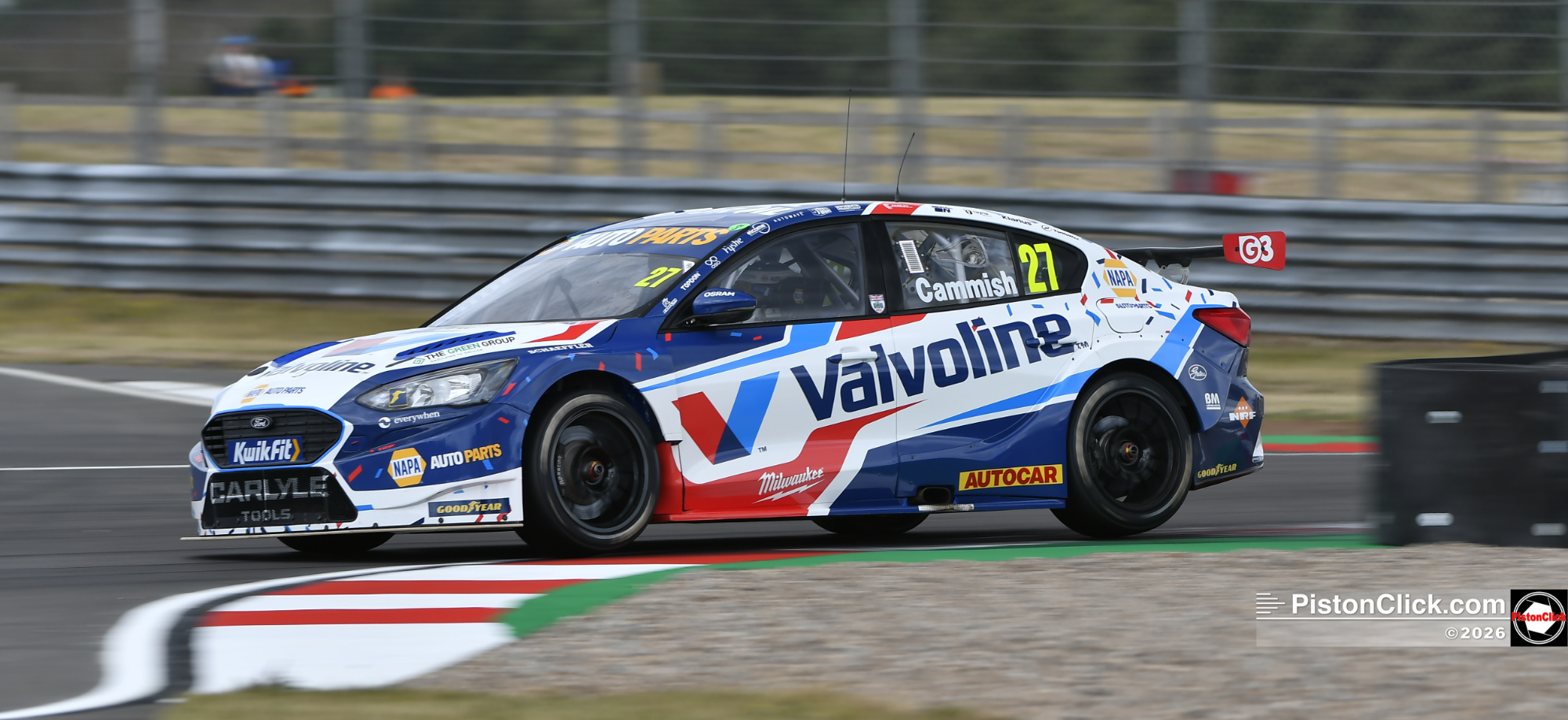
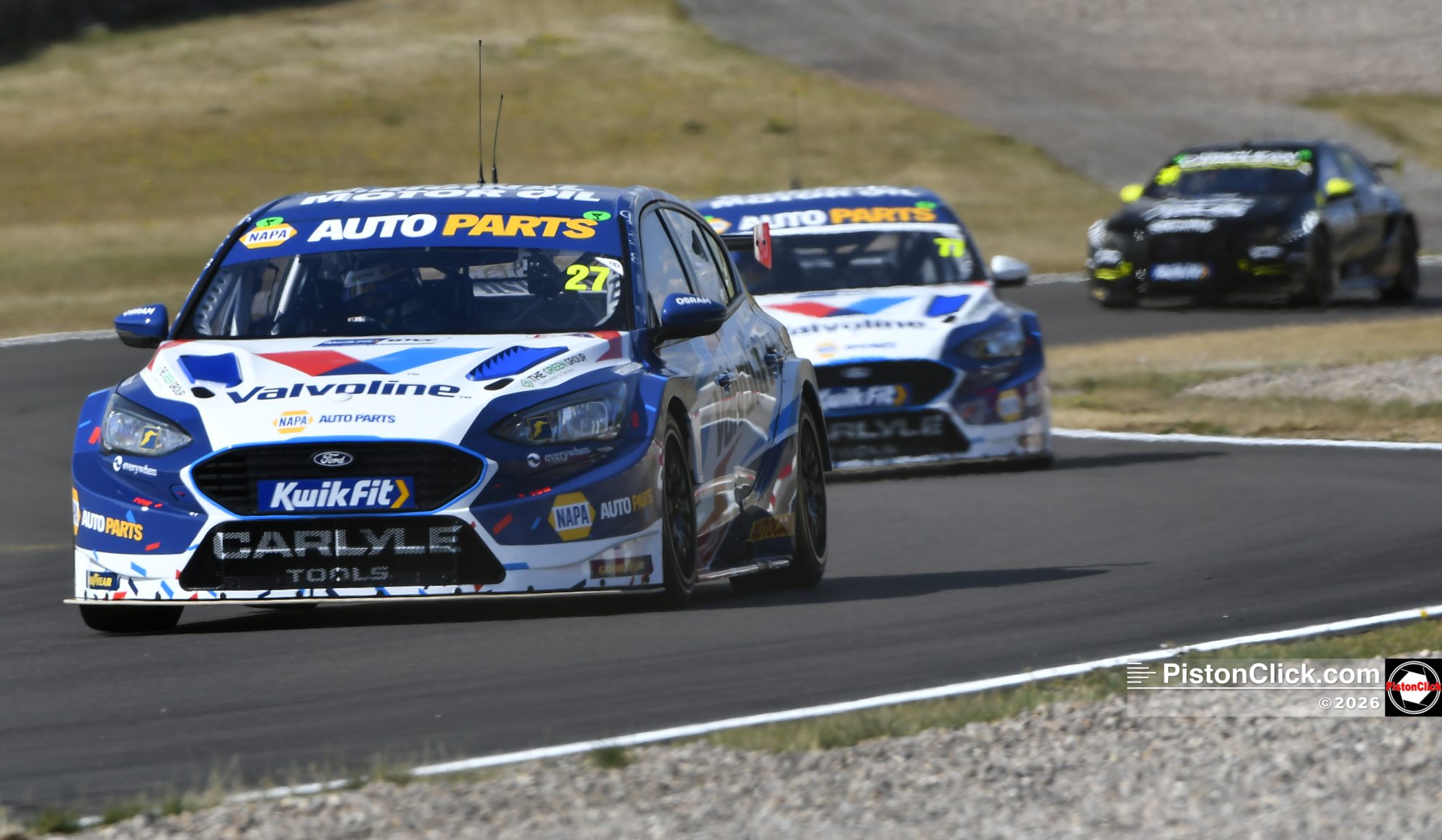
Dan Cammish also enjoyed a significant weekend, claiming his second win of the season in his NAPA Racing UK Ford Focus Titanium in the great looking Valvoline livery. This triumph tightened his championship battle, bringing him within five points of second place Tom Ingram in the overall Drivers’ standings.
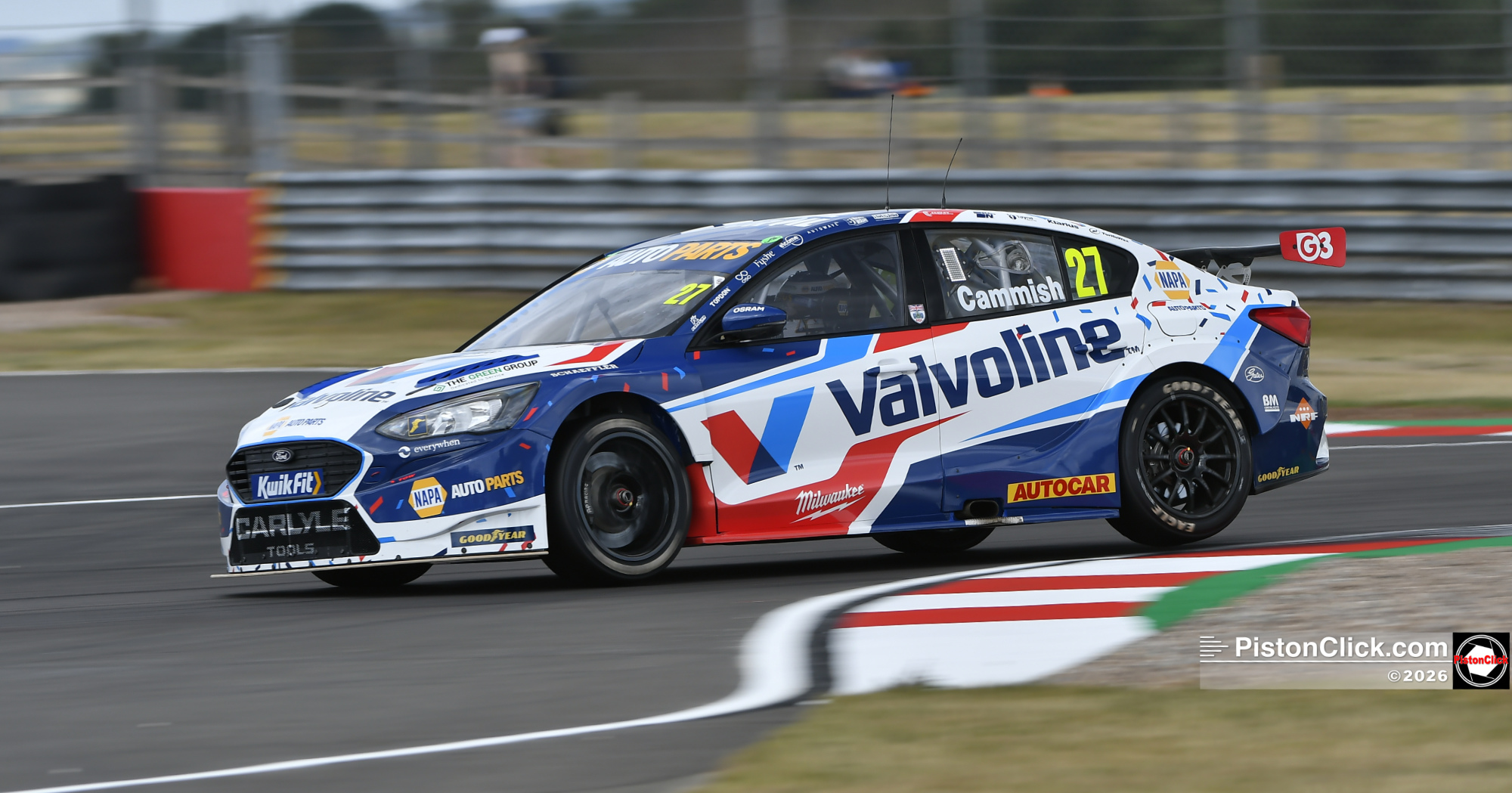
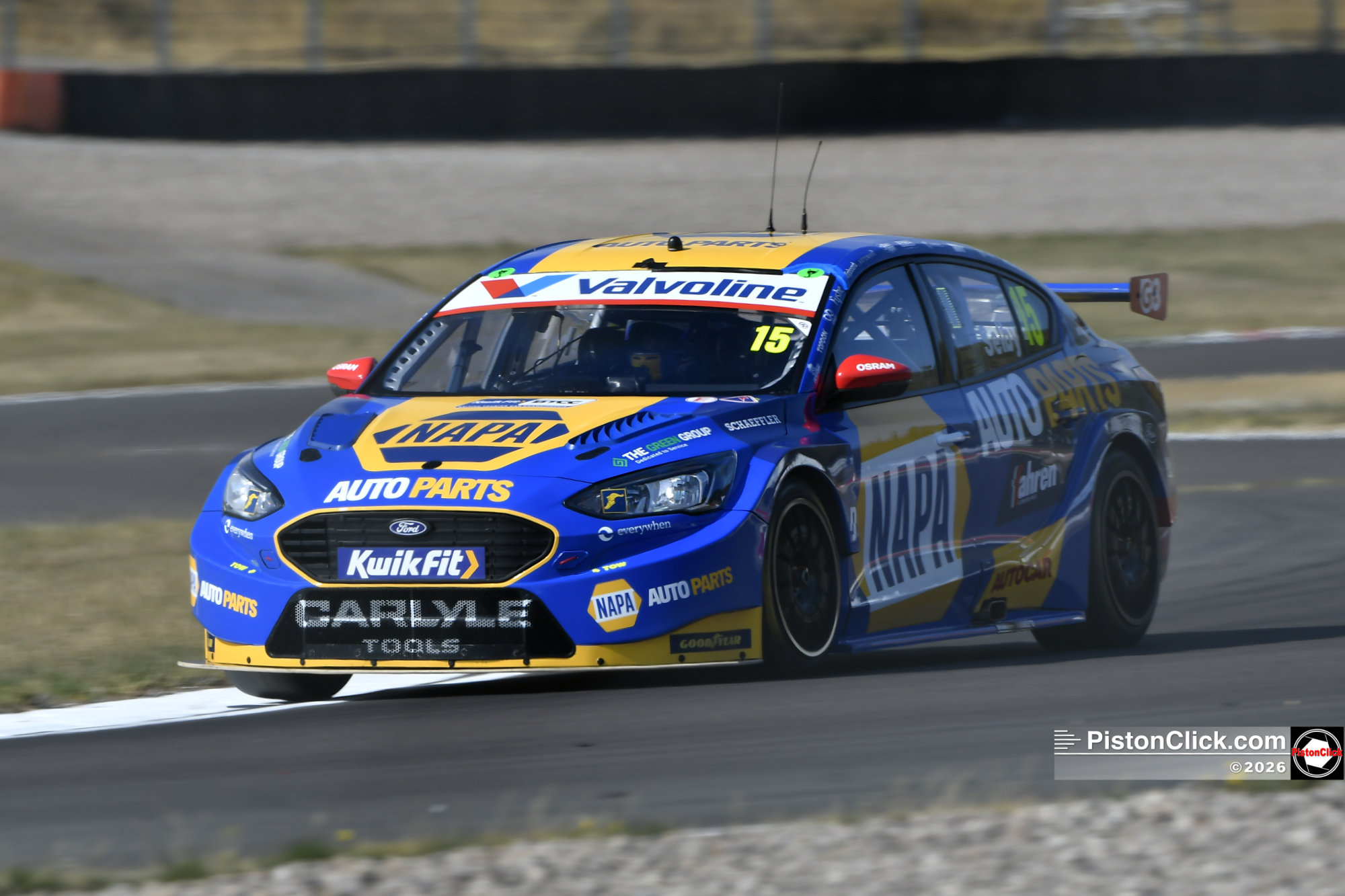
Meanwhile, Ash Sutton maintained a strong lead at the top with consistent points scoring, strengthening the position of his Alliance Racing/Ford and NAPA Racing UK teams in the Manufacturers’/Constructors’ and Teams’ championships.
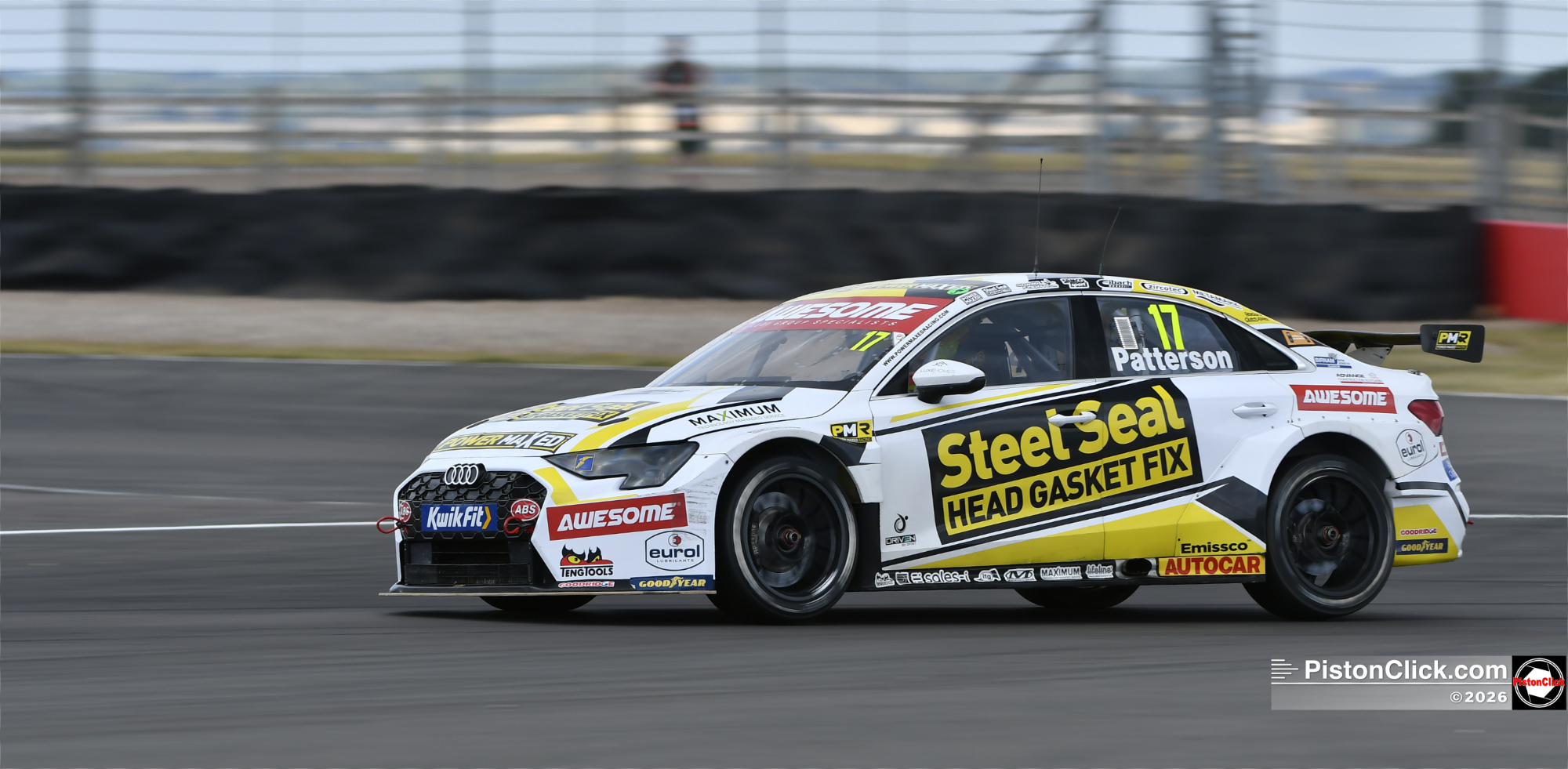
Power Maxed Racing continued its stellar season with its fleet of Audi A3 Saloons, as Mikey Doble leads the Independent Drivers’ standings, Dexter Patterson tops the Jack Sears Trophy, and LKQ Euro Car Parts with Power Maxed Racing heads the Independent Teams’ order.
BTCC Donington Park GP – Race 1
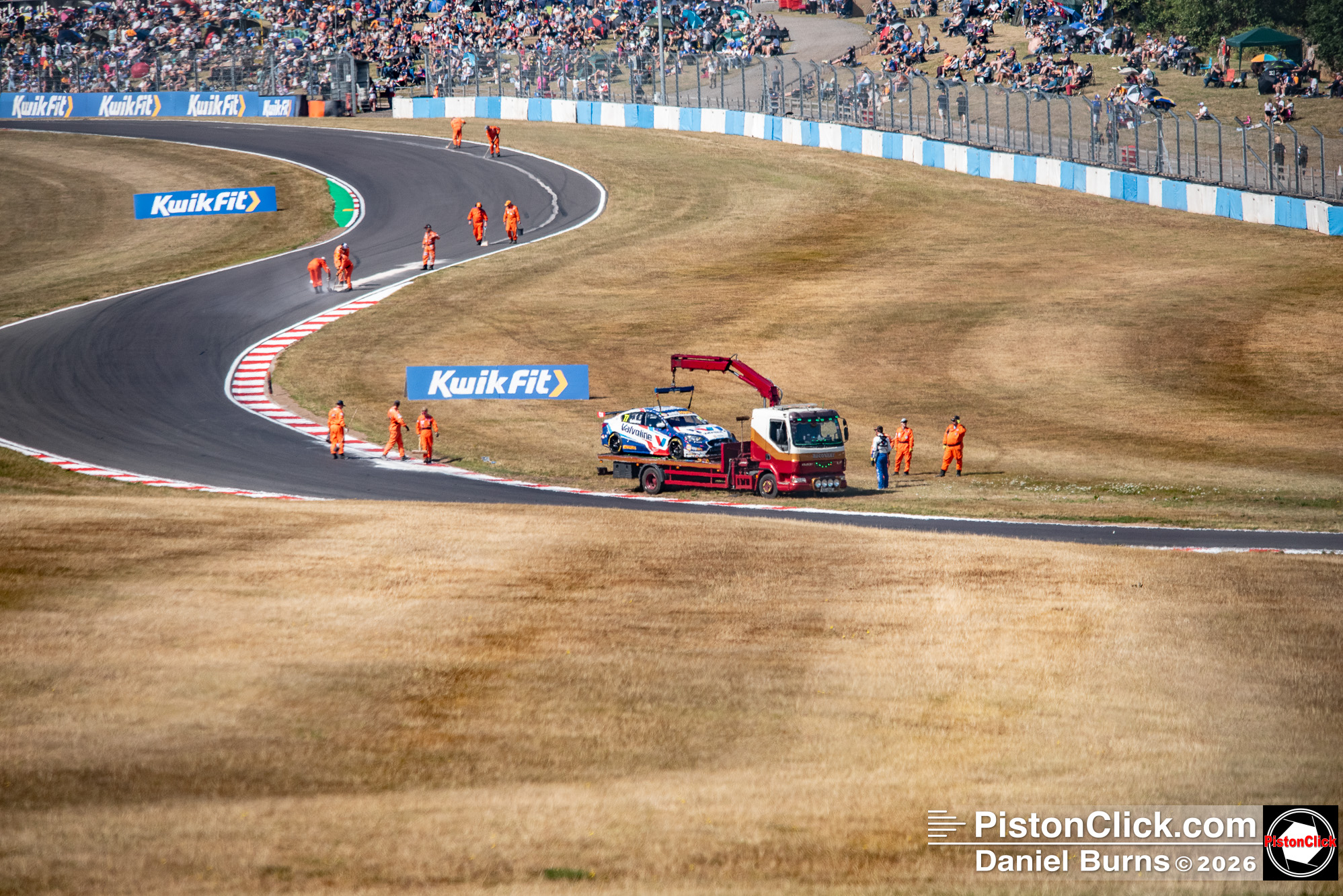
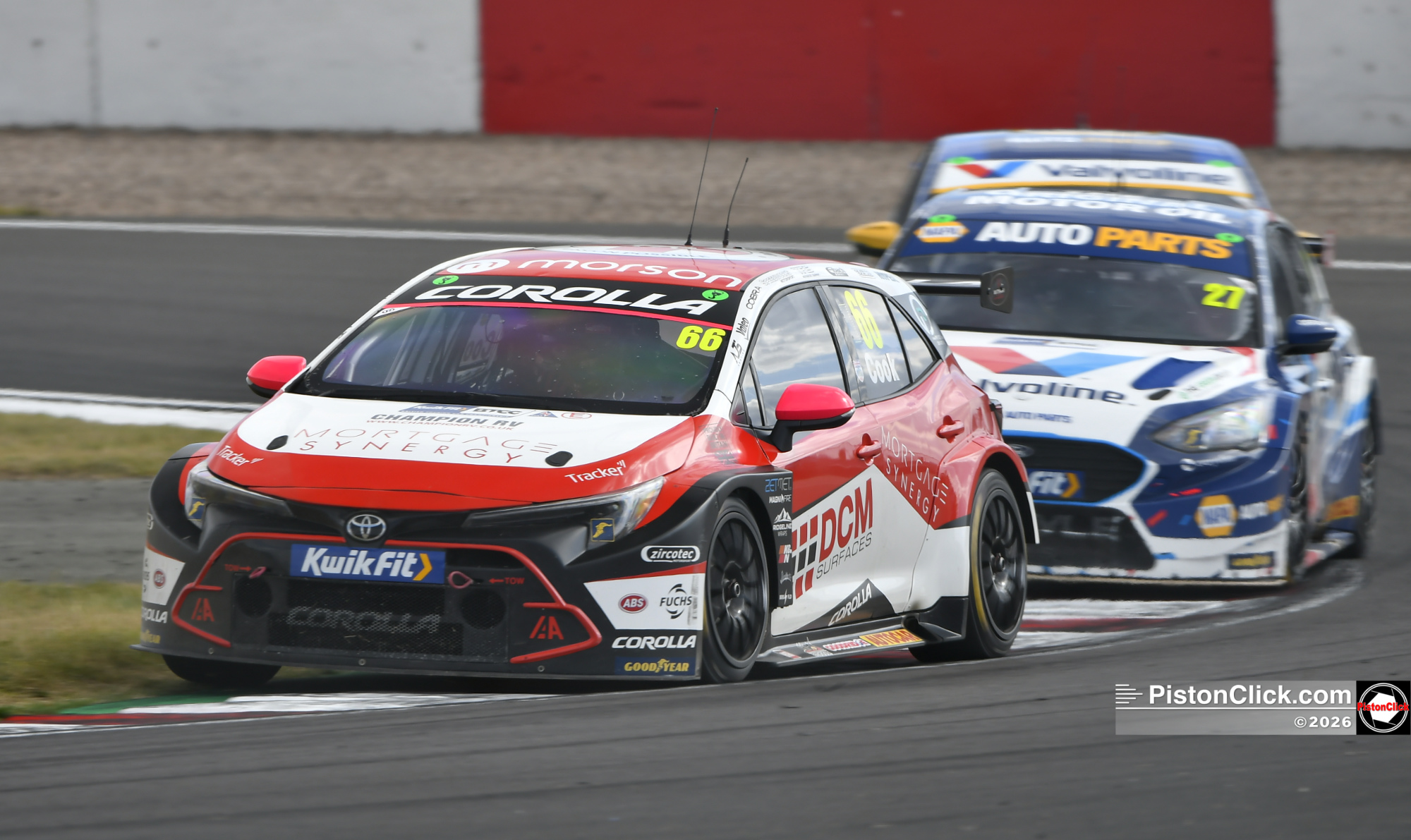
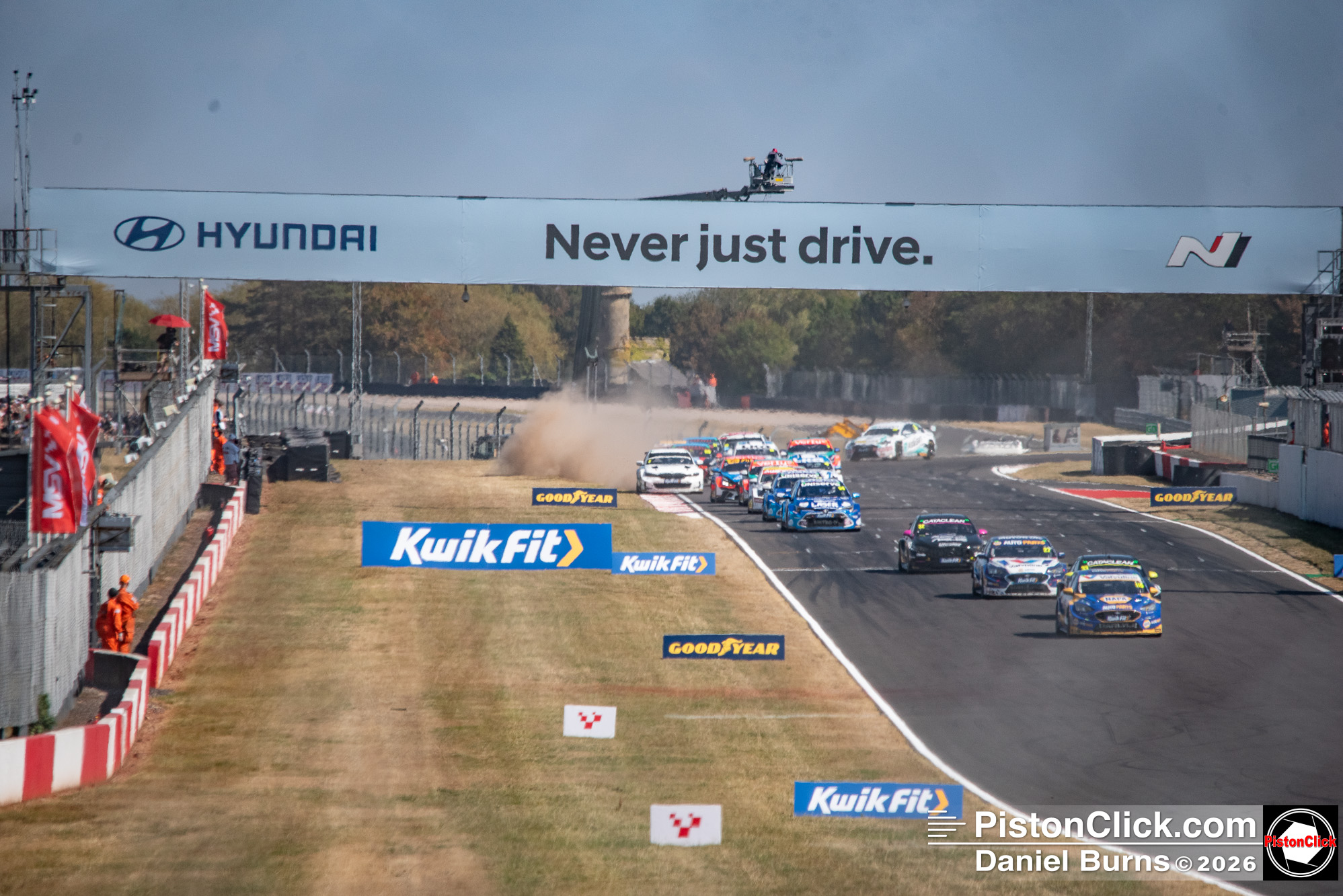
Race One saw Morgan convert his pole position into a commanding victory. A dramatic opening lap included Lewis Gilbert’s WSR BMW barrel-rolling off the circuit, though the driver was cleared after medical checks. Behind Morgan, Josh Cook initially held second before a throttle issue forced his Toyota Corolla to retire, allowing Sutton and Gordon Shedden to battle for podium places. Cammish fought through to secure fourth.
| Pos | Driver | Team | Car | Gap |
| 1 | Adam Morgan | CPRL | Mercedes A35 Saloon | — |
| 2 | Ash Sutton | NAPA Racing UK | Ford Focus Titanium | +2.733s |
| 3 | Gordon Shedden | Laser Tools Racing with MB Motorsport | Toyota Corolla GR Sport | +6.802s |
| 4 | Dan Cammish | NAPA Racing UK | Ford Focus Titanium | +8.478s |
| 5 | Dan Rowbottom | CPRL | Mercedes A35 Saloon | +8.953s |
BTCC Donington Park GP – Race 2
In Race Two, Cammish demonstrated his mastery at Donington’s Grand Prix layout, claiming his third career win at the circuit—more than any other current driver. After passing early leader Dan Rowbottom at the final corner, he fended off Sutton and Ingram to secure victory.
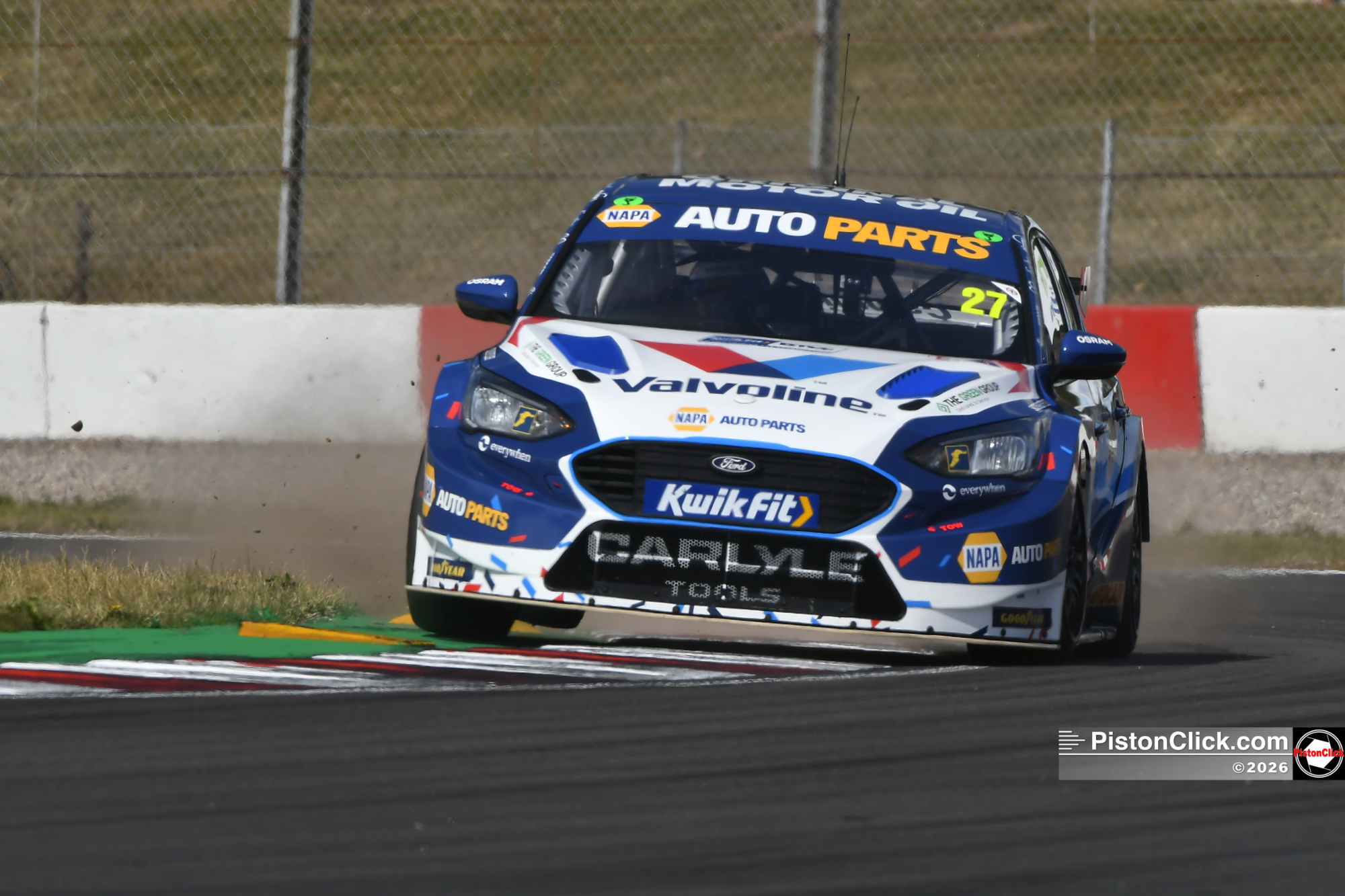
Rowbottom eventually slipped to fourth, ahead of Ricky Collard and an impressive Dexter Patterson, who once again triumphed in the Independents’ and Jack Sears Trophy classes.
| Pos | Driver | Team | Car | Gap |
| 1 | Dan Cammish | NAPA Racing UK | Ford Focus Titanium | — |
| 2 | Ash Sutton | NAPA Racing UK | Ford Focus Titanium | +0.437s |
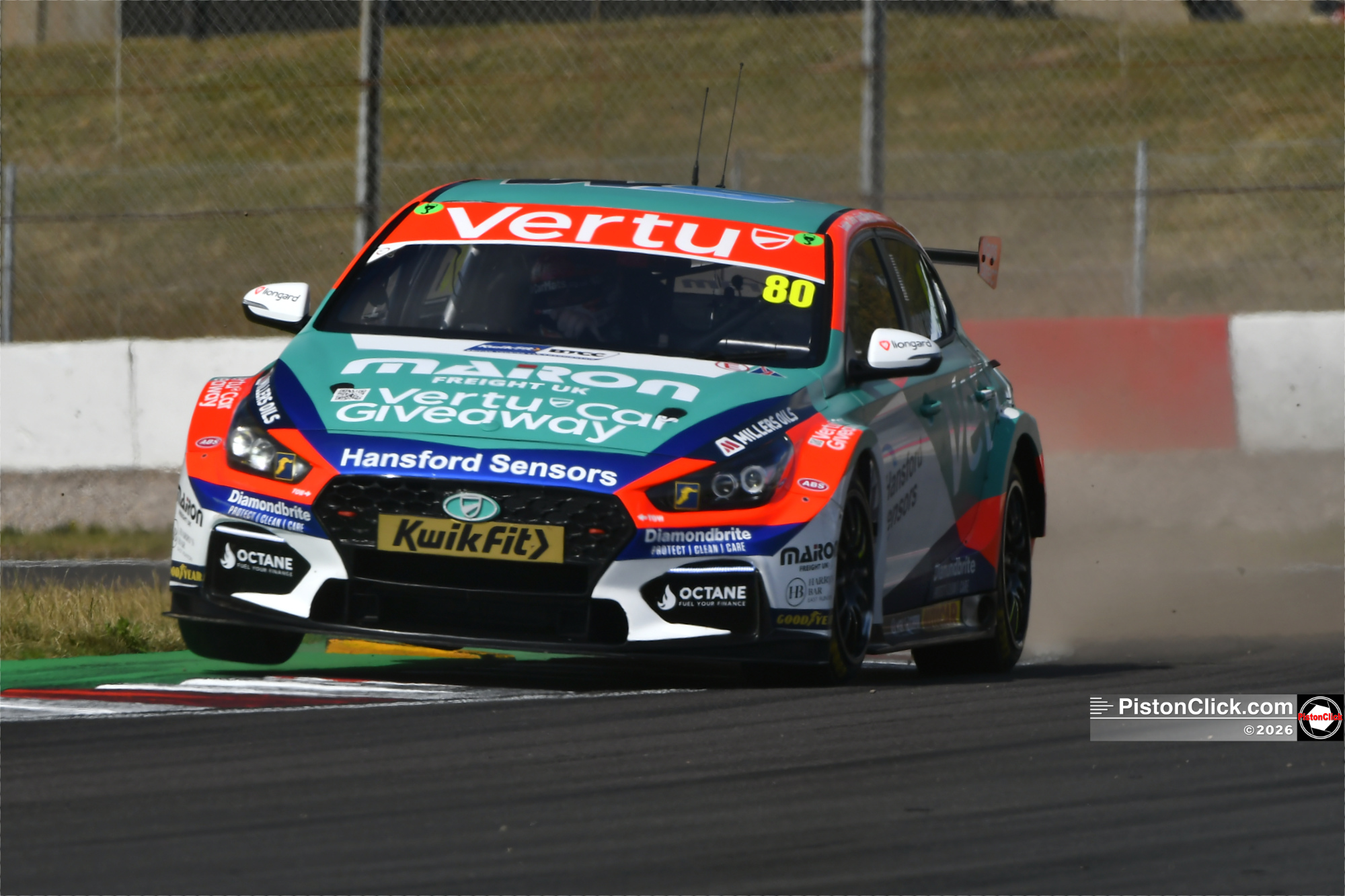
| 3 | Tom Ingram | Team VERTU | Hyundai i30N | +2.509s |
| 4 | Dan Rowbottom | CPRL | Mercedes A35 Saloon | +3.652s |
| 5 | Ricky Collard | Team VERTU | Hyundai i30N | +4.660s |
BTCC Donington Park GP – Race 3
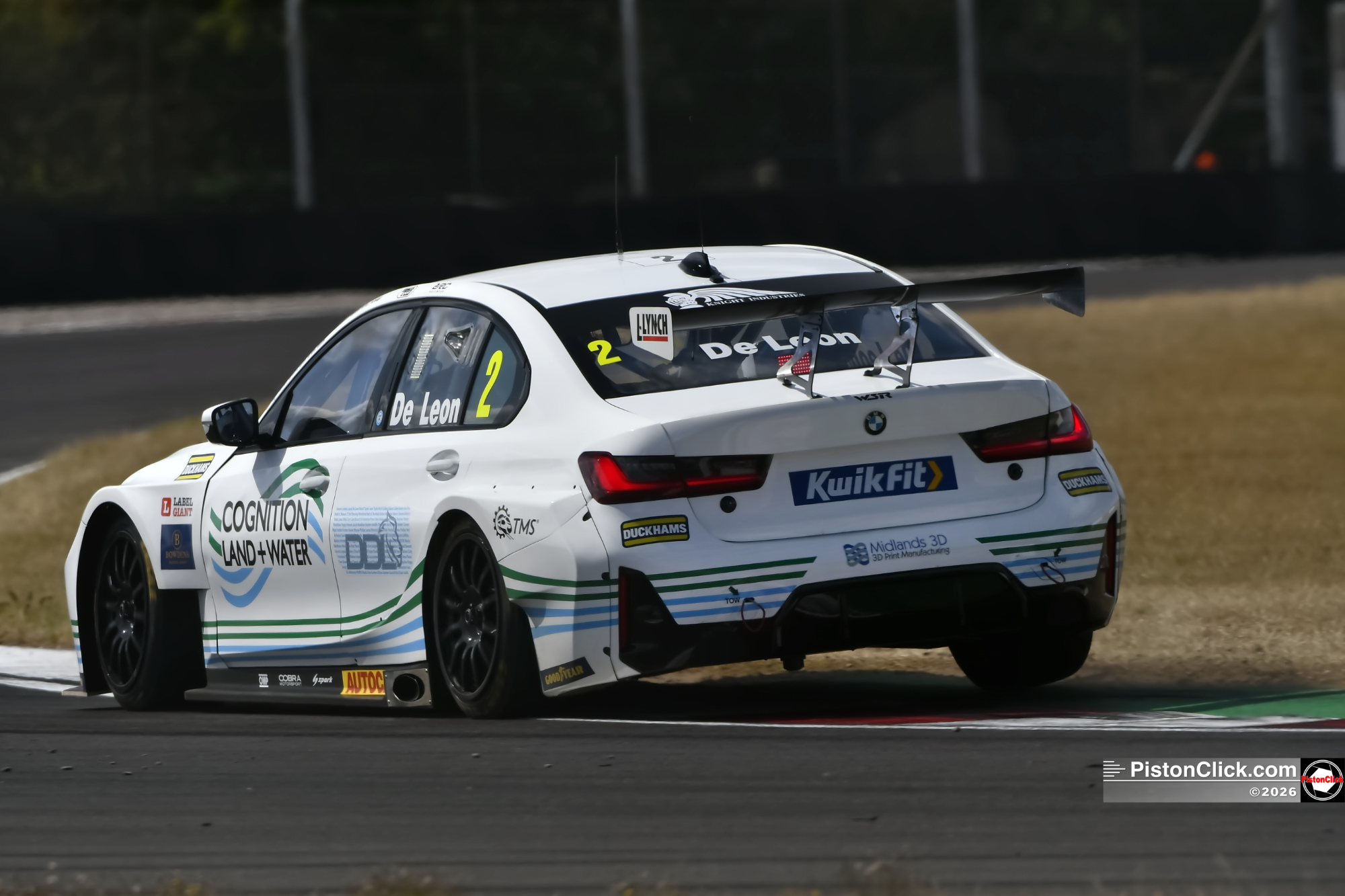
The final race of the weekend saw Morgan complete a near-perfect outing by clinching his third victory of the season. Starting behind pole-sitter Chris Smiley, Morgan quickly took the lead and pulled away to an emphatic win. Aiden Moffat thrilled the Power Maxed Racing squad by finishing second, while WSR’s young talent Daryl De Leon salvaged a podium for the team after an otherwise difficult weekend.
| Pos | Driver | Team | Car | Gap |
| 1 | Adam Morgan | CPRL | Mercedes A35 Saloon | — |
| 2 | Aiden Moffat | LKQ Euro Car Parts with Power Maxed Racing | Audi A3 Saloon | +2.813s |
| 3 | Daryl De Leon | WSR | BMW 330i M Sport | +3.433s |
| 4 | Aron Taylor-Smith | Laser Tools Racing with MB Motorsport | Toyota Corolla GR Sport | +7.048s |
| 5 | Ash Sutton | NAPA Racing UK | Ford Focus Titanium | +8.478s |
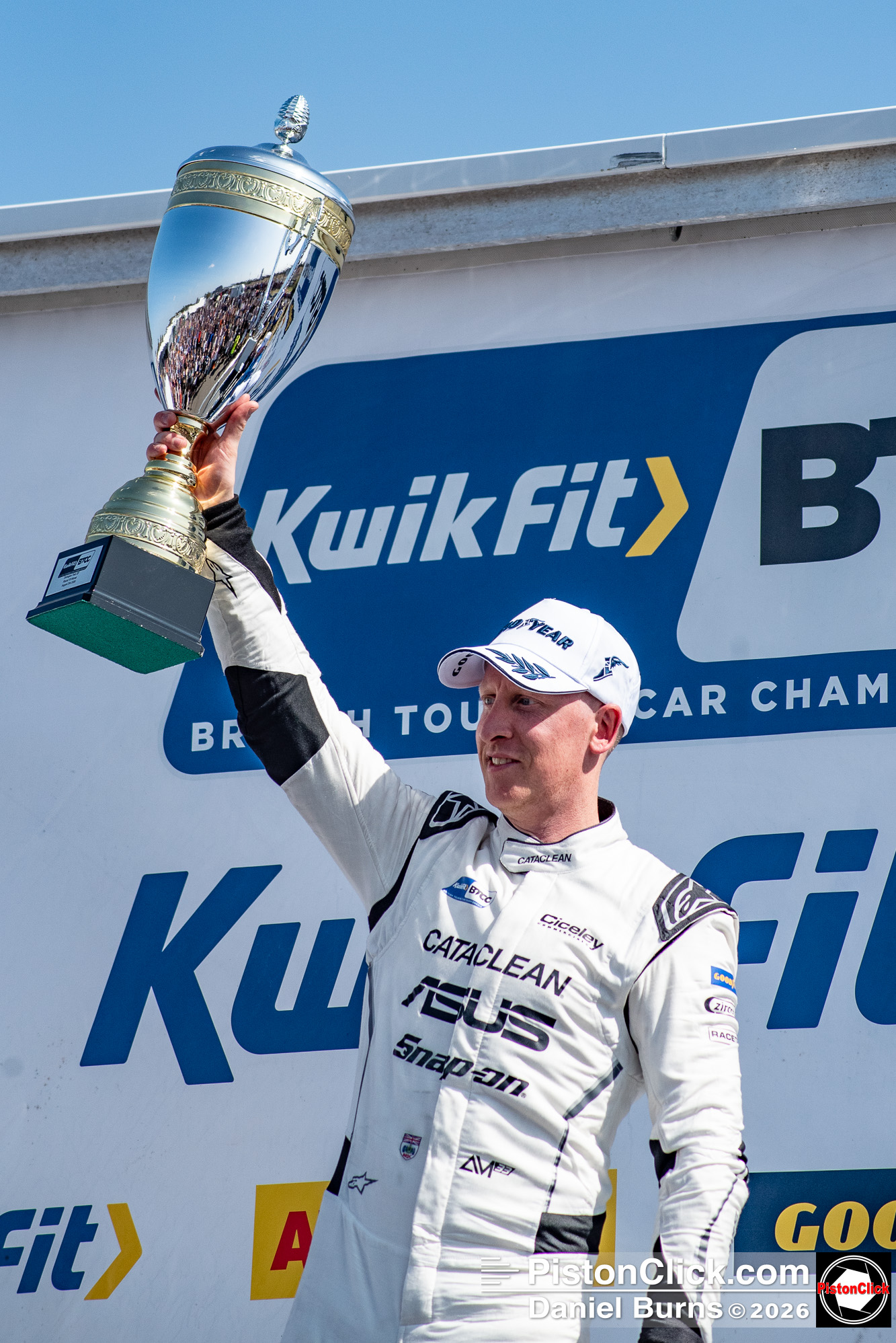
The BTCC now moves to the penultimate stretch of the season, with the next round set for Croft Circuit in North Yorkshire on 5–6 September.
Thanks to Daniel Burns for the images used in the BTCC Rounds 19,20 and 21 report. All other images are by the PistonClick editor.