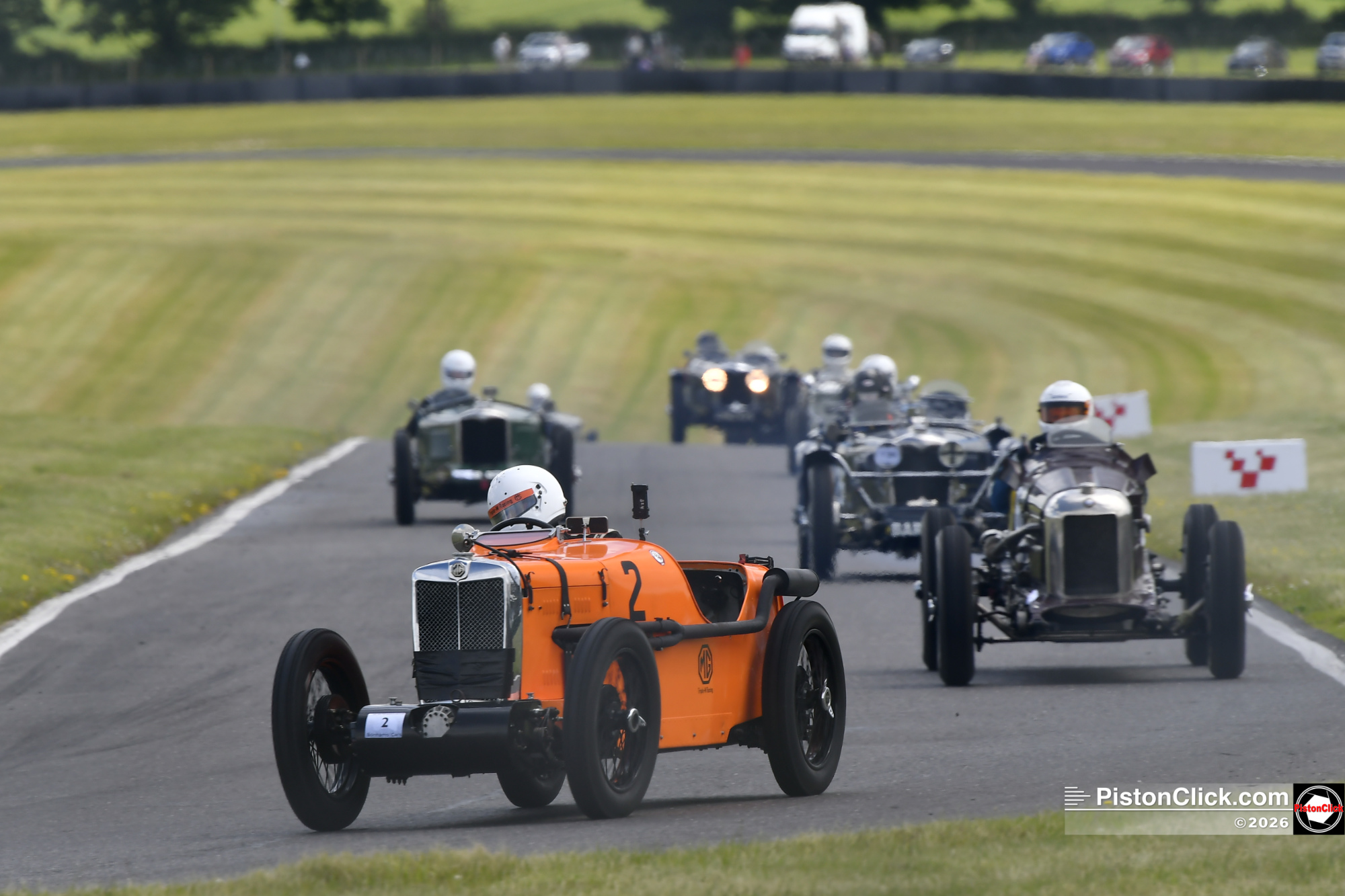



The Vintage Sports Car Club – 90 Years of Keeping Pre-War Racing Alive
Cadwell Park
21 June 2026

In a change of pace, I headed to a single-day motorsport meeting at Cadwell Park for the Vintage Sports-Car Club (VSCC). Over the previous three weeks, I had photographed and reported from the Isle of Man TT and the Le Mans 24 Hours. You could hardly find a greater contrast in motorsport.
Two-hundred-brake-horsepower motorcycles and cutting-edge hypercars are considerably faster than vintage racing cars. As I arrived at Cadwell Park on a Saturday afternoon, I welcomed the slower pace and the opportunity to photograph vehicles that didn’t disappear in the blink of an eye.
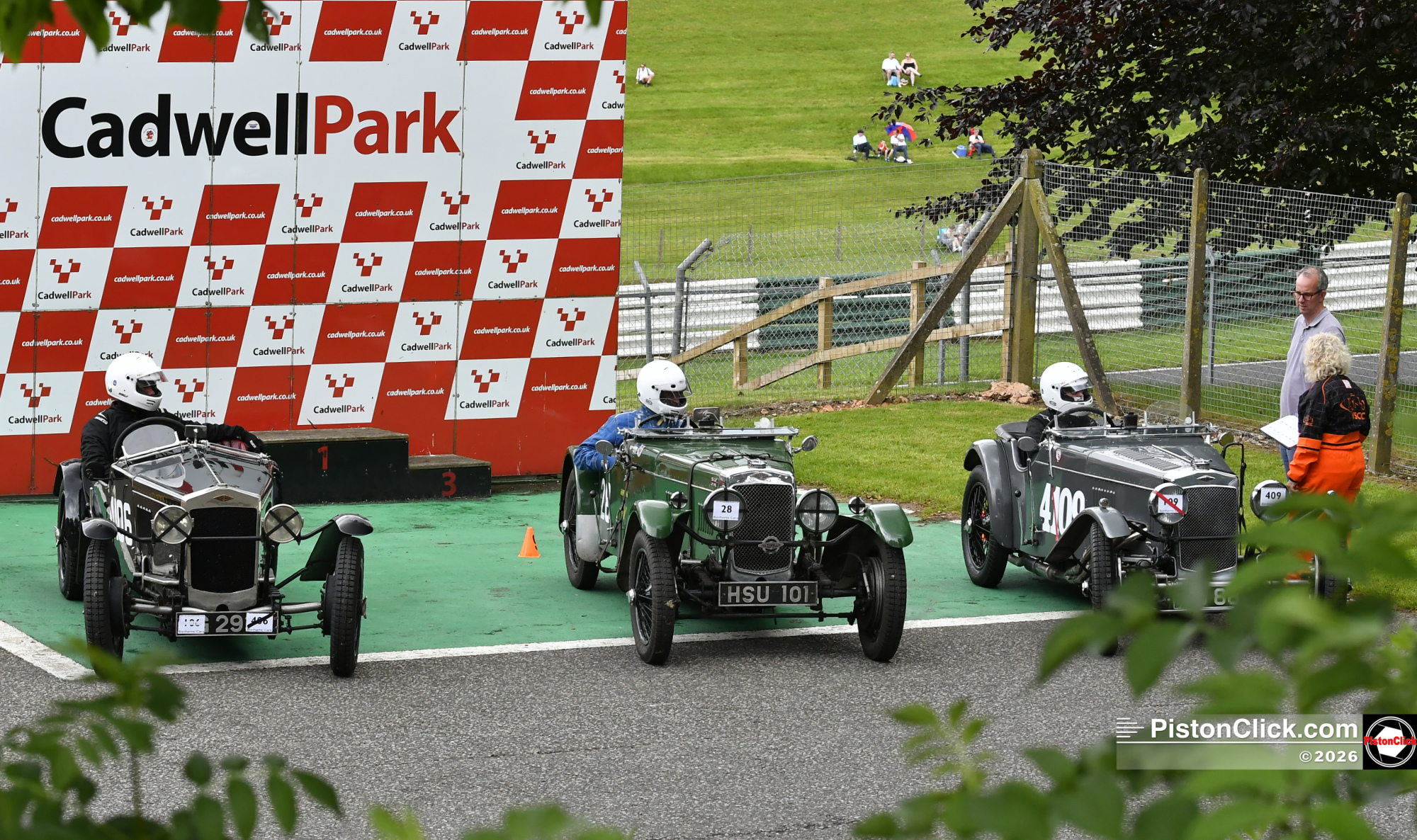
Regular visitors to this website will have seen several reports featuring the VSCC. For those unfamiliar with the organisation, here is everything you need to know.
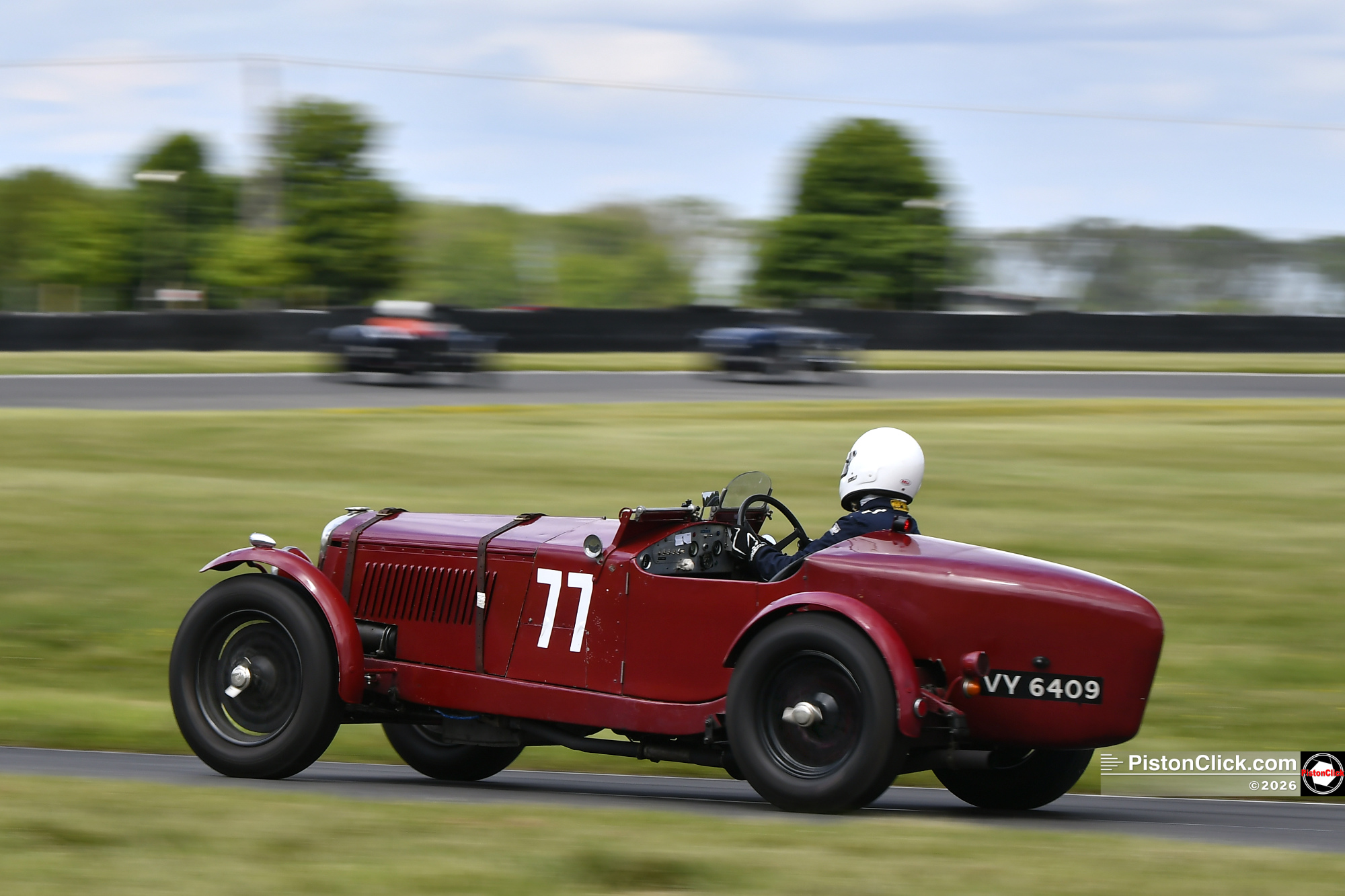
Vintage Sports-Car Club
The Vintage Sports-Car Club was established in October 1934 by five enthusiasts: Colin Nicholson, Bruce Nicholson, Ned Lewis, Harry Bowler and Vivian Brookes. Initially called the Veteran Sports-Car Club, it adopted the name Vintage Sports-Car Club within a month to avoid confusion with the Veteran Car Club of Great Britain.
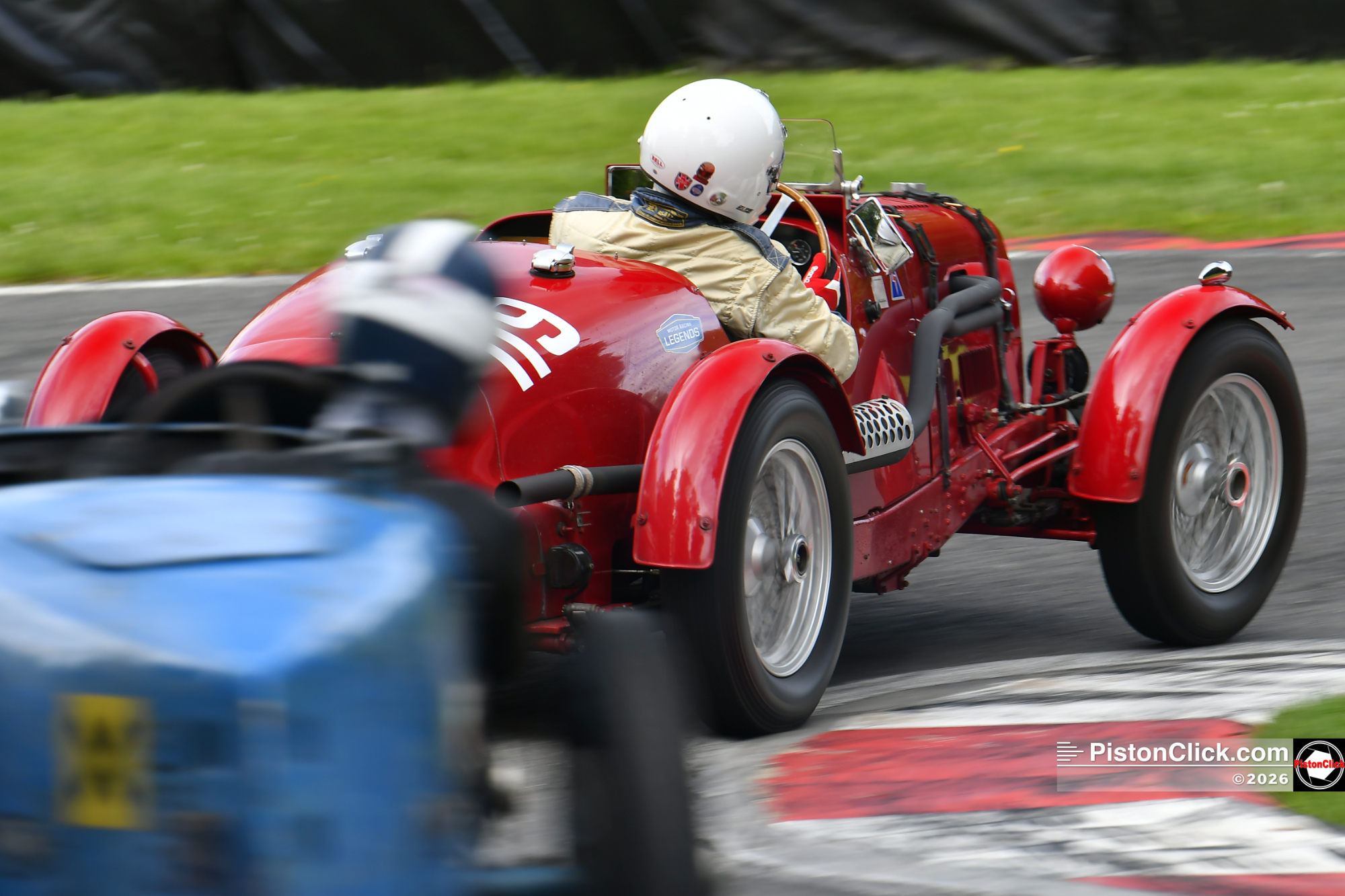
The idea for the club originated from a letter published in The Light Car magazine proposing a club “for the not so rich”. When the club formed, its mission was straightforward:
“To provide competitive events for cars five years old or more and social events for members.”
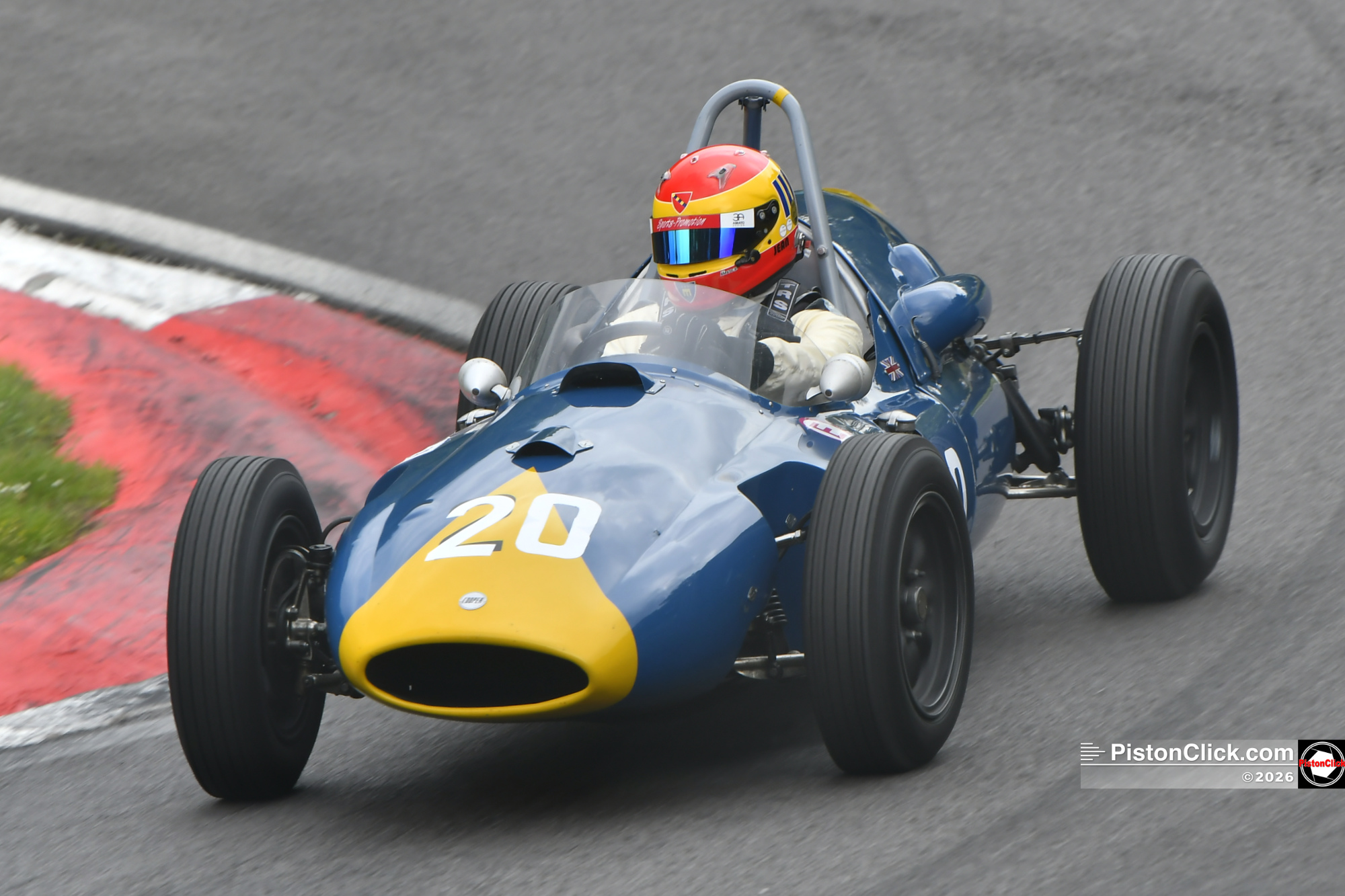
S.C.H. “Sammy” Davis became President in 1937, while Tim Carson joined the committee in 1935 and helped shape the club’s early direction.
Originally, the club centred on cars built before 31 December 1930. Today, the VSCC caters for a much wider range of historic machinery, including:
- Veteran cars (pre-1905)
- Edwardian cars (1905–1918)
- Vintage cars (1919–1930)
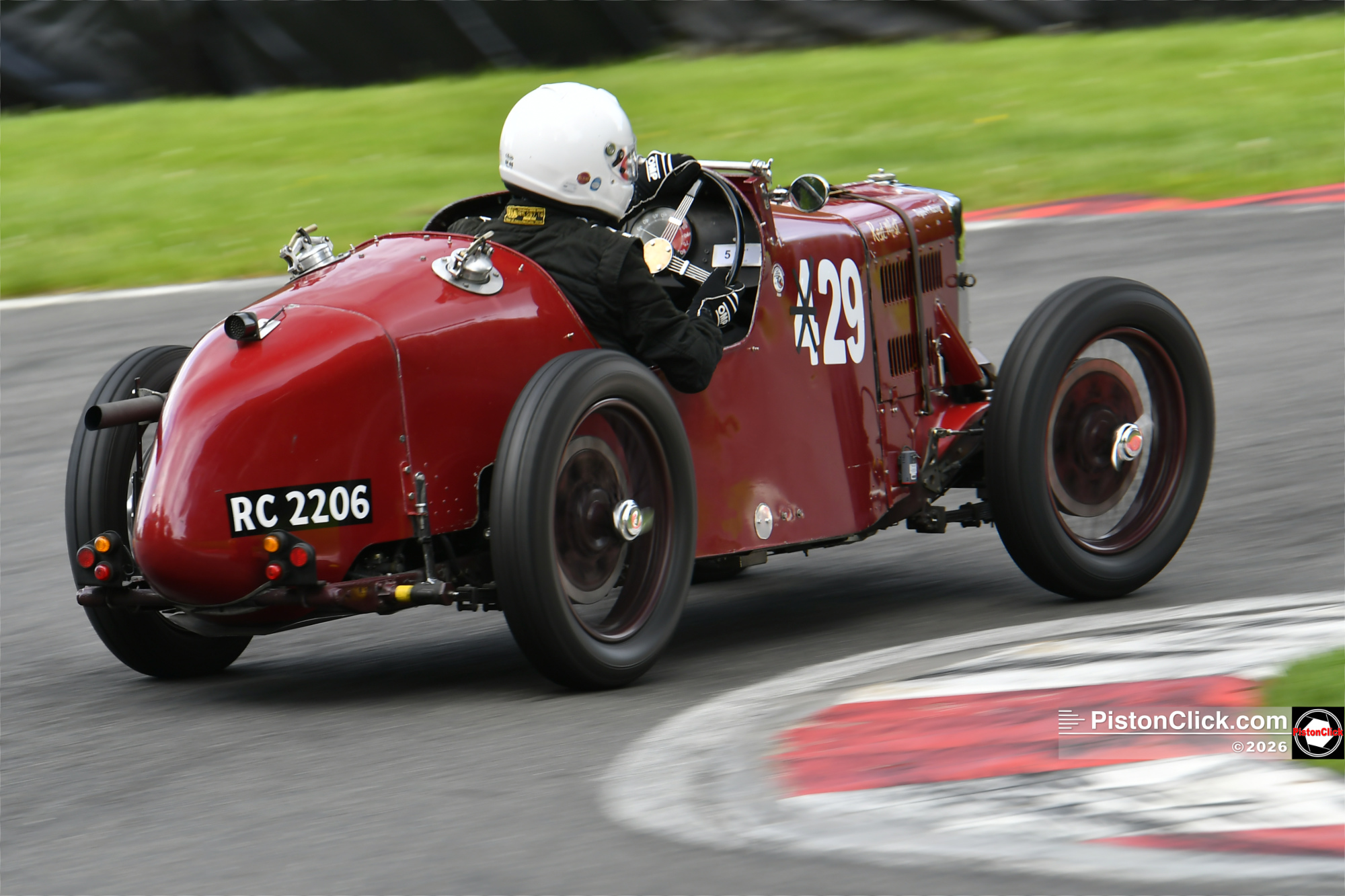
- Post Vintage Thoroughbreds (1931–1940)
- 1950s sports racing cars
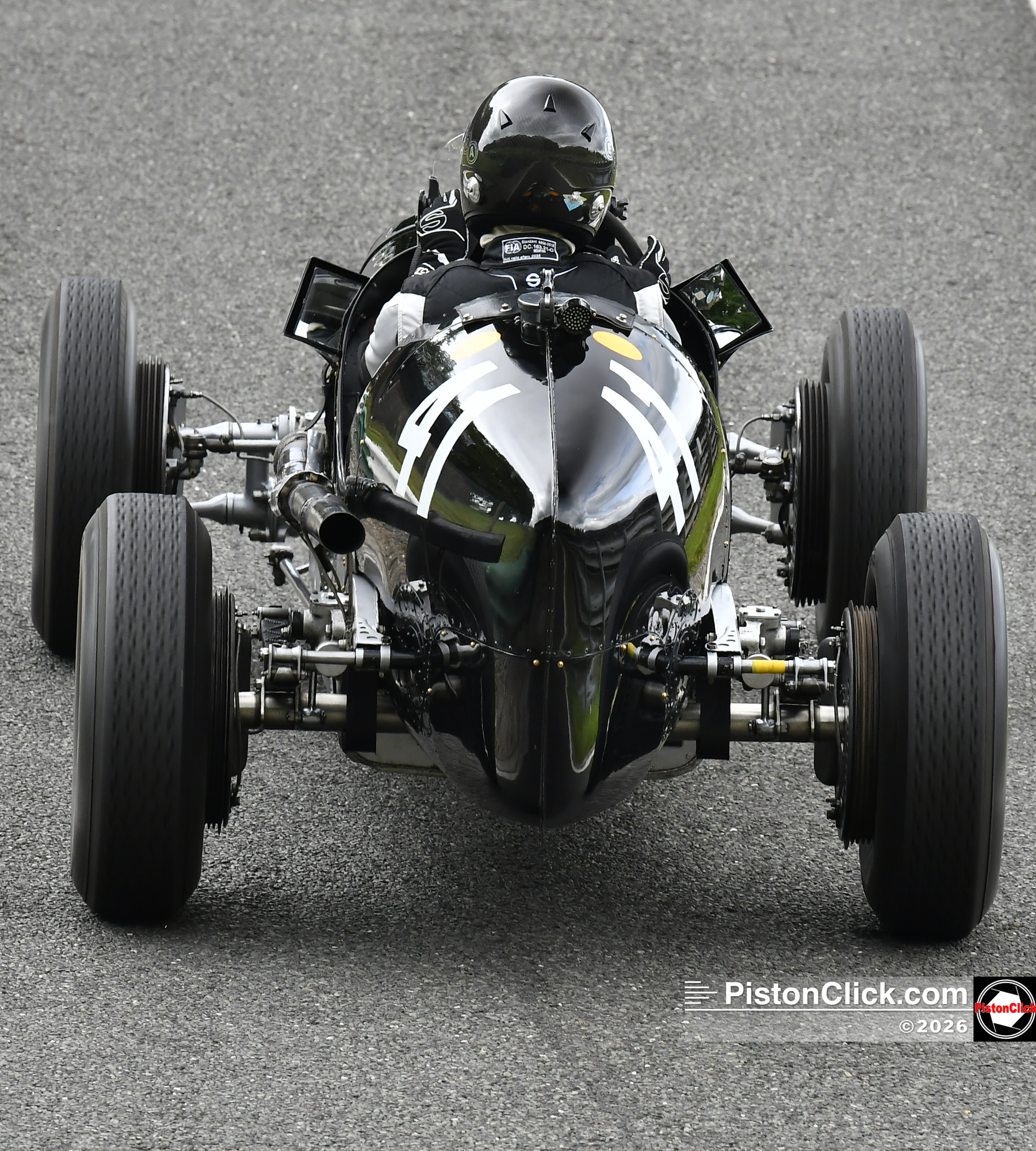
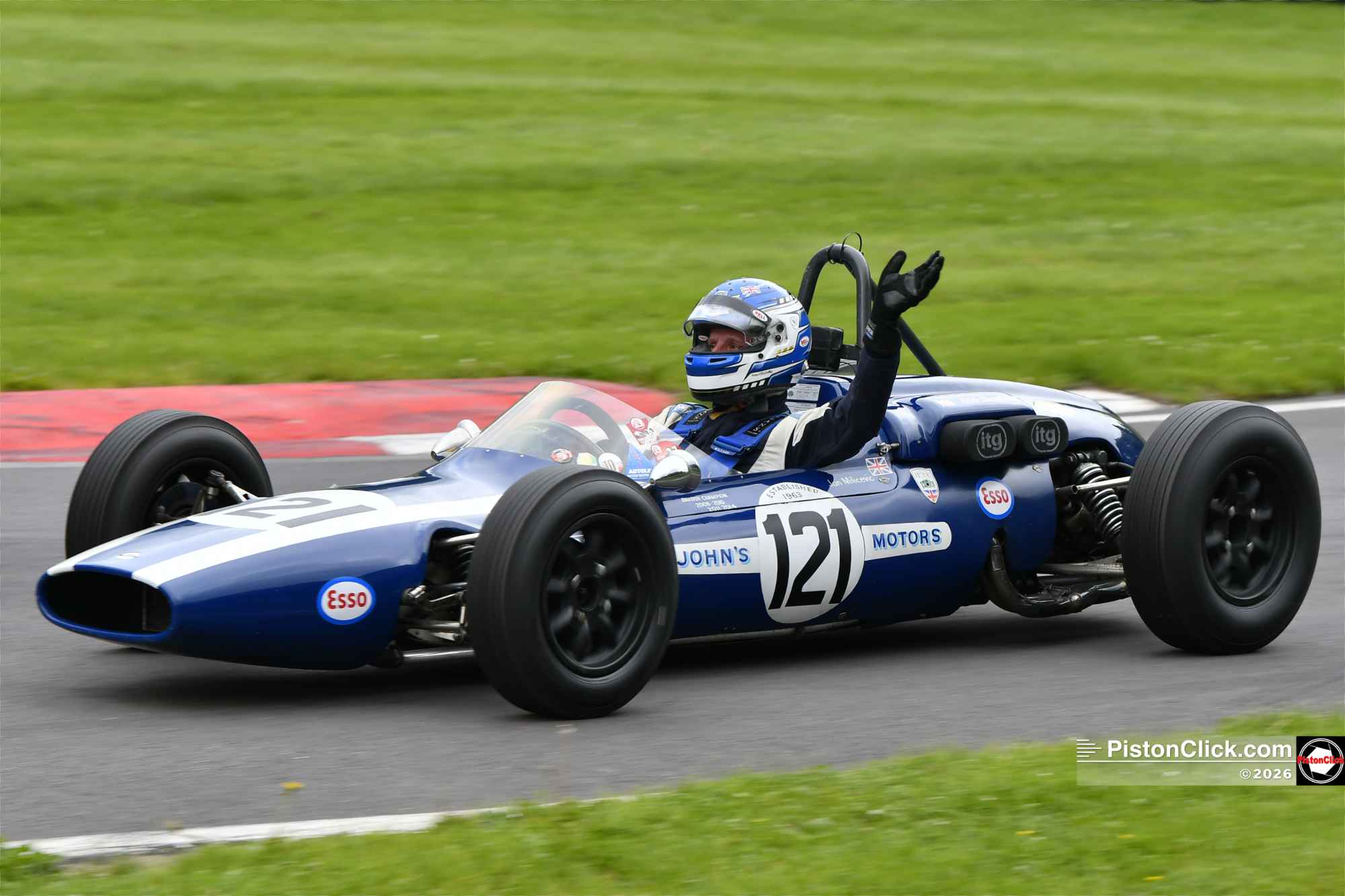
- Pre-1961 single-seaters, including Formula 500, Formula Junior and Grand Prix machinery
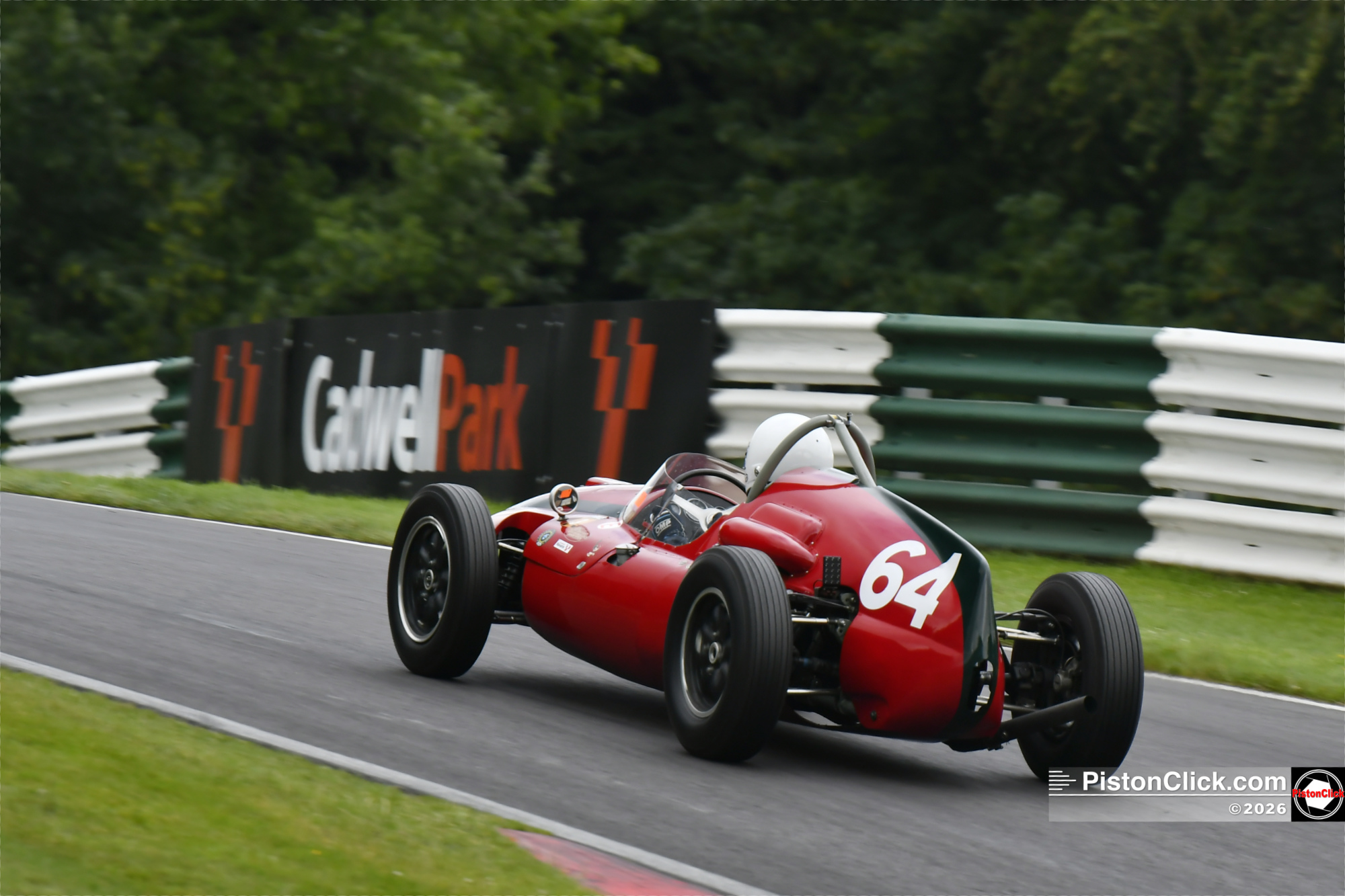
In 2021, members voted to admit selected road-going sports cars built before the end of 1955, including models such as the Jaguar XK120 and Austin-Healey 100M. Today, the club boasts between 5,600 and 7,500 members worldwide and organises around 40 events annually.
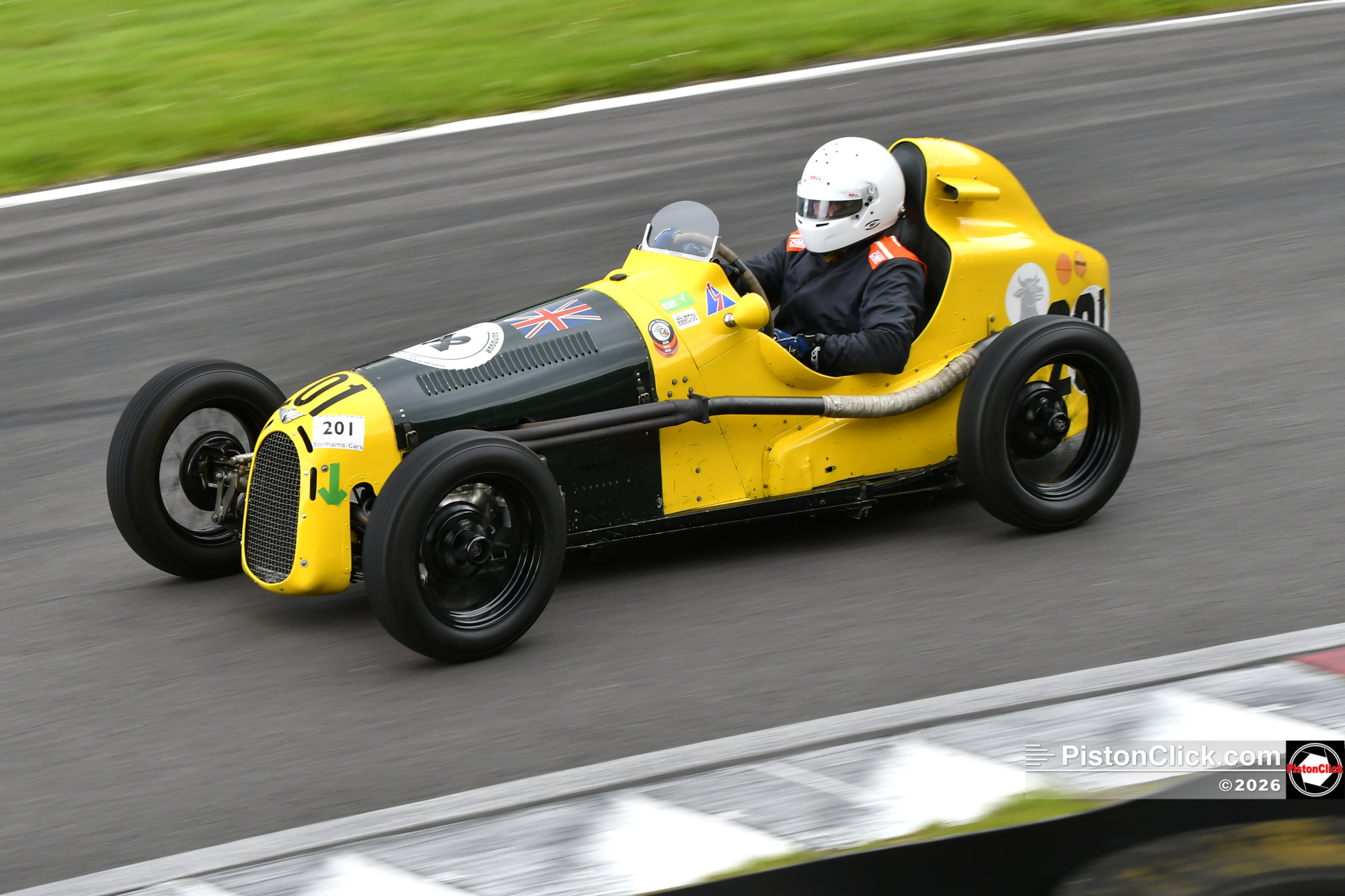
More Than Just Circuit Racing
Earlier this year, we covered the VSCC’s season-opening Silverstone Spring Start meeting. Since then, events at Oulton Park, Mallory Park, Donington Park and Cadwell Park have attracted large grids and healthy spectator numbers.
For drivers who prefer competing against the clock rather than wheel-to-wheel racing, the VSCC offers an extensive programme of sprints and hill climbs. We recently published a report from Curborough Sprint Course, while famous hill climb venues such as Shelsley Walsh, Prescott, Loton Park and Wiscombe Park continue to test both drivers and machines.
The club’s activities extend beyond speed events. Members also compete in a variety of trials and rallies throughout the year, including:
- Scottish Trials
- Welsh Trials
- Derbyshire Trial
- Lakeland Trial
- Cotswold Trial
- Measham Night Rally
The VSCC headquarters now operates from Hockley Court in Hockley Heath. Importantly, you do not need to own a pre-war car to join. As the club proudly states:
“Enthusiasm for their use is all you need.”
Philosophy and Modern Relevance
The VSCC emerged from a belief that modern automotive design had begun prioritising sales figures and cost-cutting over engineering excellence.
Ninety years later, the club remains relevant while embracing modern challenges. Sustainability now forms part of its strategy, with commitments to offset 400% of event emissions through accredited international schemes, UK tree planting and peatland restoration projects.
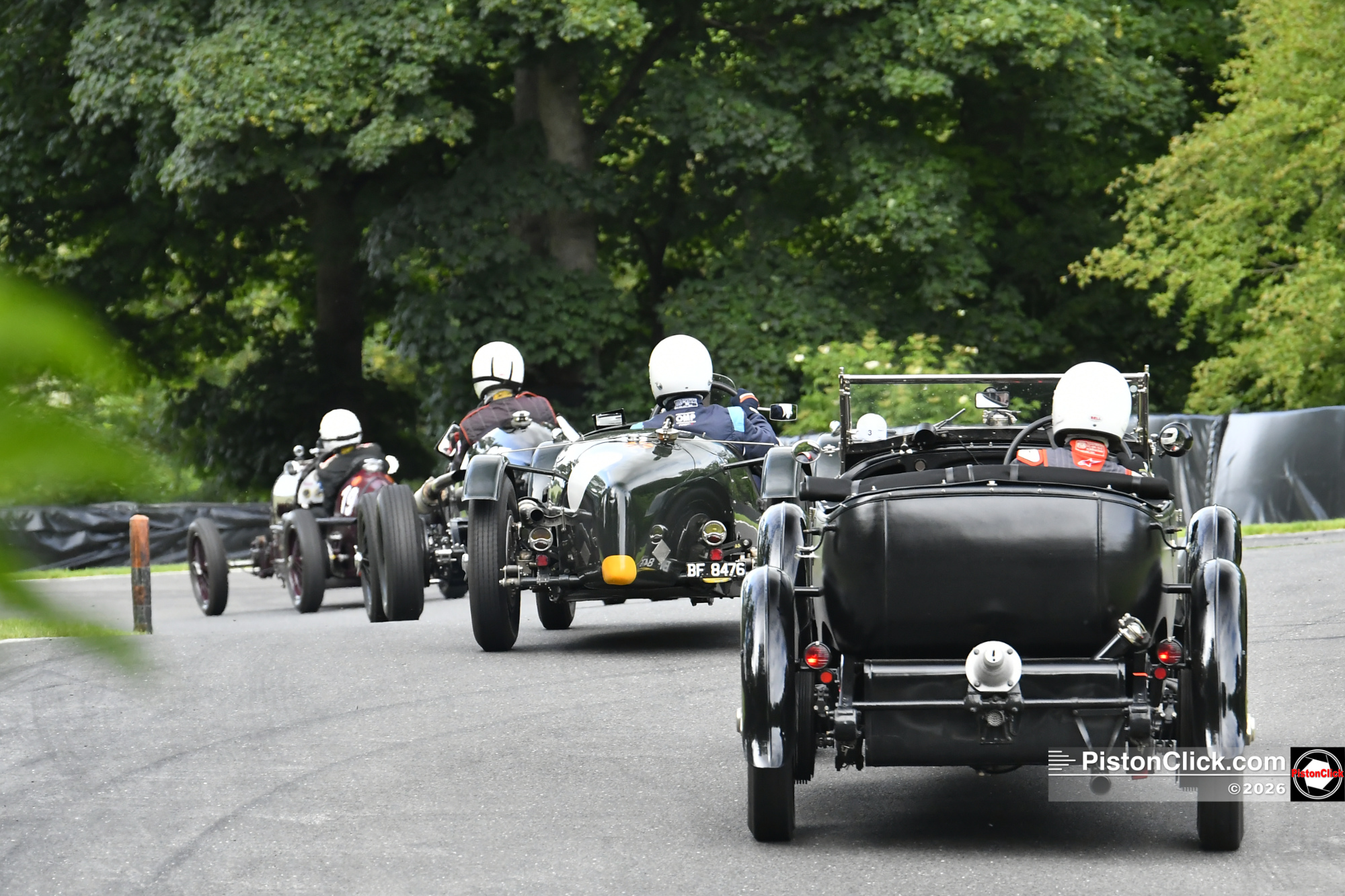
The club also continues to attract younger competitors. Club Secretary Tania Brown recently highlighted that more than 20 per cent of entrants at a Curborough sprint were under 30 years old.
The VSCC celebrated its 90th anniversary in August 2024 with a series of events around Stratford-upon-Avon, including a popular pop-up sprint at Chateau Impney.
VSCC Cadwell Park Meeting
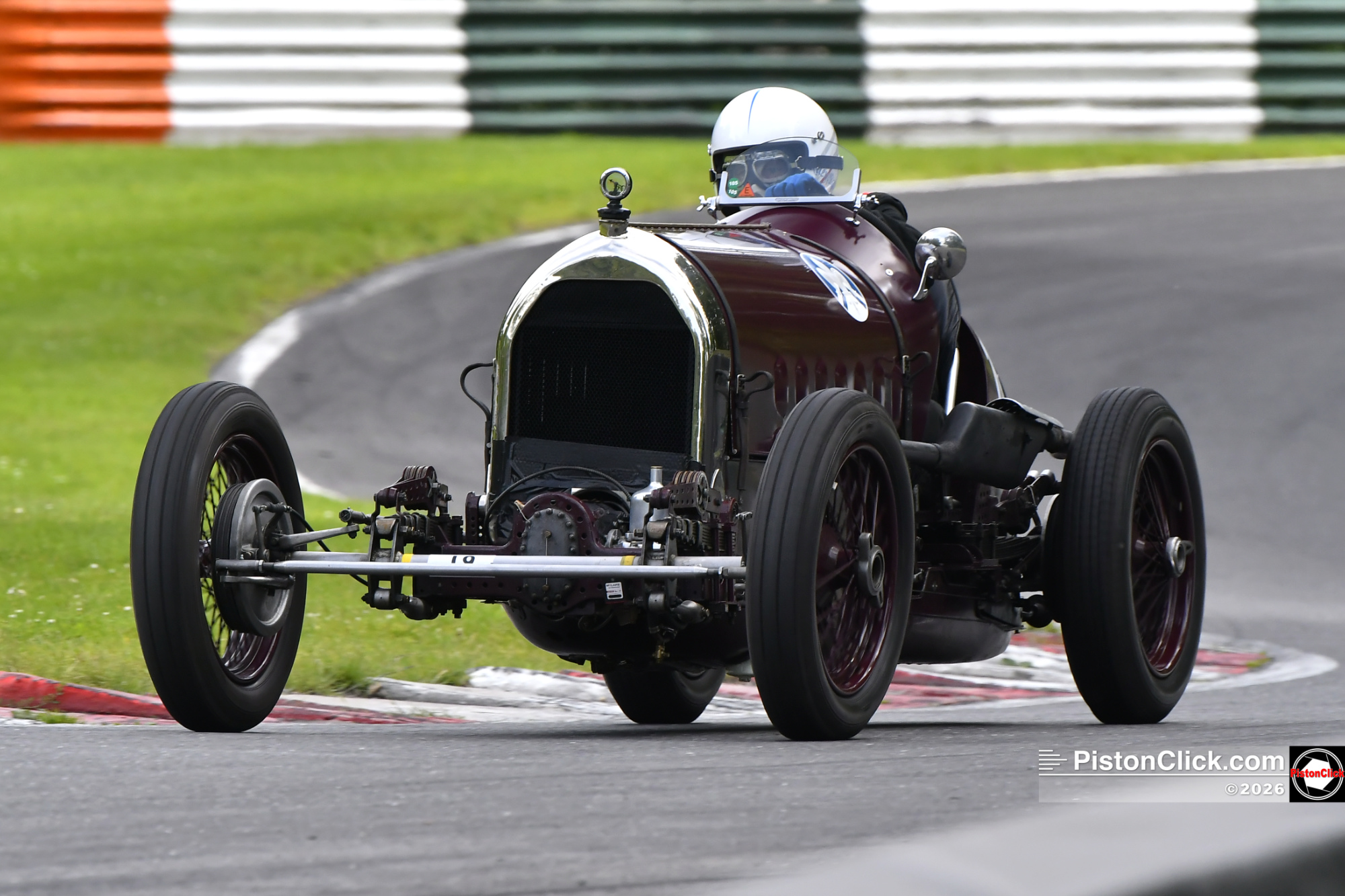
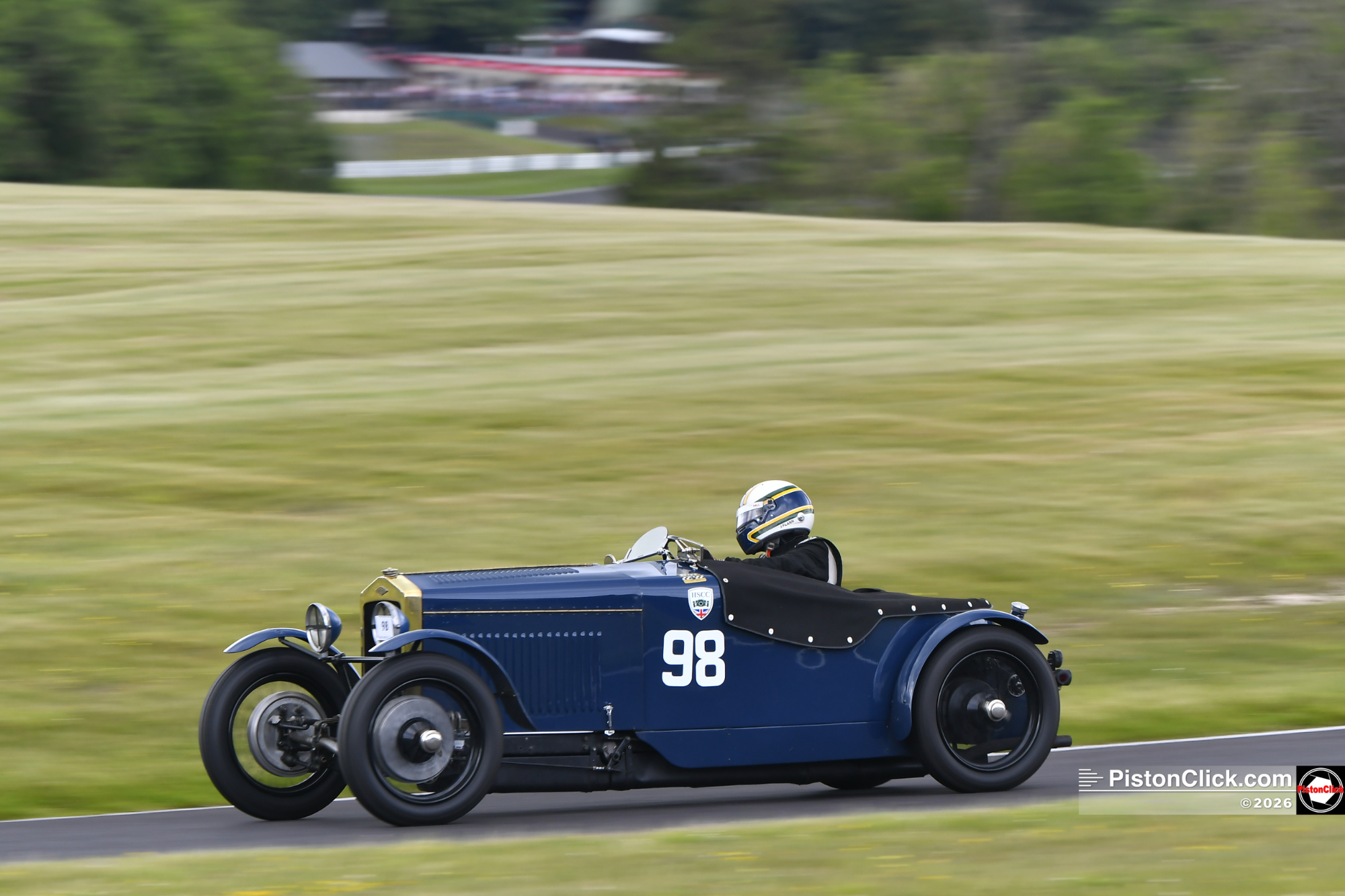
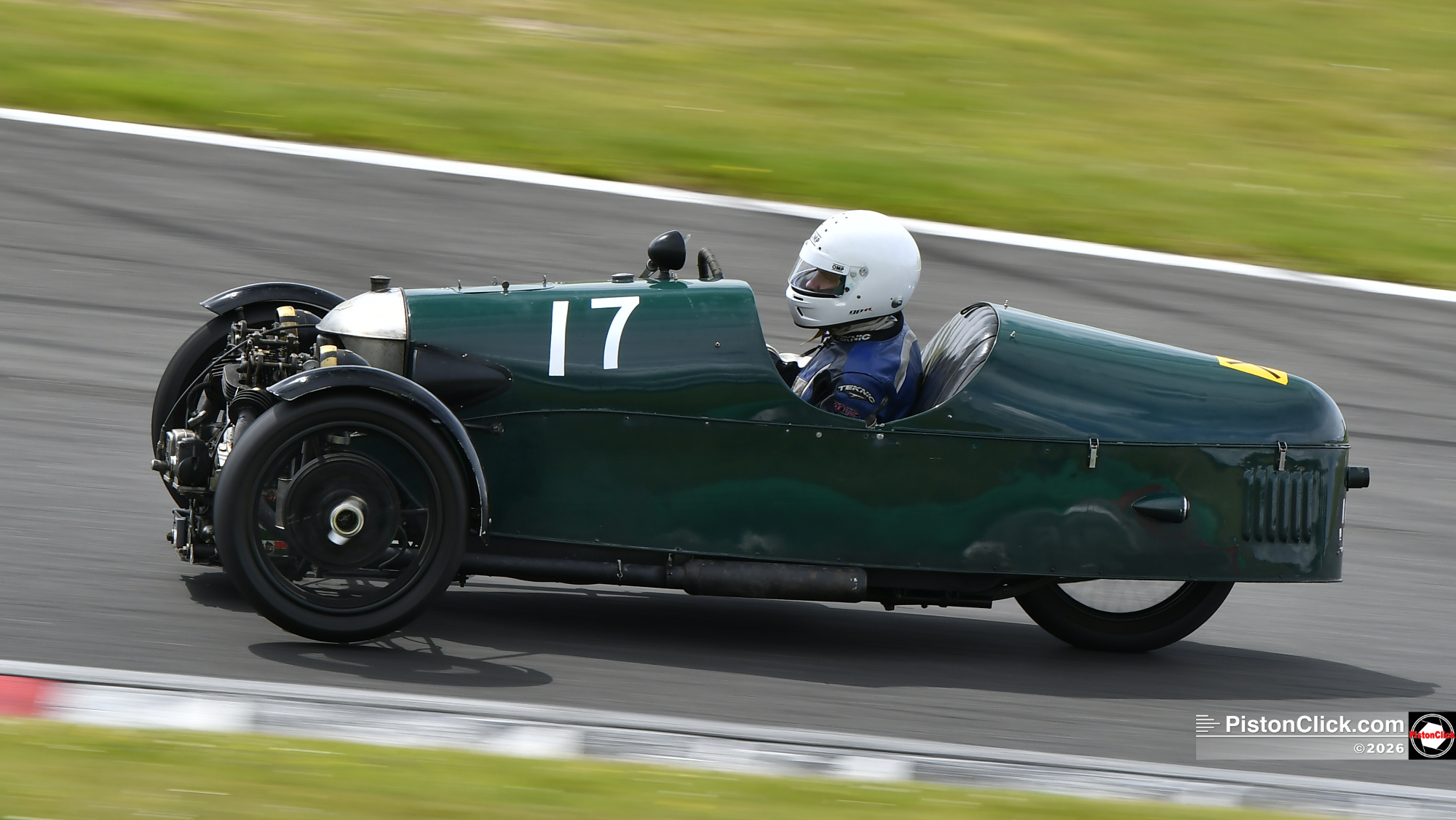
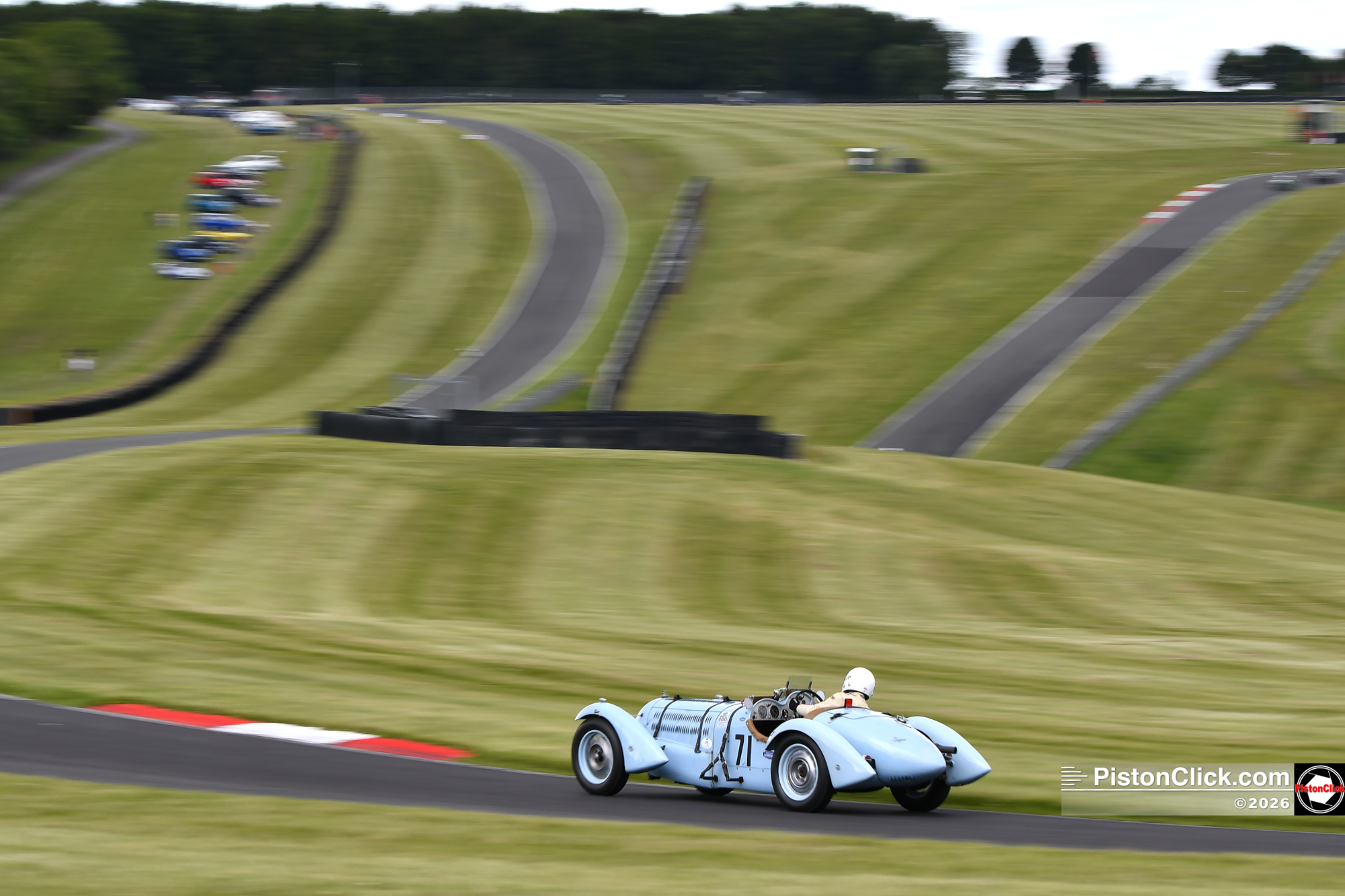
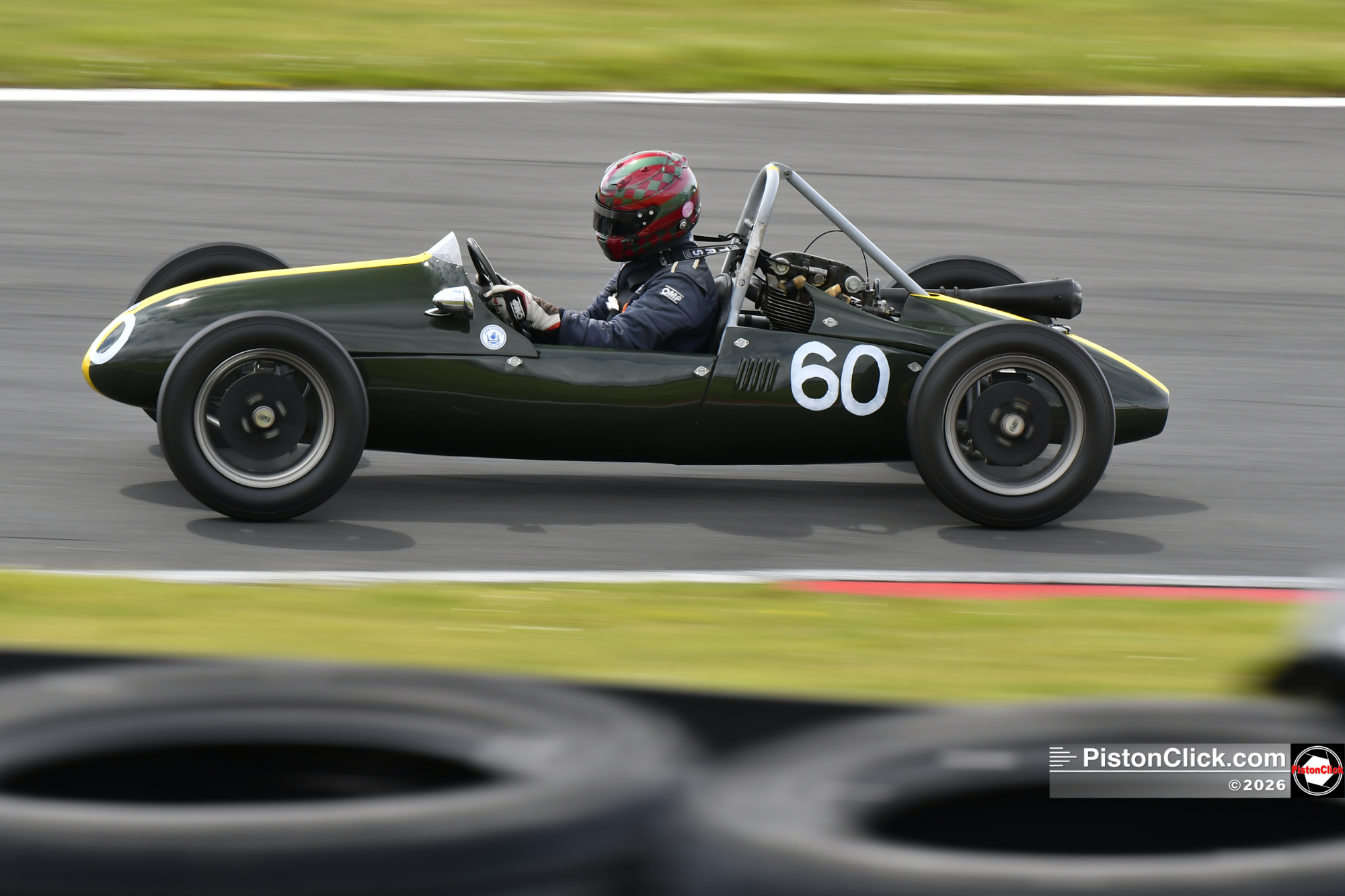
Cadwell Park remains one of the VSCC’s most popular circuits. Famous for its dramatic elevation changes and iconic “Mountain” section, the Lincolnshire venue provides a challenging and rewarding test for historic machinery.
The meeting followed a split-day format. Drivers tackled practice sessions during the morning in wet and slippery conditions, while organisers reserved the afternoon exclusively for racing. Fortunately, the weather improved by the time I arrived.
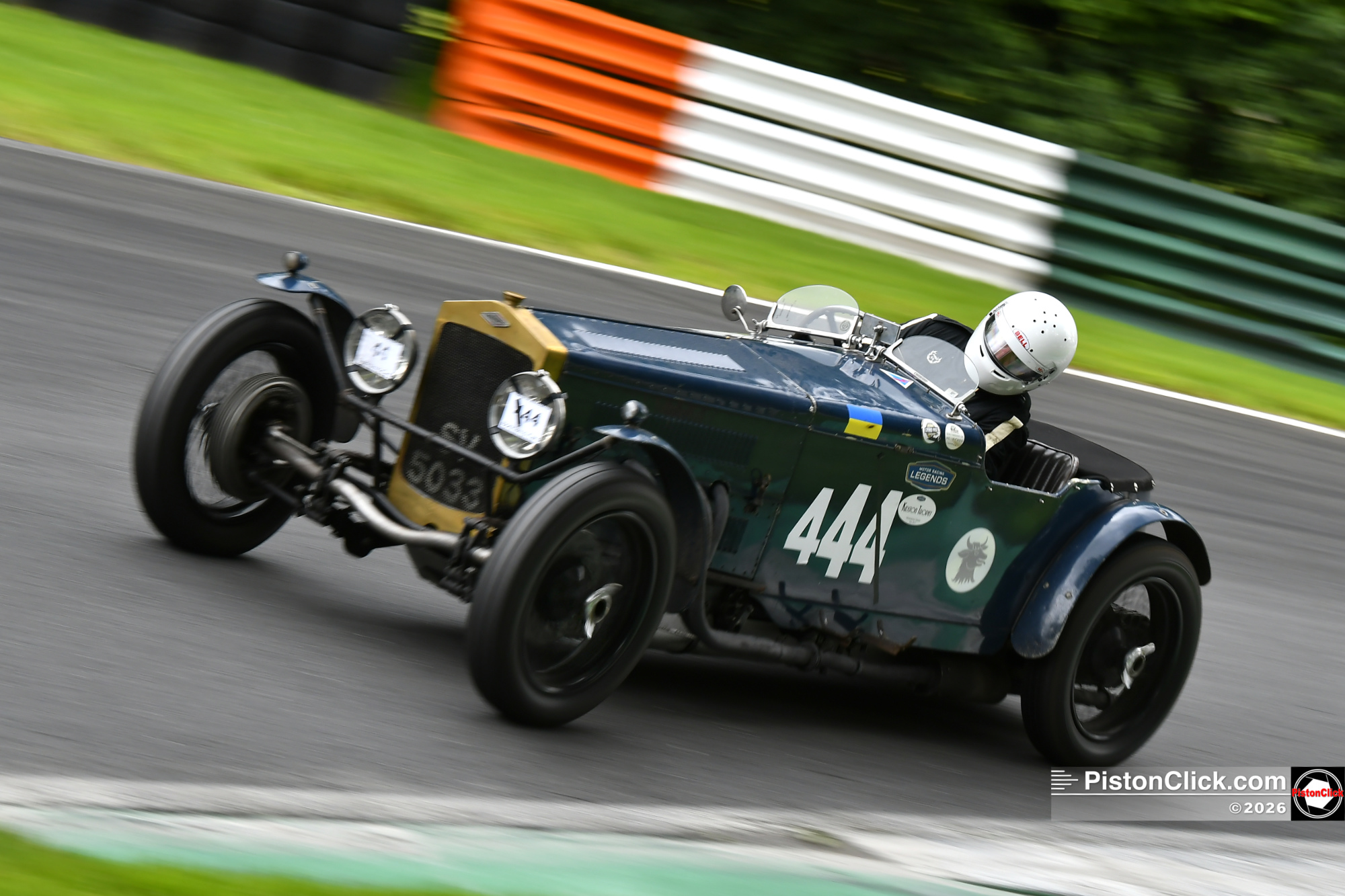
The event perfectly reflected the spirit of the VSCC: resilience, camaraderie and a celebration of mechanical craftsmanship, regardless of what the British weather delivers.
From a handful of letters published in The Light Car magazine in 1934 to today’s mixed grids featuring Bugattis, Bentleys and Frazer Nashes, the club has successfully kept pre-war motorsport accessible and relevant.
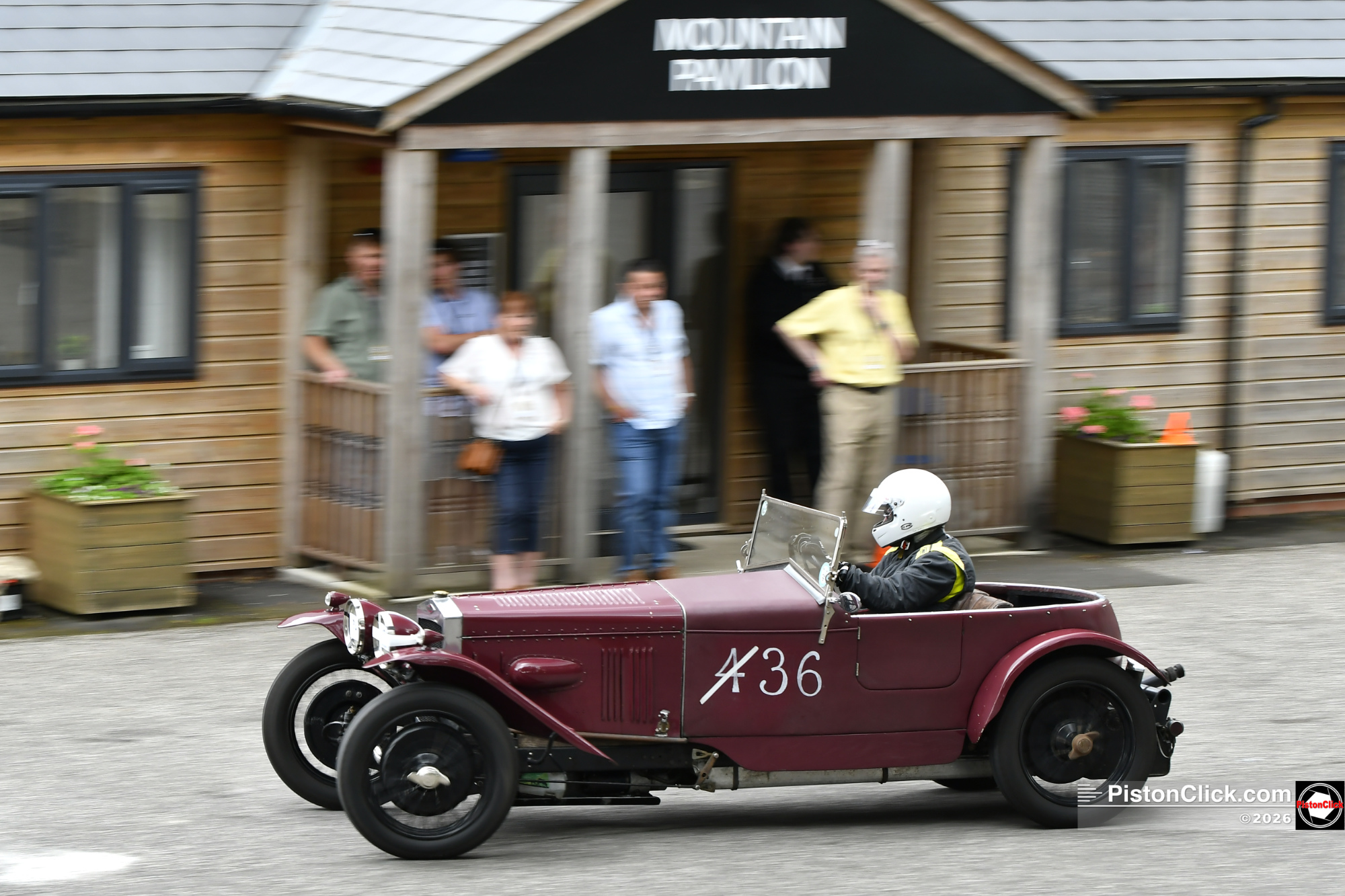
Competition remains important, but the social side of the club is equally valued. The VSCC continues to foster an atmosphere where:
“An interest in the cars supersedes any concern for personal wealth or status.”
Nine decades after its formation, the club’s unofficial description still feels entirely appropriate:
“Quintessentially great British fun.”
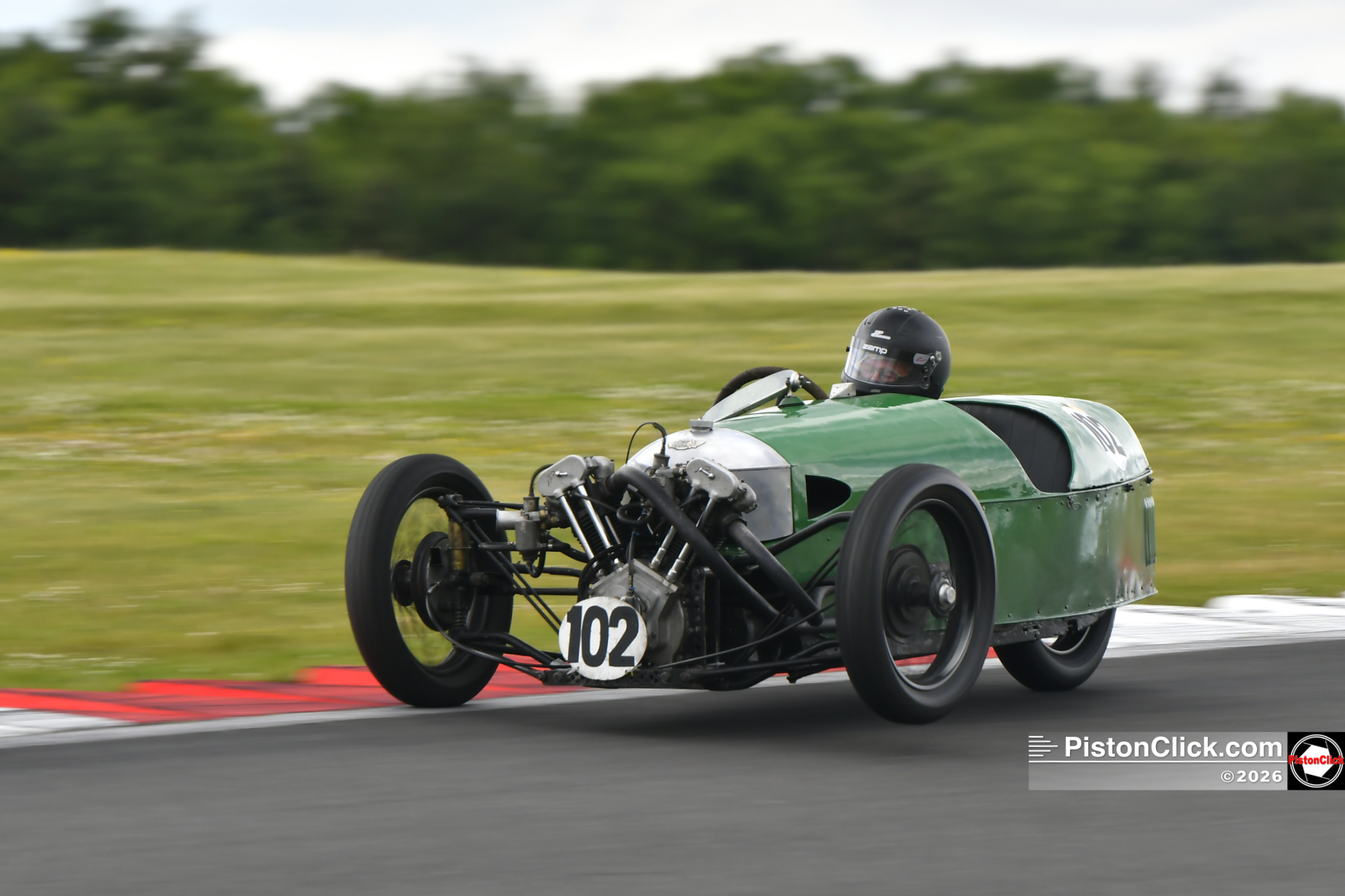
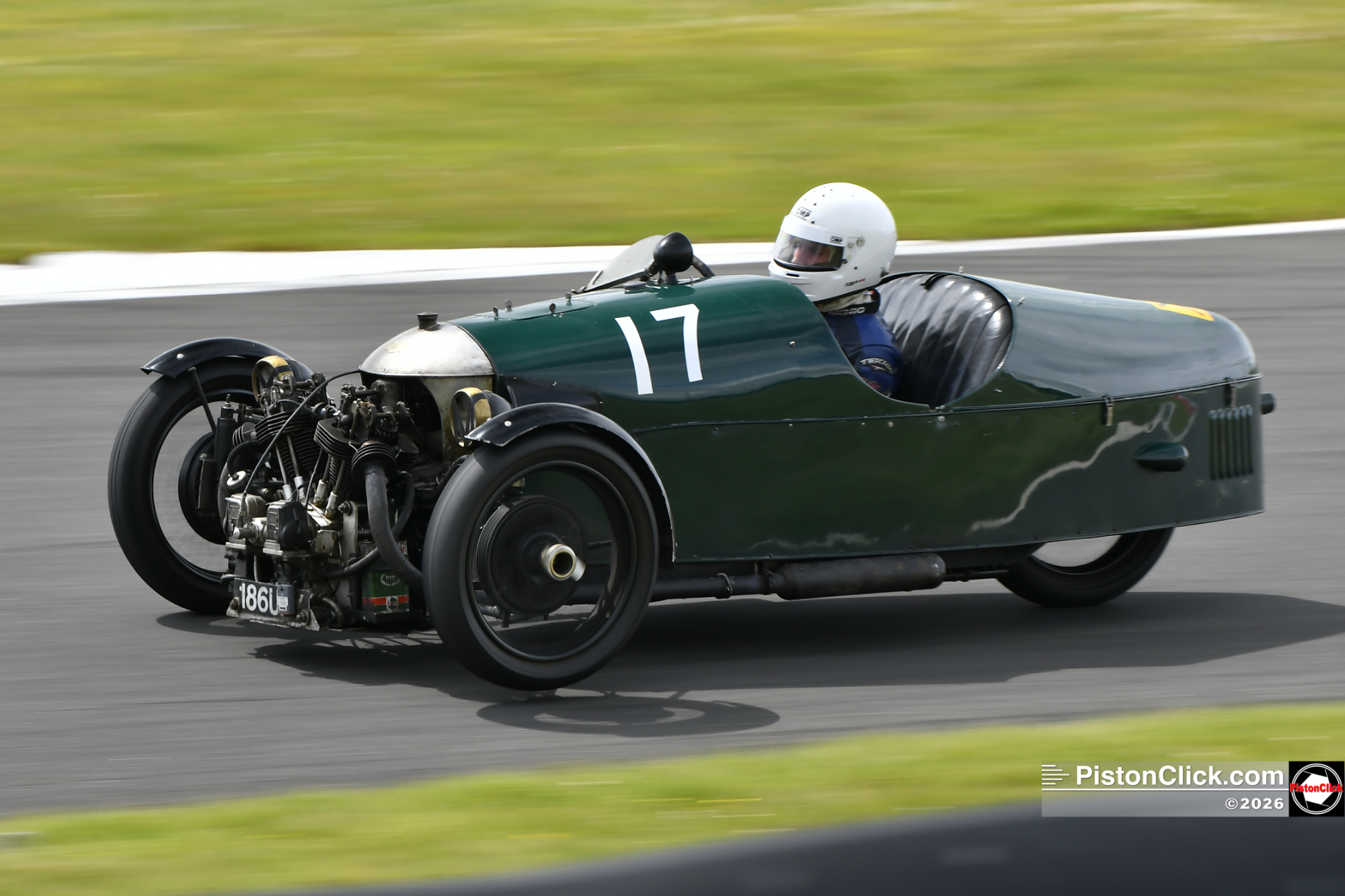
Photographic Postscript
For the VSCC Cadwell Park meeting, I used a Nikon D500 DSLR paired with a 70-200mm f/2.8 lens. Adding a 1.4x teleconverter provided sufficient reach for most situations around the circuit. Although I cropped a few images during editing, the adjustments remained minimal.
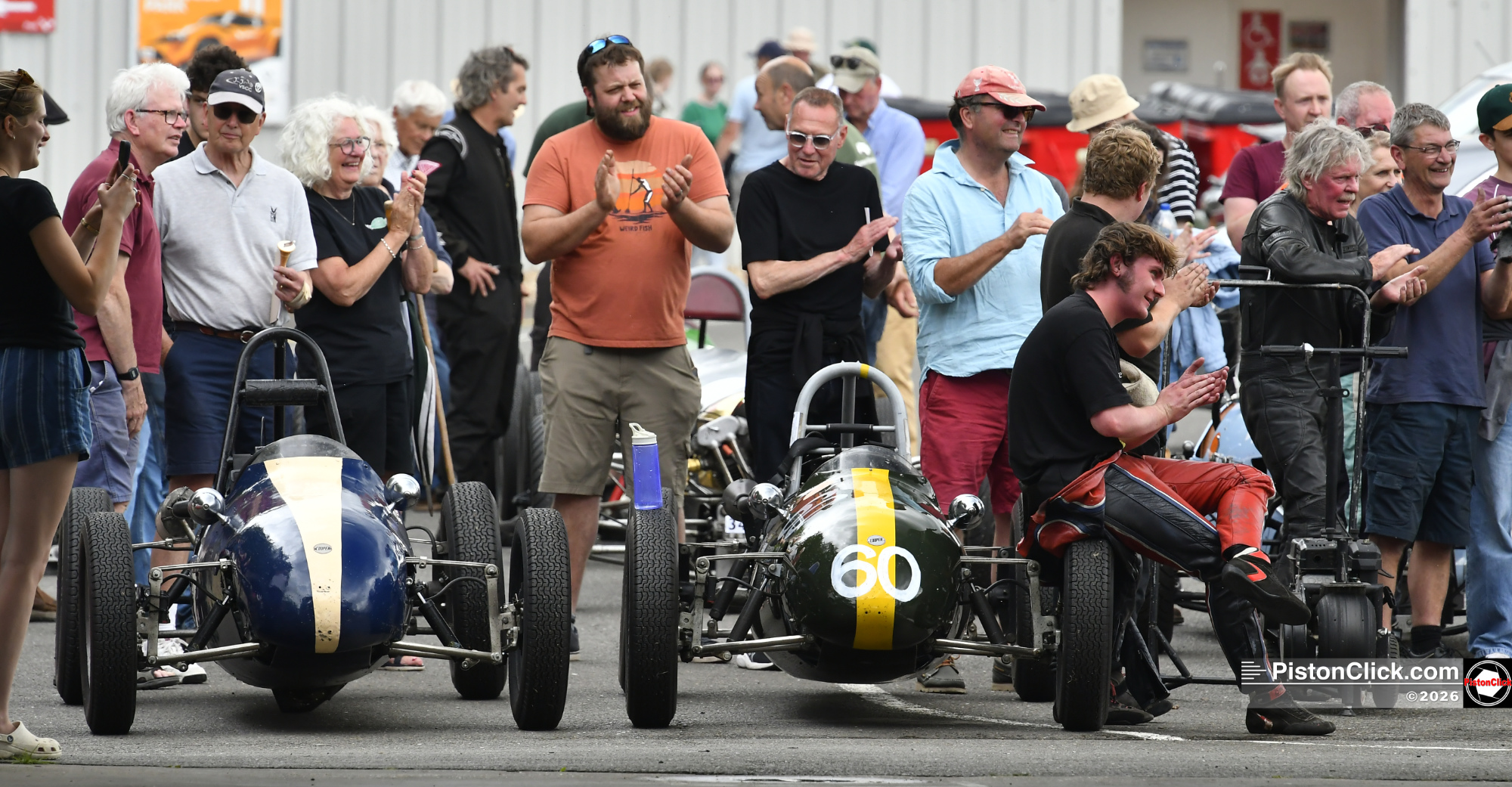
The event offers an excellent opportunity for aspiring motorsport photographers. The grids feature a wide variety of visually interesting vehicles, many of which travel at relatively modest speeds compared with modern racing machinery.
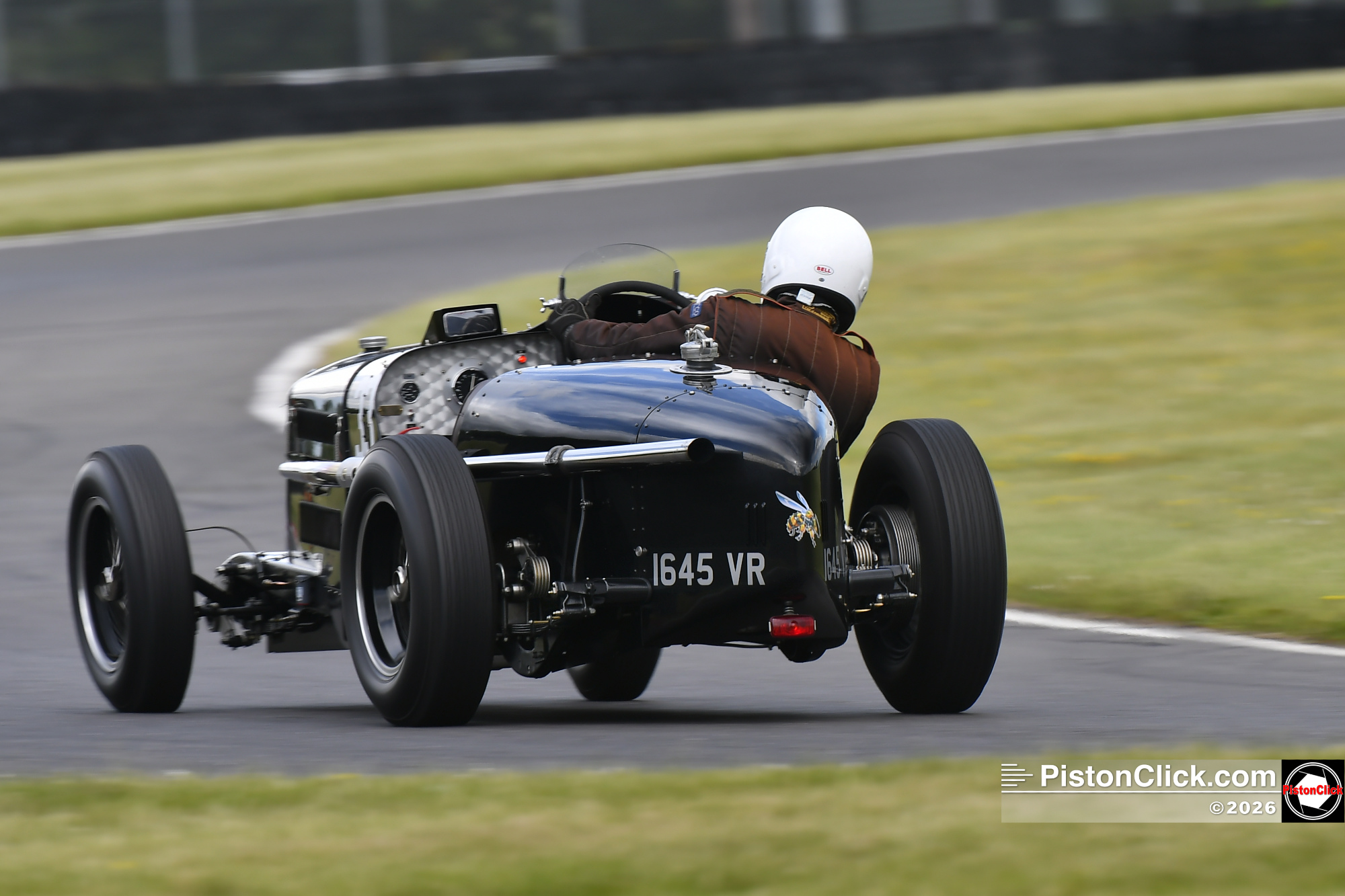
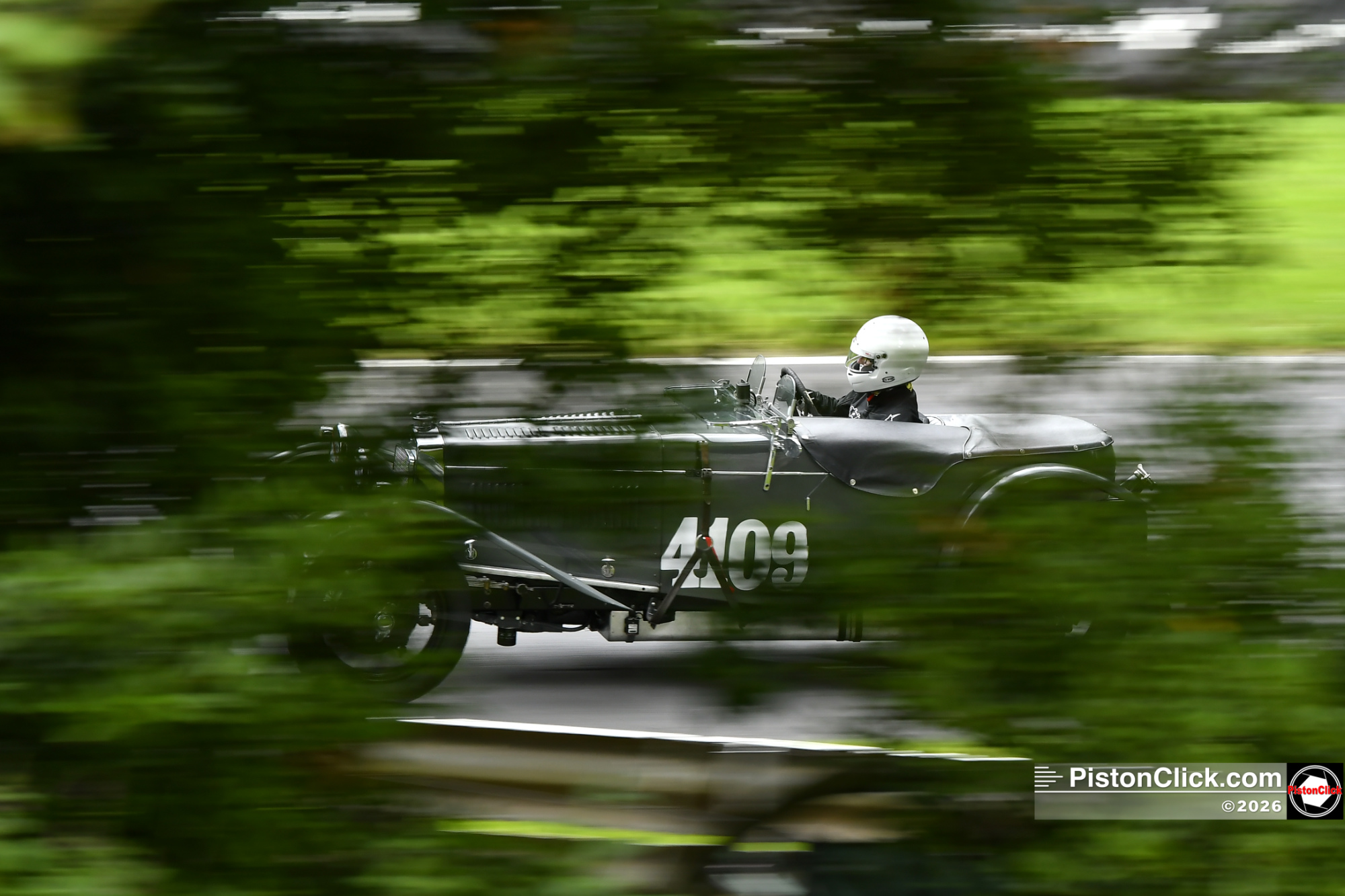
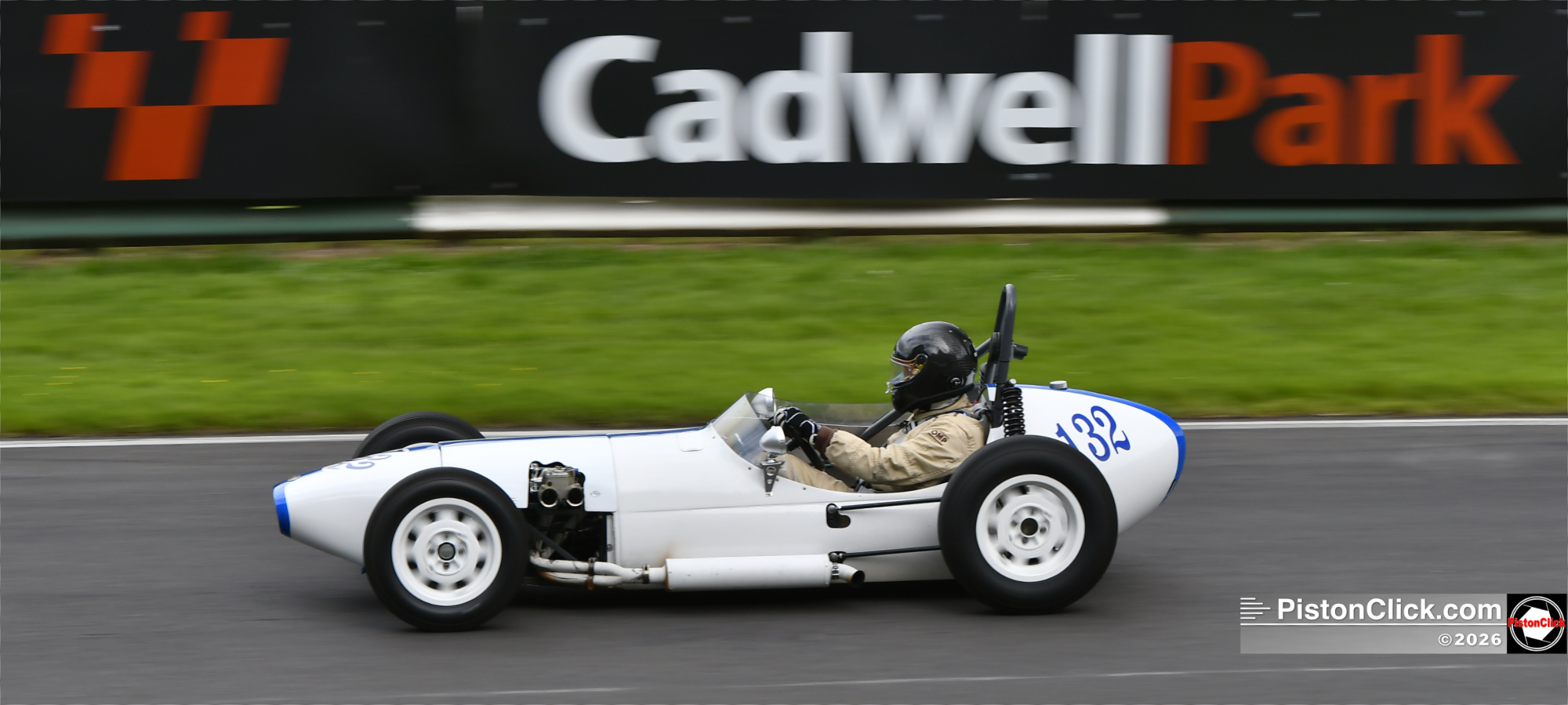
This slower pace makes panning practice far more approachable. Photographers have more time to position themselves, track the cars and refine their technique before capturing the shot.
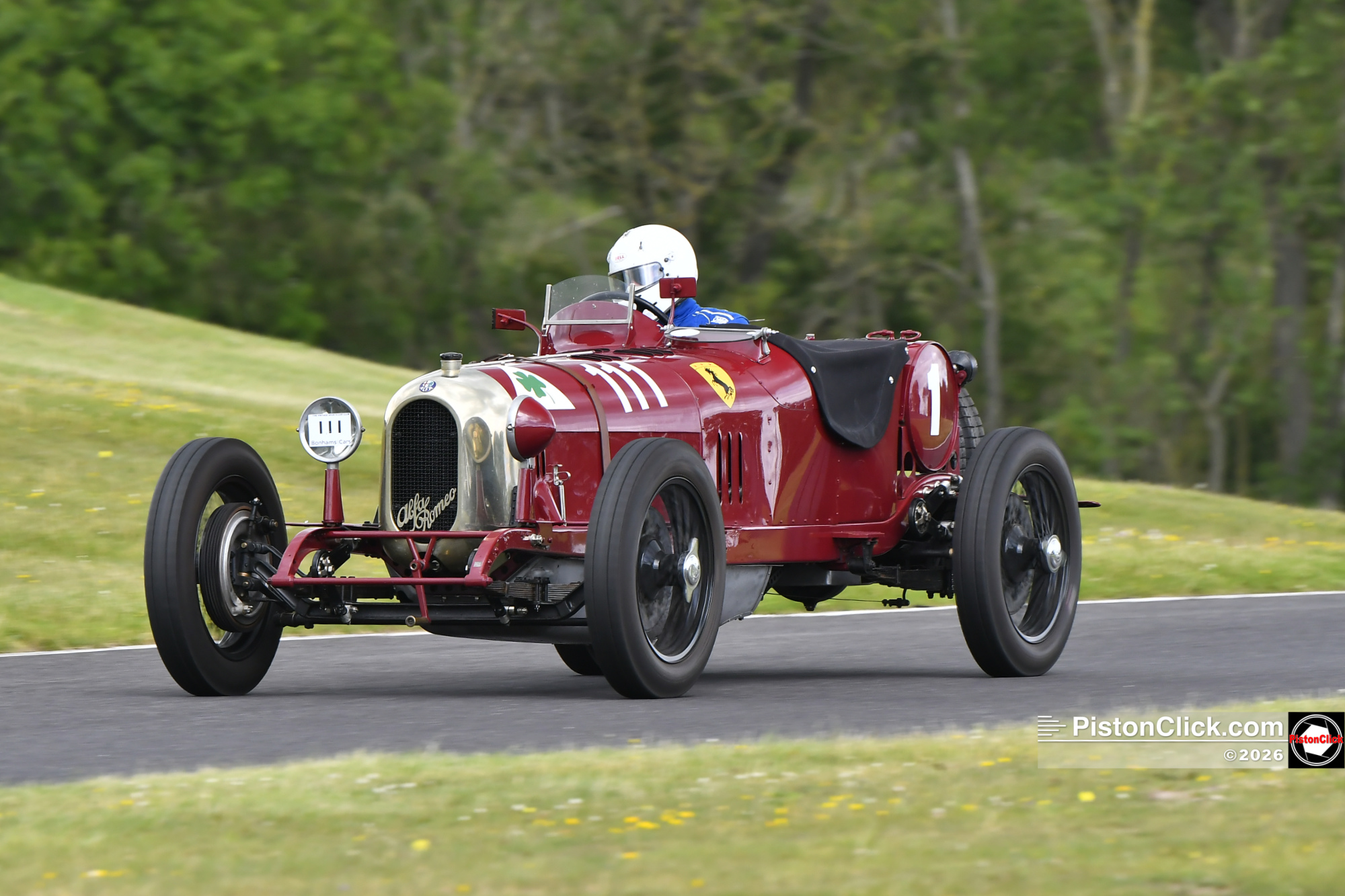
The cars themselves are incredibly photogenic, with fascinating engineering details and decades of history visible in every panel and component. The open paddock at Cadwell Park allowed spectators and photographers to get remarkably close to machines that have survived two world wars. Many proudly display the patina accumulated over generations, adding further character and visual appeal.
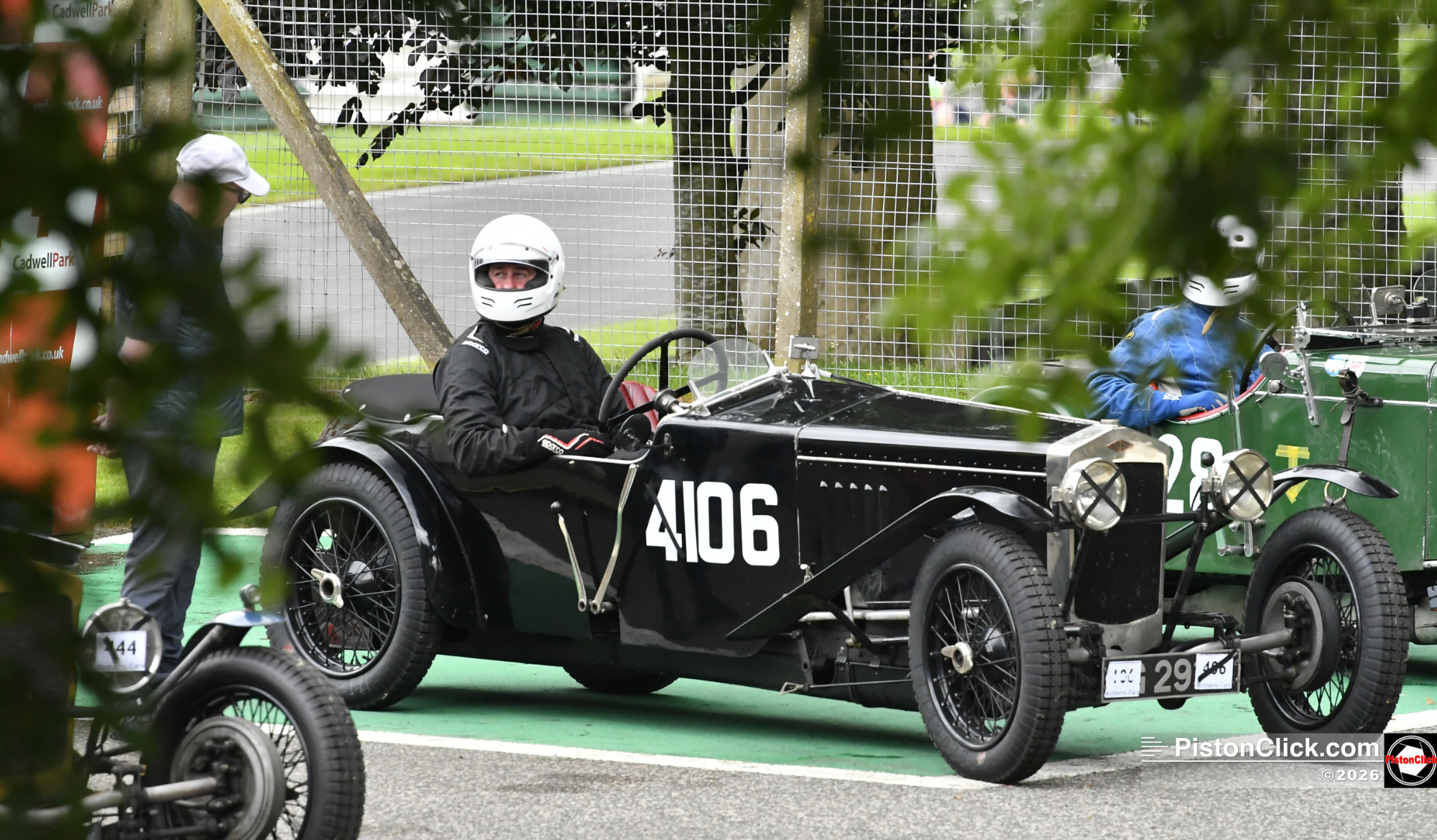
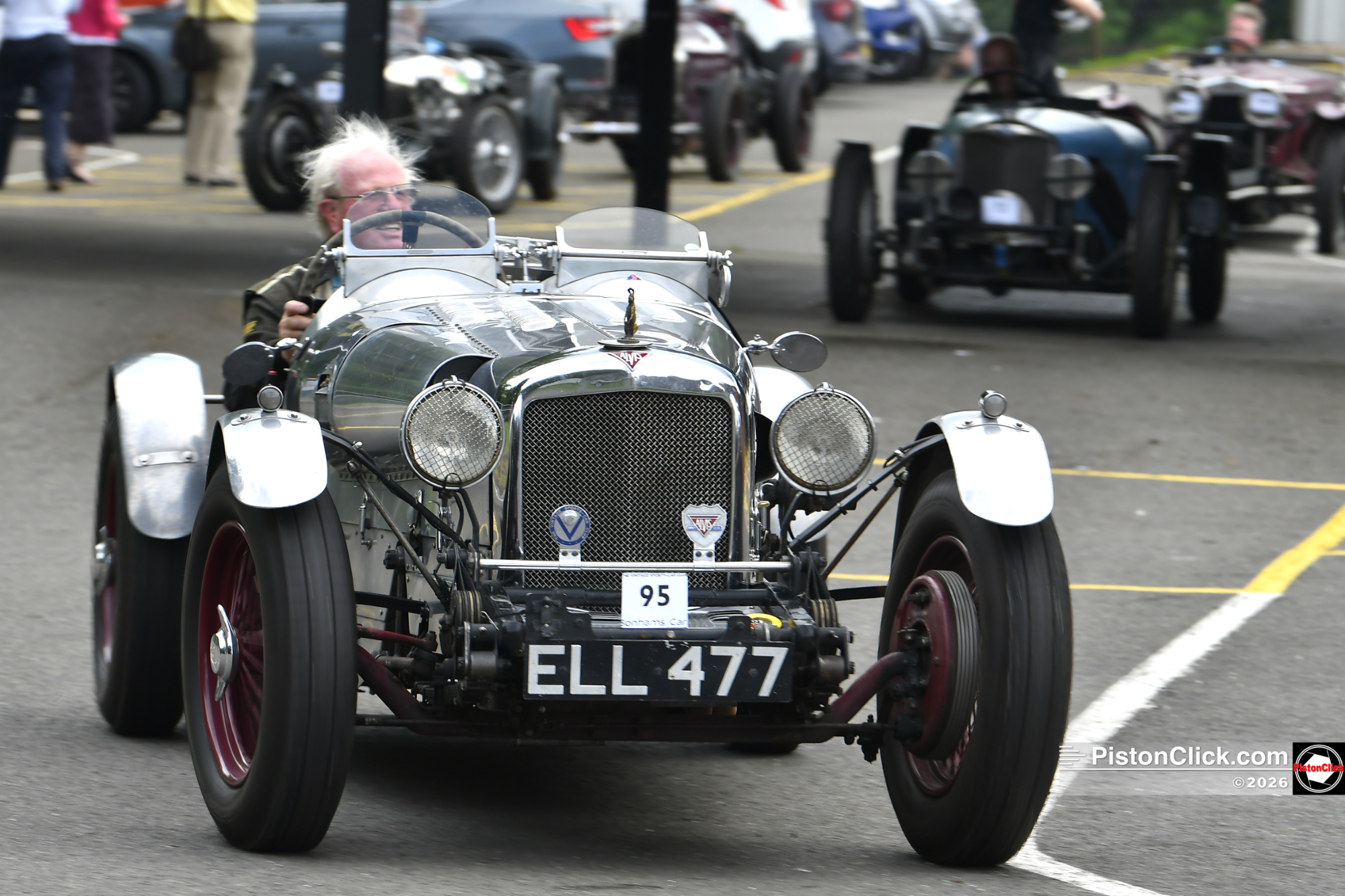
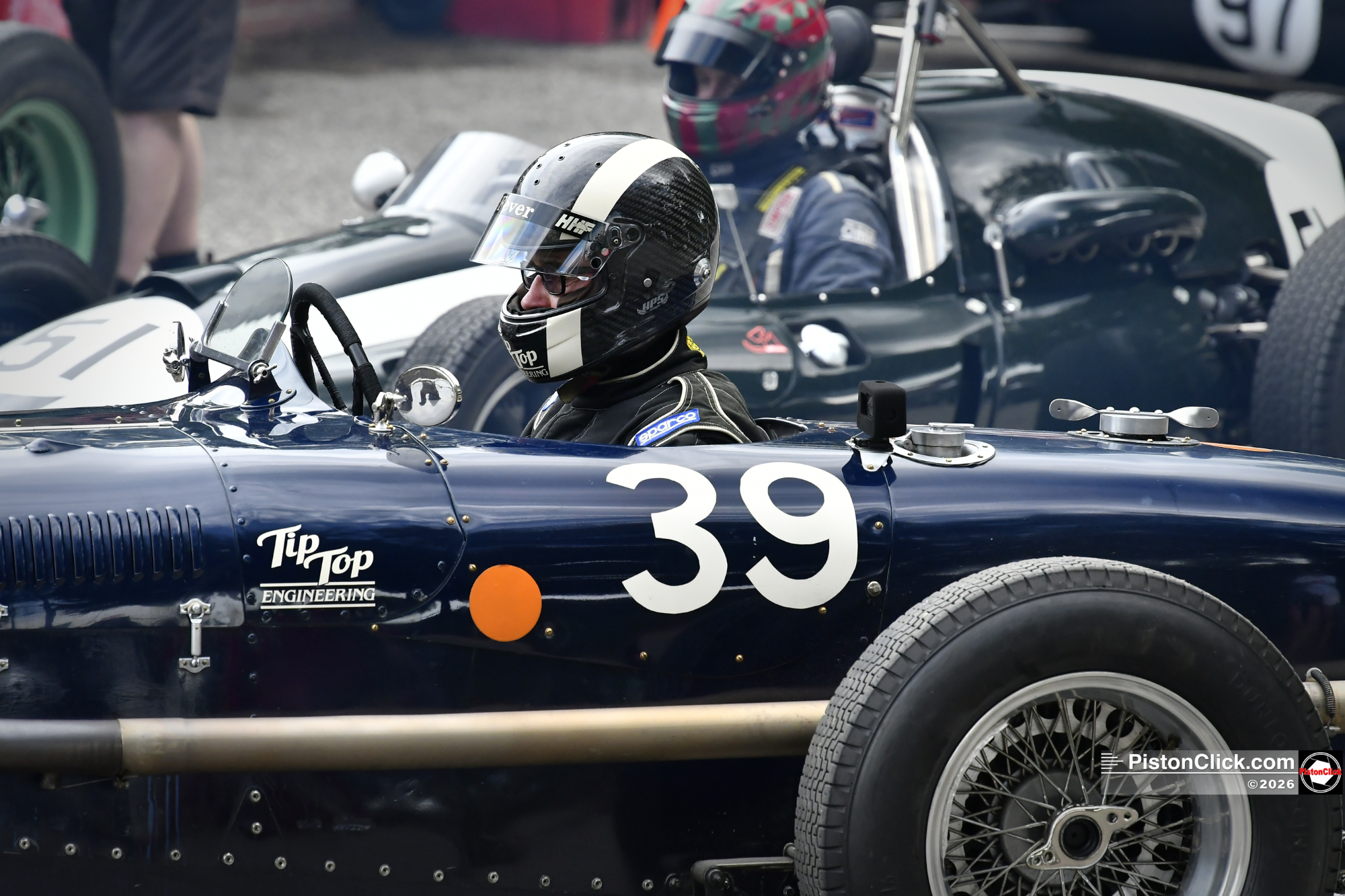
If you have never attended a VSCC meeting, I would highly recommend it. Whether your interest lies in motorsport history, photography or simply enjoying a relaxed day at the circuit, the Vintage Sports-Car Club offers a uniquely British motorsport experience.