



Photographing the Aston Martin DP214 at Donington Park
Report by Graham Atkinson Photography
16 March 2026
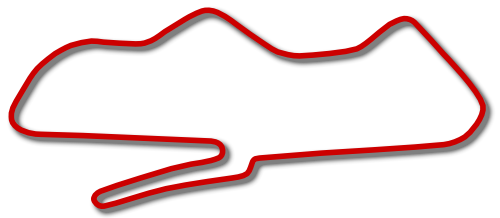
The other day at Donington Park I was wandering down the pit lane, minding my own business, when a gentleman stopped me.
“I know you don’t I? You live locally,” he said.
“Yes, I do,” I replied. “Why’s that?”
“Well, you’re lucky up here having Donington. I live five miles from Brands Hatch and we don’t have any unsilenced test days at all. I have to drive all the way up from Kent in the hope of seeing some good cars here.”
As you know, a test day is always a bit of pot luck as to what turns up. But if it’s an unsilenced day there’s far more chance of some exotic machinery appearing. Fortunately for this gentleman from Kent, he had picked a very good day indeed.
The turnout of cars was exceptional—far too many to go into detail about them all. I’ve picked out just a few cars to highlight from the test.
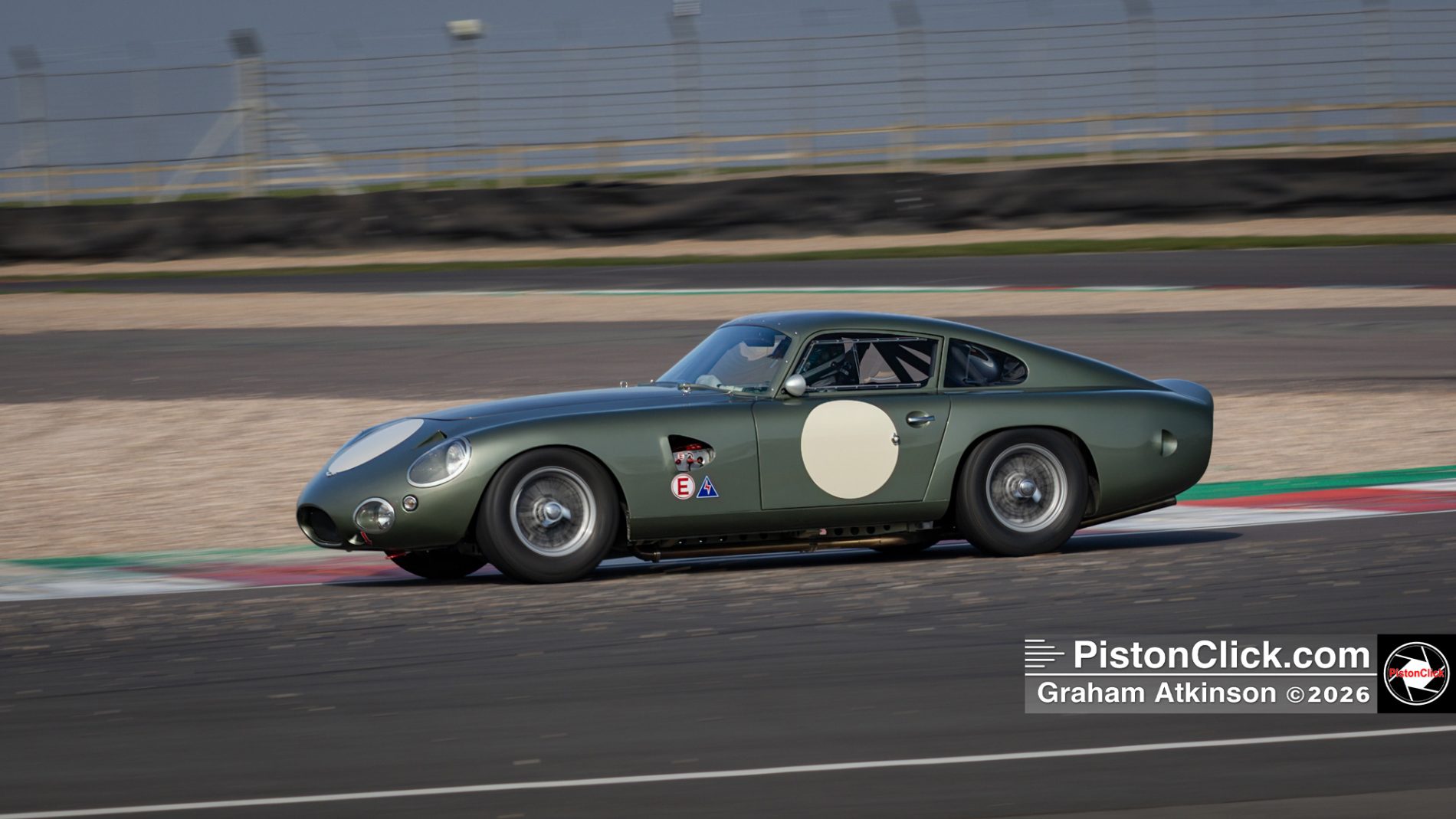
Aston Martin DP214
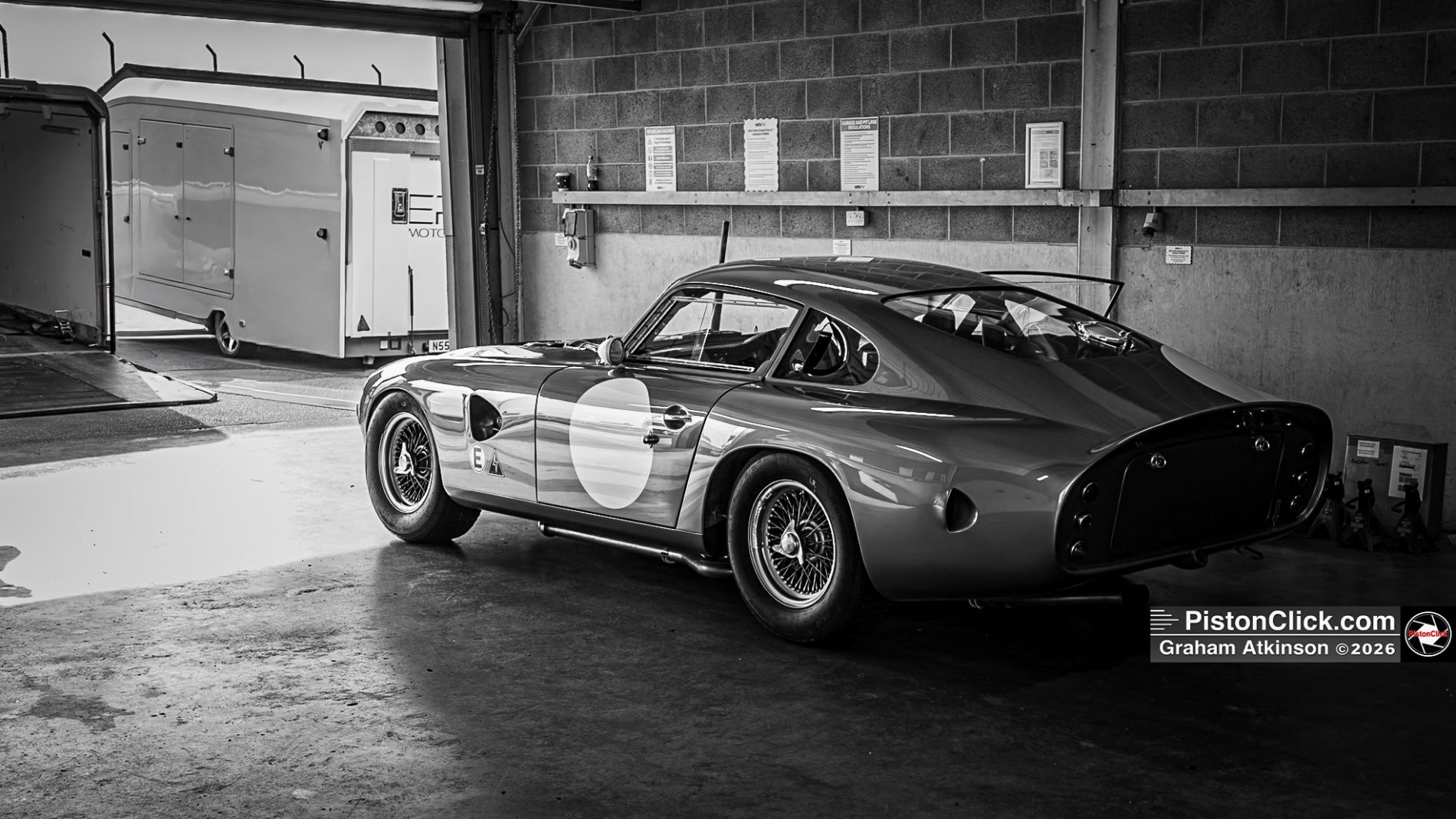
The first car was the beautiful Aston Martin DP214, chassis DP214/195/R. It was being driven today by Paul Frederick, who together with his father Wolfgang Frederick owns several Aston Martin race cars.
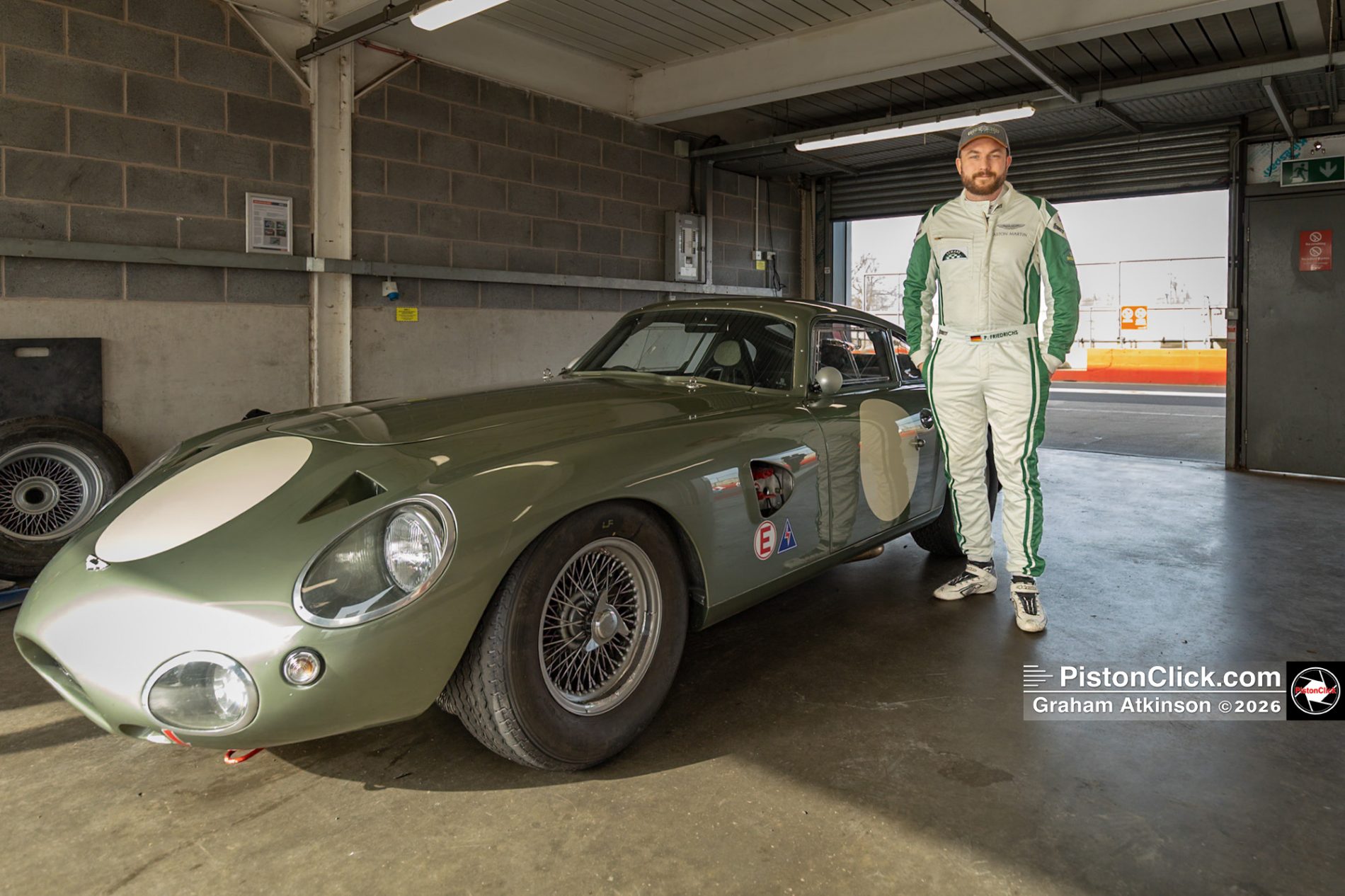
Among them is a one-off Aston Martin DP212. Built in 1962 when Aston Martin returned to racing at the 24 Hours of Le Mans after a few years away.
The car proved to be very fast but unstable at high speeds, unfortunately its race ended early with an engine failure. The problem was a piston failure: the team had run out of time to have forged pistons made and had to use standard cast pistons. These pistons were simply not strong enough for the job.
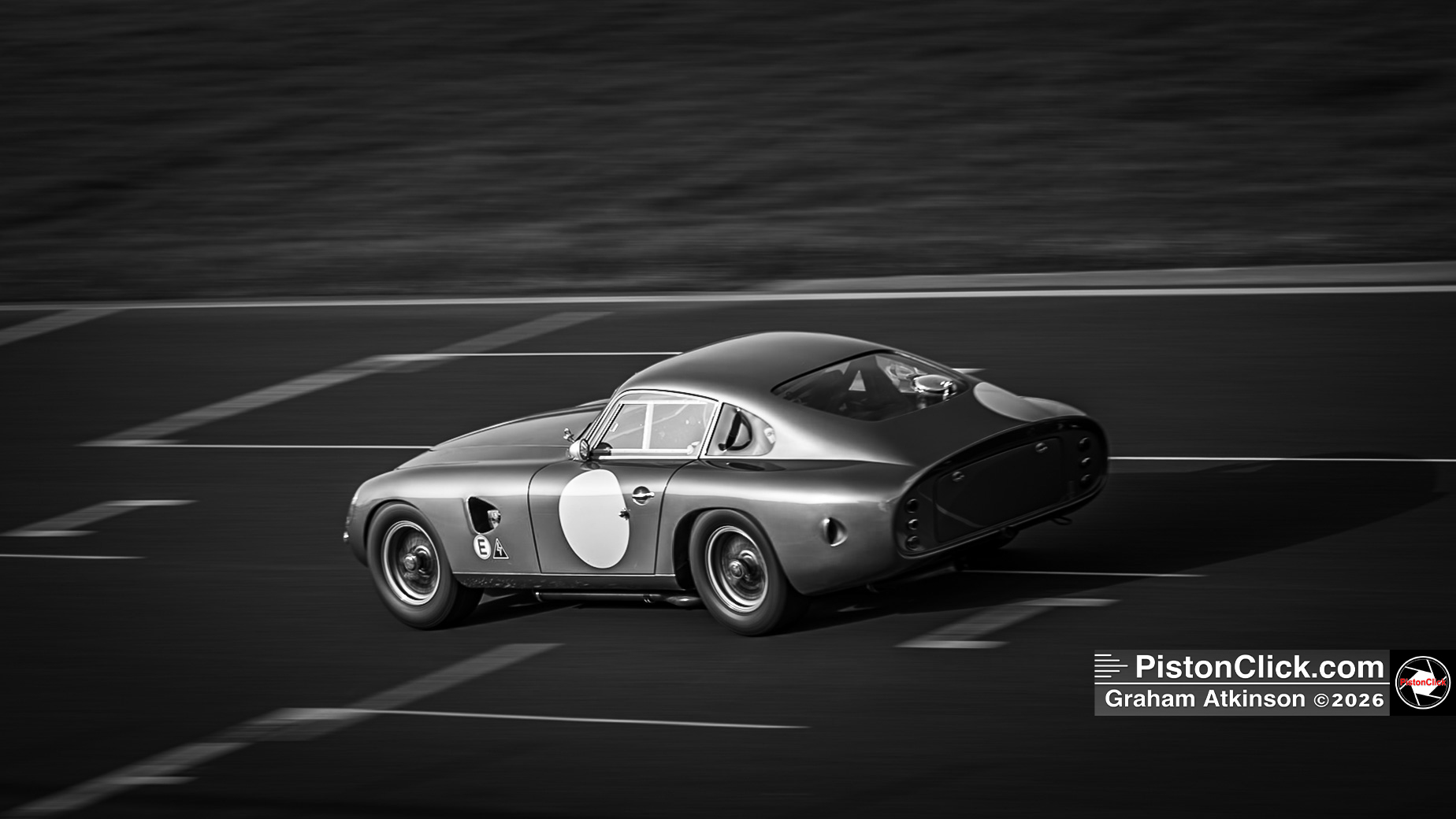
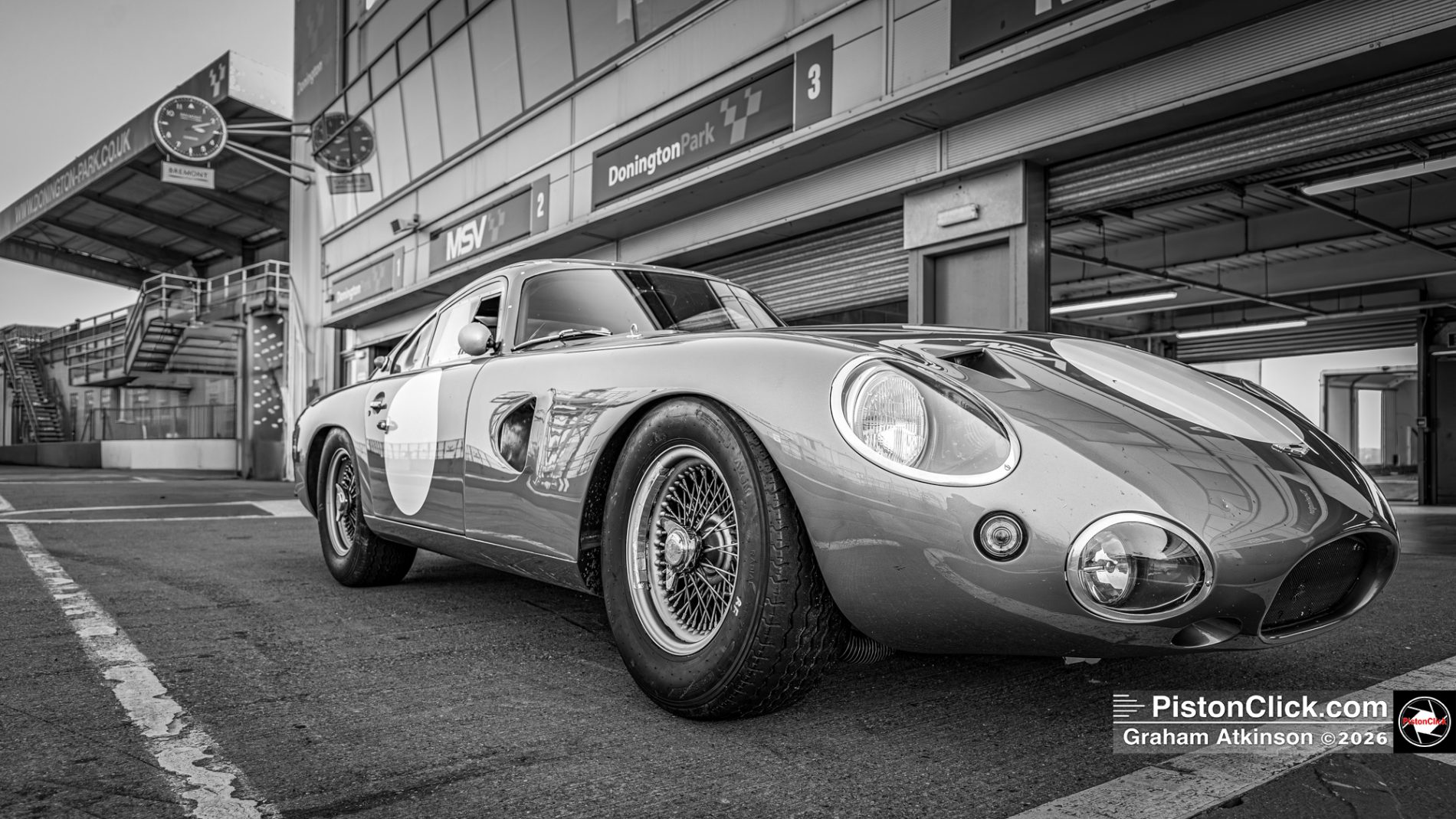
The following year, in 1963, Aston Martin tried again with two new cars. DP214 chassis 0194 and 0195—both based on the Aston Martin DB4 GT chassis. These cars were developed to challenge the Ferraris of the era and featured revised bodywork, including a small rear spoiler to improve stability at high speed. The modifications worked and the cars were again very quick.
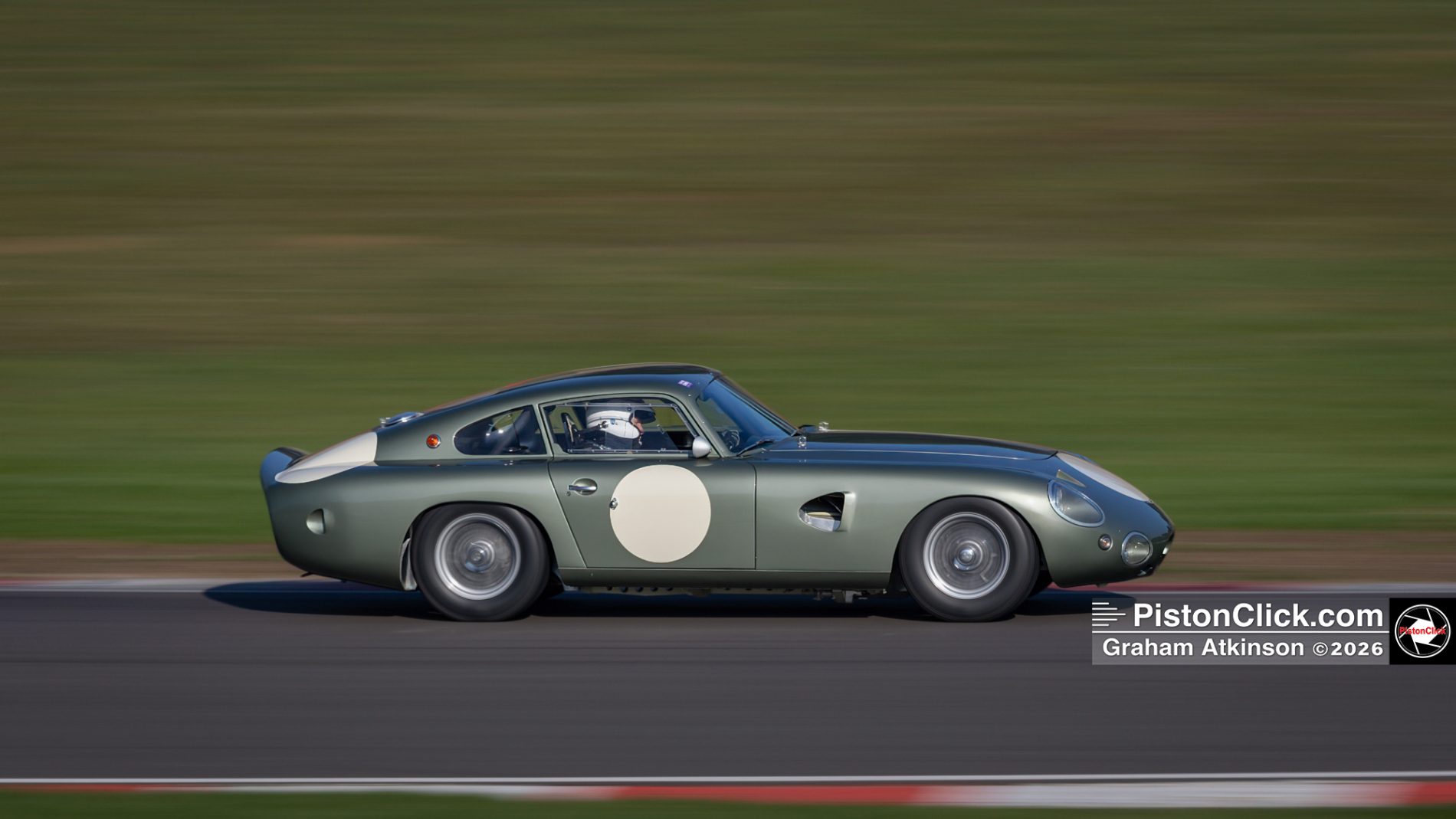
However, endurance races like Le Mans are as much about durability as speed. Unfortunately both cars again retired with engine failures.
Both continued racing with various owners and drivers. Sadly, during practice at the Nürburgring in 1964, chassis 0195 crashed, killing driver Brian Hetreed. The wrecked car was cut up and returned to England, where the engine was removed. Subsequently it was rebuilt for use in a Aston Martin DB4 GT Zagato. The sole surviving original DP214, chassis 0194, continued racing in various forms until its current owner eventually retired it to storage.
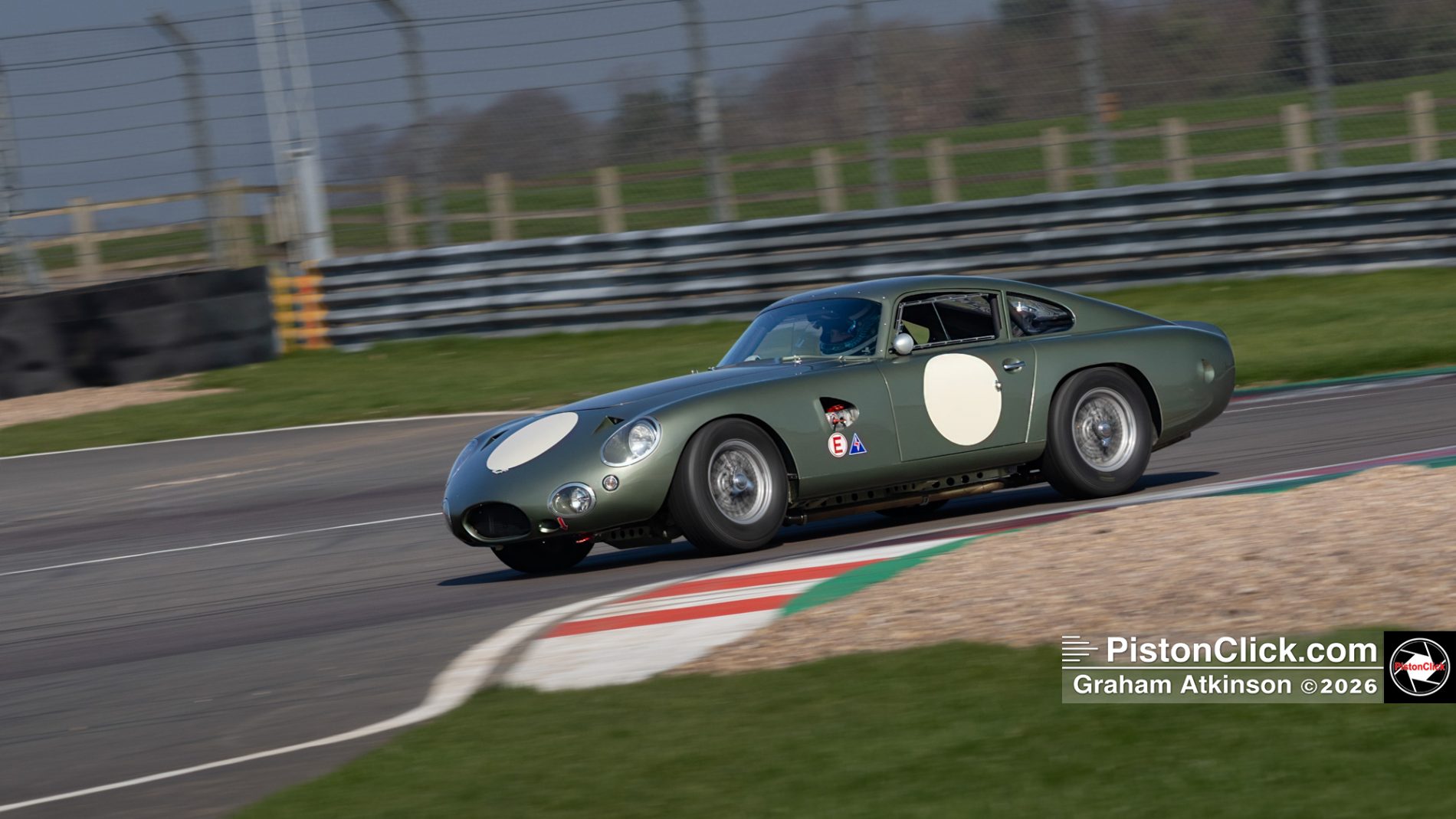
Aston Martin DP214 – Replicas
There are now three known replicas of 0195. The example here today is one of them. It was built by an American who claimed to have discovered the remains of the original car—including the engine—in Germany. However, the engine was in fact scrapped after suffering catastrophic damage. It was reported to have a three-inch hole in the side of the block.
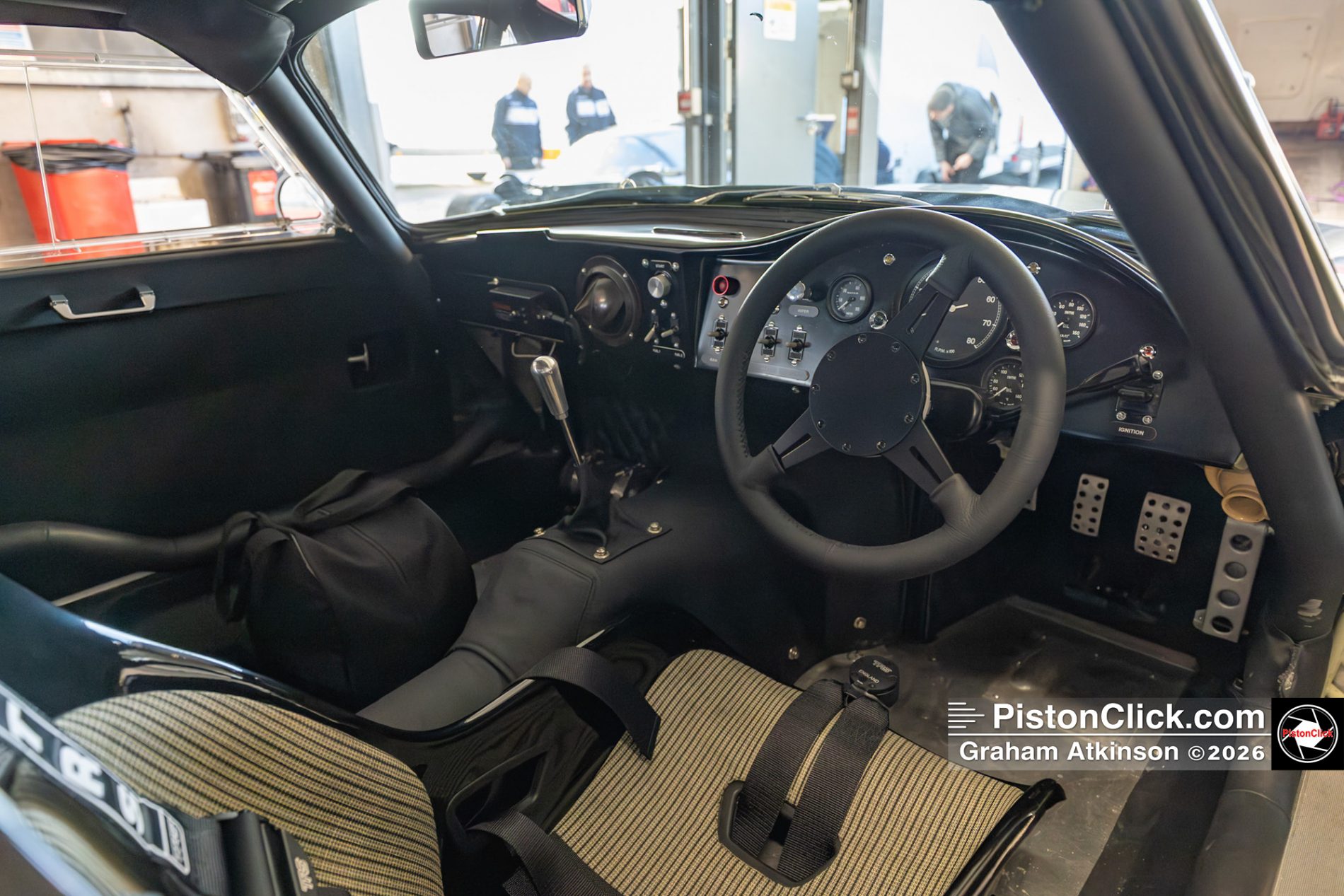
This particular car has just undergone a complete restoration by I. Wilkinson & Son. Their team were present today and explained how they had painstakingly rebuilt the car. Using as many original body panels as possible and hand-crafting replacements where necessary. The finished result is superb—arguably better than the day it left the factory.
Legacy Outlaws – Lola T70 MkIIIB
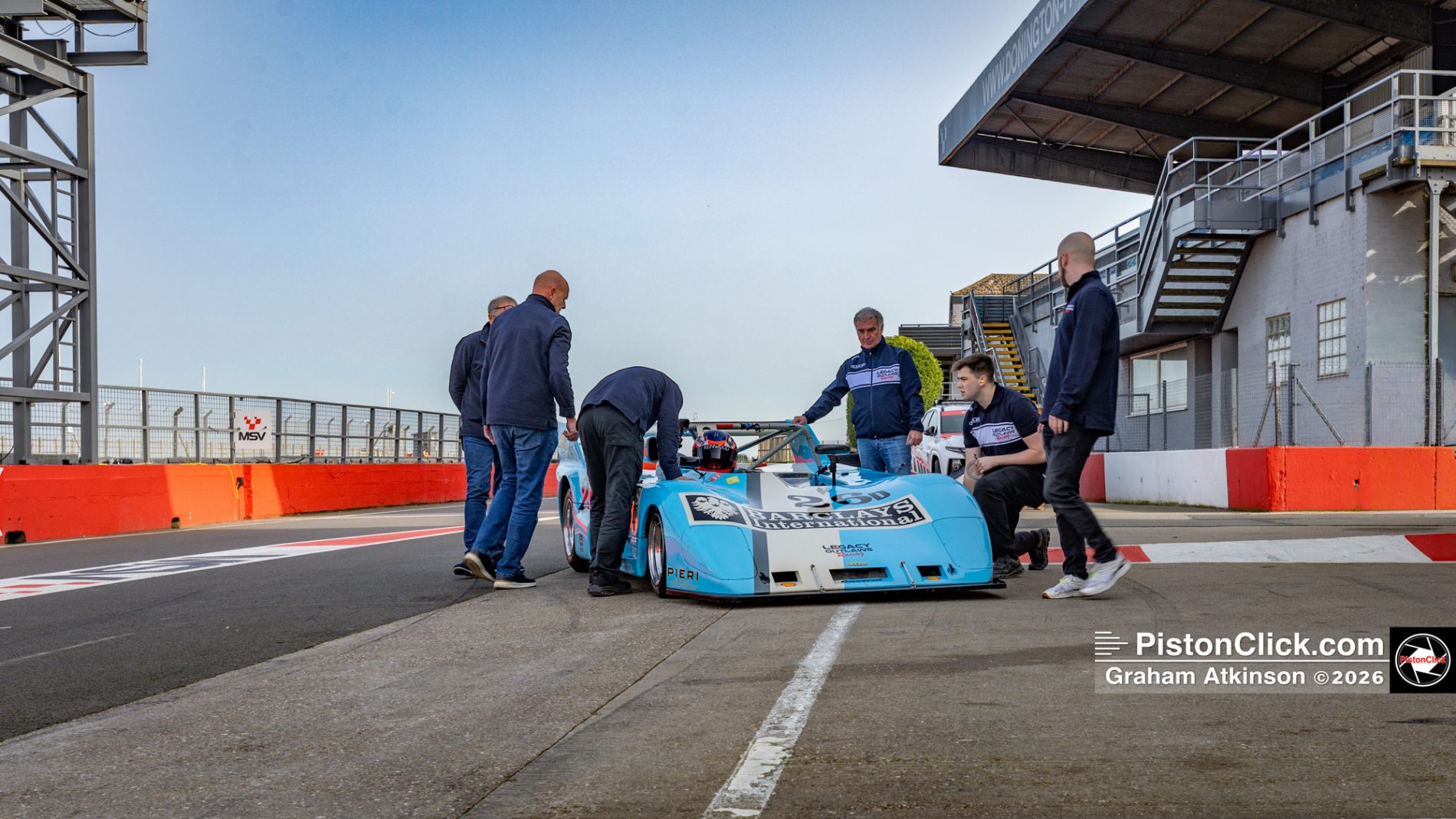
Further down the pit lane I came across the Legacy Outlaws Racing Team, who had brought three very different cars.
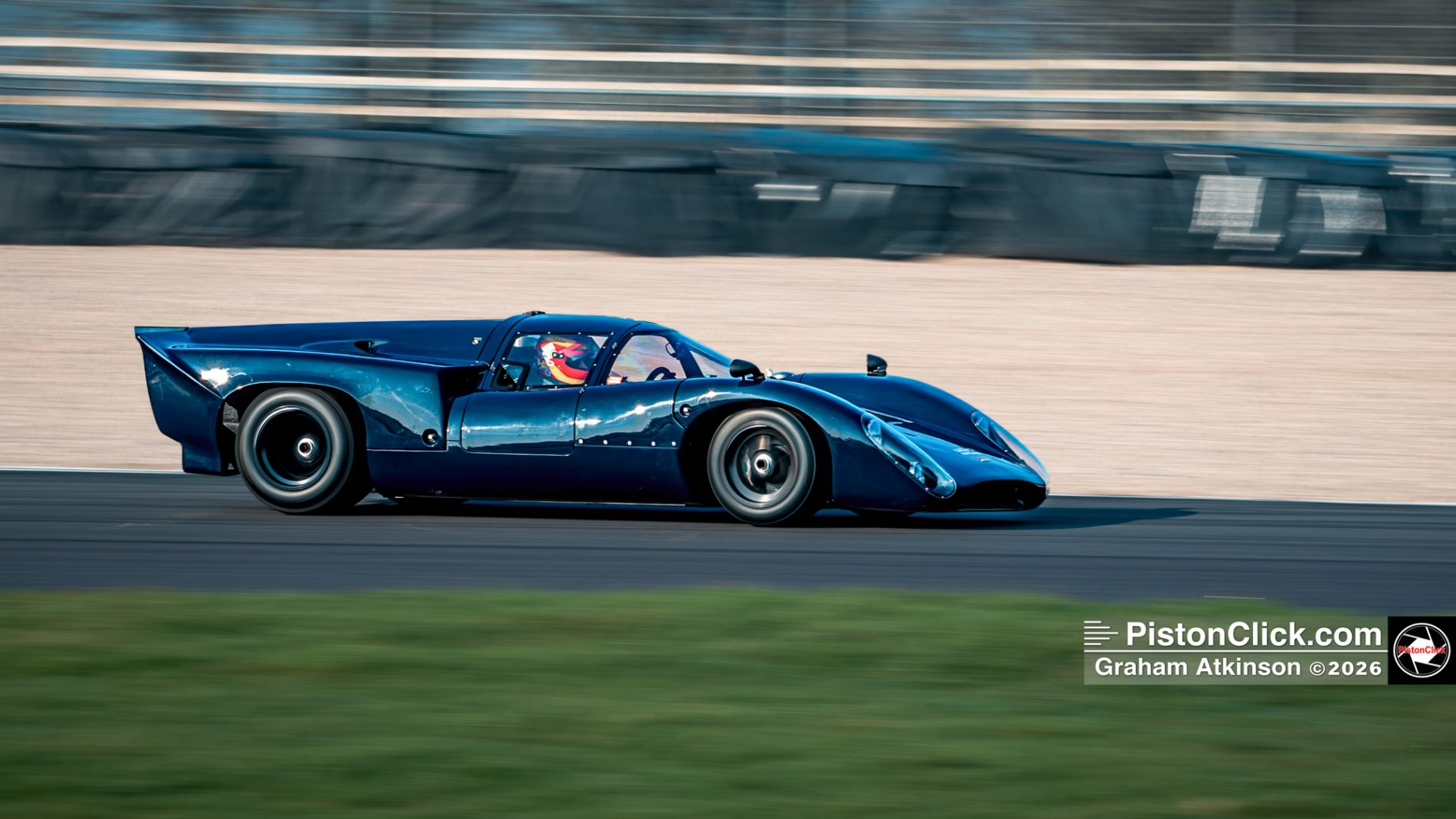
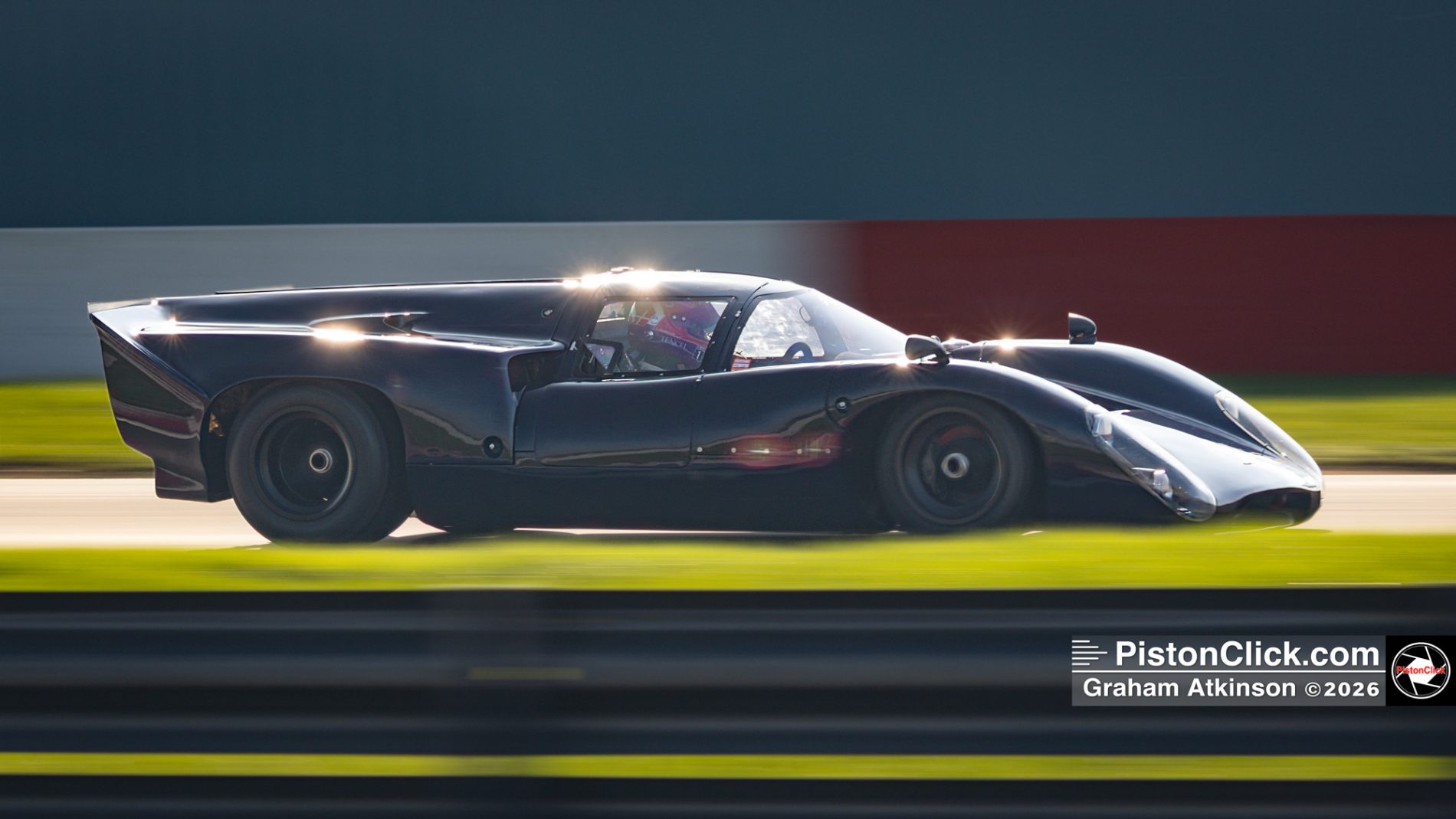
The first was the mighty Lola T70 MkIIIB from the late 1960s, powered by a Chevrolet 5.0-litre small-block V8. Even today it is every bit as impressive as anything on track. The car has just undergone a winter rebuild, emerging both lighter and around 30mm lower thanks to chassis modifications.
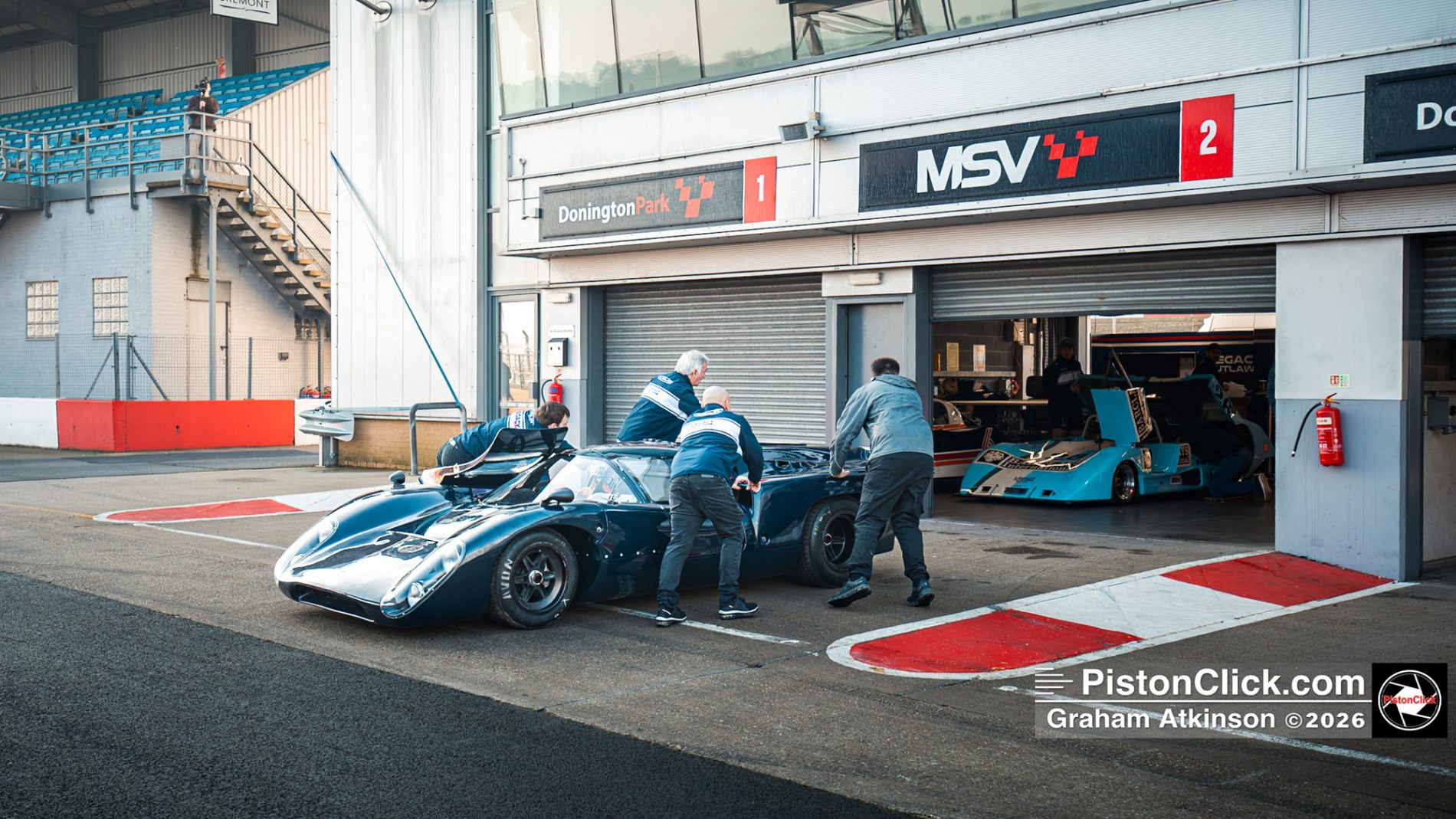
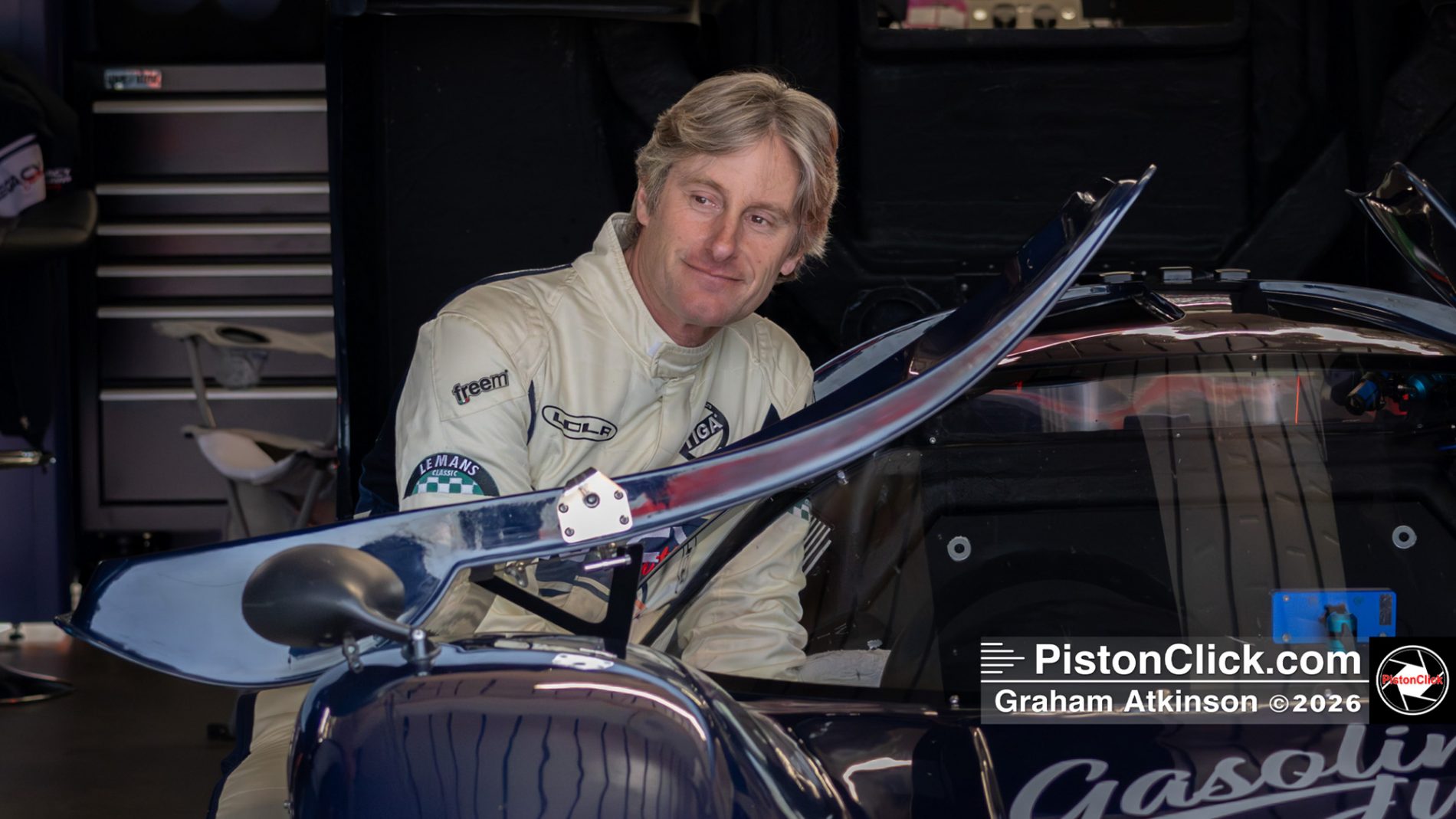
This car, along with the team’s other two machines, will compete in the Peter Auto Historic Racing Series. Last season the Lola finished third, and driver Chris Ward hopes the latest modifications will help push it to the top step this year.
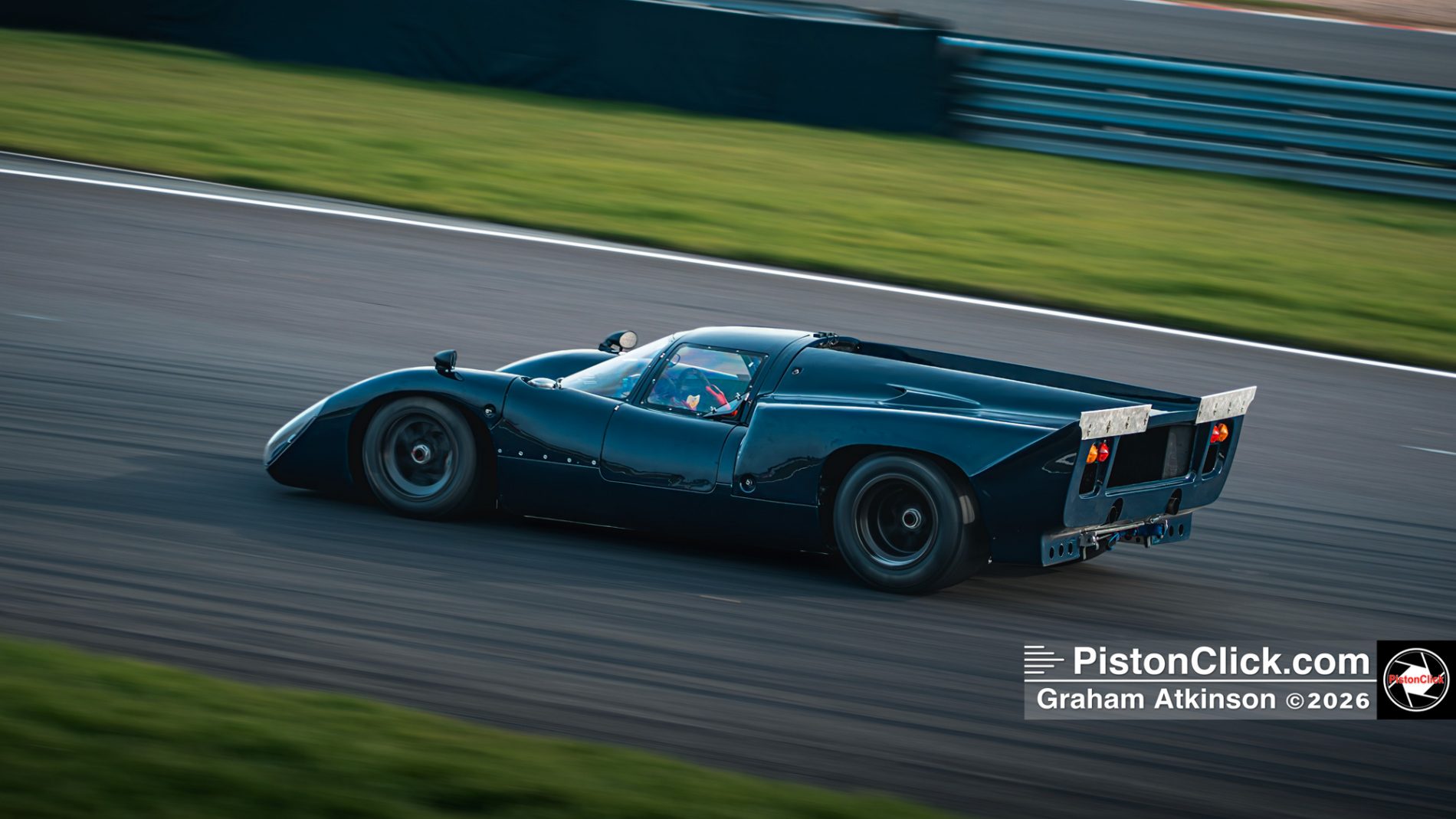
Their campaign begins shortly with a trip to Barcelona. Rounds at Circuit de Spa‑Francorchamps, Dijon‑Prenois Circuit, Circuit de la Sarthe and Circuit Paul Ricard will follow.
Legacy Outlaws Racing Team – Lola T292
The second car was a Lola T292 from the early 1970s, powered by the famous Cosworth BDG engine. Like all three of the team’s cars, it has no modern driver aids. No electronics, no power steering, just the basic instruments and controls that defined real racing cars of the era.
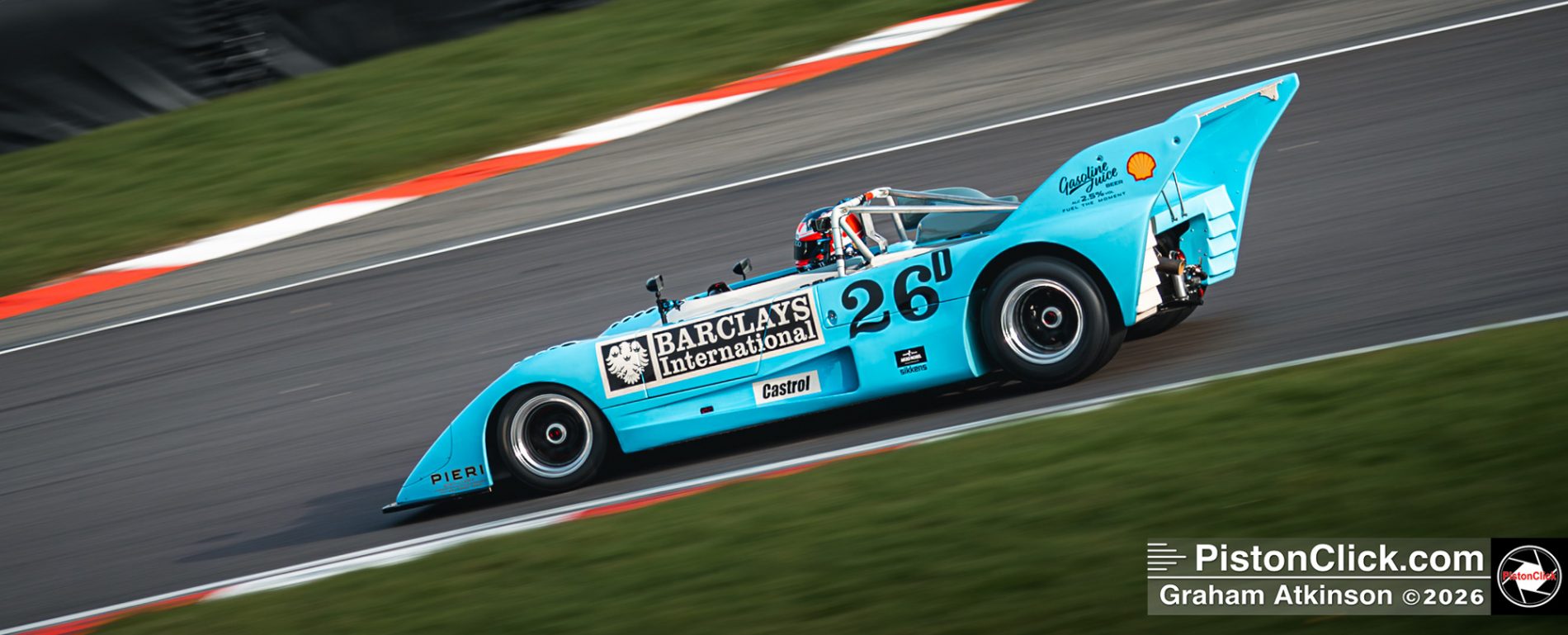
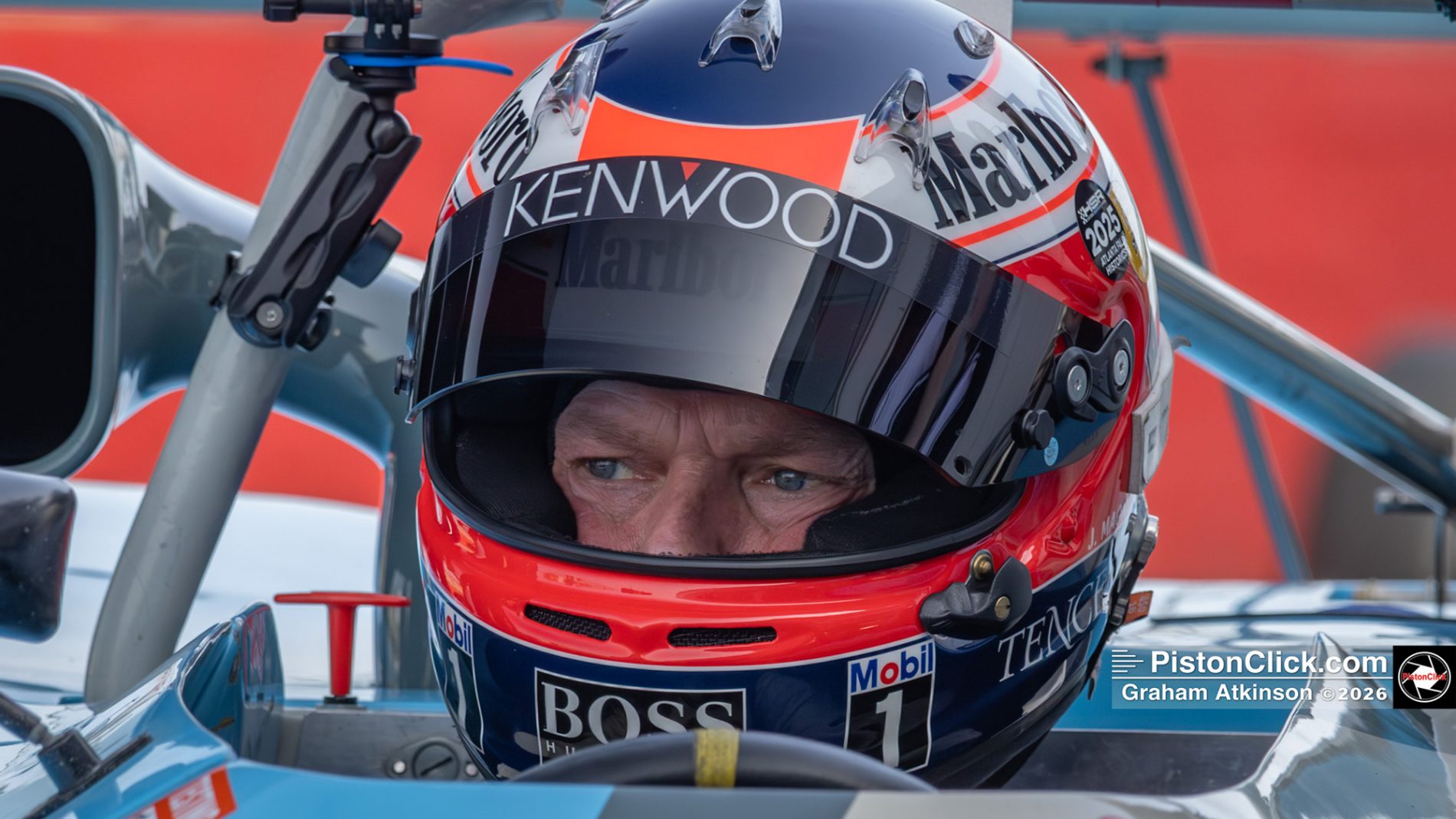
Driving it today was the legendary Jan Magnussen, who along with Chris Ward will share both Lolas during endurance races. Magnussen has enjoyed a long and distinguished career in many forms of motorsport. Kevin Magnussen, his son, has raced in Formula One for teams including McLaren, Renault F1 Team and Haas F1 Team.
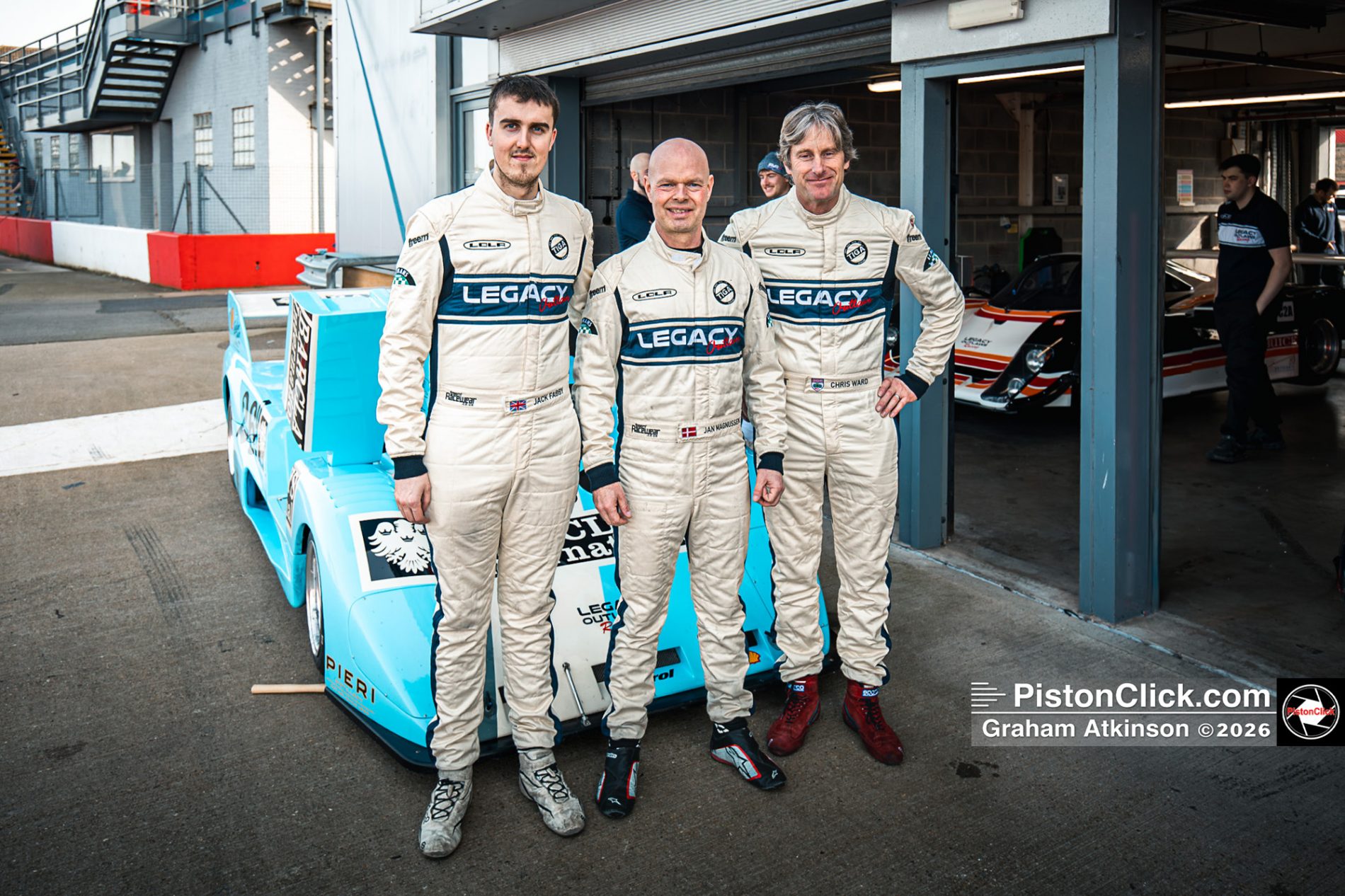
Legacy Outlaws Racing Team – Tiga Sports Prototype
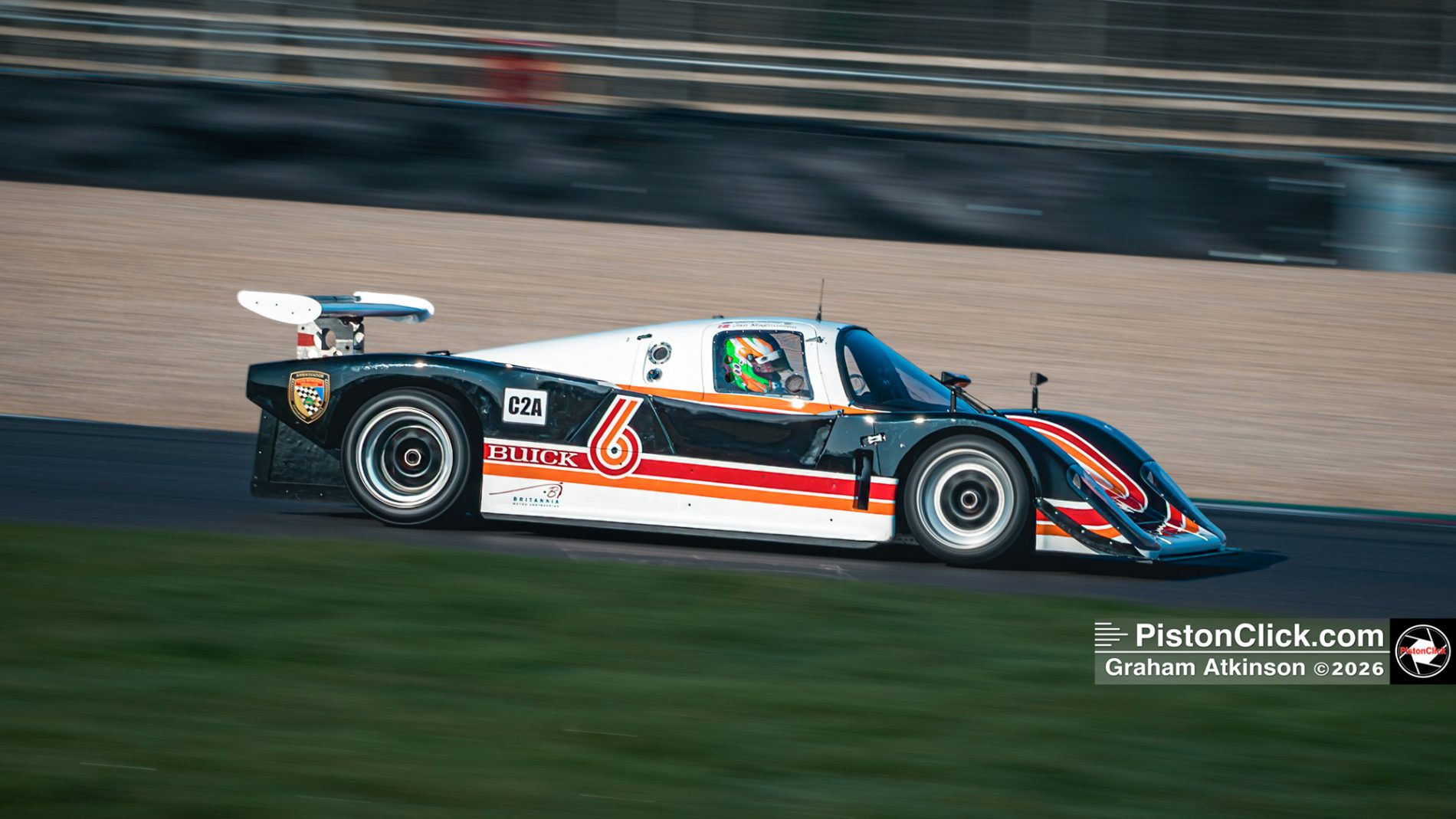
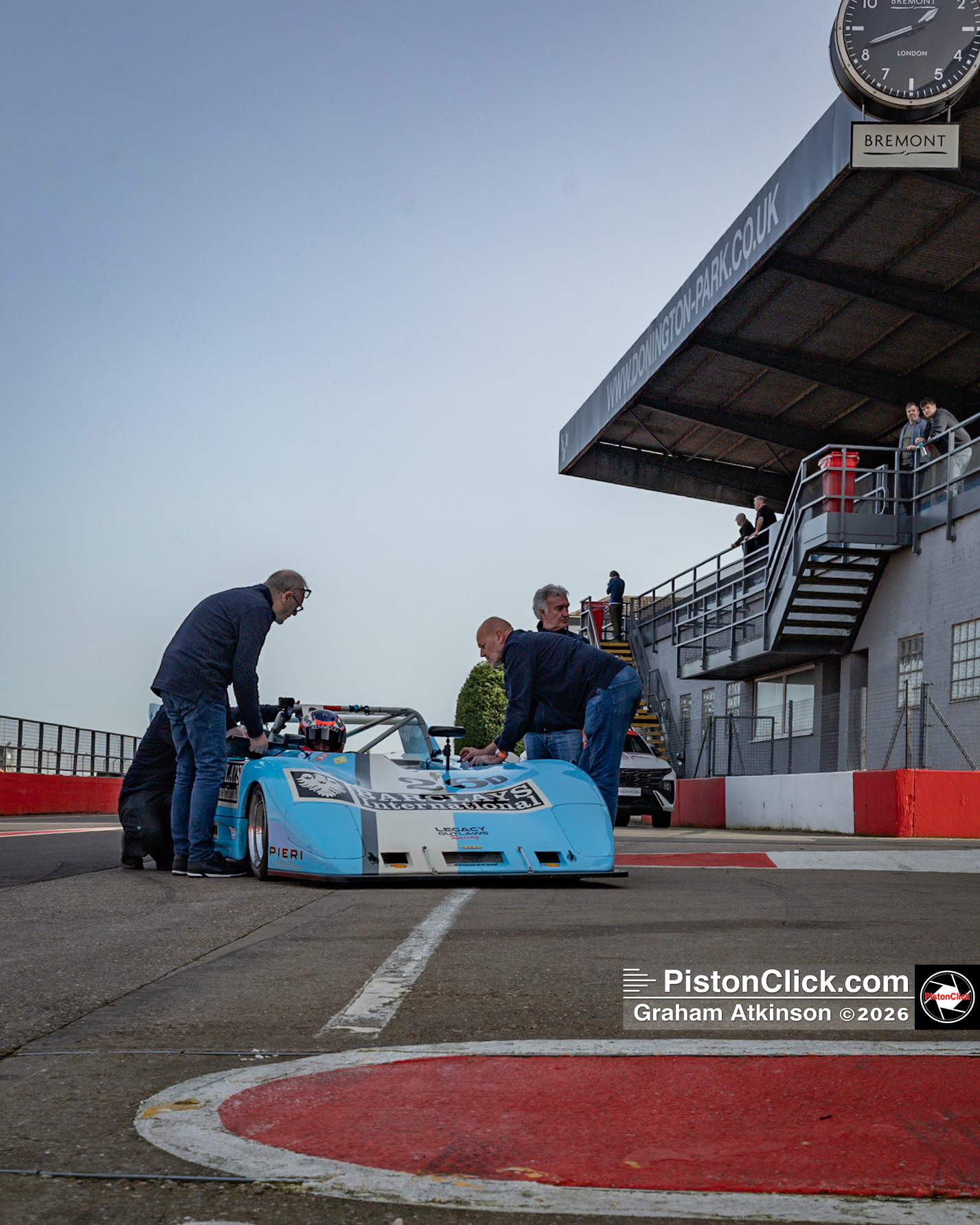
The third car was a Tiga sports prototype from the mid-1980s, driven today by Jack Fabby. Powered by a Buick V6 engine, Jack told me it isn’t the most powerful car but it is still extremely quick—and rather unforgiving. With no electronic assistance, mistakes are costly, but when you get it right it’s enormously rewarding to drive.
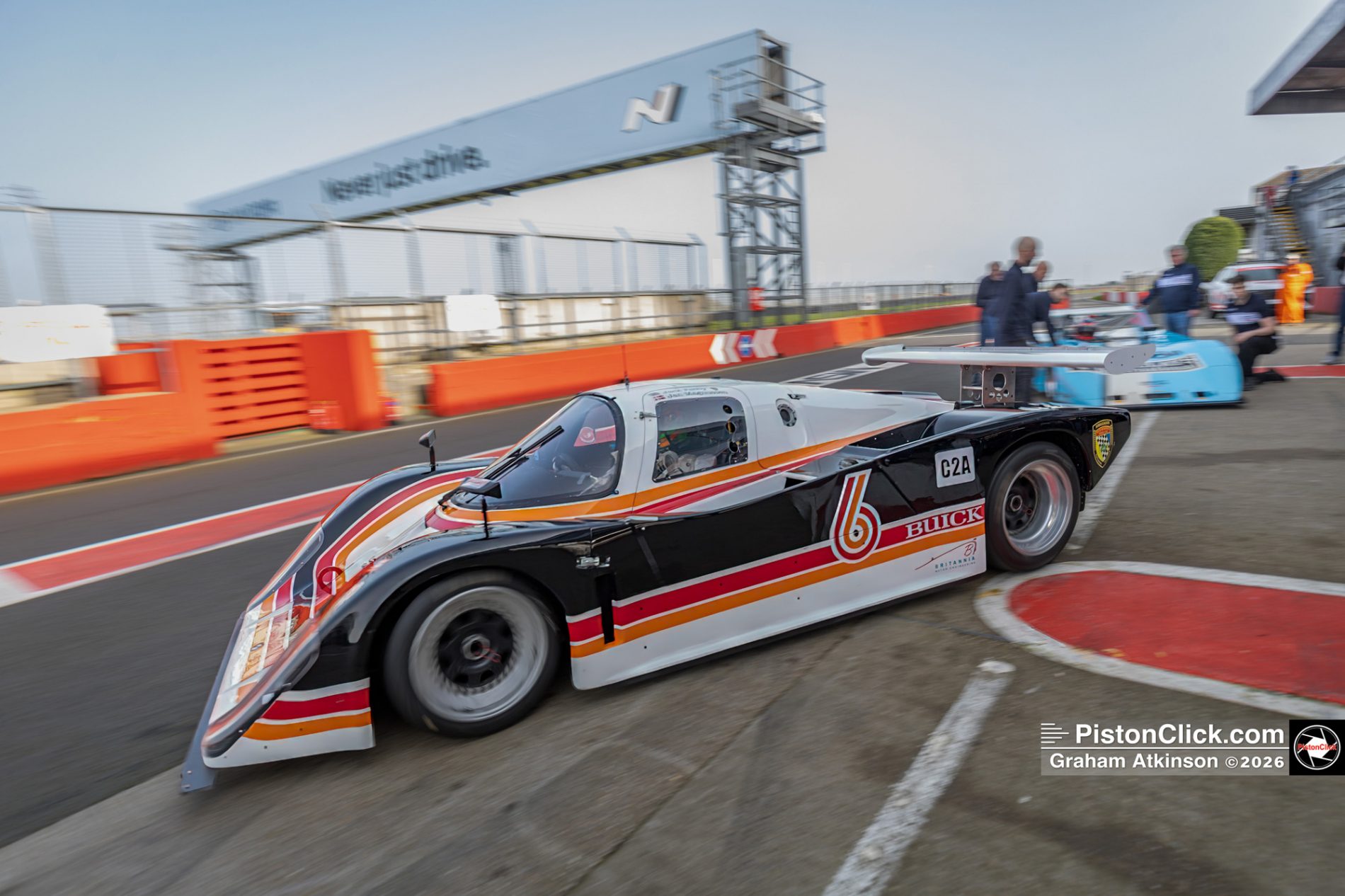
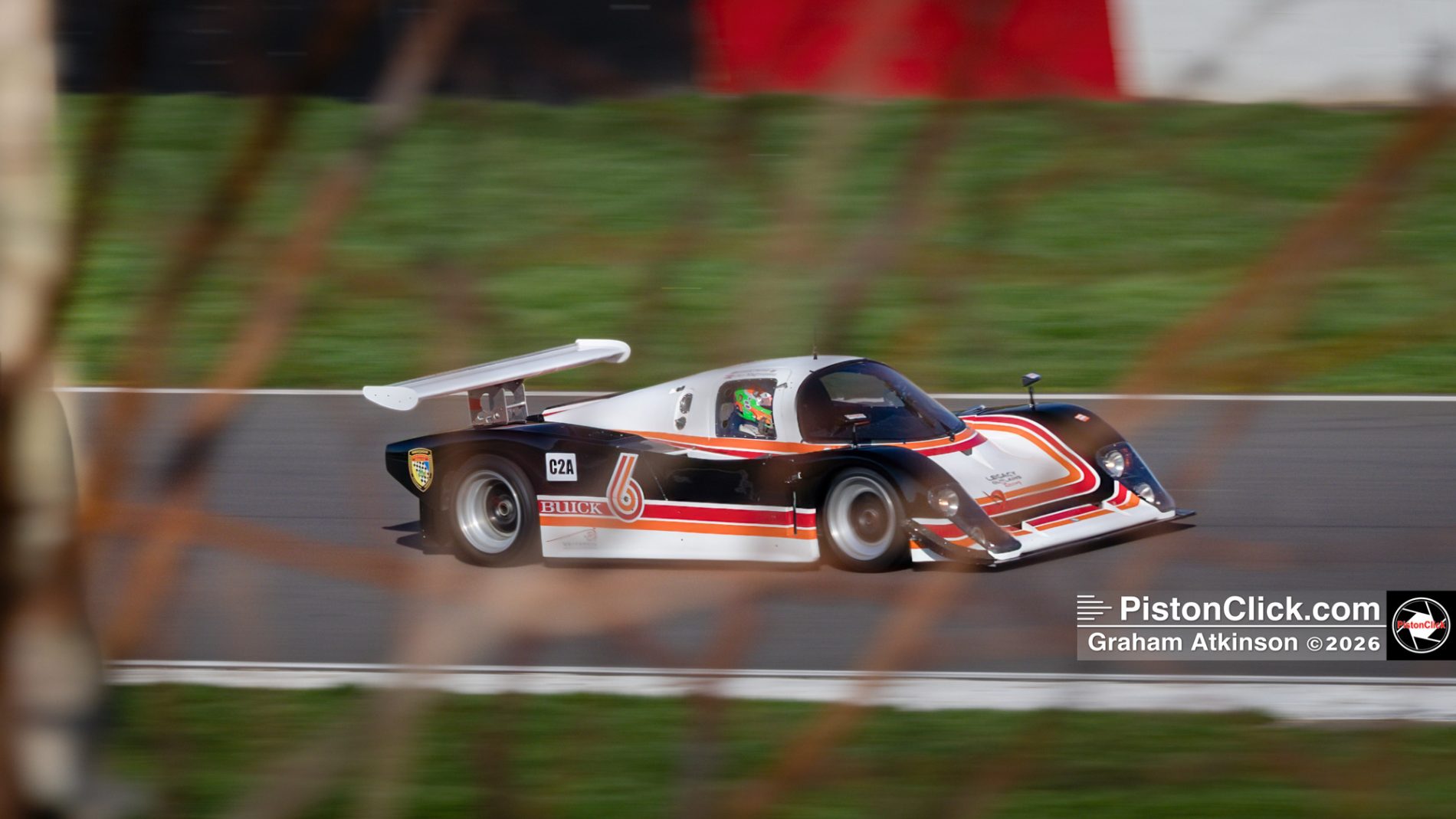
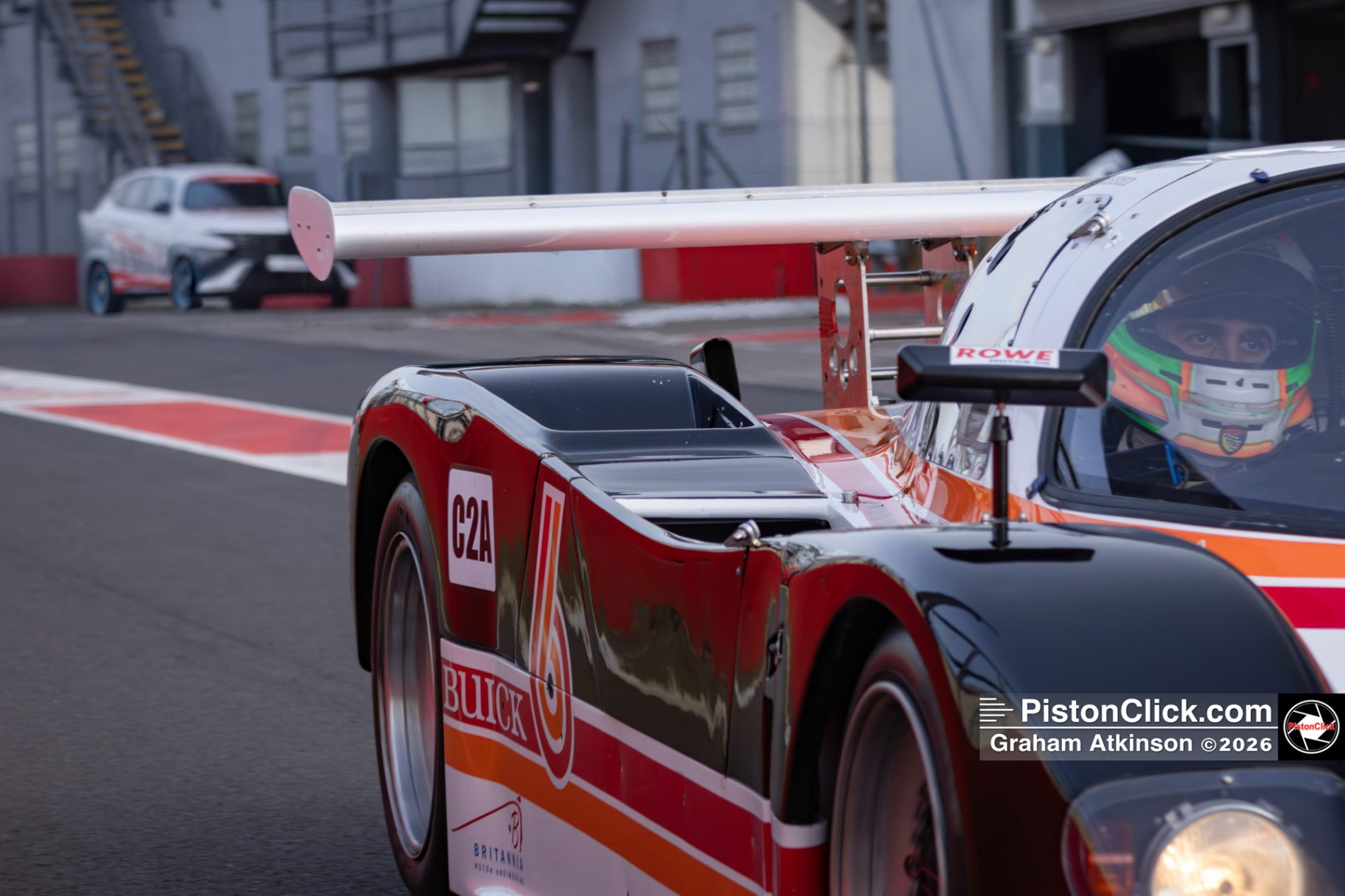
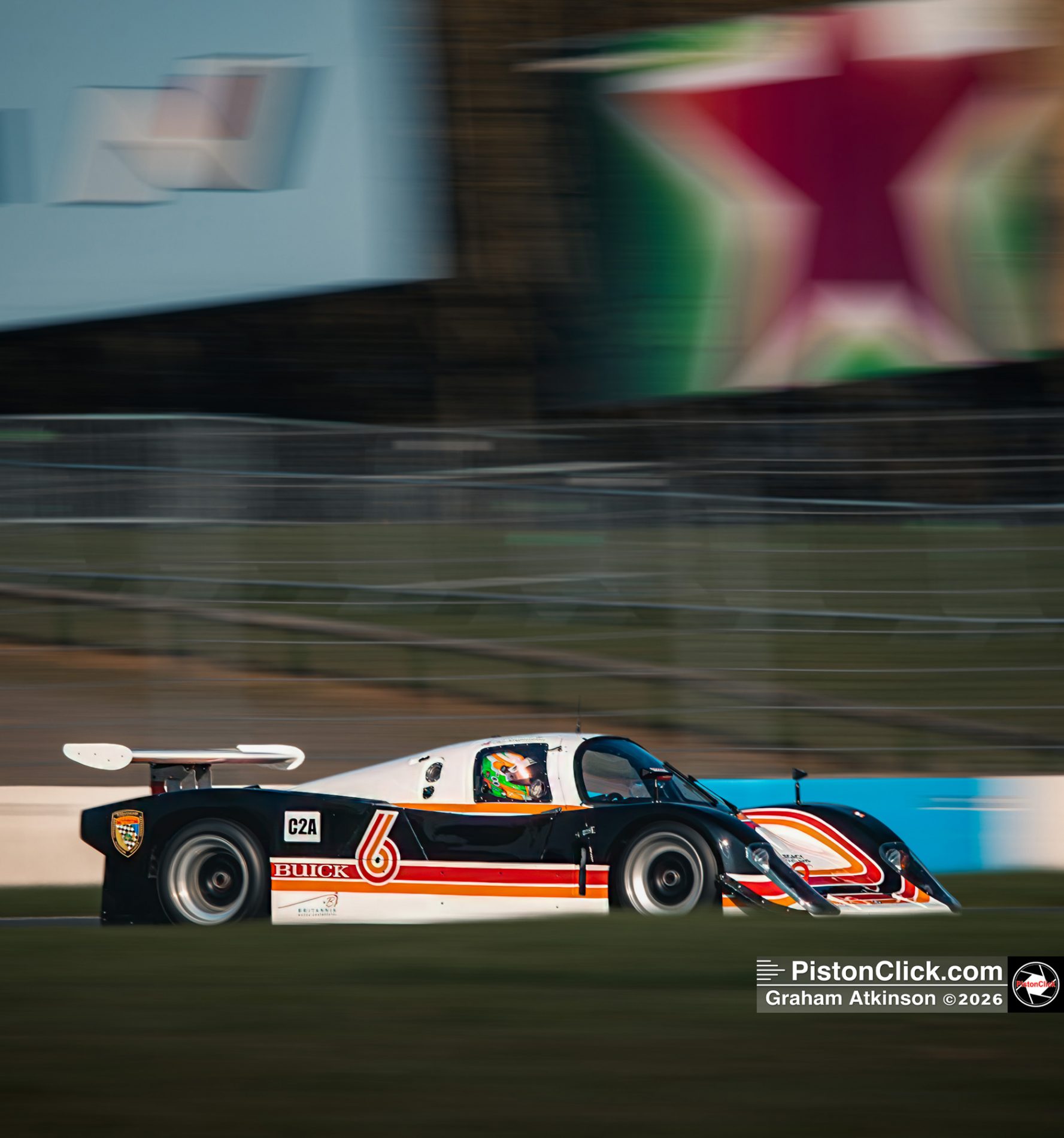
All three cars will compete in the Peter Auto series this season, with the drivers sharing duties across the cars. We wish them the best of luck.
Gilby Type B1
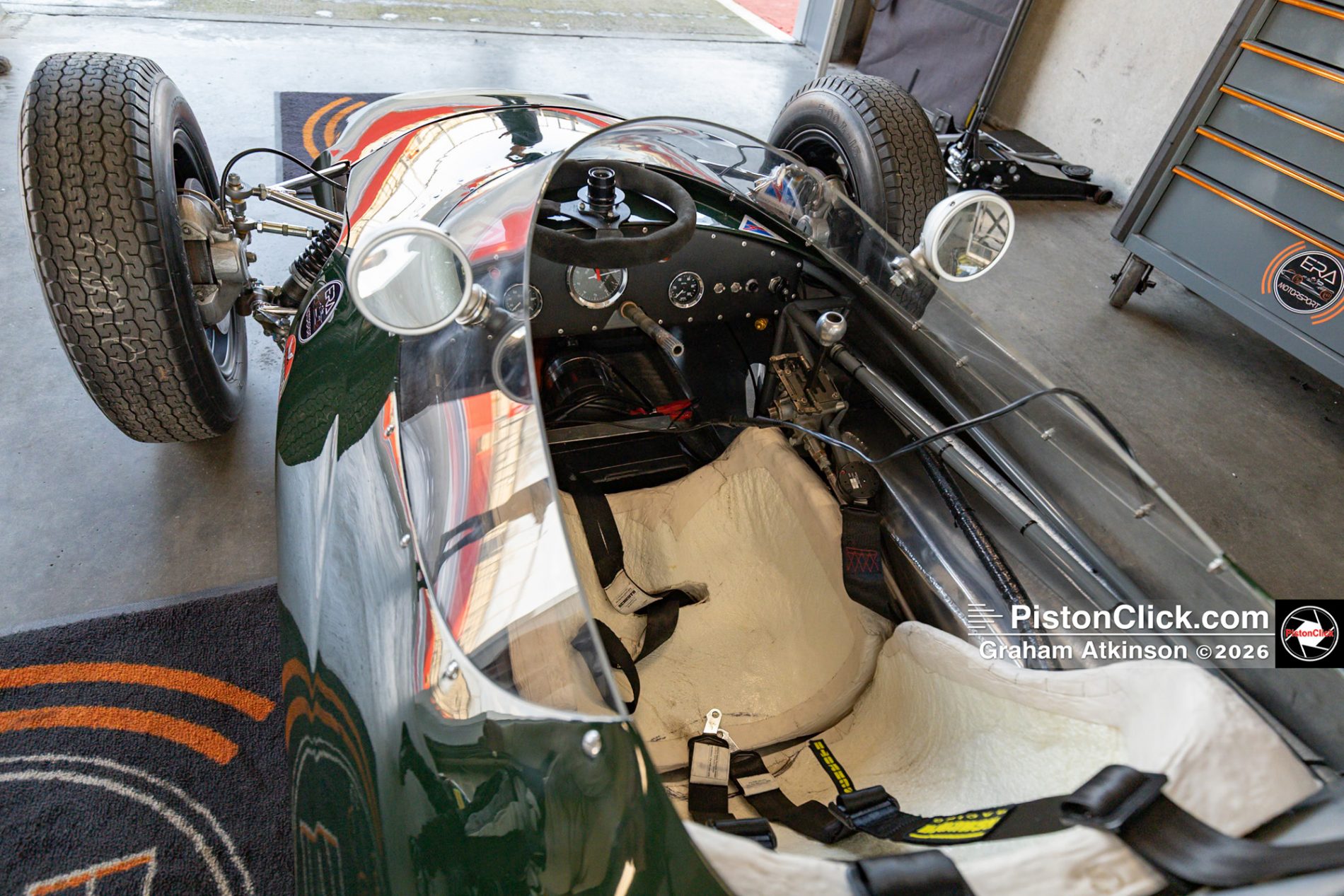
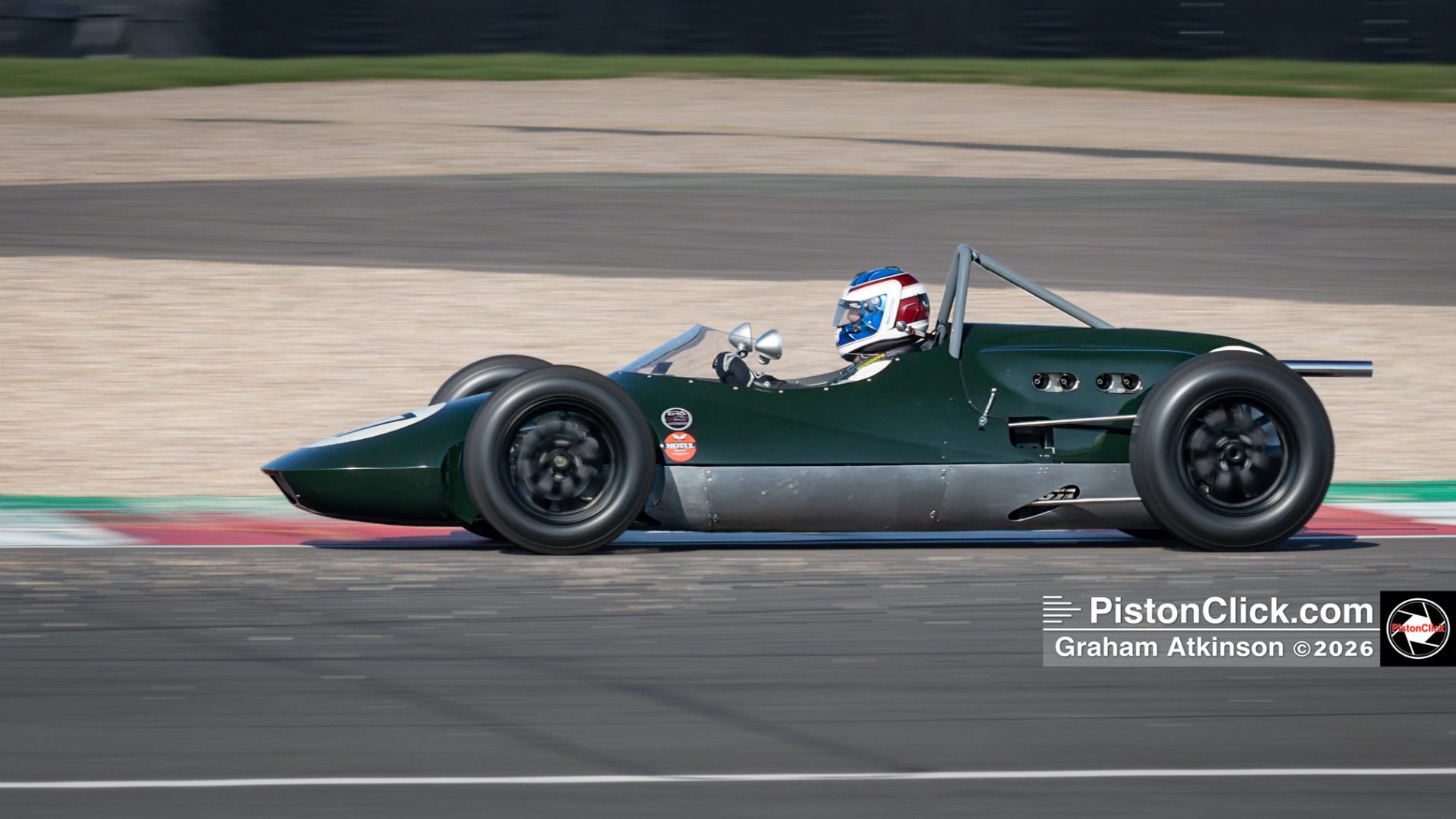
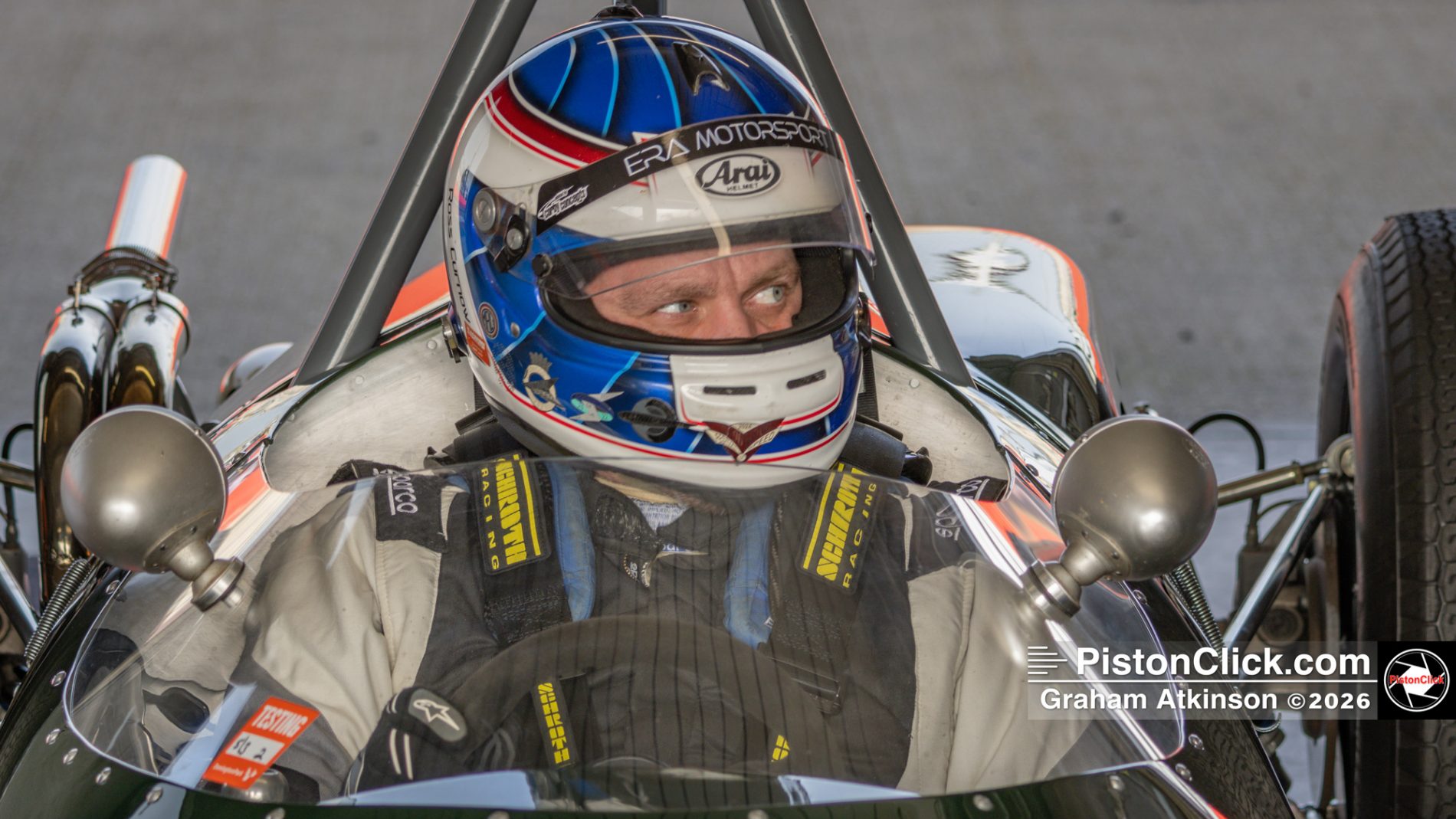
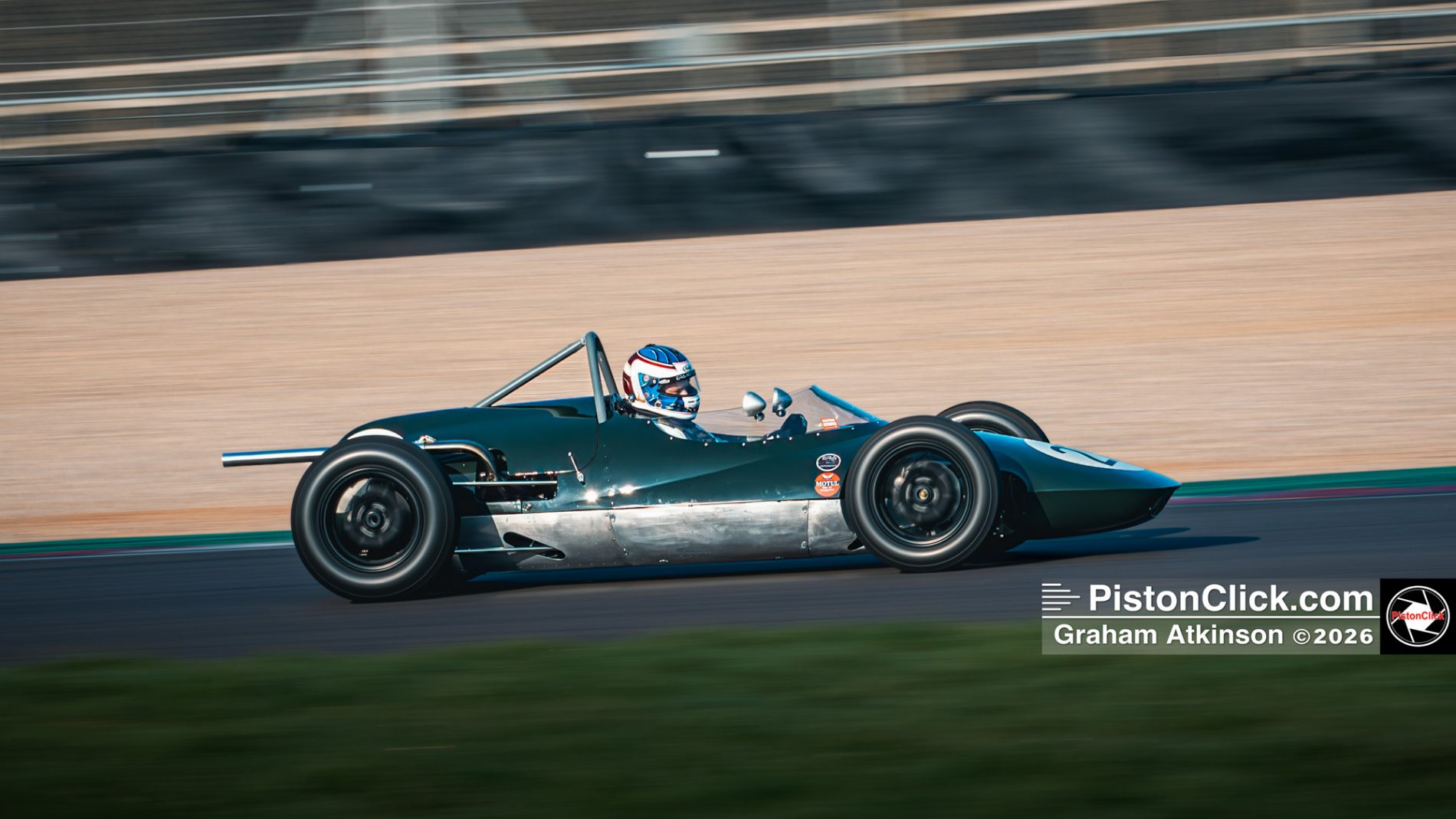
The final car I’ll mention was a little green machine. At first glance I mistook it for a Lotus or perhaps a Cooper. I was soon informed that it was actually a Gilby Type B1—a marque I had not previously heard of.
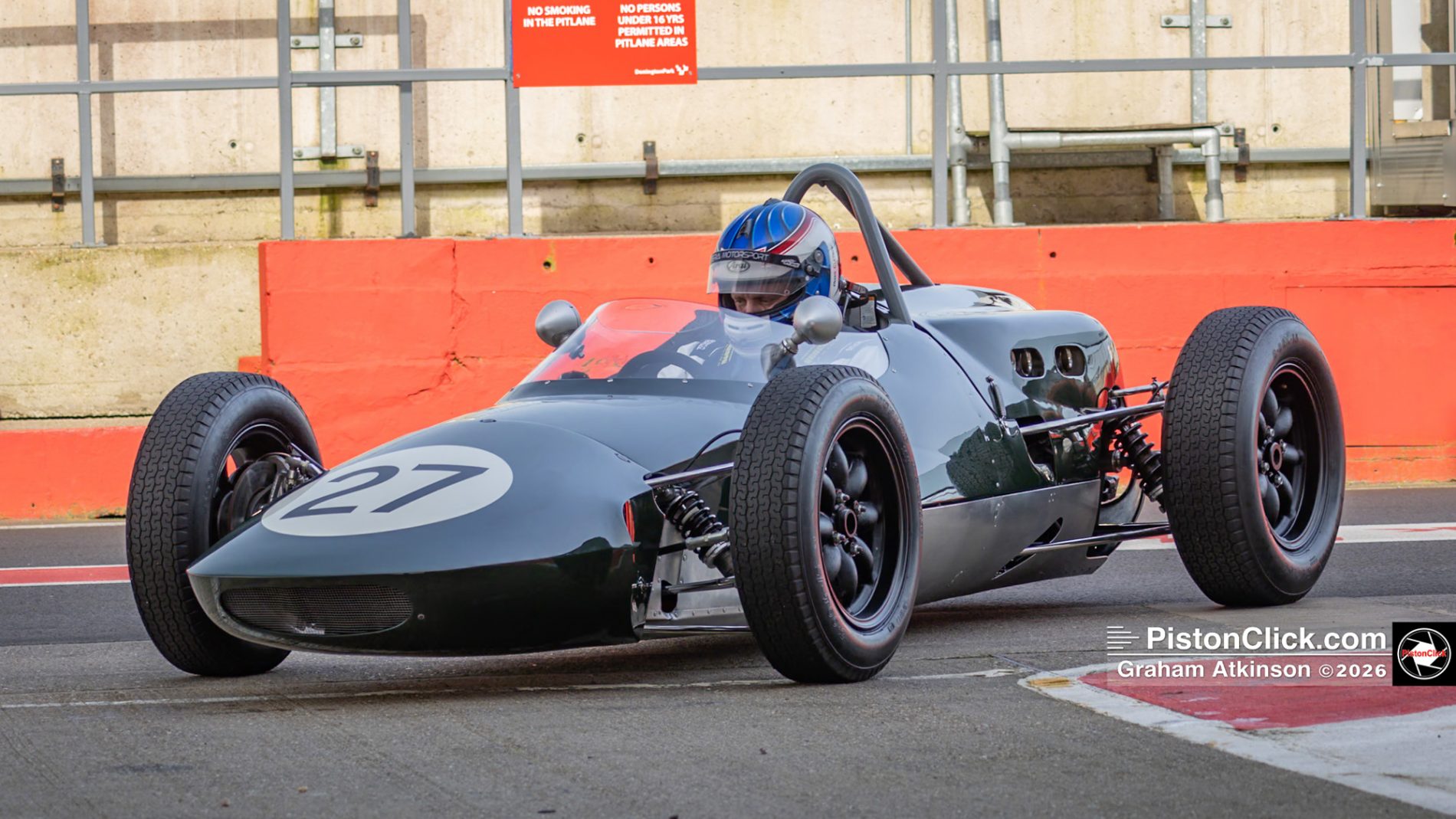
The owner explained that it is a unique car built by Gilby Engineering. The company was founded by Syd Greene. Losing an arm at the age of sixteen he nevertheless competed in speed trials during the early 1950s. After retiring from driving he established his own racing team and built six cars that competed in twelve Formula One Grands Prix, albeit with limited success.
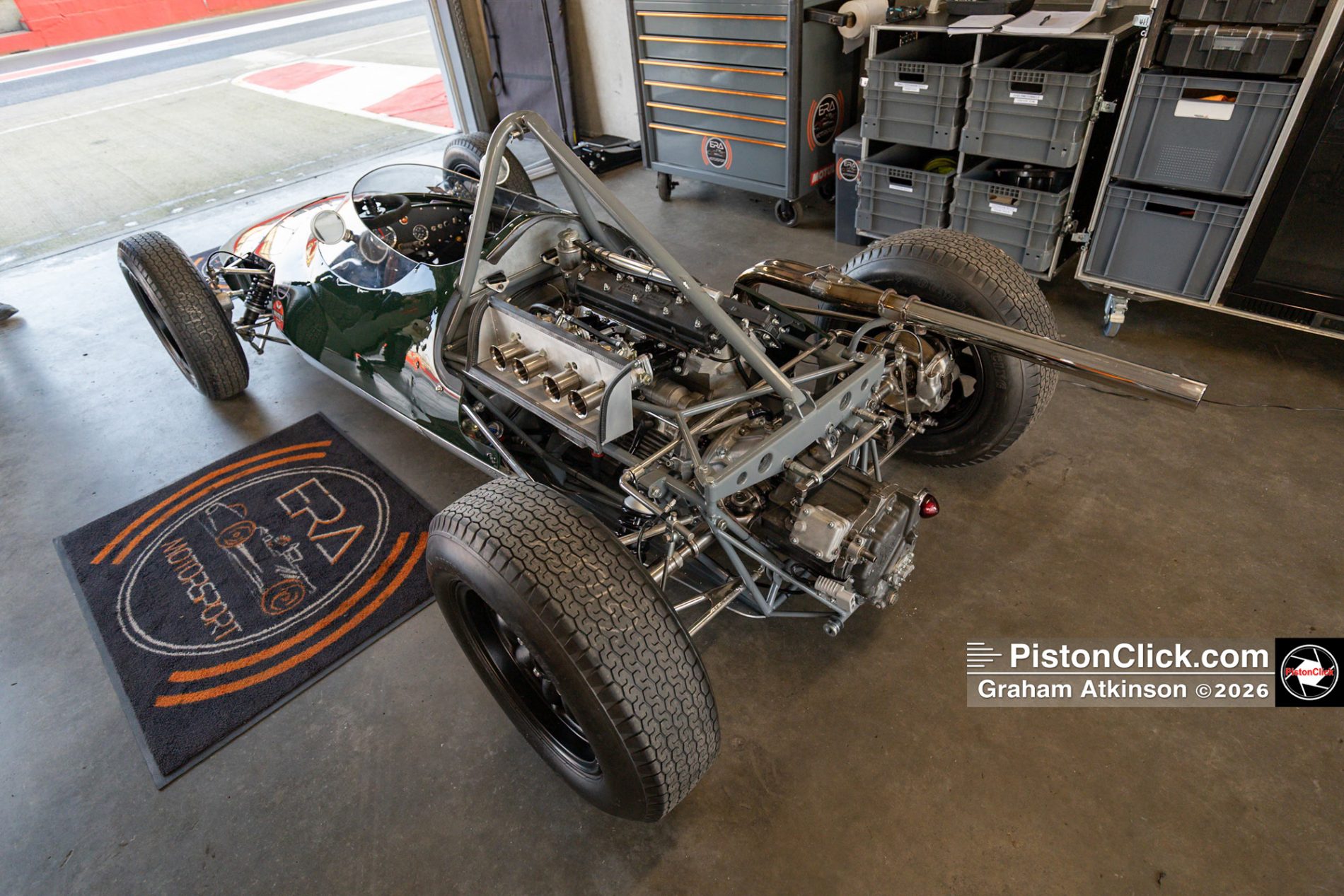
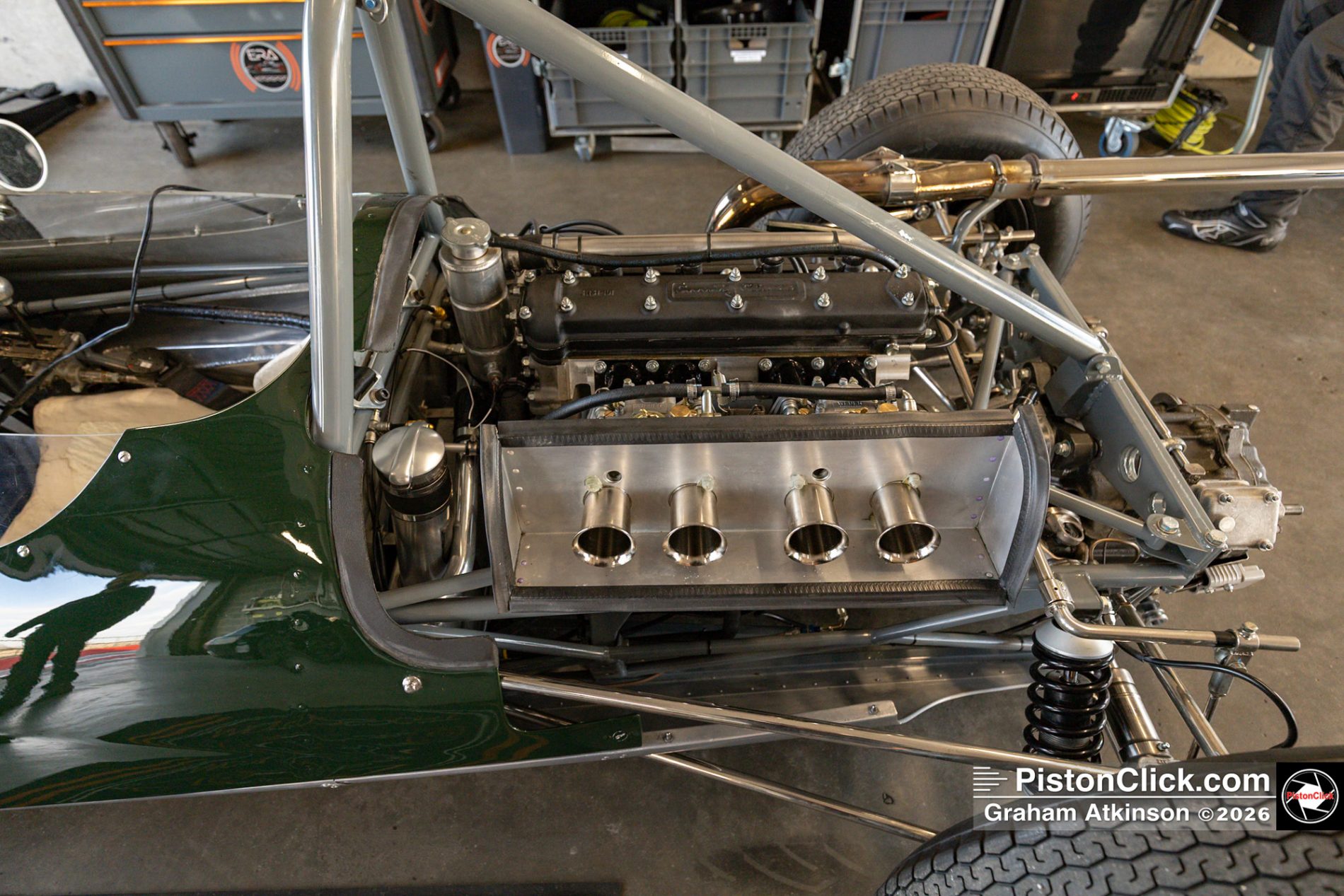
These cars were built primarily for his son Keith Greene, who raced them before later becoming better known as a Formula One team manager.
The final Gilby car was built in 1963, while this particular example dates from 1960. It was originally raced by Keith Greene with a 1500cc engine. Later owners modified it with a BRM V8 and short exhaust pipes, before a subsequent restoration returned it to its original specification. It has just undergone another rebuild and was at Donington for a shakedown ahead of this year’s racing programme.
I hope you enjoyed this report. I could easily have written far more thanks to the fantastic turnout of cars. If only every test day could be like this one. And I’m sure my new friend from Kent had a very enjoyable day—and a safe journey home.

