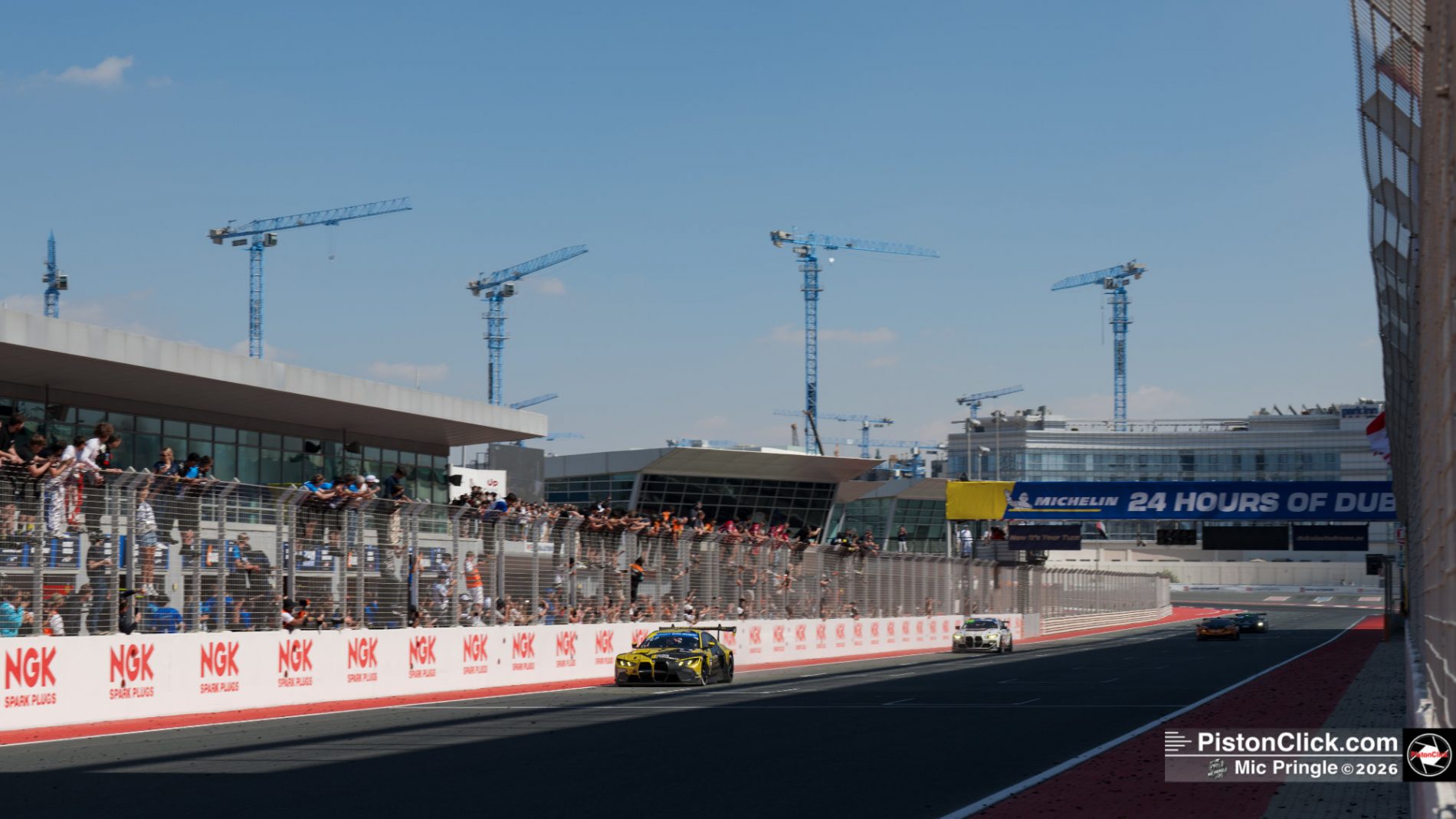



Photographing the 24 Hours Dubai Endurance race
Report by Mic Pringle
27 February 2026

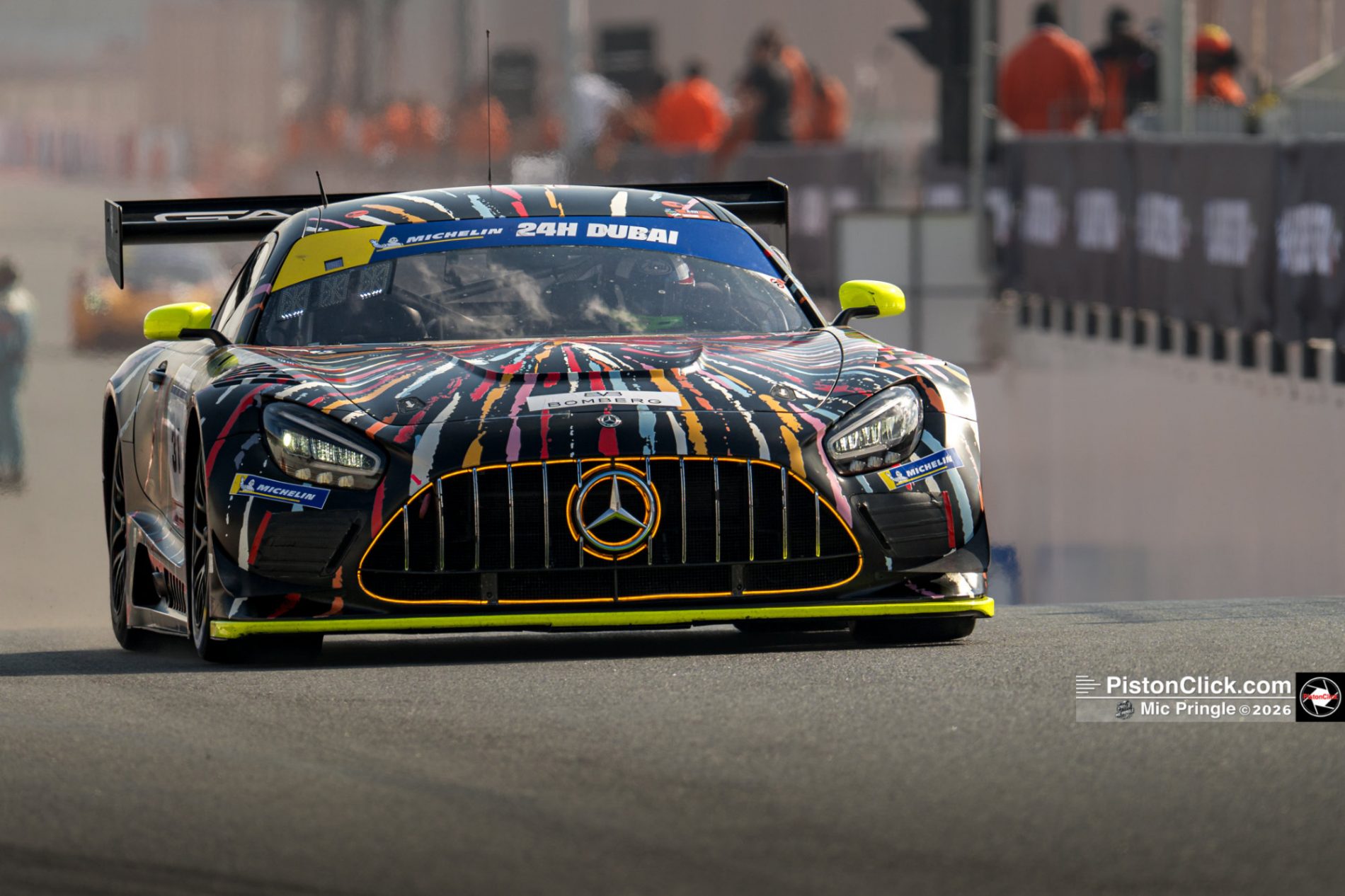
In January, I swapped a typical British winter for hot desert air as I travelled to the Middle East to cover the Michelin 24H Dubai as a media-accredited photographer. Having cut my teeth on the 24H Series finale in Barcelona just a couple of months earlier, the trip felt less like a leap into the unknown and more like a chance to build on what I’d learned. Though Dubai, as it turns out, has a character all of its own.
The weekend format followed the same structure as Barcelona, which made settling in much easier. By now, I knew the rhythm: practice sessions, qualifying, then the long haul of the race itself. Familiarity with the schedule meant I could focus less on logistics and more on finding new angles — both literally and creatively.
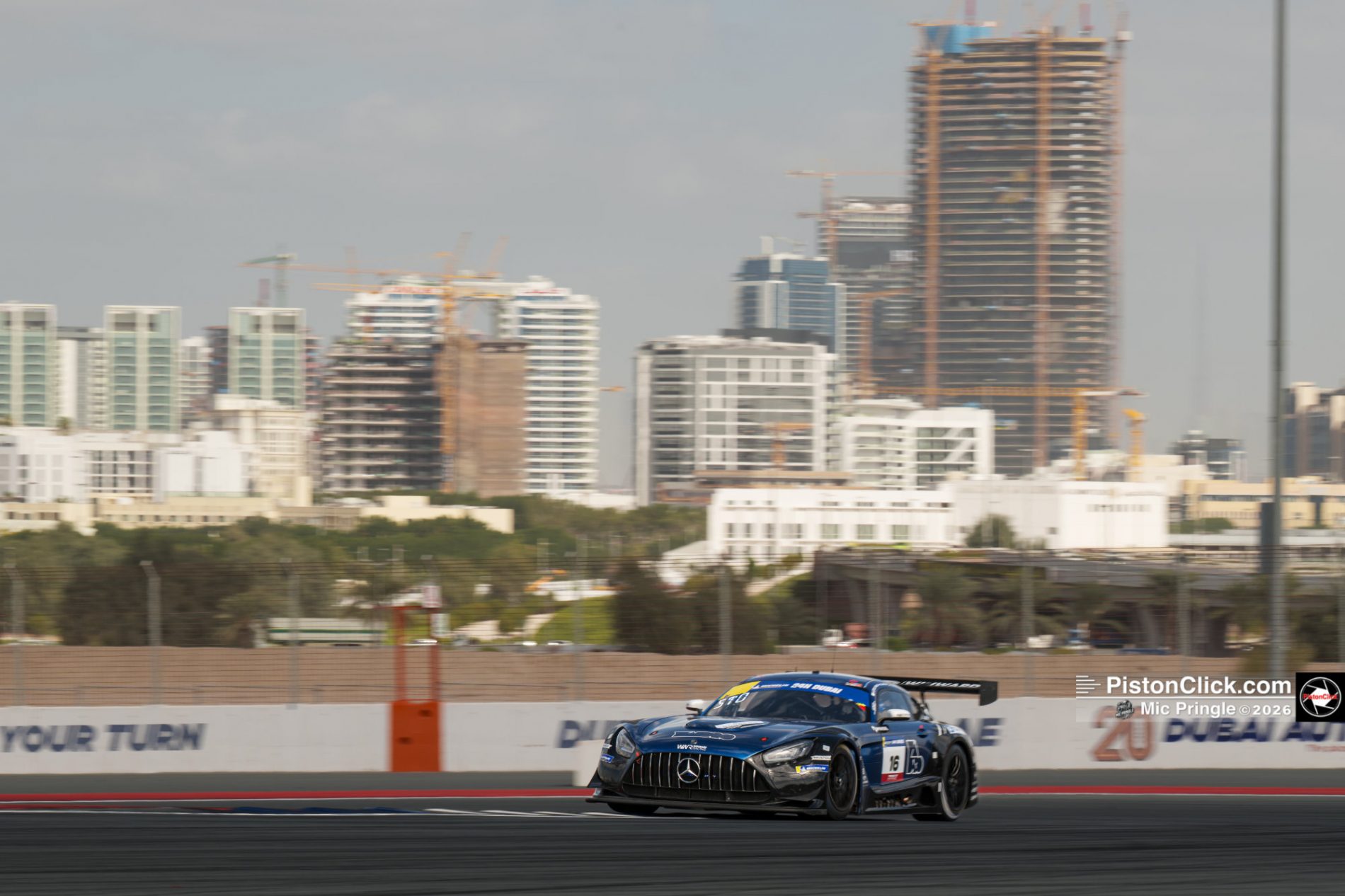
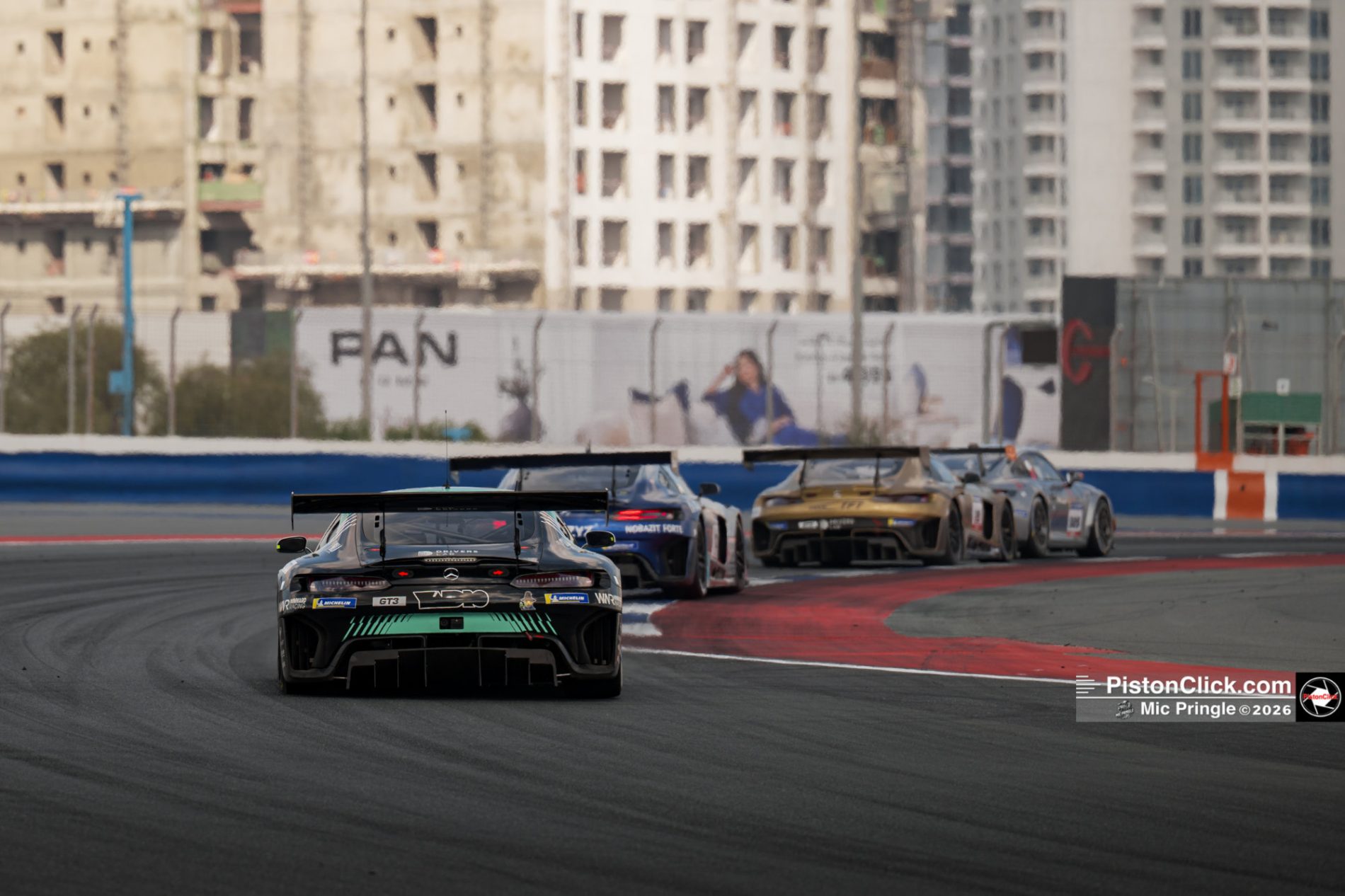
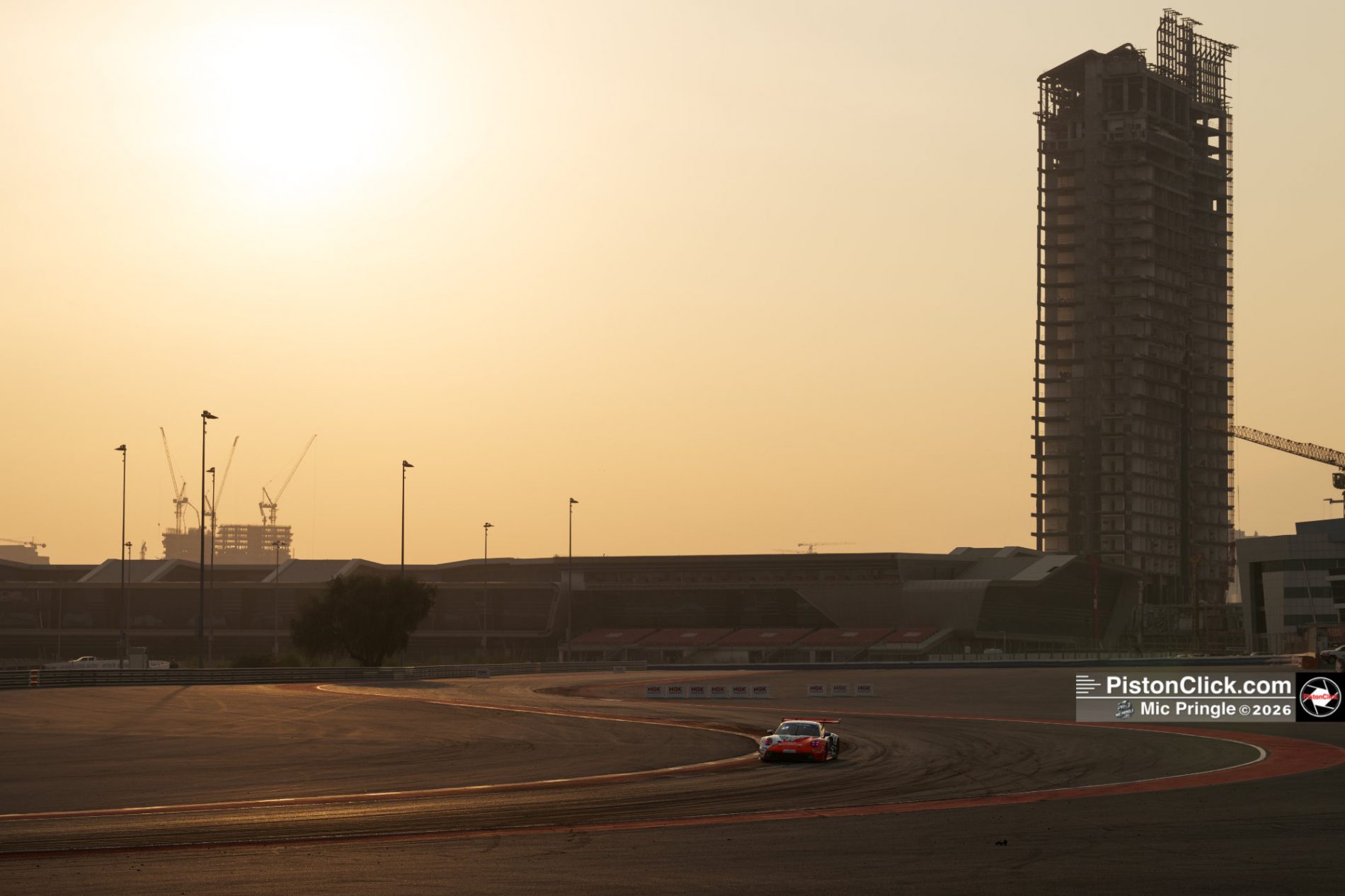
Dubai Autodrome is unlike any circuit I’ve worked at. It’s a permanent track set right in the middle of the city, and the background can change completely from one corner to the next. Depending on where you stand, you might be shooting cars against public roads and transport infrastructure, open desert, or half-finished buildings that rise abruptly from the landscape.
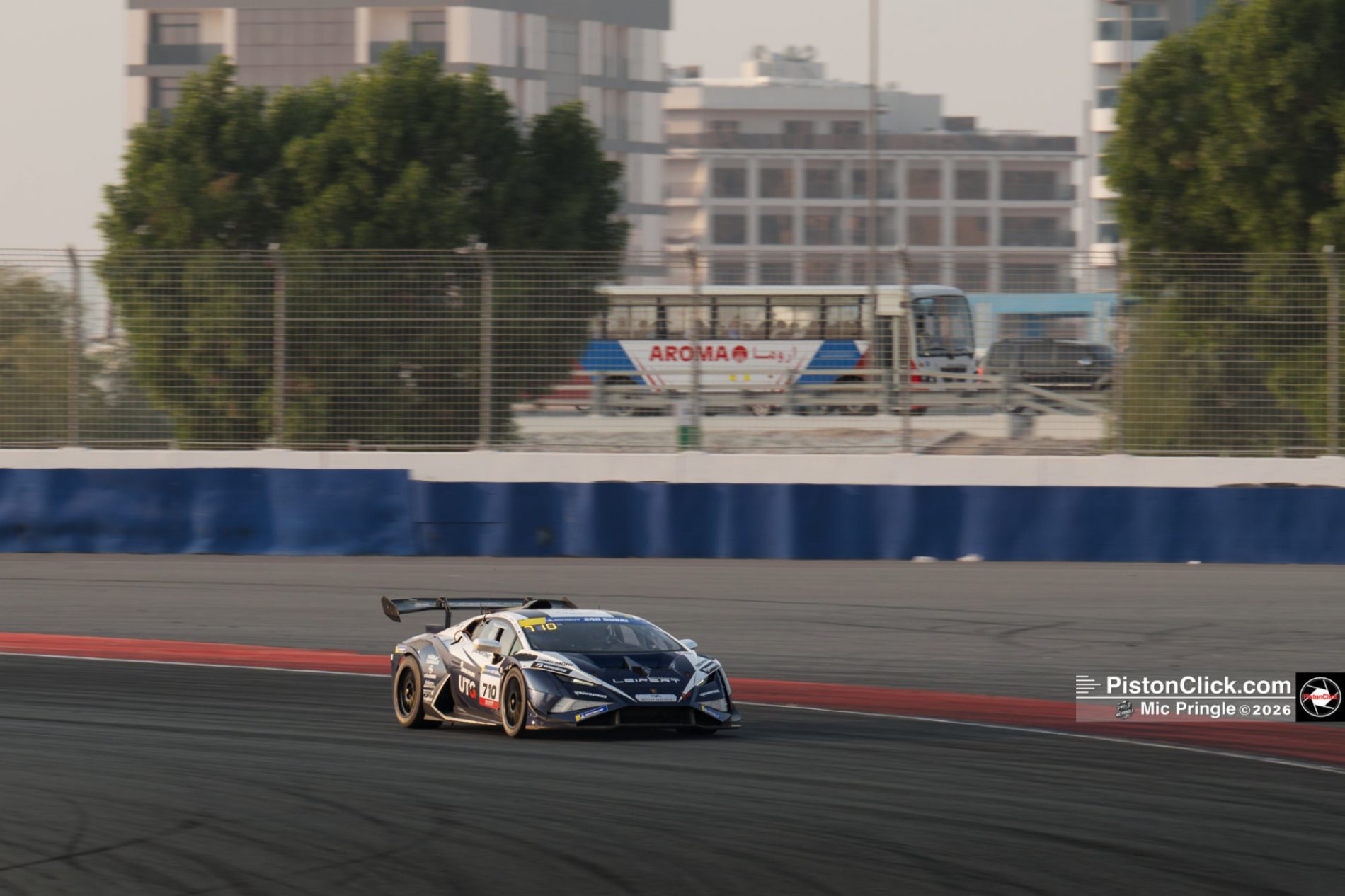
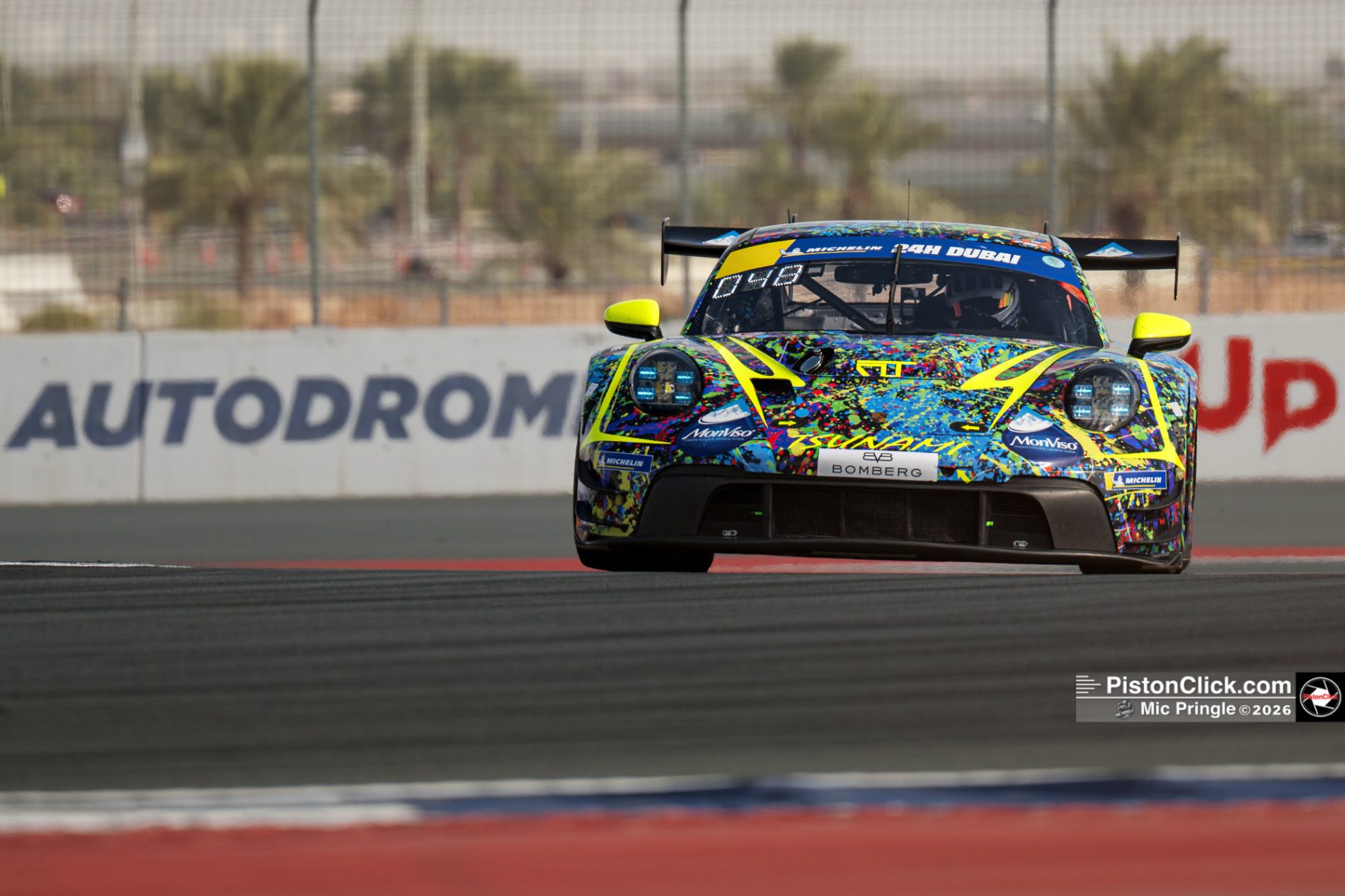
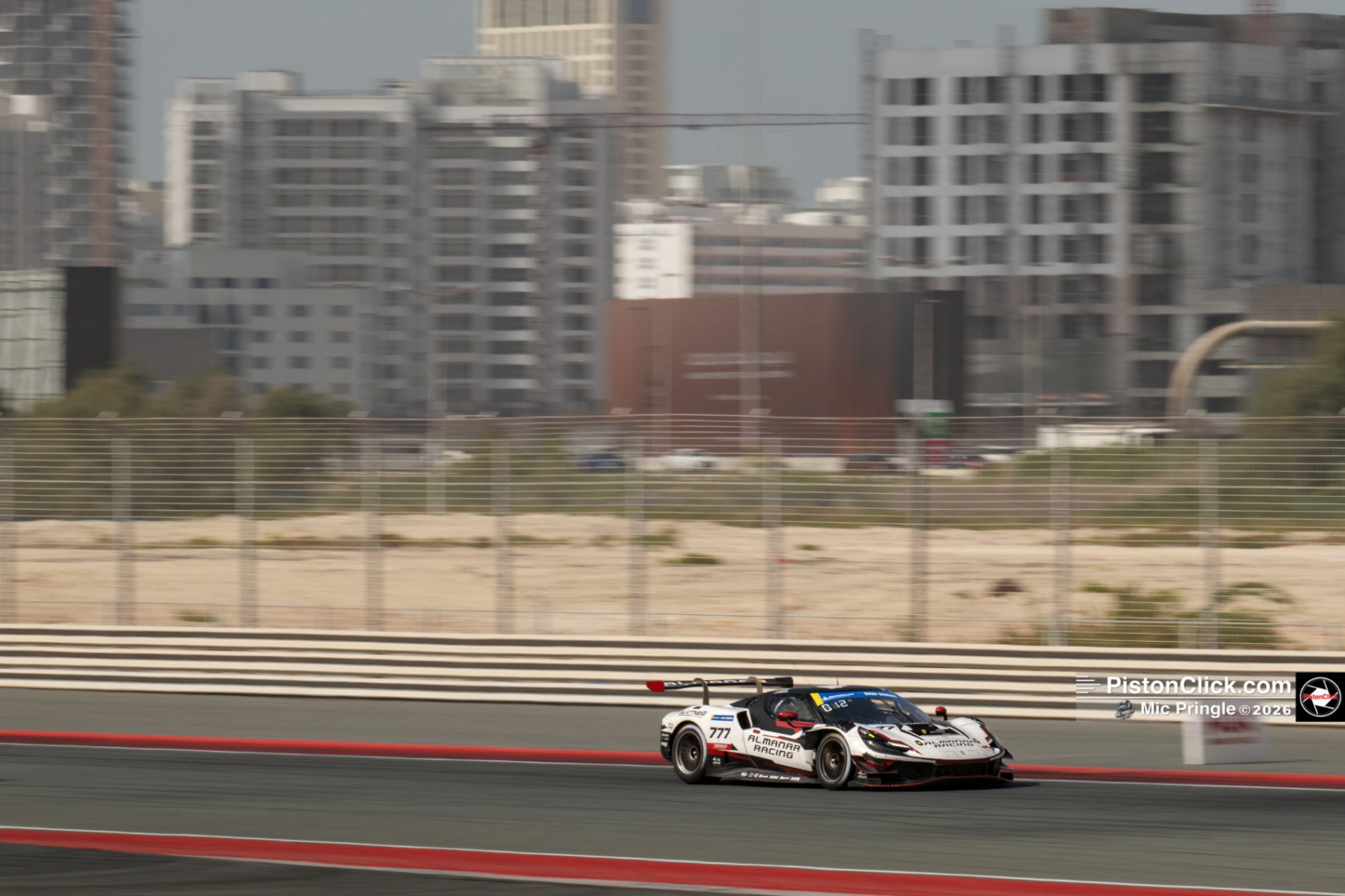
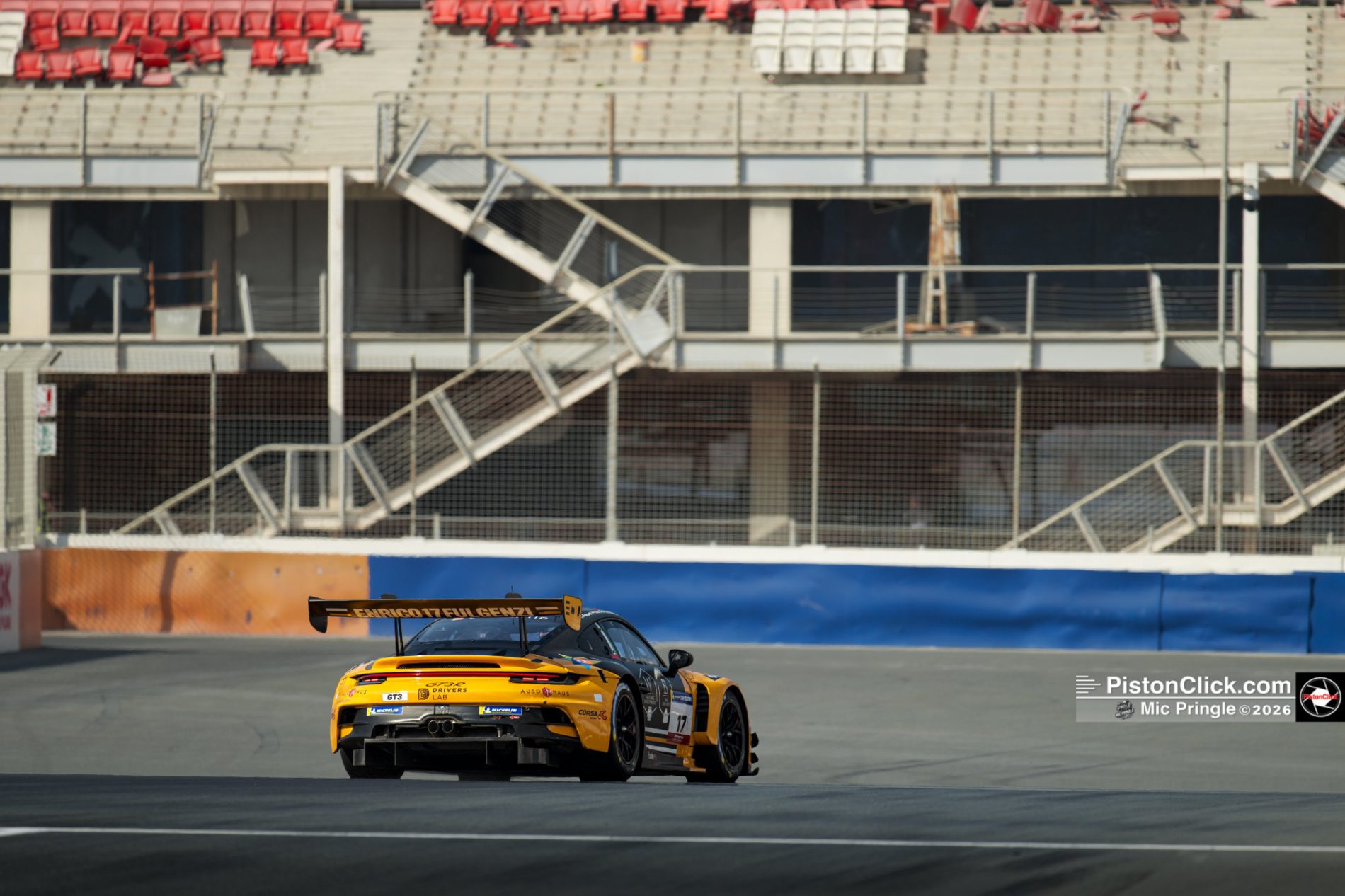
Construction is a constant presence, but so are projects that appear to have stalled before completion. That contrast gives the circuit a slightly unsettled feel, as if different versions of the city are colliding in the same space. Built with Formula 1 ambitions but never hosting a race, parts of the facility are clearly underused. The grandstand on the outside of Turn 1, now visibly deteriorating, sits in sharp contrast to the modern pit complex just across the track.
Nikon Z8
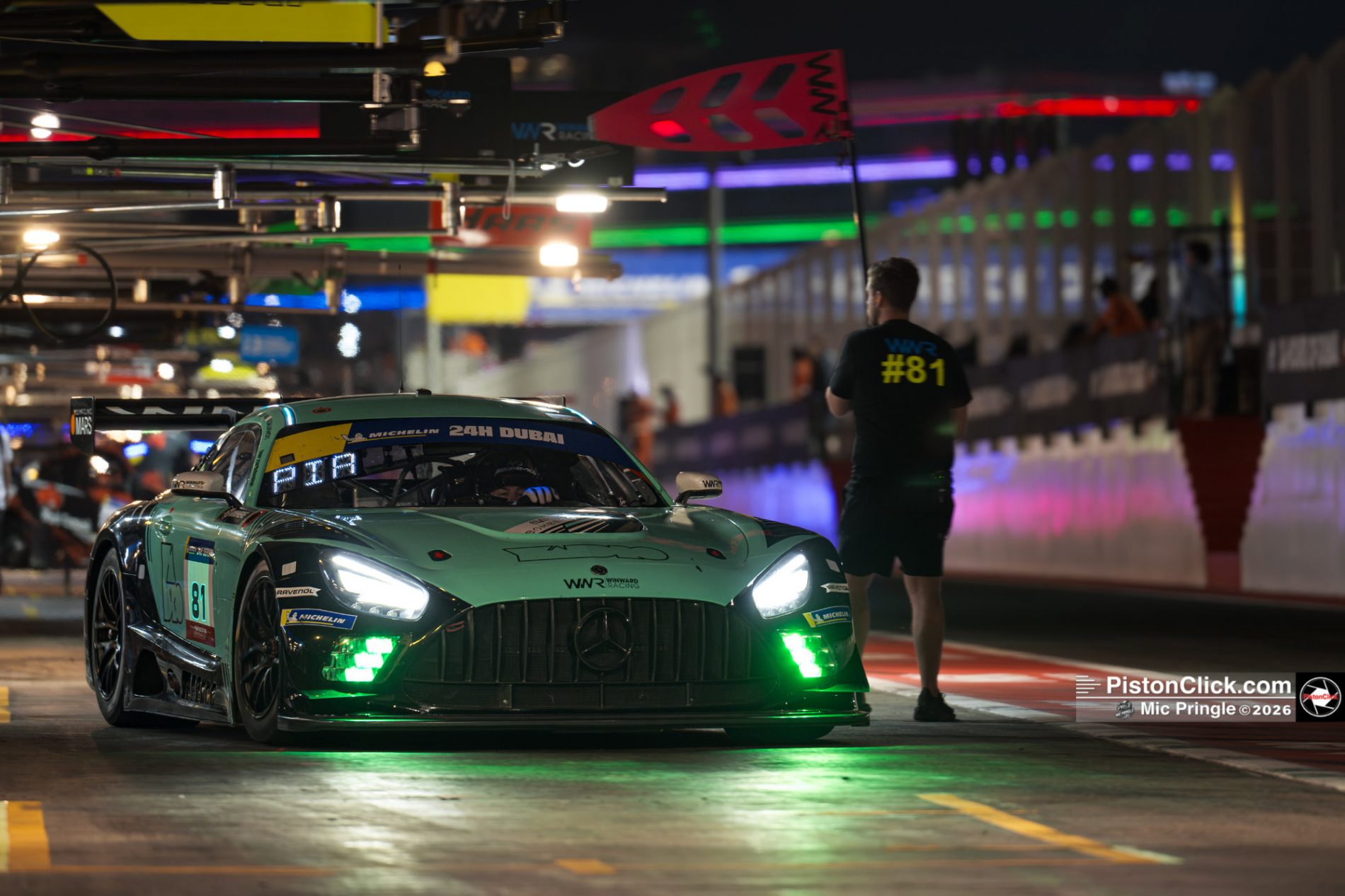
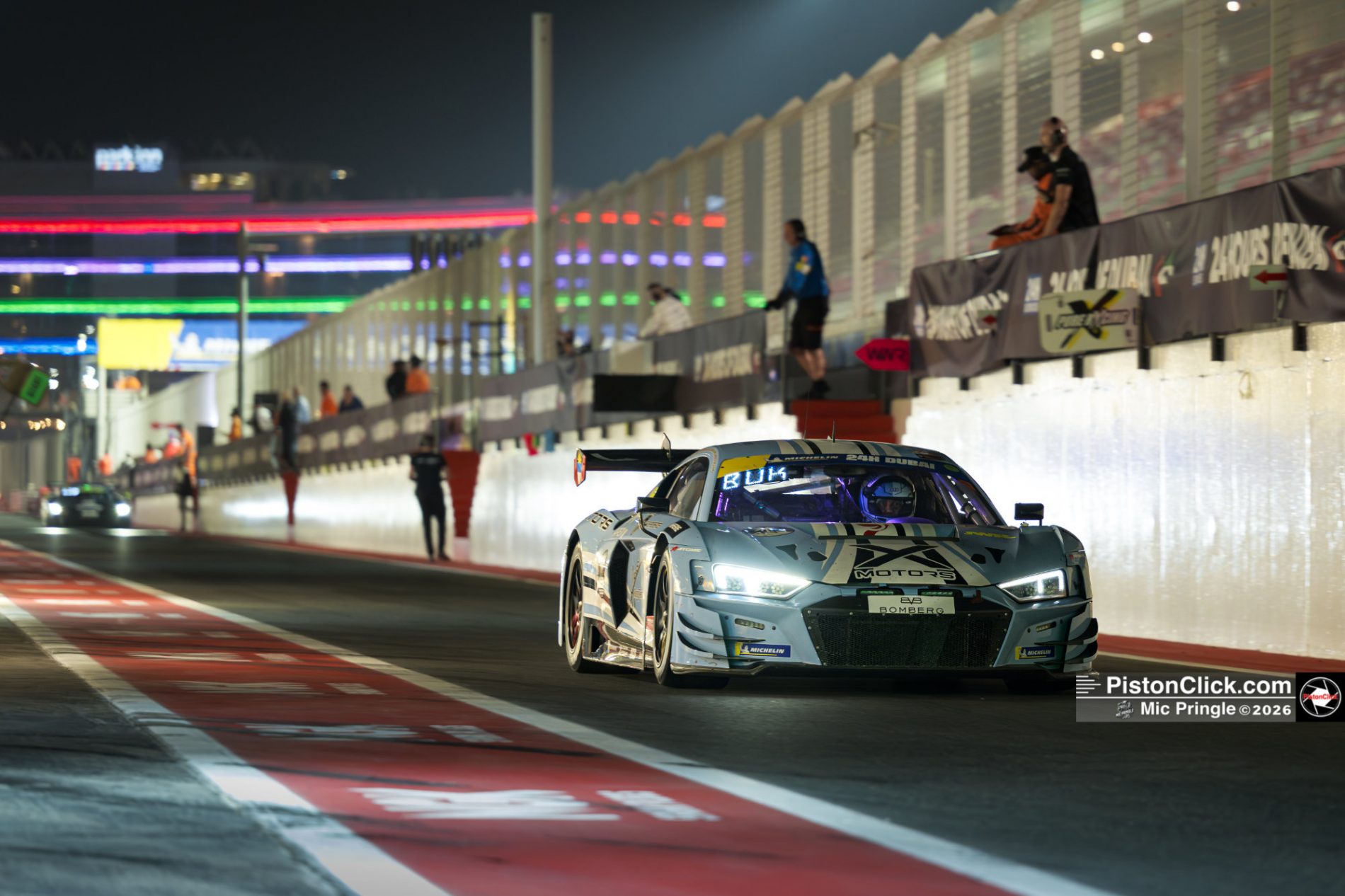
By Dubai, my transition from Canon to Nikon was complete. The Nikon Z8 paired with the 400mm f/4.5 once again proved to be the workhorse, just as it had been in Barcelona. This time, it was complemented by a Z5 II with a 70–200mm f/2.8 for pit-lane and mid-range duties. And on the recommendation of a fellow motorsport photographer, I added a (secondhand) fast 50mm f/1.8 to my kit bag. In the pit lane at night, it came into its own: sharp, fast, and capable of isolating moments in a way longer lenses simply can’t. It encouraged a different way of seeing — less about compression and more about proximity.
Accredited Motorsport Media Dubai
Media access in Dubai felt noticeably different from Barcelona. The safety fencing runs all the way to the ground, so there’s no ducking underneath it for a clearer shot, but the wider mesh spacing meant you could push most lenses through the gaps without too much trouble. There were also plenty of dedicated camera holes, and the sliding marshal doors proved invaluable, provided they were closed immediately after use. It demanded more patience and forward planning, but workable angles were always there if you took the time to look for them.
The 24 Hours Dubai media centre, however, was a different story. Much smaller than Barcelona’s expansive workspace, it felt especially cramped once the additional press interest surrounding Ajith Kumar — a Bollywood legend turned racing driver — became apparent. Tables filled quickly each morning, and the only reliable way to secure a spot was to arrive before 7am, even on days when track action didn’t begin until much later. It was a reminder that at high-profile events, logistics off the track can be just as competitive as the racing itself.
24 Hours Dubai – Turin Boulevard
On Wednesday evening, the event spilled beyond the circuit boundaries. All the competing cars exited the back of the track and rolled out onto public roads, roaring down Turin Boulevard Road (the main road that runs parallel to the circuit) before pulling up just outside the circuit entrance. Fans gathered to see the cars up close, meet the drivers, and soak in the atmosphere.
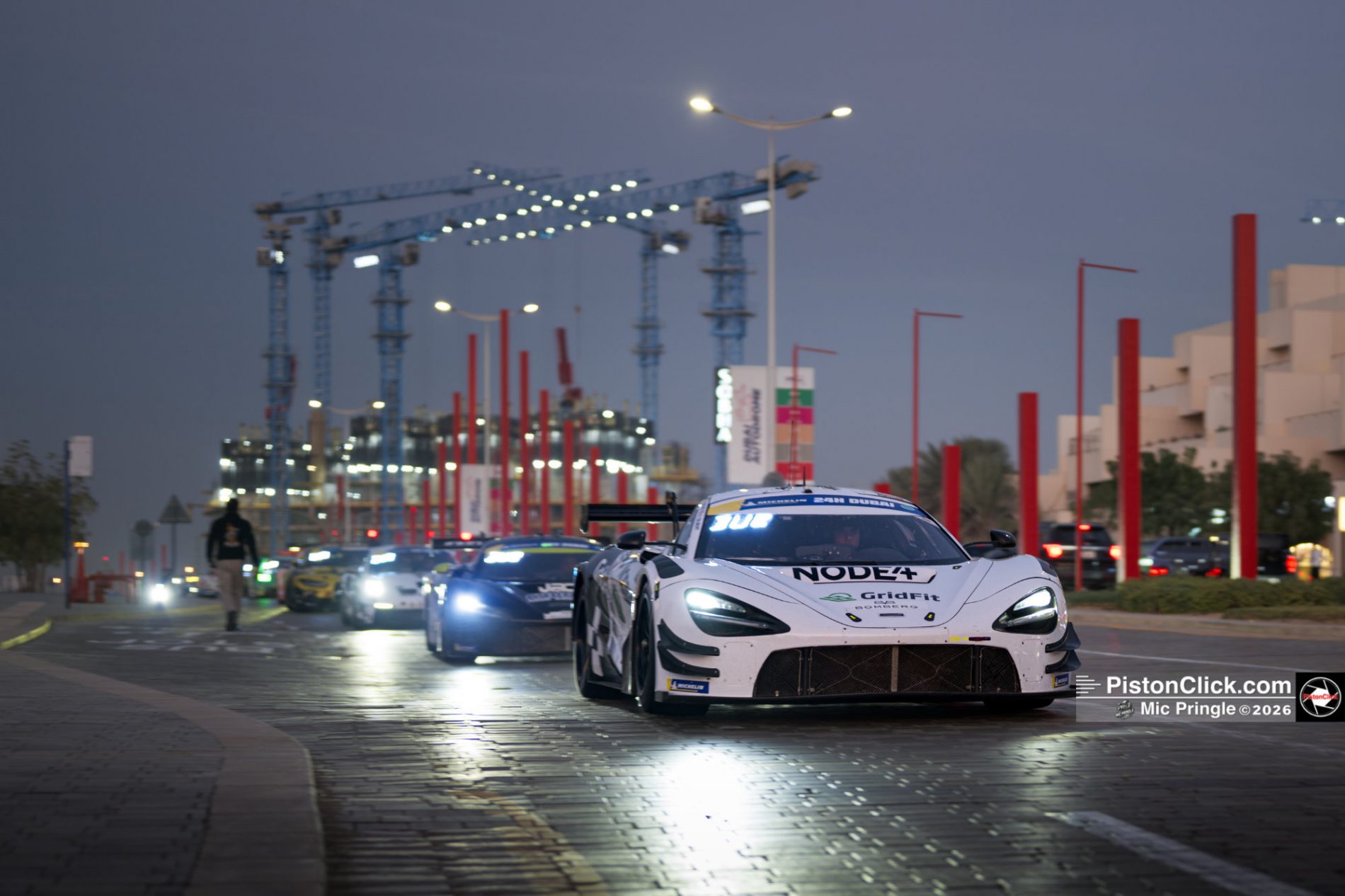
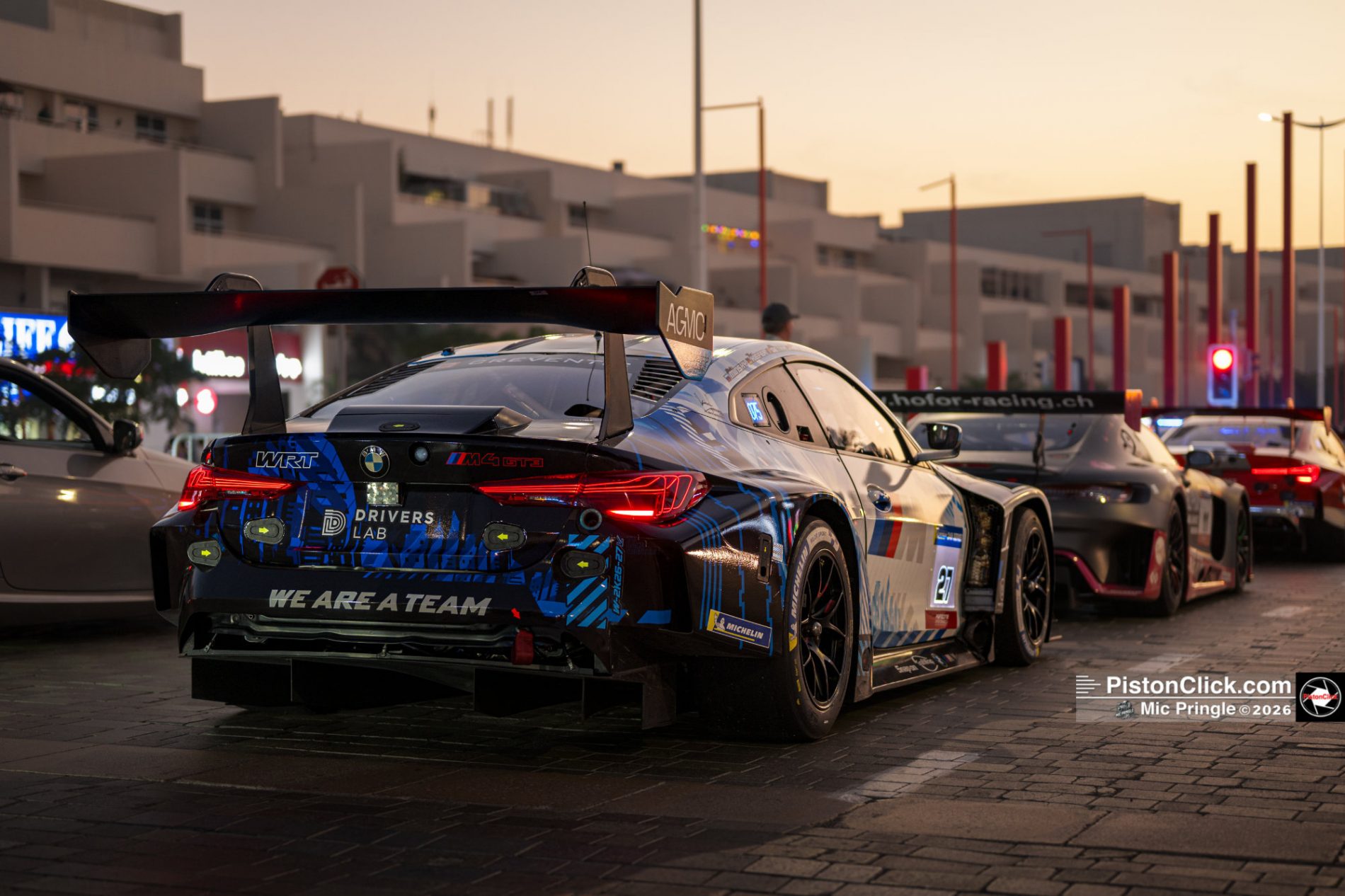
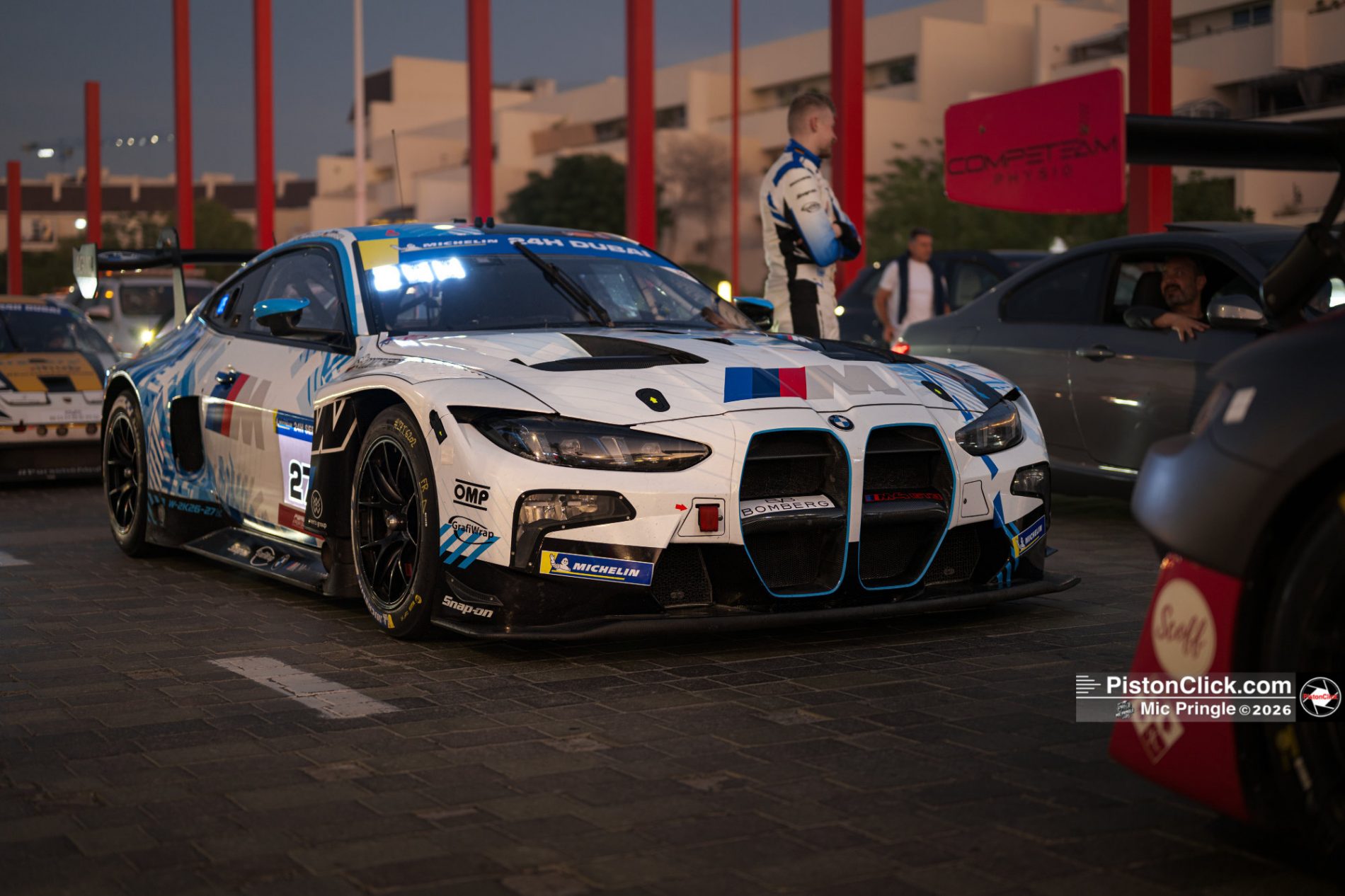
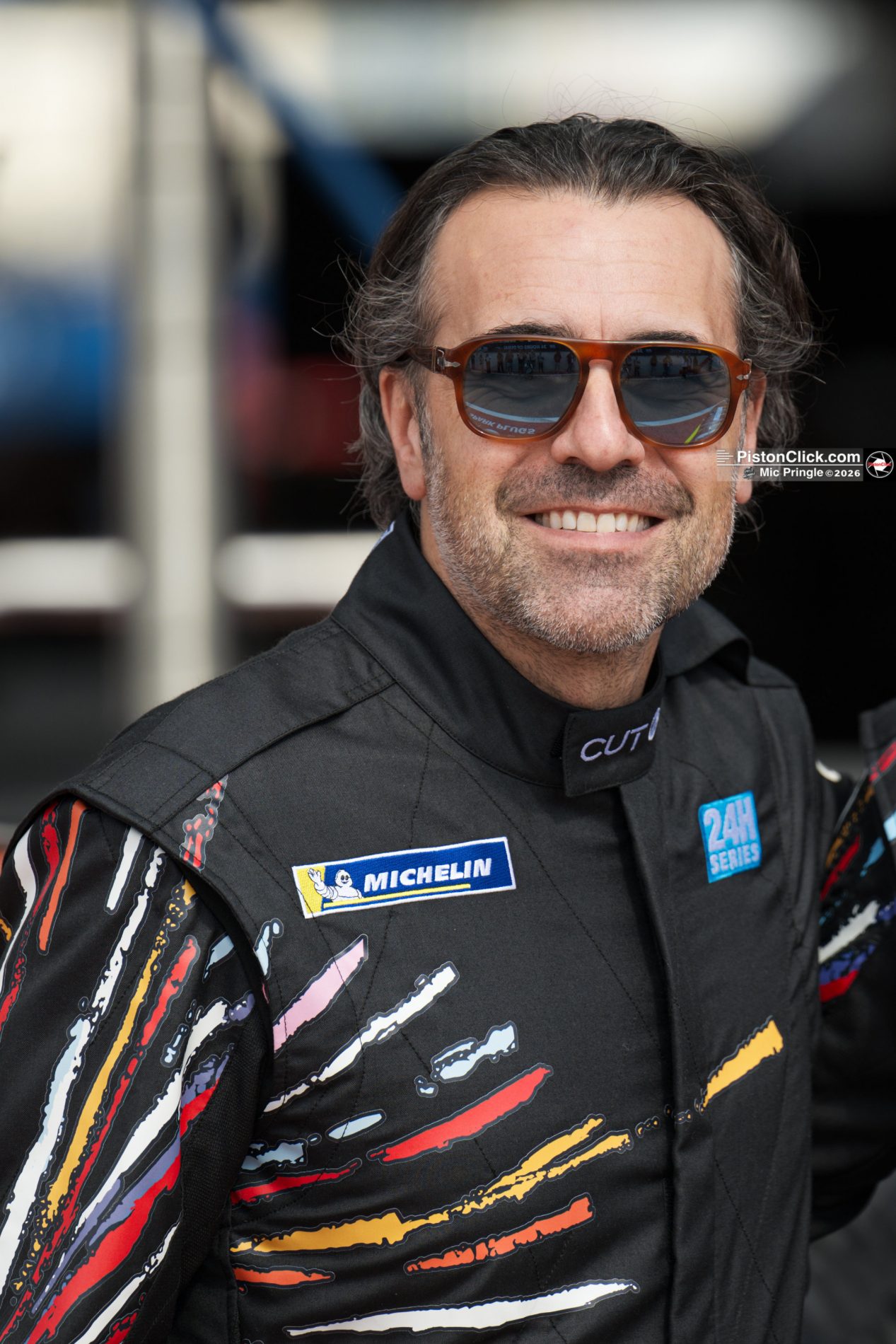
The crowd around Ajith Kumar was like nothing I’d seen all weekend, or at any race, for that matter. Phones held high and people pushing and shoving to get a glimpse of the Bollywood star, the energy felt closer to a film premiere than a motorsport event. Sharing the grid was another unexpected name: three-time Indianapolis 500 winner Dario Franchitti. Seeing a driver of that calibre competing in a 24-hour GT race underlined the global pull of the 24H Series and the diversity of its grid.
24 Hours Dubai – Lets go Racing
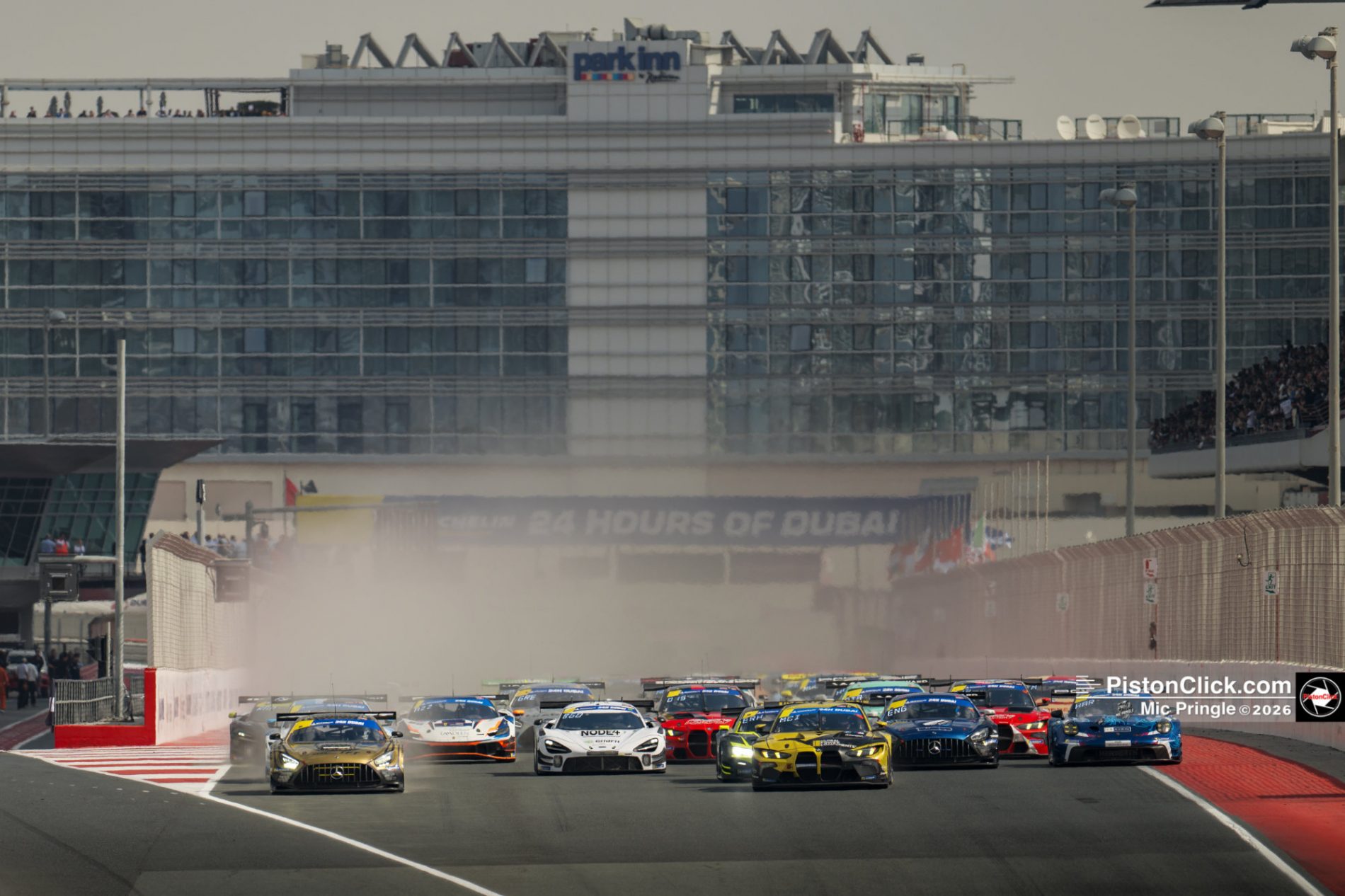
For the race start, there was little debate about where to be. The best vantage point was the derelict grandstand on the outside of Turn 1, so like almost everyone with a media tabard, I made the long walk down the outside of the start–finish straight, climbed the fence, picked my way past broken glass, exposed rebar, and debris, and headed up to the third floor.
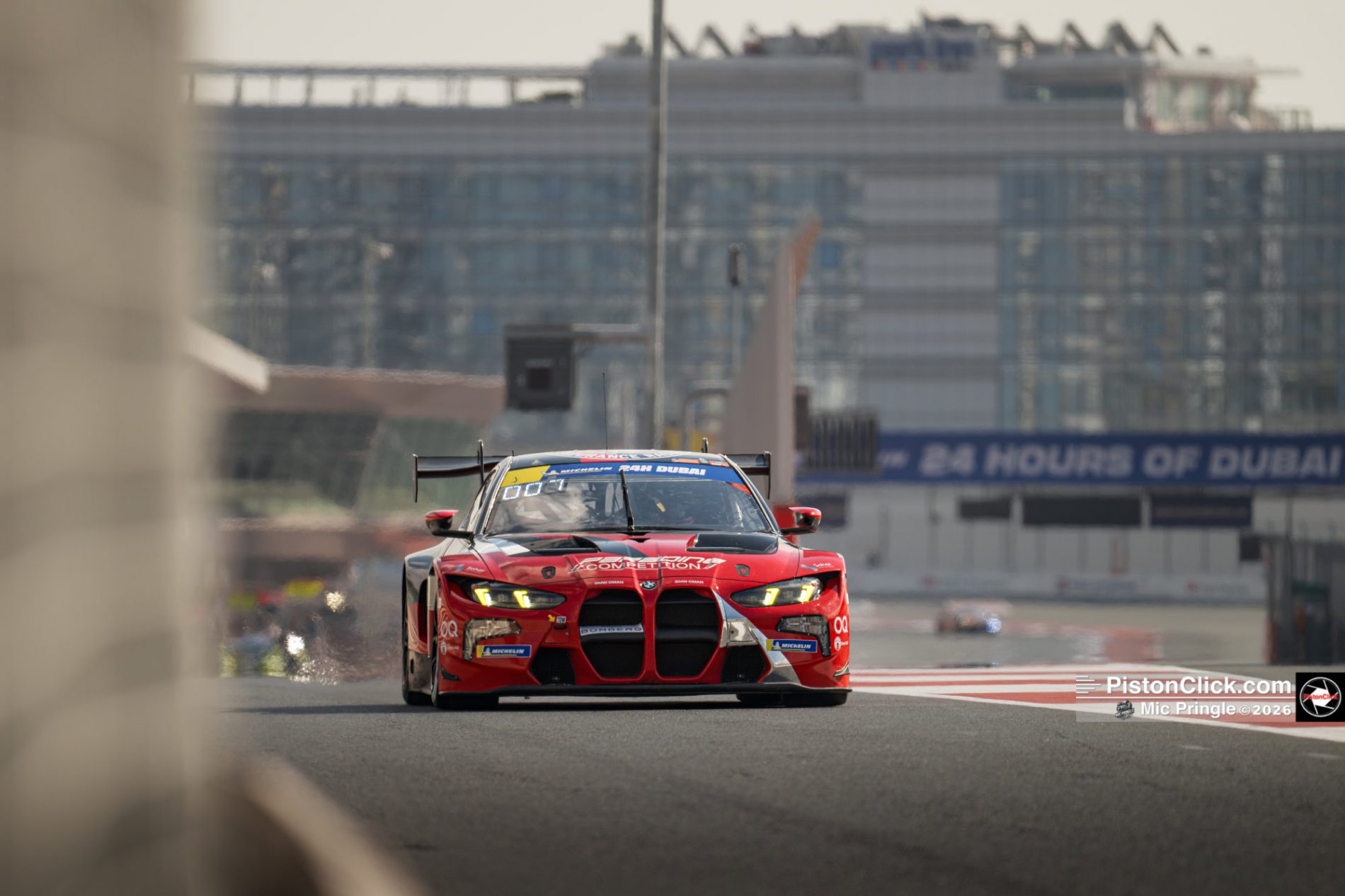
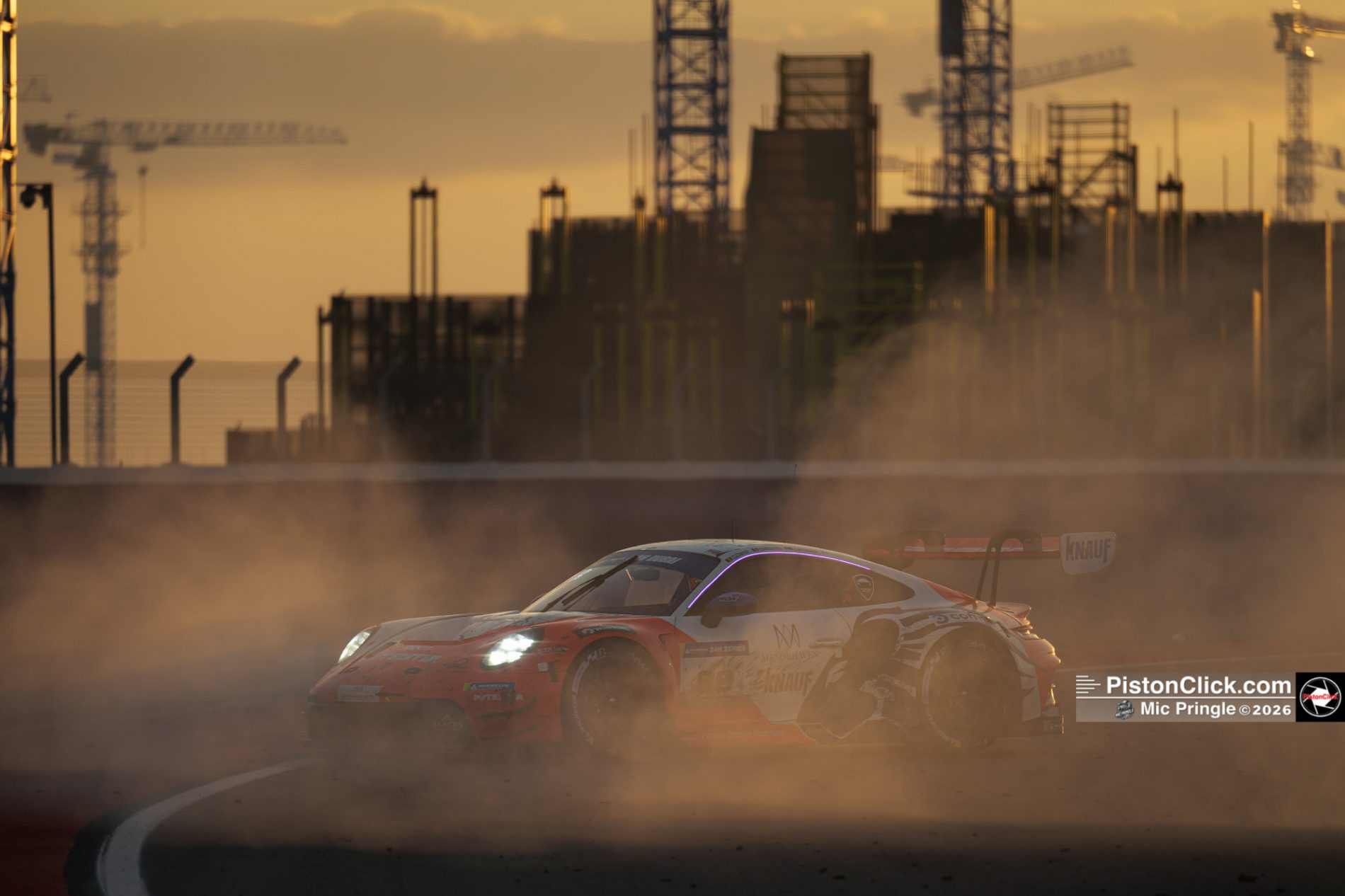
From up there, the entire scene unfolded at once: the packed grid launching into life, the field funnelling downhill toward Turn 1, and beyond the final corner, the huge Park Inn by Radisson hotel looming over the circuit (which lit up after dark). Cars pushed onto the dirty side of the track kicked up thick dust clouds, a reminder of the sand that constantly blows in from the desert and the construction sites that surround the venue.
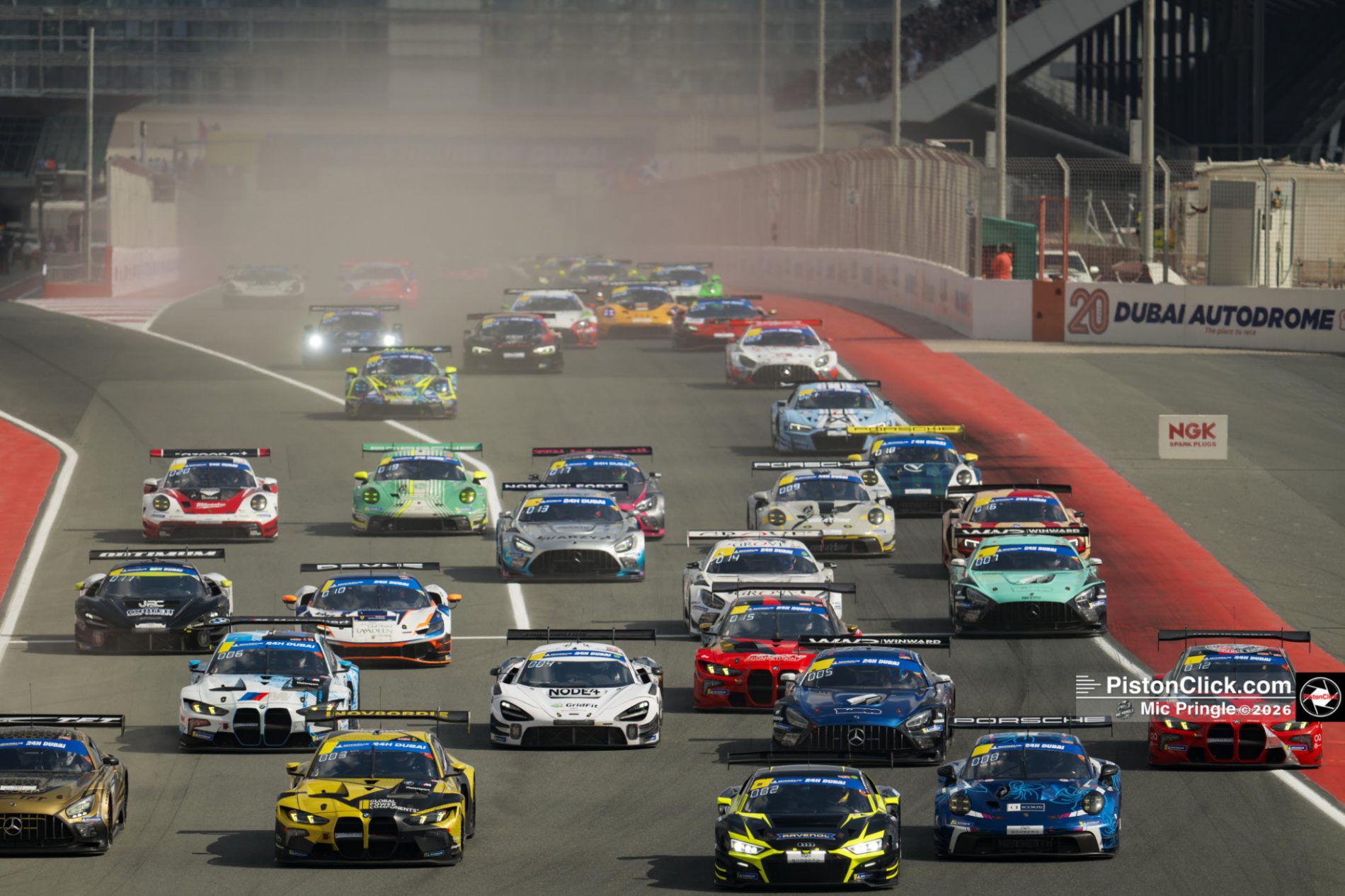
Shooting in Barcelona in September and Dubai in January reinforced just how much environment shapes motorsport photography. Barcelona offered relatively stable conditions, with clearer air and softer light that made managing reflections and distant detail more predictable. Dubai was far less forgiving. Even in January, heat haze was ever-present, visibly distorting cars at distance and softening fine detail.
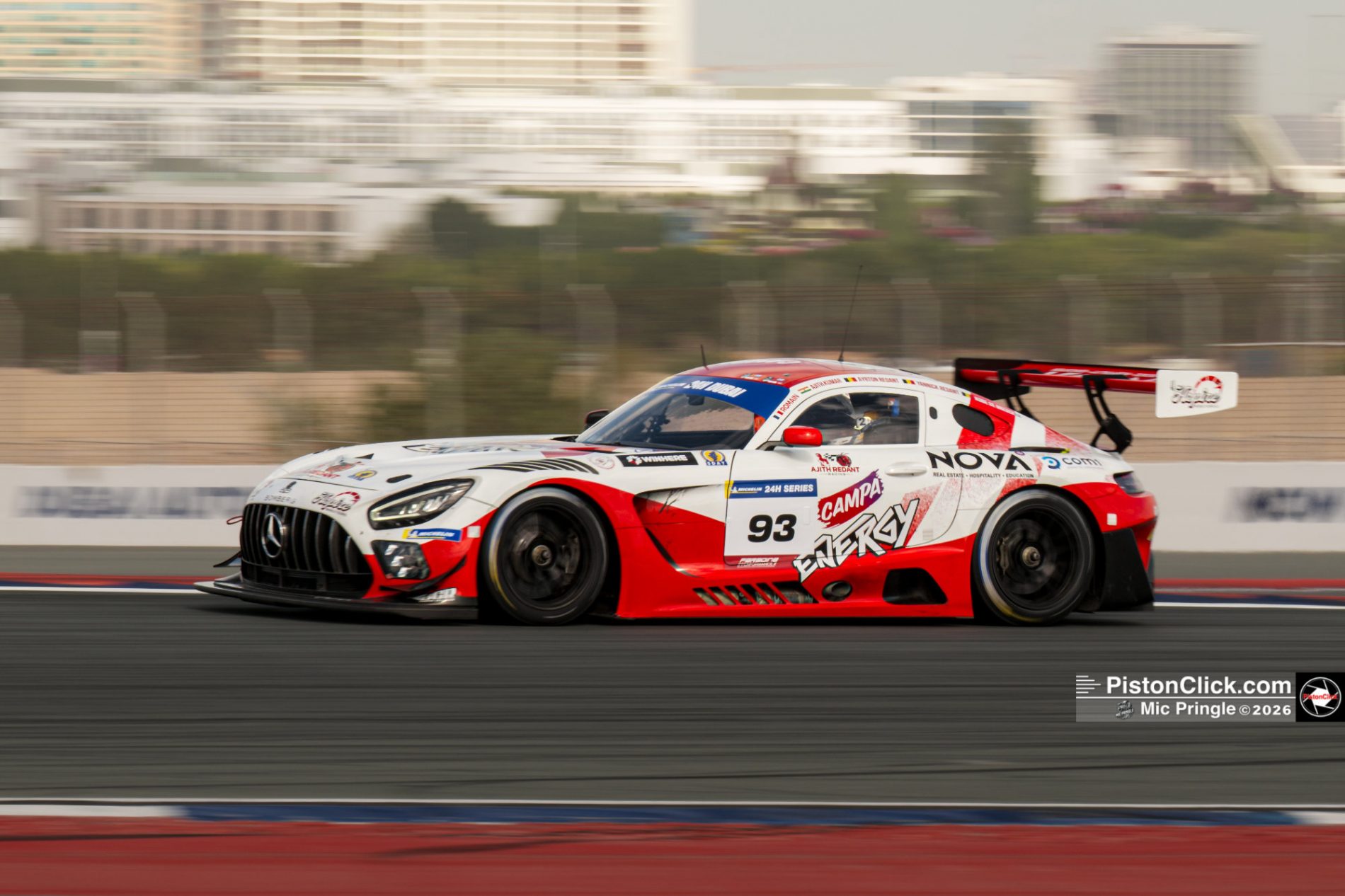
The sunlight was also much harsher, producing strong reflections on bodywork that demanded careful exposure control. Slight underexposure and more deliberate positioning quickly became essential.
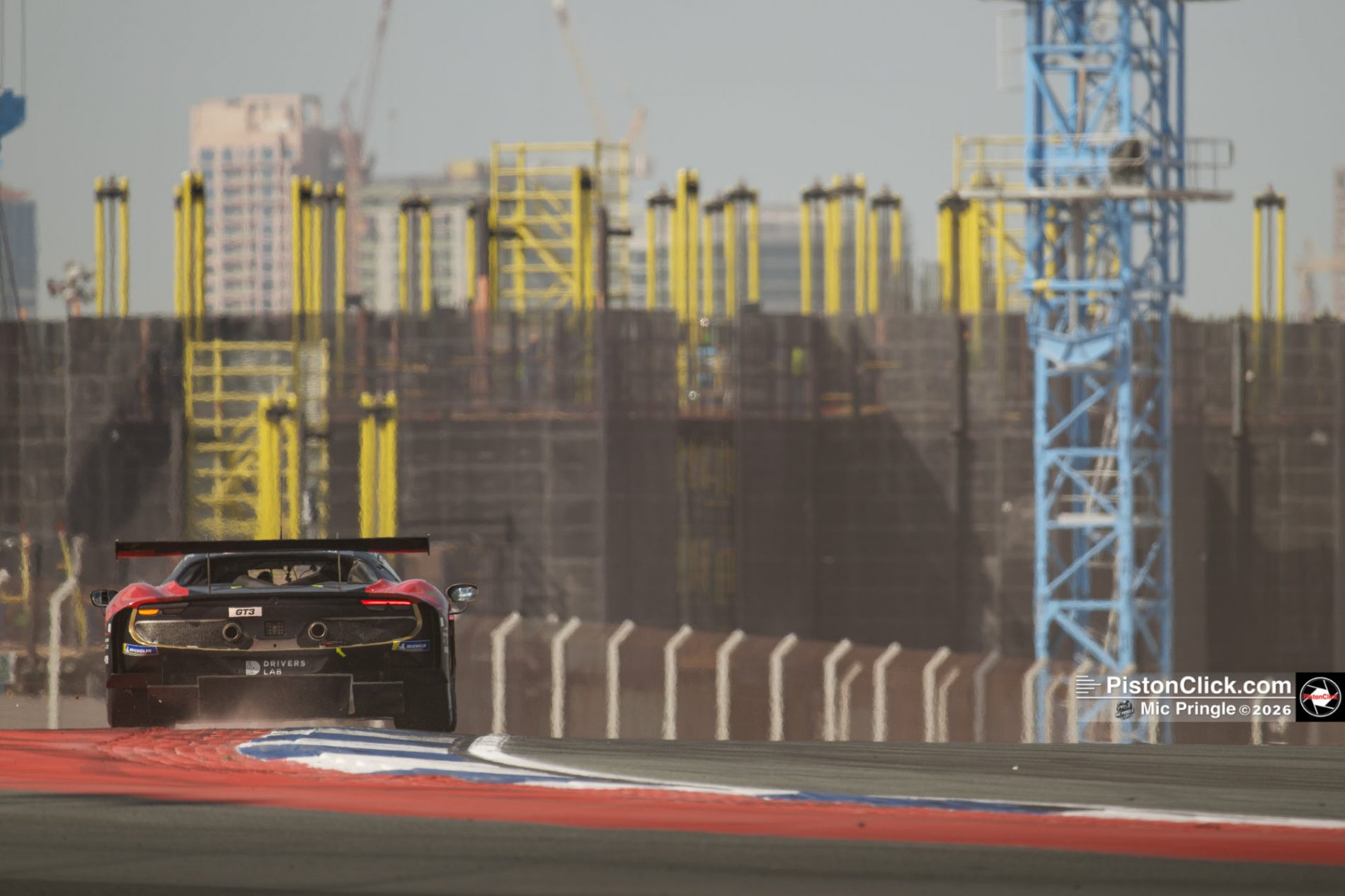
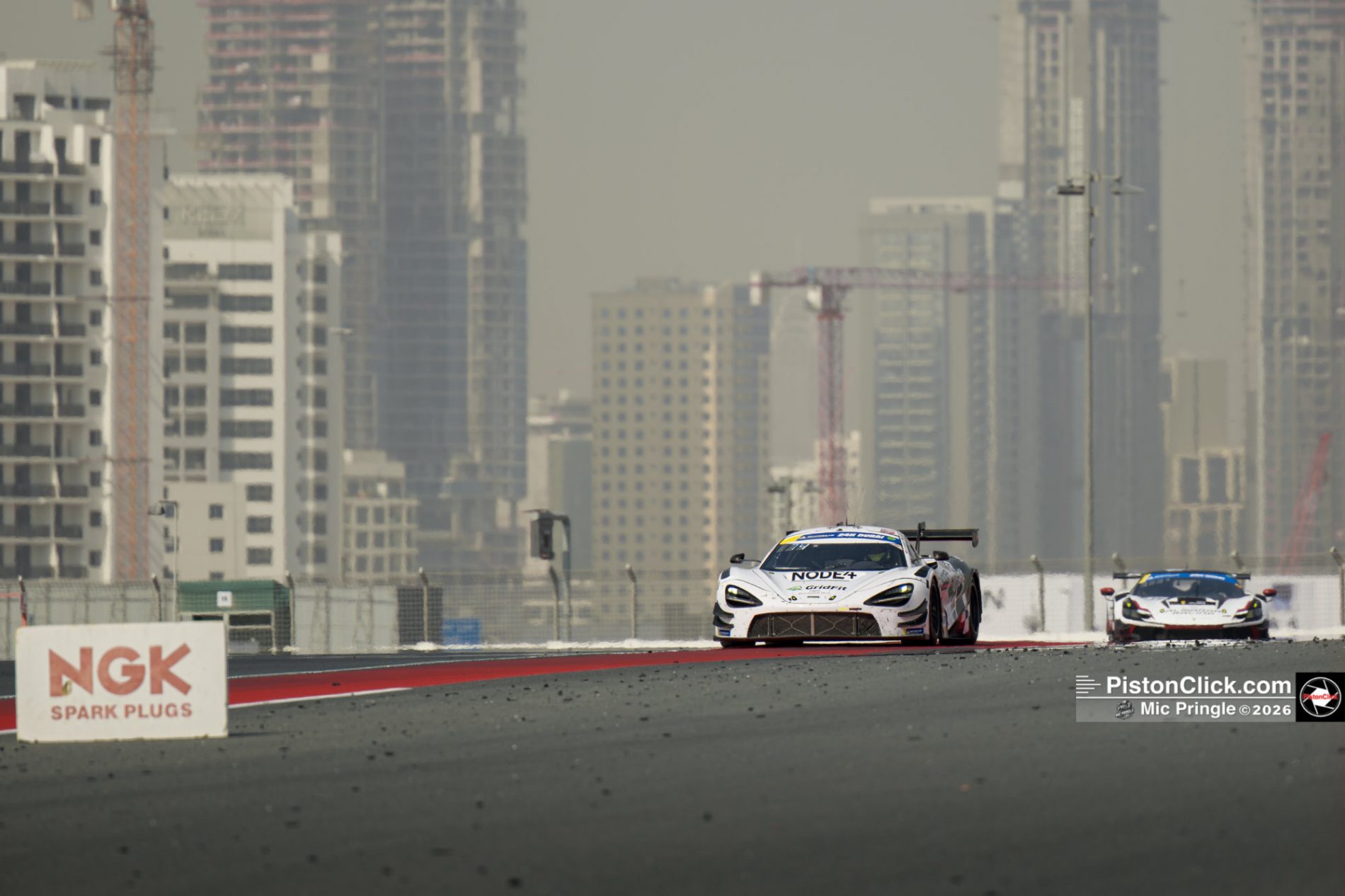
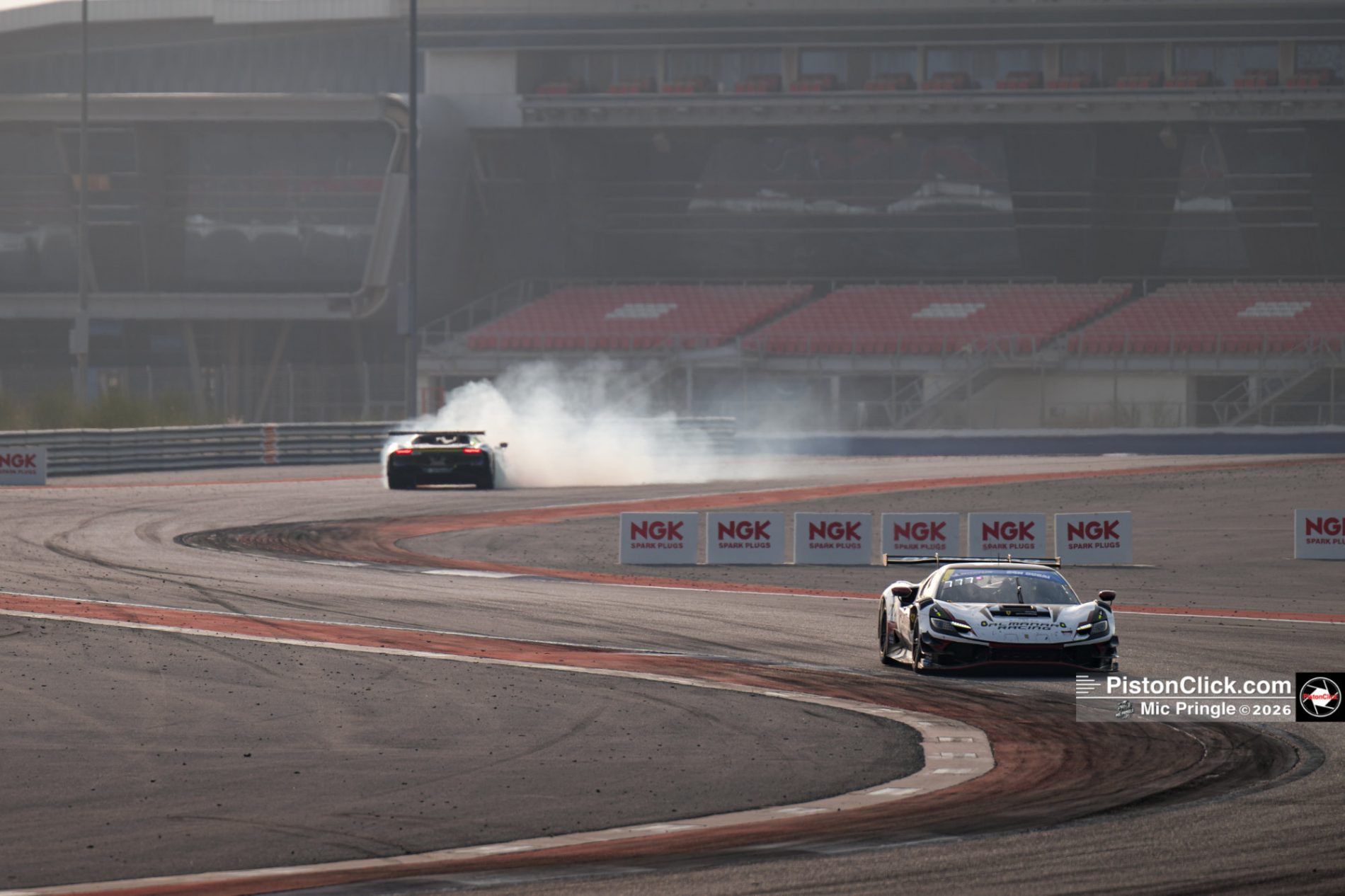
Those same challenges helped define the look of the images. Dust in the air softened contrast, the haze added depth, and the low sun introduced a warmer colour palette, one that felt specific to the desert setting and distinctly different from Barcelona.
Dubai Autodrome Pit Lane
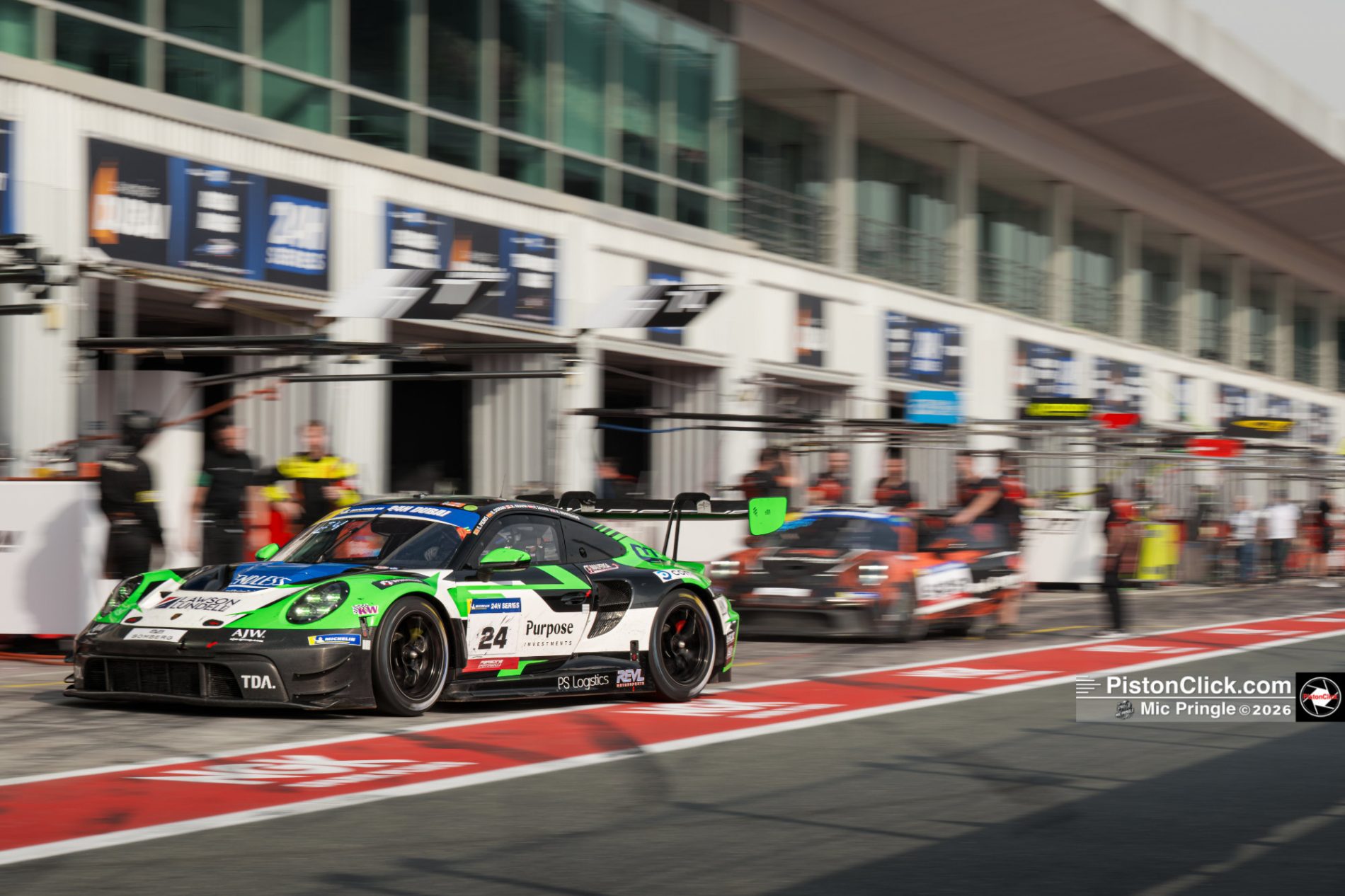
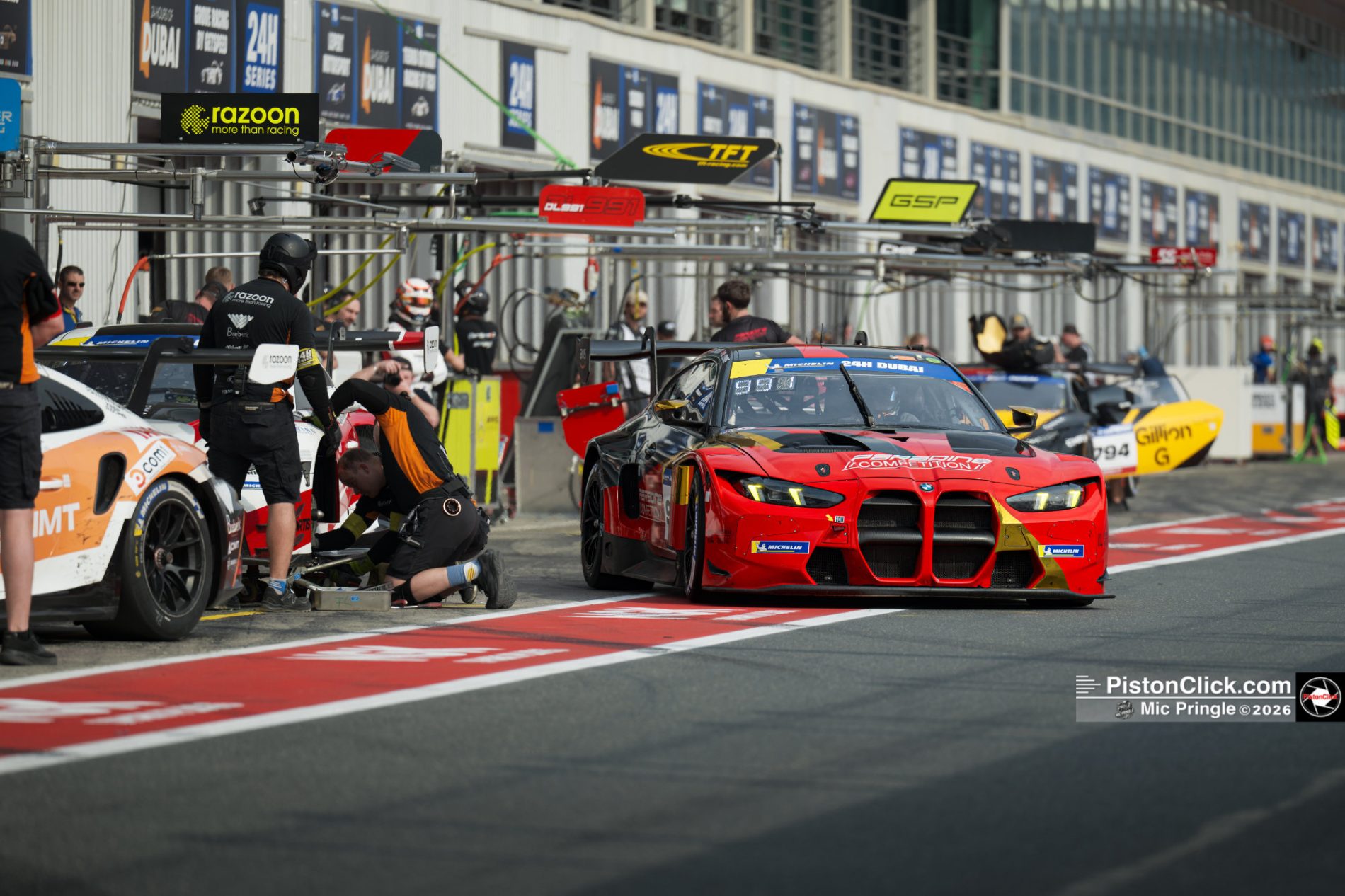
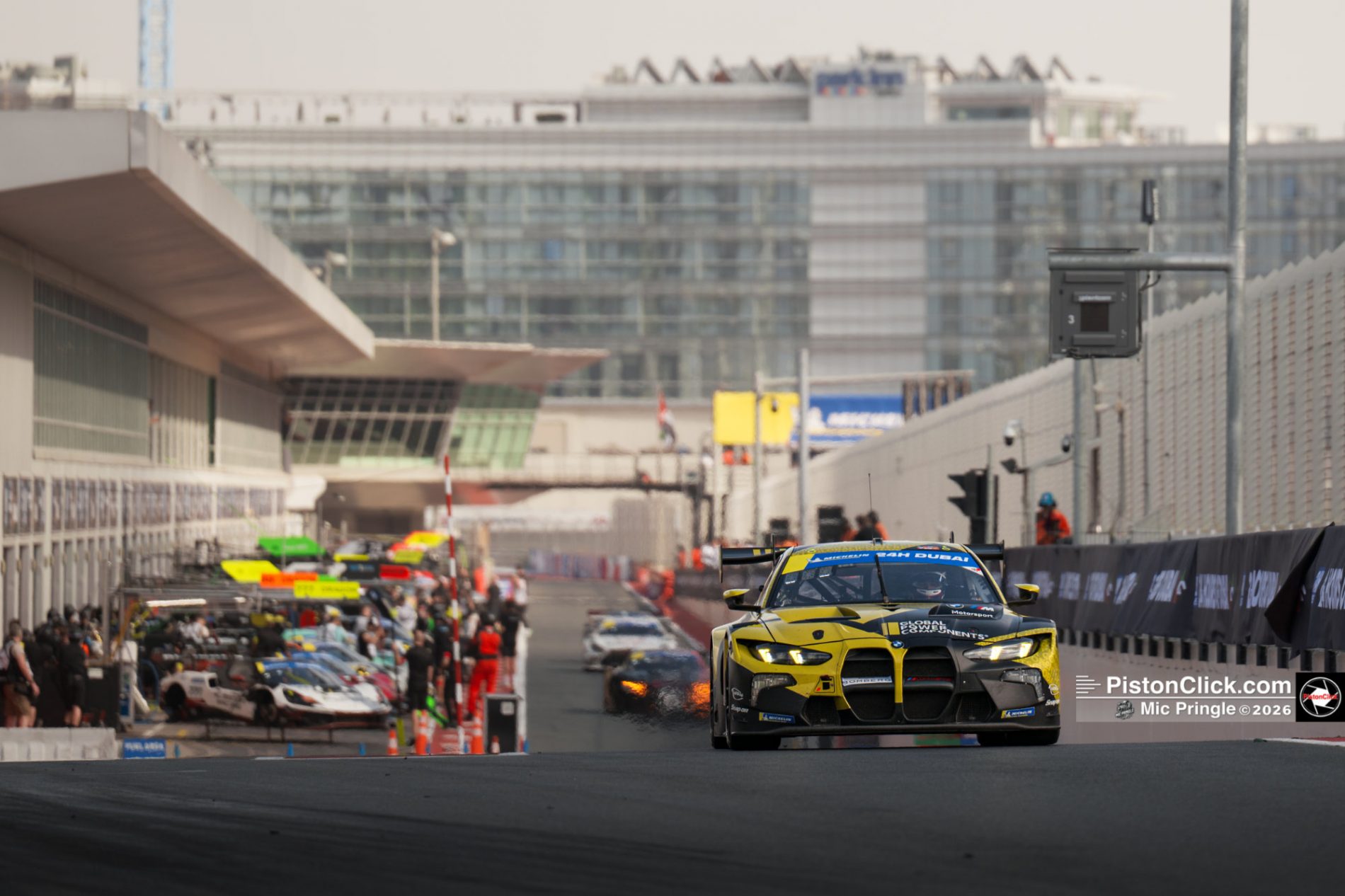
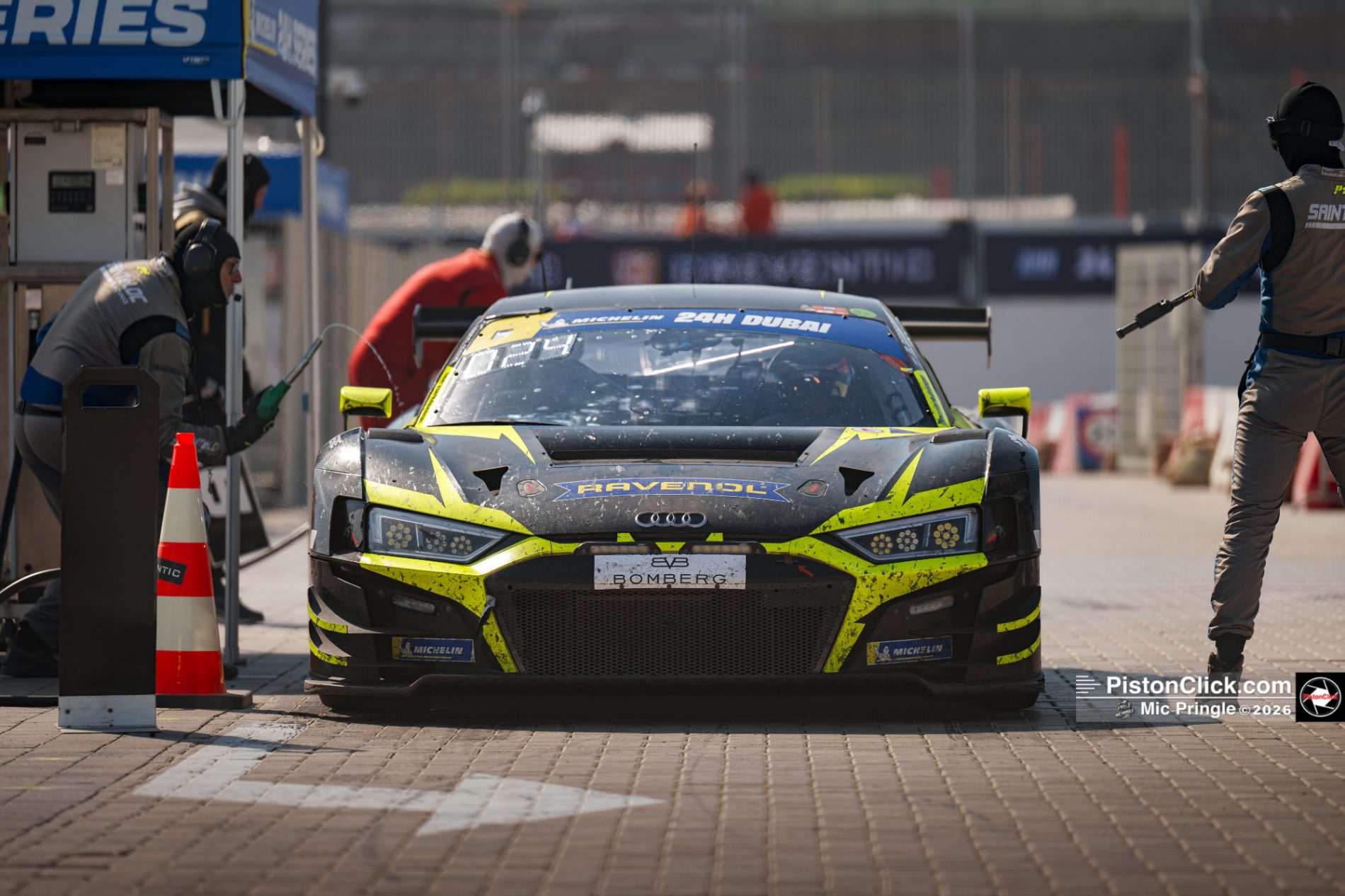
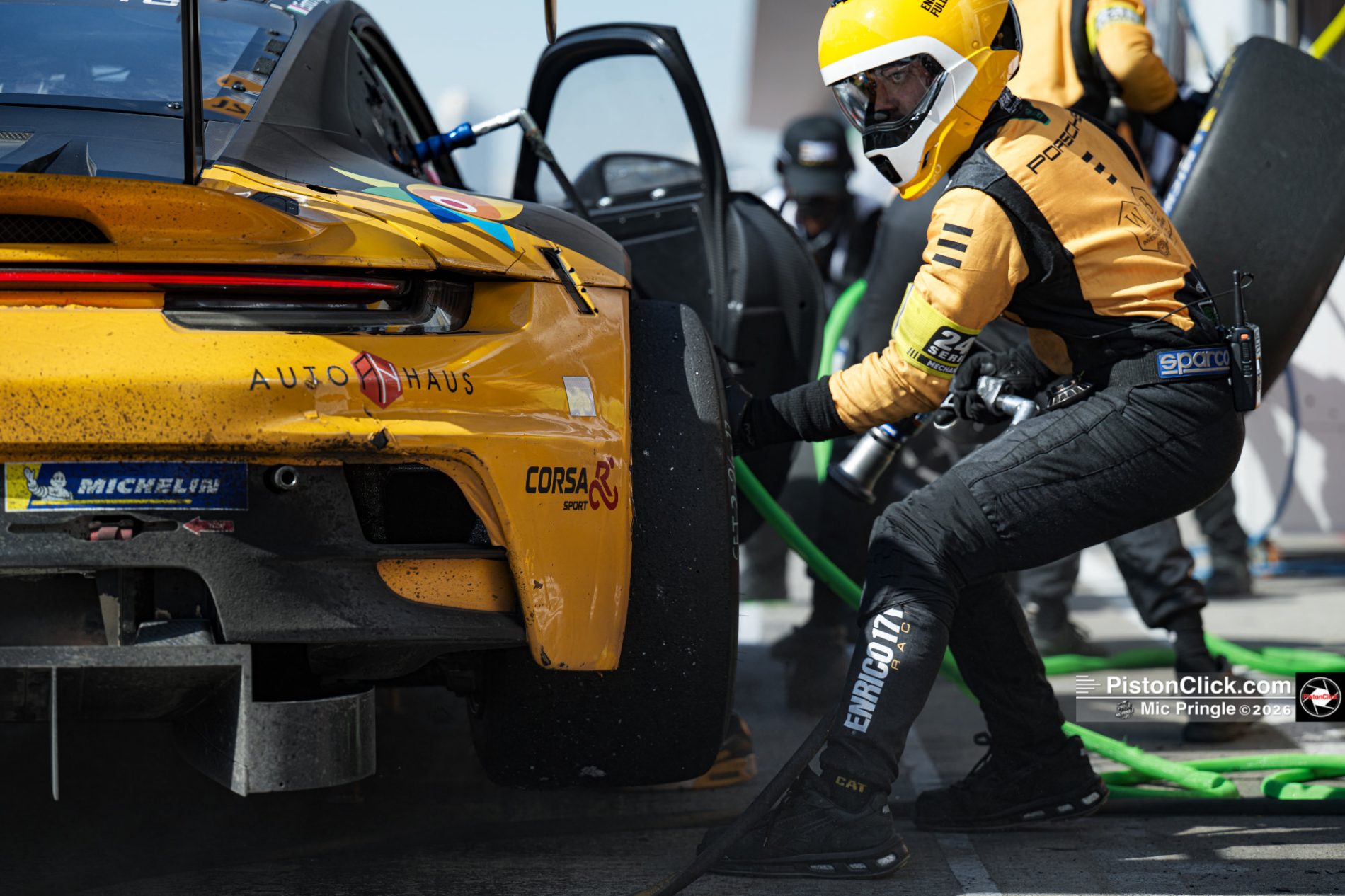
If Barcelona’s pit lane felt expansive, Dubai’s felt compressed. The pit lane is narrower and sits lower than the track surface, which creates strong visuals as cars climb uphill on exit, but it also reduces the available working space. Combined with a larger grid, this made the pit lane noticeably more intense. More cars, more crew, and less room to move meant every step had to be calculated and deliberate. It wasn’t chaotic in the traditional sense, but it demanded constant awareness of where you were standing, who was moving behind you, and which car was about to be released.
The Golden Hour – Sunset
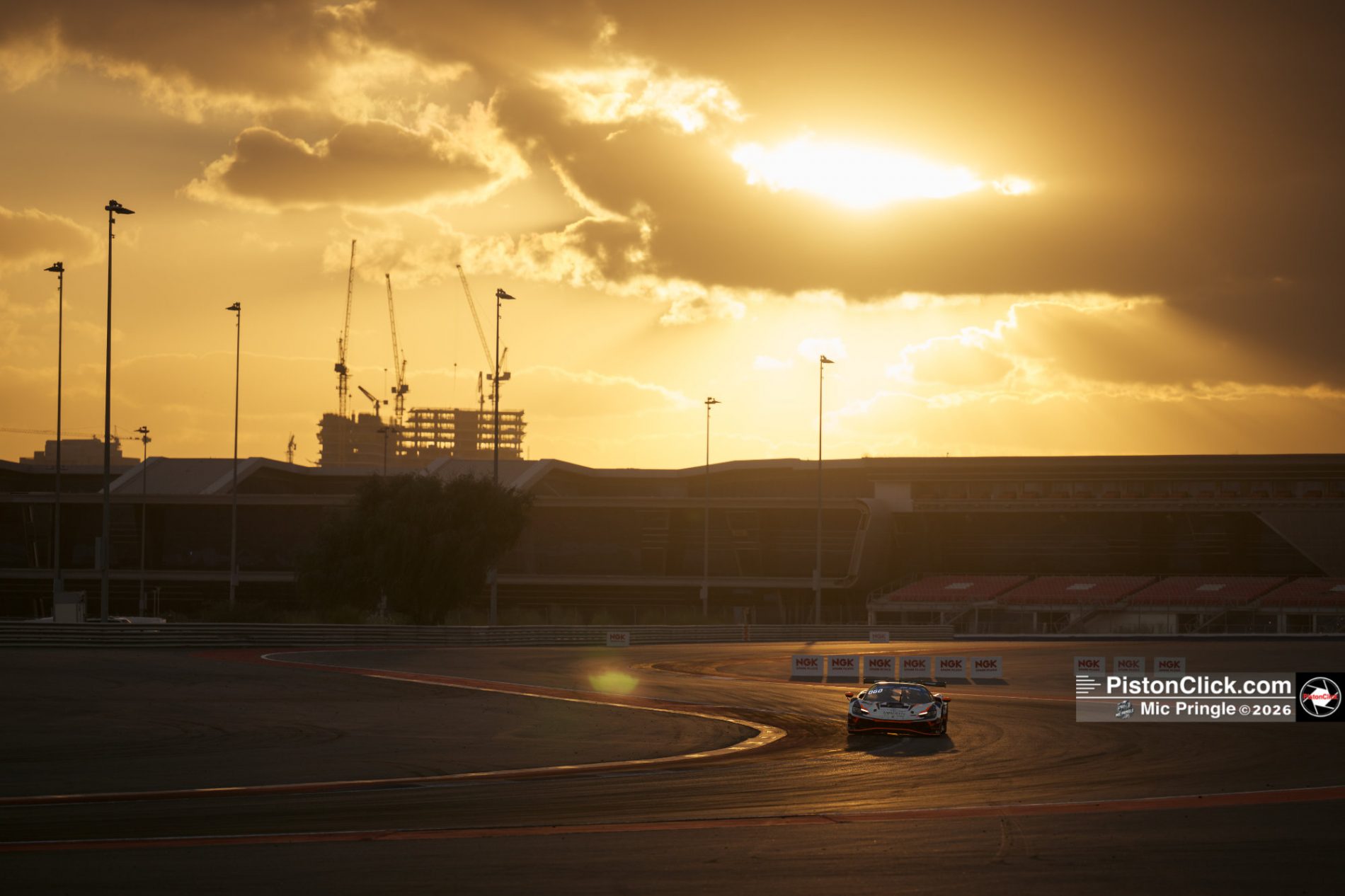
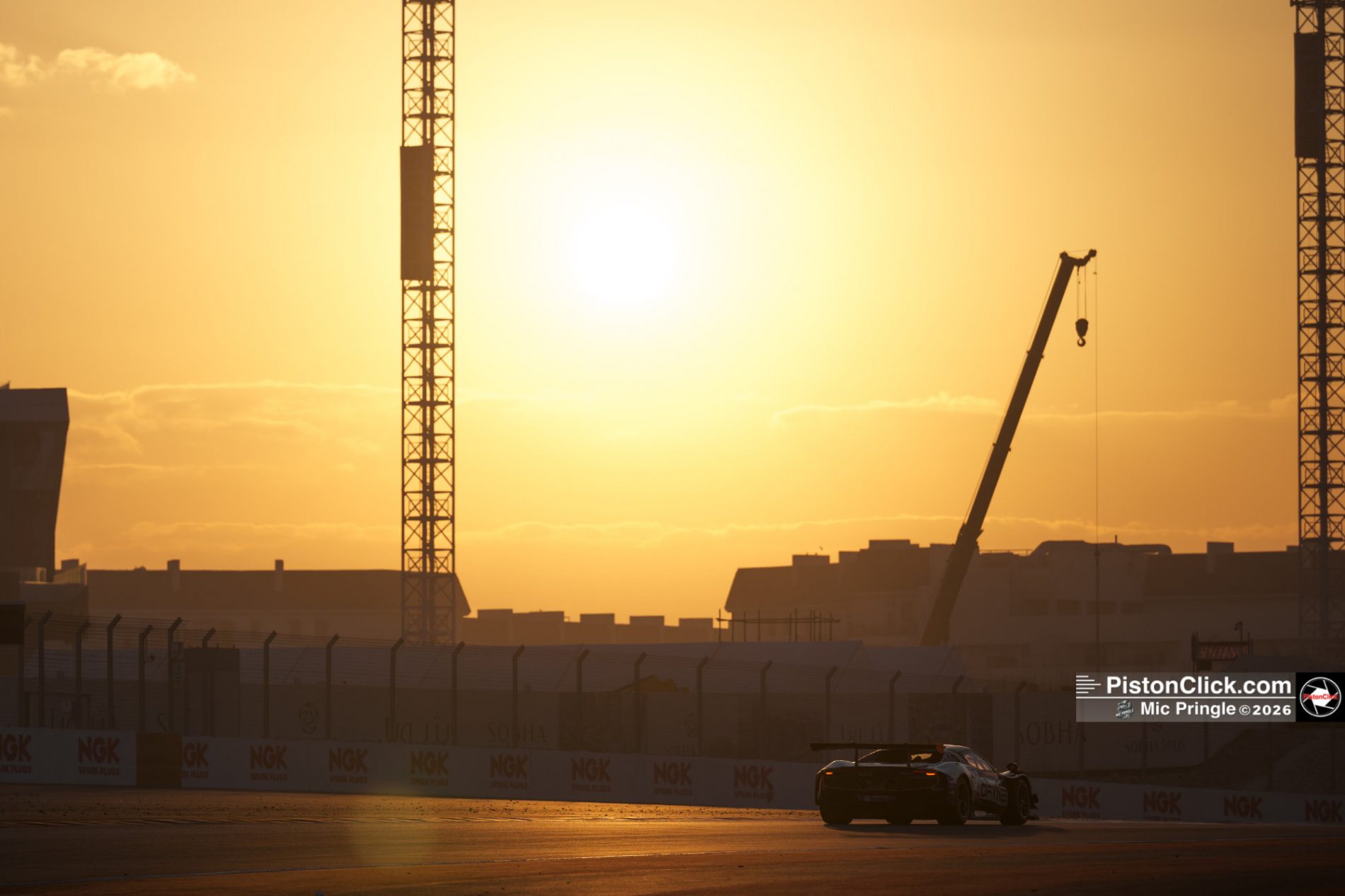
When it came to sunsets, Dubai delivered where Barcelona fell short. Over the course of the weekend, I was able to shoot sunset from two very different locations, each offering its own perspective.
On Friday evening, I positioned myself at Turn 5, a flowing S-shaped section that allowed the cars to move naturally through the frame as the sun dropped. The light picked out contours in the bodywork and cast long shadows without overwhelming the scene.
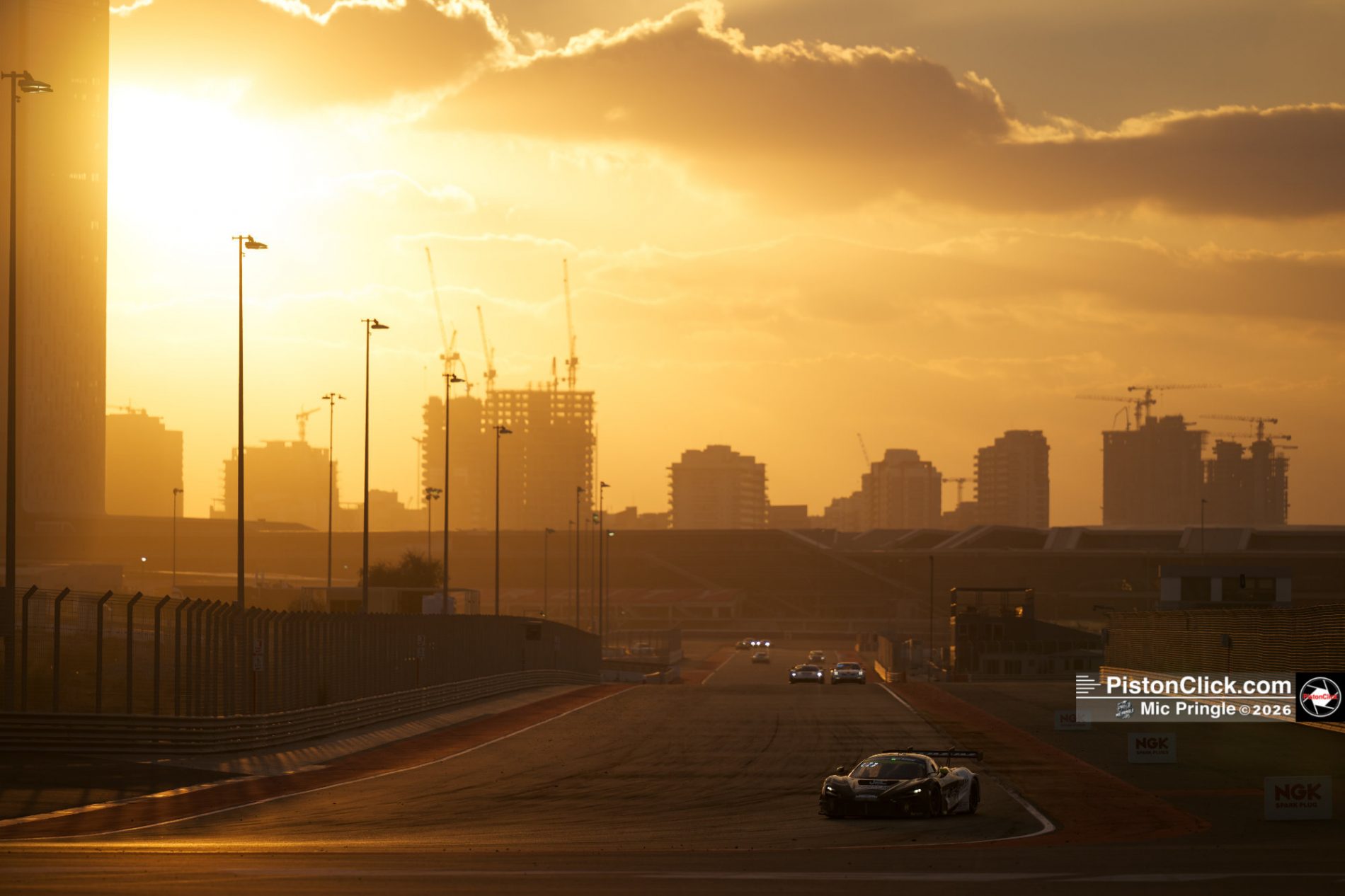
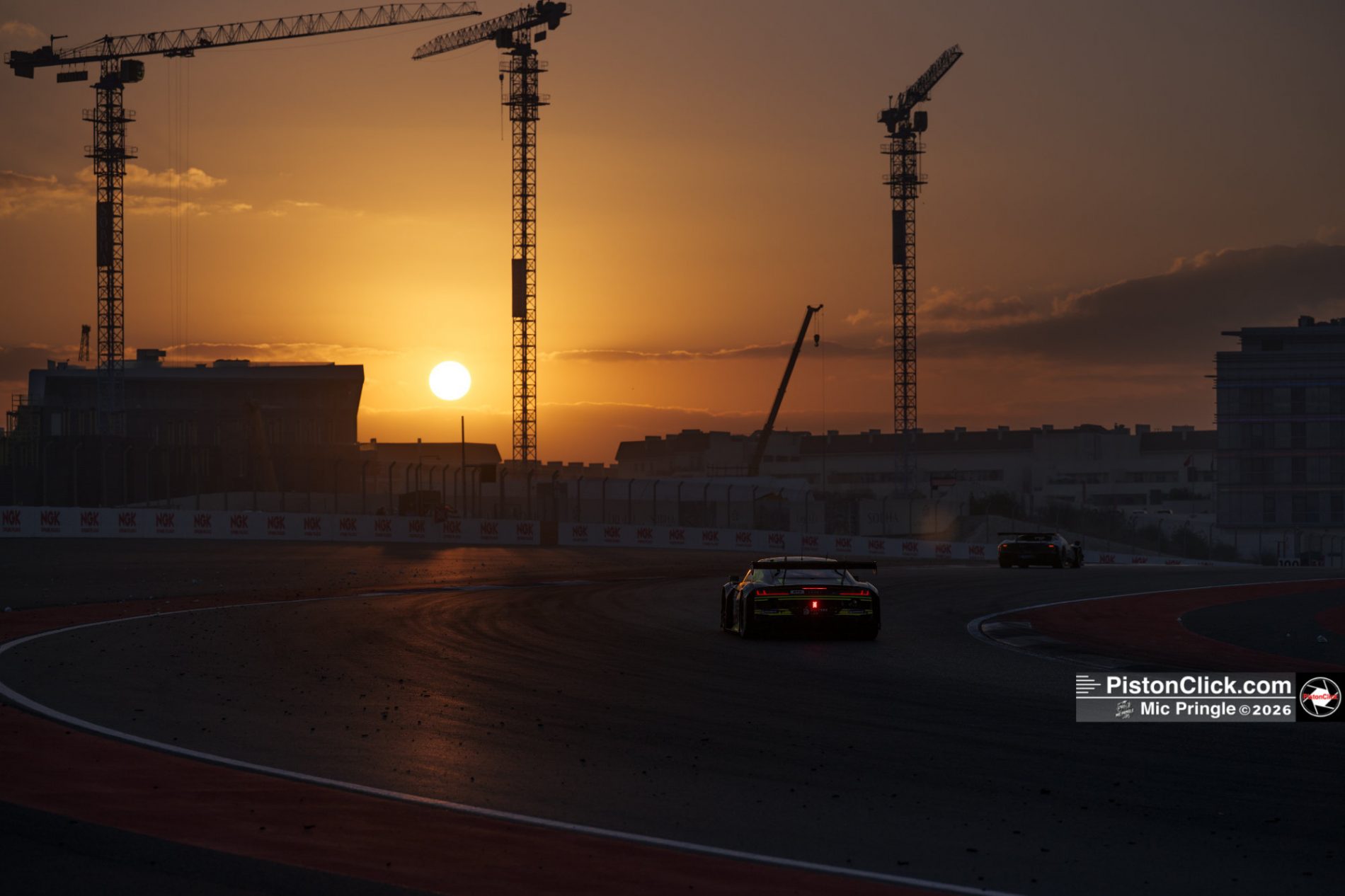
On Saturday during the race, I headed to the end of the back straight at Turn 10, where the cars came toward the camera at great speed. As the sun dipped below the horizon and headlights began to glow, the brief overlap between natural and artificial light felt like a defining moment of the race.
The Golden Hour – Sunrise
Sunrise required a more considered approach. At Dubai, the sun rises between Turns 15 and 16, making the stretch between Turns 14 and 15 the prime location. By the time I arrived, plenty of other photographers had the same idea. Aware of the crowd, a friendly marshal invited me into his post for a better vantage point, and with the race under Code 60 following an incident (cars limited to 60 km/h with no overtaking) it was a rare opportunity to work safely and deliberately.
24 Hours Dubai
Looking back, Barcelona and 24 Hours Dubai felt like two ends of the same endurance spectrum. Barcelona was about learning the rhythm, understanding how a 24-hour race breathes, how fatigue sets in, and how the story slowly reveals itself if you’re patient enough to stay with it. Dubai took those lessons and amplified everything.
Harsher light, tighter spaces, more cars, more haze. It forced quicker decisions and a different way of seeing. Yet the fundamentals remained unchanged: planning still mattered, the in-between moments still carried weight, and the strongest images often came from anticipating change rather than chasing action.
Barcelona taught me how to survive a 24-hour race with a camera. Dubai taught me how to lean into its extremes, and that felt like a natural next step.