



Photographing the Le Mans Classic
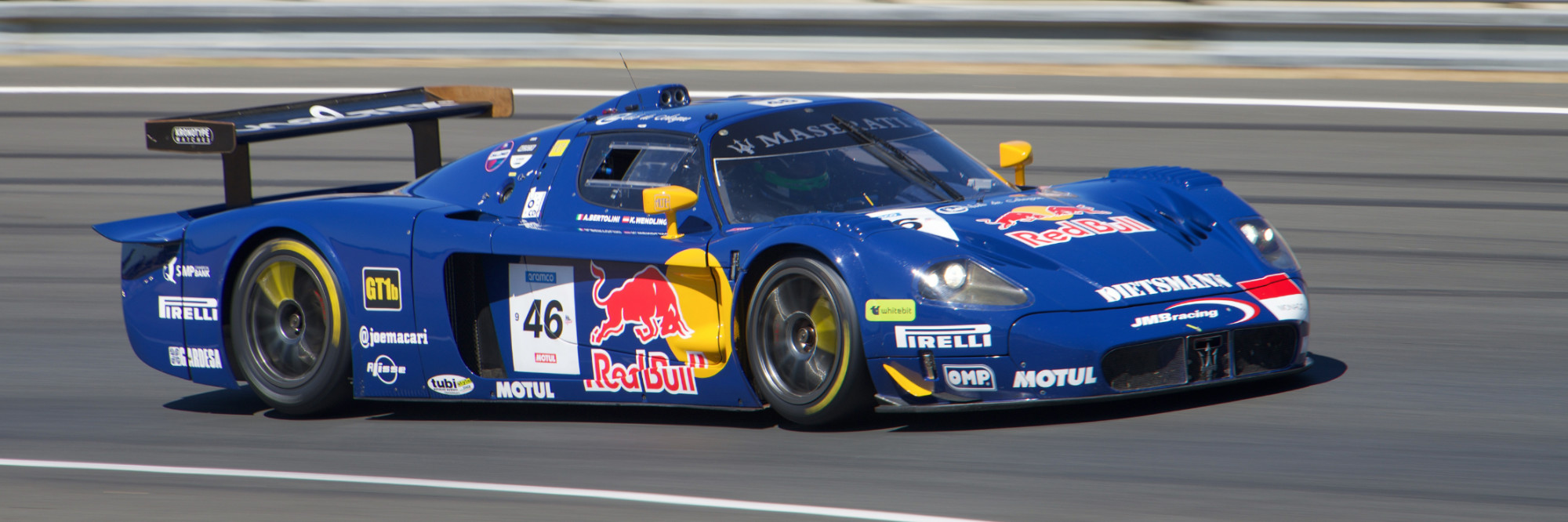
Report by David Harbey
11 July 2026

Twenty Years Later – Returning to the Le Mans Classic
It’s been twenty years since my last visit to the Le Mans Classic in 2006; the third running of the event catering for historic sports cars created by Peter Auto and Richard Mille. Held every two years the Le Mans Classic consists of a series of short races over a 24 hour period split by the age of the cars.
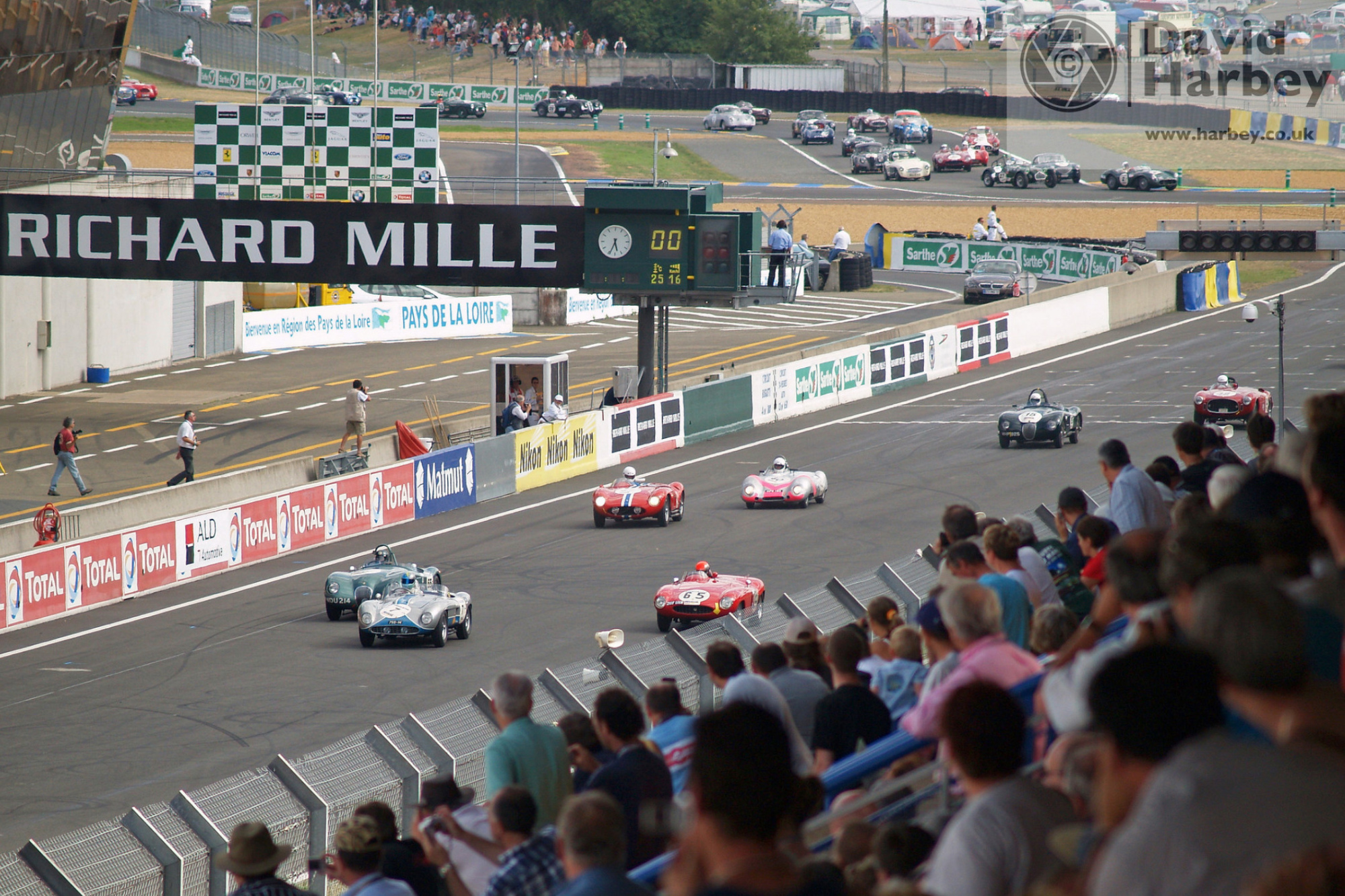
For 2026, the decision had been taken to move to an annual format alternating between Classic Legend – grids for cars from 1976 – and Classic Heritage – for up to 1975. This year was the Classic Legend. The event had grown to 660 competing cars and around 240,000 spectators by 2025, so it would be interesting to see how the new format would be received by competitors and spectators alike.
Well, change always brings challenges – in this case, a significantly lower entry of 280 cars and a more modest crowd of 160,000 on a very hot weekend. Whilst it is a very different event in many ways, the Le Mans 24 Hours this year attracted over 350,000 spectators (and it felt like it !). You can find reflections on that event from both first timers and veterans here.

Grid 6 and Grid 7 – Historic Endurance Cars Return
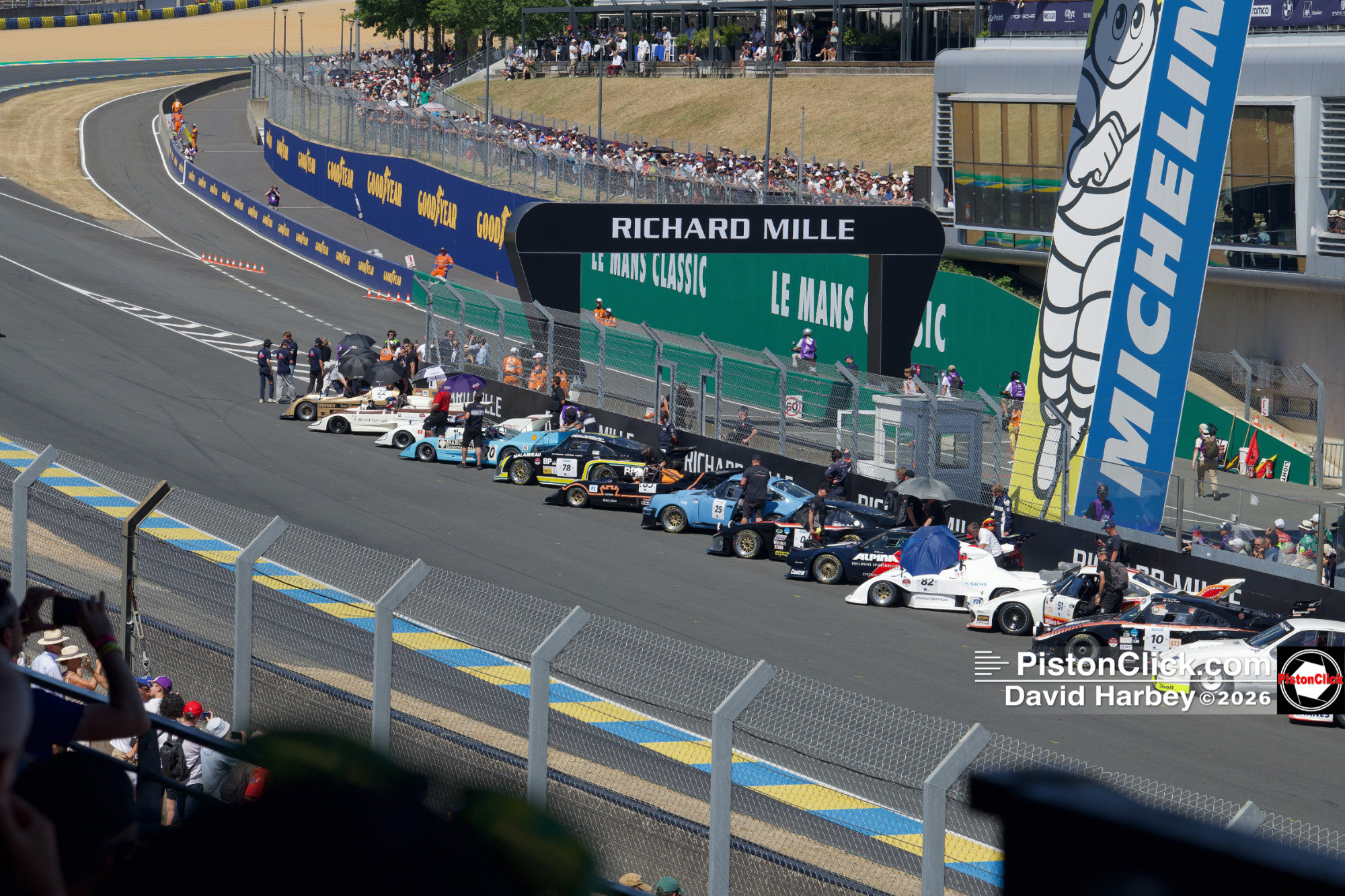
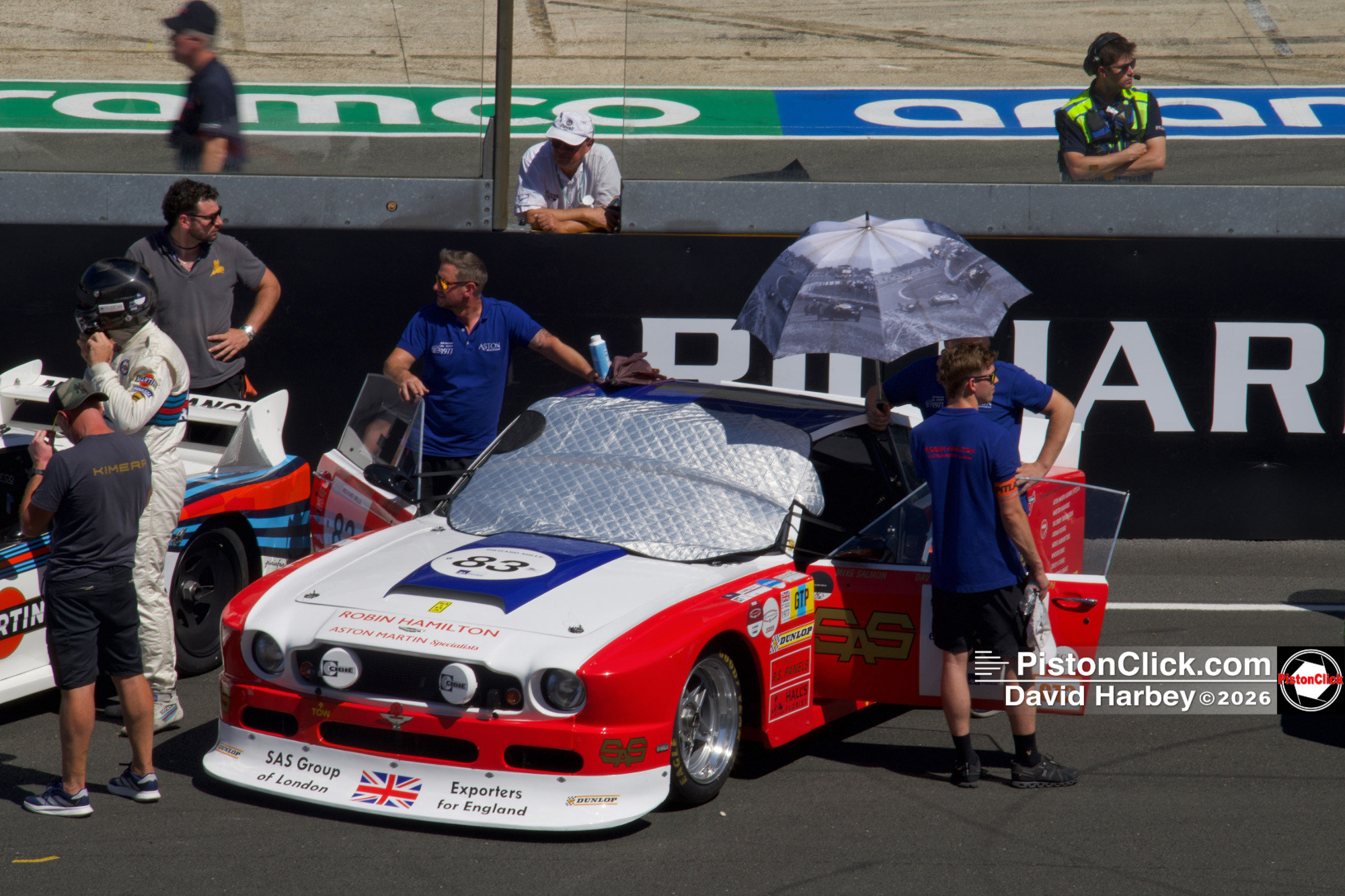
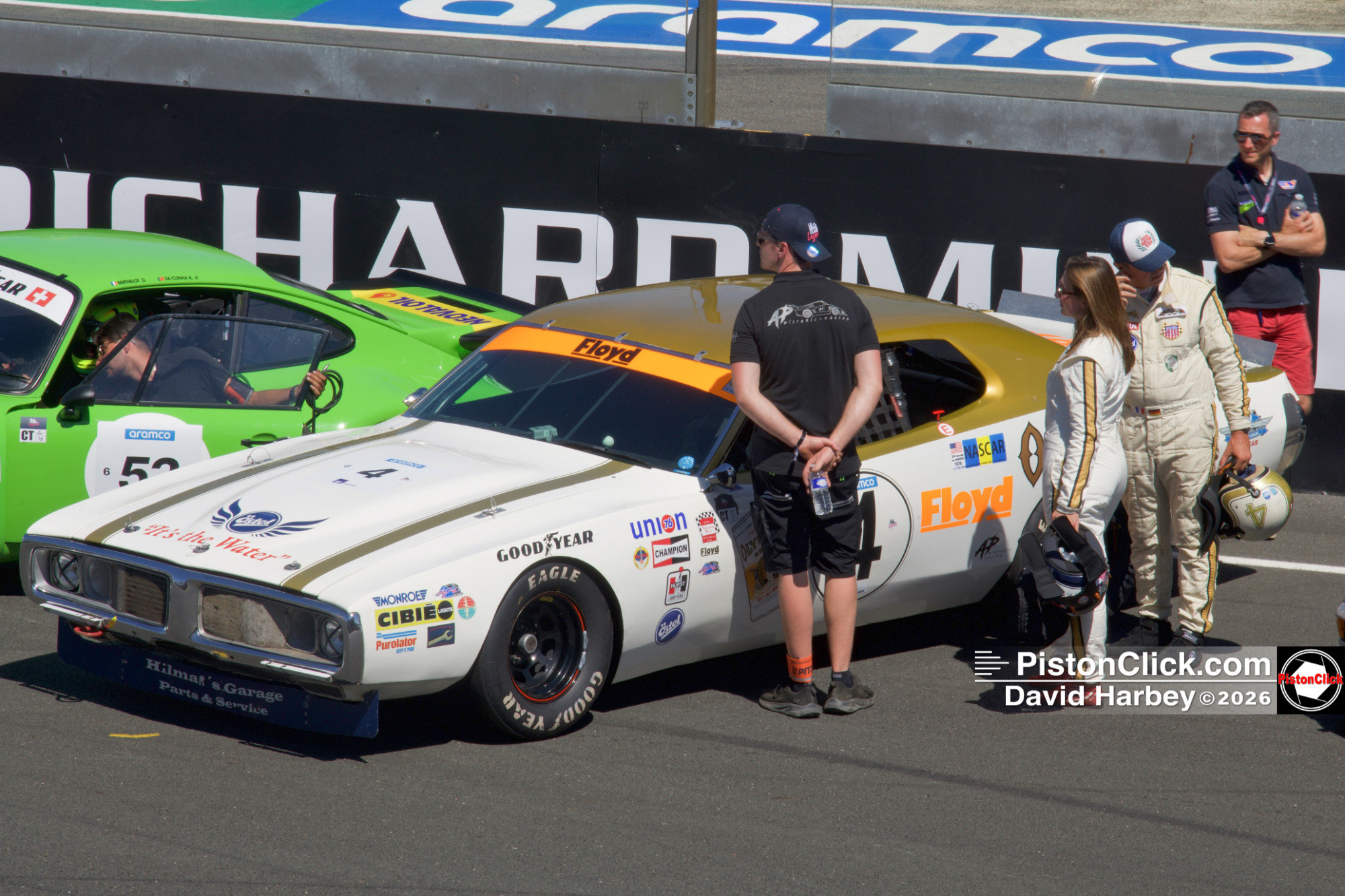
Split into five grids from nominally 1975 to 2015 plus additional races for the GT3 Revival series, Porsches, Ferraris and – a new one this time – NASCAR Classics. Let’s take them a grid at a time starting with Grid 6 for 1972 to 1984. A fine mix of open topped 2-litre sports cars and more powerful Porsches plus the occasional BMW, Aston Martin and fittingly the Dodge Charger from 1976. We were in the main grandstand for this race.

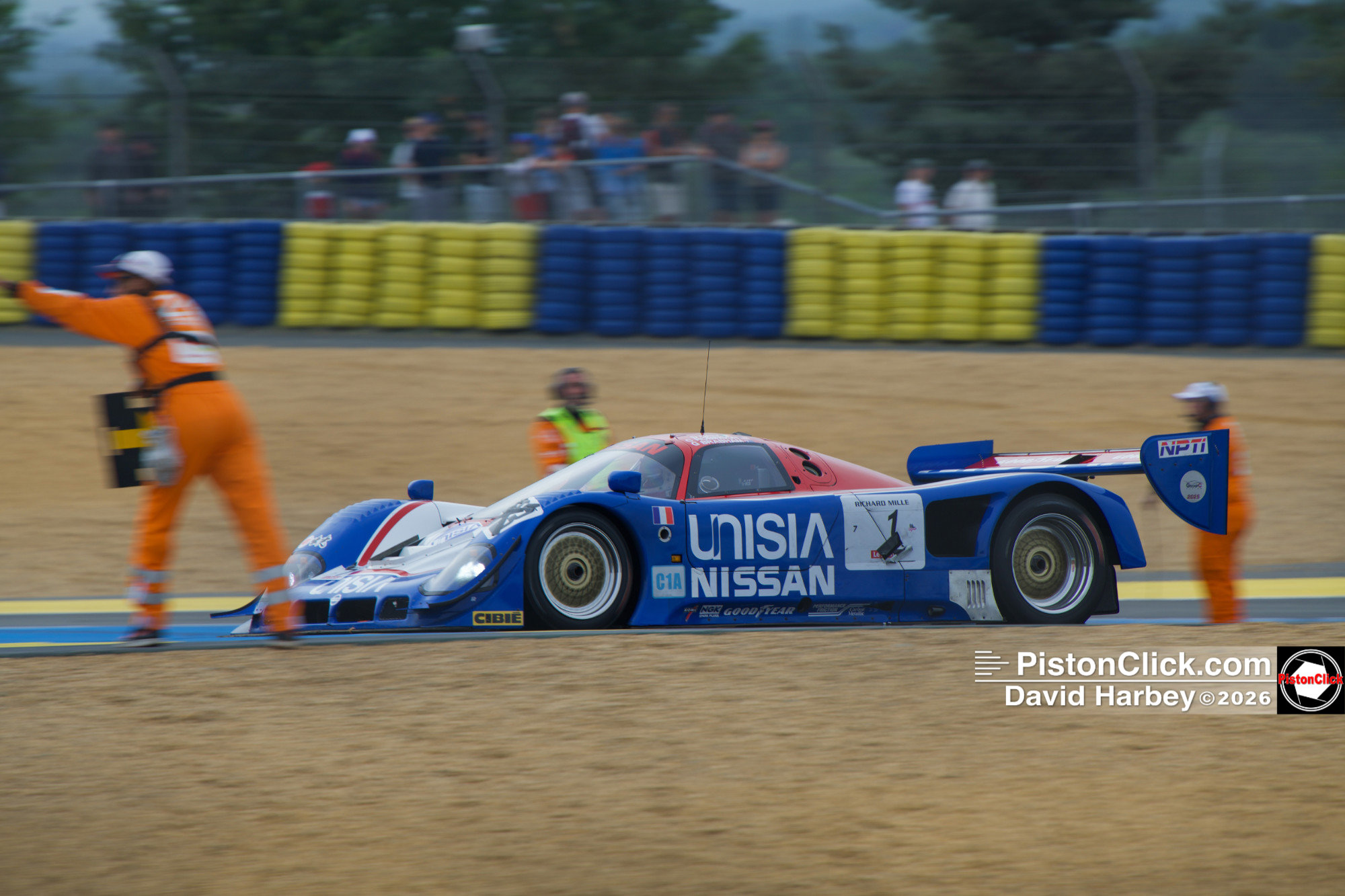
For many, Grid 7, the Group C years was much anticipated. A disappointing 16 entries around the full Le Mans circuit wasn’t necessarily going to be very entertaining. Of course, it only takes two to make a race – and the very nature of endurance racing means you rarely have door handle to door handle touring car style action – but the gaps between the cars were rather lengthy.

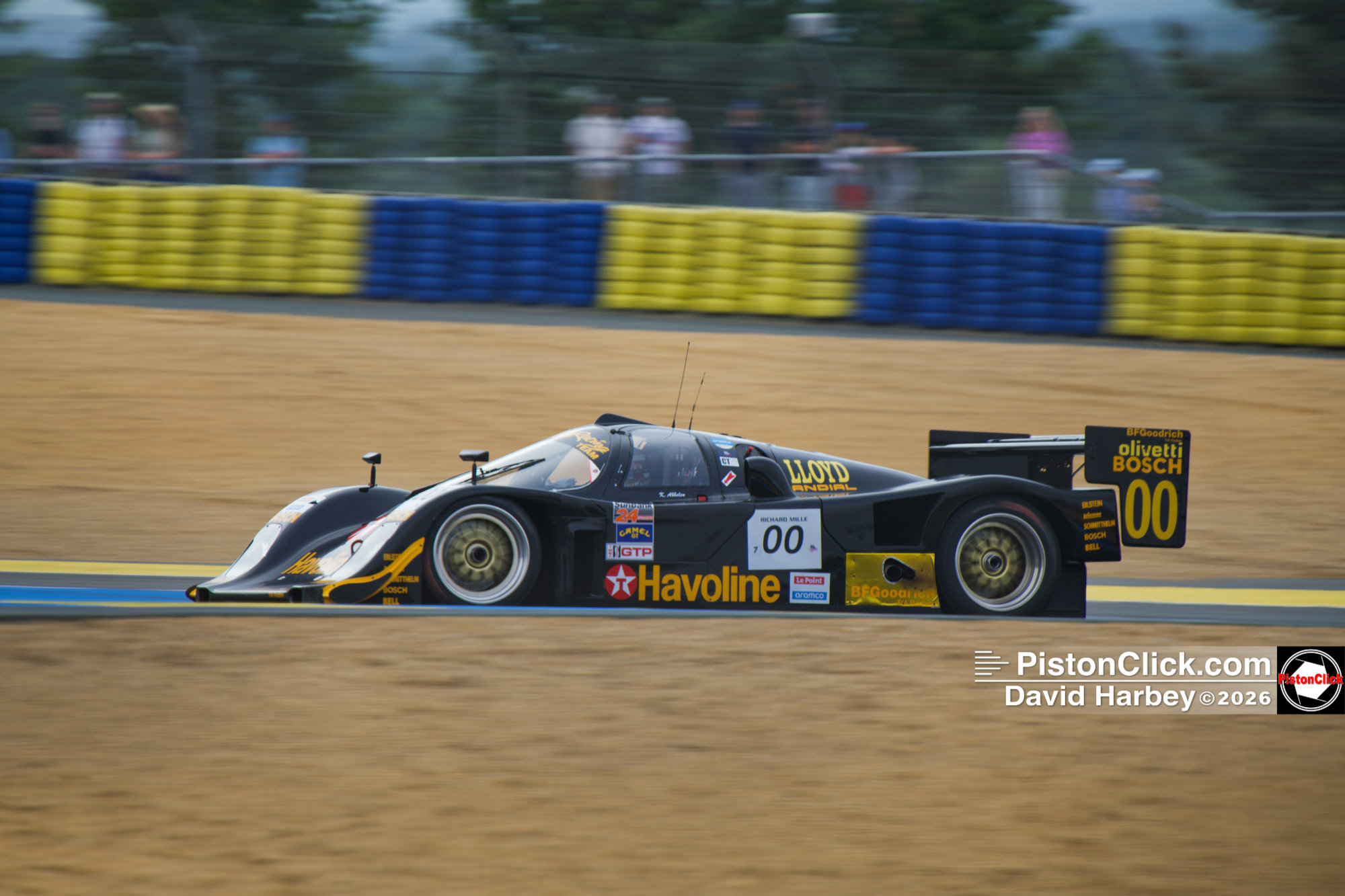
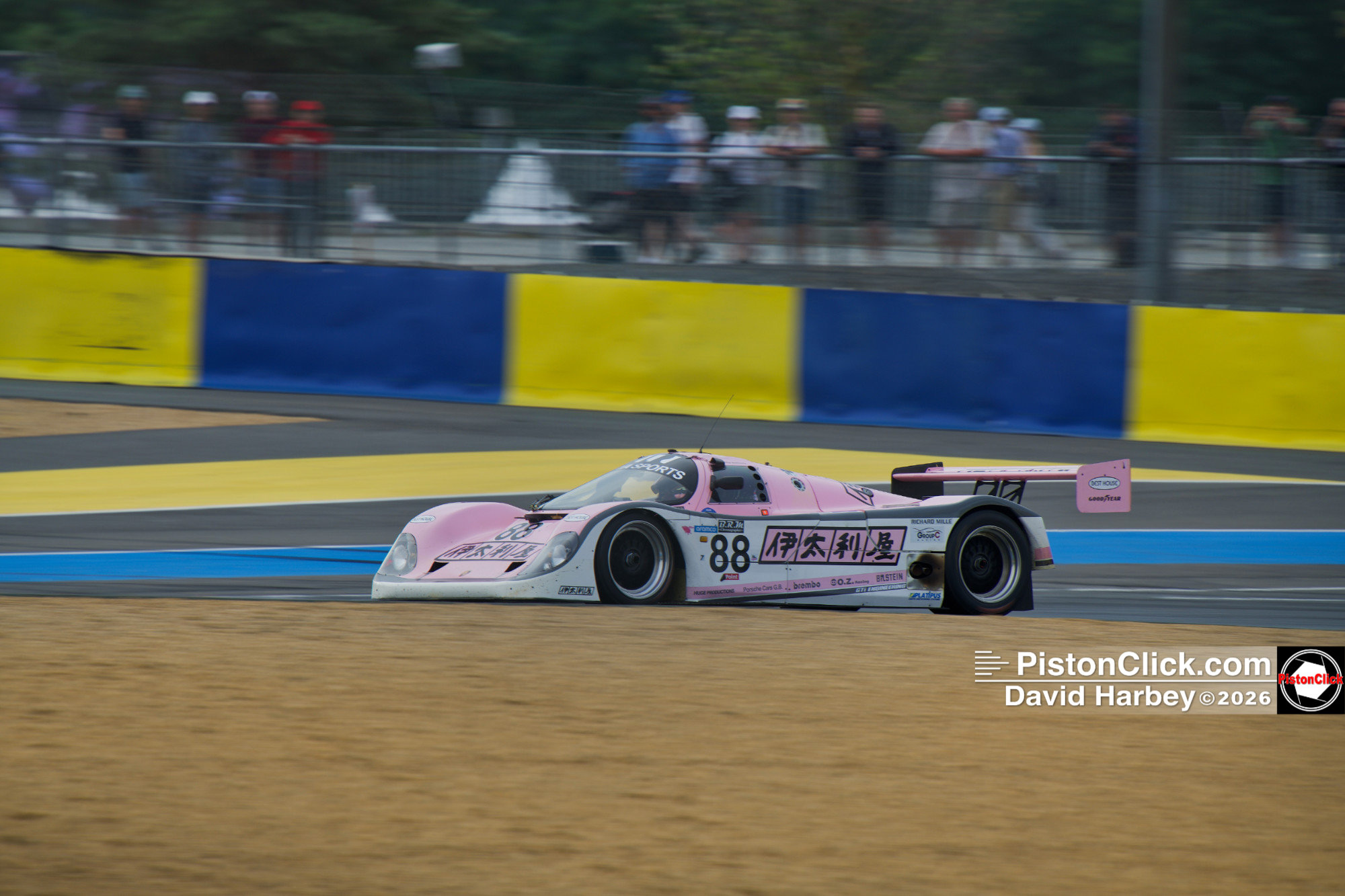
We will come back to this aspect later, but for the spectator, once you get beyond the – Wow, I remember that racing! – or Cor, I remember that sound! – it’s less entertaining – especially when the temperature is nudging 30C. Still some memories were jogged in a good way!
Grid 8 and Grid 9 – GT Legends and Modern Endurance Icons
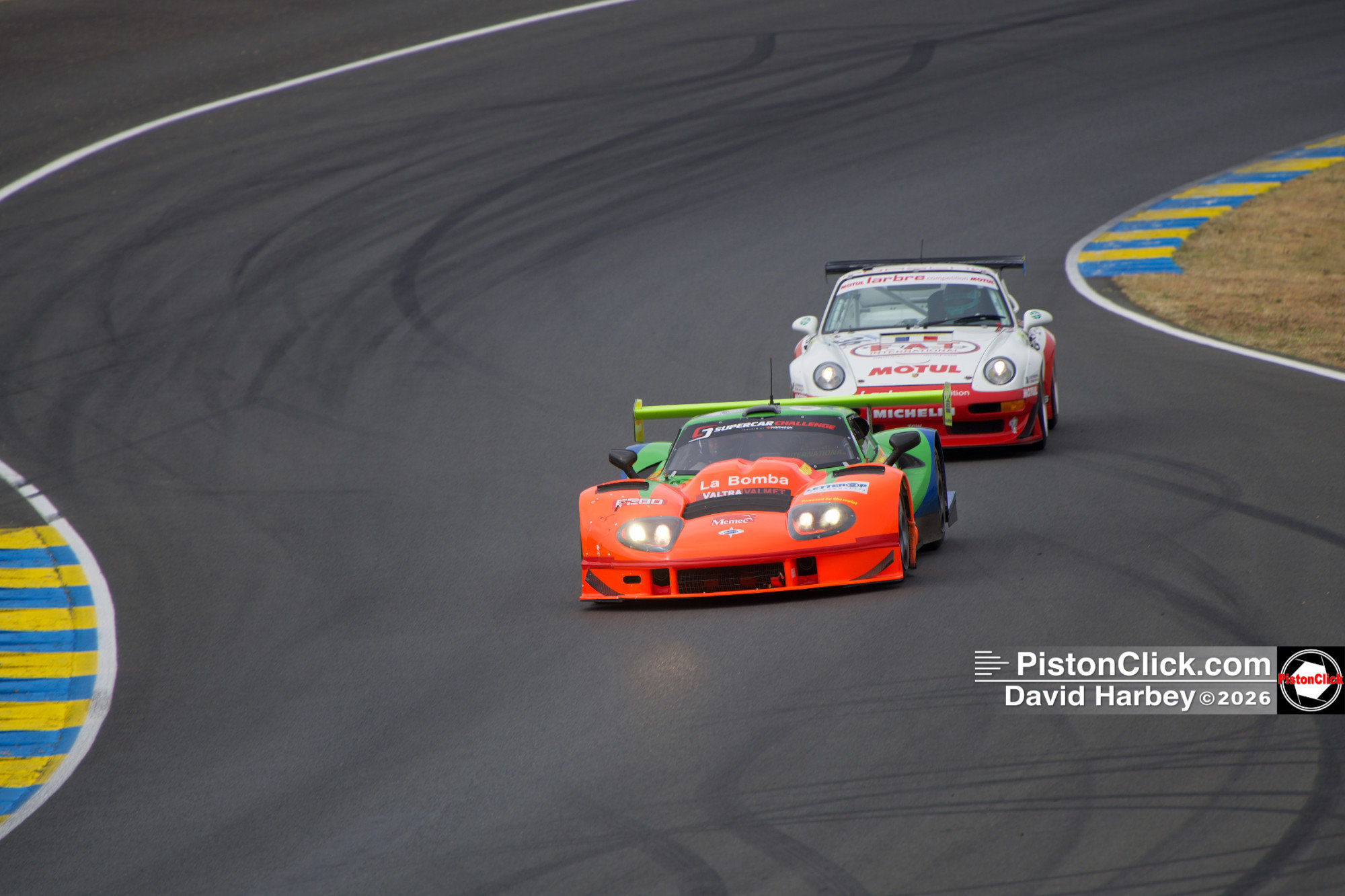
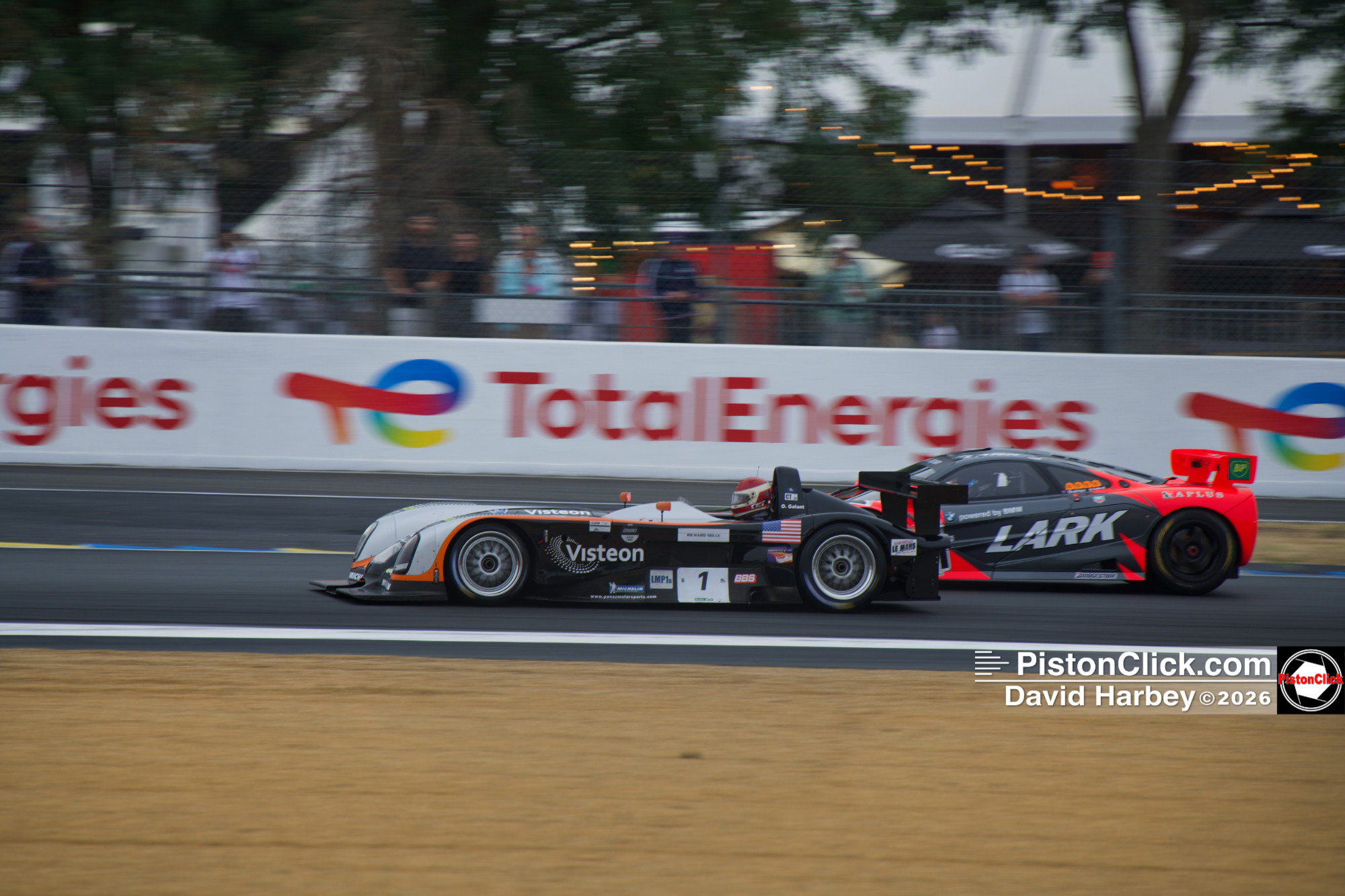
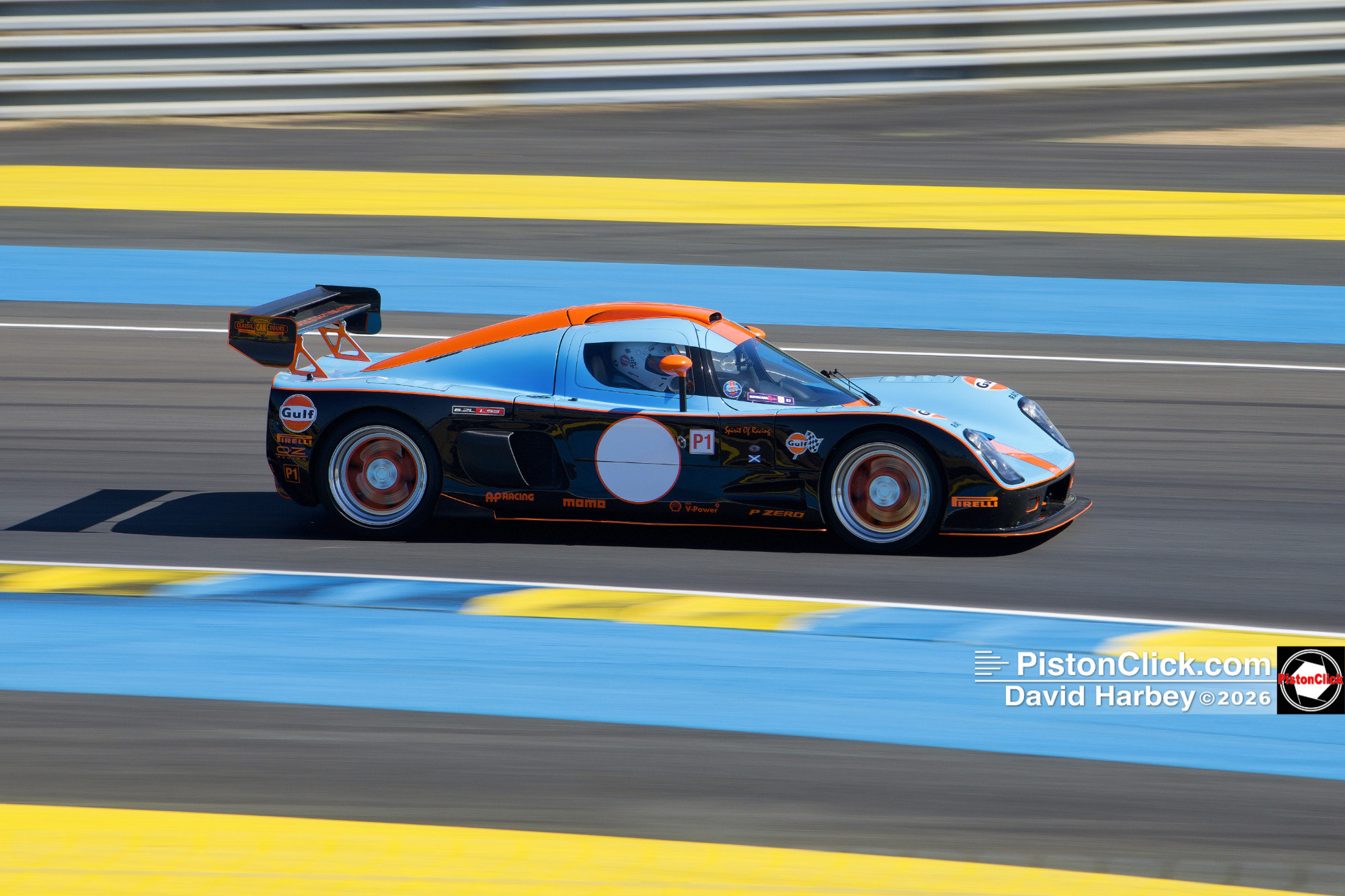
Speaking of the sound, Grid 8 for 1994 to 1999 had both a Panoz and McLaren F1 GTR – who battled out for the lead alongside numerous Porsches and a colourful Marcos. Again, with only 24 entries and less starters as they worked through their three races in the 24 hour window – it was good, but perhaps not that good.
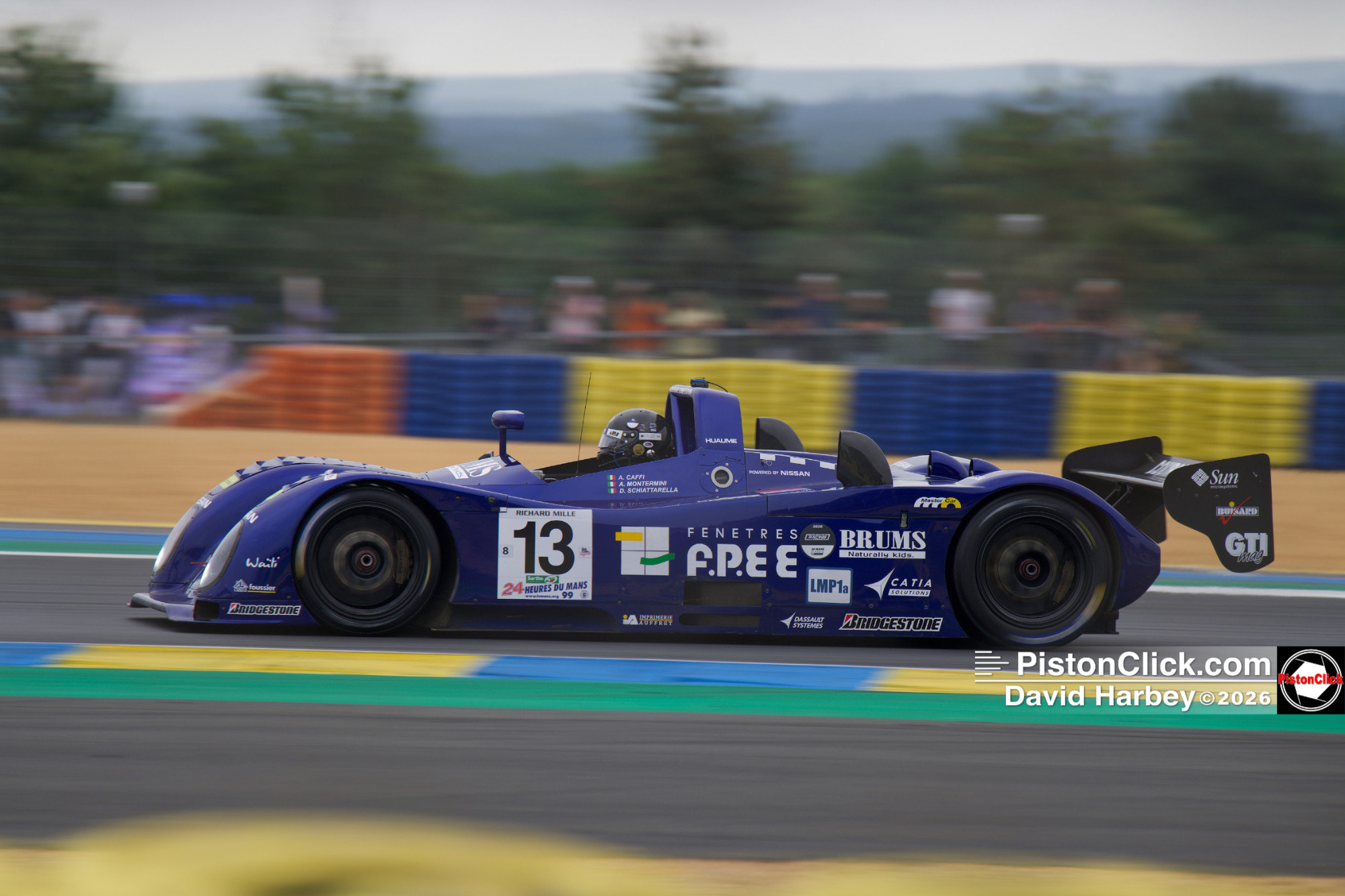
Grid 9 for 2000-2010 brought more entries and some very familiar cars. Whilst we might expect to see the all conquering Audi R8 romp to victory, there is always a balance between the driver – whether a gentleman racer or hired gun – and the level of preparation. Whilst ownership of any of these cars are not for the financially challenged, there is still a finite limit of cash available – and Audi were spending a lot in the early 2000s – and got the wins as a result.
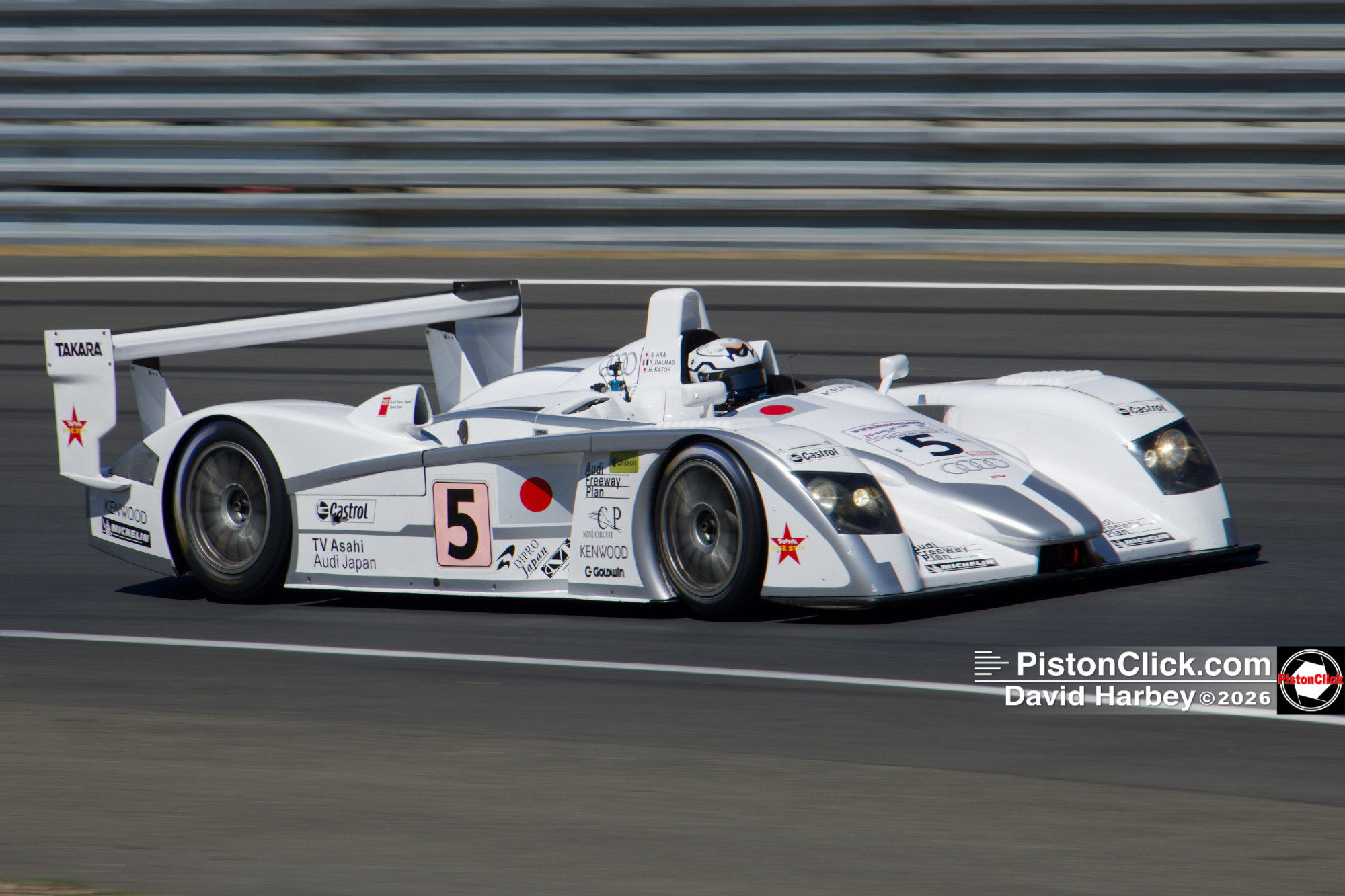
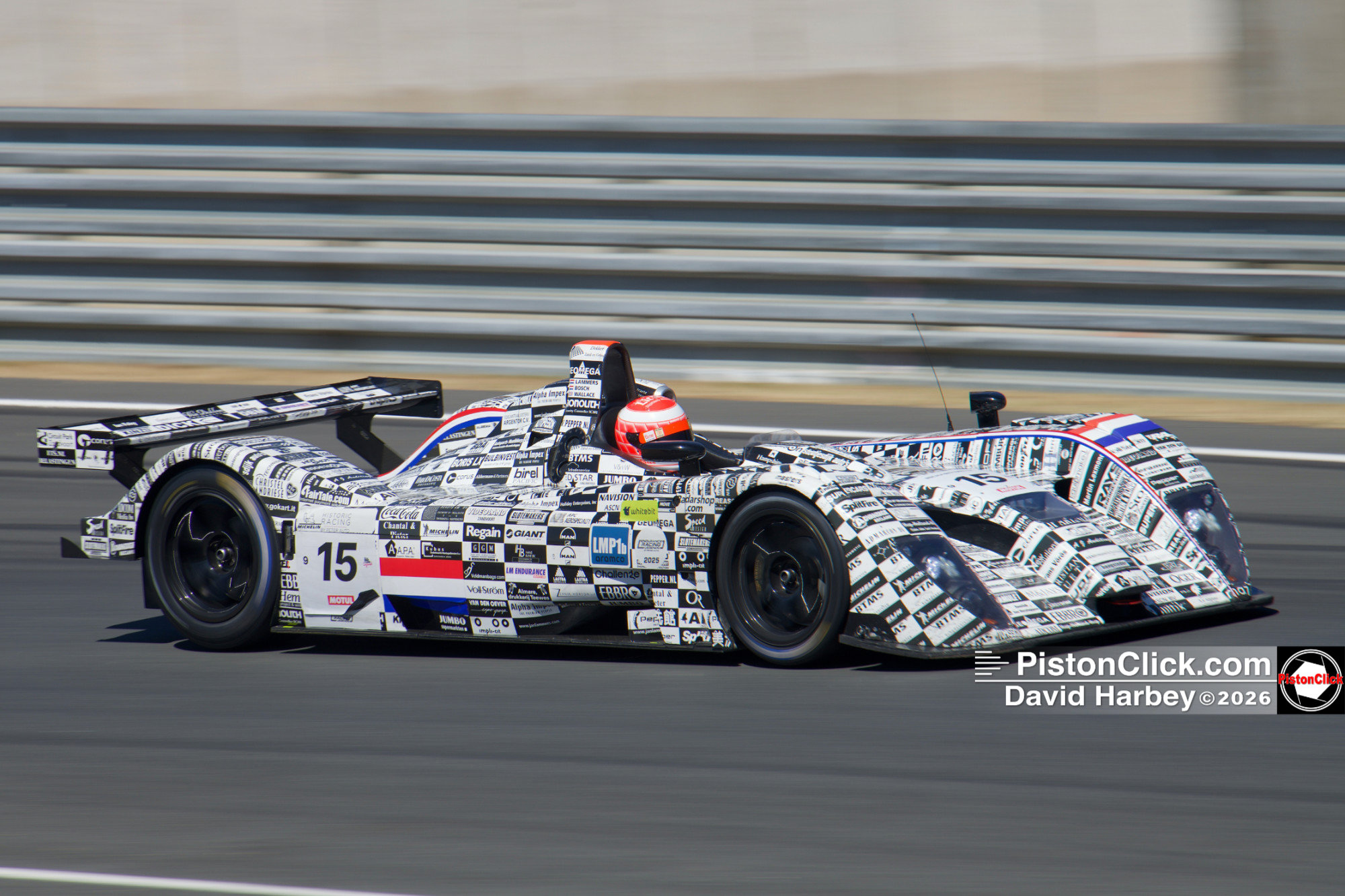

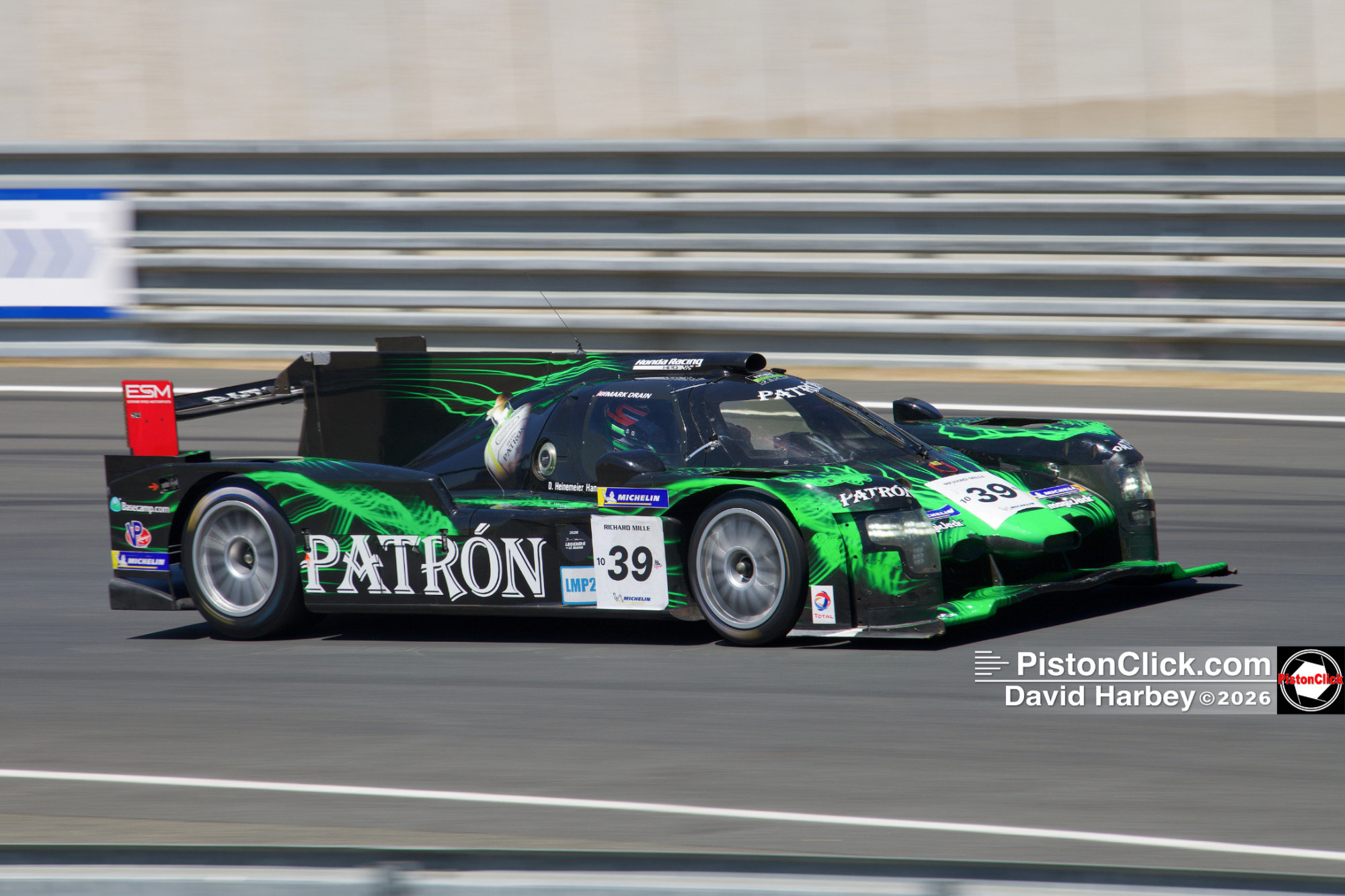
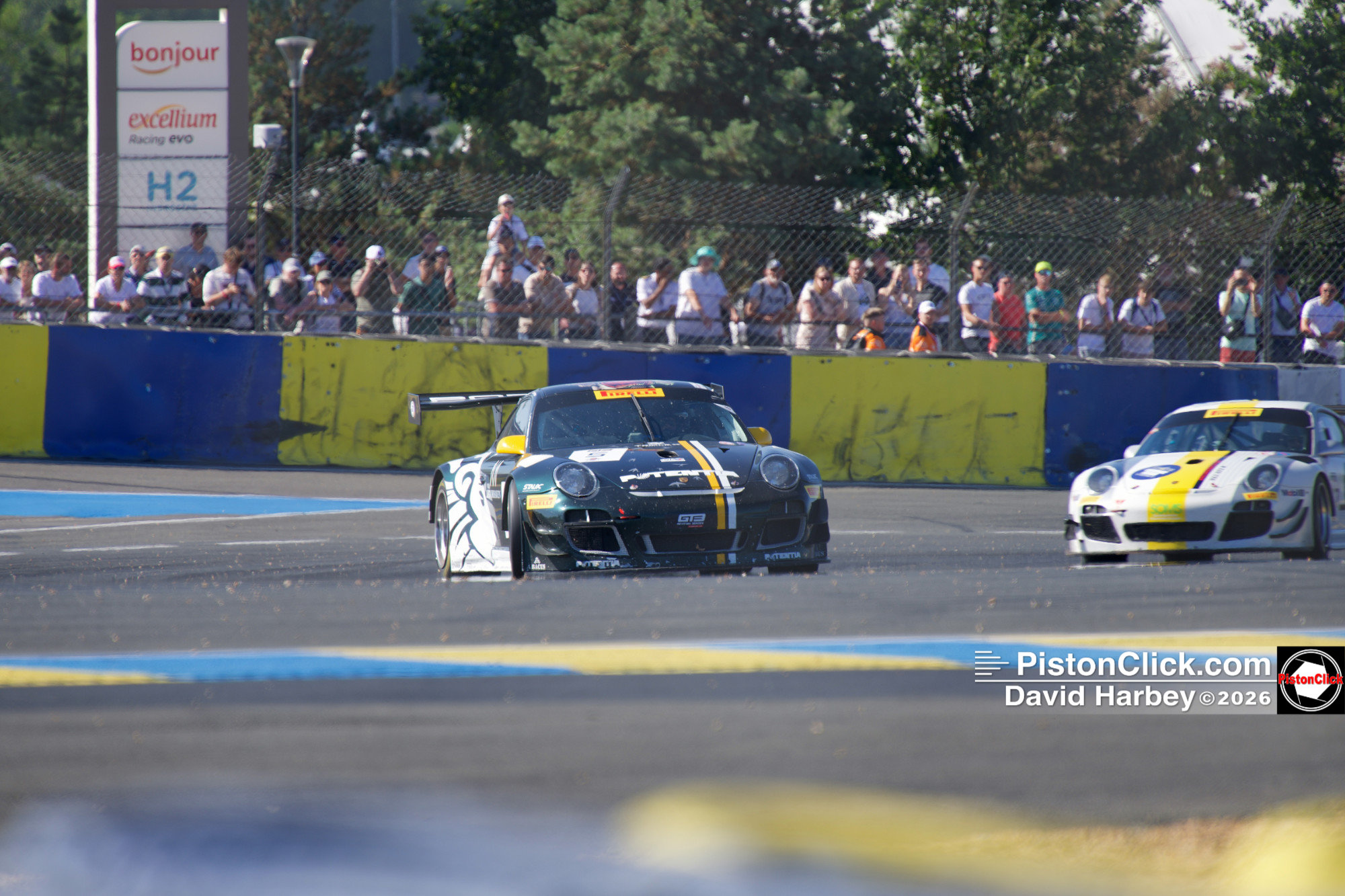
At this point it should be said that at least some of the cars entered but not ultimately racing could be seen in the paddocks. For the main grids, these required an additional ticket which seemed poor value but my primary aim of the weekend was to shoot the cars racing. The Grid 10 entry was modest – but in covering 2006 to 2015 was more familiar. In the event, the Lola Aston Martin featured recently here when testing wasn’t racing. There were however two others to entertain with their sight and sound!
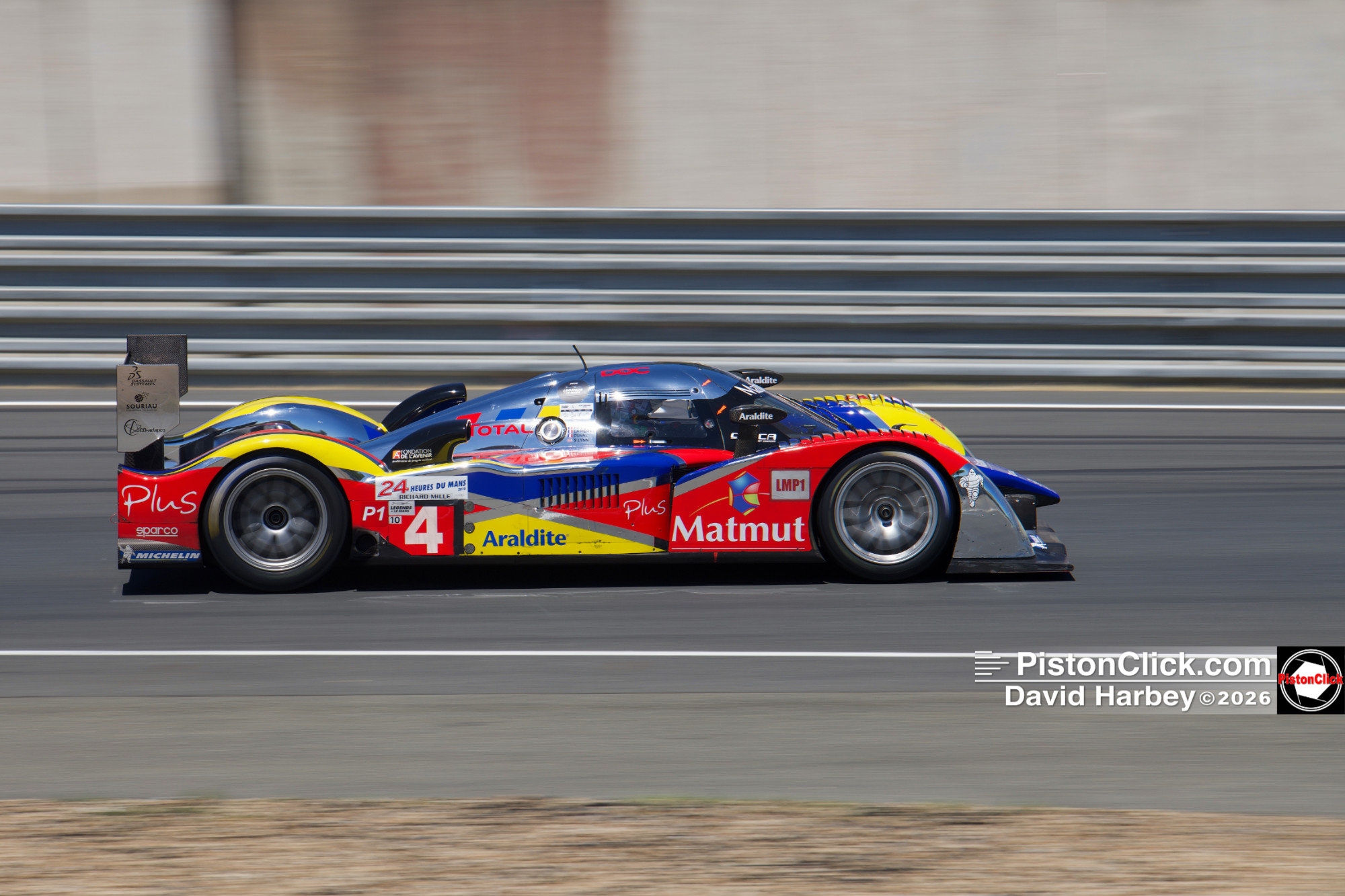
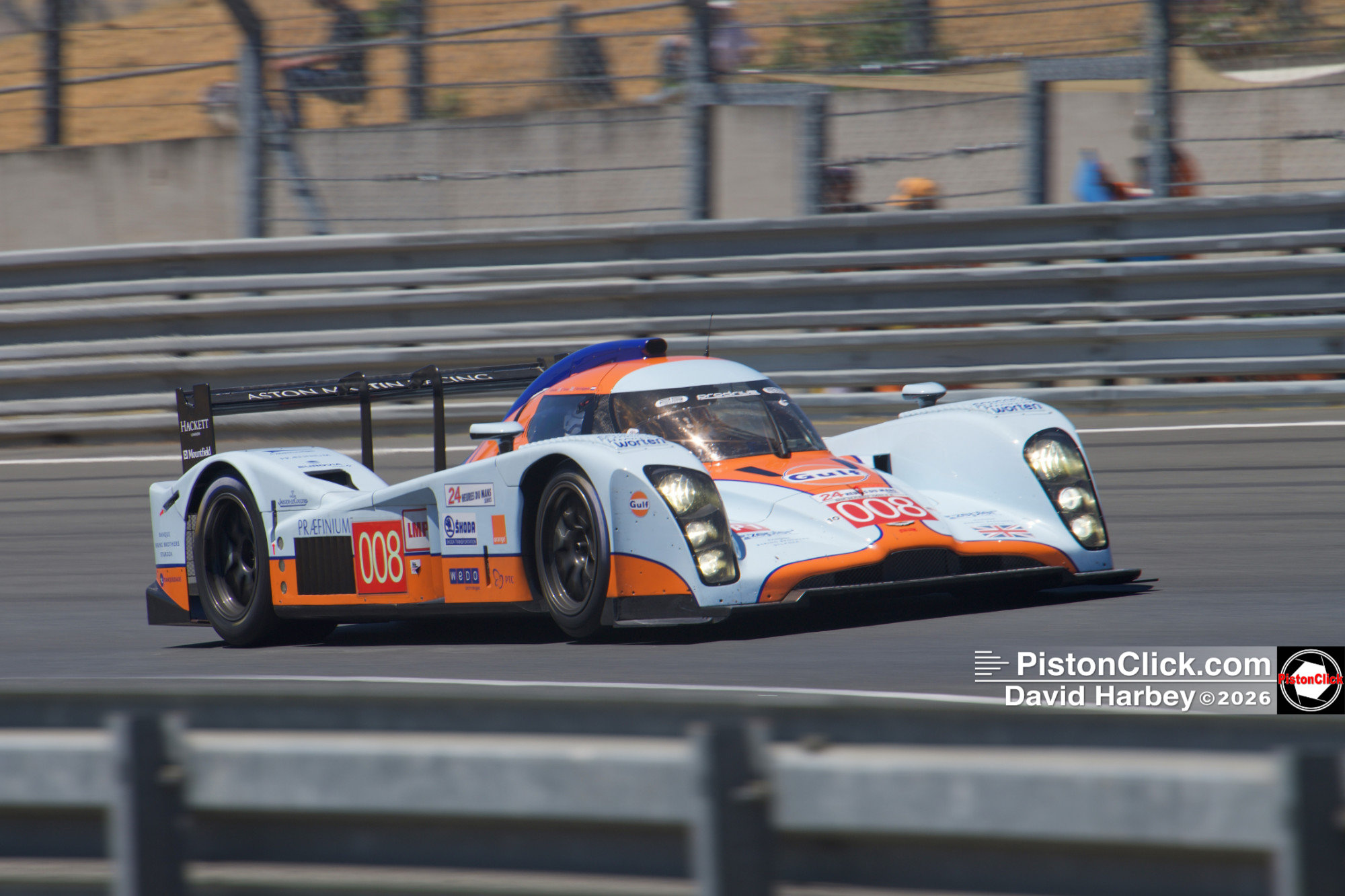
NASCAR, GT3 Revival and Special Parades
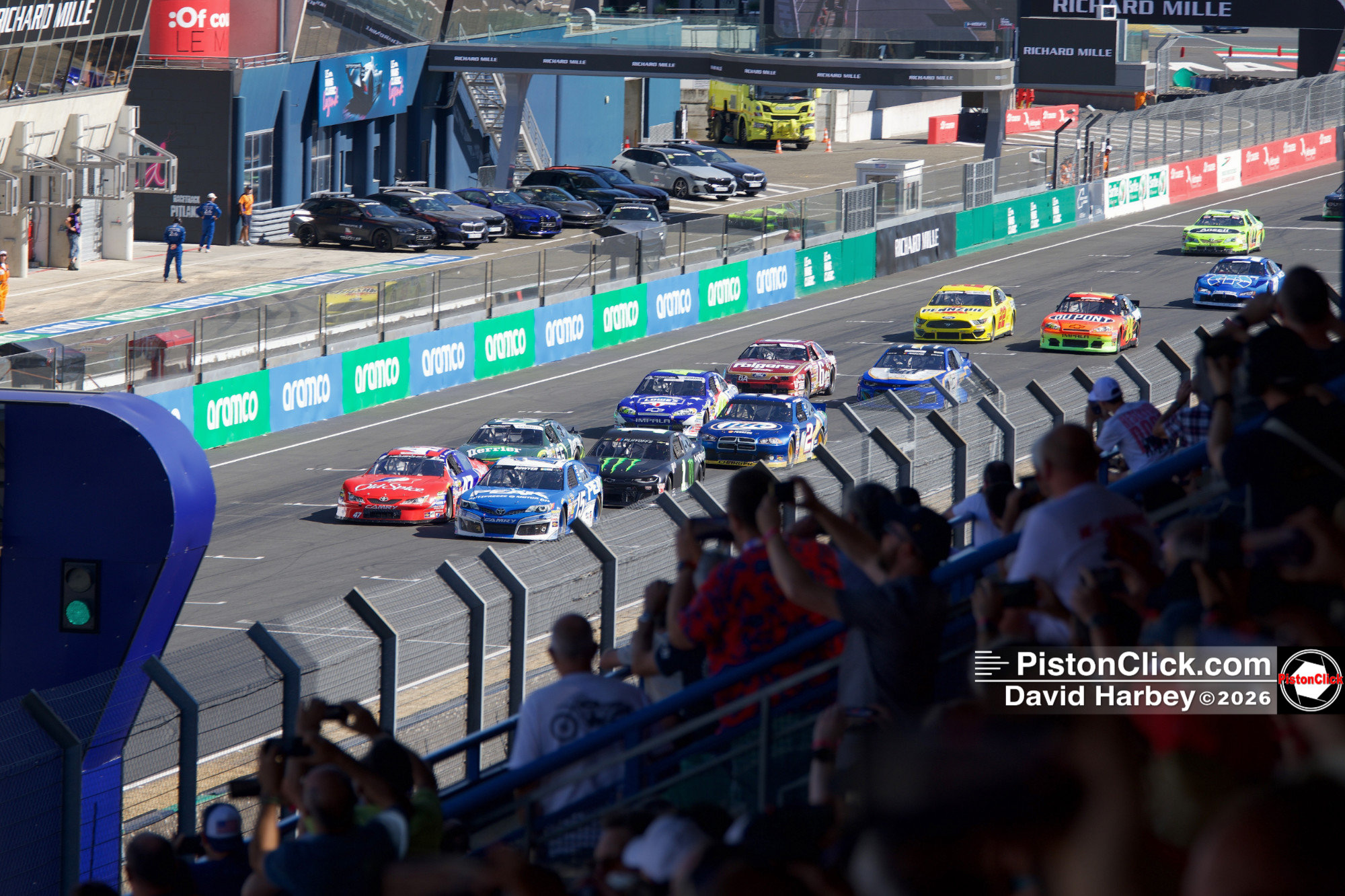
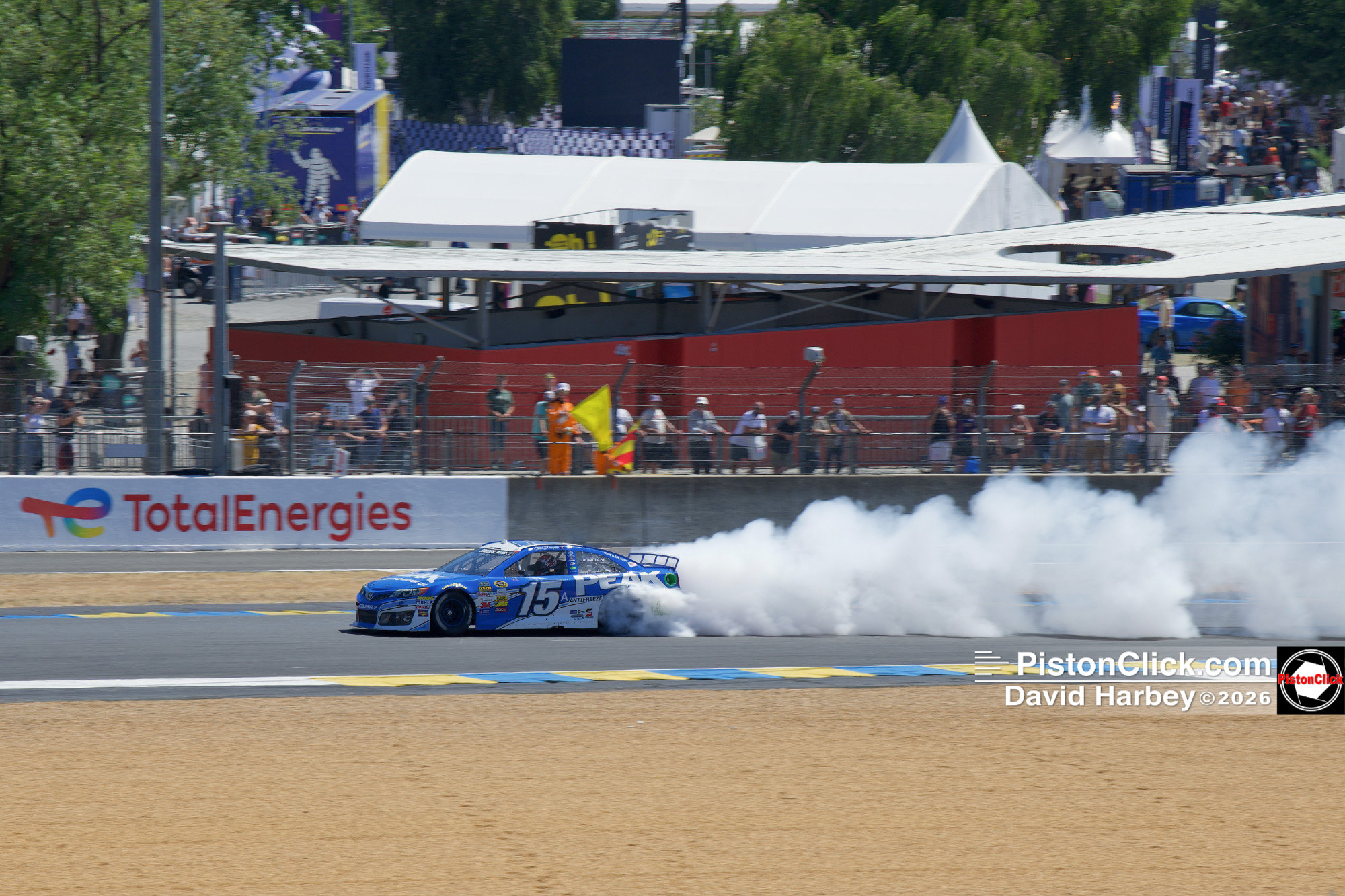
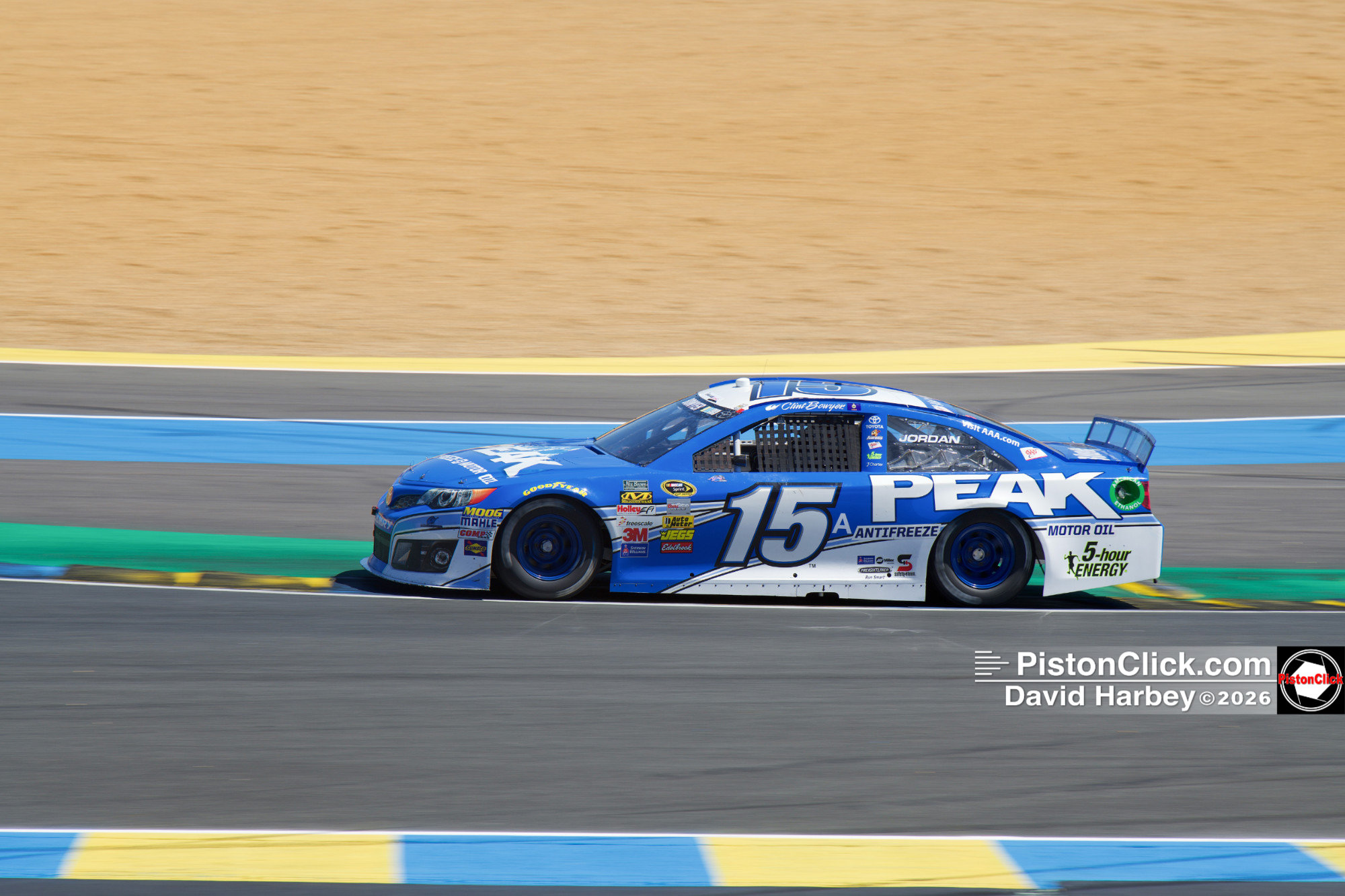
The most notable support races were for the HSR NASCARs which covered 1974 to 2016. The Garage 59 livery from 2023 was carried on a 2014 Camaro. In the event, the first race saw a number of cars run out of fuel and in all the races the understanding of yellow flags seemed rather variable (perhaps given the differing treatment between Europe and US).
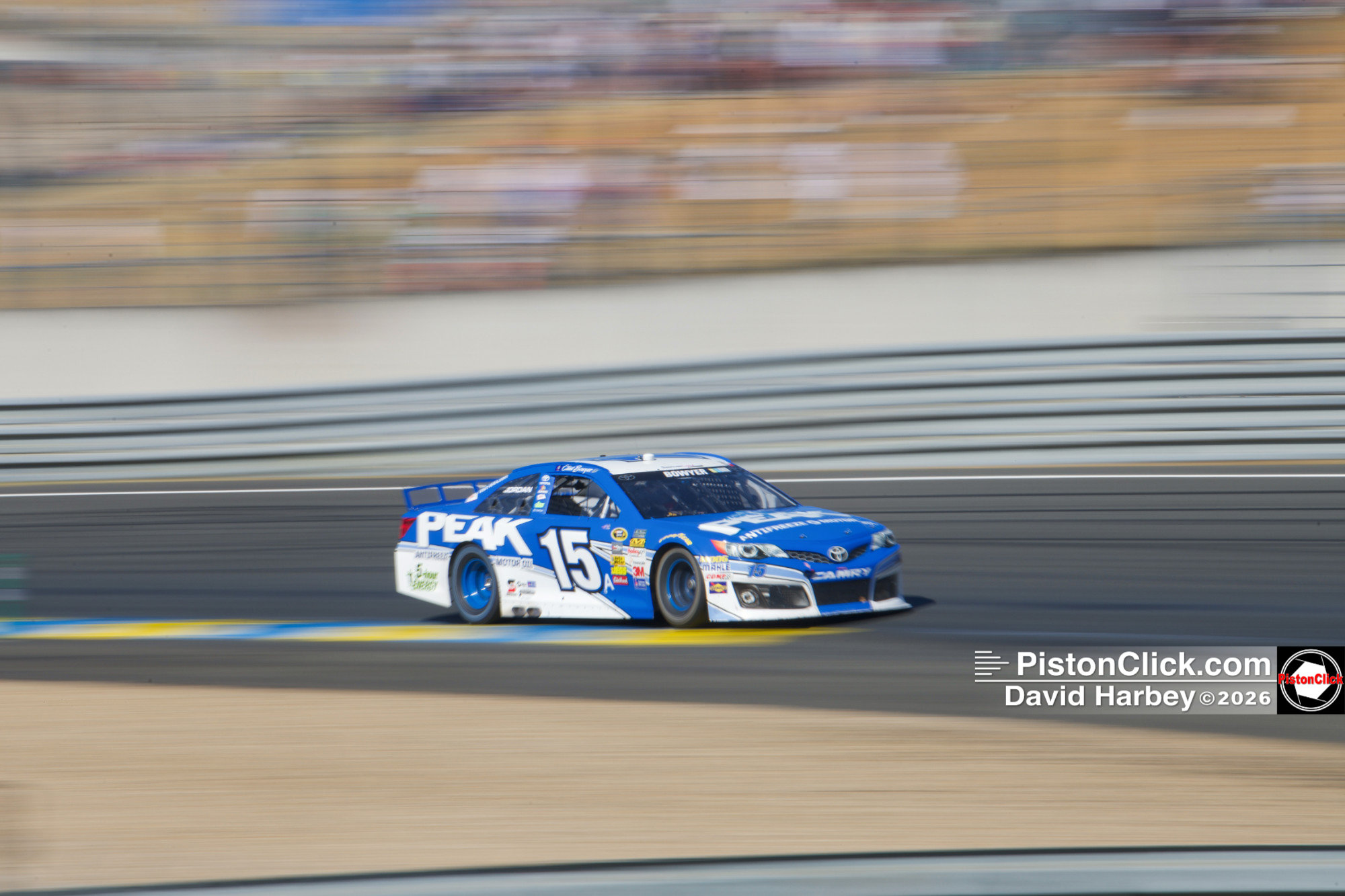
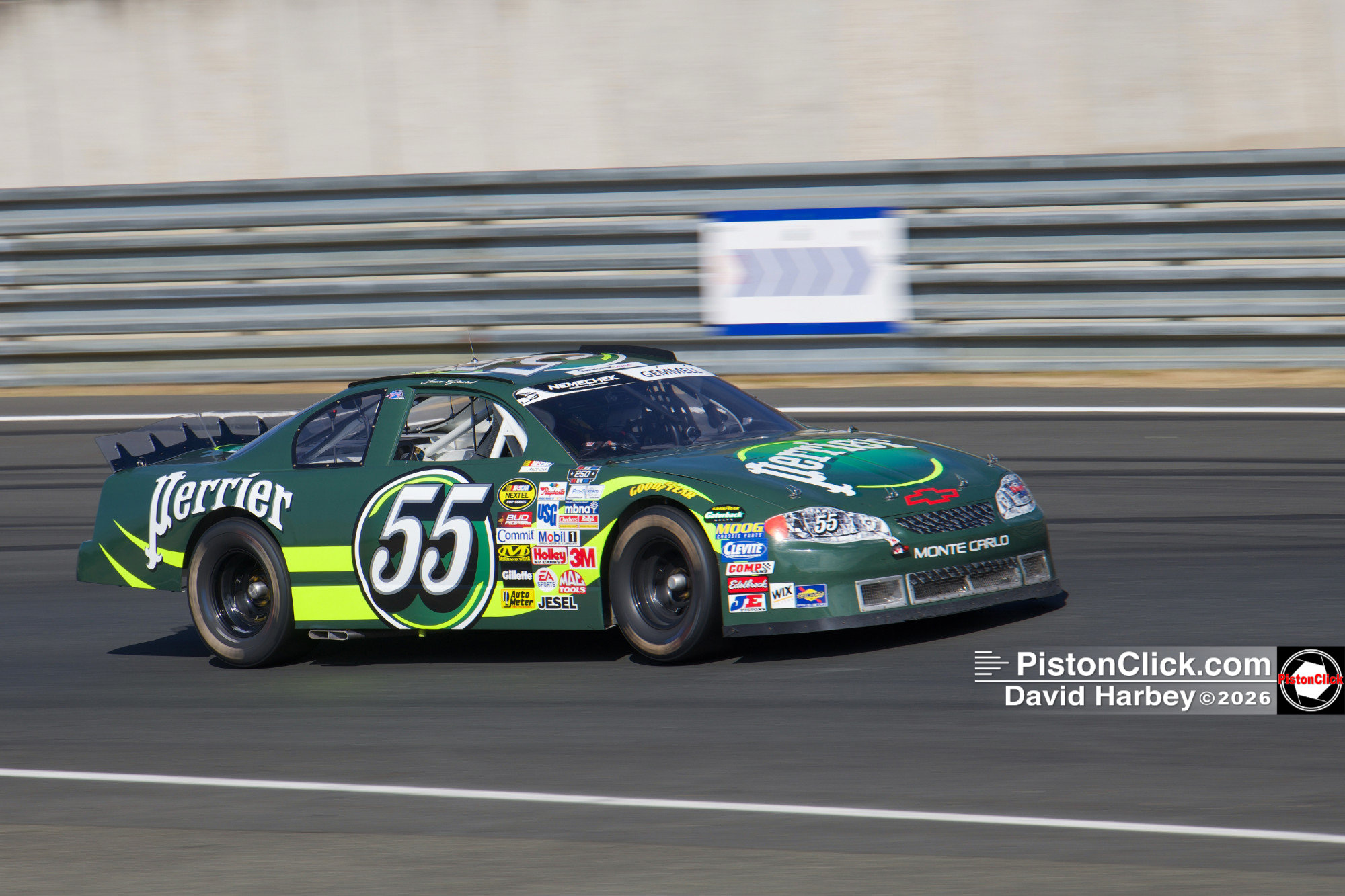
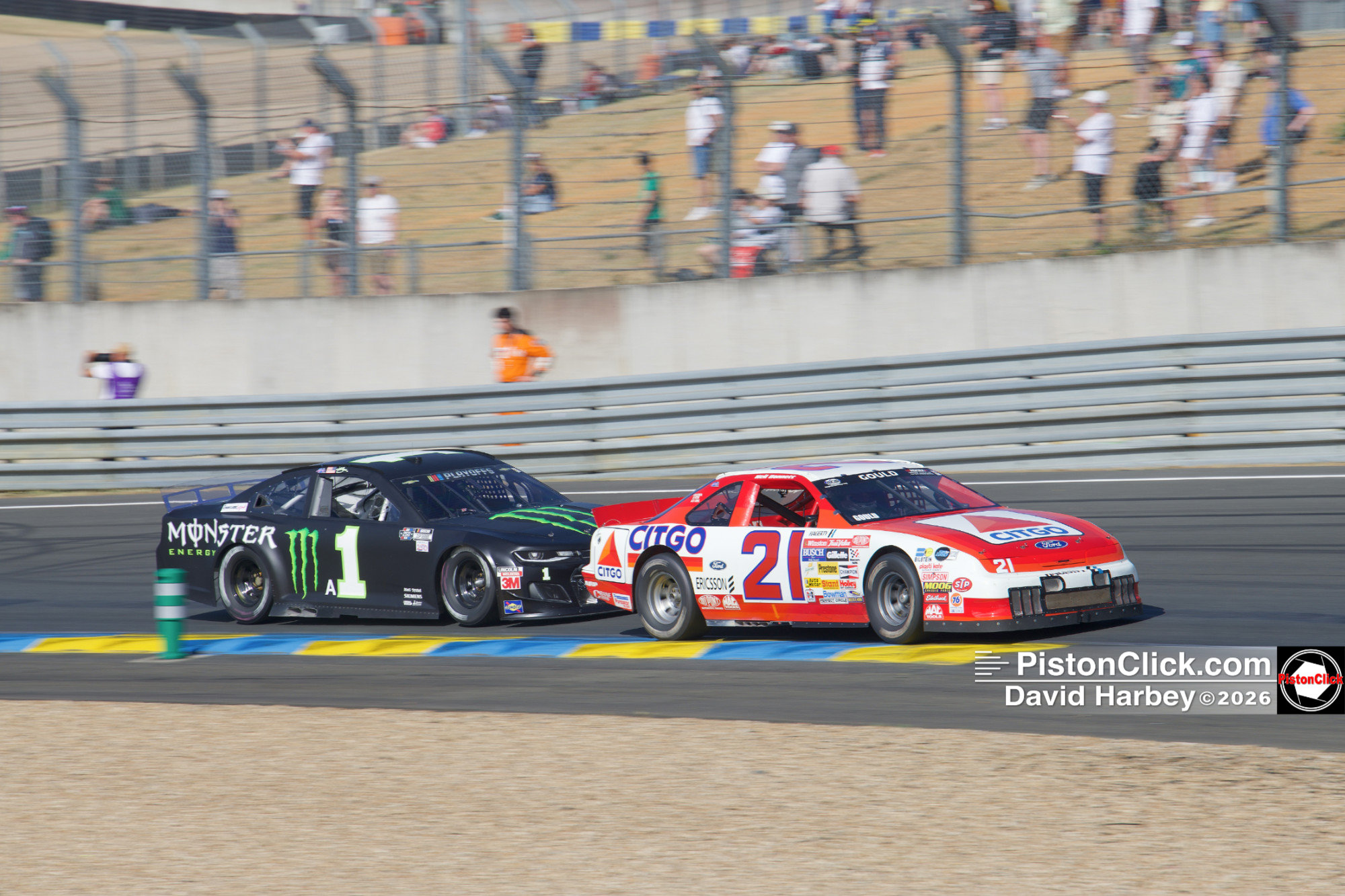
As it happened, that Andrew Jordan chap from good ol’ England was rather good at this NASCAR lark and won two races – here he celebrates after his win in race three.
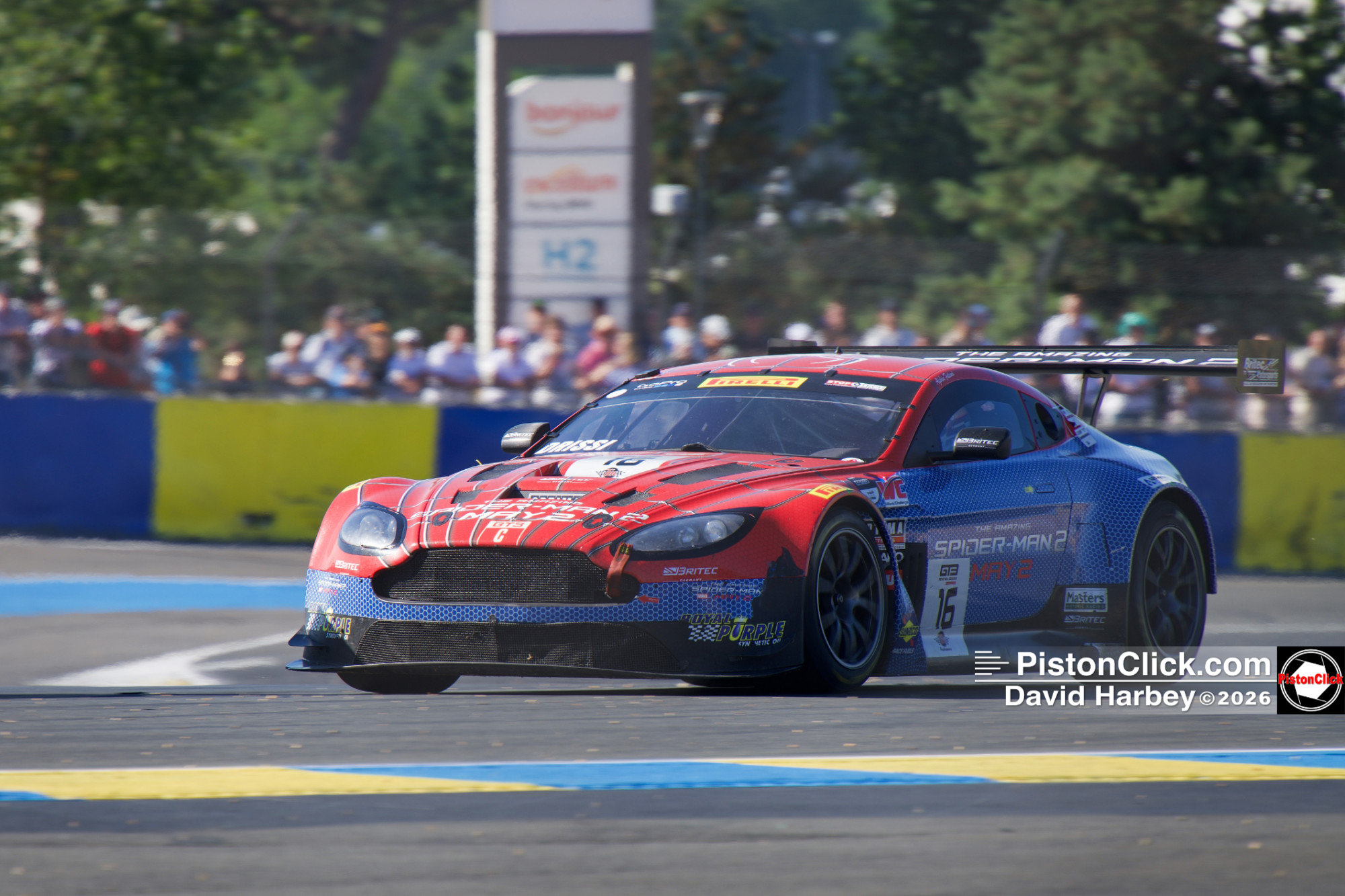
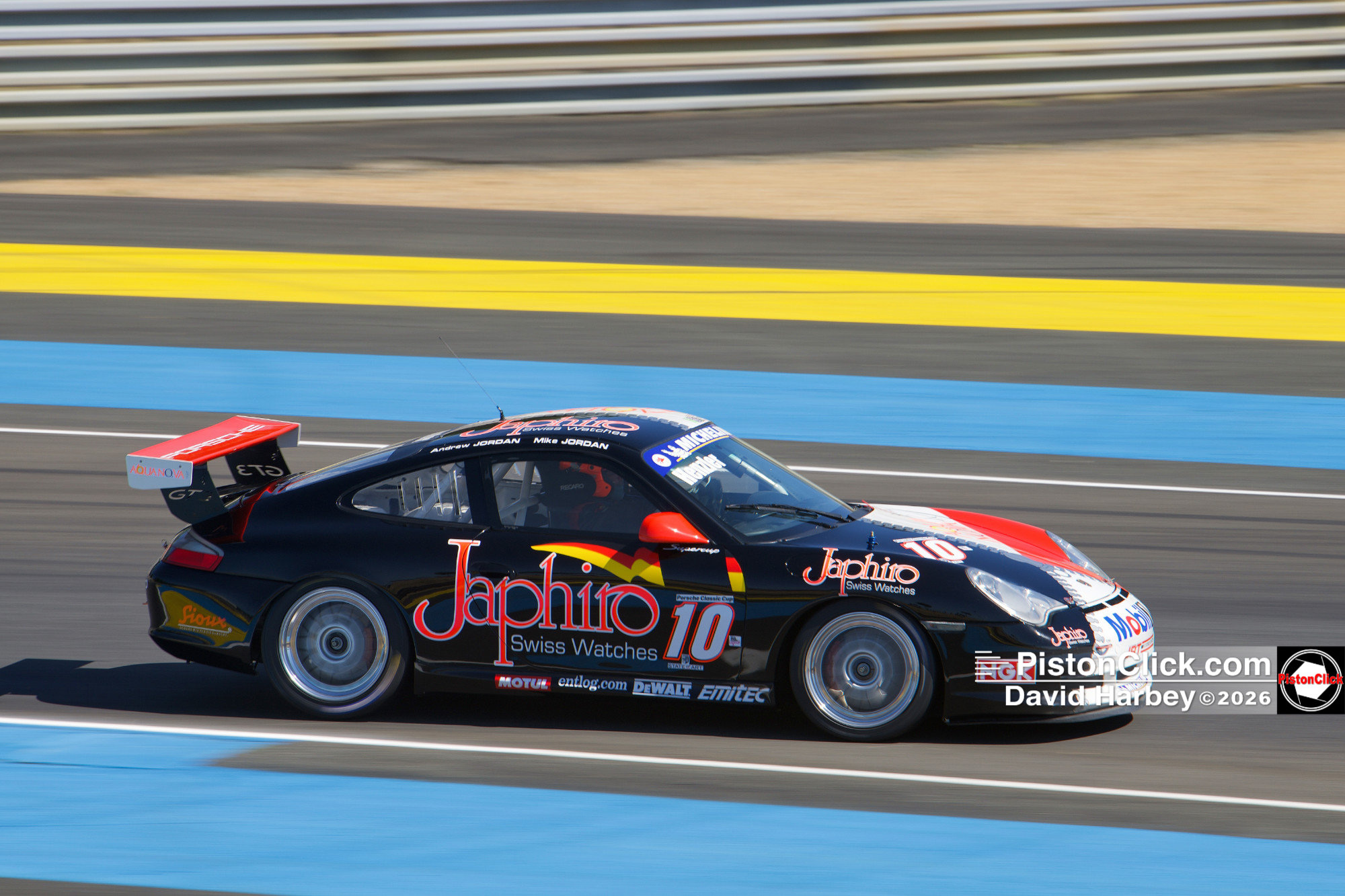
The other support races were for GT3 Revival (you can probably guess what that was about) and Classic Porsches.
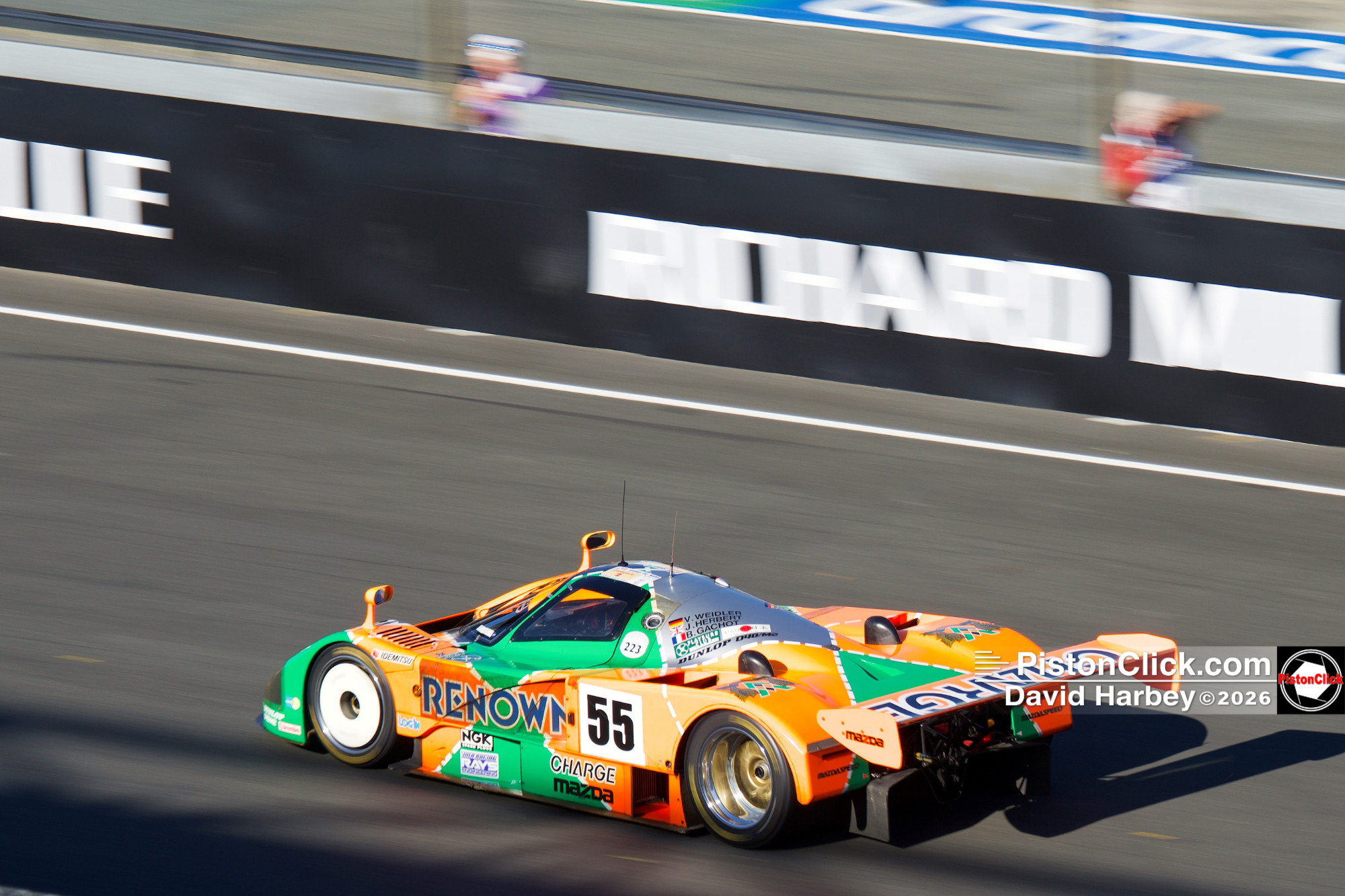
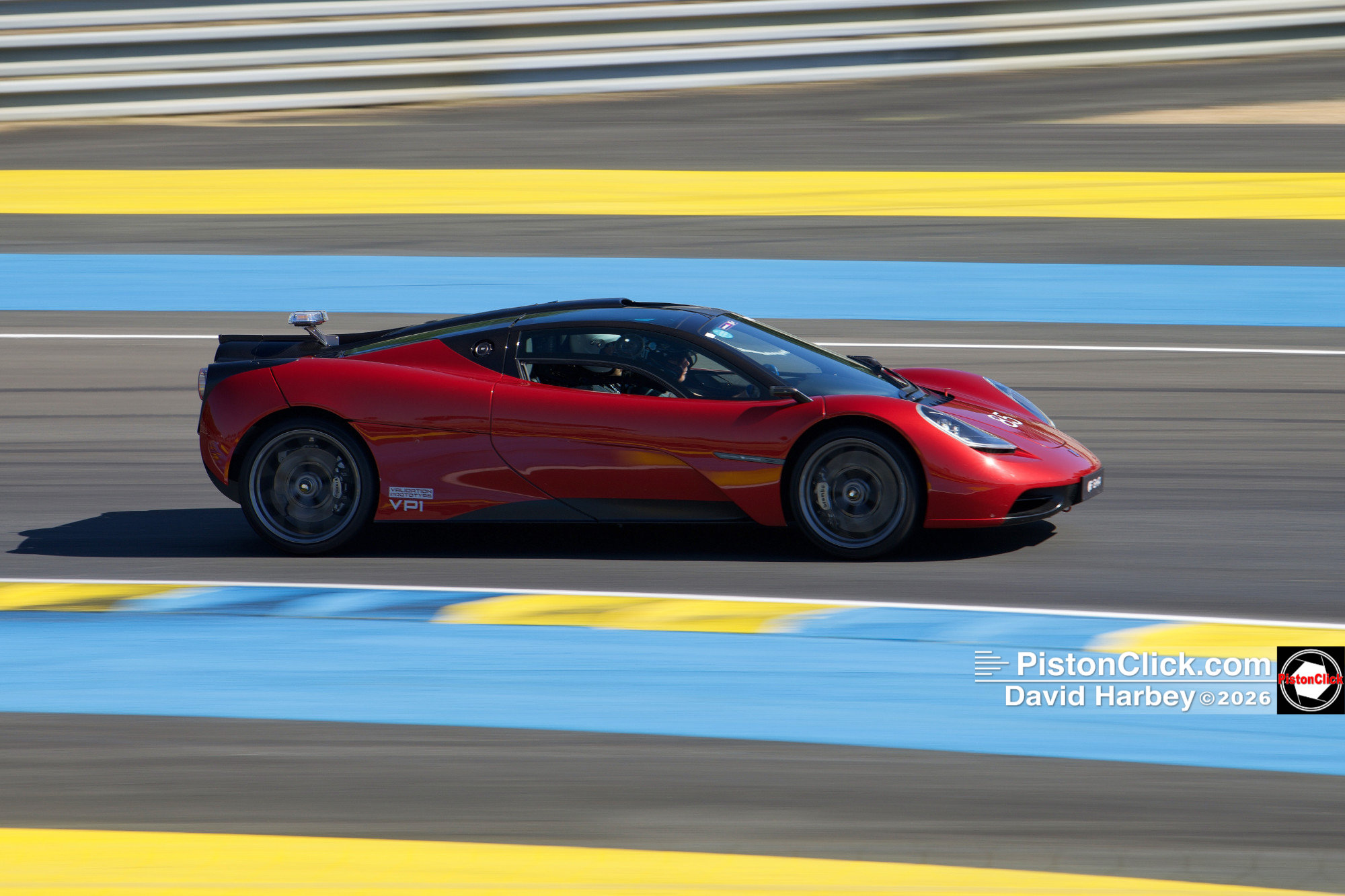
Various parades were scheduled including supercars and – be still my beating heart – the Mazda 787B that won in 1991. The triple rotor engine just screams and the sound was better than my quickly grabbed photo from the grandstand – I promise I will try better next time!
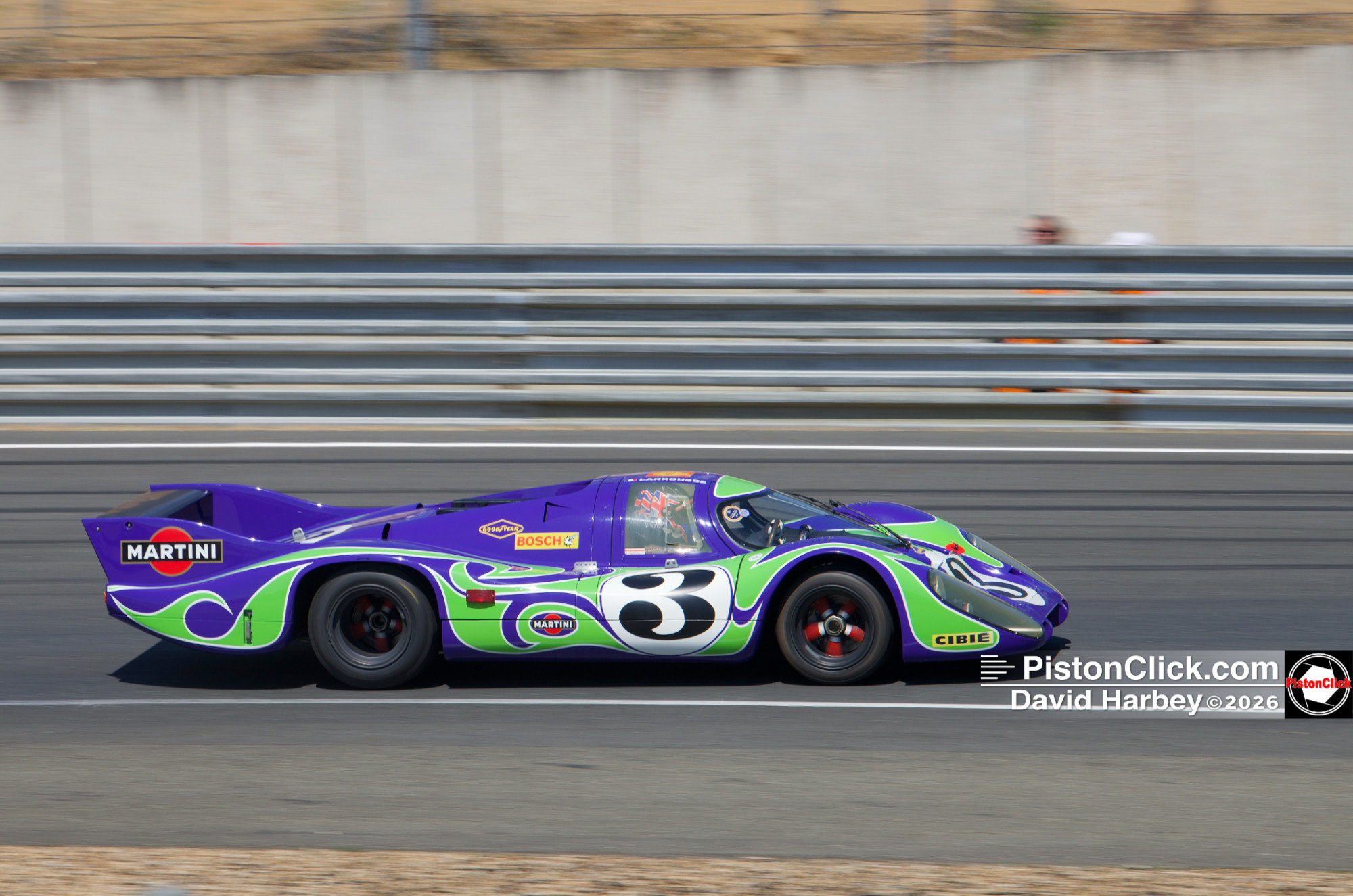
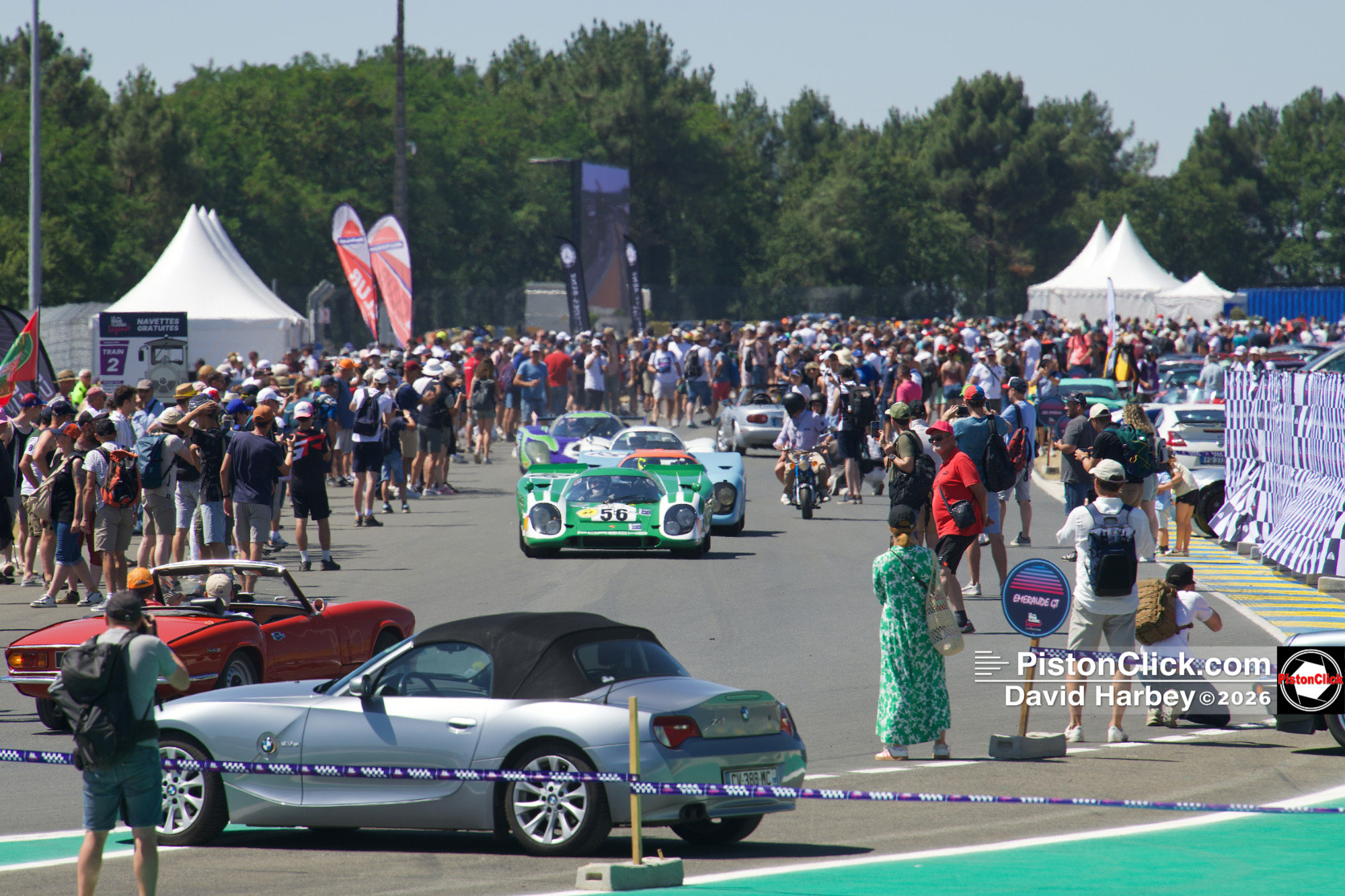
There was also a parade of Porsche 917s who happened to be returning to the paddock as we were heading to lunch.

Final Thoughts on Photographing the Le Mans Classic
Reflecting on the weekend – and the intense heat did mean that we bailed earlier than planned on Saturday night – it was all something of a curates egg. There’s clearly a set of spectators who go with their car club (much as the Silverstone Classic). It wasn’t difficult to find a space to shoot from at Tertre Rouge and the Forest Esses compared to the 24 Hours. Indeed, looking back at the main grandstands on Sunday morning there was lots of spare seats.
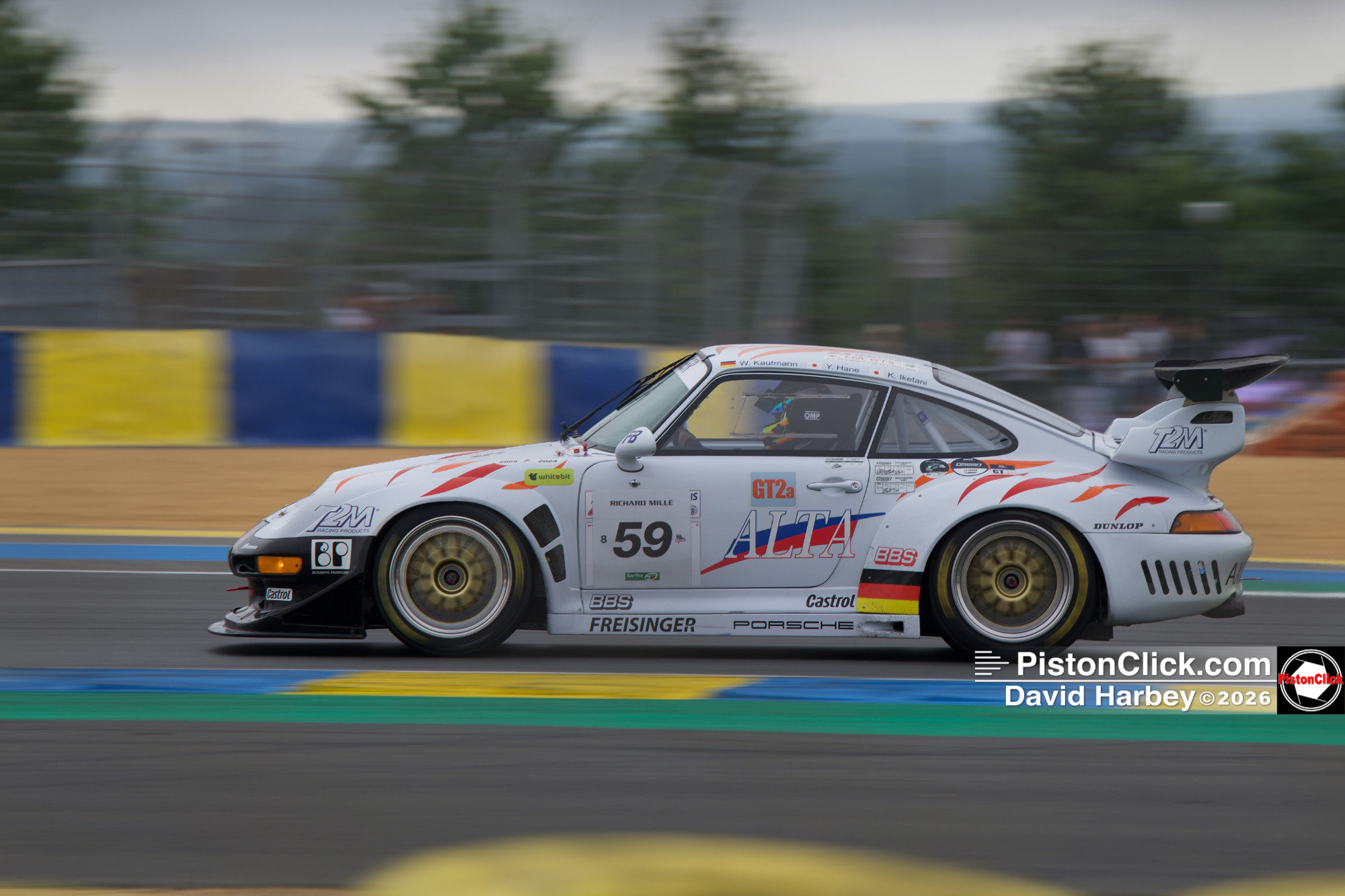

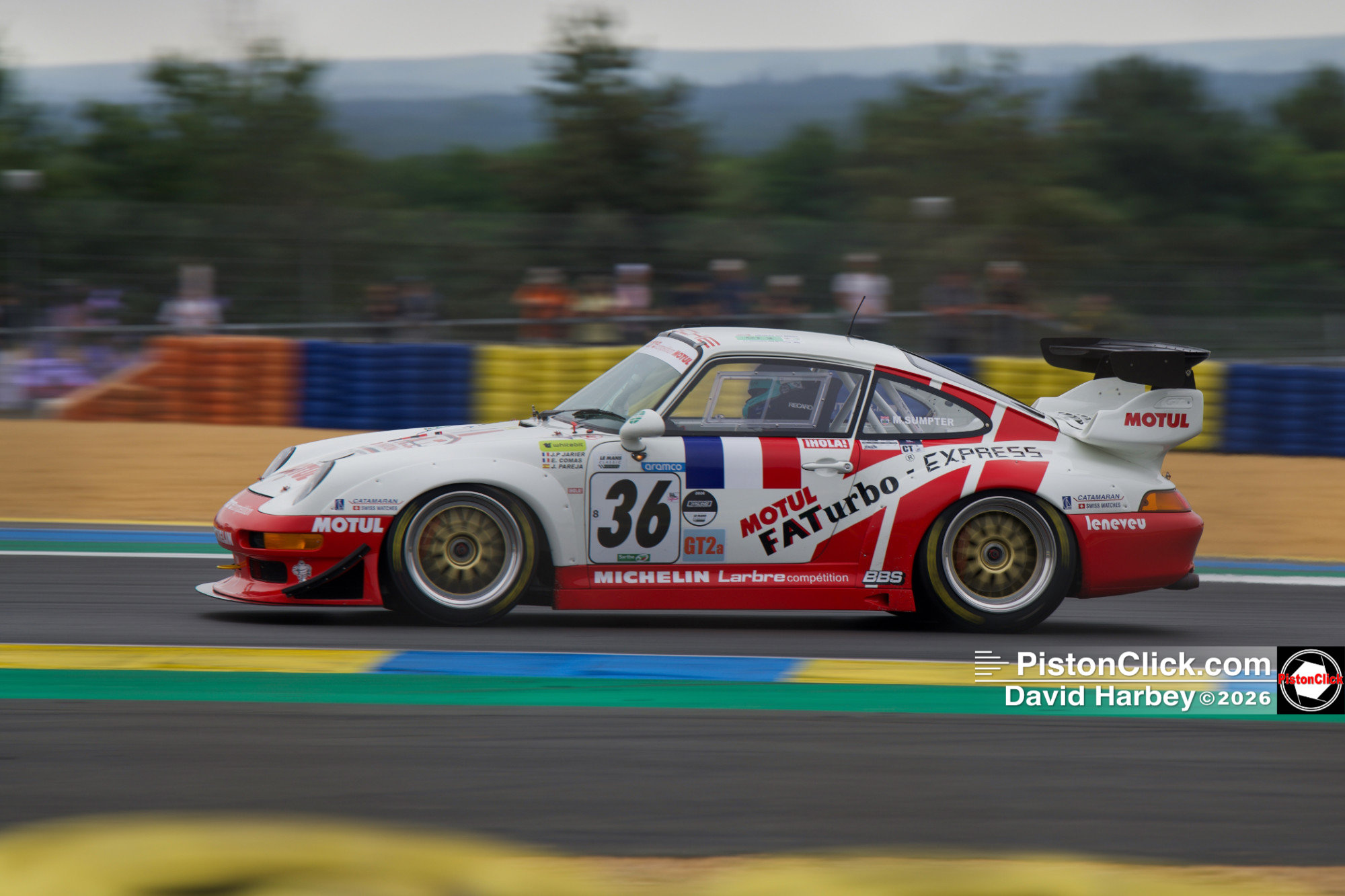
Of course, it only takes two cars to make a race and there was some good action, but some of the races felt a little like the high speed demos that Goodwood offer with the Members Meeting – and in some ways, that’s not a bad thing. To get that sense of anticipation of seeing a favourite car again – or indeed for the first time – is worth it. At the same time, I am sure that professional or amateur racers get a huge kick from racing at the home of endurance racing.
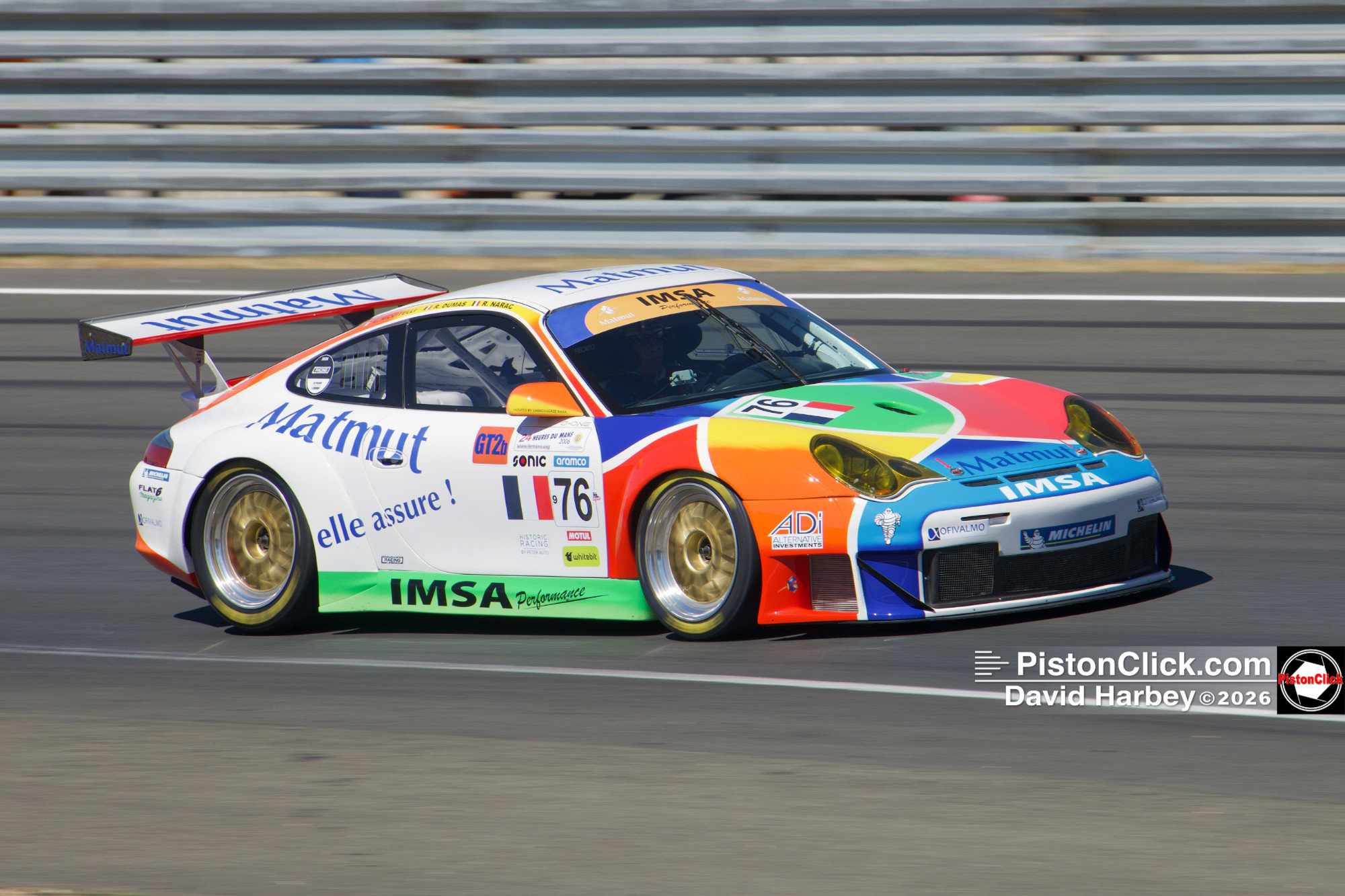
As someone whose primary interest was shooting racing, the paddocks were of less interest – who knows what gems I missed. I am glad I did the Classic this year, but will I be returning next year for the earlier cars or in two years time? I am really not sure – but if I do, I think the answer is to turn up at 3.30pm on Saturday and stay up for the 24 hours of racing through to 4pm on Sunday. That would allow a far wider range of images than I captured.
Photographer’s notes Photographing the Le Mans Classic
I travelled light (relatively speaking) using the 70-200mm zoom supplemented, as and when required, by the 1.7 TC. A small step was useful to clear the fence at Tertre Rouge.

FAQ Photographing the Le Mans Classic
- Q. Is the Le Mans Classic worth visiting for photographers?
- The event offers excellent opportunities to photograph historic racing cars with more space than the Le Mans 24 Hours, although grid sizes can vary.
- Q. What lens is best for photographing the Le Mans Classic?
- A 70–200mm zoom covers most trackside locations, with a teleconverter useful for more distant viewpoints.
- Q. Where are the best spectator photography locations?
- Tertre Rouge and the Forest Esses provide excellent views while remaining accessible to general admission spectators.
- Q. How busy is the Le Mans Classic?
- The event is considerably quieter than the Le Mans 24 Hours, making it easier to find photography positions around the circuit.