


24H Barcelona
Report by Mic Pringle
18 February 202

In September ’25, I attended Creventic’s Michelin 24H Barcelona as a media-accredited photographer. Photographing a motorsport event at Circuit de Barcelona-Catalunya has been on my bucket list for years, though I always imagined my first time there would be for a two-wheeled series like MotoGP or World Superbikes.
When the opportunity to attend the 24H Series came up, though, there was no way I was letting it pass. Endurance racing wasn’t the route I expected for my inaugural media tabard, but it proved a perfect introduction to what working at this level is really like.
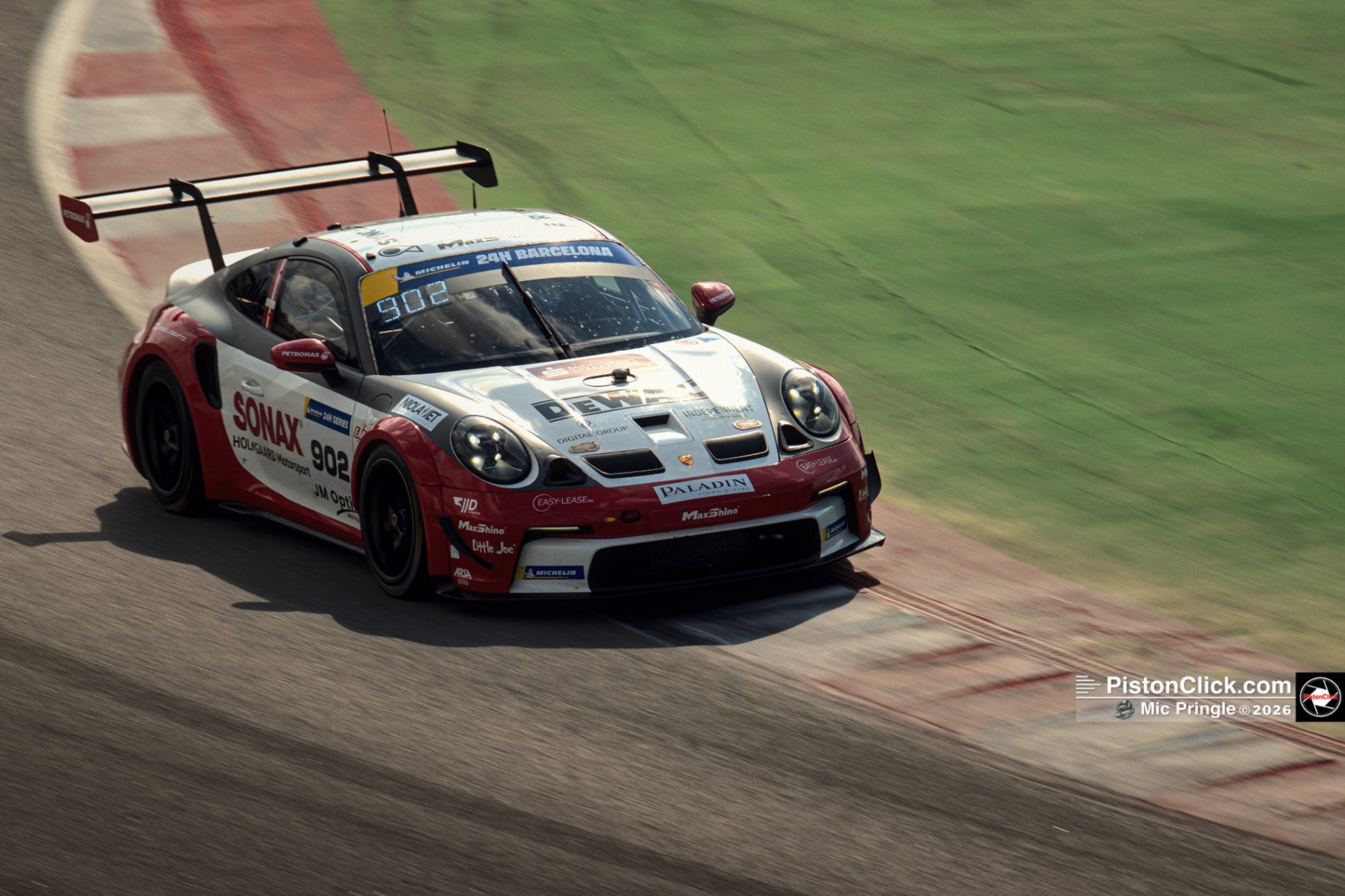
Camera Kit
For this trip, my primary body was the Nikon Z8 paired with the 400mm f/4.5, ideal for compressing action and isolating cars through heat haze and traffic. Alongside it, the Canon R6 Mk II with the 70–200mm f/2.8 handled pit-lane work, mid-range trackside shooting, and night stints. I was midway through switching systems when this opportunity arose, so I took what I had and made it work.
24H Barcelona Media
I arrived at the track on Thursday to collect my passes and media tabard and immediately thought “okay, this is serious”. This is an F1 and MotoGP circuit, after all, and it shows. The media centre is enormous — long rows of tables, ample power sockets, overhead TVs with live timing and track feeds, secure lockers, and enough space that you’re not elbowing fellow photographers just to ingest your cards.
That evening, all the competing cars were lined up on the start-finish straight for a group photo, and those of us with media tabards were allowed out onto the grid. Standing there, surrounded by the entire field, mechanics giving cars a last-minute polish, photographers circling, it was one of those quiet “this is actually happening” moments before the madness begins.
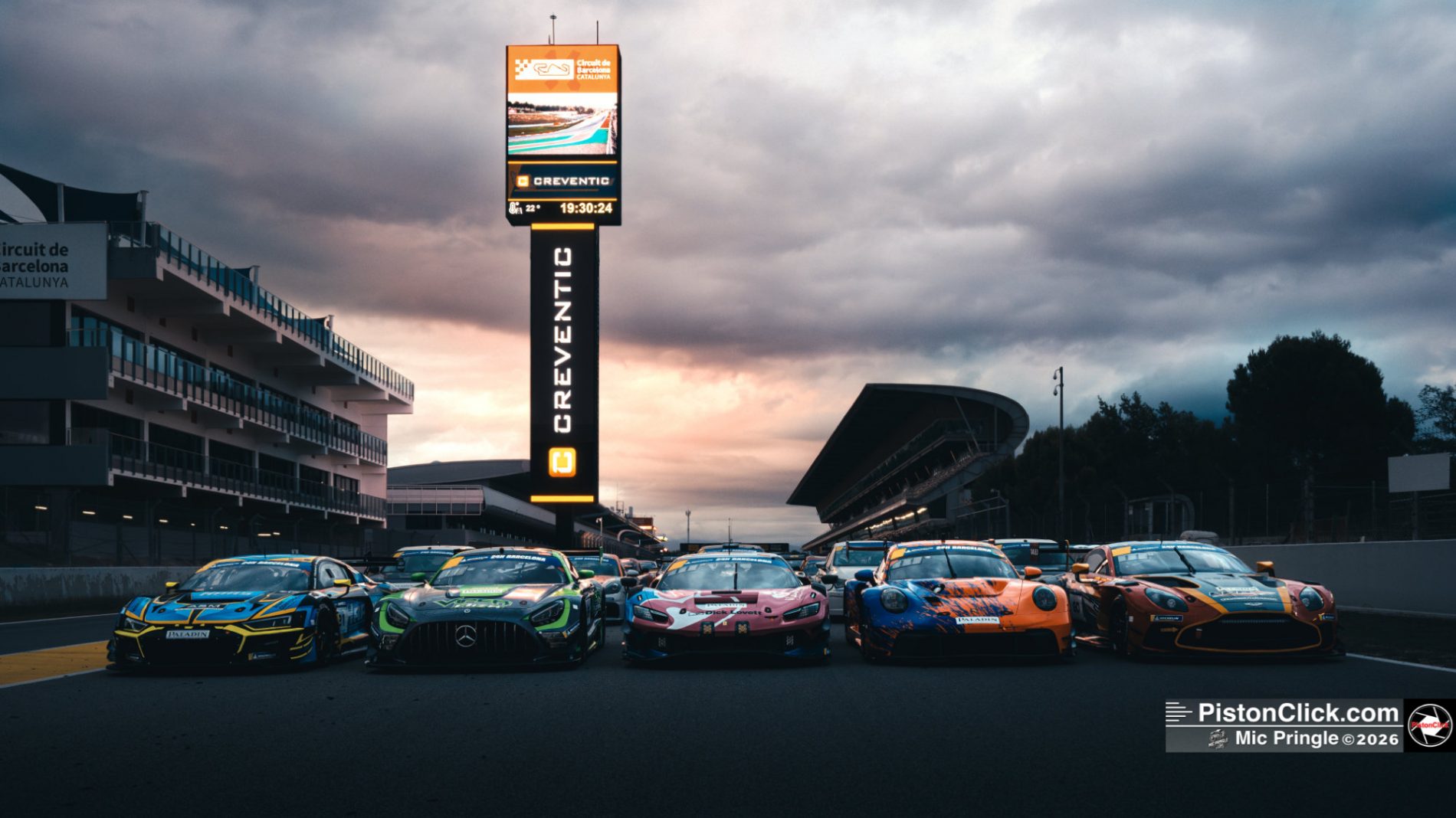
24H Barcelona – Let your pictures tell the story
The weekend format for any 24H Series event is well structured and gives you time to ease into the rhythm before the race itself. Friday features two free practice sessions (one in the afternoon and another at night) with qualifying sandwiched between them. It adds an extra layer of pressure as teams balance outright pace with long-run setup.
Night practice is particularly useful, giving drivers, crews, and photographers a chance to experience the circuit under artificial lighting before the race. On track, the field is split across five classes (GT3, GT4, GTX, 992, and TCE), meaning constant multi-class traffic, speed differentials, and strategic variation — all of which add depth to both the racing and the storytelling.
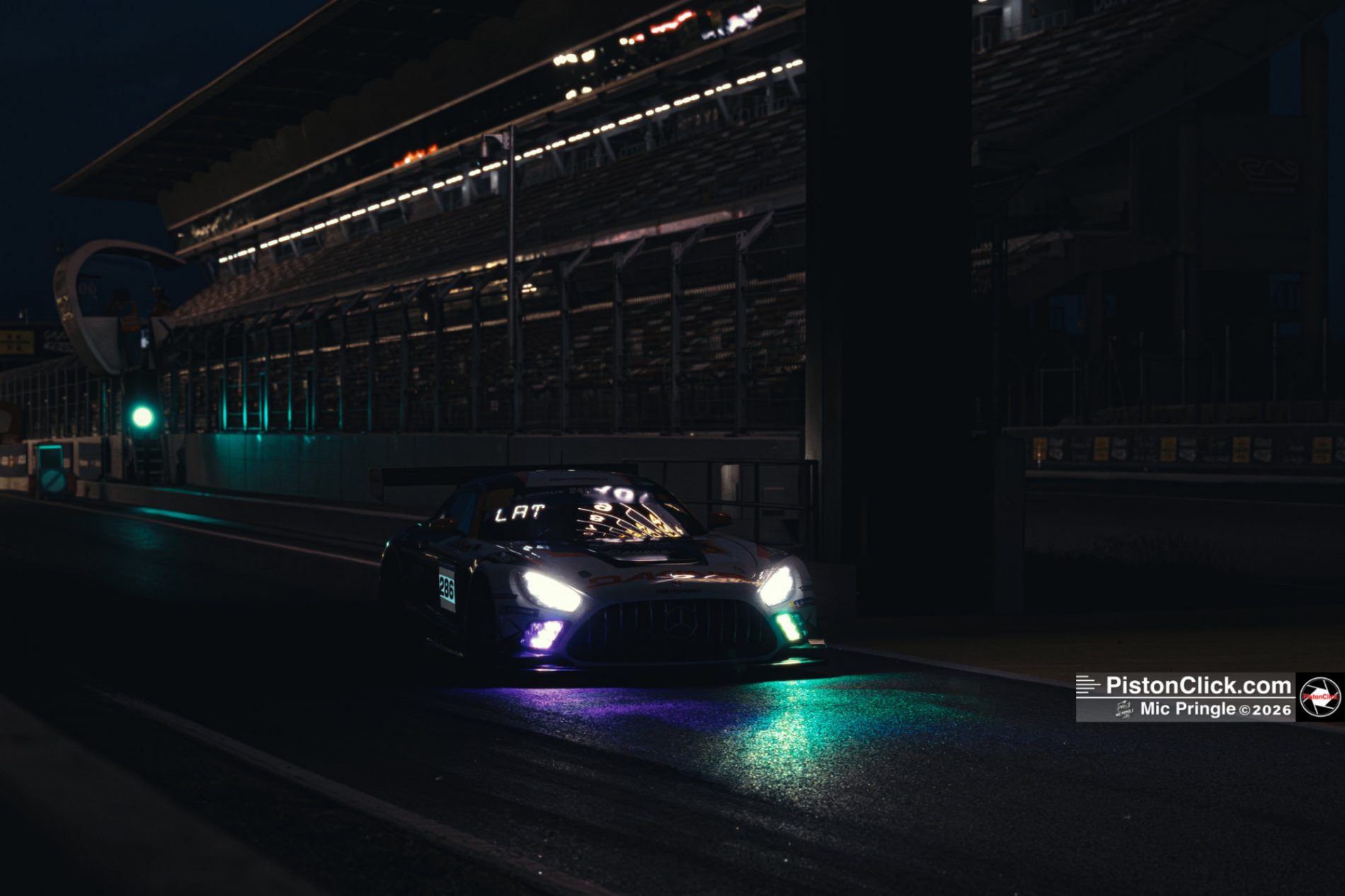
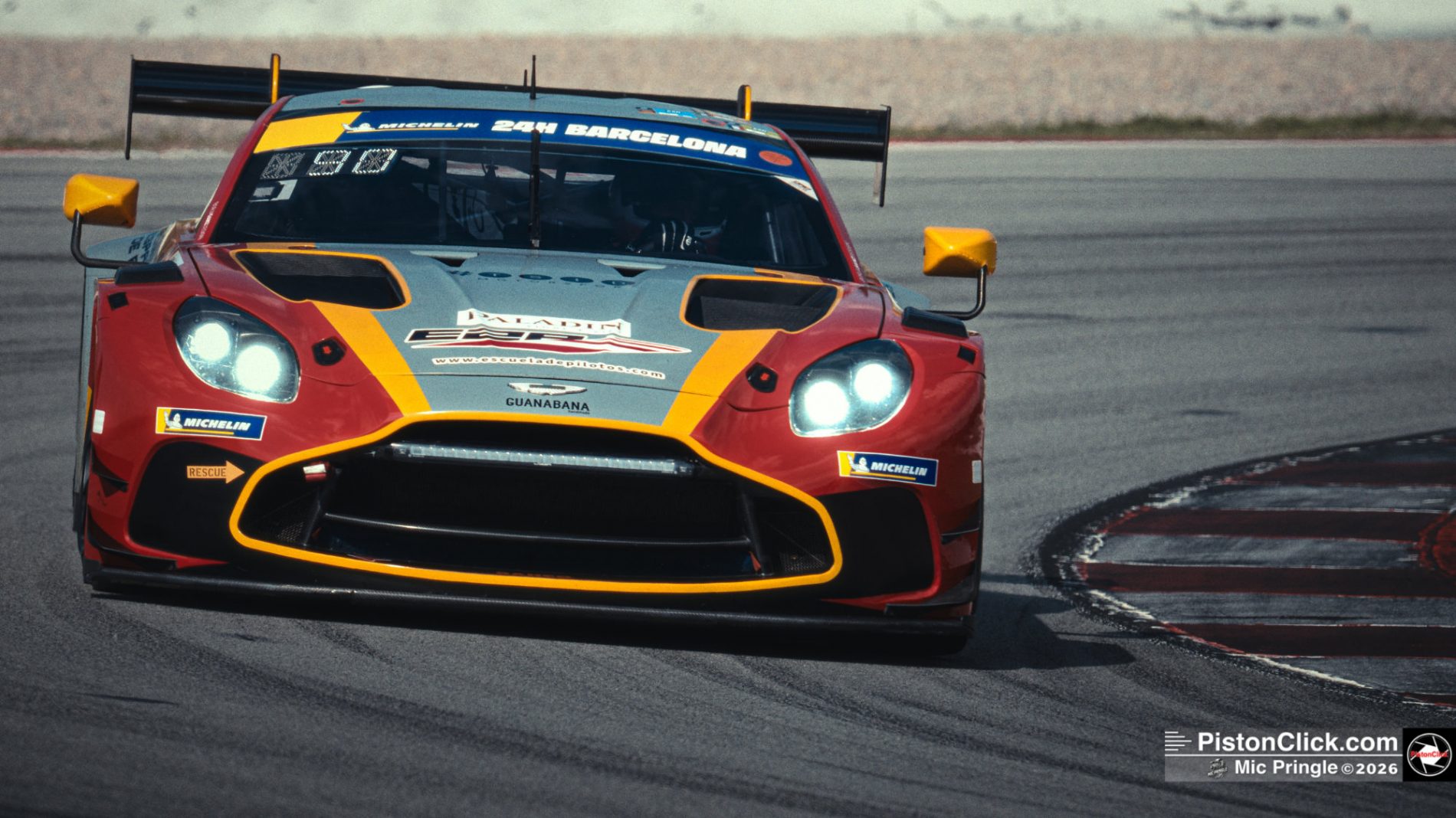
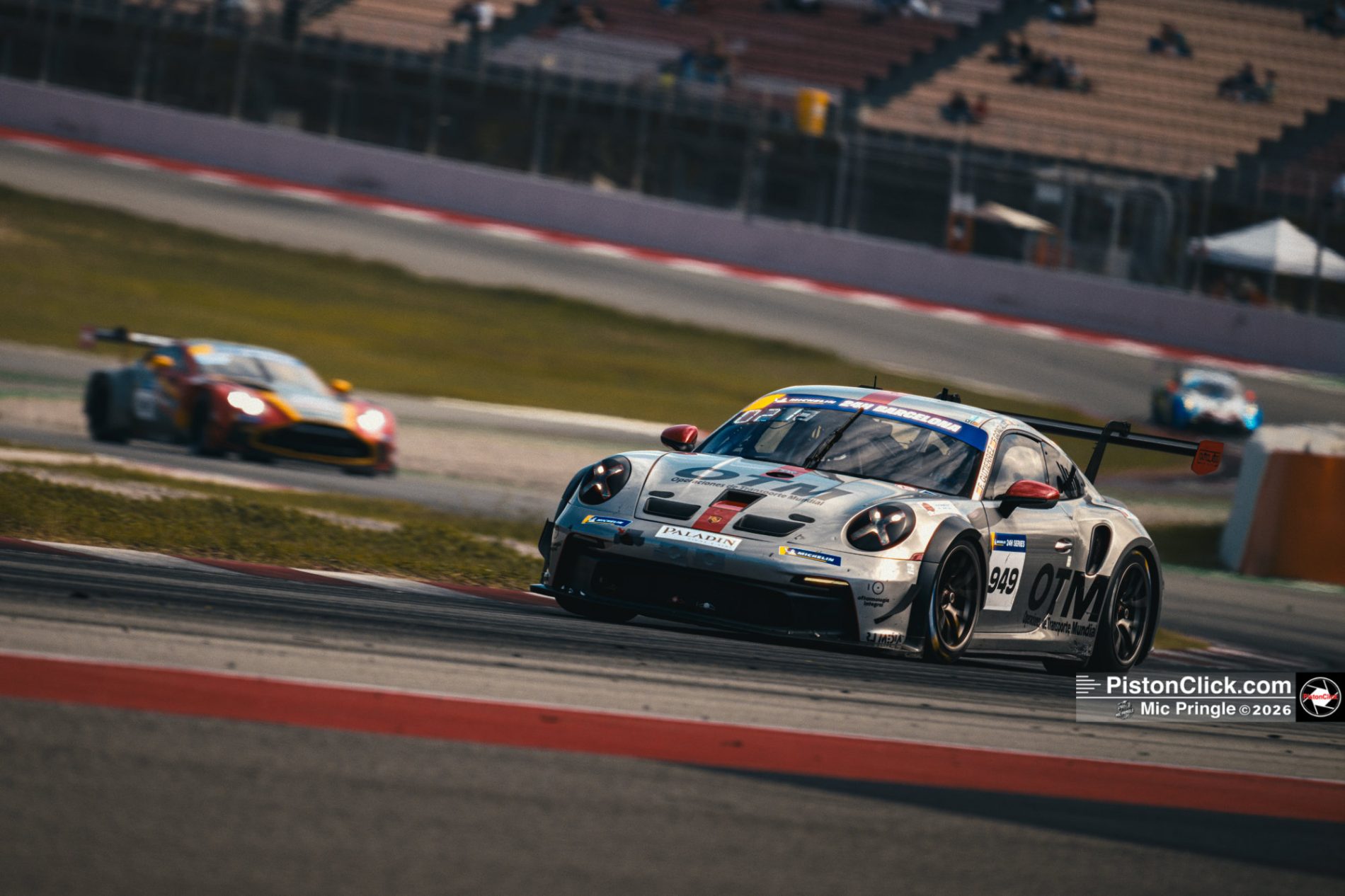
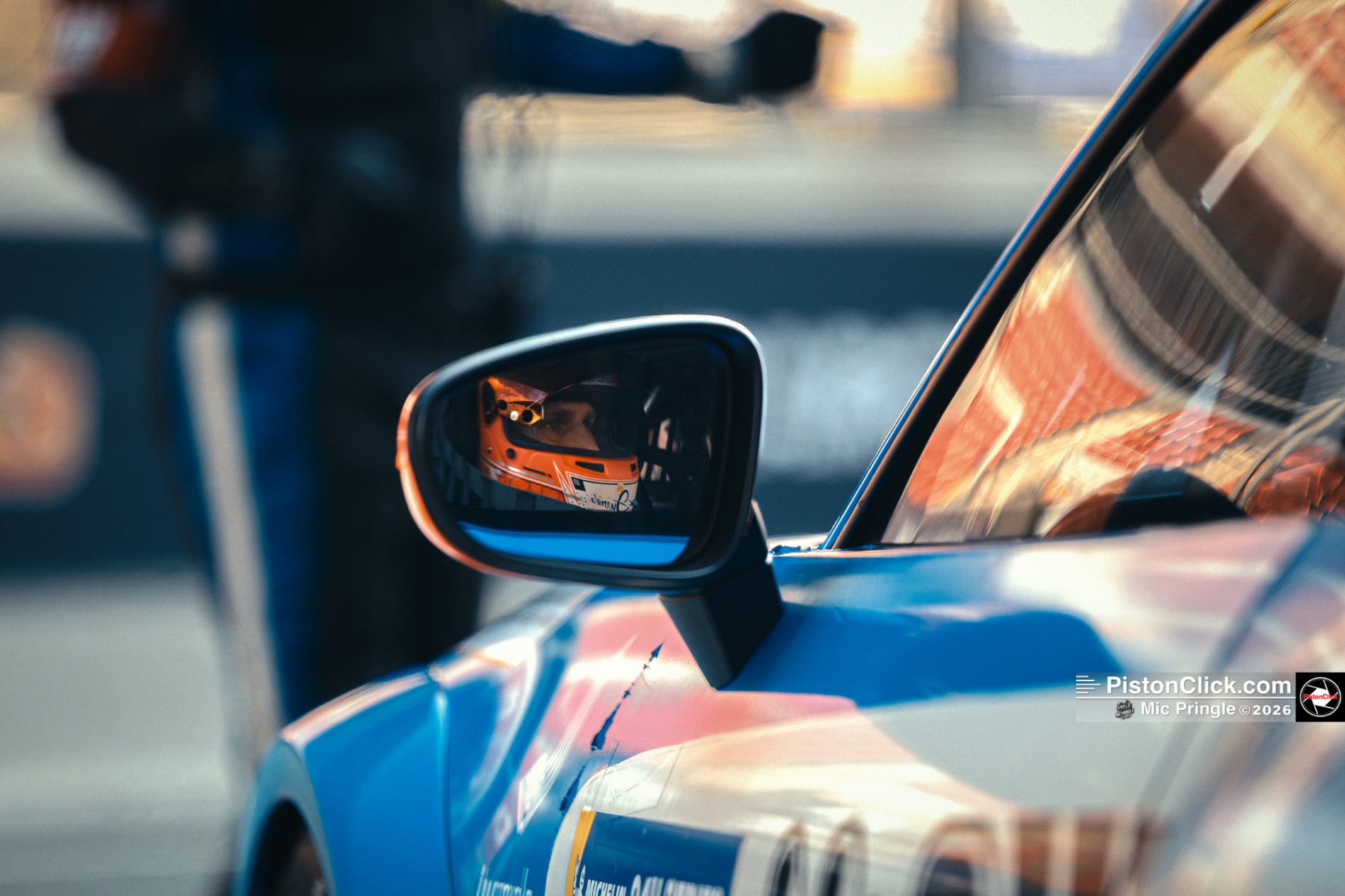
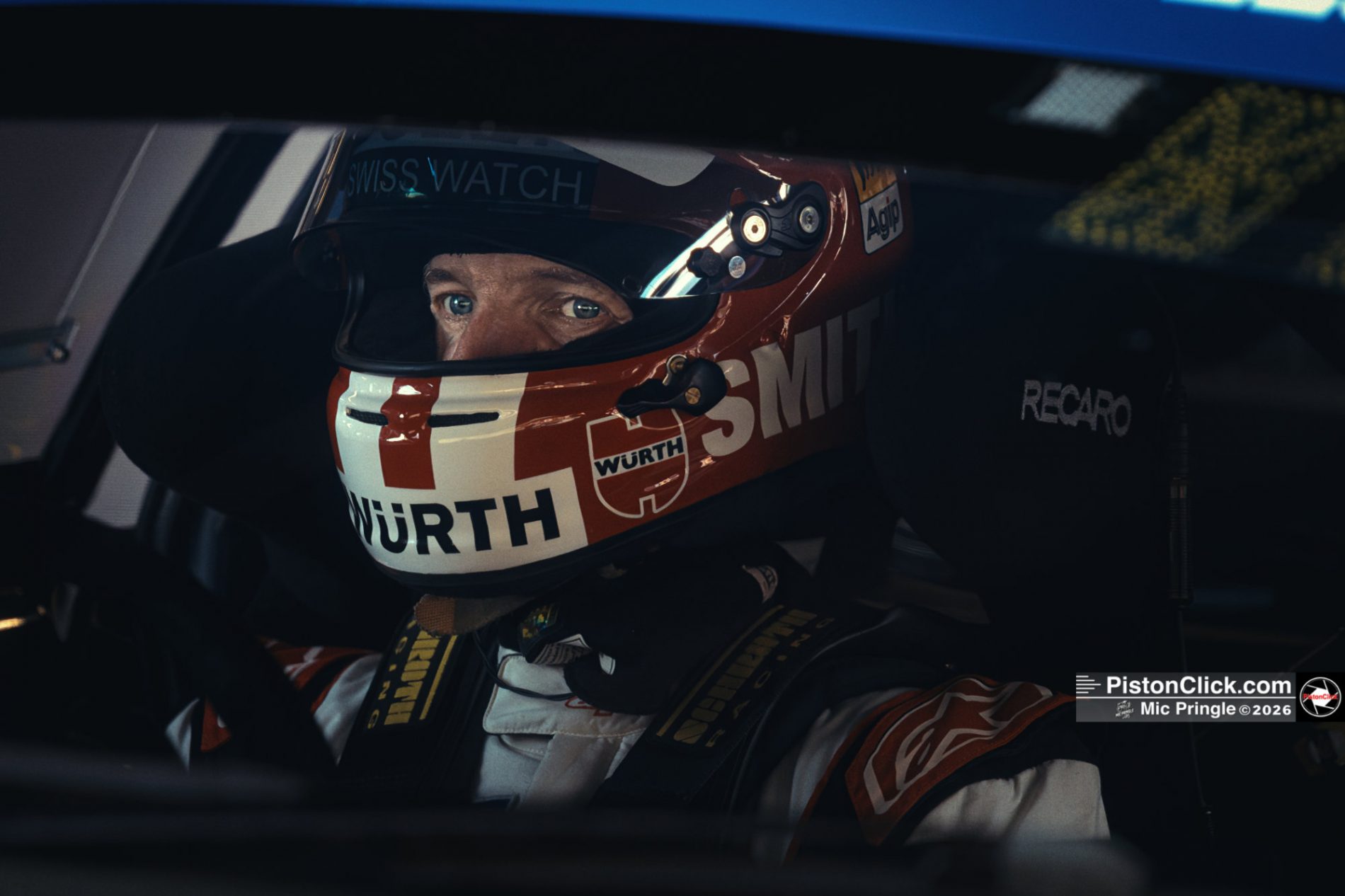
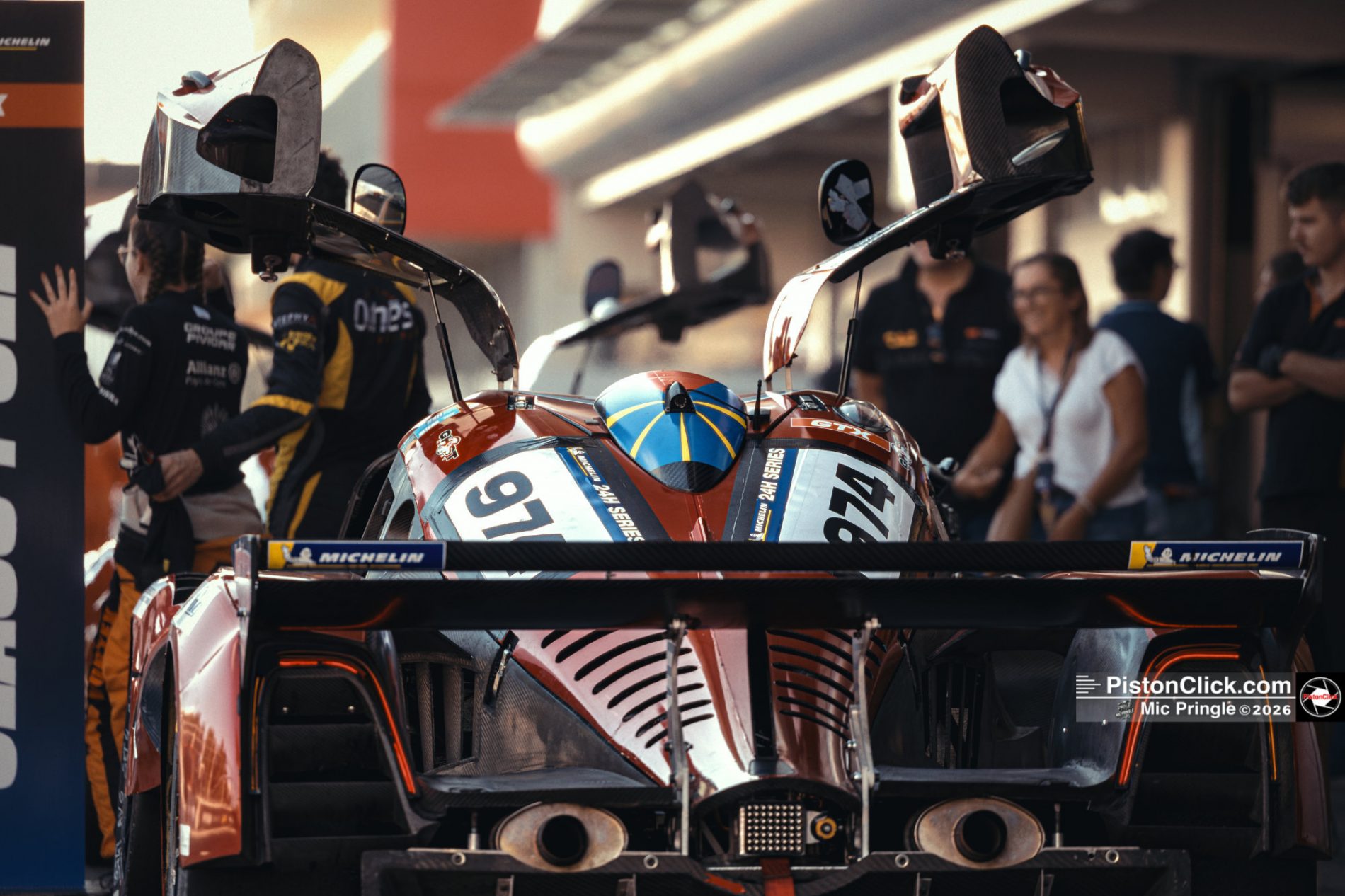
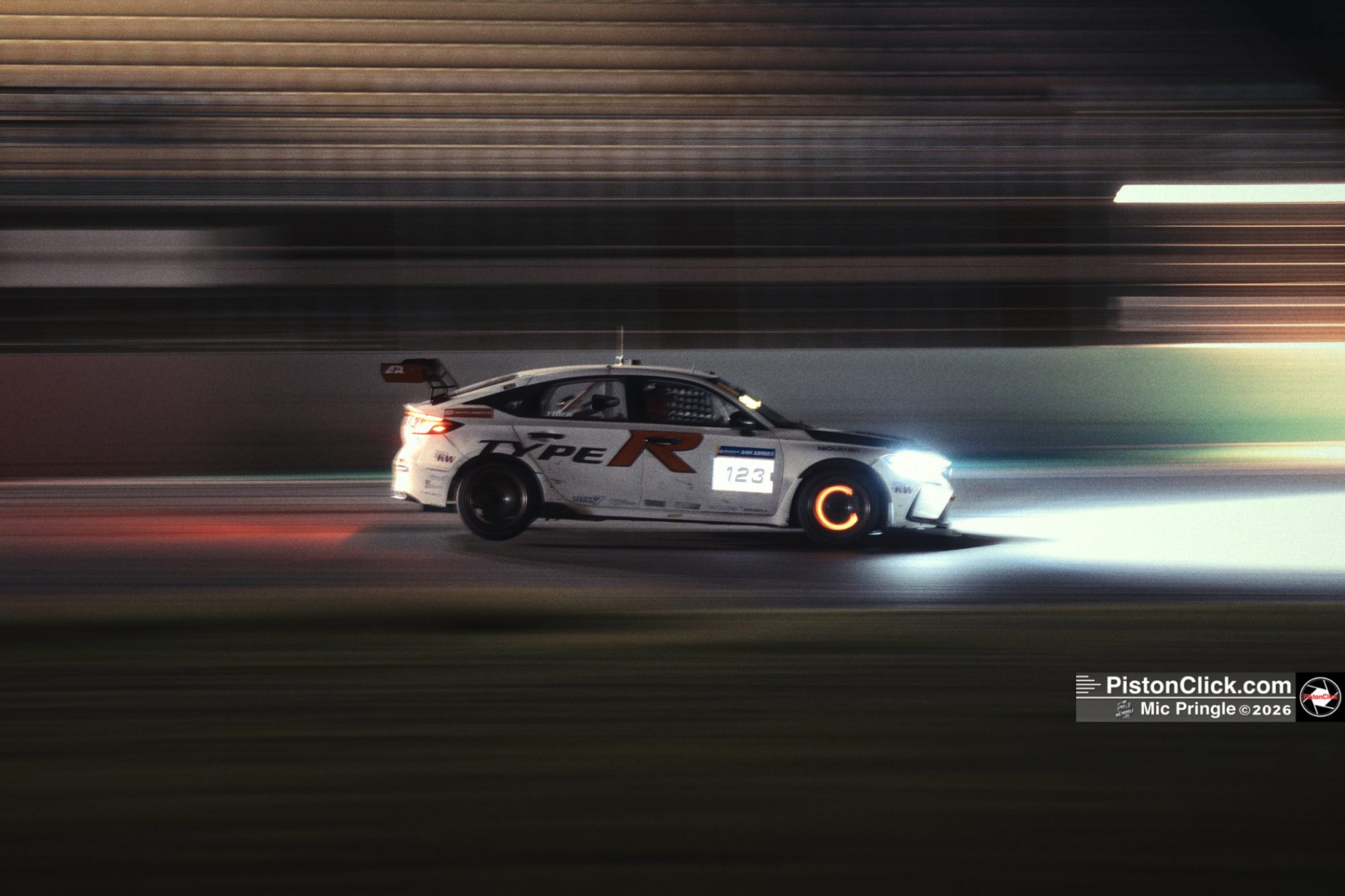
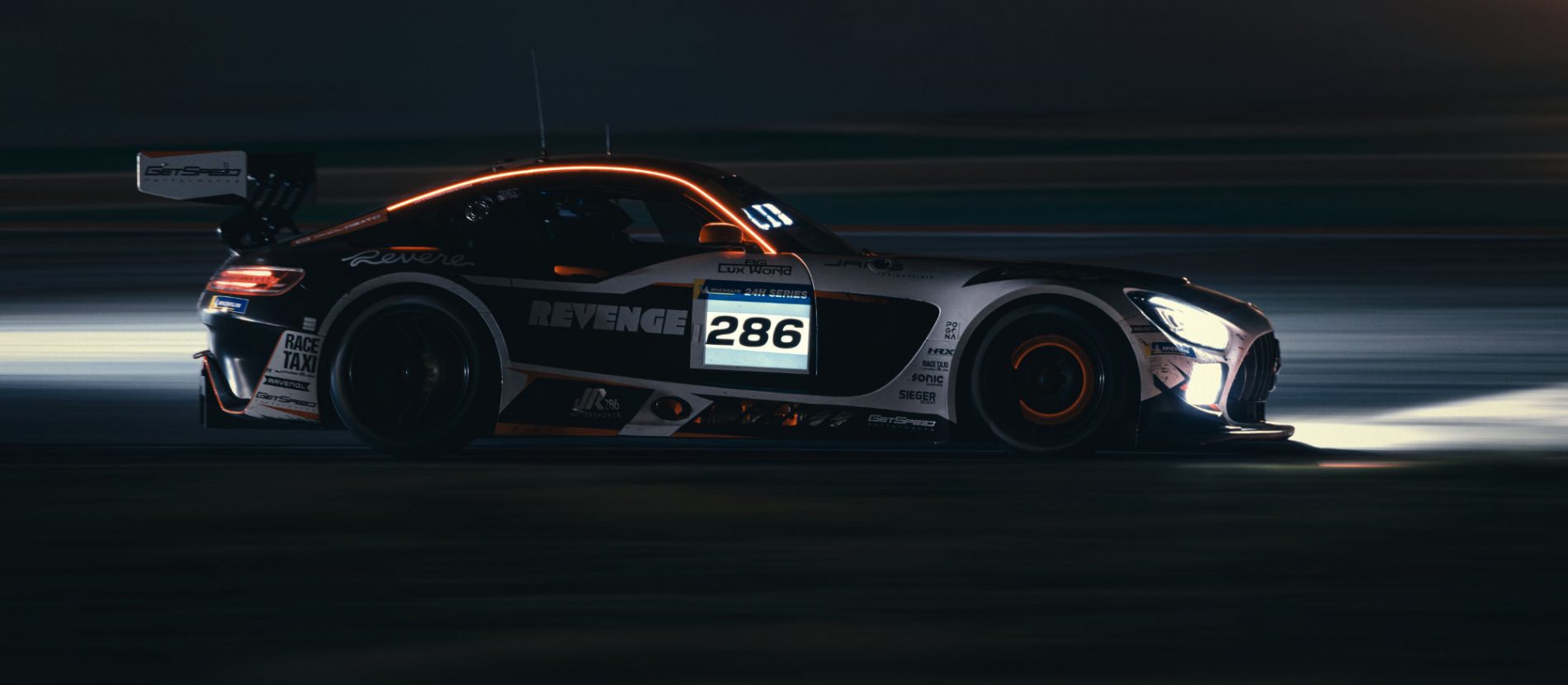
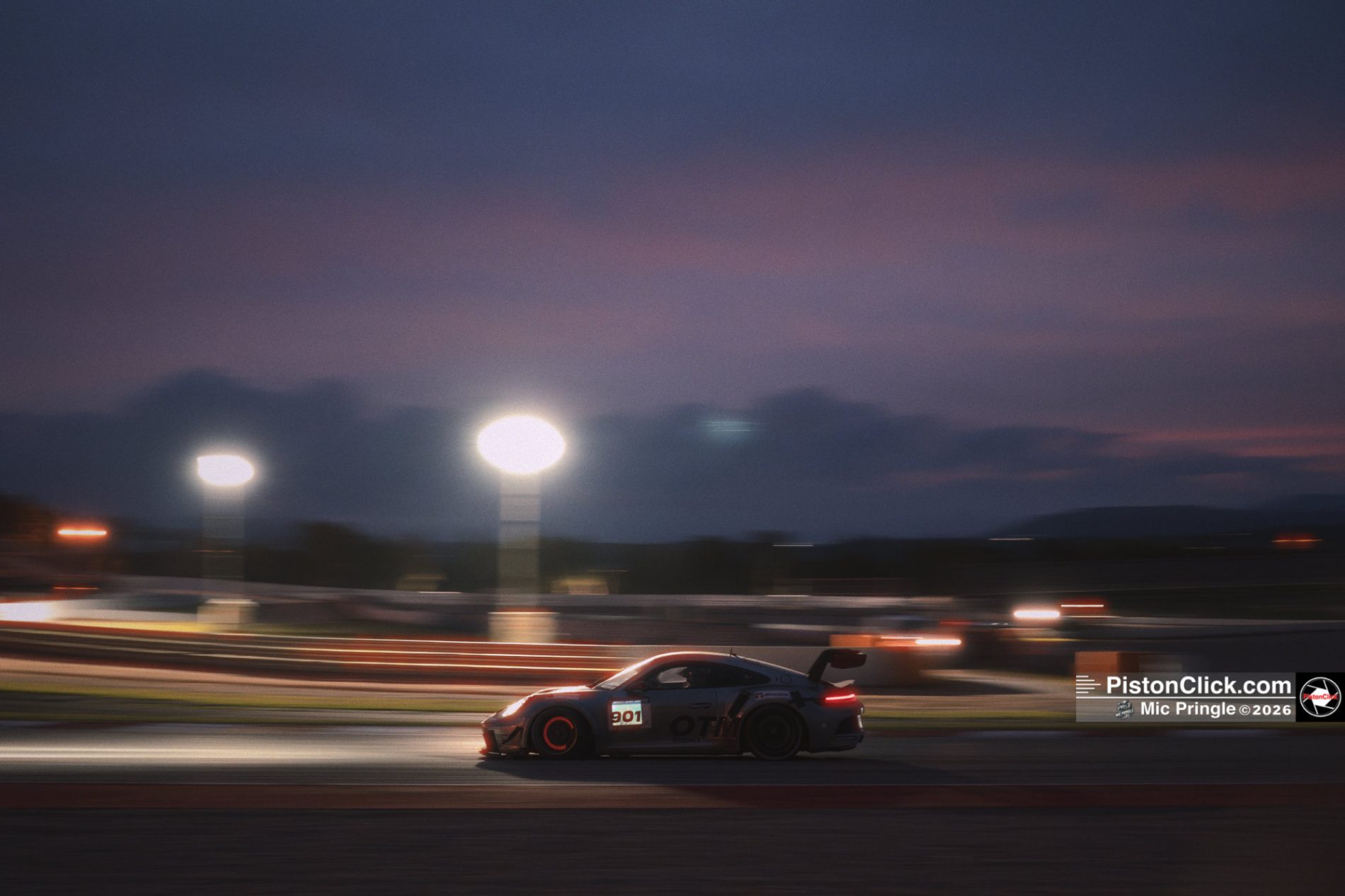
Every 24-hour race has four hero shots you need to capture for the weekend to feel complete: the start, sunset, sunrise, and the finish. Nail those and you have the backbone of the race story. What you shoot in between are the images that pull everything together — pit stops, quiet paddock moments, glowing brake discs, changing light, small human details — the connective tissue that turns highlights into a complete narrative.
24H Barcelona – Photographic Locations
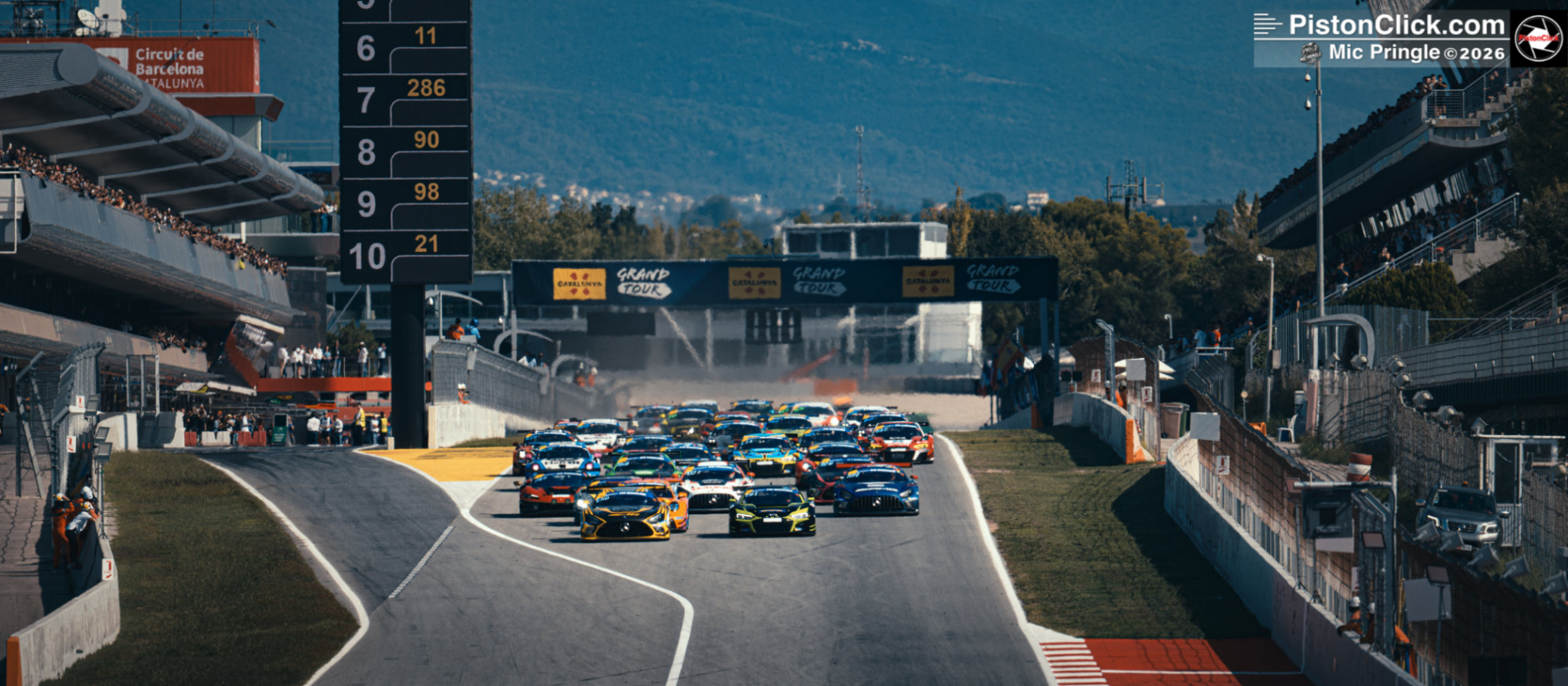
I started the race on the outside of Turn 1, watching the field funnel downhill in awe of the spectacle unfolding before me. Cold tyres, packed grid, everyone trying to gain several places into the first corner. It’s carnage, but in the best possible way. I used the 400mm here as it produces fantastic compression while still being wide enough to fit the entire grid, plus a slice of paddock and grandstand. The f/4.5 aperture also helped keep much of the field in focus as they hurtled towards me.
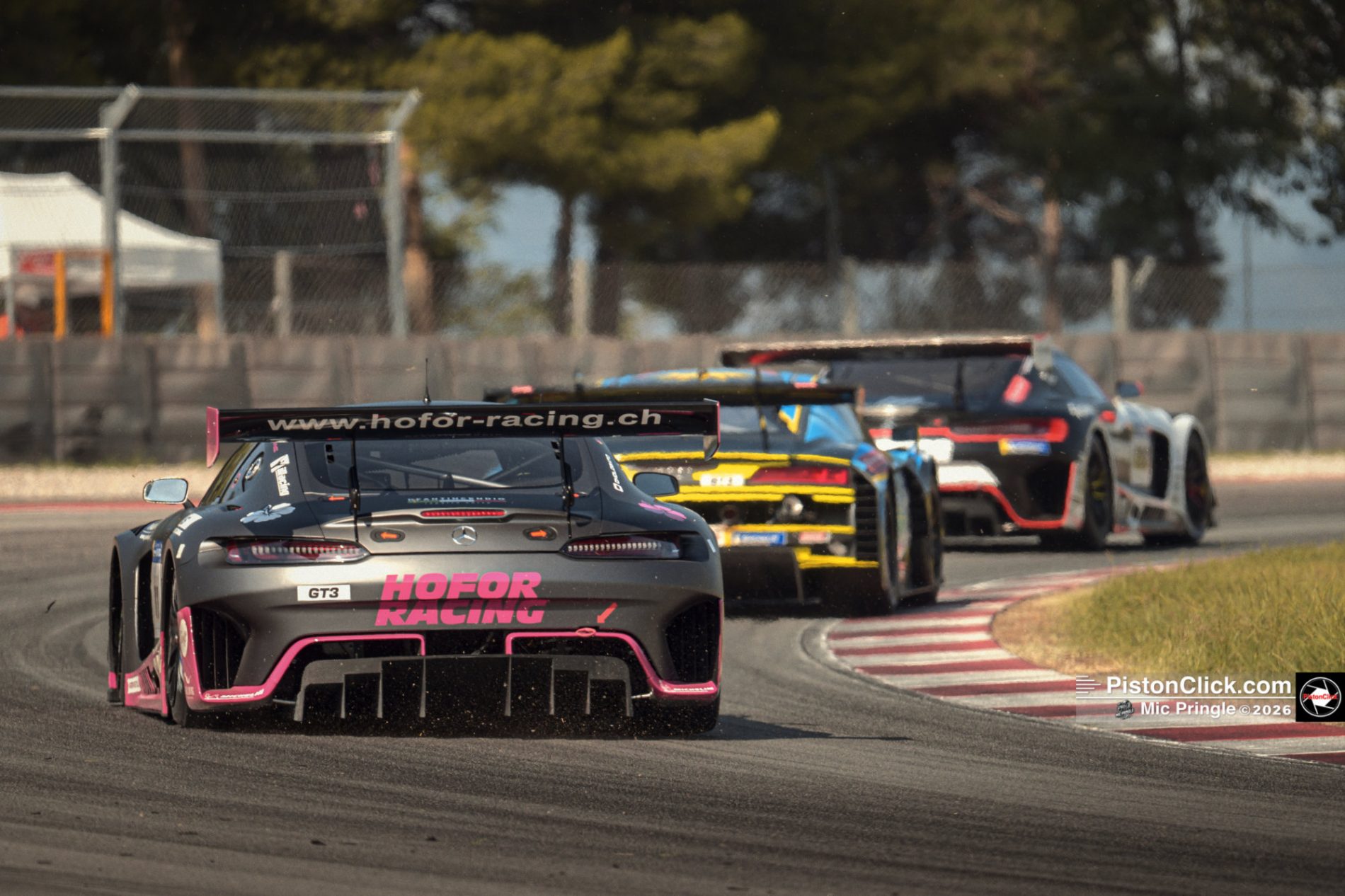
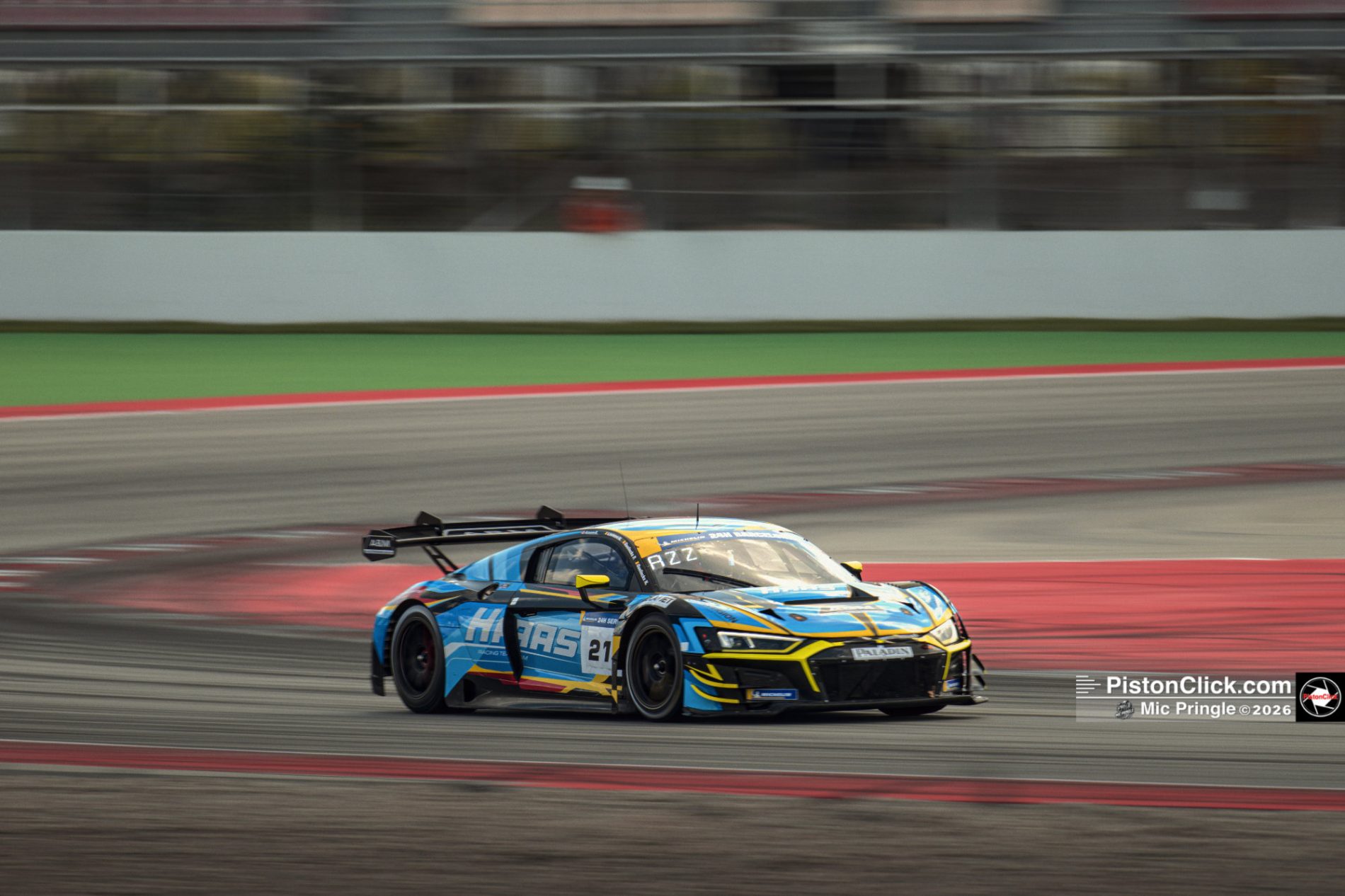
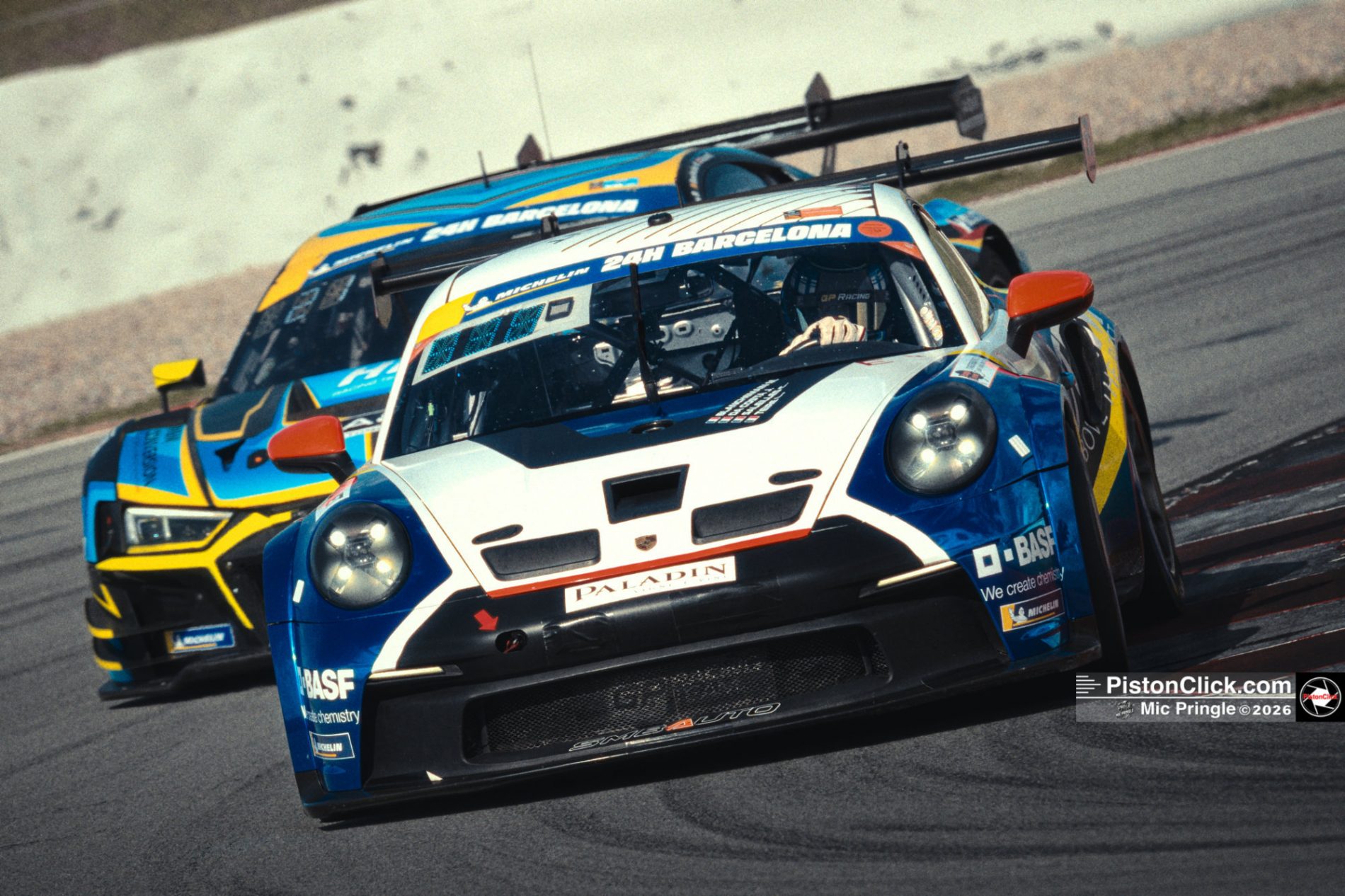
After the chaos of the opening laps, there’s a subtle shift. The field spreads out, last-minute lunges disappear, and drivers settle into a rhythm they’ll hold for hours. This is where the real story of an endurance race begins to unfold: strategies diverge, traffic management becomes an art form, and small patterns hint at what might happen six or even twelve hours later. As a photographer, it’s a moment to catch your breath, step back from the adrenaline, and look for the quieter frames that tell the deeper story.
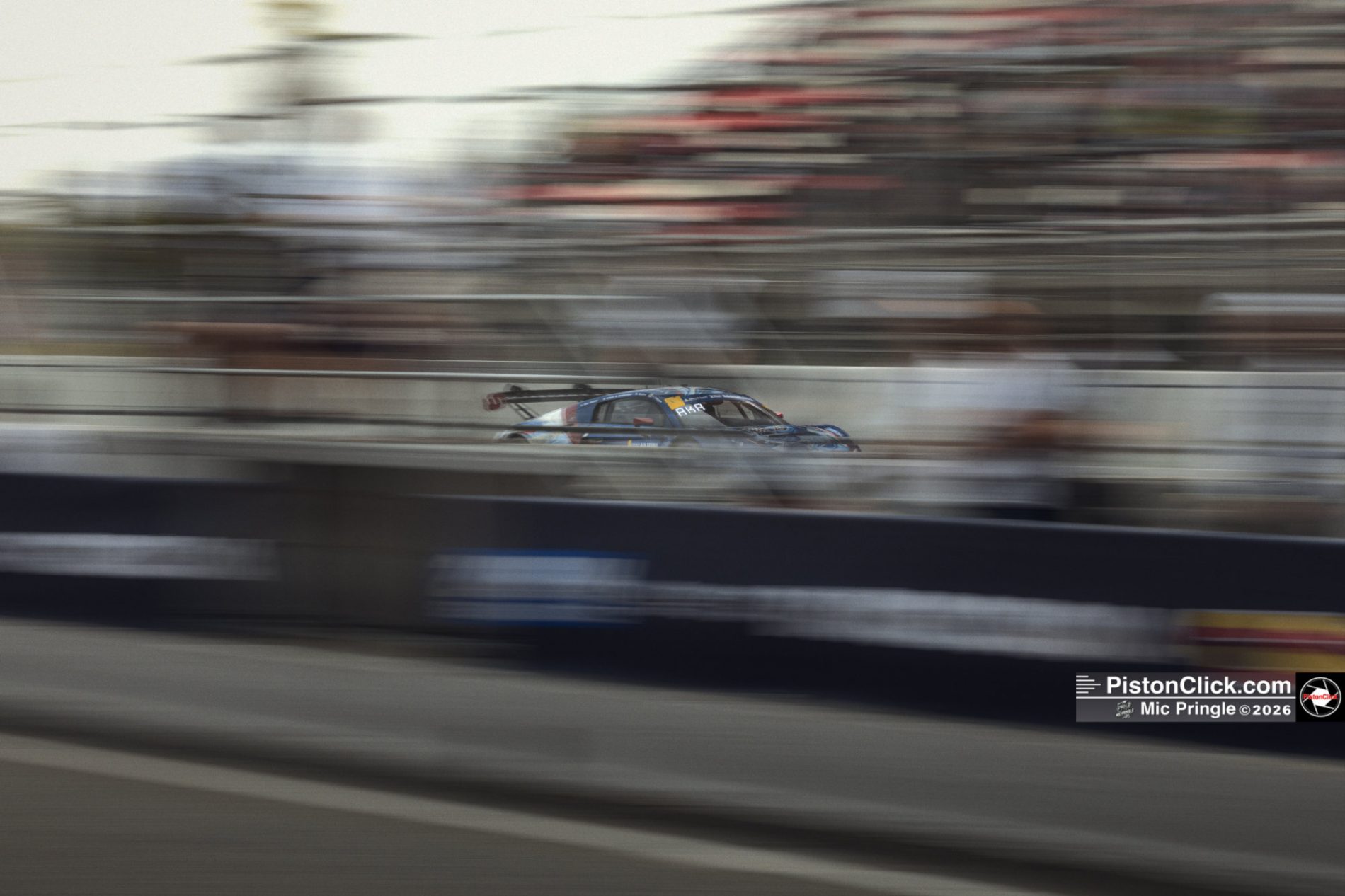
The Golden Hour
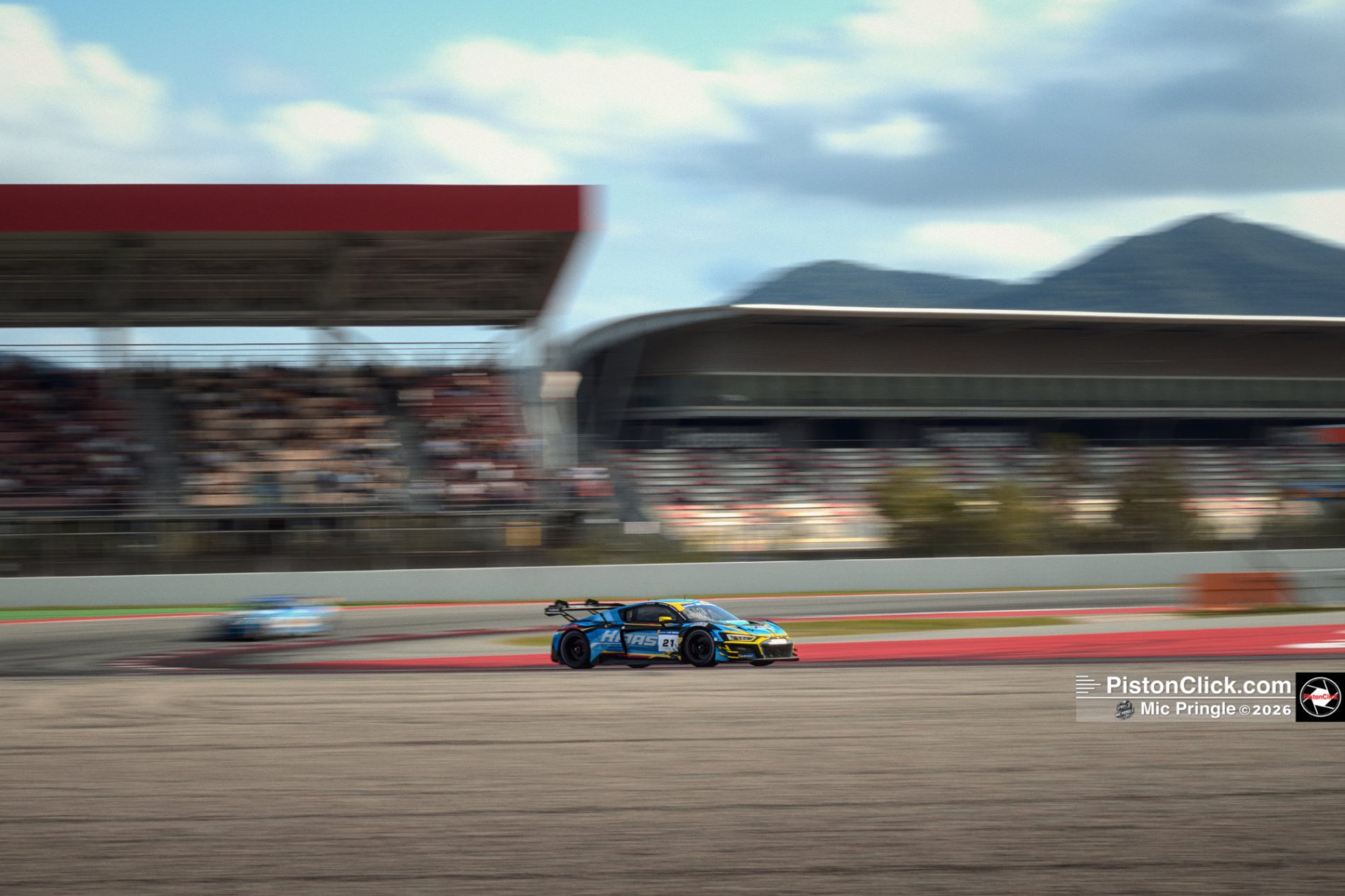
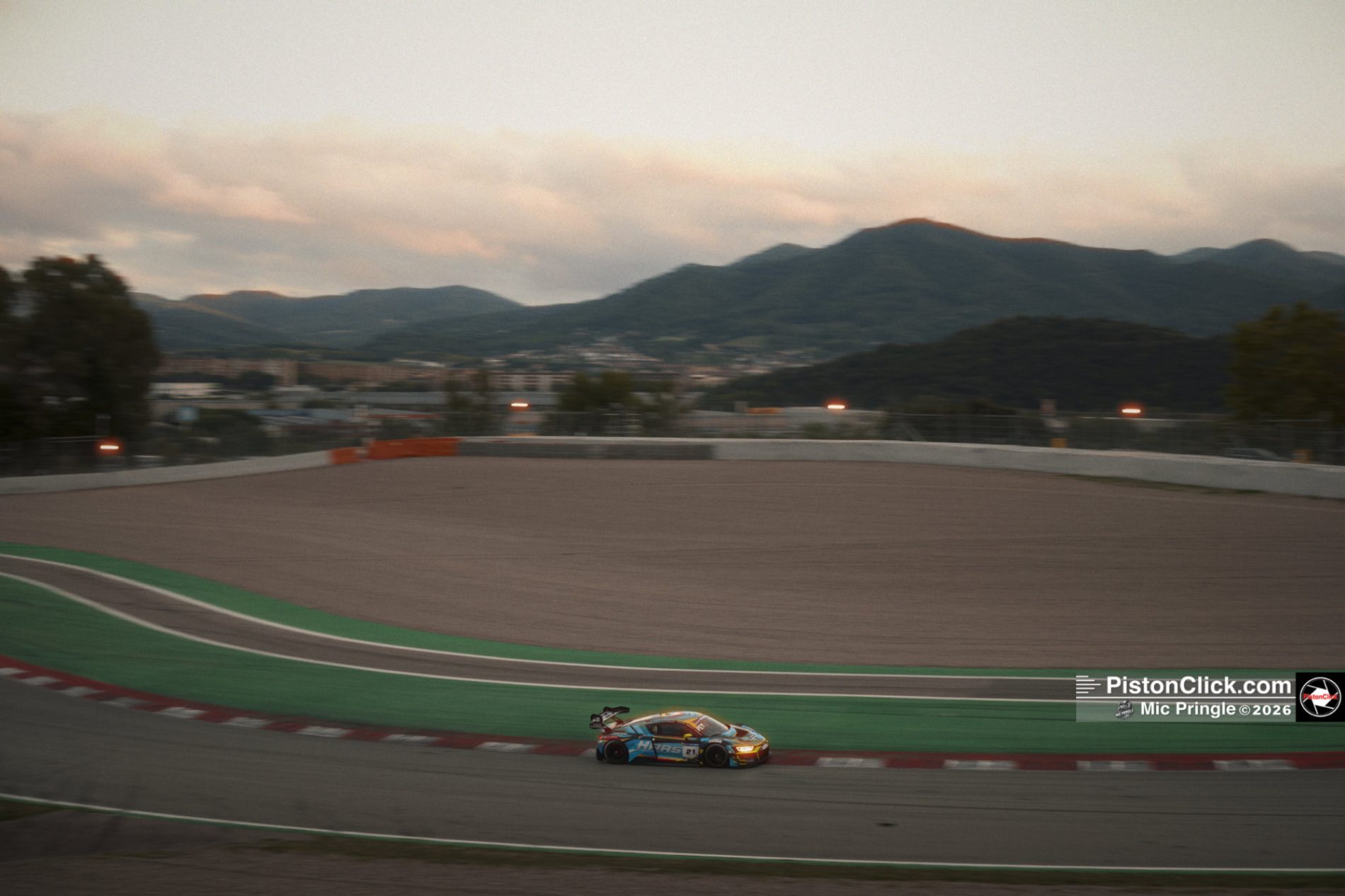
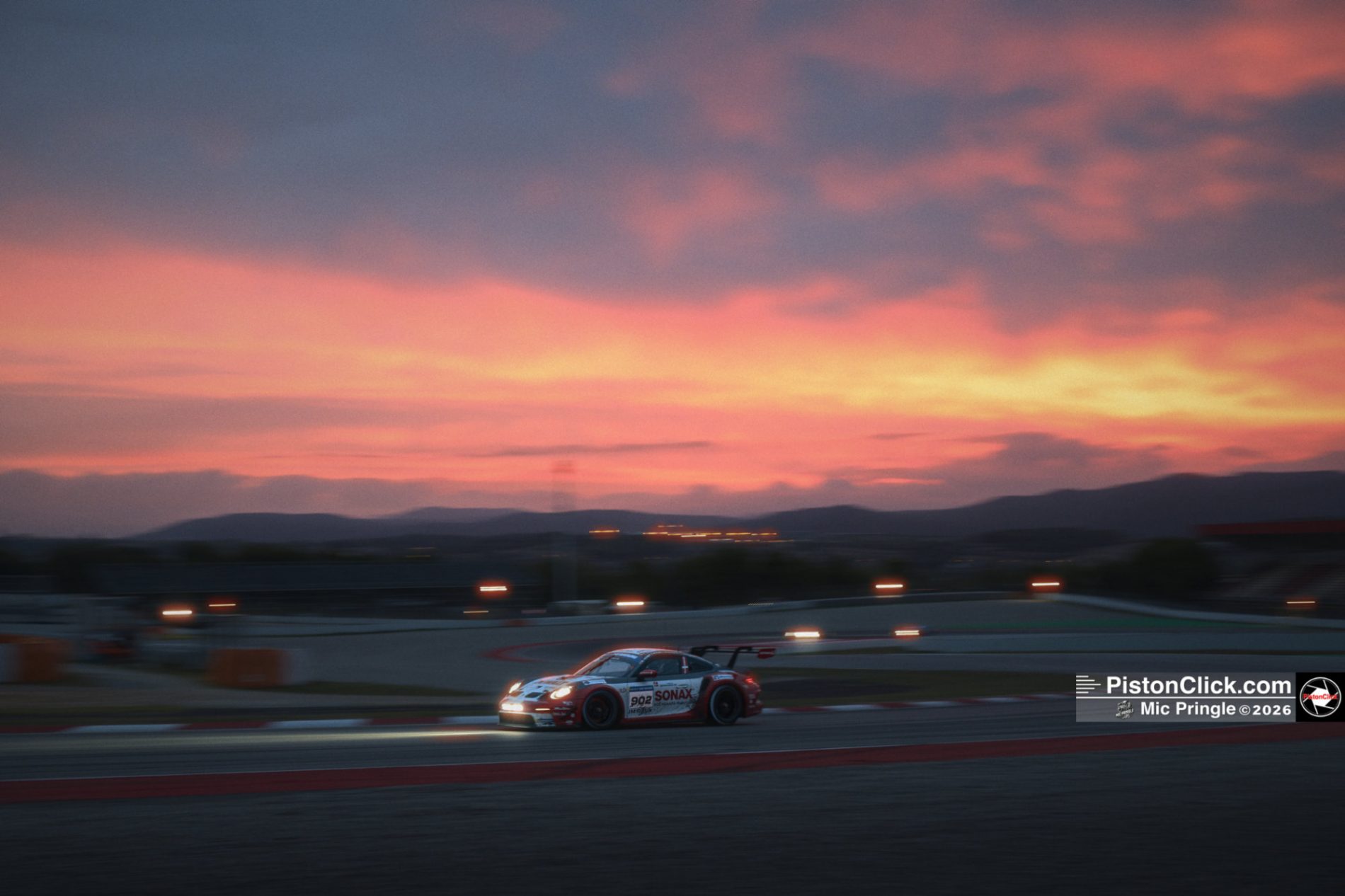
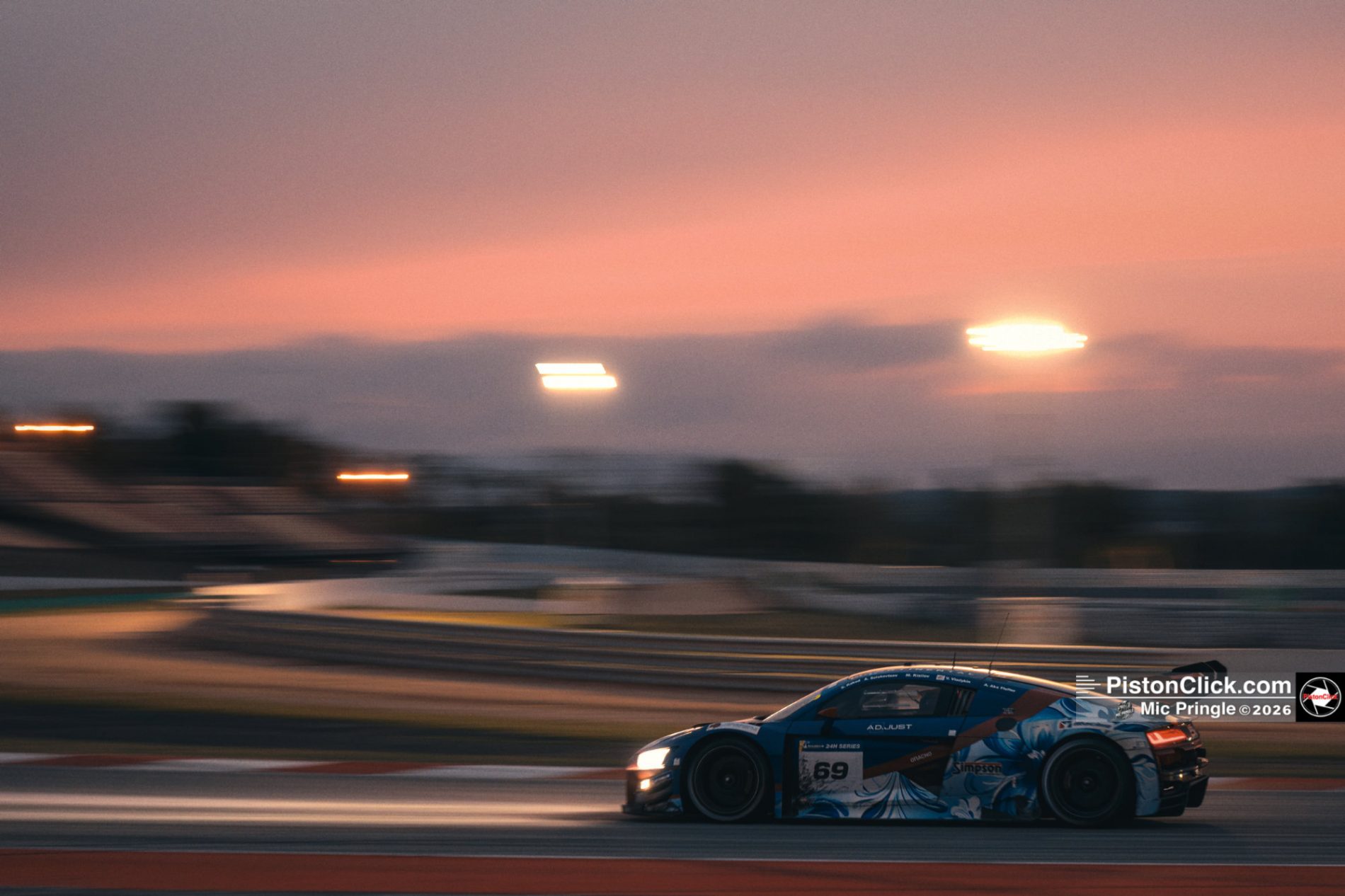
As the light softened, I headed to the outside of Turn 5 for what was supposed to be my golden-hour hero shot. The colours were promising… and then clouds rolled in from the mountains beyond the circuit and killed it stone dead. One minute I’m anticipating warm reflections and long shadows; the next it’s flat grey nothing. I stayed and made the best of it, but the sunset shots I’d imagined never quite materialised. Motorsport photography keeps you humble like that.
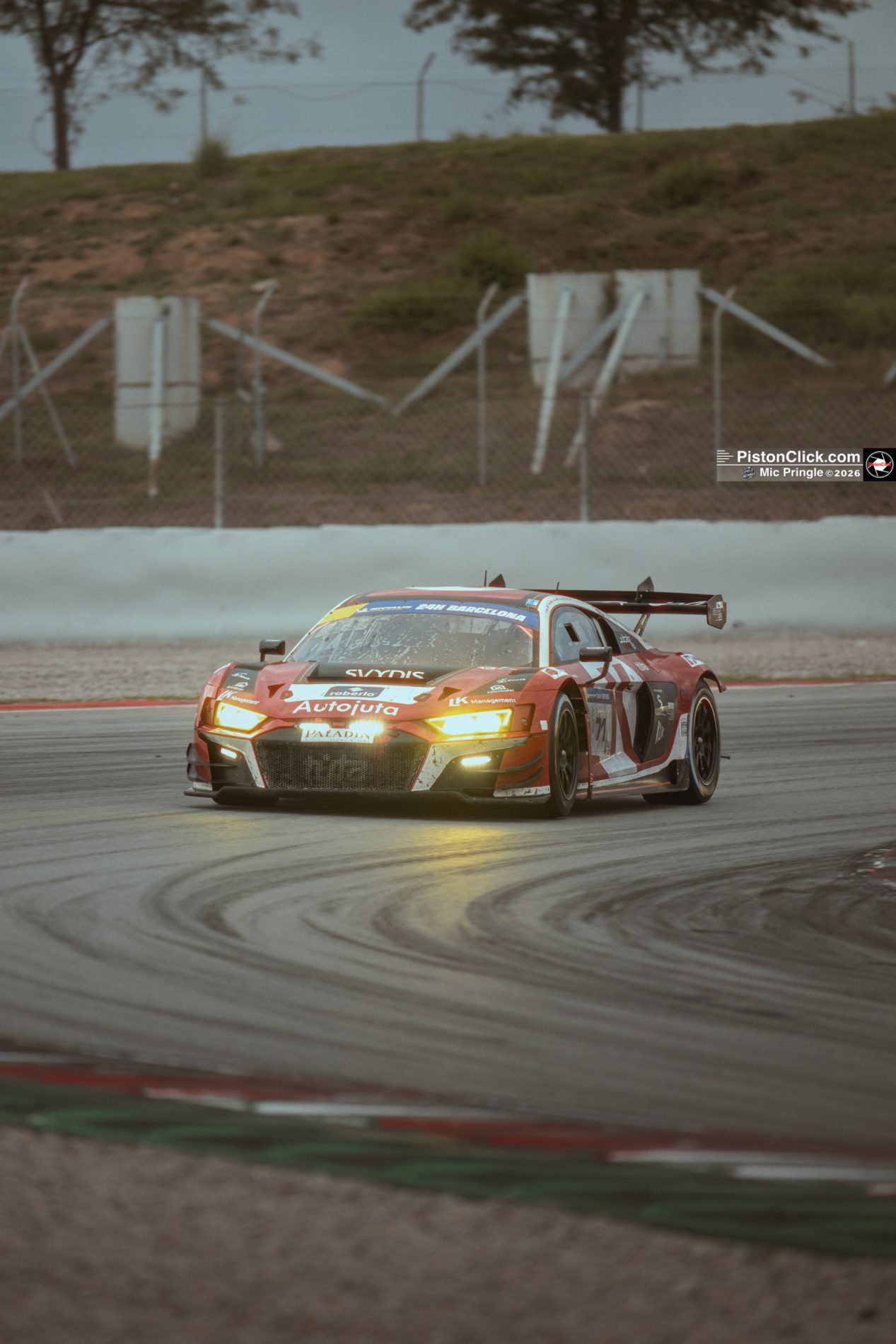
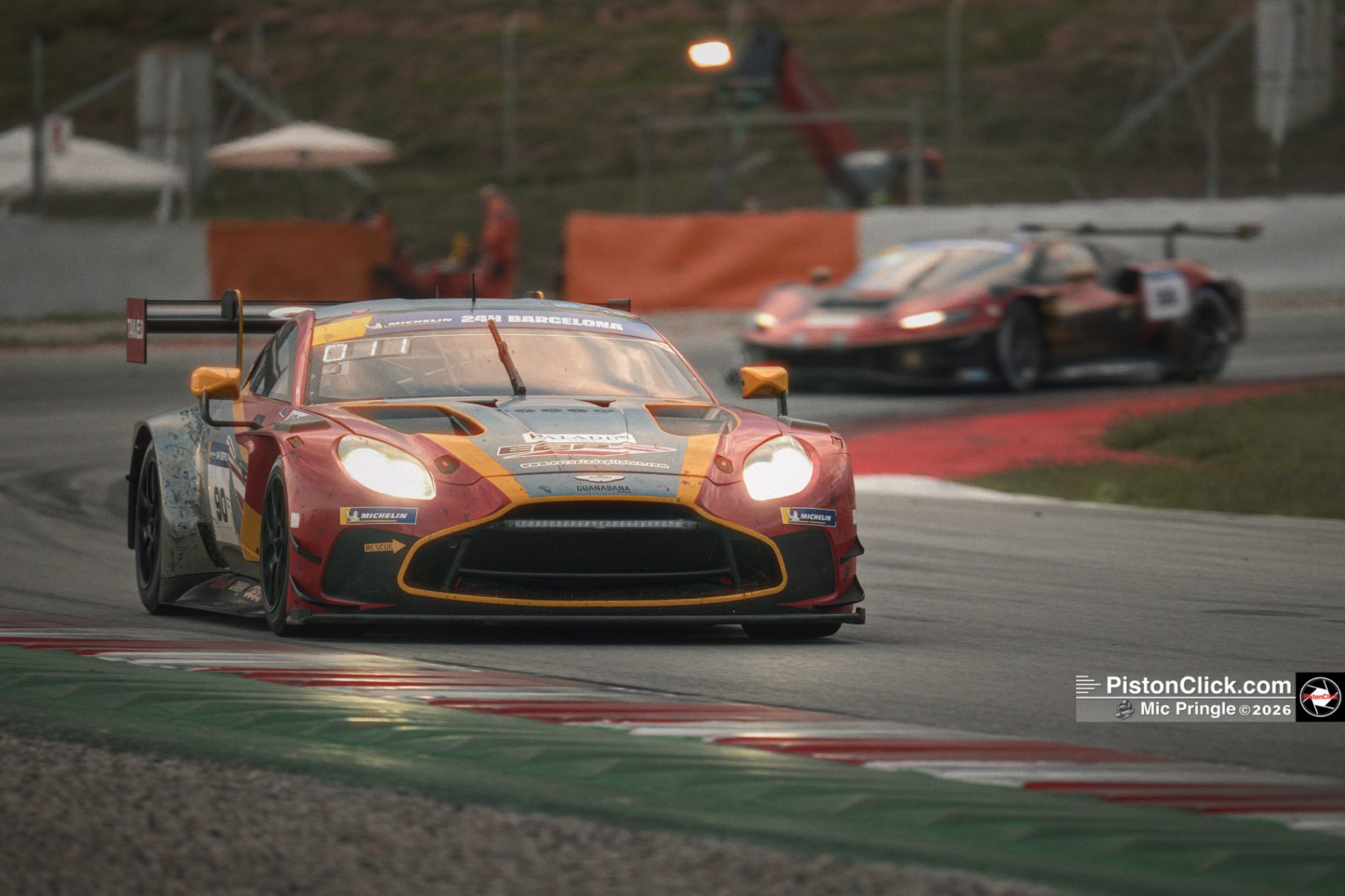
Most of my usual work is covering BSB, where races last 20–25 minutes. In that world, you might only get two or three corners per race before the chequered flag falls. A 24-hour race is the polar opposite. You have time to slow down, revisit corners in different light, and really think about composition. That freedom can be a trap, though. Without a plan, it’s easy to wander aimlessly and suddenly realise you’ve missed something important. Endurance racing rewards having a shot list and a rough timeline in your head.
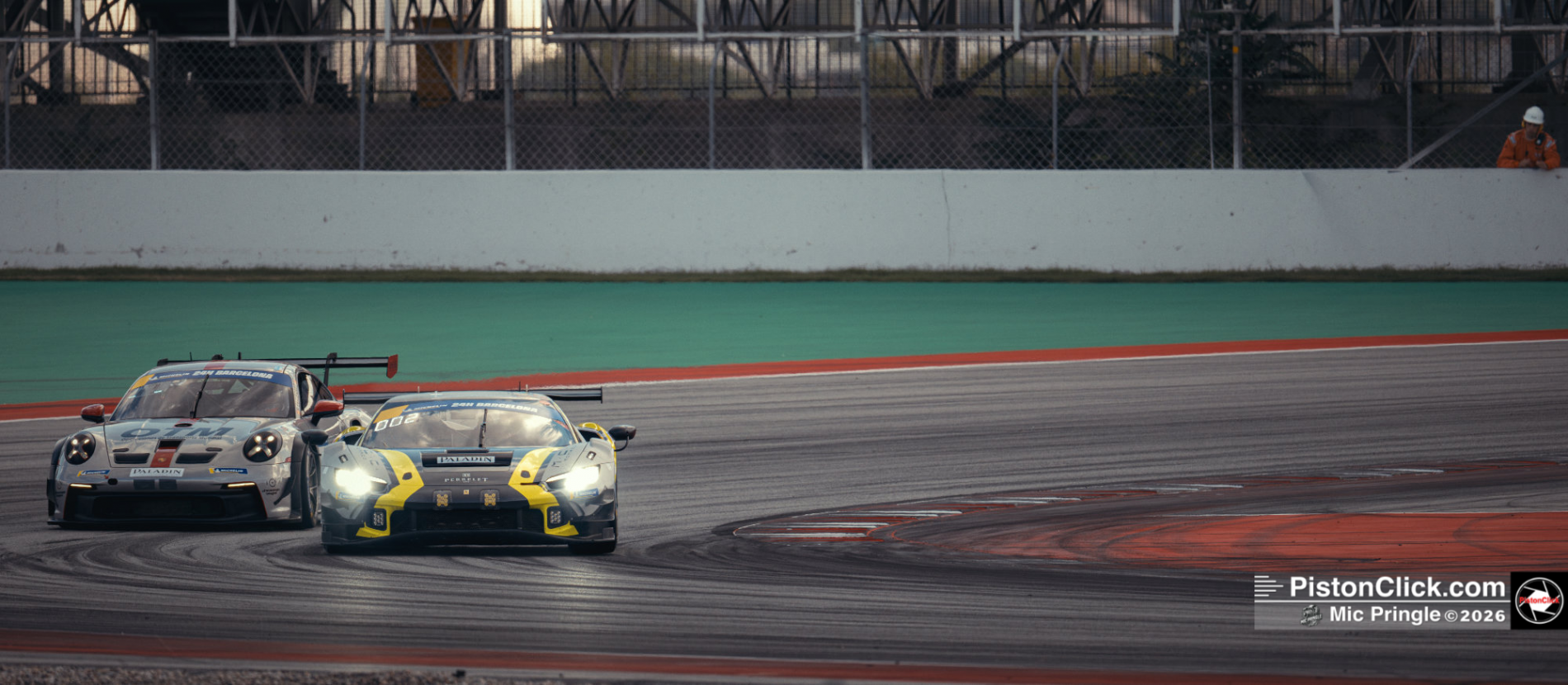
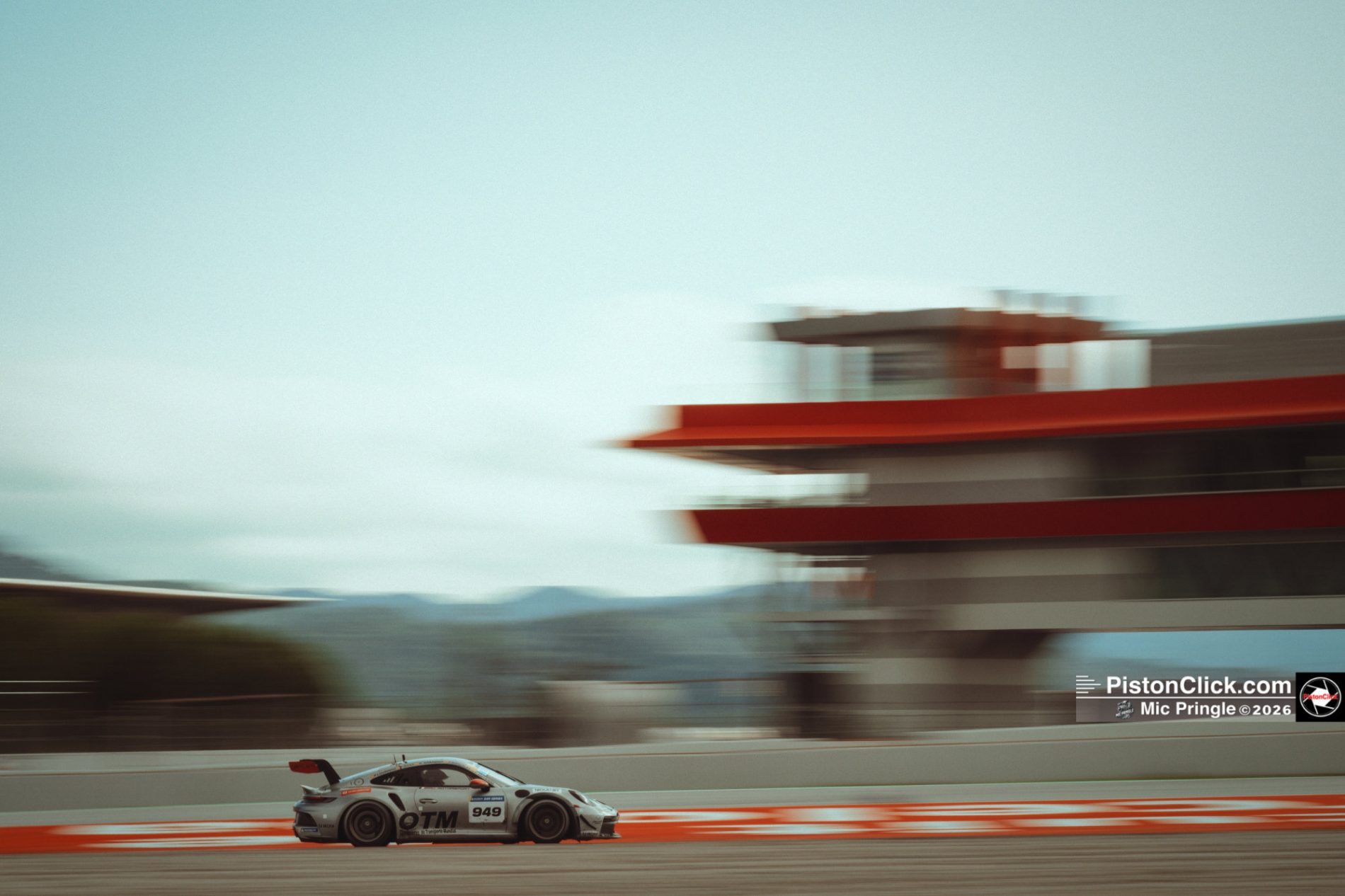
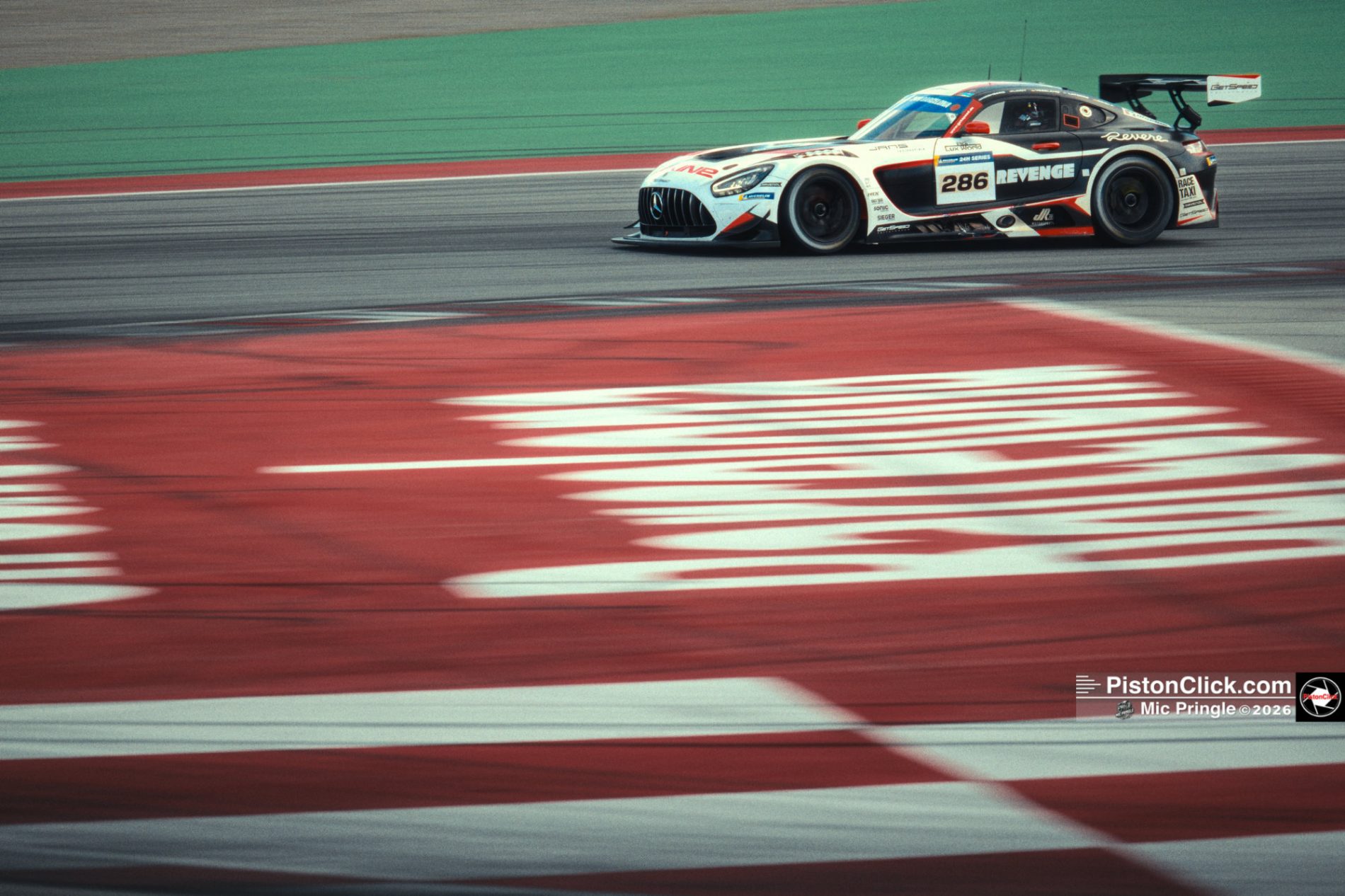
24H Barcelona – Pits
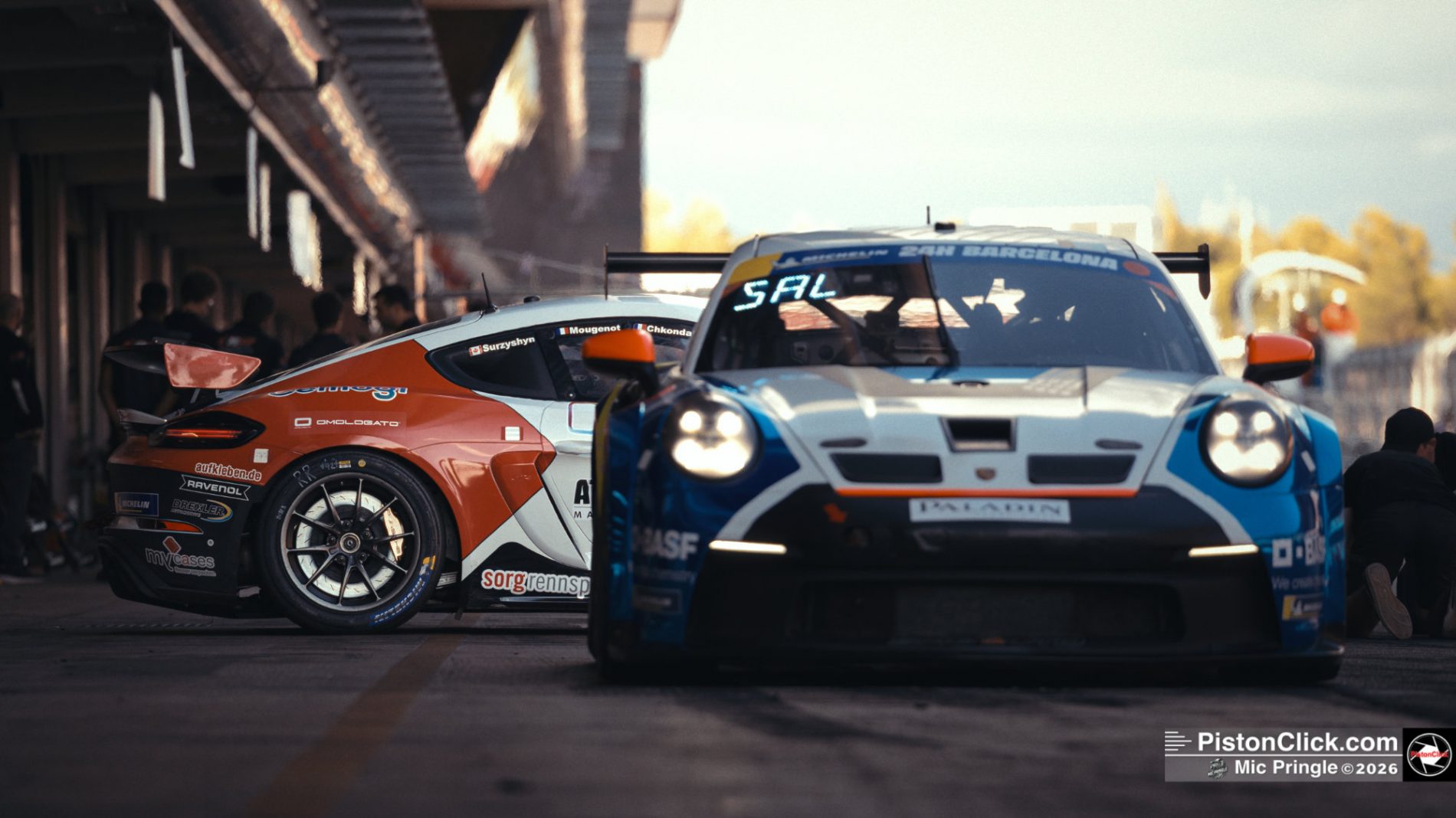
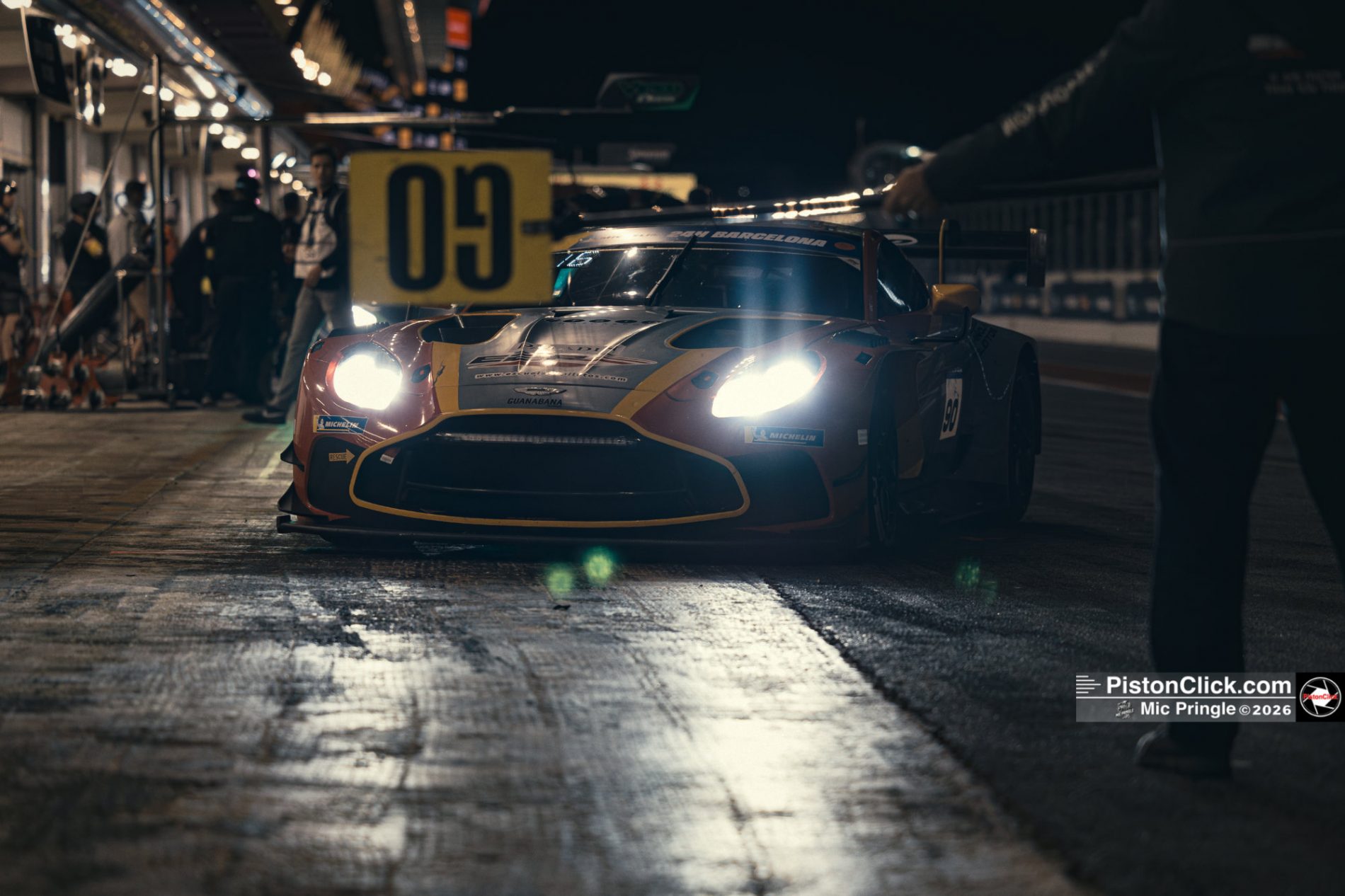
After missing the sunset shot, I headed back to the pits for the first round of stops and driver changes. The first thing that hits you in the pit lane at night isn’t the noise, it’s the heat! Stand a few feet from a car that’s been running for hours and the heat pouring from the engine, brakes, and tyres is unreal. Get in close and you’ll feel a blast of hot air and a fine coating of brake dust for good measure. Air guns crack, tyre smoke hangs under the lights, and cars are released with zero warning — a constant reminder that you’re a guest in a working pit lane.
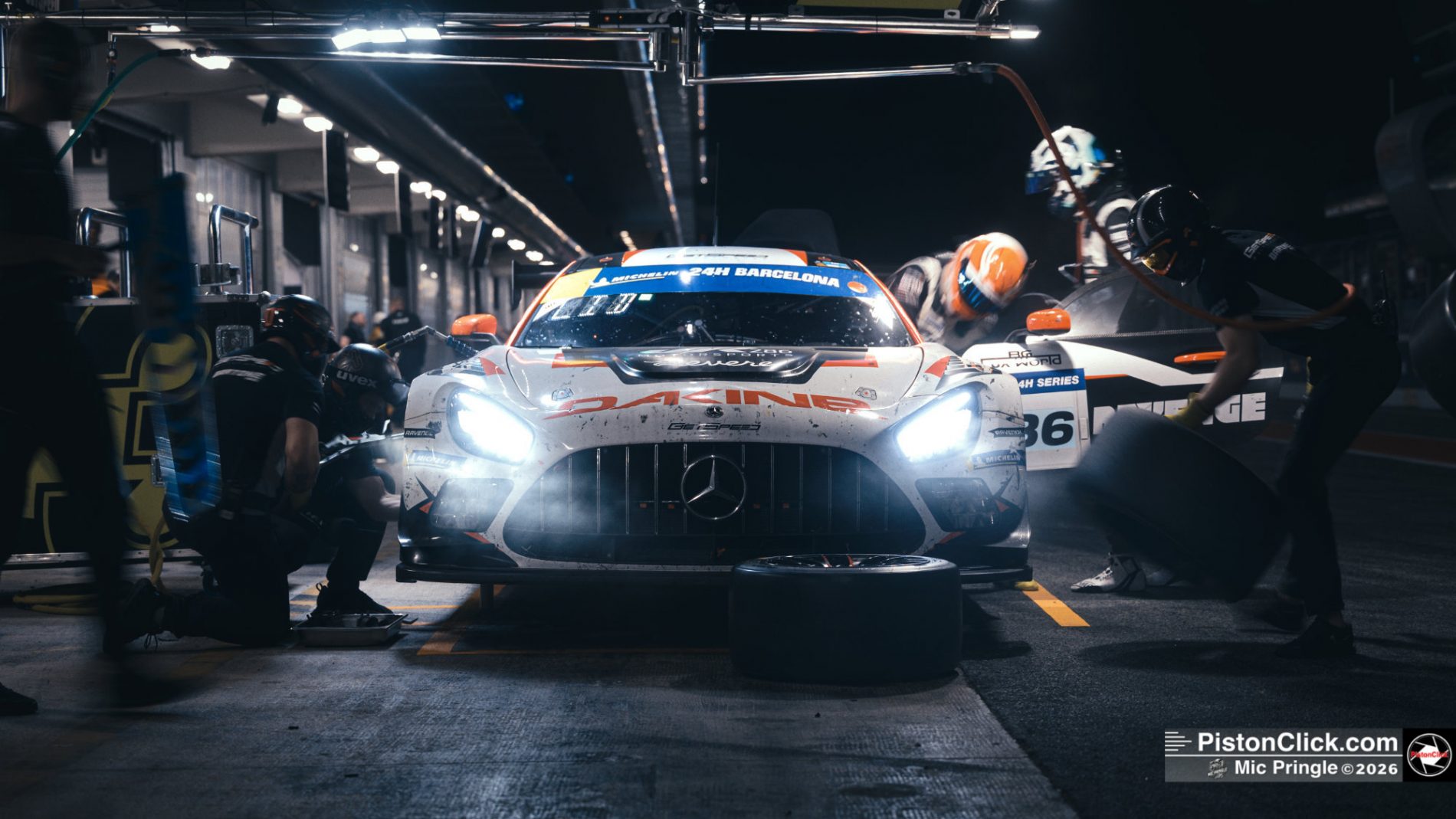
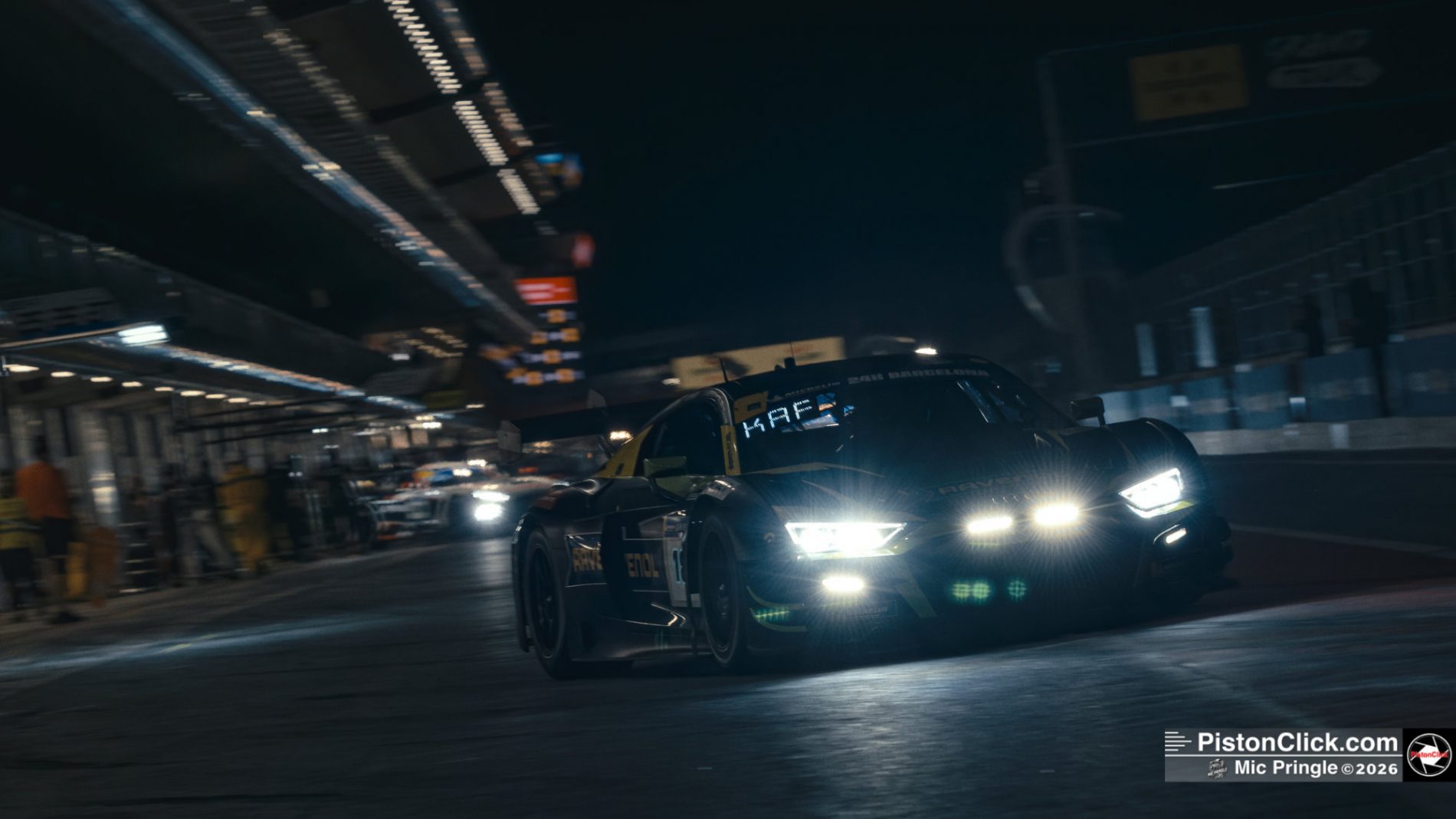
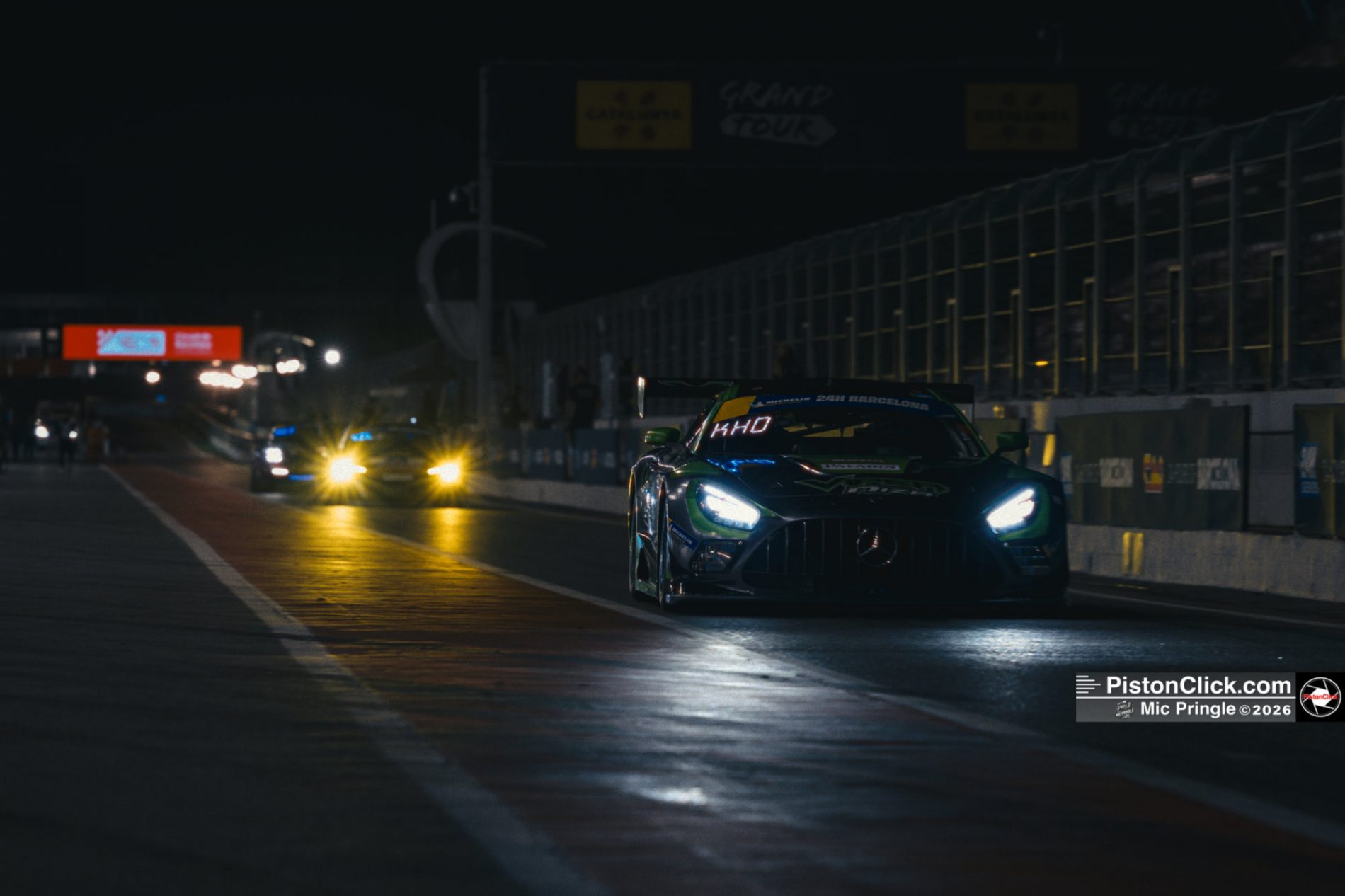
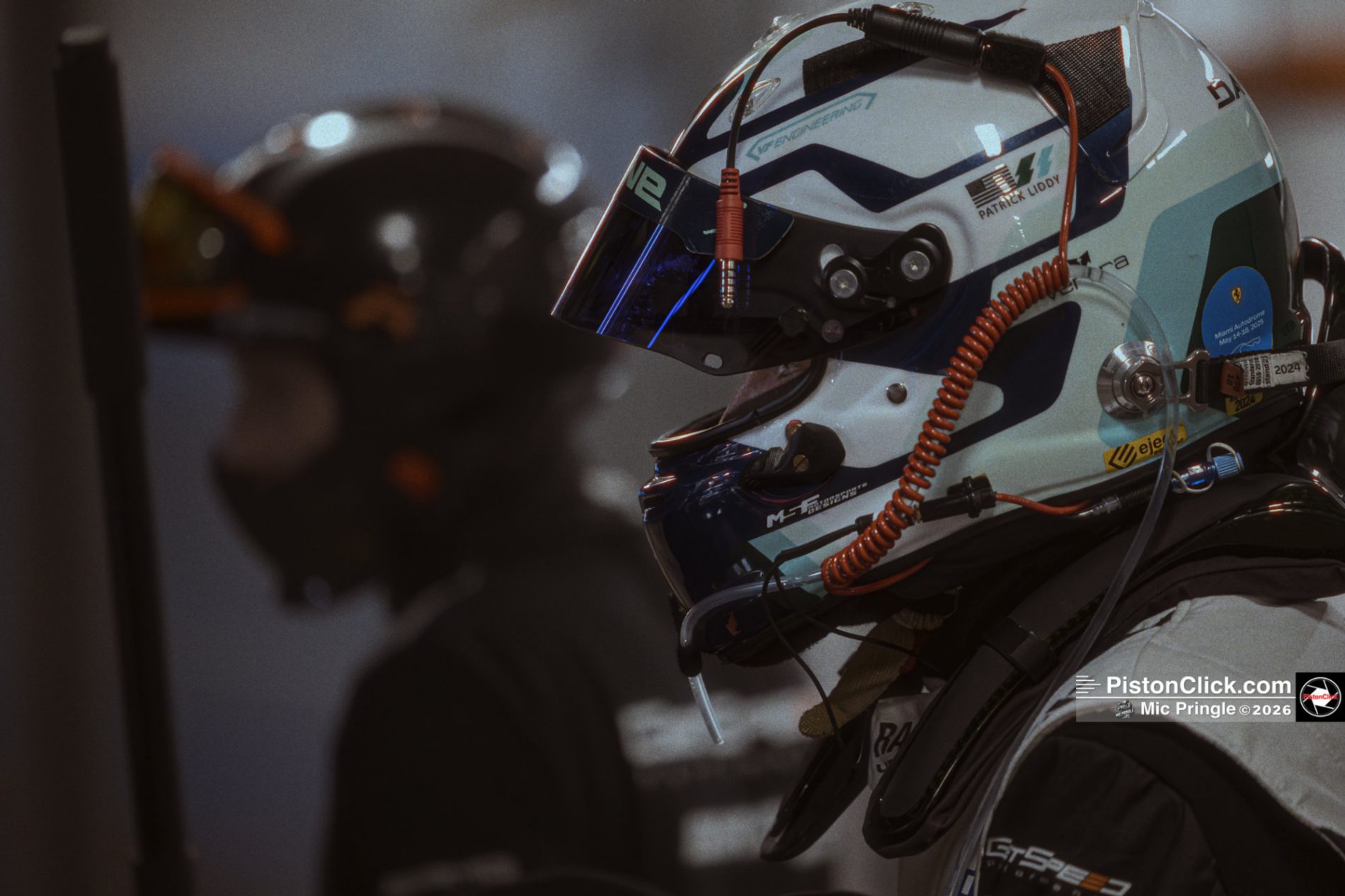
The 70–200mm really comes into its own here. It gives you the reach to stay safely out of the way while isolating mechanics, drivers, and details in the chaos, and the f/2.8 aperture is a lifesaver in mixed lighting. Being able to zoom quickly between tight detail shots and wider context frames means you don’t miss the split-second moments that define a night stint.
24H Barcelona – Out into the night
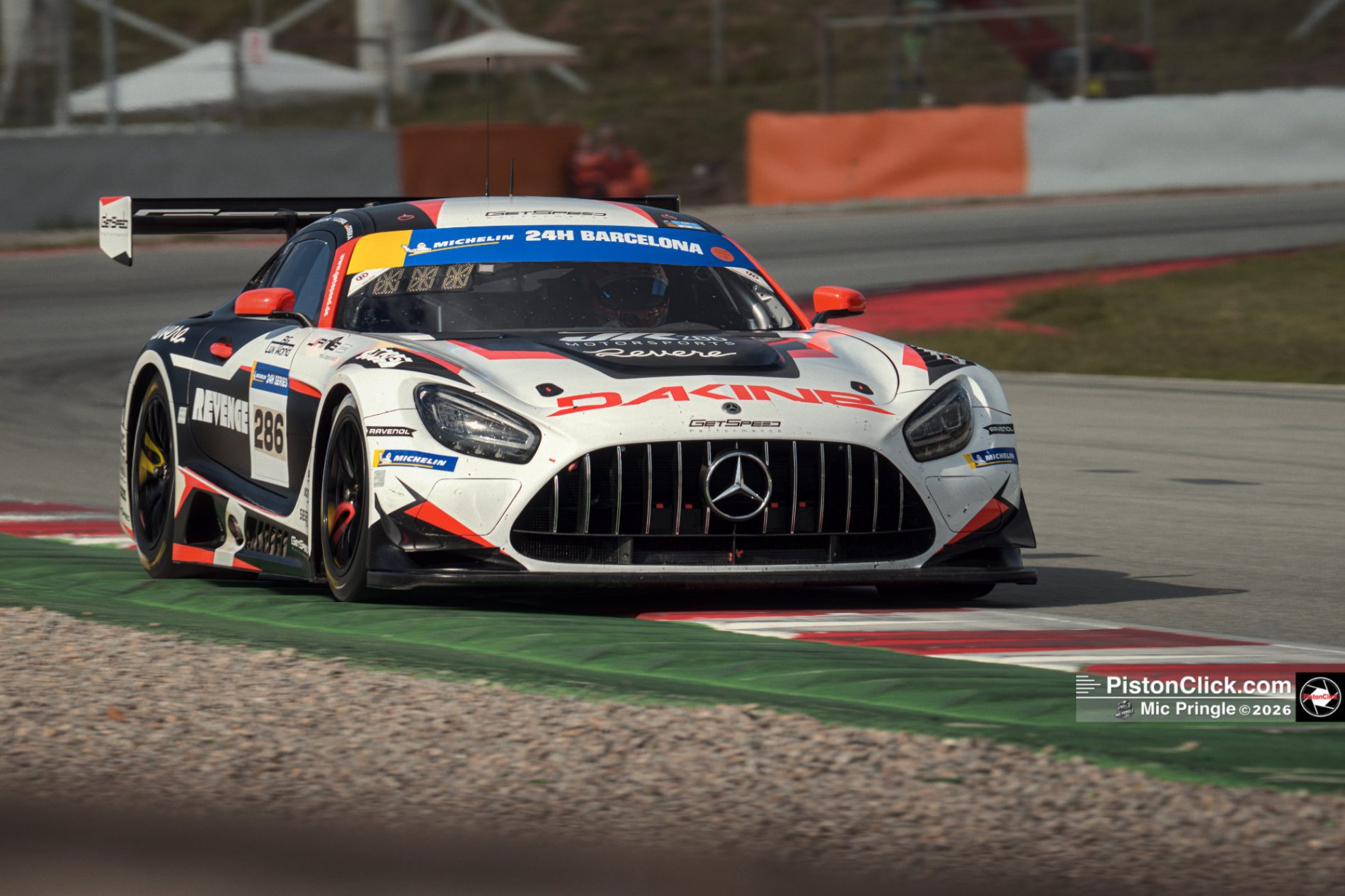
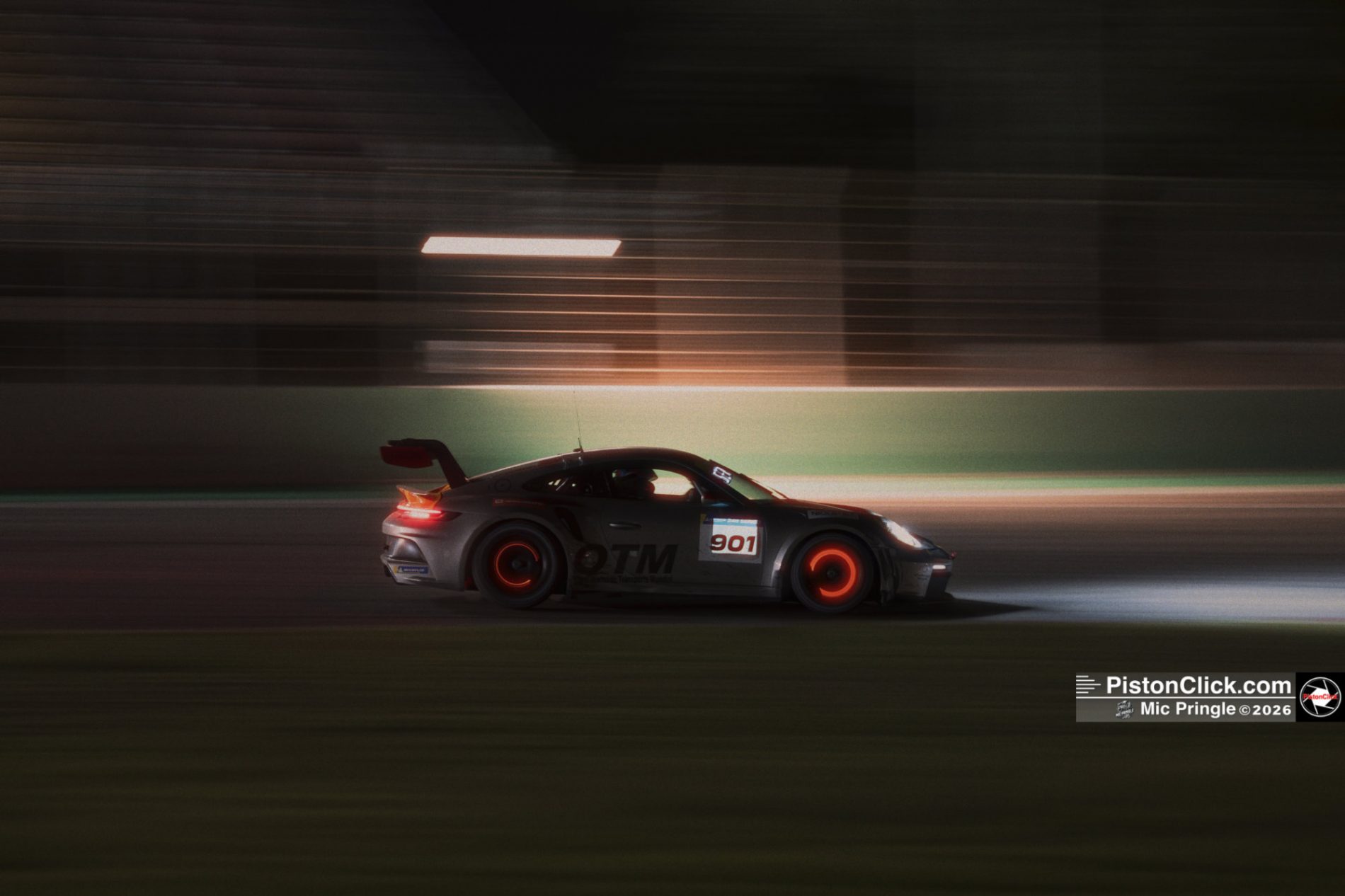
Around midnight I set up on the inside of Turn 1 and outside of Turn 2 for one of the coolest sights in endurance racing: glowing brake discs. Under heavy braking they burn bright orange, almost unreal through the lens. The GetSpeed AMG GT3 Mercedes in particular caught my eye, its exhausts glowing deep red as it powered away, leaving a brief fiery signature every lap — addictive to shoot. Night work demands confidence in manual mode; you’re constantly tweaking aperture, shutter speed, and ISO to strike the right balance.
Twenty-four hours may sound like a long time, but it passes surprisingly quickly. By 5am I began the long trek to the outside of Turn 11 for sunrise: down the pit lane, through the tunnel, then along the entire length of the back straight in darkness. It felt like a small expedition. But when the first light crept over the mountains and the sky filled with pinks and purples, it all made sense. Sunrise at a 24-hour race is something special.
Accredited Media
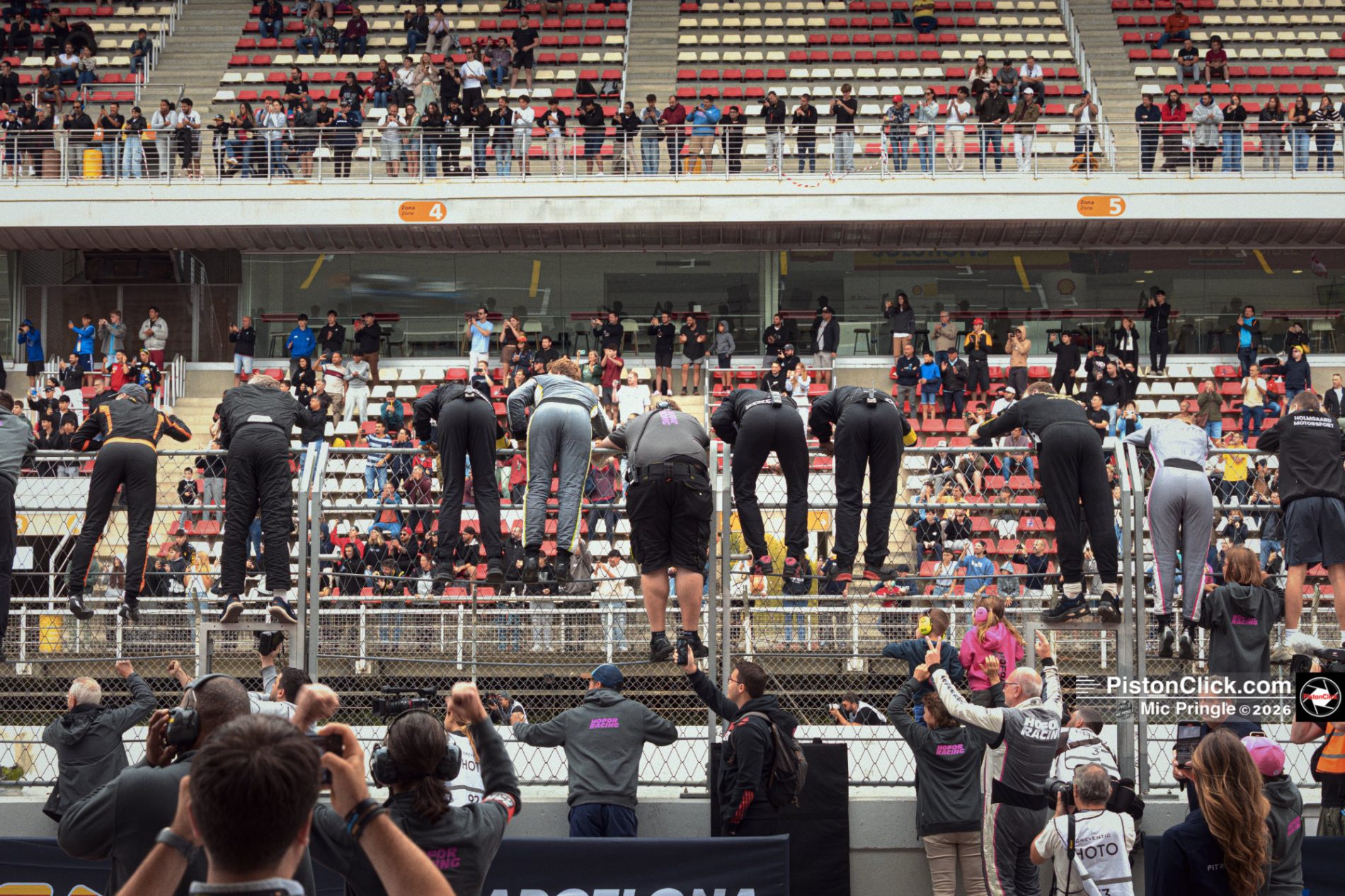
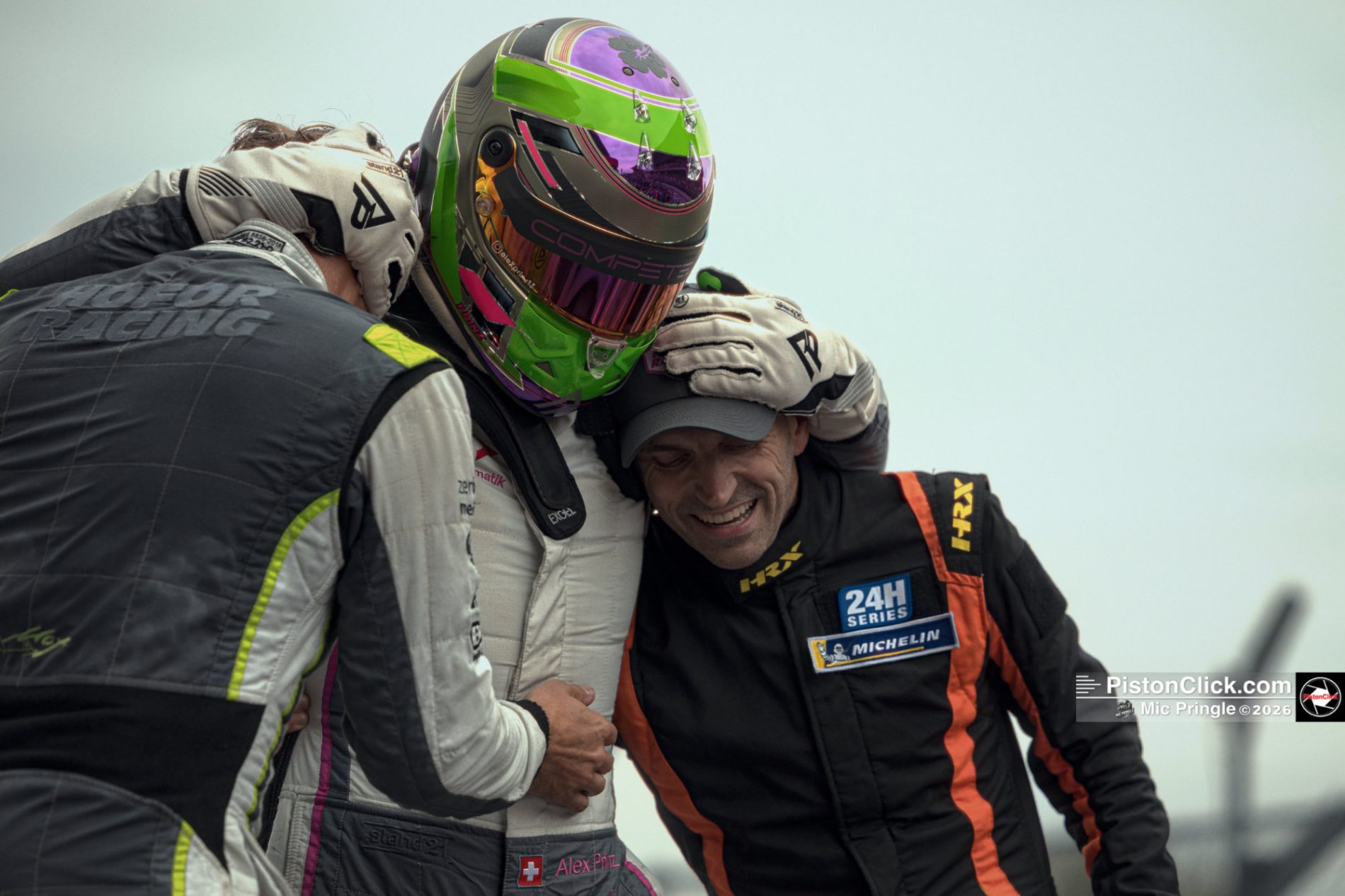
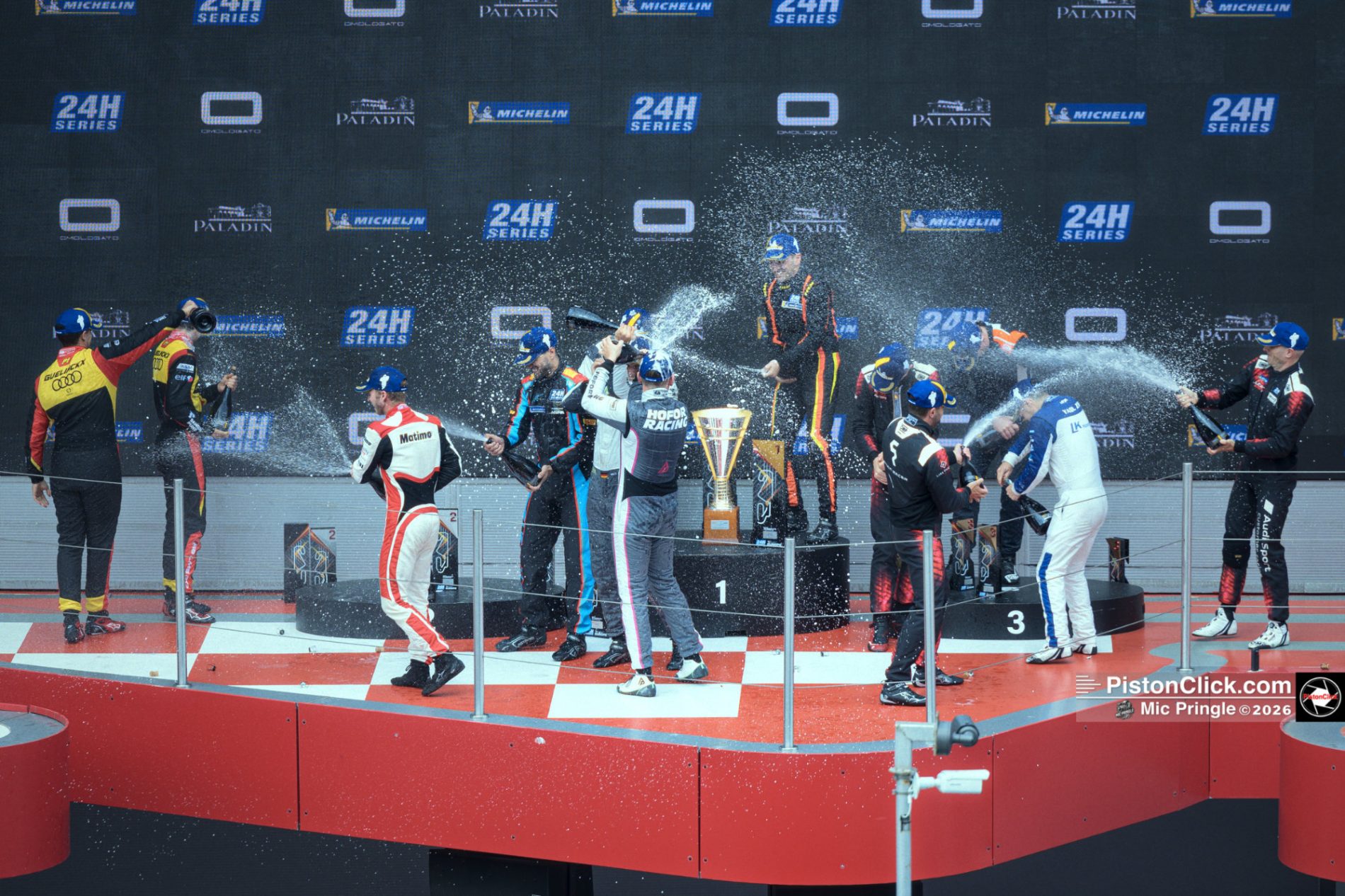
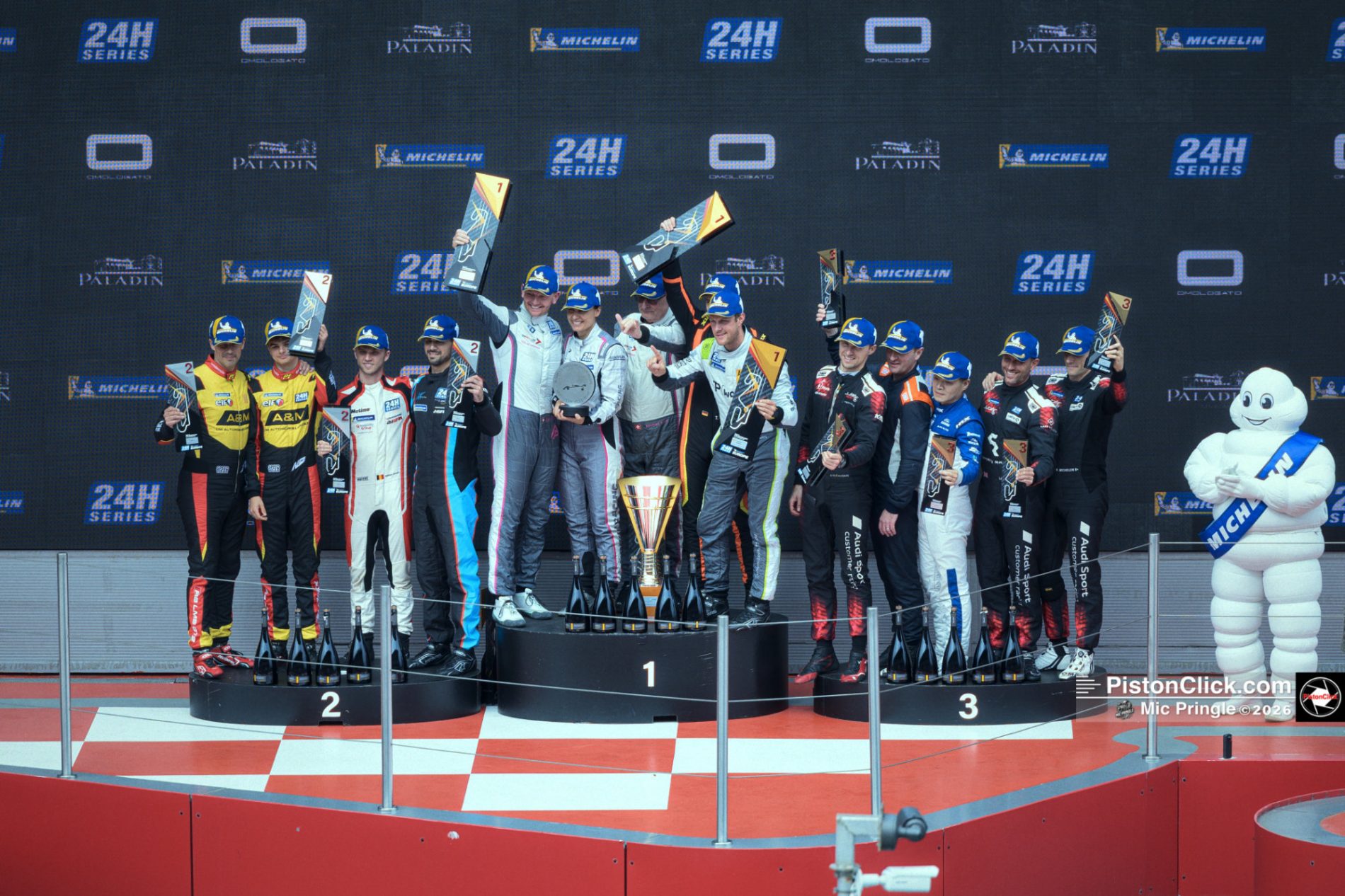
By the time the chequered flag fell, I realised the story wasn’t any single frame, not even the hero shots. They form the spine of the weekend, but it’s the in-between moments that give it life: mechanics grabbing a five-minute snooze, drivers staring into the distance before a stint, the circuit shifting mood as day turns to night and back again. That’s what I’ll remember most about my first time shooting Barcelona as accredited media, not just the spectacle, but the slow, layered story that only reveals itself if you stay for the full 24 hours and pay attention to everything in between.